2012-12-17
【Aiden in English】
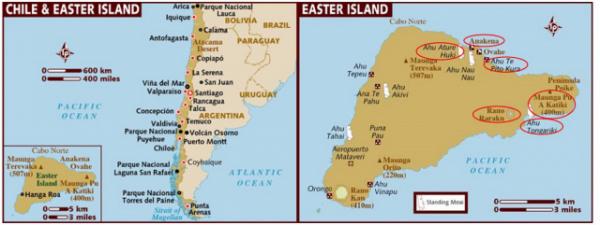
Today was my first day exploring South America after connecting a series of flights for more than 23 hours. As soon as I stepped off the plane on Easter Island in the Pacific Ocean—the Navel of the World—I knew this would be an extremely hot trip (not including Antarctica). When I woke to the rooster's morning chorus of "COCK-A-DOODLE-DOO", I was surprised that breakfast time had already started at my hotel, Explora Rapa Nui. We walked to the restaurant after getting dressed and putting on our shoes. My mom ordered a well-done fried egg, but she didn't like a raw yolk at all. I had an omelet with cheese, tasty ham, and fresh mushrooms. It was an excellent meal for a king. As I accompanied our morning tour guides, no one else was with us. I thought the tour I mentioned to my mom was popular. But oh, how wrong I was. No one came to join us. So, at 9:30 am, we left our hotel to see the Moai in Rapa Nui National Park, designated as a UNESCO (United Nations Educational, Scientific, and Cultural Organization) heritage site. Moai means "the Living Face" in Polynesian, and the stone statues are carved and shaped to resemble human figures. Some Moai appeared unique, while others bore a resemblance to one another. I learned that approximately 1,000 years ago, different Rapa Nui tribes inhabited Easter Island. Each tribe carved its respective leader differently from the other tribes. There were supposed to be 15 Moai at Ahu Tongariki, the most popular sport in the world. But when I counted, it had 17. One was lying down, and another was apart from a group of 15 Moai standing on a platform next to each other. All had some resemblance facing inland. The one standing apart from the others had a unique name, Traveler. He had a long journey to Japan to raise funds for the restoration of the Moai. Between 1250 and 1500, when the Rapa Nui native people were still carving the Moai statues, a severe earthquake struck the area, knocking over all the Moai. Since some weighed over a ton, the Rapa Nui couldn't lift them without exceptional help. So, the Traveler sailed to Japan and toured the country for monetary collection. With Japanese support, 15 Moai could be restored to their original position. I asked the tour guide why the one lying down was not lifted at the same time. According to his legendary explanation, the islanders had to carry them down from the Quarry to their Ahu, or the platform at the seaside, where the Moai stood after the Moai were made. Each Moai represented an ancestor of a new king or the current king. It was believed that every Moai had its energy. If the stone statue fell during transportation, a new one would be sculpted, and the fallen one would be left there. No one touched the hard stone for bad luck. On the way to the beaches, we stopped by Ahu Te Pito Kura, also known as the navel of the world, where the largest Moai ever transported was located. It was 10 meters long and weighed over 82 tons. I followed our guide to a magnetic rock that made for a compass. It's said that this was one of the three rocks that the first king brought to Easter Island. When they came near each other, they formed a portal in another dimension and became the center of the Earth. However, the 2nd was lost over the centuries, and the 3rd was missed in the Pacific Ocean. What a fascinating story I had just heard! We passed by Ovahe Beach, which had no sand. In winter, the intense waves sucked out the sand into the ocean. In summer, it spits the sand out from the sea. When we visited, it was too early for the sand to return to the shore. It's a pretty odd and mysterious phenomenon if you ask me. Then, we headed for Anakena, the only beach suitable for swimming on Easter Island. Once we arrived, I jumped out of the car and ran into turquoise shallows without a second thought. The water seemed so cold that it set my teeth shivering. I immediately popped out as fast as my tired legs would carry me to the shore. I stood gasping for breath and heaving for air. I'd rather spend the rest of my time playing in the white sand under the sunshine. For lunch, I ate at the hotel. The green vegetable salad seemed so bitter that I needed to dump salt onto my tongue and wash it down with gulps of water. Other than that, everything looked good. The roasted tuna became my great favorite. With black pepper, salt, and rice, it tasted delicious! When the time came to meet our afternoon tour guide, I noticed a big difference in the size of our group. There were four times as many tourists as one hour before! As I arrived at Rano Raraku or Quarry, my eyes widened. In front of my eyes, an enormous crater was displayed with Moai along the sides. The tour guide, a Rapa Nui native lady, must have seen a look of amazement on my face. The next moment, she said, "Let's climb that." Before I knew it, I stared in disbelief at the large hole. "Am I supposed to climb that tall edge?" I asked myself. When my mom called for me to move, I bolted toward her and ran up the steepest slope until I was out of energy. A large stone statue was shown off in front. It didn't draw my attention until I was shocked to hear about a particular piece of information. This rock was a Moai! It was approximately 21 meters high. However, it lay along the hill and blended in with its surroundings, which almost fooled me early on. We trekked along a small trail to the crater's summit and then sloped down toward its center. The view turned out spectacular! There was a clear blue lake surrounded by trees. The ground looked red. The red soil not only generated a lot of dust but also helped to raise the temperature. Here, it was brutally hot. As I descended from the crater, I tripped twice, fell once, and got scratched a dozen times. The dirt made the steep walk easy to fall on, and the sharp edges of the tree branches made me feel itchy. At the end of our sightseeing, we enjoyed the cold and sweet fruit juice that the tour guide brought from our hotel. After three prolonged droughts, I started toward the green van. Soon, I returned to the hotel in no time. 【红霞译】 今天在经历23小时连续转乘飞机之后,出游南美的第一天终于到来了。一走进位于太平洋号称“地球肚脐”的智利拉帕努伊“复活节岛”时,我立刻意识到,如若排除南极不计,这将是一趟战高温斗酷暑的旅行。
清晨,屋外公鸡喔喔叫个不停,把我从睡梦中吵醒,才知早餐临近,我们梳理打扮,穿好行装,立刻赶往拉帕努伊探险酒店餐厅。妈妈要来一份炸熟的荷包蛋,她一点都不喜欢吃生蛋黄;我点了奶酪火腿蘑菇煎蛋,味道鲜美得足以供奉国王。 我紧随上午导游其后,发现除我们之外,没有任何人将与我们同行,本以为要去的景点非常流行,一定会有很多游客前往,我真看走了眼。九点半钟,我们动身朝拉帕努伊国家公园进发,那里因摩艾“活脸谱”石像而引人注目,被世界科教文组织列为《世界遗产名录》。
摩艾在波里尼西亚“多岛”语的意思是“活脸谱”,巨人石像刻得跟现代人形一样,只是摩艾与摩艾之间模样有所不同。据说大约1,000年前拉帕努伊有很多土著部落,每个部落都有各自敬拜的酋长首领。阿胡·通加里基“东风平台”有15个摩艾,是当今世界上最大的巨石雕像群,可我仔细清点过,一共有17个才对,第16个躺在地上,最后一个名叫“旅行家”的摩艾则站在远处,后者之所以被称作“旅行家”,是因为它曾远渡重洋,只身到日本游说募集资金,为摩艾石像修复工程做出了重大贡献。
追溯到公元1250至1500年间,拉帕努伊土著部落正热衷打造自己的摩艾石像,地震严重破坏了岛民生活,震塌了岛上所有石像。不少石像重达一吨以上,当地人根本无法让石像重新矗立起来。于是,“旅行家”周游日本诸地,不仅唤起了民众对濒危文物的广泛关注,同时还赢得了株式会社的经济赞助。正由于日本企业家鼎力出资,才让15个摩艾石像再度获得新生。我问起为什么没有扶起躺在地上的那个摩艾石像?导游根据民间传说解释道,当岛民将刻好的石像从火山采石场运往海边祭坛的过程中,一旦石像不幸倒地,人们不许将它扶起,而只能重新打造另外一个。拉帕努伊人认为,每一个首领都有自己超自然的力量,任何人都无法改变这种神威,否则定会天诛地灭。
在去海滨的路上途经蒂皮托库拉“世界肚脐”,我们看到拉帕努伊上被运出采石场的最高摩艾石像,它全长10米,重量超过82吨。我跟随导游来到一块用作指定方向的磁石旁,听他讲述古老传说:拉帕努伊首位酋长曾从家乡带来三块这样的圆形石头,当三块岩石拼在一起,会变成地标──地球中心。遗憾地,这是唯一幸存的岩石,另外两块不是几百年前便不知去向,就是早已葬身茫茫太平洋之中,故事听起来多么不可思议!
欧瓦赫“隐藏的宝石”海滩的沙子随季节的变化而变化,冬季海浪把白沙活生生地吞嗜入海,直到夏季才把卷走的白沙退还回来,可我们来得时节稍早,海浪尚未来得及把全部白沙完璧归赵,你说大自然邪乎不邪乎?接着,我们直奔拉帕努伊唯一可以游泳的白沙滩海滨。车子刚刚停稳,我便迫不及待跳入蓝绿色海洋之中。天哪,海水刺骨,冻得牙齿上下不停地打架,我赶紧蹦出水面,拖着疲惫的身躯,三步并作两步逃往沙滩。我张开大口喘着气,好半天都缓不过劲来。说真格的,我情愿待在岸边沐浴阳光。
午餐时分,我们返回酒店下榻。绿色沙拉苦不堪言,我恨不能拿起盐罐直接往舌头上洒,然后再用清水漱口,除此之外一切安好,烧烤的金枪鱼味道真棒,再拌上少许黑胡椒、咸盐和米饭,喷香诱人美不胜收!
转眼功夫就到了与下午导游会合的时候,我立马注意到眼前游人骤增,大概是上午的四倍。我们驱车来到拉诺·拉拉库“槽型火山口”采石场,眼前出现的景观叫我瞠目结舌,偌大死火山口脊背上布满了各式各样的摩艾石像。导游阿姨是当地土著,一定看到我满脸惊喜便趁机对我说一起爬上去,我茫然地站在原地不知所措,“能行吗?”我下意识地揣度自己,一点信心也没有。恰在这时,妈妈带头前行,我箭步如飞,一口气跑过最陡峭的山坡,累得呼哧带喘精疲力竭,这时身边出现一块巨石,没想到竟是全岛最大的摩艾石像,这位身高21米的家伙正仰面躺在半山腰乱石丛中,让我难辨庐山真面目。
我们沿着相反方向徒步走过一小段山路,很快爬上火山湖正面。湖水湛蓝,山林青翠,土壤火红,出落得自然秀美!被太阳烘焦的地面尘土飞扬,不时卷起滚滚热浪,令人倍感酷暑难熬。下火山口的时候,我差点绊倒两回、摔跤一次、被灌木丛刮了不止半打乎,斜坡上浮尘滑得要命,让我很难站稳脚跟;身边树杈末梢又特别尖利,我不得不高度警惕,否则皮肤被刺挠得奇痒无比。 观光结束后,导游给我们每人送上从酒店带来清凉爽口的水果饮料,久旱逢甘霖,我连喝三杯,随即登上绿色面包车,一溜烟跑回酒店。
【后语】
在美国的小学里,一年要写多少作文?文字表达究竟如何培养?这一直是我好奇的话题。 从一年级到四年级,每回春秋两季的家长会上,我总向不同的老师提出同样的问题。我关心的既不是人人热衷的数学,也不是个个倦怠的词汇,而是那些考试成绩里难以反映、却极易被忽略的写作能力。 四年来我渐渐发觉,班主任的心境,决定了学童的作文水平。年纪稍长的老师,更擅长启发娃儿观察事物的好奇心,调动情感,拓展想象——她们愿意花时间去发掘兴趣,更有心情去放飞梦想。这似乎与教学经验并无太大关系。娃儿二、三年级时的班主任,便属于这样的老师。而年纪较轻的老师,往往忙于恋爱、成家、拉扯自己的小不点,能照着大纲教完20来个学童写作,已算莫大的造化了。一年级和四年级的老师,恰好处在这般光景。 若有一天你发现,娃儿虽博览群书,游历山川,体验过五味生活,观察过自然万象,却依然下笔空泛、言之无物,你我都不必大惊小怪——写作的门径,贵在练习。惟有长期坚持,才会有话可说,有物可写,笔下生花。 此番南美之行,娃儿每日花少许时间练笔,记录所见所闻、所思所感。有话则长,无话则短,尽兴而写,随意而止。一路走,一路看,一路写,一路成长——留下了游记、心得、随笔和日记,收获了课外教育所期待的珍贵记忆。
Today in History(历史上的今天): 2009: 新西兰天籁之声(Sounds of Heaven, NZ) 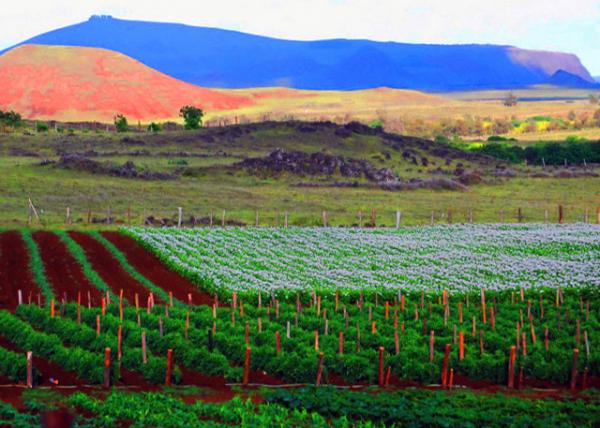 Agricultural Plantation (农业种植园) Agricultural Plantation (农业种植园)
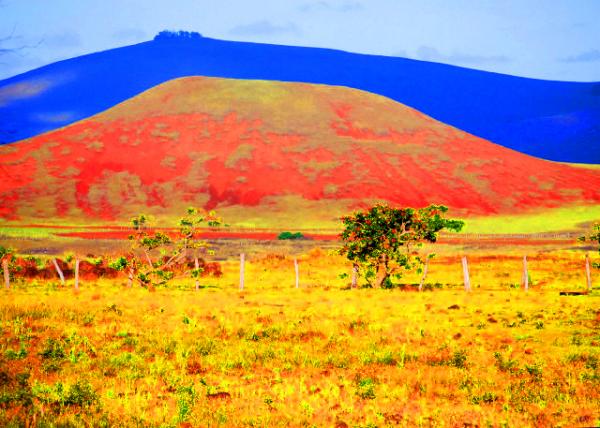 Puna Pau,the Sole Source of the Red Scoria to Be Carved for the Pukao Puna Pau,the Sole Source of the Red Scoria to Be Carved for the Pukao
(无树高地采石场·唯一出产红色火山渣石顶结的地方)
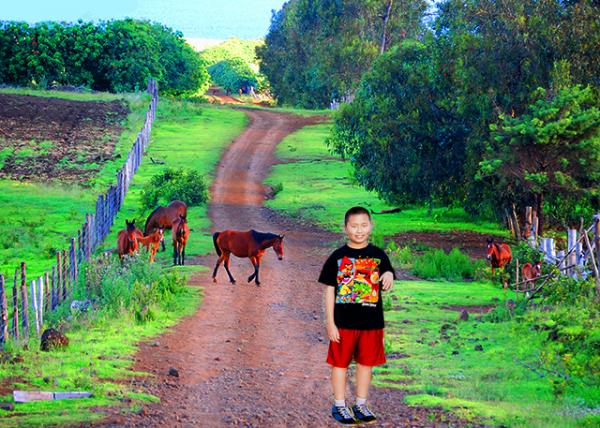 More Horses than People on Easter Isalnd More Horses than People on Easter Isalnd
(拉帕努伊上马比人多 12-16-2012) 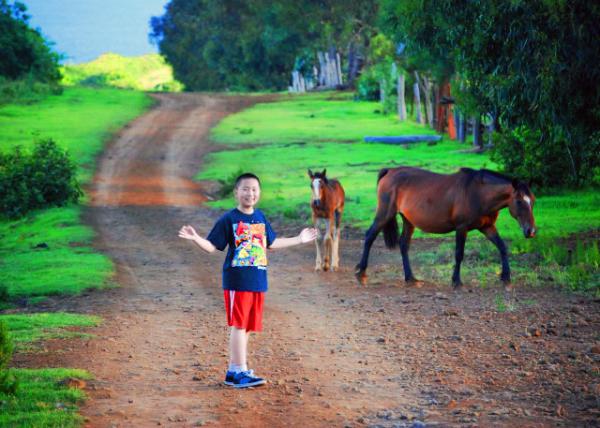 Roaming Free-range Mares & Their Foals Roaming Free-range Mares & Their Foals
(自由放养的母马及其幼驹 12-16-2012) 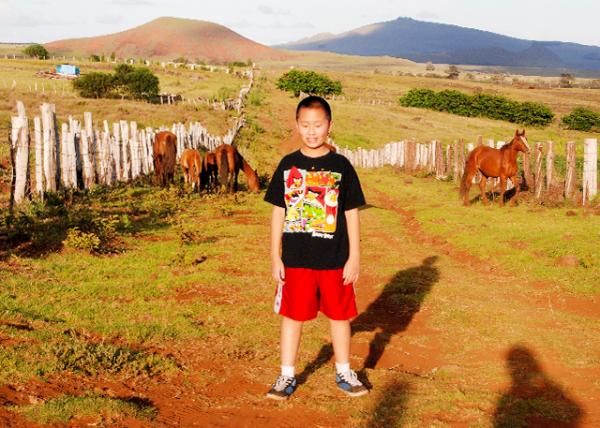 Puna Pau, a Cinder Cone at the Distance Puna Pau, a Cinder Cone at the Distance
(普纳帕乌“干泉”采石场·远处为火山渣锥 12-16-2012) 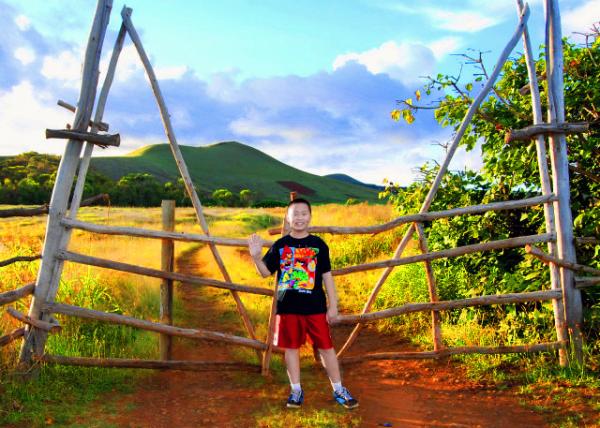 Poike Volcano, One of the 3 Main Extinct Volcanoes Forming Rapa Nui @ 370 Metres/1,214 Ft above Sea Level as the Island's 2nd-Highest Point After the Peak of the Extinct Volcano Terevaka Poike Volcano, One of the 3 Main Extinct Volcanoes Forming Rapa Nui @ 370 Metres/1,214 Ft above Sea Level as the Island's 2nd-Highest Point After the Peak of the Extinct Volcano Terevaka
(波伊克“黎明之地”火山·拉帕努伊的三座主要死火山之一,以海拔370米/1,214英尺居本岛第二高峰,仅次于死火山特雷瓦卡“推/拉独木舟”峰 12-16-2012) 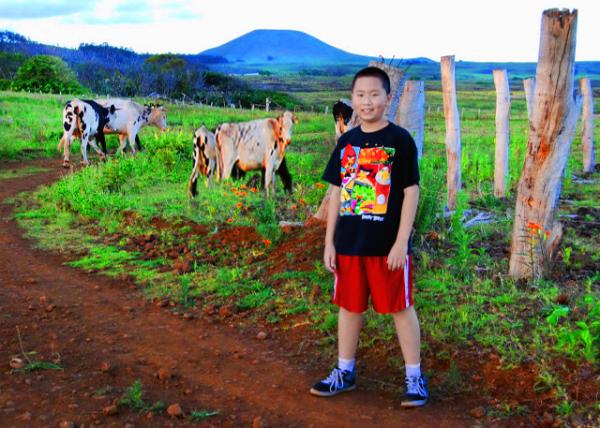 South Coast,Characterized by a "Strikingly, Brutally Rugged" Scenery of Neon Green Grass & Jet-black Volcanic Rock South Coast,Characterized by a "Strikingly, Brutally Rugged" Scenery of Neon Green Grass & Jet-black Volcanic Rock
(南海岸·引人注目、粗犷而又充满野性、霓虹绿草地和漆黑火山岩的景观 12-16-2012) 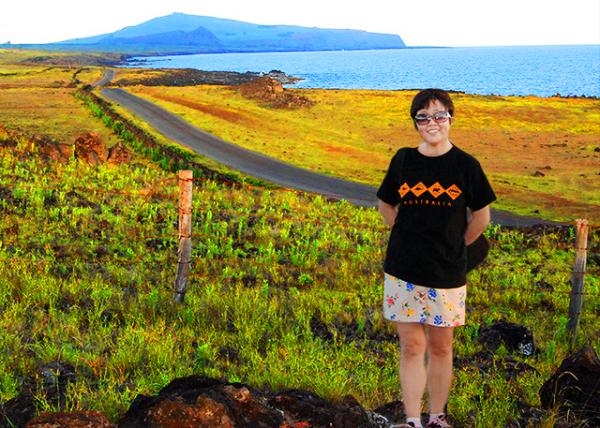 Poike, One of the 3 Main Extinct Volcanoes Forming Rapa Nui @ 370 Meters/1,214 Ft above Sea Level as the Island's 2nd-Highest Point after the Peak of the Extinct Volcano Poike, One of the 3 Main Extinct Volcanoes Forming Rapa Nui @ 370 Meters/1,214 Ft above Sea Level as the Island's 2nd-Highest Point after the Peak of the Extinct Volcano
(波伊克“夜幕降临之地”火山·构成拉帕努伊岛的三座主要死火山之一,海拔370米/1214英尺成为该岛第二高峰 12-16-2012) 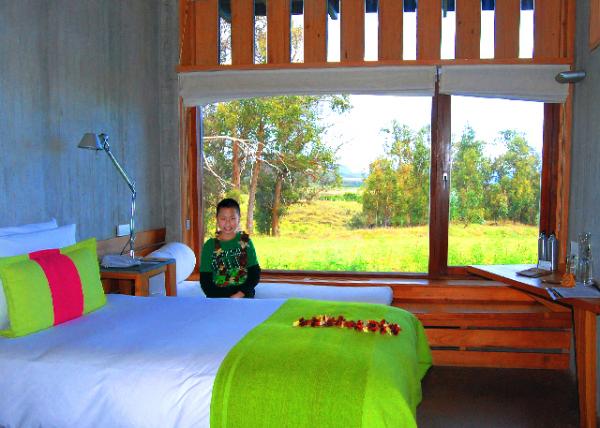 Explora Rapa Nui (探索拉帕努伊酒店 12-16-2012) Explora Rapa Nui (探索拉帕努伊酒店 12-16-2012)
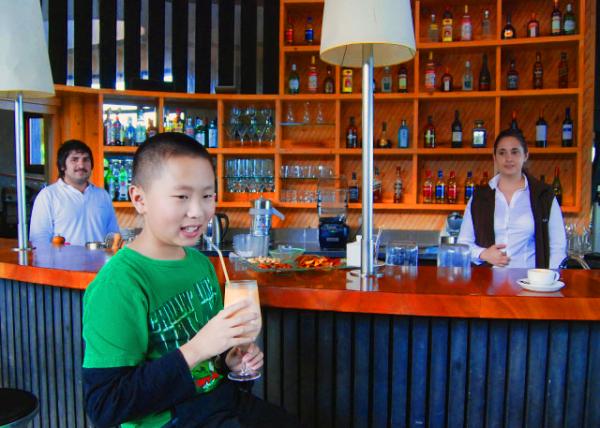 Bar of Explora Rapa Nui Bar of Explora Rapa Nui
(探索拉帕努伊酒店·吧台 12-16-2012) 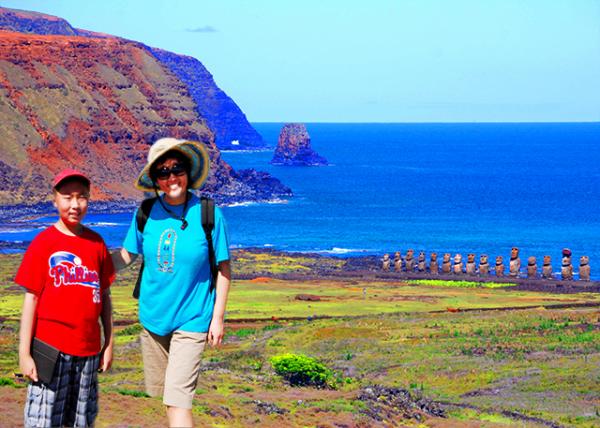 Ahu Tongariki, the Largest Ceremonial Platform in Polynesia & Featuring a Row of 15 Giant Stone Moai Statues @ Rapa Nui NP Ahu Tongariki, the Largest Ceremonial Platform in Polynesia & Featuring a Row of 15 Giant Stone Moai Statues @ Rapa Nui NP
(拉帕努伊国家公园阿胡·通加里基——波利尼西亚最大的祭祀平台,上面排列着15尊巨大的摩艾石像 12-17-2012) 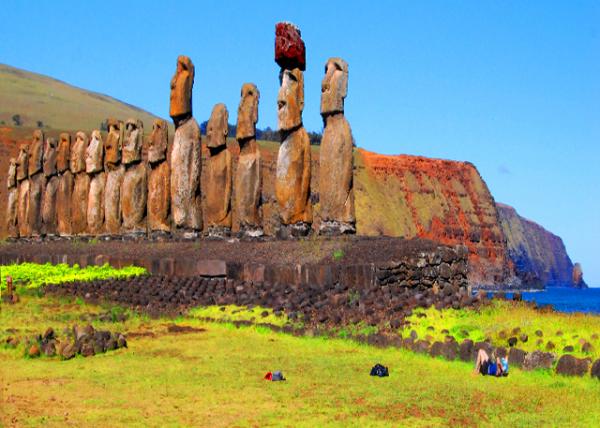 Ahu Tongariki of Rapa Nui NP w/ the Sundown toward the West & the Sunrise against the East @ the Spring Equinox Ahu Tongariki of Rapa Nui NP w/ the Sundown toward the West & the Sunrise against the East @ the Spring Equinox
(拉帕努伊国家公园阿胡·通加里基——春分时面向西方日落的夕阳背朝东方日出的朝霞)
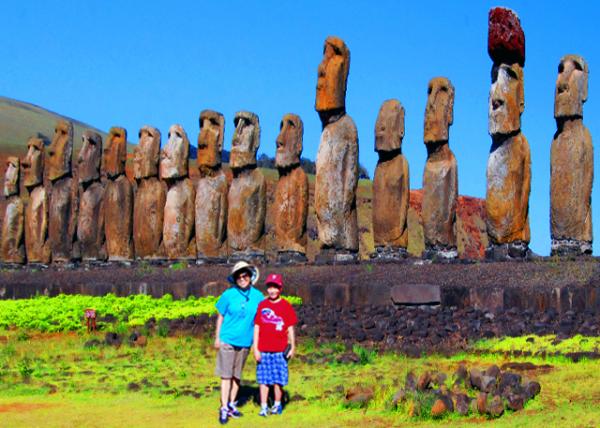 Ahu Tongariki of Rapa Nui NP, the Main Ctr & Capital of the Hotu-iti Clan Ahu Tongariki of Rapa Nui NP, the Main Ctr & Capital of the Hotu-iti Clan
(拉帕努伊国家公园阿胡·通加里基——霍图伊蒂“小火土”族的中心与首府 12-17-2012)
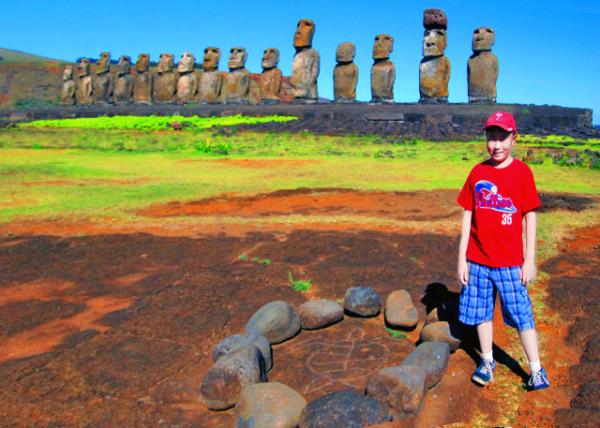 Fish Petroglyph @ Ahu Tongariki of Rapa Nui NP Fish Petroglyph @ Ahu Tongariki of Rapa Nui NP
(拉帕努伊国家公园阿胡·通加里基——鱼岩画 12-17-2012) 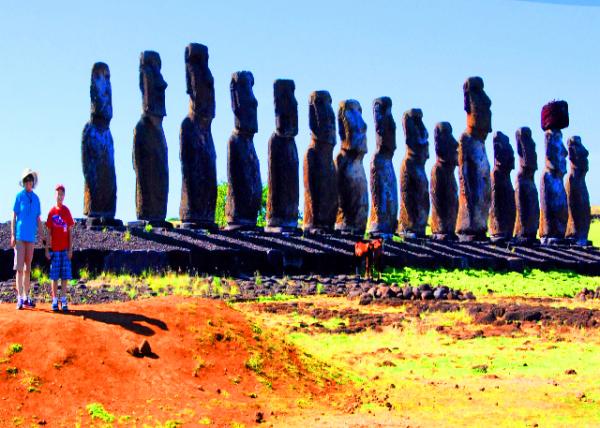 Monolithic Figures, Carved by the Rapa Nui People between the 13th & 16th Centuries to Represent Deified Ancestors @ Rapa Nui NP Monolithic Figures, Carved by the Rapa Nui People between the 13th & 16th Centuries to Represent Deified Ancestors @ Rapa Nui NP
(拉帕努伊国家公园巨石雕像·13—16世纪期间由拉帕努伊人雕刻而成,藉之代表神化的祖先 12-17-2012) 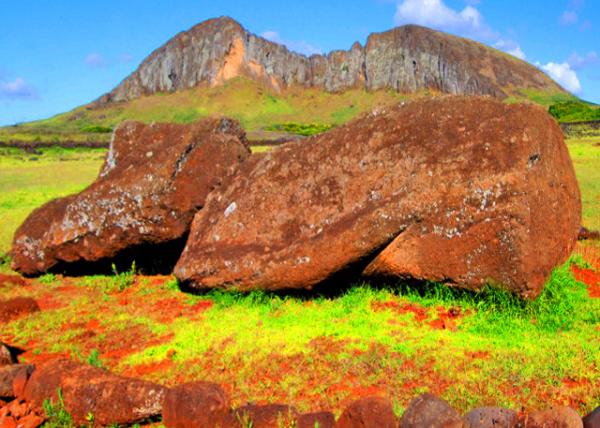 Moai Fallen in Front of Rano Raraku @ Rapa Nui NP Moai Fallen in Front of Rano Raraku @ Rapa Nui NP
(拉帕努伊国家公园·第16位摩艾倒在槽型火山口下) 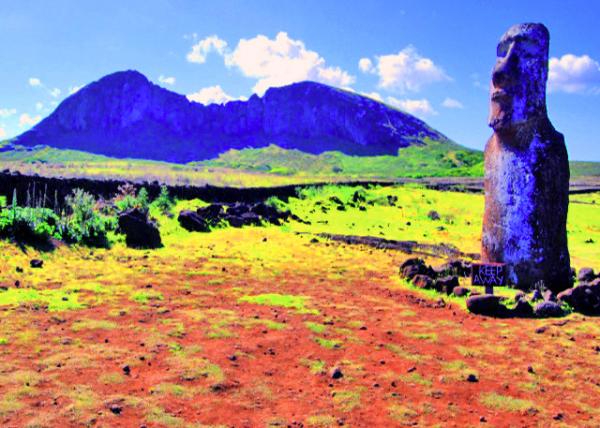 Traveler Moai @ Rapa Nui NP Traveler Moai @ Rapa Nui NP
(拉帕努伊国家公园·旅行家摩艾)
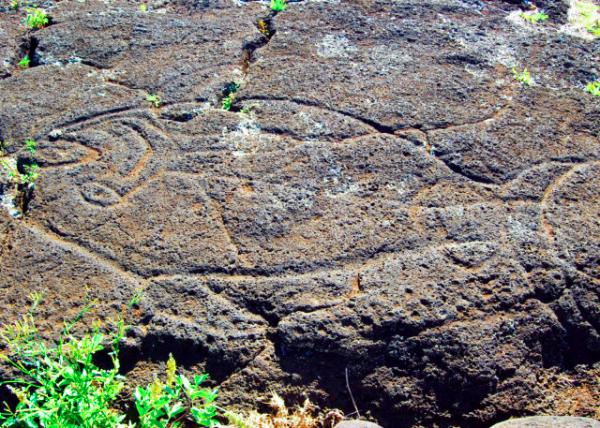 Tuna Fish @ Papa Vaka Petroglyph of Rapa Nui NP Tuna Fish @ Papa Vaka Petroglyph of Rapa Nui NP
(拉帕努伊国家公园帕帕·瓦卡“石舟”岩画石刻——金枪鱼) 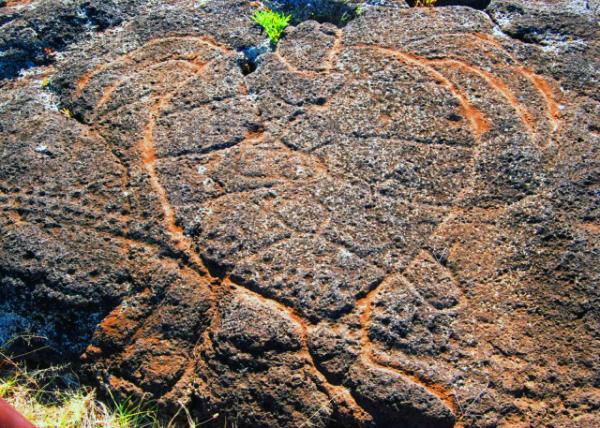 Sea Turtle @ Papa Vaka Petroglyph of Rapa Nui NP Sea Turtle @ Papa Vaka Petroglyph of Rapa Nui NP
(拉帕努伊国家公园帕帕·瓦卡岩画石刻——海龟) 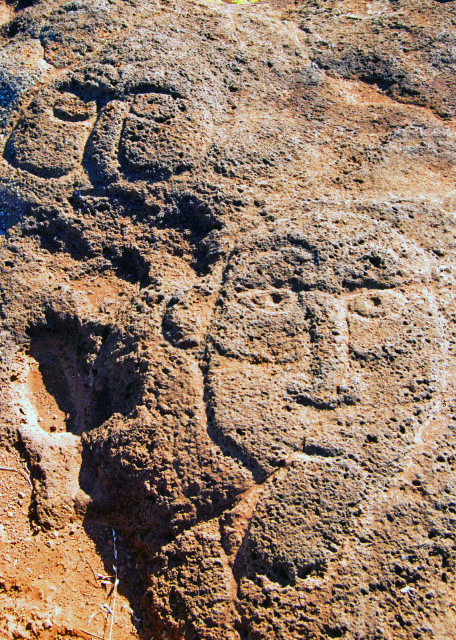
Indigenous People @ Papa Vaka Petroglyph of Rapa Nui NP (拉帕努伊国家公园帕帕·瓦卡岩画石刻——土著) 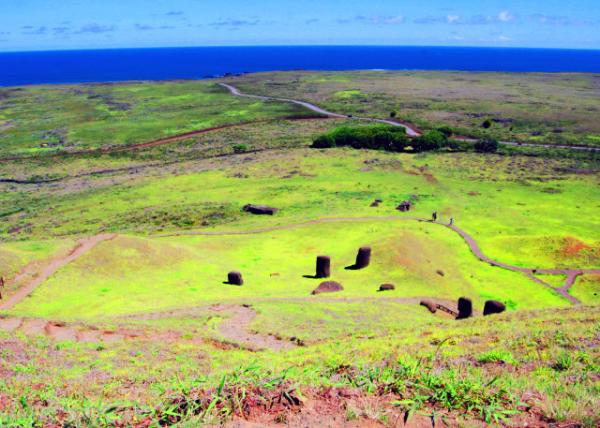 Typical Landscape on Easter Island w/ Rounded Extinct Volcanoes Covered in Low Vegetation Typical Landscape on Easter Island w/ Rounded Extinct Volcanoes Covered in Low Vegetation
(复活节岛典型景观·圆形死火山覆盖着低矮植被) 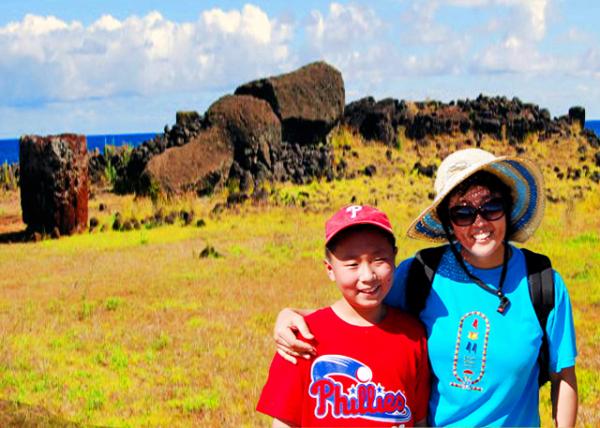 Paro Moai, the Tallest Moai Transported out of Quarry Paro Moai, the Tallest Moai Transported out of Quarry
(帕罗“祖先之地”摩艾石像·被运出采石场最高的摩艾 12-17-2012)
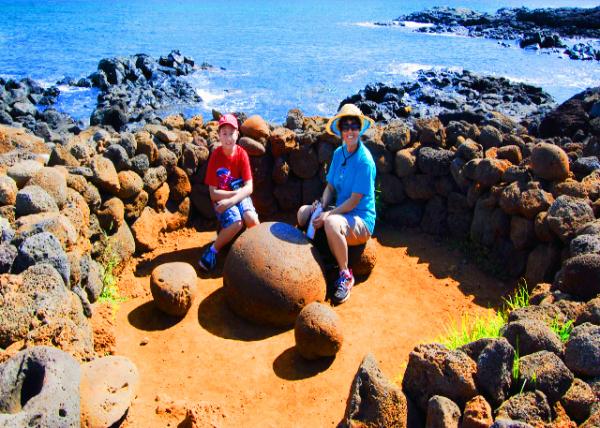 Ahu Te Pito Kura w/ Symbolic Energy Stones @ Te Pito o te Henua Ahu Te Pito Kura w/ Symbolic Energy Stones @ Te Pito o te Henua
(世界肚脐——阿胡·特·皮托·库拉“光之脐平台”的能量石 12-17-2012) 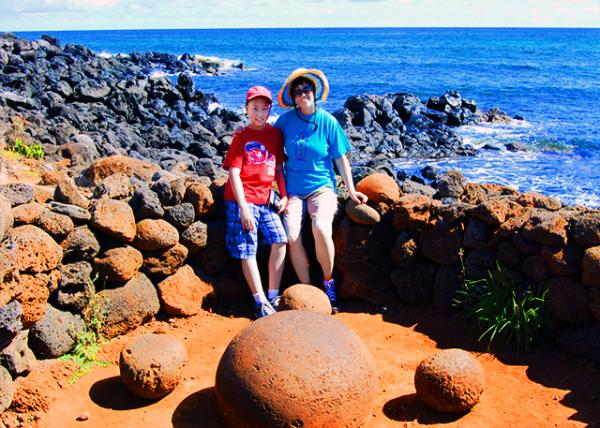 Bay of La Pérouse (拉佩鲁兹“多石之地”湾 12-17-2012) Bay of La Pérouse (拉佩鲁兹“多石之地”湾 12-17-2012)
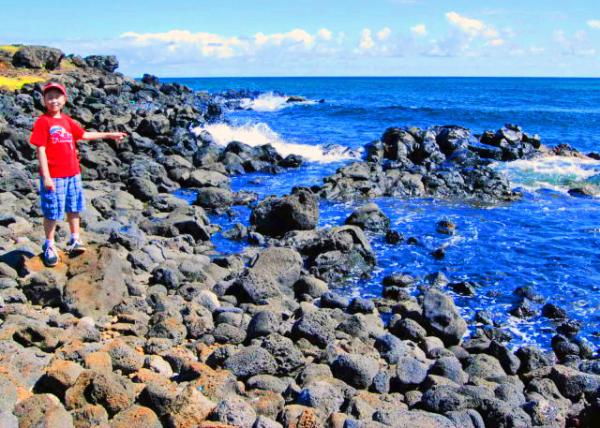 Boulder Beach @ Bay of La Pérouse Boulder Beach @ Bay of La Pérouse
(拉佩鲁兹湾·鹅卵石海滩)
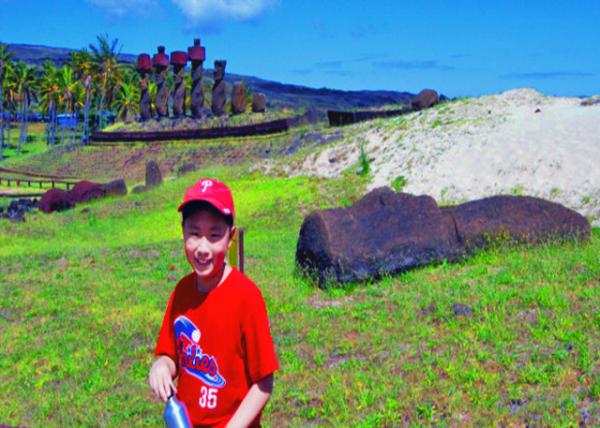 Ahu Nau Nau in 7 Moais, Some Topped w/ Red Pukao or Hheaddresses Made of Scoria Ahu Nau Nau in 7 Moais, Some Topped w/ Red Pukao or Hheaddresses Made of Scoria
(阿胡·瑙瑙“智慧平台”——七位摩艾, 有的石像顶部还戴着红色的普卡奥“用火山渣制成的头饰” 12-17-2012) 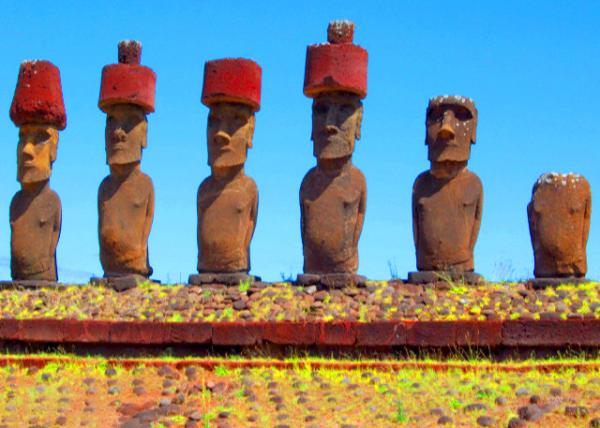 Ahu Nau Nau w/ the Red Scoria Topknots Ahu Nau Nau w/ the Red Scoria Topknots
(阿胡·瑙瑙平台·红火山渣石顶结) 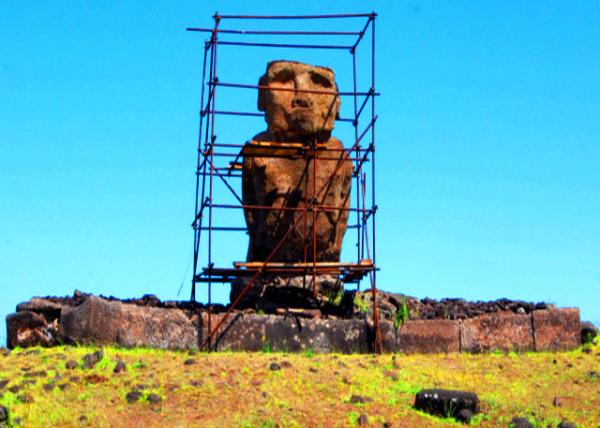 Ahu Ature Huki, the 1st Re-Erected Moai in Modern Times on Anakena Beach Ahu Ature Huki, the 1st Re-Erected Moai in Modern Times on Anakena Beach
(阿纳凯纳“蒙面鲣鸟洞穴”沙滩阿胡·阿图雷·胡基“拽大眼鲹平台”——当今第一座重新竖立的摩艾石像) 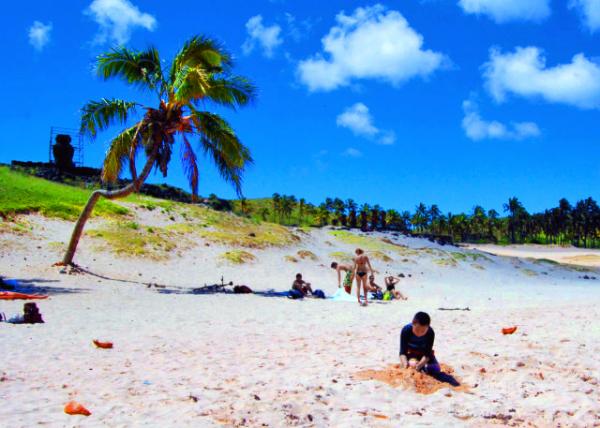 Anakena Beach, the 1st Polynesian Settlers Landed on Easter Island & the Birthplace of Rapa Nui's Culture Anakena Beach, the 1st Polynesian Settlers Landed on Easter Island & the Birthplace of Rapa Nui's Culture
(阿纳凯纳沙滩·首批波利尼西亚定居者登陆拉帕努伊的地方 | 拉帕努伊文化发源地 12-17-2012) 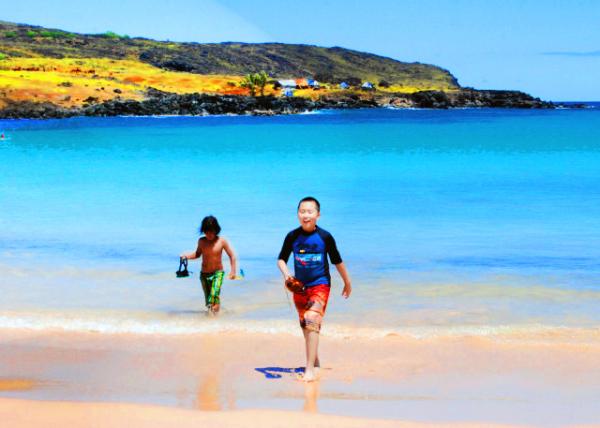 Anakena Beach, Too Cold To Swim Anakena Beach, Too Cold To Swim
(阿纳凯纳沙滩·水温低到不适于游泳 12-17-2012) 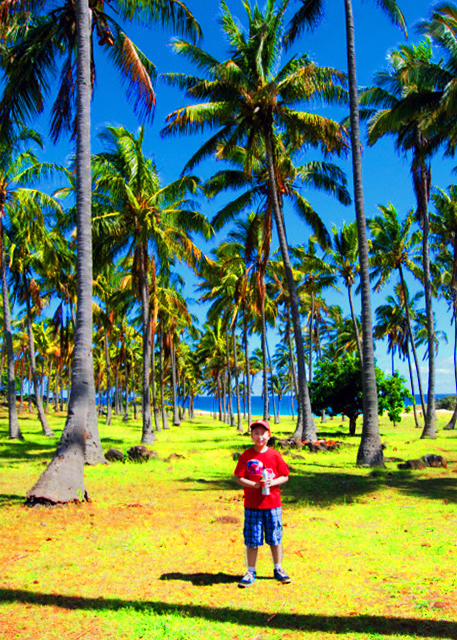
Palm Grove @ Anakena Beach (阿纳凯纳沙滩·棕榈林 12-17-2012) 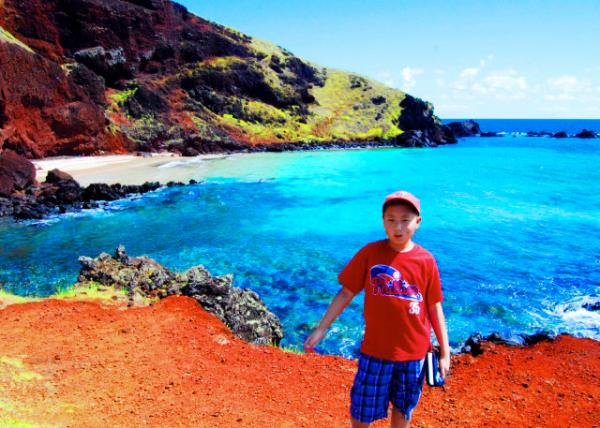 Ovahe Beach Seasonally w/ No Sand Ovahe Beach Seasonally w/ No Sand
(欧瓦赫“红天”海滩·季节性无沙海滩 12-17-2012)
 Terevaka, the Island's Largest, Tallest, & Youngest Extinct Volcano @ 507 Meters/1,665 Ft Terevaka, the Island's Largest, Tallest, & Youngest Extinct Volcano @ 507 Meters/1,665 Ft
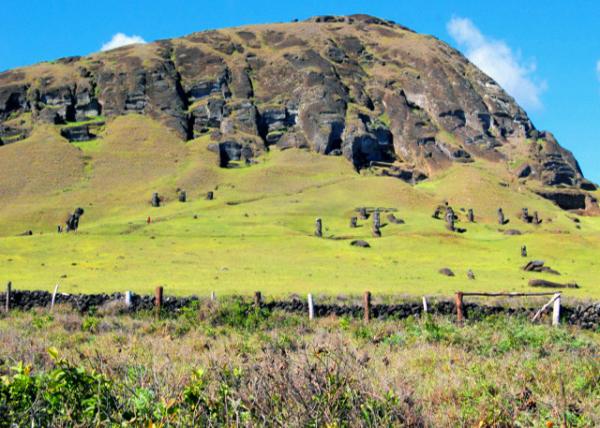
(特雷瓦卡峰·岛上最大、最高且最年轻的死火山:507米/约1,665英尺) 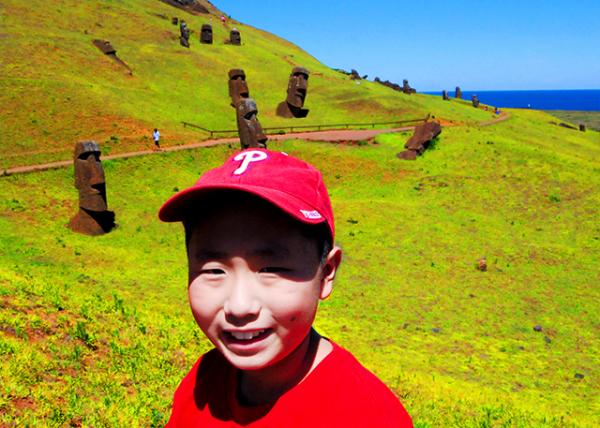 Rano Raraku Quarry Rano Raraku Quarry
(拉诺·拉拉库“沟壑山”采石场 12-17-2012)
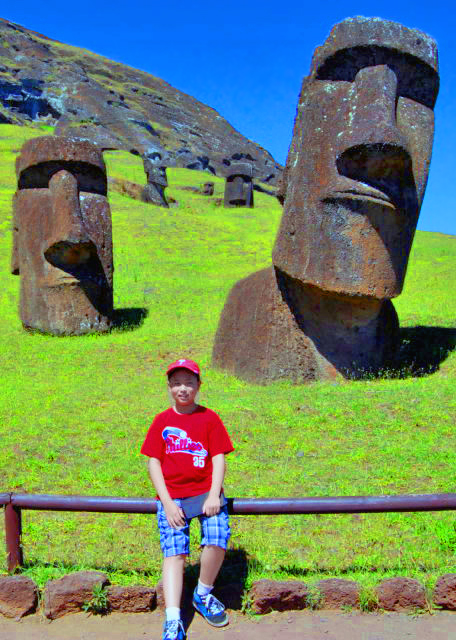
Monumental Anthropomorphic Sculptures, Representing Deceased Ancestors & Symbolizing Religious & Political Authority @ Rano Raraku Quarry (拉诺·拉拉库采石场巨大的拟人化雕塑——用来代表已故的祖先,并象征宗教和政治权威 12-17-2012) 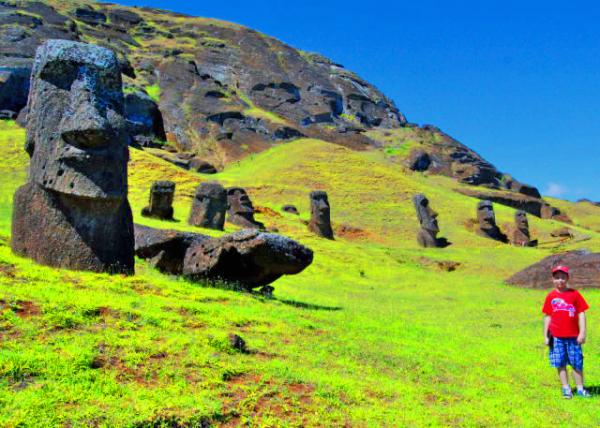 Many Uncompleted Moai Statues @ Rano Raraku Quarry Many Uncompleted Moai Statues @ Rano Raraku Quarry
(拉诺·拉拉库采石场——许多未完成的摩艾石像 12-17-2012) 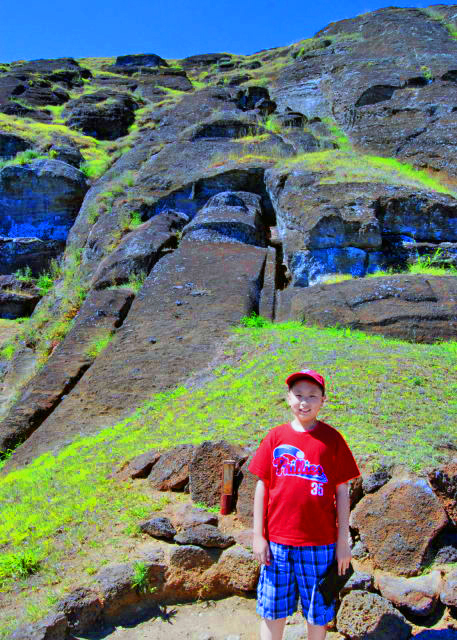
Largest Moai in 21-m/69-ft @ Rano Raraku Quarry (拉诺·拉拉库采石场——最长的摩艾:21米/69英尺 12-17-2012) 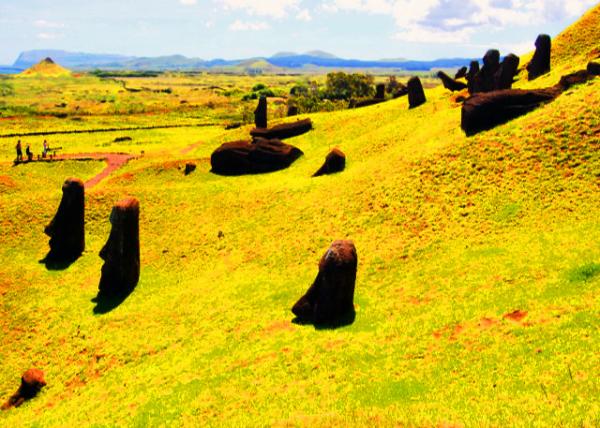 Outer Slopes of Rano Raraku w/ Moais in Half-Buried & Still under Construction Outer Slopes of Rano Raraku w/ Moais in Half-Buried & Still under Construction
(拉诺·拉拉库采石场——外山坡上半埋的、尚在建设中的摩艾) 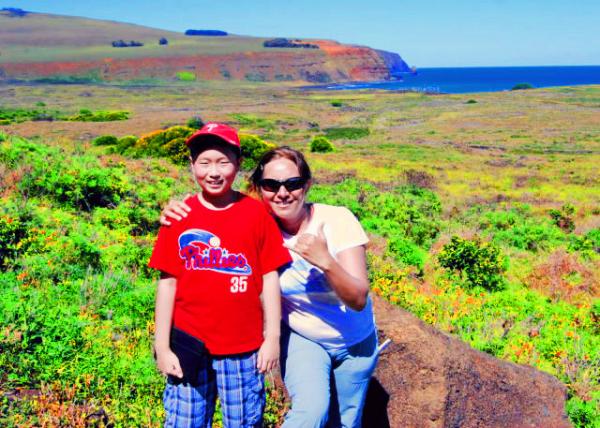 Indigenous Guide @ Rano Raraku Quarry Indigenous Guide @ Rano Raraku Quarry
(拉诺·拉拉库采石场——土著导游,背景为波伊克火山与巨人石雕群 12-17-2012) 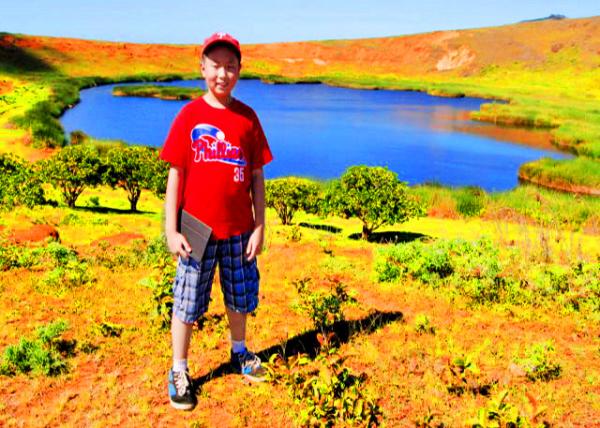 Freshwater Lake @ Rano Raraku Freshwater Lake @ Rano Raraku
(拉诺·拉拉库采石场——淡水湖 12-17-2012) 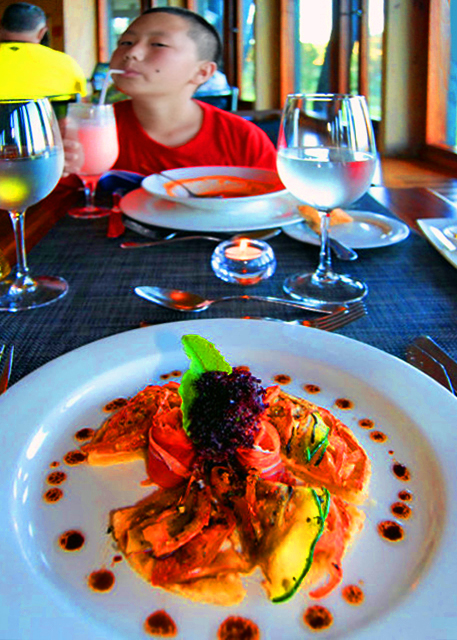
Roasted Tuna for Lunch @ Explora Rapa Nui (探索拉帕努伊酒店·烤金枪鱼午餐 12-17-2012) 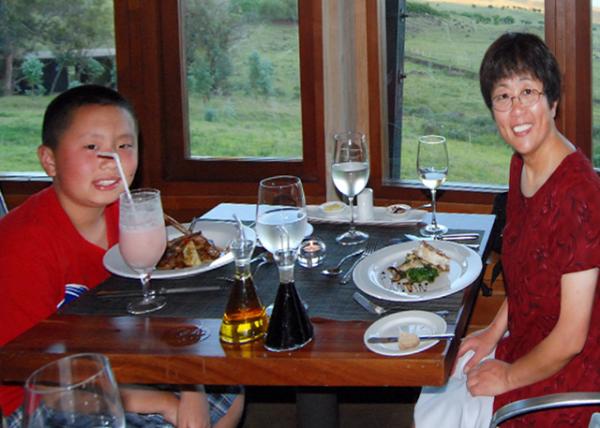 Dinner @ Explora Rapa Nui Dinner @ Explora Rapa Nui
(拉帕努伊探索酒店·晚餐 12-17-2012)
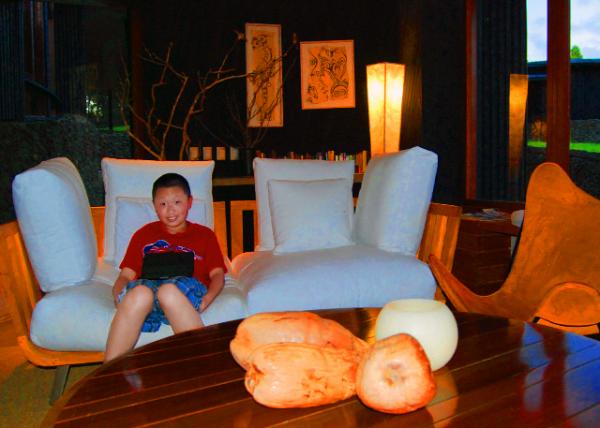 Library @ Explora Rapa Nui (拉帕努伊探索酒店·阅览室) Library @ Explora Rapa Nui (拉帕努伊探索酒店·阅览室)
Crosslinks(相关博文): Chile(出游智利)
South America(漂流南美洲) 小学四年级(4th Grade) |