2015-02-21
【Aiden in English】
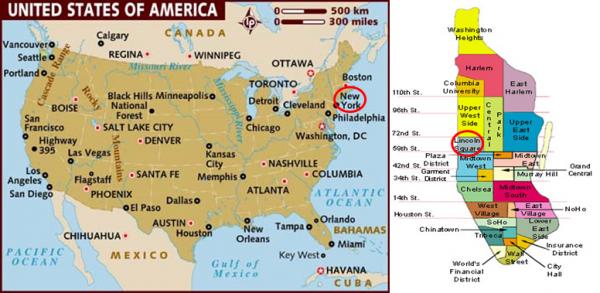
The East and West have been divided for as long as writing has existed. Both became rivals, separated by war. They had considerable differences in ideals and music. So, as our final treat of the night, Mom bought tickets to a concert of Sacred and Transcendent, led by Yo-Yo Ma's Silk Road Ensemble and debuted with the New York Philharmonic Orchestra (NYPO) for the Chinese New Year at Lincoln Center for the Performing Arts. It is well known that the music of the East and West is primarily distinct. For example, a scale in the East would only contain five notes or the pentatonic, while a scale in the West would have at least seven notes or the diatonic. Now, what would happen if they came together? Would it be catastrophic or beautifully organized harmony? Mom led us across a vast road on Columbus Ave & Broadway outside the Shun Lee Chinese restaurant, and we plopped in front of the Lincoln Center. By now, it was flurrying snow, and the ground was all slushy from cars driving by in Midtown Manhattan. We went inside and roamed around Avery Fisher Hall, home of the NYPO, until the concert time. This concert was all about bridging the gap between Eastern and Western music. The four of us would experience how prestigious musicians performed traditional music that had been passed down for thousands of years. As Confucius said, to educate somebody, you should start with poems, emphasize ceremonies, and finish with music. Performers walked onto the stage to their seats and warmed up their instruments. I saw a clarinet, a pipa or lute, drums, a trumpet, an accordion, a dulcimer, and a few other string instruments. Suddenly, they all shushed, and a sound burst from somewhere in the audience. It was a Gaita, loud and clear. They're walking down the aisle where a woman holds an enormous Gaita. The sound was very piercing, like a whistle, but it had a distinct pitch. Then, across the room, another instrument played. Mom told me that it was a Suona. At first, I thought it was a flute. After taking a closer look, it seemed more like a mini trumpet, silver, and the size of my hand. It sounded high and slightly made my head hurt. The data and the Suona traded solos for Fanfare of Gaita, Suona, and Brass as both players slowly walked toward the stage. They were greeted by an all-out explosion of sound from the other instruments. It seemed chaotic, loud, and out of control. The pipa strung as if there was no tomorrow. The clarinet player's face turned a shade of red and purple from the lack of air that I didn't even know. The song then allowed each instrument to shine, passing the solos along to each one. Some of the instruments, like the clarinet, could play loudly, while others, like the pipa, seemed quiet. As the live show went on, Yo-Yo Ma led the group to play the repertoire of the Silk Road Suite and Selections from Sacred Signs: Concerto for 13 Musicians. After the intermission, the NYPO performed Death and Transfiguration, Op. 24 by Richard Strauss. Yo-Yo Ma appeared first, followed by conductor Alan Gilbert. When they played the last piece of Rose of the Winds by Osvaldo Golijov, the East and West, in my mind, differentiated even more. The West had ordered, and every single note they played sounded controlled. The conductor was in total command of everything, and each player needed to contribute a certain amount to make the song sound beautiful. Yet, after witnessing such a performance, the East sounded too uneventful. The louds and softs were there, but too… unextreme. I believed that when there were two extremes, the best solution was the median, for example, sweet and sour, hot and cold, chaotic and uneventful. So, the first and second groups came for the show's second part. As they played, the first group stood out. The people in the NYPO had no expression in their movements, while the others were swaying like drunken ducks. But they had to hold back from drowning out the orchestra. The NYPO faded into the background, ready to play when requested. The first group could also be hushed when necessary. The median had been found. The middle is essential everywhere. So, as we left NYC, I learned not only about cultures all over the world but also about life. 【红霞译】
有史以来,世界上东西半球一直矛盾重重,双方各自为政,人们曾不惜诉诸武力激化彼此对立,这种状况甚至波及到意识形态及其音乐领域,而我们今晚的压轴戏就 是要鉴赏融合了两种文化的音乐会──妈妈事先选好的“神圣与超越”,由大提琴家马友友领衔的“丝绸之路民乐队”联手纽约爱乐乐团,在纽约林肯“湖畔定居点”演艺中心首次为庆祝春节举行同台演出。
众所周知,东西方音乐存有很大不同,例如:东方民乐中由五个音符(12356即宫商角徵羽)组成五声音阶,而西洋乐则至少由八度音程CDEFGABC组成七声音阶。现在当五声音阶与七声音阶同台献艺,结果怎样?是刺耳的配器,还是动听的和弦?
我们走出顺利西店中餐馆,在妈妈的率领下,大家徒步横穿哥伦布“鸽子”大道与百老汇“宽街”交汇处宽广马路,浩浩荡荡地朝对面林肯中心挺进。此时此刻,虽然北风那个吹雪花这个飘,但曼哈顿“弓岛”中城依然灯火辉煌,飞身驶过的车辆溅起一道道污雪浊水,我们深一脚浅一脚坚定地跋涉在泥泞的道路上,尽快躲进艾弗里·费舍尔“智者·渔夫”大厅──纽约爱乐乐团大本营等候演出开始。该场音乐会集东方多元民族风格及西方古典音乐曲式之大成,让我们一行四人共同体验渗透着几千年传统文化底蕴的精美音乐,孔夫子也说过:“诗之所至,礼亦至焉,礼之所至,乐亦至焉。”
民乐表演家依次走上舞台各就各位,开始给自己的乐器调音,整个乐队有单簧管、琵琶、鼓乐、小号、手风琴、扬琴、还有其它弦乐器。突然大家一下子安静下来, 唯有声音从观众席一侧传来,原来是嘹亮清脆的风笛,只见一位女乐手吹起巨大的风笛,音质宛如口哨一般尖厉高亢,但音色略有不同。这时又有声音从观众席另外 一侧传来,妈妈告诉我叫唢呐,起先我还误以为是长笛,仔细一看,发现它很像小号,呈银白色,跟我巴掌差不多大,它的音调极高,听起来有点叫我心惊肉跳。风笛和唢呐分别领奏引子,随后其它乐器加入进来一起合奏《风笛唢呐铜管乐主题曲》,配器上因为着力渲染多样性,而使旋律显得热闹但缺乏韵致,令人不免心生失控的感觉。琵琶轮指击弦猛烈,大有雄霸天下只待今朝之势; 单簧管演员用力猛吹,满脸涨得红一块紫一块,可能因胸气不畅所致。每首曲目中,各个乐器都有独奏机会,有的声音很大,比如单簧管;有的声音则很小,比如琵琶。接下来马友友与民乐队一起演奏了《丝绸之路组曲》和《圣洁印迹节选:13位音乐家协奏曲》。 中场休息之后,轮到纽约爱乐乐团上场,马友友与指挥艾伦·吉尔伯特“和谐·光明誓言”先后登台亮相,为观众带来了德国作曲家理查德·史特劳斯“勇敢的统治者·鸵鸟”《死与升华•作品第24号》。当他们与丝绸之路民乐队合作演奏阿根廷作曲家奥斯瓦尔多·戈利霍夫“神圣力量·财富”《玫瑰之路》时,我清楚地意识到东西方音乐之间的差别。演奏这首交响曲,用西洋七声音阶听起来比较顺耳,每一个音符都富有情感,在指挥的带领下,各个乐器的特长发挥得尽善尽美。而用东方五声音阶则觉得旋律过于平淡,虽有强弱变化,但因戏剧性不足而缺乏感染力。
不过我相信,当遇到两个极端时,例如:甜与酸、热与冷、混乱与平静,最好的解决办法就是要找出折中的套路。就拿下半场双方同台演奏来说,民乐部分应提高表现能力,管弦部分则需收敛一点;民乐出任主角,管弦扮演配角,并随时做好配合民乐的准备,同时民乐要把握好力度,这样才会东西合璧。 中庸之道天人合一,其实这是东西方音乐和谐交融的基点。此次纽约之行,我不仅对世界文化有所了解,同时还学到一点处事哲学。
Today in History(历史上的今天): 2015 Shun Lee West, NYC(初中一年级·纽约顺利西店中餐厅) 2015 Serafina Fabulous Pizza, NYC(初一·纽约塞拉菲娜美味披萨店) 2015 MMA w/ 5,000 Years of Art(初一·五千年世界艺术的纽约大都会馆) 2015 Metropolitan Museum of Art NYC(初一·纽约大都会艺术博物馆) 2011 My Favorite Things about School(二年级·记我喜爱的校日) 学前班·童心绽放(2009 Childlike Enthusiasm) 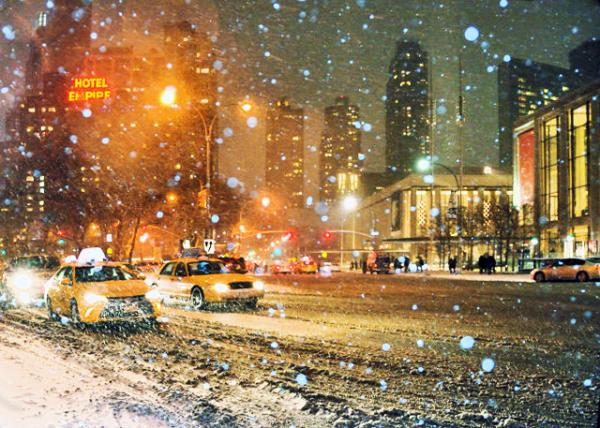 Lincoln Center for the Performing Arts (林肯演艺中心) Lincoln Center for the Performing Arts (林肯演艺中心)
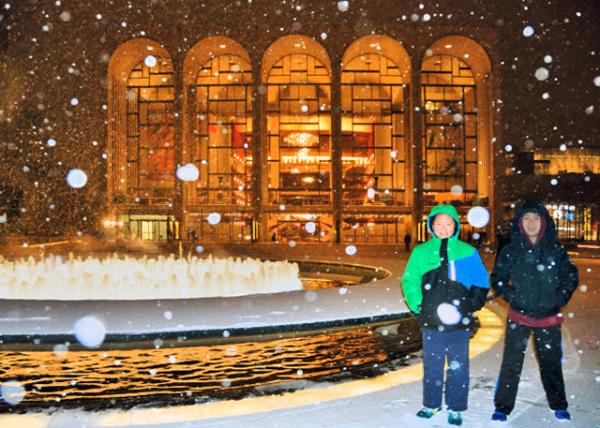 Metropolitan Opera House, the World's Largest Opera House Metropolitan Opera House, the World's Largest Opera House
(大都会歌剧院·世上最大的歌剧院 02-21-2015)
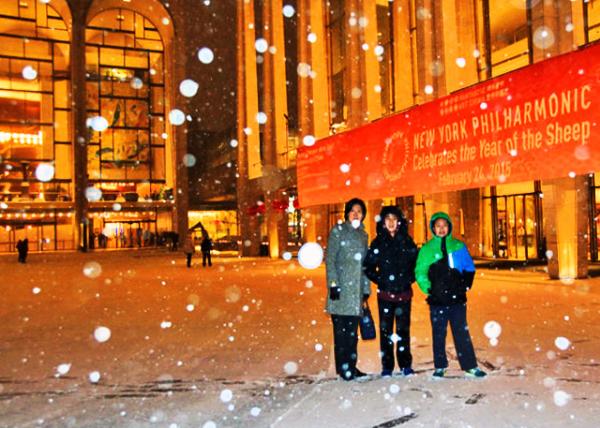 Lincoln Center for the Performing Arts, the Home for the Metropolitan Opera, the New York City Ballet, the New York Philharmonic, & the Lincoln Center Theater Lincoln Center for the Performing Arts, the Home for the Metropolitan Opera, the New York City Ballet, the New York Philharmonic, & the Lincoln Center Theater
(林肯演艺中心·大都会歌剧院、纽约市芭蕾舞团、纽约爱乐乐团和林肯中心剧院等所在地 02-21-2015) 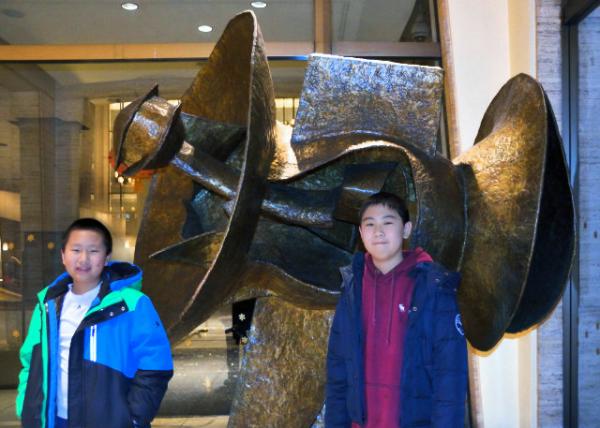 Hadzi Lipton, Archangel Sculpture, 1973 @ Avery Fisher Hall Hadzi Lipton, Archangel Sculpture, 1973 @ Avery Fisher Hall
(艾弗里·费舍尔大厅——哈兹·利普顿《大天使》| 1973年雕塑 02-21-2015) 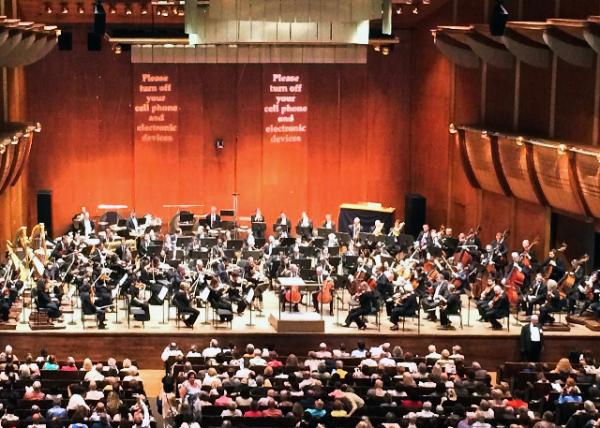 New York Philharmonic (纽约爱乐交响乐团) New York Philharmonic (纽约爱乐交响乐团)
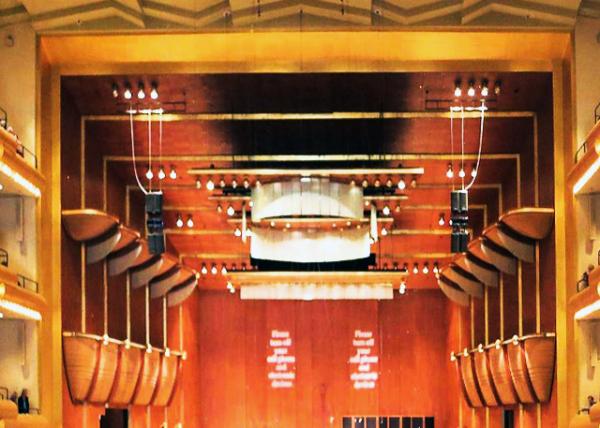 Avery Fisher Hall w/ 2,738-Seat Auditorium Avery Fisher Hall w/ 2,738-Seat Auditorium
(艾弗里·费舍尔大厅——拥有2738个座位的礼堂) 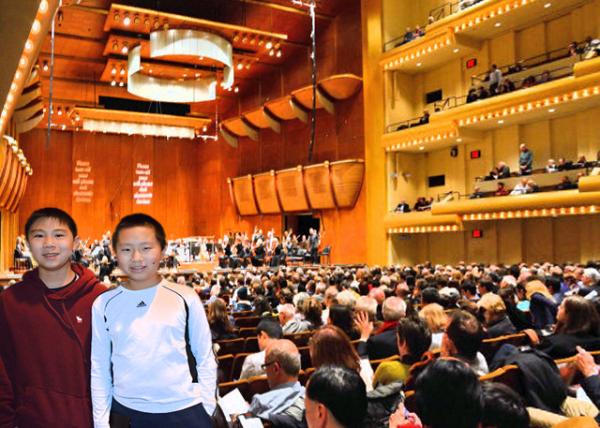 Avery Fisher Hall, Home to the New York Philharmonic Avery Fisher Hall, Home to the New York Philharmonic
(艾弗里·费舍尔大厅——纽约爱乐乐团的驻地 02-21-2015) 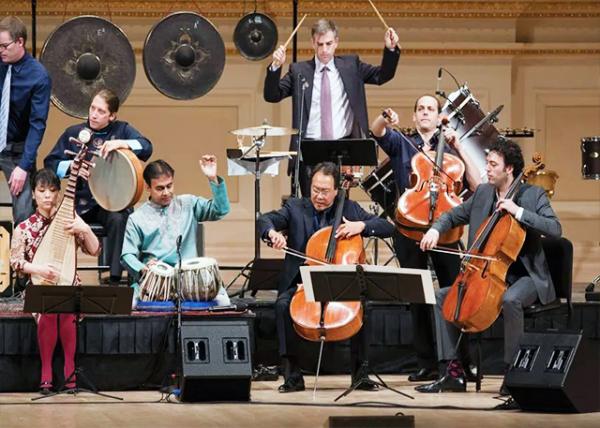 The Silk Road Ensemble w/ Yo-Yo Ma The Silk Road Ensemble w/ Yo-Yo Ma
(马友友领衔的与丝绸之路乐队) 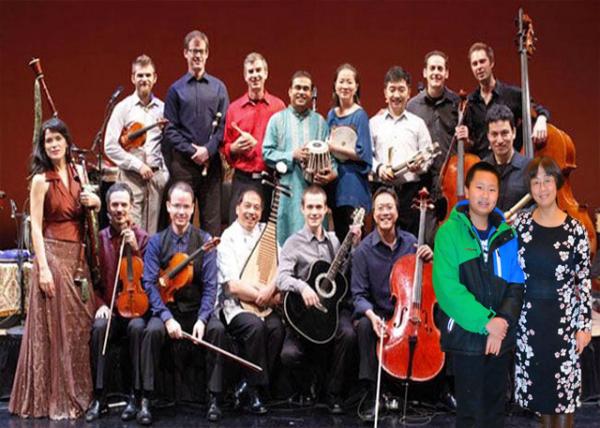 A Playlist w/o Borders for the Silk Road Ensemble w/ Yo-Yo Ma A Playlist w/o Borders for the Silk Road Ensemble w/ Yo-Yo Ma
(丝绸之路乐队携手马友友·《无国界歌单》 02-21-2015) Crosslinks(相关博文): USA(出游美国) 6th Grade(初中一年级) |