The
PLA “will have to modernize its nuclear arsenal” becauseAmerican missile
interceptors “may reduce the credibility of itsnuclear deterrence,” Maj. Gen.
Zhu Chenghu of China’s NationalDefense University told a panel in Beijing on
Wednesday. Chenghuelaborated to a Reuters reporter that the U.S. interceptor
system“undermines the strategic stability.” He was referring to theUnited
States’ planned anti-ballistic missile system, which is slimat the moment, but
by 2020 is supposed to shield Europe from short,mid-range and eventually
intercontinental
missileattacks.
PLA“将不得不进行核武库的现代化”因为美国的导弹拦截系统“降低了核威慑的可靠性”,中国国防大学朱成虎少将在周三对北京的一个专家小组如是说。他向路透社的记者阐述了美国的拦截系统“侵蚀了战略稳定性”。他所指的即是美国计划之中的弹道导弹防御系统。此时该系统尚显稚嫩,但到2020年它将能防卫欧洲抵抗各种短、中程乃至洲际导弹的攻击。
While
the shield is intended to defend Europe against an attackfrom Iran, the
interceptors are both land- and ship-based — meaningthe system can be packed up
and moved. If, say, North Korea startstossing missiles around, the United States
could send ships toshoot them down. Those same ships, Chenghu’s thinking goes,
couldbe used against
China.
尽管防御系统预期被用来防卫欧洲,抵挡来自伊朗的攻击,拦截器却是陆海基通用。这意味着这套系统能被打包、移动。假如朝鲜开始抽风胡乱发射导弹,美国也能够派遣战舰将它们击落。而这些战舰——朱将军的思绪纷飞——也能用来对抗中国。
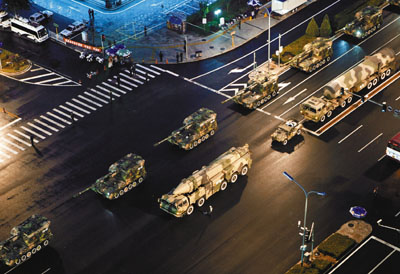
China
depends on missiles more than you might think. While China ismodernizing its
military by boosting its defense budget,retrofitting a Russian aircraft carrier,
and building newsubmarines and destroyers, its security in the near term depends
onits massive stockpile of missiles. The U.S. believes Chinapossesses 130 to 195
missiles capable of being armed with nuclearwarheads, according to Reuters. To
fill gaps in its conventionalmilitary, China has boosted its missile arsenal up
to nearly 2,000non-nuclear ballistic and cruise missiles. It could potentially
lobaround a thousand of them as an initial strike weapon againstTaiwan or U.S.
bases in the
Pacific.
中国比你能想象的更依赖导弹武器。尽管中国正在通过增加国防预算、翻新俄制航母、建造新型潜艇和驱逐舰来进行国防现代化,在短期内其国家安全仍是仰仗于庞大的导弹储备。据路透社消息,美国相信中国拥有130至195枚可装载核弹头的导弹。为了弥补常规军力的不足,中国将武库中的弹道及巡航导弹储备扩充至约2000枚。其中的1000枚有可能被用作对台湾和太平洋美军基地发动进攻时的第一波攻击武器。
But
that over-reliance on missiles has left China with a glaringvulnerability.
That’s where the U.S. missile shield comes
intoplay.
然而,过分的信赖导弹武器给中国带来了一个显著的弱点。这也正是美国的导弹防御体系发挥作用的地方。
Today,
the main bulwark of the U.S missile shield is in the earlystages of
implementation, in Eastern Europe and the Middle East.There’s a radar station in
Turkey and the destroyer U.S.S Monterrey— armed with SM-3 interceptors — in the
Mediterranean. NATO plansto put in ground-based missile interceptor sites in
Romania in2015, and press ahead with more interceptors in Poland by 2018.More
stressful from China’s perspective: Alaska and California alsoboth have SM-3
sites.
如今,妨碍美国导弹防御体系初步展开的主要壁垒在于东欧和中东地区。在土耳其,部署有一座雷达站;在地中海,配备了标3拦截导弹的蒙特雷号驱逐舰在巡弋。北约计划2015年在罗马尼亚部署陆基导弹拦截站,到2018年将更多的拦截站推进至波兰。中国也面临更大的压力:阿拉斯加和加利福尼亚也部署有标3拦截站。
And
the Pentagon is getting better at downing ballistic missiles.There’s no
guarantee the untested system will work in combat. Butin case there’s any doubt
about the United States’ role in thePacific over the coming years, the U.S. Navy
will emphasize“air-to-air, electronic attack, electronic warfare,
anti-submarine,and our capabilities in anti-ship ballistic missile and
anti-shipcruise missile defeat,” Adm. Jonathan Greenert told reporters latelast
month.
与此同时,五角大楼拦截弹道导弹的技术日趋成熟。但谁也不能保证一个未经测试的系统能在战斗中正常工作。为了避免在未来出现对美国在太平洋所起作用的质疑,海军会强化“空对空、电子攻击、电子战、反潜和对抗反舰弹道/巡航导弹的能力”,海军上将乔纳森•格林纳特在上月底告诉记者。
That
poses a serious risk to China. By investing so much inballistic missiles, the
United States responds by upgrading itsmissile defense system. In response,
China has to build even moremissiles, in the hope of getting past the system.
And it’s not justbuilding more missiles, it’s building more capable ones, too,
likethe DF-21D, which is supposed to be able to kill an aircraftcarrier. That’s
where the logic of over-relying on missiles
takesyou.
这对中国构成了严重风险。(中国)对弹道导弹投入巨大,美国却回应以导弹防御系统升级。反过来,中国又不得不造更多导弹,期望能突破防御体系。增加的不仅是导弹的数量,同时还有导弹的质量,例如东风-21D,被认为有猎杀航母的能力。这便是“导弹逻辑”的必由之路。
But
there’s an irony in here for the United States, too. Its newanimating concept
for the Navy and the Air Force is to be able tostop any adversary from pushing
ships, subs, jets and bombers awayfrom its shores or its skies. The number-one
way most adversariesdo that: missiles. If China reads the revamped U.S. missile
shieldas a provocation that requires a new wave of missile advancement,that’s
going to make the Navy and Air Force’s job more complicated.(Complicated isn’t
the same as impossible, though.) China may notbe the only nation locked into
faulty defense
logic.
但这对美国来说也同样是一个讽刺。对于海空军,最有意义的策略是将敌人的战舰、潜艇、飞机拒于国门之外。头号对手的做法是:导弹。如果中国将升级过的导弹防御系统视为挑衅,并以新一轮的导弹革新作为回应,海军和空军的任务将变得更为复杂(虽然复杂,但并不是做不到)。中国,或许并不是唯一一个被困在错误的国防逻辑上的国家。