|
最簡明的全球化三段論
錢 宏Archer Hong Qian 全球化的歷史劃分,是一個不斷引發爭議的主題。 本文作者Archer Hong Qian堅持認為:全球化,是原初人類漸次突破地理、地緣、文化隔膜,不斷擴大生產、生活、生態半徑,用生命擁抱陌生的世界,逐步走向從主客性相互依存,到主體間性共生文而化之,最後臻於“全球共生,永久和平”的演化過程。 一、全球化1.0(323 BC - 1944 AD):主客對立與擴張 3個時代: 1.古全球化:美國德裔社會學家和經濟史學家Andre Gunder Frank(1929-2005),認為古全球化始於公元前三千年蘇美爾與印度河流域文明之間的貿易聯繫,但其可感性顯然不足,因而本文把規模性、可感知性足夠的亞歷山大逝世開始的希臘化時期,算作古全球化的開始。 2.原始全球化:歐洲海上帝國的崛起,在15、16和17世紀,首先是葡萄牙和西班牙帝國,後來是荷蘭和大英帝國。補充一句,16 世紀始,隨着哥倫布大交換,全球一體化的植物、動物、食物、人口、傳染病和文化在東西半球間,有着廣泛的交流,特別是歐洲海員從美洲傳來的新作物對世界人口增長做出了重大貢獻 3.現代全球化:伴隨18世紀工業而來的帝國主義,開啟了英國對印度、中國、撒哈拉以南非洲和太平洋島嶼地區的對外戰爭與貿易,使這些地區被不同程度地納入世界體系的廣大人口,成為歐洲出口商品的現成消費者,全球貿易以及資本、投資、經濟模式和文化交流與牴牾,在19世紀至20世紀中頁達到全盛時期。最後,現代全球化時代,亦即全球化1.0,終結於二次世界大戰。 8大階段劃分 希臘化:亞歷山大東征開啟文化交融(如希臘文化與希伯萊文化、東方文化融合,托勒密、古羅馬促進軍事、宗教、經濟、科學與哲學交流)。 伊斯蘭大同:伊斯蘭文明通過征服與貿易傳播知識(如阿拉伯數字、天文學),形成跨區域文化圈。 文藝復興:宗教改革(馬丁路德、加爾文),歐洲思想覺醒(哥白尼、伽利略、笛卡爾、培根),科學(開普勒、牛頓)、藝術(如達·芬奇繪畫)推動全球化萌芽。 絲綢之路:東西方商旅經濟和文化交流巔峰(如瓷器、絲綢西傳,佛教、伊斯蘭教東傳、利瑪竇)。 哥倫布交換:新大陸發現後,物種(如玉米、馬鈴薯)、人口(如非洲奴隸)、文化(如基督教傳播)大規模流動、英國政府重商主義後,古典經濟學的興起。 工業革命:蒸汽機、紡織機等技術進步推動生產力,全球化進入現代階段(如英國工業化影響全球)。 金融力量:資本流動、金融槓桿(如荷蘭東印度公司、倫敦金融中心、紐交所)、金融危機(1929-1933)。 經貿-經濟危機(含一戰、二戰):全球化在戰爭與危機中走向終結(如1929年大蕭條、一戰、二戰)。
特點 歷時性加速:從希臘化到二戰,全球化周期逐漸縮短,速度越來越快。 共時性擴展:全球化覆蓋範圍和深度擴大,從地中海到全球。 推動力量:1). 國家間征戰(如亞歷山大東征、成吉思汗西征、奧斯曼擴張)推動土地和人口兼併。 2). 國家、宗教、個人通過商旅經濟和文化交融(如絲綢之路、文藝復興)促進全球化。 哲學基礎:主客對立統一、軸心擴張、特權支配操控。 矛盾與終結:隨着被支配對象(Object)的主體(Subject)意識覺醒,主客衝突加劇。全球化1.0始於戰爭(亞歷山大東征等),也終於戰爭(一戰、二戰)。 二、全球化2.0(1945年-2025年):自由貿易結構失衡烏托邦 背景 二戰後,國家分化、民族獨立、人民革命頻發,同時“自由競爭,公平交易”的呼聲高漲。 美國主導下,基於布雷頓森林體系(1944-1973)、關貿總協議(GATT)、國際貨幣基金組織(IMF)、世界銀行(WB)、北美自由貿易協議(NAFTA)、歐盟(EU)、世貿組織(WTO)等框架,開啟經濟商貿科技產業一體化的全球化2.0。 核心理念 “自由競爭,公平交易”:作為制度性文明機制,強調國家、公司不分大小強弱的平等競爭。 哲學基礎:依然承繼關主客對立統一、軸心擴張、特權支配操控。但是以科技至上、生產力至上的名義為包裝、裹挾。 價值參量 資本增值/減值的國民生產總值(GDP)。 成就 全球化2.0帶動日本、歐洲、中國的財富爆發式增長。 全球經濟一體化程度顯著提高,科技和產業勰作深化(如全球供應鏈整合)。 問題與矛盾 制度差異導致失衡:各國政治、經濟結構不平衡,導致“自由競爭不自由”“公平交易不公平”。 系統性互害 權貴與資本:沆瀣一氣又勾心鬥角,特別是在中國權貴與美國資本“雙贏”博弈中,兩國國民淪為被損害的“韭菜”或“炮灰”。 中國:鄉村敗落、勞工低人權、土地、空氣、微生物環境污染、貿易順差、權勢集團坐大(全官尋租化、全民佃戶化)。 美國:城市空心化、產業出走(2000-2010年製造業崗位減少600萬個)、“中產階級占領華爾街”、國債高築(2024年貿易赤字1.2萬億美元)、貿易逆差過大、內生能力塌陷。 雙方各自結構性失衡被包裝為“互利共贏”,WTO規則喪失公孞力。 自由貿易烏托邦的破滅:以川普為代表的實幹家和美國民眾意識到,新古典經濟學的“自由貿易”理論,成為經濟烏托邦,試圖砸爛其枷鎖,終結全球化2.0。 三、全球化3.0(2025年-):交互主體共生態的新文明邏輯 起點 2025年4月2日,川普在白宮玫瑰園發表演說,將該日定為“解放日”,宣布“美國的經濟獨立宣言”,以“對等關稅”(Reciprocal Tariffs)取代“自由貿易”,共生經濟學(Symbionomics)相繼在阿根廷-美國興起,正式開啟全球化3.0。 核心規則 三零規則:零關稅、零壁壘、零歧視。 貿易模:從“輸血型分工”(誰帶動誰)轉向主體間結構對等與責任互嵌的勰作機制。 文明重構:“零歧視”不僅指“零補貼”,更要求貿易行為實現主體間一一對應、動態交互、激勵性間道競合(博弈)。 摒棄特權代表、意識形態排斥和既得利益取代公平起點的做法。 哲學基礎 交互主體共生態(Intersubjective Symbiosism):強調主體間性覺知和對等交互,走出“結構互害”的全球困局。 不是延續美國模式,也不是複製中國模式,而是各國領導人在內外負責的基礎上構建新秩序。 價值參量 資源能效/能耗國民生活總孞態(GDE,國內能量轉換總值)。 實現路徑 一對一談判:通過“對等關稅”施加結構壓力,倒逼各國內部轉型升級,實現責任喚醒。 非地緣結構式全球盟約:逐步實現三零規則,而非“一簽全包”的協議政治(如WTO模式)。 普及及五因交互指數:通過《新民調基準綱要》等機制,實施五因交互指數(C、E、H、T、P),評估政策在成本降低(C)、賦能(E)、健康(H)、孞任(T)、和平(P)上的表現,實現能效/能耗動態平衡。 意義 全球化3.0不是對全球化的破壞,而是全球化2.0走到盡頭的文明轉場。 通過和平但堅決的責任喚醒,重構關稅、制度、主權與文明關係。 補充分析與未來趨勢 全球化1.0的哲學根源與歷史教訓
全球化1.0的主客對立統一模式反映了人類早期文明的擴張邏輯:強者通過戰爭、宗教或文化輸出實現支配,弱者被迫融入或被消滅。例如,亞歷山大東征通過軍事征服傳播希臘文化,但也引發當地反抗;絲綢之路雖促進東西文化交流,卻常伴隨宗教衝突(如佛教與伊斯蘭教的競爭)。這種模式在歷時性上加速(全球化周期從數世紀縮短至數十年),在共時性上擴展(從地中海到全球),但其核心矛盾在於主體意識的覺醒。被支配的“對象”(如殖民地人民)逐漸覺醒為“主體”,反抗特權支配(如印度反抗英國殖民),導致主客衝突加劇,最終以戰爭終結。 歷史教訓:1).全球化不能僅靠強權推動,必須尊重各主體的自主性。2).文化交融若以支配為目的,必然引發衝突,需轉向平等交互。 全球化2.0的制度性缺陷
全球化2.0試圖通過“自由競爭,公平交易”實現全球經濟一體化,但其制度設計存在根本缺陷。 WTO的“一簽全包”模式:忽視各國發展階段和責任對等。例如,中國加入WTO後利用低成本勞動力迅速崛起,但鄉村敗落(農村人口流失嚴重)、環境污染(2000年代煤炭占比超70%)等問題凸顯;美國則因產業外移導致城市空心化(底特律破產)和國債高企(2024年貿易赤字1.2萬億美元)。 權貴與資本勾結:全球化2.0表面上是國家間的自由貿易,實際上是跨國資本和權貴集團的“雙贏”遊戲。例如,中國權貴通過出口補貼和低匯率政策獲利,美國資本則通過全球化外包賺取高額利潤,兩國民眾卻承擔後果(中國勞工低人權,美國工人失業)。 烏托邦的破滅:川普等實幹家認識到,“自由貿易”在實際運行中無法實現真正的自由和公平,必須通過“對等關稅”等機制打破這一烏托邦。 教訓:1).全球化需要對等責任,而非單方面的“普適性”規則。2).制度設計必須考慮各國結構性差異,避免“贏家通吃”。 全球化3.0的潛力與挑戰
全球化3.0以“交互主體共生態”為核心,通過“三零規則”和一對一談判重構全球秩序。其潛力在於: 責任對等:通過“對等關稅”倒逼各國轉型升級,避免單方面“輸血”或“占便宜”。例如,川普對中國的高關稅(2025年4月達125%)促使中國加速內需轉型。 文明重構:從主客對立轉向主體間性覺知,強調動態交互和公正博弈。 和平路徑:通過談判而非戰爭實現全球化轉型,是一種更可持續的模式。 談判複雜性:一對一談判需要各國領導人具備高度的責任感和智慧,可能面臨觀念、制度的“普世敘事”與“特色敘事”的衝突,而博弈或拖延失敗。 權力平衡:如何確保“三零規則”不被大國操控,真正實現“零歧視”,是一個難題。例如,美國可能利用經濟優勢影響談判結果。 內部阻力:各國權貴和既得利益集團可能抵制轉型升級。例如,中國部分權貴反對減少出口補貼,美國部分資本反對製造業回流。 全球化3.0價值參量
2025年,一個充滿轉折的歷史節點,我們正在見證世界從“全球化2.0”向“全球化3.0”的根本轉型。川普“對等關稅”促談“零關稅、零壁壘、零歧視”三零交互主體共生規則後,全球化3.0的新國際格局,不再以大國家為中心,而是以“個體生命”為本,依靠交互信任的Transform of Trust新平台,引領組織結構、經濟協作、國際關係的全面重構。標誌性事件: 1)、從波音危機到SpaceX成功:Trust組織的勝利:2025年3月18日,美國總統川普下令撤回滯留國際空間站超9個月的兩名NASA宇航員。執行任務的不是波音,而是馬斯克領導的SpaceX。這次史詩級救援成為信任組織取代傳統舉國體制的象徵。SpaceX的勝利,是小團隊、高協作、全球信任網絡賦能的結果——小而美勝過大而無當。 2)、全球化3.0的價值觀轉型:從理念到生命:傳統全球化強調集體理念、國家戰略、資源集中。但疫情、戰爭、AI衝擊之後,人類意識到:若不能保護個體生命,任何國家敘事都將失效。全球化3.0強調:個體是價值起點,信任是組織核心,去中心化的“生命孞態系統”將取代舊的金字塔權力結構。 3)、Trust組織平台:從降本賦能開始:Trust平台的目標,不是擴大權力,而是降低信任成本。無論是SpaceX的任務協同、Web3的DAO共治,還是AI領域的開源合作,核心都在於:降本:去中介、去謊言、去層級化,提高效率,賦能:讓個體能在Intersubjective Symbiosism中自組織、自協作、自演化中連接激活。 4)、全球化3.0的趨勢與結構:Trust去中心化:國家不再是信任唯一背書,平台、技術、協議成為新信用基礎。區域化協同組合,形成靈活共生體,新國家崛起:蘇格蘭、柯尼斯堡、加泰羅尼亞、烏東烏西、俄羅斯高加索、西伯利亞、南北美、南東亞等文化共生體,將以“小而美”形式嵌入全球秩序。 5)、俄烏戰爭與地緣政治的終結:俄烏戰爭是一場舊體制末期的結構性爆炸。川普2020年敗選是“延遲的轉型”,而他的歸來,是一次全面重啟。和平不再依賴於大國爭霸,而是建立在區域信任與交互主體協商的基礎上。 6)、2025,全球化3.0的真正轉折點:Transform of Trust不是某一國的勝利,而是整個人類文明從重Trust理念走向重生命的歷史性轉向。Transform or be Transformed——在這個偉大的轉型時代,願我們都是有生命、有信任、有共生力的未來建設者。 未來趨勢展望
技術驅動的全球化:全球化3.0可能進一步依賴技術實現貿易透明性和責任對等。例如,區塊鏈可用於追蹤貿易流程,確保“零歧視”落實;AI可優化全球資源分配(如新加坡2024年智能交通提升能源效率10%)。 區域化與全球化的平衡:全球化3.0可能在全球盟約的基礎上,鼓勵區域化勰作(如歐盟、東盟),形成“全球-區域”雙層結構。例如,歐盟CBAM可作為區域試點,逐步推廣至全球。 “修昔底德陷阱”終結與新競合秩序:數字化戰爭邊際收益遞減,Trust體系重構了國際安全。未來不是誰的地多、兵多、資源多,而是誰擁有更靈活、更可信、更動態的組織信任網絡。 文化與價值觀的共生態:全球化3.0不僅關注經濟貿易,還需推動文化和價值觀的交互共生態,避免意識形態衝突。例如,新加坡通過東西文明交互,2024年市民幸福感顯著提高。 公眾參與的增強:全球化3.0通過公眾參與的《新民調基準綱要》等機制,實施“五因交互指數”普及,激發“交互主體共生態的孞念與活力”,讓普通民眾在全球化進程中發揮生命自組織連接平衡作用。例如,瑞士通過公民參與降低社會交易成本,2024年HDI排名全球前列。 愛之智慧孞態網:地球人-AI生活方式創新與再選擇的基礎設施。例如,未來可通過AI驅動的全球孞態網,實現通訊全開放、能源全自足、運載全覆蓋的共生態。 全球共生公約:未來的全球秩序將如春秋戰國——百國爭鳴、交互協同,但不是戰爭,而是文化、技術、制度的創意競賽。365個文化節日,365種生存智慧,全球文化輪值成為經濟活力的新引擎。Minds Network作為文化孞態系統的連接協議,讓全球進入有機協同的時代。 總 結 全球化1.0以主客對立和擴張為主,始於戰爭,終於戰爭;全球化2.0以“自由貿易烏托邦”為目標,但因制度性失衡和結構互害走向終結;全球化3.0以“交互主體共生態”為新文明邏輯,通過“三零規則”和一對一談判重構全球秩序,強調主體間性覺知和對等交互。 全球化3.0的實現需要克服談判複雜性、權力平衡和內部阻力等挑戰,但其潛力在於通過和平路徑實現責任對等和文明重構,為全球困局提供新的解決方案。 但事實是,全球化2.0將終結,全球化3.0的曙色熹微已現,這就是“解放日”命名的原意。

2025年4月9日草擬,4月15日修訂於大溫哥華
The Simplest Triad of Globalization By Archer Hong Qian Drafted on April 9-15, 2025 · Vancouver, Canada The Simplest Triad of Globalization By Archer Hong Qian
Drafted on April 9, 2025 · Vancouver, Canada The historical division of globalization remains a topic of ongoing debate. The author, Archer Hong Qian, firmly believes that globalization is an evolutionary process in which early humanity gradually transcended geographical, geopolitical, and cultural barriers, continuously expanding the radius of production, life, and ecology. It involves embracing the unfamiliar world with life, progressing from subject-object interdependence to an intersubjective symbiotic ecosystem, ultimately achieving "global symbiosis and lasting peace." Globalization 2.0 will come to an end, and the dawn of Globalization 3.0 is faintly visible—this is the true meaning behind naming April 2, 2025, as "Liberation Day." I. Globalization 1.0 (323 BCE - 1944 CE): Subject-Object Dichotomy and Expansion Three Eras Ancient Globalization: American archaeologist and economic historian Andre Gunder Frank (1929-2005) argued that ancient globalization began around 3000 BCE between Sumerian and Indus Valley civilizations, involving extensive exchanges in cities, technologies, currencies, populations, diseases, and cultures. For example, crops introduced from the Americas (e.g., corn, potatoes) significantly contributed to global population growth. Pre-Modern Globalization: With the rise of capitalism during the 18th-century Industrial Revolution, Britain initiated wars and trade with India, China, sub-Saharan Africa, and Oceania, integrating these regions into the global system to varying degrees. Large populations became consumers of European exports, with global trade, capital, technology, economic models, and cultural exchanges peaking from the 19th to mid-20th centuries. Modern Globalization: Driven by the Industrial Revolution and financial power, globalization entered the modern era but ultimately ended due to wars and economic crises.
Eight Phases Hellenization and Ancient Rome: Alexander the Great’s eastern campaigns and the Roman Empire facilitated military, religious, economic, scientific, and philosophical exchanges (e.g., the Ptolemaic Dynasty advanced astronomy). Islamic Golden Age: Islamic civilization spread knowledge through conquest and trade (e.g., Arabic numerals, astronomy), forming a cross-regional cultural sphere. Renaissance and Reformation: The Reformation (Martin Luther, Calvin) and European intellectual awakening (Copernicus, Galileo, Descartes, Bacon), alongside scientific (Kepler, Newton) and artistic (e.g., Da Vinci) advancements, drove the seeds of globalization. Silk Road: The pinnacle of East-West trade and cultural exchange (e.g., porcelain and silk to the West, Buddhism and Islam to the East). Columbian Exchange: Post-discovery of the New World, massive flows of species (e.g., corn, potatoes), populations (e.g., African slaves), and cultures (e.g., Christian missions) occurred, followed by British mercantilism and the rise of classical economics. Industrial Revolution: Technological advances like the steam engine and textile machines boosted productivity, ushering globalization into the modern era (e.g., British industrialization impacted the world). Financial Power: Capital flows and financial systems emerged (e.g., Dutch East India Company, London as a financial hub, stock exchanges), accompanied by financial crises (e.g., the 1929-1933 Great Depression). Trade-Economic Crises (Including WWI and WWII): Globalization ended amidst wars and crises (e.g., the 1929 Great Depression, WWI, WWII).
Characteristics Temporal Acceleration: From Hellenization to WWII, globalization cycles shortened, accelerating over time. Spatial Expansion: Globalization’s scope and depth expanded, from the Mediterranean to the globe. Driving Forces: Interstate wars (e.g., Alexander’s campaigns, Genghis Khan’s conquests, Ottoman expansion) drove territorial and population annexation. Nations, religions, and individuals promoted globalization through trade and cultural fusion (e.g., Silk Road, Renaissance).
Philosophical Foundation: Subject-object dichotomy, axial expansion, privileged domination and control. Contradictions and End: As dominated objects (e.g., colonies) awakened as subjects, subject-object conflicts intensified. Globalization 1.0 began with wars (e.g., Alexander’s campaigns) and ended with wars (WWI, WWII).
II. Globalization 2.0 (1945-2025): Free Trade Utopia and Structural Imbalance Background Post-WWII, national divisions, independence movements, and people’s revolutions surged, alongside calls for "free competition, fair trade." Under U.S. leadership, frameworks like the Bretton Woods system (1944-1973), GATT, IMF, World Bank, NAFTA, EU, and WTO launched Globalization 2.0, integrating economy, trade, technology, and industry.
Core Concept Value Parameter Achievements Globalization 2.0 spurred explosive wealth growth in Japan, Europe, and China. For instance, Japan’s GDP grew at an average annual rate of over 8% from the 1960s to 1980s, and China became the world’s second-largest economy between 2000 and 2020. Global economic integration deepened, with enhanced technological and industrial collaboration (e.g., global supply chains).
Issues and Contradictions Imbalance Due to Institutional Differences: Political and economic structural disparities led to "unfree competition" and "unfair trade." Systemic Mutual Harm: China: Rural decline (massive rural exodus), low labor rights (e.g., the 2010 Foxconn incident), environmental pollution (coal use over 70% in the 2000s, Beijing’s PM2.5 exceeding 100 µg/m³ in 2013), and rising elites. U.S.: Urban hollowing (e.g., Detroit’s bankruptcy), industrial exodus (6 million manufacturing jobs lost from 2000-2010), soaring national debt (2024 trade deficit at $1.2 trillion), and weakened endogenous capacity. Bilateral structural imbalances were masked as "mutual benefit," eroding the WTO’s credibility (公孞力).
Elite-Capital Collusion: Chinese elites and U.S. capital achieved a "win-win," while citizens became "leeks" and "cannon fodder." For example, Chinese elites profited from export subsidies and low exchange rates, while U.S. capital reaped high profits through global outsourcing. Collapse of the Free Trade Utopia: Leaders like Trump and the American public recognized "free trade" as an economic utopia, seeking to break its shackles and end Globalization 2.0.
III. Globalization 3.0 (2025-): The New Civilizational Logic of Intersubjective Symbiotic Ecosystem Starting Point On April 2, 2025, Trump delivered a speech in the White House Rose Garden, declaring the day "Liberation Day" and announcing "America’s Economic Declaration of Independence," replacing "free trade" with "reciprocal tariffs," officially launching Globalization 3.0.
Core Rules Three-Zero Rules: Zero tariffs, zero barriers, zero discrimination. Trade Model: Shifting from "transfusion-style division of labor" (one driving another) to a collaborative (勰作) mechanism of structural parity and mutual responsibility. Civilizational Reconstruction: "Zero discrimination" goes beyond "zero subsidies," requiring trade behaviors to achieve one-to-one correspondence, dynamic interaction, and incentivized competitive-cooperative (博弈) pathways. Rejecting privileged representation, ideological exclusion, and vested interests replacing fair starting points.
Value Parameter Implementation Pathways One-on-One Negotiations: Using "reciprocal tariffs" to apply structural pressure, forcing internal transformation and responsibility awakening. For example, Trump’s reciprocal tariffs on 185 countries prompted China to accelerate its domestic demand transformation. Non-Geopolitical Global Covenant: Gradually achieving the three-zero rules, rather than "one-size-fits-all" agreement politics (e.g., WTO model). Adoption of the Five-Factor Interaction Index: Through mechanisms like the "New Polling and Rating Framework," implementing the Five-Factor Interaction Index (C, E, H, T, P) to evaluate policies on cost reduction (C), empowerment (E), health (H), trust (T, 孞任), and peace (P), achieving energy efficiency/consumption balance.
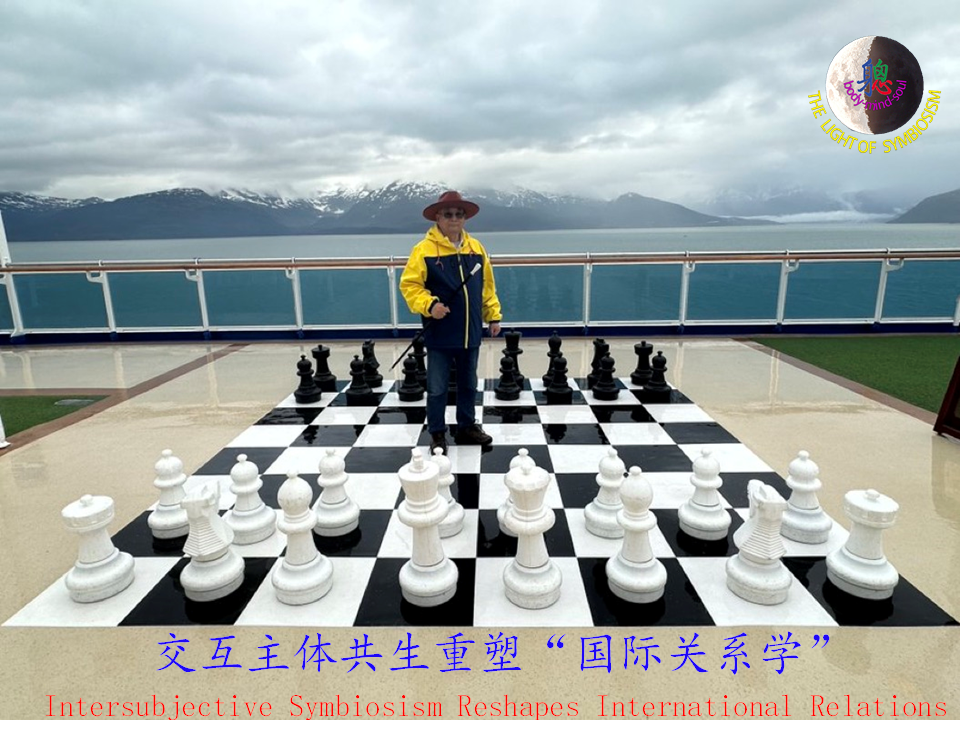
Philosophical Foundation Intersubjective Symbiotic Ecosystem (交互主體共生態): Emphasizing intersubjective awareness and reciprocal interaction, breaking the global deadlock of "structural mutual harm." Neither perpetuating the American model nor replicating the Chinese model, but building a new order based on leaders’ internal and external accountability.
The Trust (孞任) Paradigm Shift in Globalization 3.0: From Ideology to Life Traditional globalization emphasized collective ideologies, national strategies, and resource concentration. However, after pandemics, wars, and AI disruptions, humanity realized that without protecting the individual, grand national projects would fail. Globalization 3.0 posits that the individual is the starting point of value, trust (孞任) is the core of organization, and a decentralized "biological ecosystem" will replace the old pyramidal power structure. Trust (孞任) Organization Platform: From Cost Reduction to Empowerment Case Study: From Boeing to SpaceX’s Success: On March 18, 2025, Trump ordered the U.S. to end International Space Station cooperation with Russia, with two NASA astronauts retrieved by SpaceX, not Boeing. This historic mission demonstrated that trust (孞任) structures can outperform traditional state-led systems. SpaceX’s success stemmed from small teams, high collaboration (勰作), and a global trust (孞任) network—proving "small and beautiful" surpasses "large and unwieldy." Trust (孞任) Platform Goal: The aim is not to expand power but to reduce trust (孞任) costs. Whether it’s SpaceX’s supply chain collaboration, Web3’s DAO governance, or open-source cooperation in AI, the core lies in cost reduction: eliminating intermediaries, monopolies, and exploitation, enabling the most efficient, decoupled, and transparent self-organization, collaboration (勰作), and evolution of individuals within an intersubjective symbiotic ecosystem.
Trends and Structure of Globalization 3.0: Decentralized Trust (孞任) Nations are no longer the sole bearers of trust (孞任); platforms, technologies, and protocols become the new foundation for trust (孞任). Regional collaboration (勰作) improves, forming flexible symbiotic ecosystems. For instance, cultural symbiotic ecosystems like Scotland, Venice, Catalonia, East Malaysia, Russia’s Caucasus, Siberia, the Americas, and Southeast Asia integrate into the global order in a "small and beautiful" form. Philosophical Reflection: In this grand transition, we are all creators of a future with life, trust (孞任), and symbiotic capacity.
Significance Globalization 3.0 is not the destruction of globalization but a civilizational transition as Globalization 2.0 reaches its end. Through peaceful yet resolute responsibility awakening, it reconstructs tariffs, institutions, sovereignty, and civilizational relationships.
Supplementary Analysis and Future Trends 1. Philosophical Roots and Historical Lessons of Globalization 1.0 Globalization 1.0’s subject-object dichotomy reflected early human civilization’s expansion logic: the strong dominated through war, religion, or cultural export, while the weak were absorbed or eradicated. For instance, Alexander’s campaigns spread Greek culture but sparked local resistance; the Silk Road facilitated East-West exchange but often led to religious conflicts (e.g., Buddhism vs. Islam). This model accelerated temporally (globalization cycles shortened from centuries to decades) and expanded spatially (from the Mediterranean to the globe). However, its core contradiction was the awakening of dominated "objects" (e.g., colonized peoples) as subjects, resisting privilege (e.g., India’s resistance to British rule), culminating in wars (WWI, WWII). Historical Lessons: Globalization cannot rely solely on coercion; it must respect each subject’s autonomy. Cultural fusion, if aimed at domination, inevitably leads to conflict, requiring a shift to equitable interaction.
2. Institutional Flaws of Globalization 2.0 Globalization 2.0 aimed for global economic integration through "free competition, fair trade," but its institutional design had fundamental flaws: WTO’s "One-Size-Fits-All" Model: It ignored developmental stages and reciprocal responsibilities. For example, China’s WTO entry led to rapid growth via low-cost labor, but rural decline (massive rural exodus) and pollution (coal use over 70% in the 2000s) emerged; the U.S. faced urban hollowing (e.g., Detroit’s bankruptcy) and soaring debt ($1.2 trillion trade deficit in 2024). Elite-Capital Collusion: Globalization 2.0 was ostensibly about free trade among nations but was a "win-win" for transnational capital and elites. Chinese elites profited from export subsidies, while U.S. capital reaped gains from outsourcing, leaving citizens to bear the cost (low labor rights in China, unemployment in the U.S.). Collapse of the Utopia: Leaders like Trump realized "free trade" failed to deliver true freedom and fairness, necessitating mechanisms like "reciprocal tariffs" to dismantle the utopia.
Lessons: Globalization requires reciprocal responsibility, not unilateral "universal" rules. Institutional design must account for structural disparities to avoid "winner-takes-all" outcomes.
3. Potentials and Challenges of Globalization 3.0 Globalization 3.0, centered on the "intersubjective symbiotic ecosystem (交互主體共生態)," restructures global order through the "three-zero rules" and one-on-one negotiations. Its potentials include: Reciprocal Responsibility: "Reciprocal tariffs" force internal transformation, preventing one-sided "transfusion" or exploitation. For instance, Trump’s high tariffs on China (125% in April 2025) pushed China toward domestic demand transformation. Civilizational Reconstruction: Shifting from subject-object dichotomy to intersubjective awareness, emphasizing dynamic interaction and fair competition-cooperation (博弈). Peaceful Path: Transitioning globalization through negotiation rather than war, a more sustainable model.
Challenges: Negotiation Complexity: One-on-one negotiations demand high responsibility and wisdom from leaders, risking delays or failures. For example, U.S.-China talks in April 2025 reached a preliminary agreement, but intellectual property issues remain unresolved. Power Balance: Ensuring the "three-zero rules" are not manipulated by major powers to achieve true "zero discrimination" is challenging. The U.S. might leverage its economic advantage in negotiations. Internal Resistance: Elites and vested interests may resist transformation. In China, some elites oppose subsidy cuts; in the U.S., some capital resists manufacturing repatriation.
4. The End of the Thucydides Trap and Strategic Competition Globalization 3.0 reconfigures international security through trust (孞任) systems. Future competition will not be about who has more land, soldiers, or resources, but who possesses more flexible, trustworthy (可孞), and dynamic organizational trust (孞任) structures. For example, SpaceX’s small-team model outperformed Boeing’s traditional state-led system, highlighting the competitive edge of decentralized trust (孞任) organizations. 5. Future Trends Outlook Technology-Driven Globalization: Globalization 3.0 will increasingly rely on technology for transparency and responsibility. Blockchain can track trade flows to ensure "zero discrimination"; AI can optimize global resource allocation (e.g., Singapore’s 2024 smart traffic improved energy efficiency by 10%). Balance of Regionalization and Globalization: Globalization 3.0 may encourage regional collaboration (e.g., EU, ASEAN) within a global covenant, forming a "global-regional" dual structure. The EU’s CBAM could serve as a regional pilot for global expansion. Cultural and Value Symbiosis: Globalization 3.0 must foster cultural and value symbiosis, avoiding ideological clashes. Singapore’s East-West cultural interaction enhanced citizen well-being in 2024. Enhanced Public Participation: Through mechanisms like the "New Polling and Rating Framework," the Five-Factor Interaction Index (五因交互指數) will be widely adopted, igniting the "trust and vitality (孞念與活力) of intersubjective symbiotic ecosystems," enabling ordinary people to contribute to globalization via self-organizing life connections. Switzerland’s citizen participation reduced social transaction costs, ranking high in the 2024 HDI. Network of the Love of Wisdom and Trust State (愛之智慧孞態網): A foundational infrastructure for Earthlings-AI lifestyle innovation and re-selection, enabling fully open communication, energy self-sufficiency, and comprehensive transportation coverage in a symbiotic ecosystem. Global Symbiotic Covenant: The future global order will resemble the Spring and Autumn period—hundreds of nations competing and collaborating, not in chaos, but through creative competition in culture, technology, and institutions. With 365 cultural festivals and 365 forms of survival wisdom, global cultural diversity will become a new engine for economic vitality. The Minds Network, as a cultural symbiotic platform, will drive the realization of a global symbiotic covenant.
Summary Globalization 1.0, driven by subject-object dichotomy and expansion, began and ended with wars; Globalization 2.0 aimed for a "free trade utopia" but collapsed due to institutional imbalances and mutual harm; Globalization 3.0, with the "intersubjective symbiotic ecosystem (交互主體共生態)" as its new civilizational logic, restructures global order through the "three-zero rules" and one-on-one negotiations, emphasizing intersubjective awareness and reciprocal interaction. While facing challenges like negotiation complexity, power balance, and internal resistance, Globalization 3.0 holds the potential to achieve reciprocal responsibility and civilizational reconstruction through a peaceful path, offering a new solution to global dilemmas.
|
|