国是会议:中华式宪政转型的典范 ——从台湾转型经验看大陆政体结构跃迁可能性 钱 宏(Archer Hong Qian) (Intersubjective Symbiosism Foundation CANADA) 一、ROC台湾国是会议的诞生:从体制危机中开出制度之花 1990年春天,台北的街头响起了青春的呼声。野百合学运,源起于对“万年国会”与不具代表性的宪政体制的全面质疑。学生提出的核心诉求并不激进,而是回归常识:终止动员戡乱体制、全面改选国会、实现总统直选。这个理性的青年群体,并没有诉诸暴力革命,也没有依赖密室权斗,而是提出了召集“国是会议”的建议,期望以国家名义,共商制度出路。 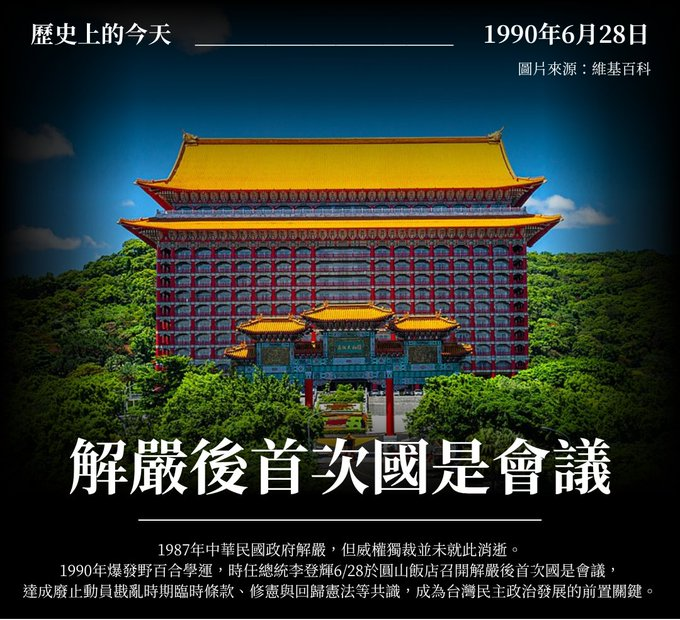
ROC台湾的李登辉总统以其政治判断力,果断接见学运代表,接受提出“召开国是会议”的核心建议。这一回应不是妥协,而是一场智慧的转身——他把社会冲突引入制度轨道,使之成为推动宪政跃迁的杠杆。6月28日,第一届“国是会议”在台北圆山大饭店召开,朝野政党、学者专家、社会各界与政府代表共聚一堂,围绕“国会改革”、“中央政府体制”、“两岸关系”、“地方制度”、“宪政修正”等五大核心议题展开辩论、妥协与协商。 最重要的是:会议并不只是一个象征性姿态。它真正达成并推动了五项制度性结论——包括废止《动员戡乱时期临时条款》、全面修宪、确立总统直选等,并在1991年后陆续完成法定落实。以此为起点,中华民国告别了“准国家”状态,进入现代宪政国家的稳定轨道。 这一切,发生在没有革命、没有外部强迫、没有大规模暴力冲突的背景下。它展现了中华政治文明中一种被长期压抑但从未消失的传统力量:上下左右齐心恊商性的制度跃迁能力。 二、“共定国是”的传统智慧:从楚庄王到现代宪政 什么是“国是”?国是一词,最早源自西汉刘向《新序·杂事二》的君臣对话。刘向记载了春秋时期楚庄王与宰相孙叔敖的一段对话,楚王问孙:“寡人未得所以为国是也。”意为我还不知该怎样确定“国是”之涵义。孙答:“国是,即国家大计也。其中也含国之大事。臣下我恐怕大王不能定。”楚王又说:“既是这样,原因是在我还是在臣在呢?”孙曰:“君臣不合,国是无从定矣。夏桀殷纣不定国是……故亡而不知。”楚王最后说:“善哉,愿相国与诸侯士大夫共定国是,寡人岂敢以褊国骄民哉。”楚庄王与孙叔敖讨论的,不是政策细节,而是如何在上下共识中确立国家正道。孙叔敖指出:“君骄士,士骄君”,将导致君臣不合、上下不信、国家失纲。换言之,国家大政之“是”,绝非君主一人所能独断,而需建立在交互主体(Intersubjectivity)的共识基础上。 这一理念,是公元前8世纪思想家伯阳父“和实生物,同则不继”存同尊异、交互共生政治哲学的实践延伸。在现代语境下,它也正是协商民主、宪政协约与政治共识理论的东方表述方式。 ROC台湾“国是会议”的现代设计,正是在这一传统上注入制度张力:它不只是政党协商会,也不是群众斗争台,而是政府以现代国家名义开启的“共识型制度跃迁机制”,是中华传统政治智慧与起源于1215年《大宪章》运动的现代政治文明之间,一次极为成功的耦合。 三、从Change到Transformation:台湾的“圆山转身”与全球化3.0 当全球化2.0存在的“互害机制”,被美国45、47任总统川普及其MAGA-MAHA发现而决心加以Transformation时,PRC大陆与世界一起站在了“全球化3.0”的门槛前,台湾早在1990年代已经完成一次内在的Transformation,而非外部压力下的Change。这一改变的内核,正是1990年召开的国是会议。 值得注意的是,今天,PRC大陆许多改革派仍拘泥于“渐进式Change”的路径——通过既有体制内部调整单纯实现经济体制改革目标而避讳政治体制改变。然而历史告诉我们:Change是内循环,Transformation才是范式跃迁。台湾之所以成功跨出“拉美中等收入转型”陷阱,是因为国是会议从根本上打破了“临时条款”结构、终结“万年国会”合法性危机、一步到位确立了“总统直选”的现代政权正当性来源。这是一场“政治-经济-文化三位一体”的制度转型,既然避免了暴力革命,也摆脱了特权改革“双革思维”的历史循环。 如果中国大陆继续沉迷于“渐进式改革(Change)”的迷思,而不能及时实现结构性的整体转型(Transformation),它将无法接住全球化3.0的历史跃迁窗口期,最终只能在世界秩序的重构中再次付出“出局”的代价——这个“代价”不只是“不惜一切代价”政治话术中的中底层人民,而是包括操控话术的顶层“特权集团”。 必须看到,川普总统归来的MAGA-MAHA战略虽有争议,但其意图打破全球化2.0的互害格局,是以Transformation为全球化3.0路径的世界秩序的重构。 ROC台湾的“圆山会议”,就是先一步勇立范式的光辉典范:“从公民运动到制度协商”、“从朝野对立到宪政重组”、“从特权垄断到制度化竞争”。这种Transformation,不仅成就了台湾民主(不少学者提及台湾民主选举方式,值得美国再学习)的起点,也为中华文明提供了转型样本。 四、大陆的“国是会议”可能吗?能召集一次生命自组织的大协商吗? 36年后,PRC大陆站在另一个临界点上。 政治上,准“地下党”体制日益固化为权贵结构;经济上,“全官寻租化、全民佃户化”结构正在蚕食改革成果;社会上,公民中产的生命活力与制度僵化之间日益矛盾。这一切构成了系统性跃迁的前夜。 我们必须提出这个根本问题:中国大陆要不要、能不能,也召开一次真正的“国是会议”? 
2017年11月29日,中国八十年代改革四君子之一朱嘉明到台湾圆山饭店看望全球共生研究院院长钱宏 这不仅是一个技术层面的问题,而是文明动能的试金石。我们是否具备如下的历史勇气与制度想象力: 能否跳出党内民主与密室恊商的死循环? 能否构建一个真正由各方——政府、企业、公民、学界、基层——参与的多元恊商机制? 能否让“国是”之议,不再成为中央指令的包装或政治姿态,而是真正由交互主体共生力推动? 能否将宪政改革置于制度正当性的高度,以真正全国代表性会议的形式开启共识重建?
如果答案是“不能”,那我们将继续困于“暴力革命”与“特权改革”这两种“双革思维”的摆荡中,直到下一次系统崩溃。 如果答案是“能”,那么国是会议将不仅是制度重构的路径,更是一次中华文明自身在21世纪的重新出发。 五、未来草图:大陆式国是会议的制度设计试探 设想一次中国大陆的国是会议,不应止于“政协+人大”式的橡皮图章拼盘,而应具备如下要素: 1.议题由社会提出,政府组织召集(类似1787年美国“制宪会议”)。 2.类似李登辉政府回应学运提出的五项议题,应设定“宪政结构重组”、“央地关系重构”、“两岸战略协定”、“民主党派自立”、“总书记直选过渡”等核心问题。 3.代表构成多元、多层级透明。 4.包括省级代表、行业协会、公民团体、基层组织、民营企业家、学者专家、网民观察团等多种形式,体现生命自组织逻辑。 5.不求一次解决所有问题,但国是原则明确(不可更改)一步到位,机制性程序持续化。 6.类似“真普联”(Alliance for True Democracy)或“圆桌会议”(Polish Round Table Talks)制度设计,形成可持续恊商机制,嵌入国家治理结构。 7.设立“宪政重建办公室”,推动修宪工程。 8.比照1991年台湾修宪程序,设立法定机制推动体制再设计,终结“临时革命体制”的无限延续。 结语:从“褊国骄民”到“共定国是”——中华文明的Transformation之路 国是会议,不是台湾的专利,也不是西方舶来制度那么简单,而是中华传统政治文明与世界现代政治文明在当代华人社会“共识型跃迁”智慧转身。美国独立后1787年的“制宪会议”奠定了“We the People”的立国之本、ROC台湾1990年也以其“圆山转身”给出了一种切实可行的路径。而今轮到PRC大陆做出选择! Transformation需要勇气、智慧,更需要生命自组织连接平衡再平衡的交互主体共生活力的觉醒。 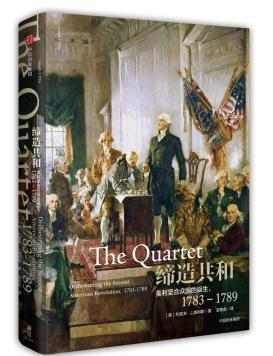
1787年5月25日-9月17日116天的“制宪会议”,主持会议的华盛顿自宣布会议开始至会议结束,自始至终,只说了三句话! 当中国大陆真正能够召开一次“由民而启、由国而行”的国是会议,比如把庆祝抗战胜利80周年纪念日,用“国是会议”取代高成本的“阅兵式”,那将是中华文明在全世界聚光灯下,正式进入全球化3.0时代最有尊严的入场仪式。 写于2025年7月12日,温哥华 ——本文节选自《批判与拯救:从暴力革命与特权改革的一根筋死路,走向生命自组织交互共生的宪政跃迁》第三编 第六章 参考文献: 1、台湾《1990国是会议资料汇编》,行政院研究发展考核委员会(现为国家发展委员会),1990 2、钱宏:《中国:共生崛起》,知识产权出版社,2012.5 3、《美利坚合众国宪法》原文与制宪会议记录,中文版中华书局,1990 4、钱宏主编:《全球共生:化解冲突重建世界秩序的中国学派》,晨星出版社,2018 5、刘向(汉):《新序》,21世纪出版社,2018 6、钱宏:《“鏡”与“燈”:PRC & ROC问题的8个观察点与8种可能的解决方式(台海时局发展趋势之我见)》,共生网 http://symbiosism.com.cn/4289.html,2020 7、钱宏(Archer Hong Qian):《SYMBIOSISM·共生——一种约定创新生活方式的精神力量》,Onebook Press,加拿大,2021 8、钱宏(Archer Hong Qian):《超越认知偏蔽,适应历史变局!》,共生网http://symbiosism.com.cn/10216.html;《中国亟需Transformation,而不再是Change!》见万维读者网https://blog.creaders.net/user_blog_diary.php?did=NTE2NDU4
National Affairs Conference: A Constitutional Transition Model with Chinese Characteristics— Exploring the Possibility of Structural Transformation in Mainland China Inspired by Taiwan’s ExperienceBy Archer Hong Qian
(Intersubjective Symbiosism Foundation, Canada)
I. The Birth of Taiwan’s National Affairs Conference: A Blossoming of Institutional Reform from Systemic CrisisIn the spring of 1990, youthful cries of change echoed through the streets of Taipei. The Wild Lily student movement originated from a sweeping critique of the "Ten-Thousand-Year Congress" and the unrepresentative constitutional framework. The students' core demands were not radical but rooted in common sense: end the Martial Law-era mobilization system, fully re-elect the legislature, and implement direct presidential elections. This rational, youthful force did not resort to violent revolution or rely on closed-door power struggles. Instead, they proposed convening a "National Affairs Conference"—an institutional dialogue held in the name of the nation to collectively seek systemic solutions. President Lee Teng-hui of the Republic of China (Taiwan) responded decisively with political insight. He received the student representatives and accepted their central proposal for a National Affairs Conference. This was not a concession but a strategic pivot—transforming social conflict into institutional leverage for constitutional change. On June 28, 1990, the first National Affairs Conference was held at the Grand Hotel in Taipei. Political parties, scholars, civil society representatives, and government officials gathered to deliberate, consult, and negotiate across five core topics: legislative reform, central government structure, cross-strait relations, local governance, and constitutional amendments. Most significantly, this conference was not merely symbolic. It produced and implemented five concrete institutional outcomes—including the abolition of the "Temporary Provisions during the Mobilization Period," comprehensive constitutional revisions, and the establishment of direct presidential elections. These reforms were legally enacted in stages starting in 1991. As a result, the Republic of China moved from a quasi-state condition into the stable track of a modern constitutional democracy. All of this occurred without revolution, without external imposition, and without large-scale violent conflict. It demonstrated a deeply rooted but long-suppressed feature of Chinese political civilization: the collective and consultative capacity for systemic transformation.
II. The Traditional Wisdom of "Defining National Affairs Together": From King Zhuang of Chu to Modern ConstitutionalismWhat is “national affairs” (国是)? The term first appeared in the Xin Xu (New Prefaces) by Liu Xiang of the Western Han Dynasty, in a dialogue between King Zhuang of Chu and his prime minister Sun Shuao. The king asked, “I have yet to determine what constitutes ‘national affairs’.” Sun replied, “National affairs refer to matters of state significance. If we cannot agree, they cannot be established. When ruler and ministers are divided, national affairs have no foundation.” The king asked again, “Then whose responsibility is it—mine or the ministers’?” Sun answered, “When rulers scorn their officials, and officials scorn the ruler, harmony is lost. Just like the downfall of Xia and Shang.” The king concluded, “Well said. I hope to define national affairs together with you and the nobles. I dare not arrogantly decide for the nation on my own.” This was not a discussion of policy details, but of how a nation establishes righteous governance through consensus between rulers and people. Sun Shuao’s warning—"If ruler and ministers are not in harmony, national affairs cannot be settled"—emphasized that the governance of great matters cannot be decided by one person alone, but must rest upon a foundation of intersubjective consensus. This concept is a practical extension of the 8th-century BCE political philosophy of Boyang Fu: "Harmony gives birth to vitality; uniformity leads to stagnation." It embodies the values of respecting difference, collaborative coexistence, and intersubjective symbiosis. In modern terms, it aligns with deliberative democracy, constitutional agreements, and theories of political consensus. Taiwan’s National Affairs Conference was a contemporary institutional design rooted in this tradition—not merely a political consultation nor a battlefield of protest, but a “consensus-driven transformation mechanism” initiated in the name of the nation. It represents a successful coupling between Chinese political wisdom and the constitutional civilization that began with the Magna Carta in 1215.
III. From Change to Transformation: Taiwan’s “Yuanshan Turn” and the Era of Globalization 3.0As the “mutual harm mechanism” of Globalization 2.0 became increasingly evident, U.S. Presidents No. 45 and 47 (Donald Trump) recognized its flaws and proposed a fundamental Transformation under the MAGA–MAHA vision. Now, as the world stands on the threshold of Globalization 3.0, mainland China must confront its position. Taiwan, however, had already completed an internal Transformation—not a gradual Change under external pressure, but a paradigm leap initiated from within. The core of this transformation was the National Affairs Conference of 1990. It is worth noting that many reformists in mainland China still cling to the path of “gradual change”—trying to achieve economic reform through adjustments within the existing political structure, while avoiding political restructuring altogether. Yet history tells us: Change is internal circulation; Transformation is a paradigm shift. Taiwan successfully escaped the “Latin American middle-income trap” because the National Affairs Conference fundamentally dismantled the temporary provisions framework, ended the legitimacy crisis of the "Ten-Thousand-Year Congress," and established modern political legitimacy through direct presidential elections. It was a "trinity transformation"—political, economic, and cultural—that avoided both violent revolution and elite-driven privilege reform, breaking free from the dual-revolution mindset that has trapped many societies. If mainland China remains obsessed with the illusion of gradual reform (Change), it will miss the historic window of structural Transformation and may once again be excluded from the reconstruction of the global order in the Globalization 3.0 era. The cost of such exclusion will not only be borne by the “ordinary people” invoked in political slogans—but also by the privileged elite who craft those slogans for their own benefit. President Trump’s return with the MAGA–MAHA strategy, although controversial, represents an attempt to break free from the mutual harm logic of Globalization 2.0 and to reestablish a world order grounded in Transformation. Taiwan’s “Yuanshan Conference” stands as a shining early example of paradigm innovation: from citizen movement to institutional consultation, from partisan confrontation to constitutional reconfiguration, from monopoly of privilege to institutionalized competition. This Transformation not only initiated Taiwan’s democracy (a model some scholars suggest the U.S. should re-learn), but also offered a sample of civilizational transition for the Chinese world.
IV. Is a National Affairs Conference Possible in Mainland China? Can a Self-Organizing Civic Dialogue Be Convened?Thirty-six years later, mainland China stands at another threshold. On the political front, a quasi-underground party structure has hardened into a system of privilege and power. On the economic front, a model of "official rent-seeking and citizen tenantization" is steadily eroding the fruits of reform. Socially, the growing tension between the dynamism of an emergent middle class and rigid political structures signals an imminent turning point. We must confront a fundamental question:
Should—and can—mainland China convene a genuine National Affairs Conference? This is not merely a technical or administrative issue, but a test of civilizational vitality. Do we possess the historical courage and institutional imagination to: Break free from the deadlock of intra-party democracy and backroom deals? Build a truly pluralistic consultative mechanism involving government, business, citizens, academia, and grassroots communities? Enable “national affairs” to be defined not by central commands, but through the dynamic force of intersubjective symbiosis? Elevate constitutional reform to a question of systemic legitimacy, and initiate a truly representative national consensus conference?
If the answer is no, we will remain trapped in the oscillation between violent revolution and privilege-driven reform—until the next systemic collapse. If the answer is yes, then a National Affairs Conference would be not merely a pathway to institutional reconstruction, but a civilizational rebirth of China in the 21st century.
V. A Tentative Blueprint: Institutional Design for a Mainland National Affairs ConferenceA National Affairs Conference in mainland China should not be a hollow mixture of political consultation and rubber-stamp legislative assemblies. Instead, it should include the following features: Agenda initiated by civil society, with the government as the convenor—similar to the U.S. Constitutional Convention of 1787. As with President Lee Teng-hui’s response to student proposals, the conference should address five core issues: restructuring the constitutional framework, redefining central-local relations, establishing strategic cross-strait coordination, enabling democratization of minor political parties, and designing a transitional path toward direct election of the General Secretary. Diverse and transparent representation across all sectors and levels. Inclusion of provincial delegates, industry associations, civic organizations, grassroots groups, private entrepreneurs, scholars, and online citizen observers, reflecting the logic of life’s self-organizing systems. While not every issue must be resolved at once, the national principles must be clearly defined and irreversible, with institutional mechanisms that are sustained and progressive. A deliberative framework, modeled after mechanisms such as the “Alliance for True Democracy” or Poland’s “Round Table,” embedded into the national governance structure. Establishment of a Constitutional Reconstruction Office, tasked with driving the constitutional reform process. Following the example of Taiwan’s 1991 constitutional amendment procedures, a legally defined process should be instituted to redesign state structures and end the indefinite extension of “temporary revolutionary governance.”
Conclusion: From “Ruling Arrogantly Over the Nation” to “Co-Determining National Affairs” — The Road to China’s Civilizational TransformationThe National Affairs Conference is not merely a Taiwanese invention, nor a Western-imported system. It is a contemporary Chinese manifestation of the ancient wisdom of political consensus and institutional self-renewal. It reflects the convergence of Chinese political tradition with modern constitutional civilization. The 1787 U.S. Constitutional Convention laid the foundation of We the People. Taiwan’s 1990 “Yuanshan Turn” offered a practical and successful pathway. Now it is Mainland China’s turn to choose. The 1787 convention, which lasted from May 25 to September 17 for 116 days, was presided over by George Washington—who famously spoke only three times during the entire process. Transformation requires not loud proclamations, but deep courage, profound wisdom, and the awakened vitality of intersubjective symbiosis—the dynamic balance and rebalancing of life’s self-organizing power. If Mainland China were to replace a costly military parade (such as for the 80th anniversary of victory in the War of Resistance) with a National Affairs Conference, that would be the most dignified entrance for Chinese civilization into the era of Globalization 3.0 under the spotlight of the world.
Written on July 12, 2025, in Vancouver
Excerpted from Chapter VI of
Critique and Redemption: From the Dead-End of Violent Revolution and Privileged Reform to the Constitutional Leap of Life’s Self-Organizing Intersubjective Symbiosis References (as cited in Chapter VI)Executive Yuan R&D and Evaluation Commission (Taiwan).
Compilation of the 1990 National Affairs Conference Documents. Taipei: RDEC, 1990.
(行政院研究发展考核委员会:《1990国是会议资料汇编》,台北,1990) Qian, Hong.
China: The Rise of Symbiosis. Beijing: Intellectual Property Publishing House, May 2012.
(钱宏:《中国:共生崛起》,知识产权出版社,2012年5月) The Constitution of the United States and Records of the Constitutional Convention (Chinese edition).
Beijing: Zhonghua Book Company, 1990.
(《美利坚合众国宪法》原文与制宪会议记录,中文版,中华书局,1990年) Qian, Hong (ed.).
Global Symbiosis: A Chinese School of Thought for Conflict Resolution and World Order Reconstruction.
Morning Star Press, 2018.
(钱宏主编:《全球共生:化解冲突重建世界秩序的中国学派》,晨星出版社,2018) Liu Xiang (Han Dynasty).
Xin Xu (New Prefaces). Translated edition: 21st Century Press, 2018.
(刘向(汉):《新序》,21世纪出版社,2018) Qian, Hong.
“The Mirror and the Lamp: Eight Observations and Eight Solutions Regarding PRC & ROC.”
Symbiosism.com.cn, 2020.
http://symbiosism.com.cn/4289.html
(钱宏:《“镜”与“灯”:PRC & ROC问题的8个观察点与8种可能的解决方式》,共生网,2020) Qian, Hong (Archer Hong Qian).
SYMBIOSISM: A Spiritual Force for Covenant-Based Innovative Living.
Onebook Press, Canada, 2021.
(钱宏(Archer Hong Qian):《SYMBIOSISM·共生:一种约定创新生活方式的精神力量》,加拿大Onebook出版社,2021) Qian, Hong (Archer Hong Qian).
“Beyond Cognitive Bias: Adapting to the Historical Shift!”
Symbiosism.com.cn, 2020.
and “China Needs Transformation, Not Mere Change!”
Creaders.net, 2020.
https://blog.creaders.net/user_blog_diary.php?did=NTE2NDU4
(钱宏:《超越认知偏蔽,适应历史变局!》《中国亟需Transformation,而不再是Change!》)
|