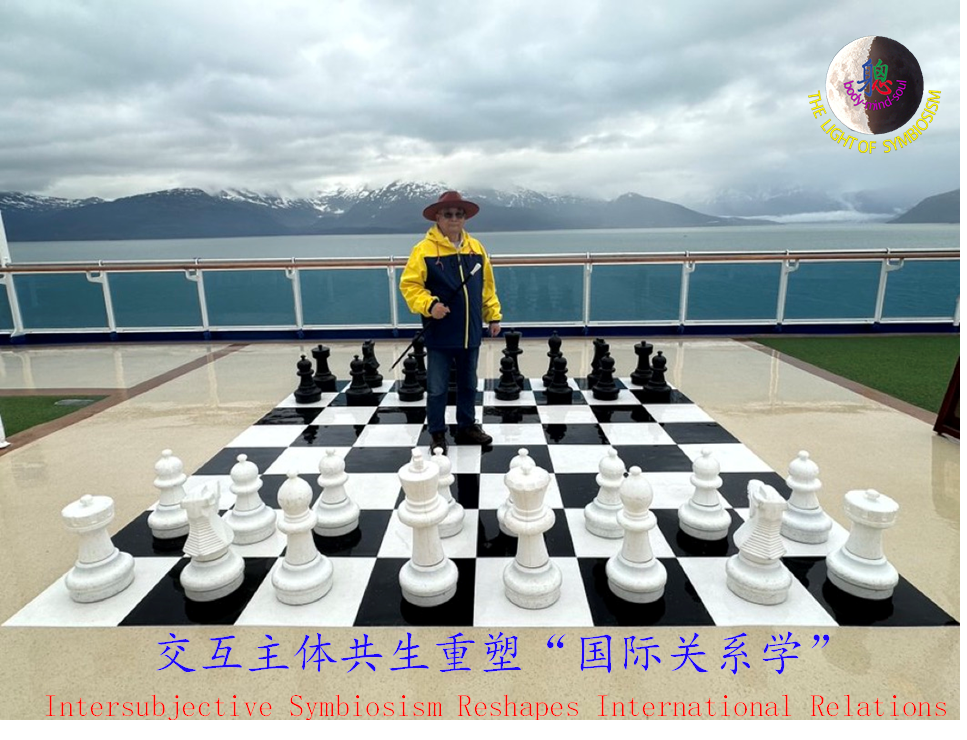
俄烏戰爭終結,改寫世界秩序 ——交互主體共生重塑“國際關係學” Intersubjective Symbiosism Reshapes “International Relations” 錢 宏Archer Hong Qian (Intersubjective Symbiosism Foundation) 題記:邁克爾·波蘭尼(Michael Polanyi)說,“任何試圖嚴格地從我們關於世界圖景中去掉人類視角的做法都必定會導致荒謬”,照此,任何試圖嚴格從“國家行為體”中清除“個人權能及其生命自組織力與外連接平衡力”的政治說教或理論建構,都終究會讓世界陷入災禍! 目 錄 從戰國時代的國家行為體定位說起 現行國際關係學的認知缺失 國際關係理論的再認識 “小即是美”的國家形態將應運而生 終止俄烏戰爭的第三條道路 國際關係學將面臨範式重塑 國際關係學的社會再平衡理論 從戰國時代的國家行為體定位說起 美國著名的國際政治學理論大家Richard Ned Lebow說過,“國際政治思想與世界上最早出現的獨立政治共同體一樣古老”(2008)。 華夏戰國時代的“國際關係學”,有兩大流派:一是《東周列國志》“保國莫如安民,安民莫如擇交”,身披六國相印的蘇秦說:“安民之本,在於擇交,擇交而得則民安,擇交而不得則民終身不安”。二是《商君書》 “馭民”五術(壹民、弱民、疲民、辱民、貧民,五術皆不靈,殺之)以強國,所以,國際關係學的研究對象——“國家行為體”的行為本身,有對內對外的兩面,而且,國家行為體兩面的核心,都是用什麼樣的權謀治理這個國家的人民——擇交安民或馭民強國! 眾所周知,馭民強國的權謀式國際關係學,經過商鞅-李斯-始皇變法,搞“刑徒經濟”,國是強了,比拼殺人多寡的奴隸變成了將軍(如白起,一次活埋40萬趙國降軍),擇交安民的權謀國際關係學徹底失敗了。但弔詭的是,“馭民強國”的權謀國際關係學,也讓滅了六國後的秦帝國“行為體”,實行“度同制、車同軌、書同文、行同倫、地同域”六大同而無當的中央集權之郡縣制,雖然“方便統治”,結果支撐不起龐大官僚機器的折騰,只能“殺雞取卵”“竭澤而漁”“坐吃山空”,存續了600年的秦國,“二世而亡”,東方大地人口減少四分之三,也消解了華夏最後一點貴氣。 此後,這一流派的權謀(偽裝+巫術),依然屢屢得手,但搗騰了二十六圈,走不出歷史的循環旋渦。 不過,“擇交安民或馭民強國”權謀式國際關係學是兩面古鏡,如果拿來照一下當代國際社會,依然可以隱約照出當今“兩種國家行為體”的影子,一是所謂“主權在民的國家”,一是所謂“主權在官的國家”! 這樣照,也許不足為訓。若將這兩種權謀式國際關係學,放在現代憲政政治(Constitutionalism)語境,即放在1215年“大憲章運動”之後的《權利法案》(1688)和《寬容法案》(1689),特別是放在三十年戰爭後《威斯特伐利亞和約》(1648)與二戰後《世界人權宣言》(1948)世界秩序中,可以發現,國際關係學的關鍵問題,就是國家行為體如何處理主權(官權)與人權(民權)的關係?國際關係,也是人際關係。也就是在思維方式和價值取向上承不承認一個邏輯大前提,即:主權存在的前提是人權,人權是主權國家的目的,在Constitutionalism的制約下,其他理性非理性工具,包括權謀、法度制序、科技發明、人文傾向、產品-服務經濟,乃至法幣、代幣、UN、NW、通訊-運載-資源、Web、AI-AGI等,可以限制或發揮主權,也可以限制或促進人權,關鍵在於採用什麼樣的哲學認知。 今天,核能、運載工具、AI和生物工程有巨大的能量,卻沒有與這能量所匹配的智慧——愛之智慧。笛卡爾二元對立認知之前的世代,智慧之愛的神性(整體統一),壓倒了人性、理性,之後至今,理性(系統、工程、工具)又壓倒了神性,以至於近一個半世紀以來模擬未來的工作,從哲學家轉到工程師、政客和野心家手中,而人性始終在多元、生態中隨波逐流,方向不明,善惡難辨。 俄烏戰爭引發世界主題從“和平與發展”到“戰爭與衝突”轉變之際,觀察各國際國內關係中的“馭民與安民”“謀交與擇交”“東方與西方”“左派與右派”“官粹(Elitism)與民粹(Populism)”“自由(狂者)與保守(狷者)”及其保國與強國之道理法術,皆為主客二元對立思維,且行使主權行為的統治者(官)以主體(Subject)自居,把當行人權行為的被統治者(民)為客體(Object)處理之意識形態,嚴重不適合走出理性工具“失靈又失控”的危險情勢,特別是當AI+生物工程由外在生活,進入到人體、進入到人心內在,直接影響人類生存生活方式。 工程師與哲學家需要重新攜手共進。語言大模型、腦機接口編程、主權-人權定位,必須獲得哲學的支撐與融合,對未來的時代,達成富有愛之智慧的共識,並制定富有愛之智慧的決策和公約,讓AI成就愛,讓人性、理性、神性成為交互主體共生的關係過程,方能避免自然生態(包括人體內在)危機與社會生態(包括多元文化)危機引發毀滅的生態戰爭——不排除真的爆發“第三次世界大戰”,甚至不排除人類社會現行國際關係,將裹挾第5次大滅絕以來,存續了近6000萬年的所有地球生靈遭受“人類世滅絕”(Anthropocene extinction)的可能——為大家帶來福祉! 在《共生簡史·宇宙之子》(2018)一書,我們專門收錄了美國科學網站io9.com寫出《第六次大滅絕》Annalie Nevitz女士,該書的副標題是:“人類能挺過去嗎?” 現行國際關係學的認知缺失 是的,“人類能挺過去嗎?” 綜合歐美國際關係學的新老現實主義、新老自由主義或理性主義、新老革命主義三大流派,儘管說詞上有很大變化,但有一點沒有變而且具有共通性,這就是把國家行為體,作為支配主權-人權-理性工具的當然主體,突破或擱置Constitutionalism對國家行為體的權力的限制,簡言之,就是在其行所謂“資本主義”,還是行“社會主義”抑或行“國家主義”的問題上,“英雄不問出處”,完全不問行為是否行得通。 國際關係學中,有個“Talleyrand”式玩世不恭和狡猾的外交,是指多才多藝,能嫻熟處理國際事務,並產生影響力,同時作出一系列背信棄義之事。塔列朗依次背叛了舊制度、法國大革命、拿破崙又參與波旁復辟。中國人對此有一句很概括的話,叫做“識時務者為俊傑”。比如着有《領袖們》和《世界秩序》的基辛格認為,不必考慮每個國家的政治制度,也不考慮它是否尊重人權,為了自己的利益可以跟任何一個國家有新的關係。所以,他反過來指責川普與拜登將道德原則置於利益之上。基辛格就是20世紀的塔列朗式國際關係學代表人物。 當今世界各國家行為體,在政治制度上有如下選擇:一種是做大蛋糕,“大家有飯吃”,無需掌勺人,大家各自創新,且互通有無;一種是分勻蛋糕,“有飯大家吃”,必有掌勺人,統一規劃大家,且往往內卷。一個是智慧-增量-創新思維,與民休養生息;一個是權謀-存量-均平思維,與官橫徵暴斂。這貌似正好說明所謂的資本主義(大家有飯吃)與社會主義(有飯大家吃)的區別。根本區別在於:以權力為軸心的“Our own men”和以權利為規範的“We the people”。 特別“有飯大家吃”的社會主義,往往落入不管有無蛋糕,不管大家有沒有飯吃,算政治賬不算經濟賬的“光宗耀祖主義”(Nationalism)。這種權謀-存量-均平思維,有文化基礎:易經八卦菜根譚、孫子兵法弟子規、奇門遁甲厚黑學,增廣賢文三字經。當代中國的聰明人,又拿來作人生規劃、作政治謀局、作市場預測、作企業管理,火眼金睛、耳聽八方、無孔不入、競相清場,走自己的路,讓別人無路可走。但是,最後卻依舊是要麼自己無路可走,要麼大家同歸於盡! 但事實上很弔詭:現行民本位的資本主義,“大家有飯吃”,是真,社會整體財富是一個集腋成裘的過程,大家飽而溫,必存同(權利)尊異(寬容),大家各顯神通。因為只要是公寓於私的民本位,實際就必然會助長社會自組織力——有社會的資本主義;現行官本位的社會主義,“有飯大家吃”,為假,社會整體財富是一個坐吃山空的結果,大家飢且寒,必有人毀契壞約,謀求獨食特權操縱壟斷一切,大家淪為韭菜或炮灰。因為只要是結黨營私的官本位,實際就必然要消滅社會資本活力——無社會的社會主義! 順便說一句,國際關係學界、美西方政客和資本家,很少有人注意到(有證據表明川普可能是個例外):如果不是發生了2014-2022俄羅斯背棄《布達佩斯備忘錄》中的承諾,悍然入侵烏克蘭的戰爭,冷戰結束,改制後至2000年普京接手的俄羅斯聯邦,到2008年梅德韋傑夫當選第5任總統時,俄羅斯聯邦其實實驗着一條介乎“有社會的資本主義”和“無社會的社會主義”兩者之間的“有社會有資本的國家主義”路線,並在民生上取得相當可觀的成績(見2009年世界銀行報告,及《原德:大國哲學》,2012)。這在我看來,對於熱衷於“和平與發展”世界主題的國際社會,是一個極大的歷史反諷! 凡活物皆有趨利避害之本能,何況是人?所以:不能Live and let live(自己活,也讓別人活),互助;必將Evil and let evil(自己邪惡,也讓別人邪惡),互害。所以,弔詭之謎,就在國家行為體的立國立身之本,在民,還是在官?在社會,還是在黨團?在哲學認知上,是主客二元對立,還是交互主體共生(Intersubjective Symbiosism)? 其實,當代人能不能挺得過“Anthropocene extinction”?取決於這個評判優劣好壞文明野蠻的Intersubjective Symbiosism哲學常識的認知。 甭管叫什麼主義,喊啥口號,給何種政治承諾?放在這個哲學常識中,鑑別一下先現行國際關係理論三大流派價值側重點雖有所不同,而且順帶關注非國家行為體和國際組織,但其共同的研究的主要對象是“國家行為體”。正因為如此,也就註定了他們存在一個共同的認知缺失。 這個認知缺失就是,對任何以主體(Subject)自居,而視異己者(包括其他“國家行為體”、有生命的個體和自然社區環境)為其任意支配、掠奪的客體對象(Object),進而引發的國際、人際衝突乃至侵略戰爭,國際關係學要麼持現實的、理性的接受姿態,要麼持革命的、整體的容忍、綏靖,甚至縱容立場,而對普遍個體生命的社會發生學、動力學、恊和學意義,抱持忽略不計的態度,從而導致強權者,對他國主權存在的隨意性和國際關係的不確定性(如昔日納粹當年對捷克、奧地利的合併,蘇德對波蘭的瓜分,今日普京對烏克蘭的所謂“特別軍事行動”,10.7爆發的哈以衝突,採取遷就或反對的法理解釋,而提不出任何學理方向性的解決方法);同時,對“人權-主權-多元生態”交互主體狀態,存在盲區,因而對國際、人際事態的發展,作“馬後炮”解釋,而缺乏預見性。前者表現在對一戰、蘇俄革命、二戰、國共內戰、柬埔寨屠殺、冷戰、俄烏戰爭的發生發展,或語焉不詳,或無所作為,或眾說紛紜馬後炮;後者集中表現在對冷戰的結束,聯合國安全理事會“大國一致原則”的一再失效,人權-主權-多元衝突,特別是對飛機、手機、衛星、Web、計算機、AI等運載、通訊工具、非化石能源等對國際、人際社會生產生活方式的影響及其發展方向的不確定性,沒有一種國際關係學理論,有所預見! 國際關係理論的再認識 綜合維基百科的表述,國際關係學(International Relations)也稱國際事務(International affairs, IA),是對世界體系及其相互作用的研究。作為政治學的一部分,國際關係也和哲學、經濟學、歷史學、法學、地理學、人類學、社會學、心理學研究緊密聯繫。從全球化到主權、人權、領土糾紛、核危機、民族主義、恐怖主義、氣候變化、貧困飢餓、及獨立政治共同體、非國家行為體、國際組織(聯合國、歐盟、非盟、跨國自由貿易區),都是國際關係學研究的議題。 國際關係學的學科自覺,源自一戰。1919年英國威爾士阿鮑里斯特威斯大學設立國際關係教席被視為學科初步創立的標誌。1927年,倫敦政治經濟學院的國際政治院系與日內瓦高級國際關係學院同時建立。1928年,美國第一個提供國際關係研究生課程的學校,是芝加哥大學的國際關係委員會,國際關係學科逐漸成熟。 自2000年後,國際關係理論領域形成了現實主義(Realism)、自由主義(Liberalism)或理性主義(Rationalism)、建構主義(Constructivism)三強並舉的局面。目前,國際關係學的研究對象包括主權國家、非國家行為體和國際組織等。三大流派各有側重地分析政治、歷史、社會和全球發展從觀念到事件的影響,研究一系列“全球性問題”之間的聯繫,如國家行為體及人權、氣候變化、貧困、飢餓、不平和戰爭等等。 但在國際關係學形成學科之前,人們就對國際關係問題有過多種思考。本文開頭講到“擇交安民”或“安民強國”都涉及到國際關係。這裡結合英國國際關係學家馬丁·懷特對國際關係思想傳統的梳理,再來簡要回顧一下過往國際關係學傳統。 在修昔底德、馬基雅維利、讓·博丹、霍布斯、大衛·休謨、黑格爾現實主義傳統看來,國際關係處於一種無政府狀態,眾多的主權獨立國家都不承認有高於自己本國政治權威的存在,所以最後國際問題的最終解決方案是戰爭。現實主義傳統的核心人物霍布斯認為,在一個社會內由於自然狀態會陷入“每個人對每個人的戰爭”,所以產生了社會契約來保障和平,人民把一部分權力讓渡給主權者。但他指出這種社會契約在國家這種政治單元之間是不可能達成的:“每一個共和國都擁有絕對的自由,對於那些有利於國家利益的事情,他們就可為所欲為”。 與現實主義形成對比的是理性主義或自由主義傳統,格勞秀斯、約翰·洛克、邊沁、埃德蒙·伯克、約翰·斯圖爾特·密爾以及伍德羅·威爾遜等認為,國際關係首先是一種國際交易,主權國家之間政治,被一種制度的、持續的、有組織的外交和貿易關系所主導和制約。格勞秀斯和約翰·洛克為代表的理性主義或自由主義堅持,自然狀態並不像霍布斯認為的那樣必然導致戰爭,“自然狀態儘管是一種自由狀態,但絕對不是一种放任狀態”。因為人的本性中有群居的需要——與同類共同過和平而符合理性的生活,而戰爭實際上是一種非理性的表現。 國際關係學中革命主義傳統的代表人物是盧梭、康德、馬克思主義者和無政府主義者。儘管他們意識形態風馬牛不相及,但他們都有一個信念:雖然不存在超越國家的權威,但所有的國家組成了一個道德和文化整體,並且指定了某種基於道德和文化的規則和法律義務。革命主義傳統總是運用規範性的語言探討國際關係,並期望一種“大同世界”。如康德在《論永久和平》中便認為,在理性的推動下,各種政治實體的無法兼容的個性反而會推動他們走出戰爭狀態,並進入一個“國際聯盟”的時代。在馬克思主義者(不等於馬克思)看來,國際關係只是世界共同體歷史進程中的一個時期,在未來的歷史運動和階級鬥爭中,國家將不復存在,無產階級所代表的全人類將建立一個消滅了資產階級連帶它自己的“無階級性的全球社會”。 但是,無論是現實主義,還是理性主義或自由主義、革命主義傳統,抑或建構主義,都暗含了一個認識論上的缺陷,這就是主客二元對立,而且主體(Subject)操縱、主導、支配客體(Object)。 這個軸心主體,即國家行為體,在現實主義那裡,是“國家實力”;在理性主義或自由主義那裡,是“有組織的交易”;在革命主義那裡,是“道德文化整體”;而在建構主義(neo-classical constructivism、post-modernist constructivism和natural constructivism)那裡,是“文化觀念結構”。 需要注意的是,由於到20世紀80年代末90年代初,沒有一種國際關係理論,預見到冷戰格局的結束,這種對政治現實的無力,導致了哲學範式危機,國際關係學作為科學的可能性,及其知識框架,都遭到後實證主義(反思主義,忽視經驗性的研究,也無法提出自己的實質性的理論)的解構,從而引發了國際關係理論建構以來,遵從現代社會科學的理性主義原則的自由主義、現實主義、革命主義與反思主義之間的範式之爭。但是,這場被稱為聾子間對話爭論(雙方的基本信念有着根本的差異),卻形成了現在可與現實主義和自由主義相抗衡的新學派:建構主義學派(1989)——特別是讓建構主義受到了學界廣泛的關注。建構主義與理性主義不同,在於更加關注社會建構關係“如何可能”?而且,社會建構的關係主要依賴觀念的力量,認為國際政治是行為體持有的一系列共有觀念,這又與現實主義僅僅強調物質性權力不同。Alexander Wendt在《Social Theory of International Politics》(1999)中指出,這些觀念的主要表現形式為文化,文化在國際社會發揮着各種各樣的功能,比如塑造國家的身份和利益。但必須看到,觀念在某種意義上更是權力(支配主體)的化身。 國際關係學,必須了解其研究對象本身存在的問題!因為這涉及當今世界最關鍵問題描述、解決方案與新生活方式。 二戰後國際社會經歷了且正在經歷着:從1970年代的“世界經濟滯脹”,到21世紀的諸般“全球性問題”(潘基文)及其文明、地緣、新技術衝突造成的“人權-主權-AI危機”概括一句話,即“全球共生危機”(Global Symbiosis Crisis),已然表明:建立在《威斯特伐利亞和約》與《世界人權宣言》基礎上的世界秩序,需要與時俱進地重建。 基於此,我們自2012年至今,嘗試通過“全球共生論壇”(GSF)形成國際社會的新共識,以達成一個具有“主權(官權)-人權(民權)-AI(工具理性)交互主體共生新規則”(New Rules for Sovereignty-Human Rights-AI Intersubjective Symbiosism)意義的《全球共生公約》(The Global Symbiosism Convention),“改造聯合國”,成立“全球共生理事會”(Global Symbiosis Council),將“人權(民權)-主權(官權)-AI(理性工具)交互主體共生存在方式”(Human Rights-Sovereignty-AI Intersubjective Symbiosism Style of Existence),落在更具體的“小即是美”(Small is beautiful)的國家-組織-社區行為——人類未來生活方式創新與再選擇上! 這樣一來,不難發現“國家實力”、“有組織的交易”、“道德文化整體”、“文化觀念結構”這些主體,就缺失了一個同時兼具發生學(Genetics)、動力學(Dynamics)、恊和學(Synergy)的根基,那就是:作為交互主體存在的個人權能。 而且,當現行國際關係學各大流派,分別強調“國家實力”、“有組織的交易”、“道德文化整體”抑或“文化觀念結構”主體支配行為時,也就忽視了一最基本的事實:包括“國際關係”在內的“全部歷史的第一個前提”,歸根到底是“有生命的個人權能”之主體間性,才能相互激勵、制約和促進,從而重塑人際-國際關係的正常態。 其實,只要回到生活本身,“有生命的個人權能”的存在方式,是“本自具足又非獨存”,而且在天人(人與自然)、人我(人與社會)、心物(人與自己身心靈)三大關繫上,體現出“和實生物,同則不繼”生生不息的本質。因而,“個人權能”就落在了具體生命自組織力與外連接平衡力的交互主體共生(Intersubjective Symbiosis)過程之中。 一切脫離活生生的“個人權能”根基的“國家實力”、“有組織的交易”、“道德文化整體”抑或“觀念結構”,都將整體淪為強制、綁架、支配個人權能的工具,因而缺失了交互主體Live and let live的正當性、尊嚴性、高尚性。 這也正是從全球化到主權、人權、領土糾紛、核危機、民族主義、恐怖主義、氣候變化、貧困飢餓、及獨立政治共同體、非國家行為體、國際組織(聯合國、歐盟、非盟、阿盟、跨國自由貿易區)等,之所以成為國際關係學面臨的當代問題時語焉不詳的根源。另一方面,在人類從農耕文明,到工商文明,進而生態文明迭代之際,從機械時代、電氣時代,走向AI時代之際,有生命的個人自組織與外連接平衡交互主體共生的事實,日益呈現為一種常態。 所以,國際關係理論本身面臨重塑,尤其對世界的認知上,需要重新界定、設置、定位“三大關係”,完成從你我“自己人”到你我他(她、它、祂)全生態、全人稱的存同尊異,間道競合,降本賦能,贖福共生。 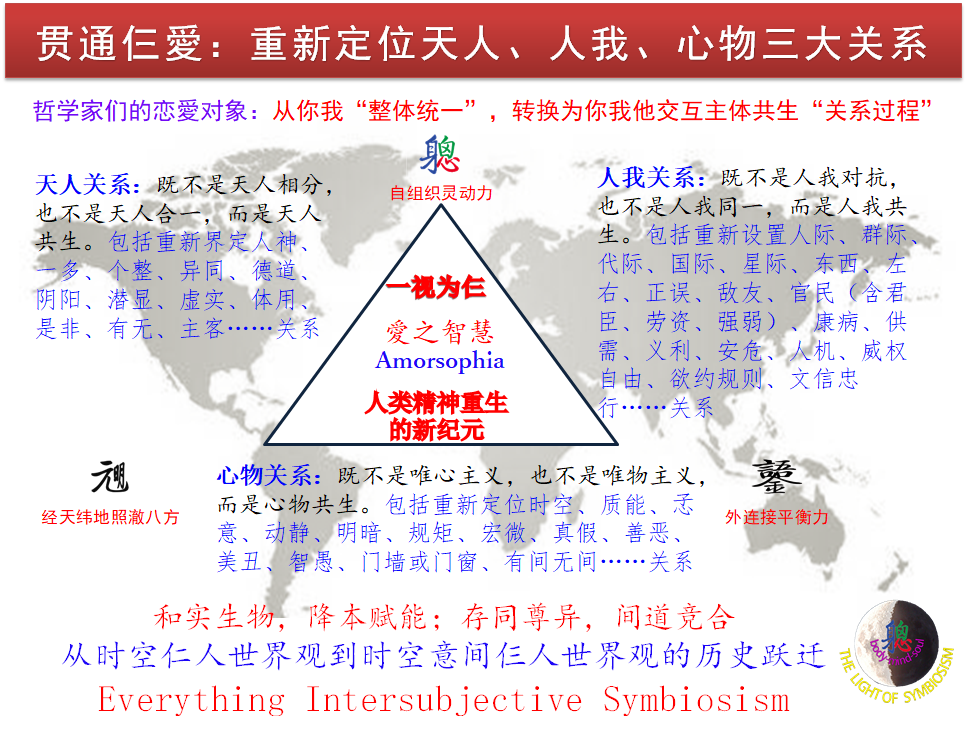
凡事交互主體共生(Everything Intersubjective Symbiosisim)。從人與自然(天人)、人與社會(人我)、人與自己(心物)三大關係看: 既不是“天人相分”,也不是“天人合一”,而是天人交互主體共生,因而需要重新界定人神、一多、個整、異同、德道、陰陽、潛顯、虛實、體用、是非、有無、主客……關係; 既不是“人我對抗”,也不是“人我同一”,而是人我交互主體共生,因而需要重新設置人際、群際、國際、代際、東西、左右、正誤、敵友、官民(含君臣、勞資、強弱)、康病、供需、義利、安危、威權自由、欲約規則、文信忠行……關係; 既不是“唯物主義”,也不是“唯心主義”,而是心物交互主體共生,因而需要重新定位時空、動靜、明暗、規矩、宏微、真假、善惡、美醜、智愚、門牆或門窗、有間無間……關係。 三大關係認知轉變的同時,我們欣喜地看到,機械時代、電氣時代之後的15件改變人們生活方式(軌跡)的發明(手機、電腦、高鐵、飛機、光導纖維、衛星、洗衣機、電視、汽車、液晶顯示屏、地鐵、電梯、空調、芯片、互聯網),絕大部分集中在通訊、交通方面,這是為什麼呢?進一步試想:人類實現了“通信全開放”、“交通(運載)全覆蓋”,接下來必是,“能源全自足”,“三全”驅動下,人類生產生活從“降本賦能”到“稀缺性”的徹底解決,AGI-MindsNetwoking時代——一個趨零邊際成本的共生社會,成為現實! 麻省理工學院(MIT)華裔研究生朱家迪等人開發出一種不會損壞芯片的低溫生成工藝,可直接將 2D 半導體晶體集成在標準硅電路之上。而且,新技術還有兩個優勢:擁有更好的工藝+減少生成時間。 當“納米自供電”或“微型核聚能”裝置的AGI誕生,並迅速全面介入人類生活各個領域,提供便捷服務時,實行全民基本收入(Universal Basic Income,UBI)和追求物質財富不再是夢,以權利為靈魂的工商文明,將迭代為以共生為靈魂的生態文明,分享生活(主要是精神財富)創造的介質,不再是主權貨幣。代之而起的是,生態文明相應的超主權、超地緣、超界別(行業)富有“約定價值承兌能力”的共生幣(比特幣等超主權數字貨幣是其初級形式),在自治社區、分地域社區、地球社區(虛擬實體)——的全球流通! 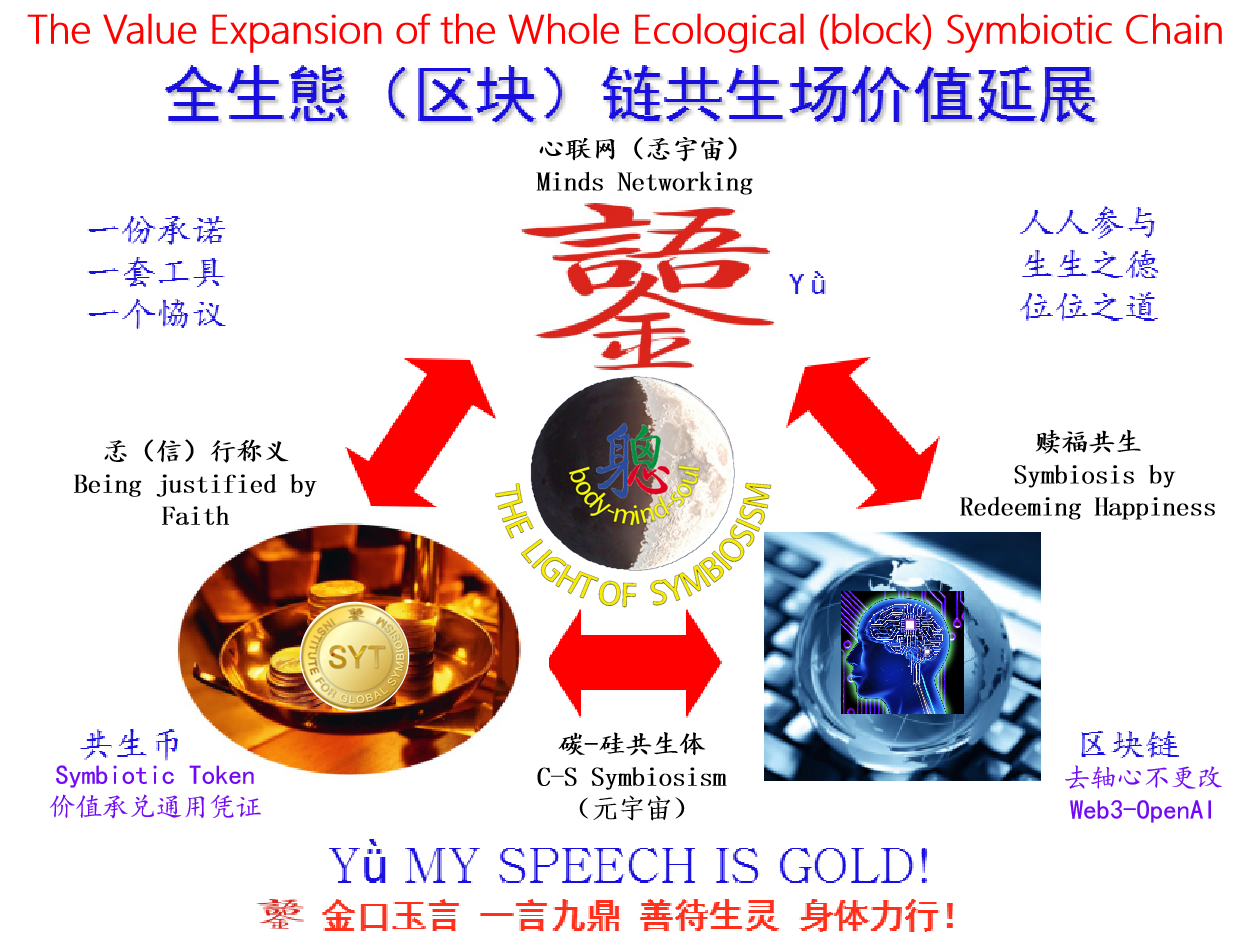
觀今鑒史,世界三大文明,陸權、海權、人權疊加又迭代,既是歷時性演化進步結果,又呈共時性優化關係態勢——農耕(陸權)文明:占有土地等資源,封邦建國,光宗耀祖,蔭及兒孫近親,律法之約;工商(海權)文明:占有資本等資源,輕關易道,通商寬農,人民相向服務,福音之約;生態(人權)文明:重資源轉換效能,交互主體,自組織力,連接動態平衡,共生之約。 於是,身處不同文明狀態的國家區域的人們,在思維方式、生產方式、生活方式,應當據此作出相應的結構性功能調整,自行淘優汰劣,融通世界,以生態文明消解生態軸心戰爭,以交互主體化解文化文明衝突,重建世界秩序,實現永久和平而全球共生! “小即是美”的國家形態將應運而生 “小即是美”的新加坡當值總理李顯龍,發表2024新年賀詞中,比照世界各國情況與國際國內局勢後說:“一些社會變得分裂和脆弱,是因為領導人將自身利益置於國家利益之上。”“在面對像以哈衝突這種有可能分化國人的課題時,我們必須繼續包容和尊重彼此的觀點。” 如果說,這個世界有病,那麼,作為一個成熟的政治家,李顯龍看到了國際族際衝突與民眾信眾脆弱分化的原因,是領導人——操縱Trust平台組織者的特權利益擠兌、侵吞國家、群體、個人利益的普遍情況的存在,而其因應之道,則是人與人、群體與群體、國家與國家間“包容和尊重彼此”。這是一種對症下藥的價值取向,也是一種實事求是的思維方式。 這種思維方式和價值取向,上升到哲學層面,就是“交互主體共生”(Intersubjective Symbiosism)。 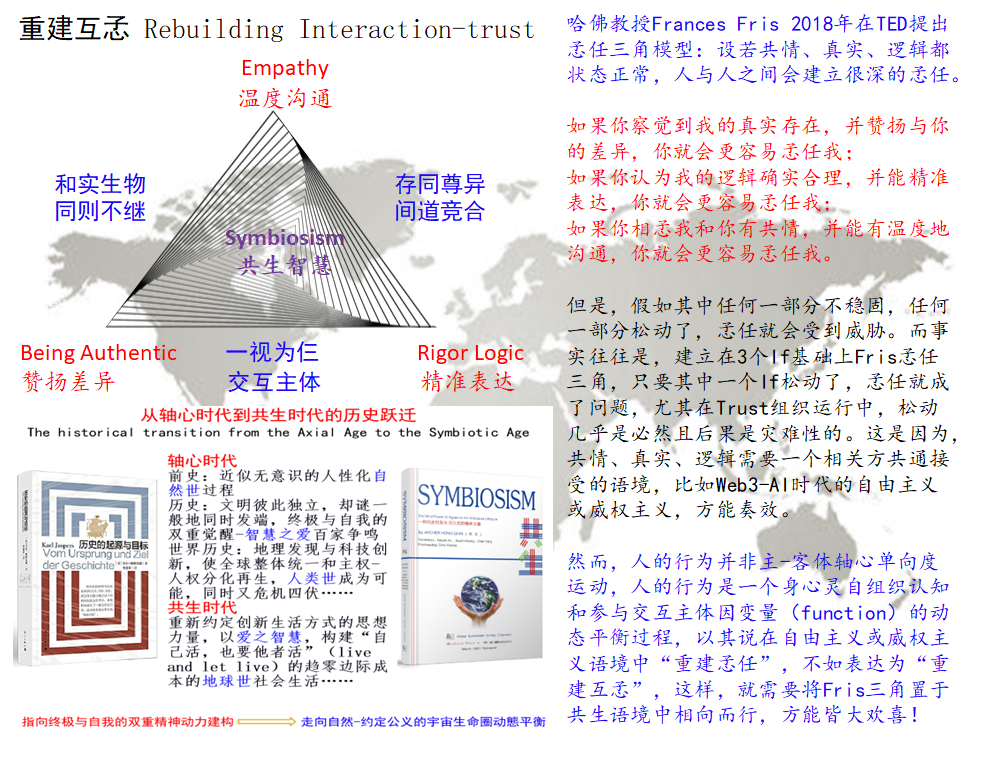
那麼,何為“交互主體共生”思想? 首先,從人稱上看,就是將現行“你我”(自己人)的“仁人世界觀”,擴展為“你我他”(全息)的“仨人世界觀”; 第二,在人類組織形態上,將以權力為軸心的“Our own men”排他性的“共同體”,拓展為以權利為規範的“We the people”全生態的共生體; 第三,在人類組織體量上,將大一統的舉國體制(含大家族、大集團、帝國),轉化為小即是美的社區、市場、政府三大自組織力聯邦制。 國防大學教授馬駿有句話叫“架子大沒好下場”,他講大俄羅斯、大塞維亞、大德意志、大日本都“無好下場”,他提出為什麼要叫“大中華”? 從共生哲學上看,馬駿說的“大”,就是主客二分自我中心的主體意識。這樣的主體意識,在現實生活中即是以優先占有資源權能的主體(Subject)自居,而視他者(她它祂)為可支配可統治的客體(Object),因而必然追求國家行為體的大一統(政治大一統、經濟大一統、文化大一統)。大一統的核心,是權力大一統、官階大一統、資源大一統。大一統的背後,必是依靠自己人、小圈子維繫,並為自己人、為小圈子服務的假公濟私的病態的特權! 這種大而無當的文化之病、經濟之病、政治之病,如今Web3-AI時代,生得很不合時宜!凡事都有邊界,大而無當,小即是美,有道是“無度不丈夫”! 所以,喊“大”的結果反而是“小”,而強調“小即是美”的個人權能及生命自組織力與外連接平衡力、自然而然結構成社會權能,限制政府權能,才是真正的大且公義! 我們不妨超越或撇開民主、專制、獨裁體制機制及其理念,觀察最近孟加拉廢除“配額預留制”,阿根廷廢除“精英特權”,89中國“反官倒”,91“蘇東巨變”,烏克蘭成功抵抗俄羅斯入侵⋯⋯不難發現,這些偉大的黑歷史事件,都是解決一個國家“龐大上層建築與超負荷經濟基礎基本矛盾”的重要一環。都是Intersubjective Symbiosism交互主體共生智慧的偉大勝利! 問題在於,具體到歷史行進中,一個國家行為體,是否存在和葆有公民、社會、政府三大自組織力連接平衡的活力機制——其背後的邏輯和歷史,還是公民、社會、政府交互主體共生的理念!所以,小即是美的孟加拉青年人、社會各階層、政府了不起;小即是美的阿根廷新總統、社會各界、普通選民了不起;小即是美的蘇東各國人民、社會、政府真偉大。 什麼叫智慧?智慧就是:通損益,知進退,行共生!這樣的智慧,就是交互主體共生的智慧——即愛之智慧!愛之智慧,是一個比任何軍隊或商隊更強大,比任何海洋和天空更遼闊,比任何獨裁者或暴君更有力量的“小即是美”的智慧。 甘於居小,是一種智慧,小規模更能發揮大能量,因為萬事萬物皆有度。正如修馬克(E. F. Schumacher)在《小即是美》指出:經濟發展只能“到某種程度”、生命只能複雜“到某種程度”、追求效率或生產力只能“到某種程度”、使用無法在利用的資源只能“到某種程度”、完整人性對細密分工只能忍受“到某種程度”、以“科學方法”代替一般常識“到某種程度”。 英國作為最成功也最有文明魅力的海權國家,對歐洲、對世界陸權國家的最大貢獻是什麼?英國保守黨領袖、首相撒切爾夫人生前說過:“我們英國人對歐洲的貢獻是非常獨特的。數百年來,我們一直努力阻止歐洲陷於單一強國的統治,我們為歐洲的自由而戰,並為歐洲的自由而死,要是沒有這種戰鬥、犧牲的意志,歐洲早就實現了統一,但那種統一既無自由可言,也無正義可言。”這聽起來似乎令人震驚,卻又發人深思!英國“脫歐”成功後,歐洲的國際政治格局,越發顯示其增量思維-小即是美的最佳典型案例,相對存量思維-大一統,哪個更富有創意和魅力?答案不言而喻。 在可預見的將來,Intersubjective Symbiosism意識作用下的人類個體和各種共同體組織奮鬥的路徑和形態,以及所有相應的物化評價標準,都將發生歷時性與共時性改變! 小即是美的瑞士聯邦,是世上第一個共和國,三十年戰爭1648年《威斯特伐利亞和約》確立“相互承認即為主權國”的國際秩序,擺脫羅馬天主教“選帝權”後,分布在資源貧瘠的阿爾卑斯山上幾個州的一部分法蘭西人、一部分德意志人、一部分意大利人自願除外交事務外,各州保有各方面主權的條件下結盟組合而成。 小即是美的新加坡,可以玩淡馬錫,保證政府提供公共物品的資金,不搞高稅收,保持平等競爭的社會活力與穩定。避免了政府、市場、道德三重失靈! 小即是美的尼德蘭,神聖而偉大的貢獻不可估量:1、普及了清教倫理(加爾文基督教原理);2、創新了商業組織形態(現代股份制有限責任公司金融市場雛形);3、引導了理性認知自我與宇宙的方向(斯賓諾莎);4、示範了新大陸的文明(五月花號宣言);5、成就了英格蘭光榮革命(威廉三世);6、一百五十年後,美利堅合眾國成為世界上第二個主權在民的憲政共和國;7、1912年,中華民國(ROC)成為亞洲第一、世界第三個共和國,不幸的是,接着出現“二次革命”“大總統稱帝”“蘇俄出資同時扶持國共兩路黨人”“北南並立”“軍閥混戰”“日本入侵”“三次內戰”,形成PRC大陸與ROC退縮台灣分治的格局! 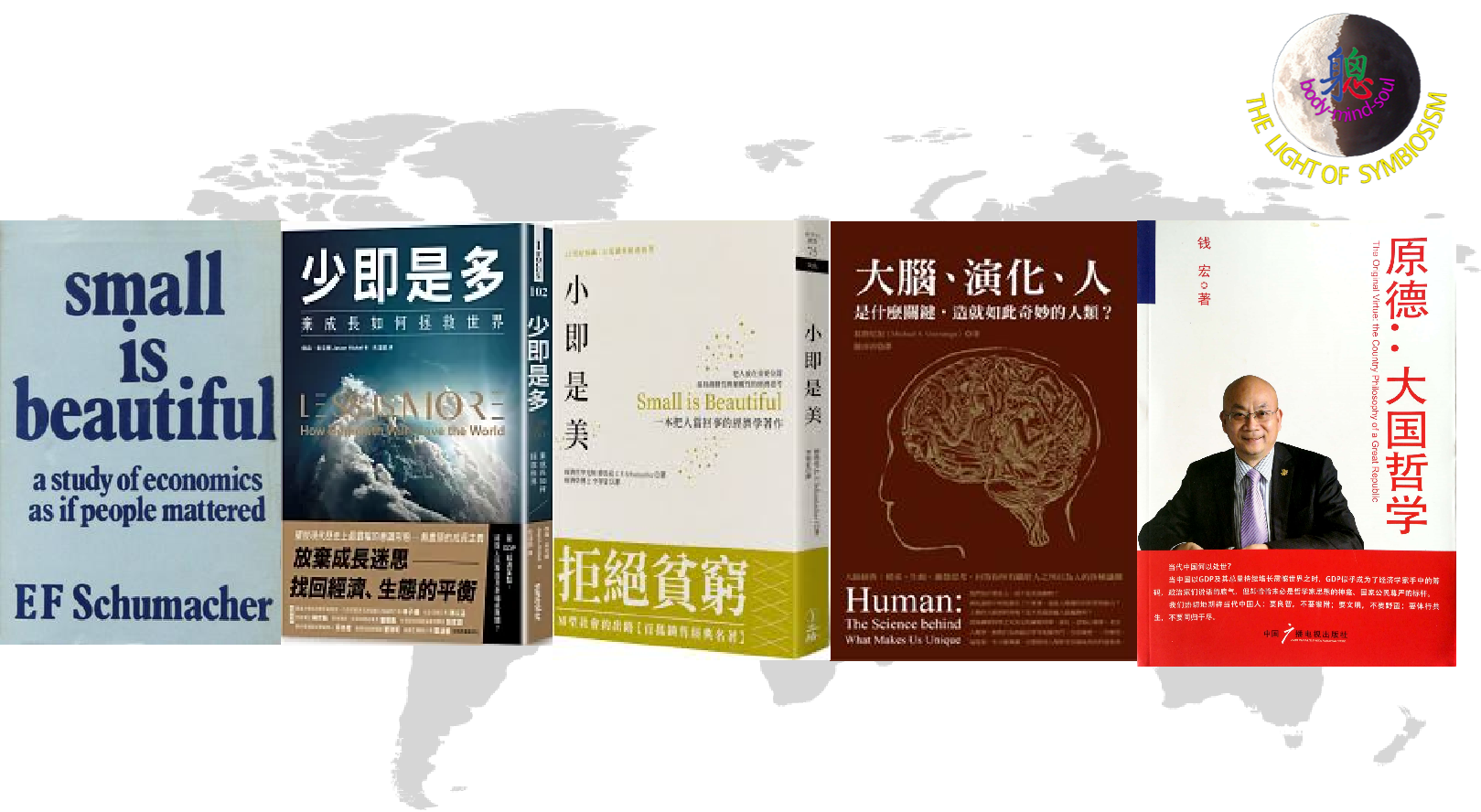
今天,地球的東方這片最大的土地上的人們,也走到新的歷史轉折關頭:是繼續“天下為公”的假公濟私,強人為王、贏者通吃、循環取代“利出一孔,利入一孔,流氓輪流坐莊”——馭民強國的老套路,還是重建社會“以社會建設為要務”,改弦更張依憲行政(始於1908後,有1912,1946,1954,1978,1982諸多版次),官民Live and let live交互主體,而轉化為“小即是美”的社區、市場、政府三大自組織力相互作用共襄生活的聯邦共生體制?一種可能的結果是,由此引出“重建有社會的中國特色社會主義共和國——實際上人們將不難發現,中國是工商文明普及全球以來,世界上第一個實行自己獨創的共生政體的“立憲共生國”!(參看《中國:共生崛起》,知識產權出版社,2012.5)。 “你中有我、我中有他、他中有你”的交互主體共生思想,超越了自我中心的“自己人與非自己人”的二元對立的主體思想,也超越了“排他性共同體”的泛多元論思想,是處理當今世界人際關係、群際關係、國際關係、星際關係、生態關係的全新思維範式。可望引領超越諸如國際關係中的所謂“修昔底德-升降恐懼陷阱”,官民關係中的所謂“塔西陀陷阱”,人際關係中的“出人頭地-信任陷阱”、群際組織關係中的“Trust信託陷阱”,走向共生。 隨着AI-AGI技術的發展和普及,人類思維方式、生產方式、生活方式,價值參量與組織形態必將發生空前改變,包括銀行、政府、國家在內的一切Trust組織平台如夢幻泡影,大國消亡是必然趨勢,取而代之的是小即是美的邦聯形態。瑞士不僅是世界第一個共和國,也是世界第一個共生國。瑞士聯邦之美,將重新被發現,成為全球國家新形態的楷模。 終止俄烏戰爭的第三條道路 現代政治文明是以規則為基礎的自由和平等,但有兩種政體方式:自由×平等法律=民主;自由+不平等法律=專制。 但是,在民主政體與專制政體之外,還有一種和尚打傘無法無天的威權或獨裁體制,嚴格說,是一種結黨營私貌似大一統而實際管理混亂,資源極度浪費的舉國政體!這種政體,從歷時性上,是現代政治文明的反動,卻又與民主政體、專制政體共時性存在,是現代政治機體中的腫瘤,會吞噬消耗浪費機體大量能量,造成熵增效應,讓機體走向死寂而崩解。 2014克里米亞危機和2022.2.24俄羅斯悍然發動對烏克蘭的“特別軍事行動”,就是存在於民主政體與專制政體之間的獨裁政體,侵蝕現代文明機體的腫瘤擴散案例!這場類似於1939年俄芬“春季戰爭”的俄烏戰爭,到今天已經880多天,打成了拉鋸戰和“生命、資源”消耗戰,不僅雙方傷亡慘重,而且迫使國際社會自冷戰結束三十多年後,重新分裂為民主、專制兩種陣營的對壘,二戰後包括“聯合國安全理事會”和“北大西洋公約組織”在內的所有“國際安全架構”全部失靈。 有趣的是,又是小而美的瑞士聯邦,挺身而出,答應牽頭舉辦“瑞士和平峰會”(Summit on Peace in Switzerland),這是是二戰後第一次非聯合國主持下的世界和平會議,意義深遠! 鑑於如果“烏克蘭反侵略戰爭”,不能儘快決勝,或戰場上取勝遙遙無期,俄羅斯也顯然拖不起,不如儘快先在現有國際法和聯合國憲章框架下,實行雙方採取“止損”“止盈”終戰方式。這裡,我作為Intersubjective Symbiosism Foundation公益組織代表,對“瑞士和平峰會”與會者及一切渴望結束戰爭恢復和平秩序的人們,說三點意見: 第一、2024年初,我應《文化中國》總編輯梁燕城的邀請為118期寫的“卷首論語”,提出過一個實現和平的思路和和平方案。當烏克蘭戰爭打到第三個春季,進入相持階段時,實現“公正和平”的呼聲及不同的和平版本,浮上檯面。歸結起來,無非是以烏克蘭總統“十點計劃”為核心的版本和以俄羅斯總統“新領土現實”(含克里米亞“主權”)為核心的版本,但是,單方的和平版本無論支持率多少,和平協議都很難達成。我提出介於兩者之間的“第三條通道”,就是“止戰/止盈”的三條思路: 1、俄羅斯軍隊分兩階段撤出所有被占領的烏克蘭領土(在烏克蘭1991年國際公認的邊界內) 第一階段:俄羅斯2022年2月24日。 第二階段:俄羅斯2014年占領的克里米亞和為確保安全有序撤軍,國際維和部隊(主要由歐洲國家領導)將撤出所有被占領的烏克蘭領土。 2、對五個爭議地區及其潛在的新主權的特殊保護 為促進烏克蘭重建並解決揮之不去的擔憂,烏克蘭正式承認五個地區。然而,烏克蘭可以同意允許這些地區在嚴格的國際條約下成為新的主權國家,而不僅僅是承諾“特殊保護”。監督國際組織(聯合國託管理事會、聯合國人權理事會)和國際維和部隊。這種方法並不意味着烏克蘭以土地換取和平以確保持久穩定——1994 年《布達佩斯備忘錄》就是一個例子)。 3、 政治平衡:俄羅斯最西部地區的新主權國家 作為一種政治平衡行為,俄羅斯孤立的加里寧格勒州(與俄羅斯本土沒有陸地邊界)也可以在國際監督下被考慮成為潛在的主權國家。這個新國家可以命名為“柯尼斯堡共和國”,以紀念伊曼紐爾康德(《永久和平》的作者)、大衛希爾伯特(著名數學家)和 ETA 霍夫曼(著名作家)。 4、權衡:解除制裁和撤銷戰爭罪指控 作為這些措施的交換,國際社會將: 撤銷對俄羅斯領導人入侵烏克蘭的戰爭罪指控。解凍尚未沒收的俄羅斯外匯儲備。俄羅斯,這個為世界貢獻了羅蒙諾索夫、普希金、托爾斯泰、門捷列夫、柴可夫斯基、安德羅波夫、索爾仁尼琴和葉利欽的國家,也必須被允許重建——不能讓它完全崩潰。此外,烏克蘭和俄羅斯必須最終建立一種新的共存關係。 如果這條“第三條道路”能夠實施,它將實現: 1. 永久結束俄羅斯的戰略擔憂這將消除俄羅斯的地緣政治焦慮,讓普京有尊嚴地退出,防止俄羅斯進一步利用歐洲的資源作為擴張的藉口。 2. 解決烏克蘭內部的文化和種族衝突這個解決方案將解決烏克蘭內部的三個關鍵緊張局勢:宗教分歧(希臘天主教會與俄羅斯東正教會)語言分歧(烏克蘭語使用者與俄語使用者)經濟分歧(發達的中西部地區與烏克蘭可以集中精力進行重建,東部地區及克里米亞可以發展成為小國但富強的國家,類似於瑞士、比利時、芬蘭、新加坡、荷蘭、盧森堡、波羅的海國家等的成功典範。 3、人工智能時代全球安全重構藍圖這一框架可以作為以聯合國為基礎重建二戰後國際安全體系的樣板,為順應生態文明和人工智能時代的“全球共生公約”提供現實動力。 第二、烏克蘭戰爭結束之後,隨着AI技術及哲學革命的普及,2024、2027年始,到2035年,未來已來的十年,超主權、超地緣、超文化的“大而無當,小即是美,交互主體,全球共生”將成為大勢所趨! 一種可能的世界格局是:象二戰後的英聯邦一樣,俄羅斯、中國、美國、印度都將蛻變為若干小即是美的共生國。烏克蘭實現和平後,俄羅斯為了融入世界擁有未來,必然會重心東移,甚至首都東遷,將杜金的“歐亞主義”,修改為行“亞歐主義”,而且,這樣的修改,必定包含遞交侵害中國的“投名狀”,與歐美各國將經濟、政治、軍事重心東移,安倍生前提出的“印太戰略”,構成一種無形的跨時空意間的呼應,特別是,假如川普2024大選勝出,中國當年背蘇投美的歷史,大概率將有一個相反的劇本重演,而且,國際社會將慢慢覺察到,這個劇本已經從朝鮮、越南、阿富汗、哈薩克斯坦分配戲碼,還會有印度、蒙古、甚至日本角色分工開場。如果“歷史自有他的必然性”(黑格爾),其實,即使民主黨人如哈里斯接任美國總統(對不起,拜登做對了許多事,但在大戰略上顯得過於精明而軟弱),這個相反的劇本,仍然可能發生! 但是,我把話放在這裡:新時代“小即是美”的國家行為體形態,不必再模仿、重複過去的歷史事件,而是要弄清自己存在的內容及方式方法,當代人不需要模仿、迷信古代人,歷史也不需要刻意地“重演第二次”。 今後,為了讓人們能自律、自由、自在地創造生活,凡是發生持續邊界物理空間爭議地區的當地人們,只要自願組合,就可以成為一個主權國家。比如當初成立的瑞士、比利時、盧森堡、摩納哥、新加坡、捷克、斯洛伐克、克羅地亞(領帶發明之地),現在的利伯蘭(Liberland,位於塞爾維亞和克羅地亞交界的7平方公里的地方),甚至在Web3-AI迅猛發展和普及下,包括突破地緣政治和物理空間限制更充分發揮個人權能及其生命自組織力與外連接平衡力的“網絡國家”“微國家”“AI虛擬城市國家”(擁有虛擬物理空間、數字利益相關者,市政廳、協作工作空間、商場、企業孵化器和非同質化代幣藝術畫廊,及某些所謂“元宇宙”)的出現,也不必大驚小怪,只需要人類富有愛之智慧,改寫世界秩序而已。 因此,即使按時至今日依舊懷揣大國沙文主義清秋夢想的杜金,1997年《地緣政治的基礎》的構想(俄羅斯數所大學採用為地緣政治相關學科的教科書),一時奪得中國整個北方區域作為所謂“戰略緩衝區”,不因為中國,不因為美國,更不因為北約東移,俄羅斯自身仍然會因時代變化內外開放的需要,分解為近40個國家。 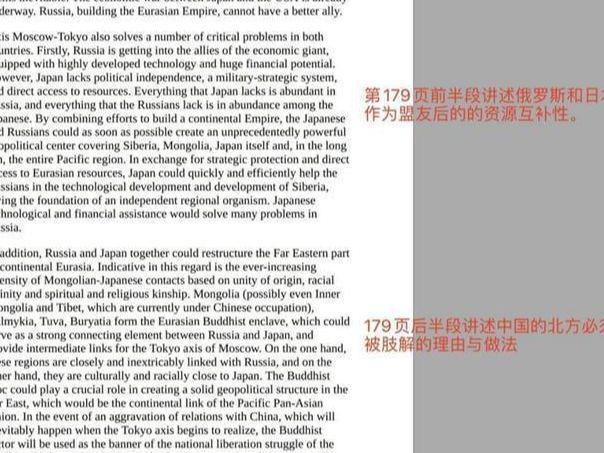
而且,中國和俄羅斯一樣,即使中國按“杜金戲碼”奪得除越南以外的東南亞及澳大利亞,奪得除越南以外的東南亞(包括台灣)及澳大利亞,也將因為“421”結構嫡親數量的減少、政治幫派的膨脹、經濟結構的失衡和衰退,延續數千年的親族網絡及其束縛個人、社會自組織力而“求同存異大一統”的宗法倫理,愈益不合時宜(當代中國人重新回到面對巴金《家》中展現的問題),必然會分家為近30幾個“小而美”國家⋯⋯ 最後,輪到美國,可能分離為近38個國家(13個最初獨立的小州可能葆有合眾國),加拿大至少分家為9個國家(人太少了),印度將分裂為東西南北中5個國家(巴基斯坦不但不會重新併入印度,且很有可能再一分為二)。巴西、阿根廷、印度尼西亞、伊朗繼續其“大而小”的國家形式,英聯邦(有益無損)將成為“鑄劍為犁”的聯合國新結構形式……到那時,全球國家級的共生體組織形態的總數,將與地球一年自轉365周數大致相當,一日一國慶(地域文化特色,而非政治、經濟特色)。於是,大而無當,小即是美,甚至老子的“小國寡民”的國家組織形態,將成為地球村的預言——從而開啟這個星球“小而美”的世界新紀元、新天地!(《“小即是美”的國家形態將應運而生》symbiosism.com.cn/7990.html)。 第三、面對“主權(官權)-人權(民權)-工具理性(如AI權)危機”,當今時代,這場戰爭打得越久,促使人類反思的問題就越多。 我相信,烏克蘭取得反侵略戰爭勝利的劃時代意義,必將促使人類更透徹地反思過去500百年“戰爭與和平”的歷史:“三十年戰爭”後《威斯特伐利亞和約》(1648),二戰後《聯合國憲章》(1945)和《世界人權宣言》(1948)形成的世界理念,改變作為二戰勝利者操縱拼裝世界版圖的格局——如幾個大國設置的聯合國安理會常任理事國——而重建世界新秩序,人類將進入包含《AI憲章》內容的《全球共生公約》(Global Symbiosis Convention)新時代。基於《全球共生宣言》(Global Symbiosis Manifesto)與《全球共生公約》,超越“民主-專制-獨裁”和“人權-主權-理性工具”衝突,又非排他性“超級世界政府”共同體性質的共生體——“全球共生理事會”(New UN Global Symbiosism Council,可以將“託管理事會”與“人權理事會”合併、更名、充實功能、改變成員構成而來),將應運而生(錢宏主編:《全球共生:化解衝突重建世界秩序的中國學派》Global Symbiosism:Chinese School of Defusing Clashes and Rebuilding the World Order,晨星出版社,2018)。 這樣,結束俄烏戰爭,改寫世界秩序,18世紀柯尼斯堡(Königsberg)小鎮上數學“大衛王”希爾伯特的前輩老鄉哲學家康德提出的“永久和平”幻想,就可能成為現實:惟交互主體共生意識的提高普及,“讓任何統治全世界的帝國政治企圖成為不可能”(《地球新文明:這世界亟需交互主體性的共生智慧!》symbiosism.com.cn/7980.html)。 國際關係學將面臨範式重塑 還是那句話,當今世界,總體上不缺技術、不缺資本,國際社會的一切危機,都是哲學危機! 當我寫下這個題目時,卓別林在《大獨裁者》中借理髮師查理之口,說出了“大自然足夠慷慨,但奢侈貪婪將毀掉一切”那句話,猶在眼前⋯⋯而電影《逃往雅典娜》,領導保衛城鎮和修道院的教授,有句台詞說得更地道:“沒什麼你方我方,這裡只有河流、山脈、村莊、人和家庭,國家是抽象的。”當一個區域的人被奴役剝削,且任何反抗都被官粹(Elitism)精英斥為民粹主義(Populism),這裡的山河鄉村社區生活被摧毀破壞時,國家不只是抽象,更是空洞而尚黑的! 繼解放人的體能的工業革命之後,解放人的智能的Web3-AI時代——建構人類孞聯網(MindsWeb)——來臨之際,讓人類摒棄“東西南北中左右,江湖廟堂農工商”等Trust(信託及價值承兌憑證)中介性排他性共同體的種種優先預置立場(目的),回歸交互主體人共生(Intersubjective Symbiosism)成為可能。 所以,觀察谷歌、OpenAI、Mate、馬斯克們之開源/閉源、放能/吸能、驅動/制動⋯⋯之爭,人類已然超越向左向右、南轅北轍、孰公孰私、激進保守的糾結,而開始明晰反顧:是否偏離生命自組織與外連接動態平衡的生活恆情、恆態、恆道問題,歷時性地成為重塑國際關係學的根本課題! “國家行為體”在新的國際關係學中,將遵循“小即是美(Small is Beautiful)與大而無當(large but impractical)”的哲學認知展開敘事。 這個哲學認知,就是重新發現青年馬克思和恩格斯1845年在《德意志意識形態》發現的第一歷史原理:“全部歷史的第一個前提,無疑是有生命的個人的存在”。只要我們將這一發現,放進Intersubjective Symbiosism語境中,新的意義就顯現出來了:個人權能及其生命自組織靈動力與外連接平衡力,是人類社會文明創化的源頭活水! 所以,國際關係學的理論建構,不妨擱置所有的主義、範式之爭,回歸這一事實——能夠創造強大個體、家庭和社區生活的國家,才是健康正常真正偉大的臻美共生之國家。一切抽掉個體、家庭、社區“眾私”的空洞化的“天下為公”的意識形態之下,無論打出現實主義、理性主義、革命主義的名號,行國家主義(民族主義)、集體主義、官粹主義(Elitism)或民粹主義(Populism)、共產、大同、小康之實,還是冠冕堂皇強詞奪理收割個體、家庭、社區,使得自己表面一度看上去無比強大,但是,如果這種冠冕堂皇和無比強大的背後,沒有能力創造強大的個體、家庭和社區生活,就必然陷入停滯和僵化。 這是因為它在壓抑、扼殺個體、家庭、社區活力(自組織靈動力與外連接平衡力)的同時,必然陷入“集權悖論”——壓抑、扼殺個體、家庭、社區的活力集中起來的權力,也註定要落在人格化的某個個體(聖上、“特殊材料做的”領袖、領導同志)身上,而任何單一個體,一旦獲得不予設限的特權和資源,其自身註定無法逾越的局限——認知局限、願行局限、身心靈健康局限,以及結黨營私、假公濟私的局限,且這種局限絕不會因其掌控了高效集權工具(有兵在、強力部門、數字集權工具)而改變,結果“十億顆腦袋等於一顆腦袋”(《杜潤生文集》1464頁)的“大而無當”(Big but useless)顧此失彼的殭屍性歷史悲劇必然會上演——集權悖論對一個區域自然、社會和人的身心靈的傷害,是顯而易見的,陷入政權更迭宮廷內外六親不認的窩裡鬥和“一將功成萬骨枯”“興百姓苦,亡百姓苦”的所謂治亂循環旋渦! 在可預見的將來,Intersubjective Symbiosism意識作用下的人類個體和各種共同體組織奮鬥的路徑和形態,以及所有相應的物化評價標準,都將發生歷時性與共時性改變! 當全球生態文明凸顯“增長的極限、對抗的極限、恃強凌弱的極限”三大極限共時性疊加之際,用GDP(國民生產資本增值/減值總值)衡量人類福祉,顯然已經非常不合時宜,因為國家、企業單位消耗了天量資源成本所得收益非常有限,只不過比拼GDP的人們把這天量成本駝鳥式地藏在地毯底下視而不見。結果是在比拼這種成本收益不成比例的GDP炫目成果中,迷失了發展經濟的目的和方向,即用最少的消耗獲得最大的福祉! 這種迷失,同樣表現在對科技、政績的獎勵與GDP掛鈎上。從人與自然、人與社會、人與自己身心靈健康三大交互主體共生關係上看,只要回歸“用最小能耗獲得最大福祉”的經濟目標,共生智慧要求科技和政治,勢必是走向有機、溫和、非暴力、優雅、美麗的新方向。 而與這一新方向相恊調的經濟參量,就只能是代表國民“時空意間”轉換中能效/能耗成本收益率的GDE價值參量,及其自然、社會、家庭、社區、企業、政府六大資源(資產)負債統計表,以衡量人們的政治經濟組織行為是否偏離了“生產回歸生活,生活呈現生態,生態激勵生命,一切為了人的身心靈健康”的基本目標——即用最小能耗獲得最大福祉?!由此觀之,國家規模、企業規模、經濟體規模、以及一切Trust組織規模,都不是越大越好,而是規模恰到好處結構功能正常地體現為“小即是美”的最小消耗獲得最大福祉生活方式的創新與再選擇。 隨着Web3-MindsNetworking、區塊鏈技術的普及和AGI(人工智能)的出現,更使人的社會生活去軸心化成為可能。稀缺性問題的解決,無條件“普遍基本收入(UBI)”成為現實,於是,每個有生命的個人和小即是美的國家,都將充分發揮精神體能及生命自組織力與外連接平衡力,沒有大國特權操縱,也沒有集團資本壟斷,及其勾兌(既沆瀣一氣人作韭菜又勾心鬥角人當炮灰),任何統治全世界的帝國政治企圖都將成為不可能! 國家行為體,於官於民,都將清楚地意識到並自覺遵循Intersubjective Symbiosism思維方式和價值取向,處理人、事、物,質、能、孞,你、我、他(她它祂)全生態關係:天下為公,公中有私、私異而活、和實生物、同則不繼,所以,私不可怕,怕就怕以Subject自居,視他(她它祂)為Object,而結黨營私、以黨代公、黨同伐異、同而不和,從而侵犯或僭越別人(他者)生命私域自組織活動的權能,造成“Evil and let eivl”的互害共死局面!於是,中國古人講究和而不同、君子不黨,西人講究文明非暴力、私權契約邊界、自由通商、法治公平,生命私域自組織與生命公域外連接平衡,存同尊異、開放賦能、間道競合、降本賦能,從而形成Live and let live的交互主體共生格局! 區別於生態野蠻(戰爭)的生態文明(和平),Everything Intersubjective Symbiosism(凡事交互主體共生),歷時性連接:八大最真福音(希伯來)、六大最善約定和踐約(希羅英美)、十大最美觀念(印夏先秦)的智慧遺產;共時性貫通:正負微電宿寄主、精卵雄雌你我他,東西南北中左右、江湖廟堂農工商,古今階段文明愛、科技人文生態美! 國際關係學的社會再平衡理論 既然國際關係學的精神內核,即是天人(自然)、人我(社會)、心物(時空意間)交互主體共生,而交互主體共生又是一個關係過程,那麼,全球化的形態就不是靜態不變,而是在動態平衡中行進。 從國家行為到國際社會,全球化是一個從“社會資本化”到“資本社會化”的過程,所以,不以任何同質化、排他性的“超級經濟共同體”(Super economic community),尤其主權(民族)國家或主權國家“聯盟”為單位共同體之“產業鏈、供應鏈、價值鏈三鏈趨勢的零關稅、零壁壘、零歧視三零規則”全球化。這就不同於19世紀末至當下,出現的從“東亞共榮圈”“軸心國”,到WTO、G7、G8、G20 ,抑或南南、上合、金磚,包括UN等依次出現的所謂國家聯盟或共同體,都或多或少具有“圈子”(Coterie或Tribes)主體支配的訴求和性質——“以圈為體,以方為用”,視圈內“自己人”為主體,圈外(他者)為客體,而圈內又有一個支配性的主體,其餘為附庸——所以,重塑後的國際關係學的理論訴求,必然要“超越小圈子,彰顯大格局”,因而接下來的國際社會,必是一個“小即是美”“小即是大”的超主權、超地緣、超文明共生體(Global Symbiont)的組織形態,遍布全球。 小即是大,小即是美,是指凸顯不同主體的特殊結構功能Intersubjective Symbiosism,展現出來的社會魅力。 於是,為了適應小即是美的新國際格局和生態文明建設的需要,國際關係學研究對象的國家行為體,需要一種具體的社會再平衡理論,加以規範。即通過社會平衡、再平衡權力、資本(資源)分配機制,充分發揮每個人的精神體能及其生命自組織力與外連接平衡力——從追逐“權、錢、性”陷入“忙、盲、茫”奢侈浪費的生活方式,到實行一種人人健康、簡約、高尚、富有尊嚴而可持續健康幸福的自美其美、美人之美、美美與共、共襄生長的普惠生活方式,從而創建一個共生世界! 社會再平衡的第一要義,是組織生態平衡:政府自組織、市場自組織之外引入社會自組織(包括社區性、國際性的各種NGO),形成三大組織力互不隸屬相互作用共襄生長的格局,相應的職業、勞動關係,是“佃戶制”“僱傭制”向“合作制”“夥伴制”的轉變; 社會再平衡第二要義,是行為價值平衡:把經濟活動中不同勞動(白領、藍領、金領)的價值,落實在定價機制的平衡上。比如,加拿大人的做法是,最苦最髒最累的活兒單位價值率最高,比如垃圾工、清潔工、護士等藍領勞工每小時工資75$、46$,而銀行辦公室等白領每小時工資15-20$,所以,在這裡沒有我們中國人那種歧視低端人口的等級觀念,媽媽指着街道清潔工教育孩子“你不好好讀書,以後就象他/她那樣”,這教育背後的深厚文化根基,是秦制漢儒後社會等級固化下的出人頭地(宋真宗《勸學篇》書中自有黃金屋顏如玉相誘); 社會再平衡的第三要義,是國民待遇平衡:從生養教育、醫療、退養等福利機制保障(哪怕你只是消費者也是納稅人)完全普及(社會不 “養懶人”,但會“養傻人”“養弱者”),到OpenAI總裁山姆·奧特曼期許的“全民基本收入”( Universal Basic Income)制度設置; 社會再平衡的第四要義,是科技人文平衡:Web3區塊鏈應用分布式去中心化創造的元宇宙,讓包括政府、企業、行會等等Trust在內中間人平台機構操控、脅迫、剝削和壟斷“解釋權”現象,降至最低限度,馬斯克們的擔憂、奧特曼伊利雅們的磨合展望,人們漸漸懂得,沒有人文的科技是危險(創新脅迫)的,而沒有科技的人文是愚昧(巫術盲目)的,可是似乎忘卻了,缺乏哲學思維和價值的科技與人文,依然是沒有方向感沒有靈魂的Flight⋯⋯惟有新價值、新思維、新生活的創造,永無止境(交互激勵是必須,比拼輸贏是多餘),哲學、科技、人文形態,將繼續相互作用共襄生長,追尋和展現無限可能的世界; 社會再平衡的第五要義,是愛之智慧平衡:當代人類遭受何種際遇,政教信仰、科技人文、性別行為,都不得以損害他者(她它祂)為前提的底線思維,在live and let live共生哲學語境下,針對性地交相應用好四大古老金科玉律:1、Do to others as you would have them do to you(金律:待人如己,推己及人),2、Do unto others, do not impose on others(銀律:己所不欲,勿施於人),3、To give joy to others as one desires for oneself(銅律:己之所欲,樂施於人),4、An eye for an eye, a tooth for a tooth(鐵律:以眼還眼,以牙還牙)。 這樣,國家行為體社會再平衡之精神內核,通過對天人(自然)、人我(社會)、心物(時空意間)三大關係交互主體共生(Intersubjective Symbiosism)的重新定位,終極標準參照系就出來了——一切為了人的身心靈健康! 一切歷史的創造,都始於思想創造,一切現實的改變,都始於思維方式與價值取向的改變。現代政治文明的“四大自由”(Freedom of speech、Freedom of worship、Freedom from want、Freedom from fear)與當代生態文明的“三大自組織力”(Citizen self-organization、Society self-organization、Government self-organization)哲學融合——將四大自由寓於三大自組織力之中,亟需一個共生價值公約。 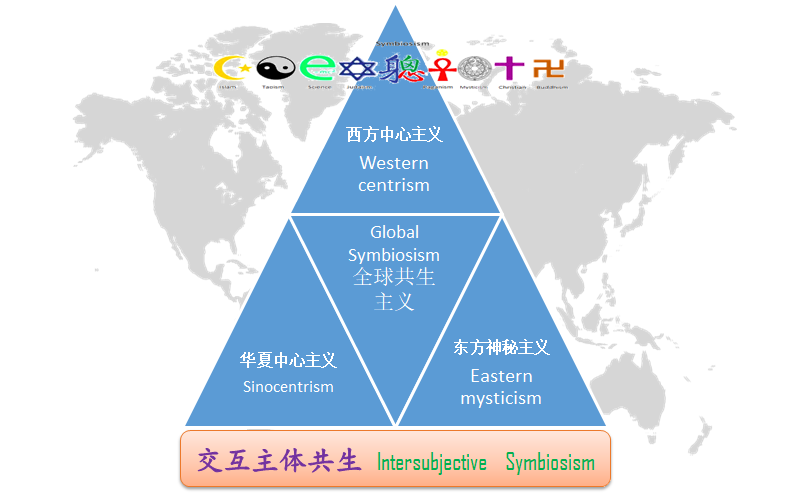
2013年參加第23屆世界哲學大會始,在雅典大學,在波茨坦萊布尼茨研究所,在倫敦政治經濟學院,在芝加哥大學……訪問,我漸漸有了這樣一種感悟:我們當代人,註定要自創範式,而不是在現成範式——西方中心主義、東方神秘主義、華夏中心主義——中尋找安身立命之所。 這樣一來,神助自助者,普渡自勵(弱)者、自律(強)者,無需再來任何地上的外在普渡者(Purdue)、救世主(Savior)、哲人王(Philosopher king)、信託者(Trust)、軸心組織平台的駕馭或代勞,也無需共產、大同、烏托邦,一切皆為心約——律法之約、福音之約、共生之約,新耶路撒冷城建在作為生靈之殿的人的心裡,必結絢麗多彩的聖靈之果!於是,像諸多一般知識及學科教育一樣,始於一戰的作為研究“國家行為體”的國際關係學,也就可以從哪裡來回哪裡去了! 今天,從軸心時代邁入共生時代之際,我們不難發現,從“自然世”(Naturaropocena)的共生起源,到“人類世”(Anthropocene)的共生底線,再從“人類世”到“地球世”(Earthropocene)的共生靈魂,惟有茫茫宇宙中小小地球的生靈自組織力與外連接平衡力的共生與非共生,決定人們展現張力、穿透力和潛力組合,及其相應的榮辱、毀譽、成敗之光輝⋯⋯ 親愛的造物主啊!當我置身於浩瀚大海,仰望星空,俯念蒼生,忽至亙古長存的冰川,生者如斯夫,消長平衡,不舍晝夜,實實在在地見證着禰的原德真諦,生命竟僅存於逆熵的時空意間之道——造物主的愛之智慧! 孞烎2024年7月1-18日於溫哥華-阿拉斯加-溫哥華 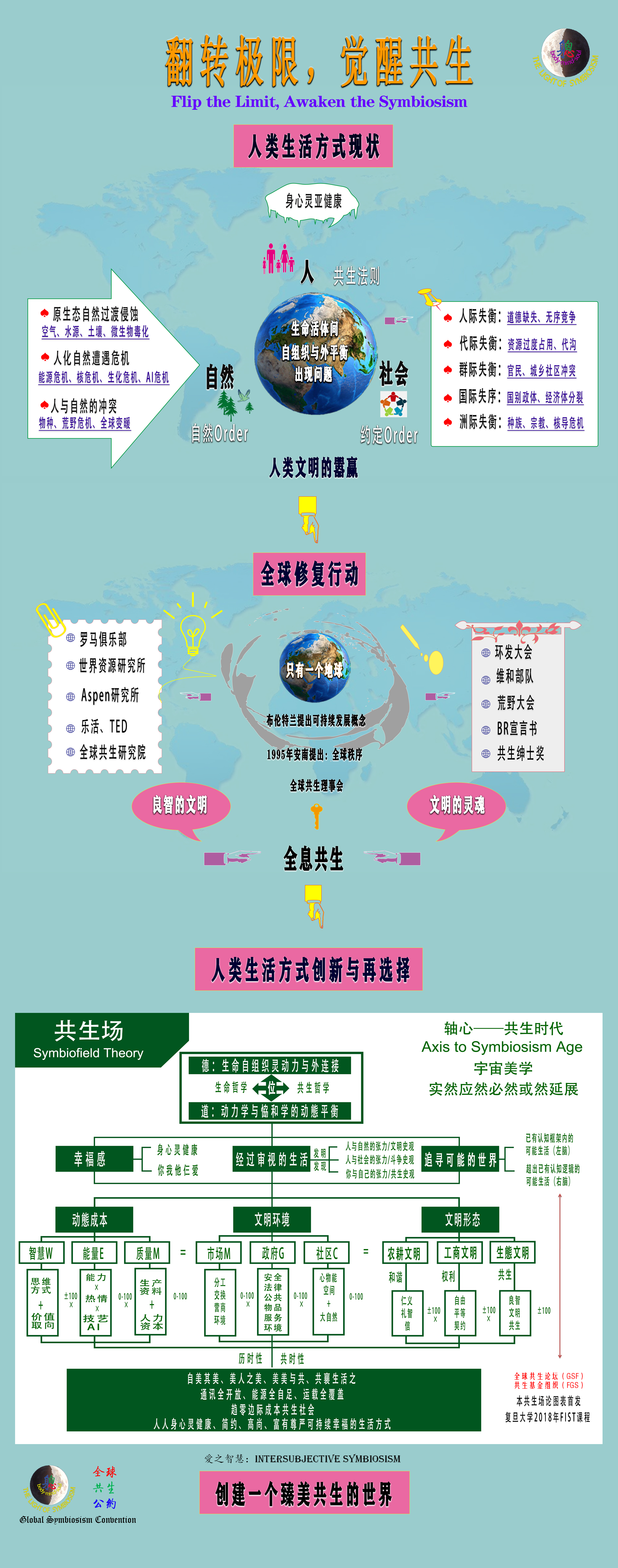
Email: hongguanworld@gmail.com;Mobile: +1(604)690 6088
Ending the Russia–Ukraine War and Rewriting the World Order Intersubjective Symbiosism Reshapes “International Relations” Archer Hong Qian (Intersubjective Symbiosism Foundation) Epigraph. Michael Polanyi once observed that “any attempt to rigorously eliminate the human perspective from our picture of the world must lead to absurdity.” By the same token, any political sermon or theoretical construction that attempts to purge the “personal agency—and its intersubjective symbiosis of life’s self-organizing external linkage, balance, and rebalancing”—from the category of the state actor will ultimately plunge the world into disaster.
Table of Contents From the Warring States era’s positioning of the “state actor” The cognitive blind spots of contemporary International Relations Rethinking IR theory “Small is beautiful”: the state form that is bound to emerge A third path to end the Russia–Ukraine war IR faces a paradigmatic reshaping A social rebalancing theory for International Relations
From the Warring States Era’s Positioning of the “State Actor” Richard Ned Lebow once wrote that “international political thought is as old as the earliest autonomous political communities” (2008). In ancient China’s Warring States period there were, broadly, two approaches to what we would now call “international relations.” The first, reflected in Chronicles of the Eastern Zhou Kingdoms, taught that “there is no better way to preserve the state than to secure the people; there is no better way to secure the people than to choose one’s alliances wisely.” Su Qin, who bore the seals of six states, said in effect: the foundation of securing the people lies in choosing allies; if the choice is right, the people are secure; if it is wrong, they are insecure for life. The second approach—associated with the Book of Lord Shang—sought to “rule the people” through five techniques (unify, weaken, exhaust, humiliate, impoverish—and if these fail, kill), thereby strengthening the state. Thus the state actor, the object of IR study, has always had two faces: internal and external. At the core of both lies the same question—by what strategy does the ruler govern the people: by choosing alliances to secure the people, or by ruling the people to strengthen the state? History records that the “rule-the-people-to-strengthen-the-state” strategy triumphed through the Shang Yang–Li Si–First Emperor reforms, including a “penal-labor economy.” The state grew strong; slaves who excelled at killing could become generals (e.g., Bai Qi, who once buried alive 400,000 surrendered soldiers of Zhao). The strategy of “choosing alliances to secure the people” failed. Paradoxically, after Qin unified the six states, it imposed six “uniformities”—weights and measures, axle width, script, propriety, and territory—through a centrally controlled commandery-county system. Although this facilitated rule, the bloated bureaucracy could not be sustained; “killing the chicken for its eggs,” “draining the pond to catch fish,” and eating up capital led a state of six centuries to collapse in the second generation. The population of the eastern lands shrank dramatically, and the last vestiges of nobility dissipated. Since then, this school of strategy—power masked by ritual and thaumaturgy—has had repeated successes, yet after twenty-six cycles it has never escaped history’s vortex. If we hold up these twin “mirrors” to today’s international society, two shadows still appear: so-called states “whose sovereignty rests with the people,” and states “whose sovereignty rests with officials.” Placed in the modern context of constitutionalism—after the Magna Carta (1215), the English Bill of Rights (1688) and Toleration Act (1689), the Peace of Westphalia (1648), and the Universal Declaration of Human Rights (1948)—the key IR question becomes: how does the state actor handle the relationship between sovereignty (official power) and human rights (popular power)? International relations are, in essence, interhuman relations. The prior logical premise is this: the precondition of sovereignty is human rights; human rights are the purpose of the sovereign state. Under the constraints of constitutionalism, other rational and non-rational instruments—statecraft, legal order, technological invention, humanistic trends, goods and services, and even fiat money, tokens, the UN, networks, the web, AI/AGI—can either constrain or empower sovereignty and human rights alike. The crux is the philosophy one adopts. Today, nuclear energy, transport, AI, and bio-engineering have amassed enormous power without matching wisdom—the wisdom of love. Before Cartesian dualism, the divinity of the “love of wisdom” overwhelmed humanity and rationality; afterward, rationality (systems, engineering, instruments) overwhelmed divinity. For the past century and a half, speculation about the future has migrated from philosophers to engineers, politicians, and adventurers; humanity drifts in a pluralistic ecology without a clear compass, with good and evil hard to discern. As the global theme shifts from “peace and development” to “war and conflict,” analyses framed as “ruling vs. securing the people,” “forging vs. choosing alliances,” “East vs. West,” “Left vs. Right,” “Elitism vs. Populism,” “liberal vs. conservative,” all rest on subject–object dualism. Rulers exercising sovereign power treat themselves as Subjects and those who should exercise human rights as Objects. This mindset is utterly unsuited to escaping the perils of rational tools that both fail and run amok—especially as AI and bio-engineering move from the external world into the human body and mind, directly shaping human ways of living. Engineers and philosophers must once again work hand in hand. Large language models, brain–computer interfaces, and the calibration of sovereignty and human rights all require philosophical support and integration. The age ahead needs consensus and covenants animated by the wisdom of love so that AI serves love, and humanity, rationality, and divinity become an intersubjective symbiotic process—thereby averting ecological wars born of crises in nature (including the human body) and society (including multiculturality). A third world war is not impossible; nor is an Anthropocene extinction that drags down the biosphere that has survived sixty million years since the fifth mass extinction—unless we choose wisdom. In A Brief History of Symbiosis: Children of the Universe (2018) we cited Annalee Newitz’s Scatter, Adapt, and Remember: How Humans Will Survive a Mass Extinction and posed the same question: Can humanity get through this? The Cognitive Blind Spots of Contemporary International Relations Yes—can humanity get through this? Across the major Western schools—old/new realism, old/new liberalism (rationalism), and old/new revolutionary thought—formulas have changed, but one constant remains: treating the state actor as the unquestioned Subject that commands sovereignty, human rights, and instrumental rationality, often bypassing constitutional limits. Whether a system is labeled capitalist, socialist, or statist, the question of whether it works in human terms is too often left unasked. IR also venerates a Talleyrand-style diplomacy—dexterous, influential, yet faithless. As Chinese say, “the truly able read the times.” Kissinger, author of Leaders and World Order, argued one could build relations with any state irrespective of regime type or human rights—interest above all—and criticized Trump and Biden for placing moral principles over interests. In this sense, Kissinger was the twentieth century’s Talleyrand in IR. In today’s world, states face two broad choices of political economy. One is enlarging the pie—“everyone can eat”—with no single ladle-holder, fostering innovation and exchange. The other is equal slicing of a fixed pie—“everyone must eat”—which presupposes a ladle-holder who plans and allocates, often producing involution. One is a wisdom-driven, incremental, innovative approach that lets the people recuperate; the other is a power-driven, stock-dividing, leveling approach that extracts from the people. At root, the divide is between a power-centric “our own men” and a rights-centric “we the people.” Where “everyone must eat,” systems often devolve into national-glory-ism—counting political scores rather than economic ones. The cultural toolkit—I Ching, Vegetable Roots Discourse, The Art of War, Standards for Being a Good Student and Child, Stratagems, Thick Black Theory, Elementary Learning—is repurposed for life-planning, politics, market timing, and management: all-hearing, all-seeing, clearing the field. In the end, either no one has a way forward, or all go down together. Paradoxically, people-centered capitalism (“everyone can eat”) is true: aggregate wealth grows through the accretion of countless private efforts; satiation and warmth foster rights in common and tolerance in difference. Because a public-spirited people-centrism boosts society’s self-organization, it is capitalism with society. By contrast, official-centered socialism (“everyone must eat”) is false: aggregate wealth shrinks as resources are consumed; hunger and cold breed breach of contract, privilege-seeking, and monopoly; people become chives to be cut, or cannon fodder. Because factional official-centrism kills social capital, it is socialism without society. Few in the IR community or among Western politicians and capitalists have noticed (Trump may be an exception) that—had Russia not reneged on the Budapest Memorandum and invaded Ukraine (2014–2022)—the Russian Federation from the 1990s to Medvedev’s presidency (2008) was experimenting with a path between “capitalism with society” and “socialism without society”: a societal, capital-enabled statism that delivered real welfare gains (see World Bank 2009; Original Virtue: The Philosophy of Great Powers, 2012). For a world supposedly fixated on “peace and development,” this is a historical irony. All creatures seek benefit and avoid harm. If we cannot live and let live, we will evil and let evil. The crux for any state actor is this: is its foundation the people or the officials? Society or party-clique? Philosophically, is our lens subject–object dualism or Intersubjective Symbiosism? Whether humanity survives the Anthropocene depends on understanding this common-sense premise of Intersubjective Symbiosism. Whatever the “-ism,” slogans, or promises, when viewed through this lens the three grand schools of IR (with occasional attention to non-state actors and IOs) share the same lacuna: their primary object of analysis remains the state actor. This leads to a shared blind spot: whenever a self-styled Subject treats the Other—whether another state, living individuals, or natural communities—as an Object to be dominated and plundered, producing conflict or war, IR either rationalizes acceptance (realism) or tolerates/appeases in the name of wholes (revolutionism). It largely ignores the generative, dynamic, and synergistic significance of individual living agency, thereby licensing arbitrariness toward others’ sovereignty and uncertainty in international relations (e.g., the Anschluss and partitions of the 1930s; today’s “special military operation” against Ukraine; the October 7 conflict). The result is ex post facto explanation rather than foresight—no robust theoretical direction for resolution, and blind zones regarding the intersubjective state of human rights–sovereignty–plural ecologies. No major IR theory foresaw the end of the Cold War, the repeated breakdown of UNSC great-power unanimity, or the societal impact of aircraft, smartphones, satellites, the web, computing, AI, and non-fossil energy. Rethinking IR Theory Per Wikipedia’s synthesis, International Relations (IR) studies the world system and its interactions. As a subfield of political science, it is entwined with philosophy, economics, history, law, geography, anthropology, sociology, and psychology. From globalization to sovereignty, human rights, territorial disputes, nuclear crises, nationalism, terrorism, climate change, poverty and hunger, sovereign polities, non-state actors, and IOs (UN, EU, AU, free-trade areas): all are IR topics. IR’s disciplinary self-consciousness dates to post-WWI. In 1919, the Aberystwyth chair marked a beginning; LSE and the Graduate Institute in Geneva followed in 1927; Chicago launched graduate study in 1928. Since 2000, realism, liberalism (rationalism), and constructivism have co-existed as three pillars; the object of study includes states, non-state actors, and IOs. Each school emphasizes different lenses from ideas to events across “global problems.” Before IR became a discipline, thinkers had long pondered these issues. As noted at the outset, both “choosing alliances to secure the people” and “ruling the people to strengthen the state” implicate IR. Martin Wight’s survey helps sketch three traditions. For realists (Thucydides, Machiavelli, Bodin, Hobbes, Hume, Hegel), international anarchy means no authority above sovereign states; war becomes the ultimate arbiter. Hobbes held that social contracts tame the war of all against all within societies, but such contracts among states are impossible: “Every commonwealth enjoys absolute liberty, to do whatever serves its interest.” By contrast, liberal/rationalist thinkers (Grotius, Locke, Bentham, Burke, Mill, Wilson) see IR first as international intercourse: sustained, institutionalized diplomacy and trade that discipline politics. Locke argued the state of nature is free but not licentious; humans are social by nature, disposed to peaceful and rational life; war is a deviation from reason. Revolutionists (Rousseau, Kant, Marxists, anarchists) maintain that although no authority stands above states, humanity forms a moral-cultural whole governed by obligations. Kant’s Perpetual Peace envisioned a league of nations emerging from reason. In Marxist futurity, the state withers away and a classless global society emerges. Yet all these bear an epistemic flaw: subject–object dualism, with the Subject dominating the Object. For realists the Subject is state power; for liberals, organized intercourse; for revolutionists, a moral–cultural whole; for constructivists (neo-classical, post-modern, natural), a structure of ideas. The failure of any IR theory to predict the end of the Cold War triggered a crisis of paradigm and method, the rise of post-positivism (reflectivism), and the ascent of constructivism (from 1989), culminating in Wendt’s Social Theory of International Politics (1999). Constructivists rightly ask how social constructs are possible and emphasize culture shaping identities and interests. Yet “ideas” themselves often embody power—the Subject in another guise. IR must confront the problems inherent in its own object of study—for today’s most urgent problems demand it. Since WWII the world has moved from the 1970s “stagflation” to a plethora of “global problems” (Ban Ki-moon): a global symbiosis crisis in which human rights, sovereignty, and AI collide. The Westphalian + UDHR order must be renewed. Since 2012 we have sought to build consensus through the Global Symbiosis Forum (GSF) toward a Global Symbiosism Convention—new rules for Human Rights–Sovereignty–AI intersubjective symbiosis—“reforming the UN” by establishing a Global Symbiosis Council, and localizing the style of existence into “small is beautiful” choices across states–organizations–communities. Thus the canonical Subjects—“state power,” “organized intercourse,” “moral–cultural whole,” “ideational structures”—lack a genetic, dynamic, and synergistic foundation: the personal agency of living individuals as intersubjective beings. When schools center the Subject’s dominance—power, intercourse, wholes, or ideas—they neglect the basic fact that the first premise of all history (Marx) is living personal agency interacting intersubjectively—only then can relations be mutually encouraging, constraining, and enabling, remaking the normal state of interhuman/international relations. Return to life: personal agency is “complete in itself yet never solitary.” In three planes—human and nature, human and society, human and self (body–mind–spirit)—its essence is creative harmony in difference. Hence personal agency unfolds as an intersubjective process of self-organization and external linkage–balance. Any abstraction of “state power,” “organized intercourse,” “moral–cultural whole,” or “ideational structure” that is cut off from living personal agency becomes an instrument for coercing and kidnapping persons, bereft of legitimacy, dignity, and nobility. Hence the muddle in IR around globalization, sovereignty, human rights, territorial disputes, nuclear crises, nationalism, terrorism, climate, poverty, hunger, sovereign polities, non-state actors, and IOs—and the growing normality, in the AI era, of personal self-organization and external linkage–balance across life. IR theory must therefore be reshaped. We must re-define the three great relations and complete a move from “you and I as insiders” to you, I, and the whole ecology of others—preserving commonality while honoring difference; channeling competitive cooperation; lowering costs and empowering; redeeming and sharing flourishing. Everything Intersubjective Symbiosism Across the three great relations—human–nature (heaven–human), human–society (self–other), human–self (mind–matter): Not “separation of heaven and human,” nor “fusion into one,” but intersubjective symbiosis—requiring fresh accounts of God and human, one and many, individual and whole, difference and sameness, virtue and way, yin and yang, latent and manifest, void and solid, essence and function, true and false, being and non-being, subject and object… Not “self–other antagonism,” nor “self–other identity,” but intersubjective symbiosis—resetting relations of interpersonal, intergroup, international, intergenerational, East–West, Left–Right, right–wrong, friend–foe, official–people (ruler–ruled, labor–capital, strong–weak), health–illness, supply–demand, righteousness–interest, security–risk, authority–freedom, desire–constraint, norms of culture, trust and fidelity, action… Not “materialism” nor “idealism,” but mind–matter intersubjective symbiosis—re-locating space–time, motion–stillness, light–dark, rule–measure, macro–micro, true–false, good–evil, beautiful–ugly, wise–foolish, walls–windows, bounded–unbounded…
Concurrently, observe the 15 inventions that transformed life since the mechanical and electrical ages—mostly in communications and transport (phone, computer, HSR, aircraft, fiber optics, satellites, washer, TV, car, LCD, metro, elevator, AC, chips, internet). Why? Because once communication is fully open and transport is fully covered, the next frontier is energy self-sufficiency. Under this “threefold completeness,” production and life move from cost-down empowerment to the elimination of scarcity. The AGI–MindsNetworking era—a symbiotic society of near-zero marginal cost—becomes thinkable. MIT researchers (e.g., Jiadi Zhu et al.) have demonstrated low-temperature processes to integrate 2D semiconductors directly onto silicon, promising better processes and faster fabrication. When nano self-powering or micro-fusion devices integrated with AGI permeate life, universal basic income (UBI) and the end of material poverty are no longer dreams. An industrial-commercial civilization centered on rights evolves into an ecological civilization centered on symbiosis. The medium of shared life (chiefly spiritual value) will no longer be sovereign currency but symbiosis tokens with agreed redemption value—superseding sovereignty, geography, and sectors—circulating across autonomous, regional, and planetary communities. Looking across history’s three civilizational logics—land power, sea power, human rights—we see layered evolution and synchronous optimization: Agrarian (land-power) civilization: possession of land/resources; feudal states; clan glory; kinship covenants. Industrial–commercial (sea-power) civilization: possession of capital/resources; free passage; commerce favoring agriculture; service to the people; gospel covenant. Ecological (human-rights) civilization: conversion efficiency of resources; intersubjectivity; self-organization; dynamic balance of linkages; symbiosis covenant.
Thus peoples in different civilizational states must adjust their structures and functions—selecting and innovating for an ecological civilization that dissolves axis wars and transcends civilizational clashes, rebuilding world order toward perpetual peace and global symbiosis. “Small Is Beautiful”: The State Form That Is Bound to Emerge Singapore’s Prime Minister Lee Hsien Loong noted in his 2024 New Year address that some societies have grown divided and fragile because leaders place self-interest above the national interest; in issues like the Israel–Hamas conflict, we must remain tolerant and respectful. A mature statesman, Lee identifies how elites who control TRUST platforms crowd out public interest; his remedy is mutual tolerance and respect among persons, groups, and states—both value orientation and pragmatic method. Philosophically, this is Intersubjective Symbiosism. What does it mean? In personhood, expand the “you and I” insider worldview to a holographic “you, I, and he/she/it/Thou” worldview. In organization, transform exclusive communities centered on power (“our own men”) into ecological symbionts normed by rights (“we the people”). In scale, convert unitary, nation-as-firm systems (great clans, conglomerates, empires) into a federal interplay of community–market–government as three self-organizing powers.
As Professor Ma Jun of the National Defense University quipped, “a large frame rarely ends well”—Greater Russia, Greater Serbia, Greater Germany, Greater Japan. Why insist on a “Greater China”? In symbiosis terms, “greatness” signals a self-centered Subject that prioritizes privileged access to resources and treats others as Objects to be managed—thus pursuing unification in politics, economy, and culture under a monopoly of power and privilege. This is a pathology—ill-suited to the Web3–AI era. All things have limits: large but impractical; small yet beautiful. The louder the call for “greatness,” the smaller the result. Emphasizing the personal agency of “small is beautiful,” together with life’s self-organization and external linkage–balance that aggregate into social power while limiting state power—that is true greatness and justice. Leaving aside regime labels (democratic, autocratic), observe recent events—Bangladesh’s abolition of quota reservations; Argentina’s assault on elite privilege; China’s 1989 anti-profiteering movement; the 1991 Eastern European transformations; Ukraine’s resistance to invasion. Each tackles the contradiction between a massive superstructure and an overburdened economic base. Each is a victory of intersubjective symbiosis. Wisdom means sensing gains and losses, knowing advance and retreat, and practicing symbiosis. The wisdom of love is stronger than any army or caravan, more expansive than seas and skies, and more powerful than any tyrant—precisely because it is small yet beautiful. E. F. Schumacher wrote in Small Is Beautiful: development can only proceed “up to a point.” Life, complexity, efficiency, non-renewable resources, the division of labor, and scientific method each has a proper limit. As Margaret Thatcher put it, Britain’s unique contribution to Europe was to prevent its subjugation to a single power; freedom and justice would have vanished under such unity. After Brexit, Europe’s politics illustrate that incremental, small-is-beautiful logics outperform stock-dividing, unitary ones in creativity and appeal. The Swiss Confederation—the world’s first republic—was born when alpine cantons of French, German, and Italian speakers freely federated under the Westphalian recognition of sovereignty. Singapore’s Temasek model funds public goods without punitive taxation, maintaining fair competition and social vitality. The Netherlands’ sacred contributions include Calvinist ethics, corporate/financial invention, Spinoza’s rationalism, the Mayflower legacy, the Glorious Revolution, and templates for the U.S. (1776) and China (1912). The East now stands at a new turn: continue faux-“all under heaven” patrimonialism—winner-take-all cycles—or rebuild society with constitutional administration and a federal symbiosis of community–market–government. A “Constitutional Symbiosis Republic” would amount to an original symbiotic polity (China: The Symbiotic Rise, 2012). “In you there is me; in me there is him; in him there is you.” This vision transcends insider–outsider binaries and exclusionary pluralism, providing a paradigm for interpersonal, intergroup, international, interstellar, and ecological relations—bypassing Thucydidean traps, Tacitus traps, mistrust traps, and trust-platform traps. As AI–AGI spreads, our modes of thought, production, life, values, and institutions will be transformed. Banks, governments, and states—as TRUST intermediaries—will look increasingly illusory; great powers will wither, replaced by confederal small-is-beautiful forms. Switzerland—the first republic—will be rediscovered as the first symbiotic state. A Third Path to End the Russia–Ukraine War Modern political civilization rests on rules of freedom and equality: Beyond these lies a monk-with-umbrella world of bald illegality—personalist authoritarianism disguised as national unity: factionalism, chaos, and waste. The 2014 Crimea crisis and Russia’s 2022 invasion exemplify how such systems metastasize within modernity. This war, now a grinding war of attrition, has split the world into camps and exposed the failures of post-war security architectures (UNSC, NATO). Notably, small-but-beautiful Switzerland stepped forward to convene a Summit on Peace—the first major peace conference not under UN auspices since WWII. If Ukraine cannot rapidly achieve victory and Russia cannot sustain the war, both should pursue stop-loss/stop-gain within international law and the UN Charter. Speaking for the Intersubjective Symbiosism Foundation, I offered three ideas (expanded here as four): staged Russian withdrawal; special protection and possible neutral micro-states for five disputed regions under international trusteeship/peacekeeping; a political counterbalance by transforming Kaliningrad into a “Republic of Königsberg”; and trade-offs—lifting sanctions and war-crime charges conditional on compliance and reparations from frozen assets. This could: (1) end Russia’s strategic anxiety and permit a dignified exit; (2) resolve Ukraine’s religious, linguistic, and economic fissures through neutral small states; (3) provide a template to rebuild the post-1945 security order for the AI era through a Global Symbiosism Convention. Looking ahead to 2024–2035, as AI and philosophical renewal spread, a trend toward large-no-longer / small-is-beautiful / intersubjective / global symbiosis will assert itself. Major polities may evolve into clusters of small symbiotic states. Micro- and network-states—including Web3/AI-enabled city-states with virtual/physical space, digital stakeholders, town halls, cowork hubs, marketplaces, incubators, and NFT galleries—should not alarm us. With the wisdom of love, they can rewrite the world order. Even if geopoliticians dream of Eurasian blocs, the tide will fragment monoliths into dozens of small polities. Similar logics could reshape China, the U.S., Canada, India, and others—toward many small and beautiful states and looser commonwealths—ushering in a new epoch where one day, one national day celebrates cultural regions rather than political–economic domination. The longer this war lasts, the deeper our reflections on sovereignty (official power), human rights (popular power), and instrumental rationality (e.g., AI). Ukraine’s eventual victory would catalyze a reconstruction of world order around a Global Symbiosism Convention (including an AI Charter) and a Global Symbiosism Council (a reformed trusteeship/human rights council), making imperial world-rule impossible and translating Kant’s dream of perpetual peace into institutional reality. IR Faces a Paradigmatic Reshaping In sum, the world lacks neither technology nor capital; it suffers a philosophical crisis. As films like The Great Dictator remind us, nature is generous but greed destroys; and as Escape to Athena puts it, “There is no ‘our side’ and ‘their side’—only rivers, mountains, villages, people, and families. The state is abstract.” When people are enslaved and any resistance is branded populism by elites, the nation becomes not only abstract but hollow and dark. With Web3–AI building a MindsWeb, humanity can shed exclusionary TRUST intermediaries and return to intersubjective symbiosis. Debates over open vs. closed, throttle vs. release, public vs. private recede before the central question: have we drifted from life’s self-organization and dynamic balance? In the new IR, the state actor is narrated through the philosophy of small-is-beautiful vs. large-but-impractical. Rediscovering Marx and Engels’s 1845 first premise—“the first premise of all history is the existence of living individuals”—we now place it in an intersubjective symbiosism context: personal agency, with self-organization and external linkage–balance, is the living spring of civilization. Thus theoretical construction should set aside “isms” and paradigms and return to this fact: a great state is one that creates strong individuals, families, and communities. Any vacuous ideology that drains the “many privates” of persons, families, and communities—whether under realist, liberal, or revolutionary banners; whether nationalist, collectivist, elitist, populist—may seem mighty, but if it cannot create strong personal and communal life, it will stagnate. This is the paradox of centralization: by suppressing personal–family–community vitality, power concentrates in a personified sovereign whose inherent limitations (cognition, will, health, factionalism, self-dealing) cannot be overcome by efficient tools. “A billion heads become one head.” The outcome is zombie-like tragedy, palace struggles, and cycles of misery. As ecological civilization confronts the limits of growth, antagonism, and bullying, GDP becomes an obsolete metric—it hides colossal resource costs under the rug. The true aim is maximum well-being at minimal energy cost. Rewards for science and governance should align with this aim, steering toward organic, gentle, non-violent, elegant, beautiful pathways. Accordingly, we propose GDE (a value parameter of energy-efficiency across “spatio-temporal interspace”) and comprehensive balance sheets across nature, society, family, community, enterprise, and government to judge whether organization has strayed from “production returns to life; life manifests ecology; ecology animates life; all for bodily–mental–spiritual health.” Size—of nations, firms, economies, and TRUST organizations—is not “the bigger the better,” but appropriate scale achieving maximal well-being at minimal cost. With Web3–MindsNetworking, blockchain, and AGI, society can decenter; UBI becomes feasible; individuals and small-is-beautiful states can flourish without great-power privilege or monopoly capital. Imperial world-rule becomes impossible. Both officials and citizens will consciously apply intersubjective symbiosism to all relations among persons and things, qualities and energies, selves and others—public within the private, difference within commonality, harmony without sameness—forming a live and let live pattern of symbiosis. Unlike the barbarism of ecological war, ecological civilization (peace)—Everything Intersubjective Symbiosism—links, diachronically, the truest eight gospels (Hebraic), kindest six covenants (Graeco-Anglo-American), and most beautiful ten ideas (Indic–Sinitic). Synchronically, it connects micro-charge to macro-life; male–female to you–I–others; all directions and stations of life to a fusion of love, science, and ecological beauty. A Social Rebalancing Theory for International Relations If IR’s spiritual core is intersubjective symbiosis across nature, society, and mind, then globalization is not static but dynamic balance. From state behavior to international society, globalization proceeds from the capitalization of society to the socialization of capital—not through homogenizing, exclusive “super-economic communities” (especially not sovereign nation-states or blocs) that operate via inside–outside coteries with a dominant Subject. Instead, IR must transcend small circles and embrace grand patterns, moving toward a world of small yet great symbiotic forms beyond sovereignty, geography, and civilization. “Small is great/beautiful” means revealing each Subject’s special structure–function in intersubjective symbiosis—the true charm of society. To adapt to this, IR needs a social rebalancing framework for state actors: Organizational ecological balance: alongside government and market self-organization, introduce social self-organization (NGOs, communities, international civil society) so three powers co-create; labor relations shift from tenancy and wage-labor toward cooperative–partnership forms. Behavioral value balance: reset pricing so that different kinds of labor are valued fairly. In Canada, for example, the dirtiest and hardest work (garbage collectors, cleaners, nurses) commands higher hourly pay than white-collar banking work—thus curbing class contempt. National-treatment balance: universalize welfare guarantees from birth, education, health, and retirement (society does not “feed the lazy,” but it will support the vulnerable), progressing toward UBI. Tech–humanities balance: Web3 and decentralization minimize intermediated coercion and monopoly by governments, firms, guilds, and TRUSTs. Without the humanities, technology is dangerous; without technology, the humanities are blind; without philosophy and values, both are directionless. Only new values, new thinking, and new ways of life—mutually inspiring rather than zero-sum—can open the infinite. Balance of the wisdom of love: in a live and let live ethos, apply four golden rules as context requires—(i) do to others as you would have them do to you; (ii) do not impose on others what you do not desire; (iii) be generous with what you desire for yourself; (iv) an eye for an eye (the iron rule) when necessary to defend boundaries without cruelty.
Re-locating the three great relations under intersubjective symbiosism yields a final criterion: everything for the bodily–mental–spiritual health of persons. All creation begins in thought; all change begins in mind and value. Fuse the four freedoms (speech, worship, freedom from want, freedom from fear) with the three self-organizing powers (citizens, society, government) so that freedoms inhabit self-organization—under a covenant of symbiosis. Since the 23rd World Congress of Philosophy (2013)—from Athens and Potsdam to LSE and Chicago—I have come to this conviction: our generation must create its own paradigm, not live under Western-centrism, Eastern mysticism, or Sinoscentrism. Thus grace helps those who help themselves; the weak are encouraged, the strong self-disciplined. No earthly savior, philosopher-king, TRUST overlord, or utopia is required. All rests in the covenants of law, gospel, and symbiosis. The New Jerusalem is built in the living temple of the human heart. As with basic education, so with IR as the study of “state actors”: it can now return whence it came. Standing at the threshold from the axial age to the symbiotic age, we see that from the Natural Age (Naturaropocene) to the Anthropocene and on to the Earthropocene, it is the symbiosis—or its lack—of life’s self-organization and external linkage–balance on this small blue planet that determines humanity’s tension, penetration, potential, and the lights and shadows of honor and disgrace. O Creator! When I stand by the boundless sea, gaze at the stars, and bow before all living beings—when I come upon ancient glaciers that ebb and flow yet endure—I behold Your Original Virtue: life subsists in the way of negative-entropy spatio-temporal interspace—the wisdom of love of the Creator. 孞烎, Vancouver–Alaska–Vancouver, July 1–18, 2024 
|