Grand Parade Highlights the Illusion of Imperial Politics 帝国政治的仪式幻像 Archer Hong Qian 2025年9月4日 · 波士顿CitizenM Hotle1212 参加盛大阅兵的观礼者中,有一类特殊的座上宾:老革命后代。按照惯例,凡上将以上职级的家族,每家可以派出一位代表,入住北京饭店,享受官方周到的接待。9月2日,他们集体进驻;9月3日纪念活动结束后,“老大弟弟”又在北京饭店贵宾楼召集午餐,并亲自与大家合影留念。
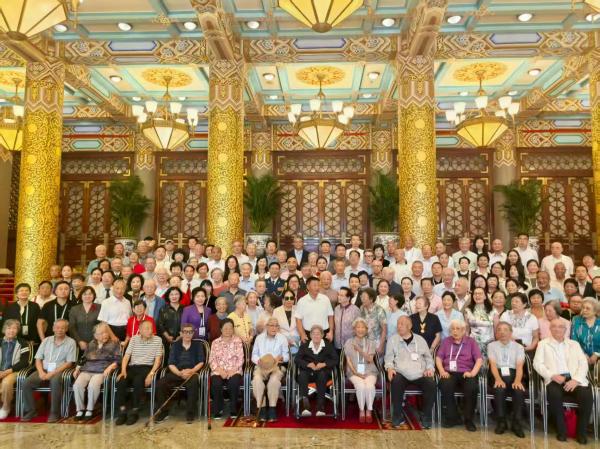
表面上,这只是仪式性安排;实质上,却是一次微妙的权力操作。“地震”预报后的权力核心,再次通过“雨露均沾”的荣耀分配,安抚并笼络“自己人”。在帝国政治的逻辑里,每一次阅兵,既是展示武力的舞台,也是编织特权共同体的契机。而一尊,貌似又赢了一把。 帝国政治的本质特征
帝国政治的事,就是那么几个至多几百个家族共同体(自己人)的事儿! 帝国政治的企图,不在乎民生、民主、民享自由,“自己人”之外的生活、生態、生命更不在其任何政治动机关注之列,只在乎特权的稳固与扩张,其背后逻辑大致有这样四项基本原则: 1. 经济上的公有 —— 表面上“全民所有”实际“全民所无”,实行“全官寻租化,全民佃户化”; 2. 政治上的私有 —— 权力高度集中,以“黨管干部”之名,实行“官阶大一统”; 3. 文化上的公私混淆 —— 宣传替天行道的“天下为公”,实则是结黨营私大开方便之门; 4. 组织上的对立统一 —— 派系平衡轮流坐庄的黑箱操作,拱立黑社会老大支配、操控一切。 这正是“帝国政治”构造特权共同体的内核:用“公”的名义,行“私”的实利,诱发成王败寇赢者通吃,特别是循环取而代之,陷入对内“残酷权斗,无情打击”对外“欺善怕恶,伺机扩张”,以致国无宁日,世无安全。 所谓“帝国”,只是一种“家国”,一种“准国家”,与正常的现代主权在民的“民族(主权)国家”毫无关系! 洛克与黄宗羲的先见 17世纪,英格兰的洛克与明清之际的黄宗羲,虽天各一方,却异口同声发出警世之。 黄宗羲陷阱(Huang Zongxi Trap):所谓“替天行道”(acting on behalf of Heaven),常沦为“以天下奉一君”。 洛克难题(Lockean Dilemma):权力不可私有(power cannot be privatized),财产不可公有(property cannot be collectivized)——两端一失衡,必致专断与掠夺。 两位思想家指出同一个悖论:反对财产私有、宣扬天下为公,最后往往导向权力私有化与结黨营私。帝国政治的特权共同体,就是“通往奴役之路”! 特权共同体是轴心时代(无论东西)以来人以主体(Subject)自居視异己者、他者为客体(Object)加以支配、操纵思想在社会机体内长出的一种制度性恶性肿瘤。
《新阶级》:一面照妖镜 前南斯拉夫副总统、共产主义者联盟的领导人米洛凡·吉拉斯,在1957年出版《新阶级:对共产主义制度的分析》。他以亲历者身份揭示:在所谓“无产阶级专政”下,出现的不是无阶级社会,而是新的统治阶级——党国特权阶层。 吉拉斯的结论如同一面镜子。无论中外古今,无论帝国何种意识形態性谎言,一旦置于这面镜子前,特权共同体的真实面目必然暴露无遗。阅兵式的华丽,无法遮掩与民族国家无关的利益集团的裸像。 所谓“帝国”,只是一种“家国”,一种“准国家”,与正常的现代主权在民的“民族(主权)国家”毫无关系! 出路何在? 现在的问题,不在于帝国政治如何更好地“分配特权”,而在于如何让这种权利分配游戏本身不再可能。 出路只有一条:We the People发挥出自己生命自组织连接行动力,感动中国各利益共同体,感动自由世界,超越小圈子,彰显大格局,用基于生命自组织连接适应平衡的交互主体共生(Intersubjective Symbiosism)作为检验真理和价值的圭臬: 守护生命(Life),善用理性工具(AI),在信任(Trust)的滋养与呵护中,让“你中有我,我中有他,他中有你”——本自具足、各显异彩又非独存的生命,你、我、他交互生成,交互成全——从而让主权在民的共和国名副其实,让珍爱生命、家庭第一、社区优先、政府服务“小即是美的共生国”遍布全球! 唯有如此,才能“让如何统治世界的帝国政治企图成为事实上的不可能”(康德《论永久和平》)。
结论 盛大阅兵作为帝国政治的象征,折射出特权共同体的运作逻辑。 世界和平,全球共生,需要实力,但不需要盛大阅兵的帝国幻像,继续沉迷其中,必将陷自己于无法自拔的深渊,拖累国家和国民!
The Grand Military Parade Highlights the Illusion of Imperial PoliticsArcher Hong Qian
September 4, 2025 · CitizenM Hotel, Boston 1212
A Ceremony of PowerAmong the honored guests at the grand military parade were a special group: the descendants of old revolutionaries. According to custom, families of generals and above could each send one representative, who would be accommodated at the Beijing Hotel with thoughtful official reception. On September 2, they collectively checked in; after the commemorative events on September 3, the “Elder Younger Brother” hosted a luncheon at the hotel’s VIP building and personally took photos with them. On the surface, this was merely a ceremonial arrangement; in essence, it was a subtle act of power management. After the “earthquake forecast,” the power center once again distributed honors under the principle of “rain and dew for all,” appeasing and rallying the “insiders.” Within the logic of imperial politics, every parade is both a stage to display military might and an opportunity to weave together the privileged community. And once again, he gained the upper hand.
The Essence of Imperial PoliticsImperial politics is essentially the affair of, at most, a few dozen or a few hundred family clans—the “insiders”! Its ambitions care nothing for livelihood, democracy, or freedom of the people. The lives, ecologies, and beings outside the circle of “insiders” fall beyond its motives and concerns. What matters is only the consolidation and expansion of privilege. Behind this lies four basic principles: Economic Collectivism in Name — What is called “ownership by all” in reality becomes “ownership by none.” In practice: “universal rent-seeking by officials, universal tenant-farming by the people.” Political Privatization — Power is highly centralized, under the name of “the Party controls the cadres,” implementing a unification of official hierarchies. Cultural Confusion of Public and Private — Propaganda proclaims “the world belongs to all” in the name of Heaven’s mandate, but in fact opens the floodgates for factional self-interest. Organizational Contradiction — Black-box operations of factional balancing and rotation, erecting a mafia-style boss to dominate and manipulate everything.
Thus the privileged community of imperial politics is formed: acting in the name of the “public,” but pursuing private gain. This induces a cycle of “winner takes all” where victors devour the vanquished, leading to ruthless infighting domestically and opportunistic bullying and expansion abroad. The result: no peace for the nation, no security for the world.
Locke and Huang Zongxi’s ForesightIn the 17th century, John Locke in England and Huang Zongxi at the end of the Ming dynasty in China, though worlds apart, both issued warnings. Huang Zongxi Trap: The slogan of “acting on behalf of Heaven” often degenerates into “all under Heaven serves one ruler.” Lockean Dilemma: Power cannot be privatized; property cannot be collectivized. Once either end loses balance, the result is despotism and plunder.
Both thinkers pointed to the same paradox: opposing private property and extolling the common good often leads, in practice, to the privatization of power and factional corruption. The privileged community of imperial politics is nothing less than a “road to serfdom.” This privileged community is a malignant institutional tumor that grew out of Axial Age thought—whether East or West—where humans posited themselves as Subjects and regarded others as mere Objects to dominate and manipulate.
The New Class: A Mirror of TruthIn 1957, Milovan Đilas—former vice president of Yugoslavia and a leader of its Communist Party—published The New Class: An Analysis of the Communist System. From his personal experience, he revealed that under so-called “proletarian dictatorship” there emerged not a classless society, but a new ruling class: the party-state elite. Đilas’s conclusion was like a mirror. No matter the time or place, regardless of what ideological lies an empire proclaims, once held before this mirror the true face of the privileged community is exposed. The splendor of military parades cannot conceal the naked reality of interest groups unconnected to the nation. An “empire” is merely a kind of “family-state,” a “quasi-state,” bearing no resemblance to a genuine modern sovereign nation where sovereignty belongs to the people!
The Way OutThe question today is not how imperial politics can better “distribute privilege,” but how to make such a game of distribution impossible altogether. There is only one path: We the People must unleash our self-organizing vitality, moving and inspiring China’s interest groups and the free world, transcending small circles, embracing broader horizons, and adopting Intersubjective Symbiosism—based on life’s self-organizing adaptive balance—as the touchstone of truth and value. Guard life, use rational tools (AI) wisely, and let trust nurture the interwoven generation of beings: “You are in me, I am in him, he is in you.” Life is inherently complete—diverse yet non-isolated—emerging and fulfilling each other. Only then can a republic truly embody “sovereignty of the people,” and small-is-beautiful symbiotic nations—cherishing life, putting family first, community foremost, and government in service—flourish worldwide. Only thus can “the imperial ambition to rule the world become factually impossible” (Kant, On Perpetual Peace).
ConclusionThe grand military parade, as a symbol of imperial politics, reflects the logic of the privileged community. World peace and global symbiosis require strength, but not the imperial illusions of grand parades. To remain enthralled by them is to trap oneself in an abyss and drag the nation and its people down with it.
Appendix: On Wisdom in the Context of Holographic SymbiosisWisdom has no higher or lower dimension. True wisdom that solves problems is the adaptive capacity of the trinity—rational, human, and divine—interacting as one. To face matters with intersubjective symbiotic adaptation is the greatest blessing. Humanity is now transitioning—from wisdom of love to love of wisdom, from natural justice to covenantal justice, from the Axial Age to the Symbiosis Age.
附录: 在全息共生的语境下看智慧 智慧,无所谓高维低维,真正解决问题的智慧,是具体可感(理性人性神性)三位一体或一体三位的交互适应能力。 凡遇事,能说到做到交互主体共生(Intersubjective Symbiosism)适应,是最大的福报。 人类正在经由智慧之爱,到爱之智慧,由自然公义,到约定公义,由轴心时代,向共生时代的历史跃迁! 走过“自然世”(Naturaropoene)的地球生灵,正遭遇着工商文明高昂成本的超主权、超地缘、超文明的“人类世”(Anthropocene)新问题。为了避免“第六次大灭绝”的命运降临,国际社会亟需直面当代问题的哲学对话,以全新的思维方式和价值取向迈进“地球世”(Earthropoene)。 人类际遇的一切问题,都是交互适应上出了问题,如果当下交互适应能力不逮,单纯乞求于“科学语境”+“东方神秘主义”的所谓高维智慧,只是一种以修辞替代逻辑、以立场遮蔽真相的巫师般的方便法门,是故作高深的巧诈话术! 比如“一维是二维的投影、二维是三维的投影、三维是四维的投影”(二维的投影怎么会是一维,三维的投影怎么成了二维?),除了修辞意义,逻辑完全不通,还有所谓“高维引领低维,意识能量驾驭物质能量”,不仅是无稽之谈,而且为机会主义的坑蒙拐骗预留了空间。凡是鼓吹高维智慧者,不是半通不通的思想偏蔽,就是故弄玄虚醉翁之意不在酒。 方便巧诈似是而非的话术,可以哗众取宠,但无法操作,于事无补,且助长惰性鼓励偷懒,甚至视自由思想为天敌,一味求同存异,必“道不同不相与谋”的霸道,视“百家争鸣”为杂音,阻礙人类具體情況具體分析解決問題,在政治上大开以非为是指鹿为马之门……从而剥夺人们生命自组织力与外连接动態平衡力——交互主体适应能力! 以时空意间交互影响观之, 生命之源,共生一体。 全息共生的生命主体(无论是寄主、宿主)的交互觉醒和觉悟,从来都是生命的第一需要,每一个细胞、器官、活体都是全息共生。正所谓“愛是尽善尽美的联结”(Love is a perfect connection)。 轴心时代(无论东西)以来,人以主体(Subject)自居,視异己者、他者为客体(Object)加以支配、操纵的帝国思想,在社会机体内长出的一种制度性恶性肿瘤。所以,我们必经超越东西南北中左右,在出江湖庙堂农工商,相信人本自具足又非独存,人人都有交互主体适应能力!今后,判断是非的标准是:人类行为共生就是“大是”,非共生就是“大非”。 “高维智慧”的话术,为掌握话语权者张目,在社会生活的各个领域建立其排他性、排异性的共同体,是其目的,而在方式方法上,也必然倾向于“顶层设计”而缺乏“低层驱动”,结果必然是一堆烂尾,推倒重来!结合中国的情况,不难发现,自上(高)而下(低)的改革,有改良与改恶之分,缺乏交互主体共生思想的改革,注定是“结构性失衡”的改革,改恶的成分,大于改良的成分。 这是因為,作為上层权力中枢的改革主体,不仅是改革政策的制定者,而且几乎是随心所欲的“权重选择性執行”者,这其中有权力任性的問題,更有改革資源占有者自私自利的問題。 从秦帝国排他性改革的成功(刑徒经济灭六国)与失败(指鹿为马二世亡),经王莽、杨广、朱由检,到晚清十年改革的成功(拿来主义废旧制)与失败(皇族内阁代宪政),以及四十五年改革的经验(党政事权分税制,开放统制半市场)与教训(权力资本沆瀣债,防挖祖坟坐江山),莫不由主体思想作祟、结构失衡歪斜、座主门生选秀、社会溃散无力所致! 所以,中国接下来的问题是,变改恶为改良,跳出“塔西陀-托克维尔-过秦效秦-打天下坐江山陷阱”,阙立交互主体共生思想,生命至上,重建社会,生成公民自组织力、政府自组织力、社会自组织力三大自组织力相互作用共襄生长的局面,创建一个人人自美其美、美人之美、美美与共、全息共生的世界! 於是,无论當作人类遭受何種際遇,让我們在共生哲学語境下,针对性地交相應用好富有爱之智慧(Amorsophia)的五大金科玉律: Do to others as you would have them do to you. 金律:待人如己,推己及人。 Do unto others, do not impose on others. 银律:己所不欲,勿施于人。 To give joy to others as one desires for oneself. 铜律:己之所欲,乐施于人。 An eye for an eye, a tooth for a tooth. 铁律:以眼还眼,以牙还牙。 Live and let live; don’t be evil and let evil be. 通律:自己活,也要别人活,不要自己邪恶,也让别人邪恶。 务必时刻谨记在心,五大金科玉律意识,无分高维低维,甭管西方东方,直面当下问题解决之就好。 孞烎2024年1月28日于温哥华
Appendix (continued): Viewing Wisdom in the Context of Holographic SymbiosisWisdom has no such thing as higher or lower dimensions. True wisdom that addresses real problems is the adaptive capacity of rationality, humanity, and divinity—a trinity-in-one, or one-in-three. Whenever one can act and speak in accordance with Intersubjective Symbiosism, that is the greatest blessing. Humanity is journeying from the wisdom of love toward the love of wisdom, from natural justice toward covenantal justice, from the Axial Age toward the Symbiosis Age. Having passed through the “Naturaropoene” (the Age of Nature), Earth’s living beings now face new problems in the “Anthropocene”—supranational, suprageopolitical, and supracivilizational costs of industrial civilization. To avoid the fate of a “sixth mass extinction,” the international community urgently needs philosophical dialogue on contemporary problems, advancing into the “Earthropoene” (the Age of the Earth) with a new way of thinking and new value orientations. All human problems arise from failures in interactive adaptation. If, when faced with real issues, our adaptive ability falls short, and we simply beg for so-called higher-dimensional wisdom from a mix of “scientific discourse” and “Eastern mysticism,” this amounts to replacing logic with rhetoric and truth with standpoint—a magician’s trick, clever wordplay, nothing more. Take for example the claim: “one dimension is the projection of two dimensions, two dimensions the projection of three, three the projection of four.” (How can two-dimensional projection become one-dimensional, or three-dimensional projection become two?) Aside from rhetoric, it makes no logical sense. Likewise, sayings such as “higher dimensions guide lower dimensions” or “conscious energy commands material energy” are not only nonsense but also create loopholes for opportunism and fraud. Those who preach “higher-dimensional wisdom” are either partially blind in thought or deliberately mystifying with ulterior motives. Such rhetoric may titillate the crowd, but it cannot be applied, solves nothing, encourages laziness, and even casts free thought as an enemy. Obsessing over “unity” while treating diversity as noise inevitably leads to tyranny: “if our paths differ, we cannot plan together.” It turns “a hundred schools of thought” into cacophony, obstructing practical problem-solving, and politically opens the door to calling a deer a horse. Ultimately, this strips people of their self-organizing vitality and external balancing capacity—the very essence of adaptive intersubjectivity. From the perspective of spatio-temporal inter-influence, life is the source, and symbiosis is one. Every cell, organ, and organism is holographic symbiosis. As the saying goes, “Love is a perfect connection.” Since the Axial Age, the imperial mindset of humans taking themselves as Subjects while treating others as mere Objects to dominate has grown like a malignant tumor within social structures. Therefore, we must transcend East and West, North and South, court and marketplace, believing instead that human beings are inherently complete yet not isolated—that each person possesses intersubjective adaptive capacity. From now on, the criterion for right and wrong should be: behavior that is symbiotic is a “great right”; behavior that is not is a “great wrong.” The rhetoric of “higher-dimensional wisdom” is ultimately about monopolizing discourse, erecting exclusionary communities across social life. Its methods incline toward “top-down design” and lack “bottom-up driving force.” The inevitable result: unfinished projects, repeated collapse and rebuilding. In China, this is easy to see: reforms imposed from above often divide into “improvements” and “deteriorations.” Those lacking symbiotic thought almost always end in structural imbalance, with deterioration outweighing improvement. Why? Because the central powerholders are both designers of reform policy and, in practice, arbiters of its selective enforcement—often acting willfully and selfishly. History is replete with examples: the Qin empire’s reform “success” (a penal economy to conquer six states) and “failure” (the deer-for-horse tyranny of Qin II); Wang Mang, Yang Guang, Chongzhen; the late Qing’s ten years of reform with both successful abolition of outdated systems and failed “royal cabinets” replacing constitutionalism; and the mixed legacy of 45 years of reforms—splitting party, government, and fiscal powers while opening markets, yet also collapsing into collusion of power and capital, and debt burdens. In every case, subject-centric thinking produced structural imbalance, factional favoritism, and social collapse. Thus, the task for China ahead is to transform deterioration into improvement, to leap out of the “Tacitus Trap–Tocqueville Trap–Qin Cycle–Conquer-and-Rule Trap,” and to establish intersubjective symbiosism: life first, society rebuilt, with citizen self-organization, government self-organization, and societal self-organization growing together. This will create a world where “everyone cherishes their own beauty, appreciates others’ beauty, and shares beauty together”—a holographic symbiosis.
The Five Golden Rules of AmorsophiaIn the philosophical context of symbiosis, let us apply five guiding maxims rich in the love of wisdom (Amorsophia): The Golden Rule: Do to others as you would have them do to you.
— Treat others as yourself; extend yourself to others. The Silver Rule: Do unto others, do not impose on others.
— What you do not desire, do not impose on others. The Bronze Rule: To give joy to others as one desires for oneself.
— What you wish for yourself, gladly share with others. The Iron Rule: An eye for an eye, a tooth for a tooth. The Universal Rule: Live and let live; don’t be evil and let evil be.
Keep these five rules always in mind. They are not about higher or lower dimensions, nor about East versus West. They simply face problems as they are and provide guidance for real solutions.
Xinyan
January 28, 2024, Vancouver
|