从创造性破坏到创造性破局:共生经济学的愿景 From Creative Destruction to Creative Breakthrough: The Symbionomic Vision (2025诺贝尔经济学奖得主、马斯克机电生態创新:从系统扰动到共生重构的经济学新视野——2025 Nobel Laureate in Economics and Elon Musk’s Electromechanical Ecosystem Innovation: A New Economic Perspective from Systemic Disruption to Symbiotic Reordering) 钱 宏(Archer Hong Qian) 2025.10.12-13· Vancouver 摘要 从熊彼特提出的“创造性破坏”,到共生经济学所倡导的“创造性破局”,人类经济思想正经历由系统内竞争更新到结构性范式重建的转向。前者以资本和技术的自我更替为动力,后者则以生命形态(LIFE)-工具形态-组织形态的交互主体共生为场域,体现了经济学从追求增长黄金律逻辑到追寻健康黄金律逻辑的文明进化。2025年诺贝尔经济学奖得主对“创造性破坏”的新建模,特斯拉机电生态创新对能源、智能系统边界与某种供应链垄断的突破——创造性破局,象征着这一转折的现实印证——将开启从系统扰动到共生重构的新时代。共生经济学为此提供了一个让"生产回归生活、生活呈现生态、生态激励生命"的新视野,使经济学完成“8大转变”,重新回归人类与自然、人文与社会、科技与伦理的整体健康之道。 Abstract From Schumpeter’s concept of creative destruction to the creative breakthrough advocated by Symbionomics(共生经济学), human economic thought is undergoing a transformation from internal competitive renewal to structural paradigm reconstruction. The former is driven by the self-replacement of capital and technology, while the latter takes the intersubjective symbiosis among life-forms (LIFE), instrumental forms, and organizational forms as its field of evolution—reflecting a civilizational progression from the logic of the Golden Rule of Growth to the logic of the Golden Rule of Health. The 2025 Nobel Laureate in Economics’ new modeling of creative destruction, together with Tesla’s electromechanical ecosystem innovation—which breaks through the boundaries of energy systems, intelligent systems, and certain supply-chain monopolies—constitutes a creative breakthrough that symbolizes the real-world manifestation of this paradigm shift, inaugurating a new era from systemic disruption to symbiotic reordering. In this context, Symbionomics provides a new vision—“production returning to life, life revealing ecology, and ecology inspiring vitality”—enabling economics to accomplish its “eight major transformations” and return to the holistic path of health that unites humanity and nature, culture and society, technology and ethics. 引言:从“增长的边界”到“共生的转向” 如果说,2024年三位诺贝尔经济学奖得主阿西莫格鲁(Daron Acemoglu)、约翰逊(Simon Johnson)、罗宾逊(James Robinson)强调制度如何形成并影响经济繁荣,决定了国家间巨大的差距与不平等。那么,2025年诺贝尔经济学奖得主乔尔·莫克尔(Joel Mokyr)、菲利普·阿吉翁(Philippe Aghion)与彼得·霍维特(Peter Howitt),则在创新、生产率增长与长期经济演化机制研究中作出了卓越的探索。 他们的理论揭示了一个核心命题:经济增长的真正动力不在于资本积累和垄断,而在于知识与创新在复杂生態系统中的创造性破坏(Creative Destruction)——即有别于持续性创新的扰动,是颠覆了市场既有的轨迹模式,重塑了游戏规则,具体例子包括电动车、Silicon photonics(硅光子或矽光子)、网络、AI(人艺智能)都是例子。这是对传统增长范式的进一步深刻反思。经济增长,不再被理解为“要素投入的线性扩张”与供应链的垄断,而是一个类似生物演化的非线性过程——创新既创造新可能,也终结旧秩序。 Daron Acemoglu 宣称的制度差异,与Joel Mokyr所称的“文化—知识生態”与阿吉翁、霍维特的“创造性破坏”模型,共同预示了一种新的增长哲学:从单一效率走向生態演化,“破坏”不仅是对旧系统的冲击,而是从现行格局中“脱颖而出”,即“创造性破局”(Creative Breakthrough)的意义,是一种朝向共生性新秩序(Symbiotic Re-Ordering)的创造性跃迁——从主客二元对立竞争,走向生命自组织连接动態平衡的交互主体共生(Intersubjective Symbiosism)。 恰恰在此期间,特斯拉宣布推出无稀土永磁电机技术生態体系。这不是巧合,而是历史在不同领域的同频回响——从经济思想到技术实践,人类文明正迎来一次深层次的“共生性转变”(Symbiotic transformation)。 让我们结合特斯拉无稀土电机技术的案例,以共生经济学(Symbionomics)为框架,探讨从“创造性破坏”到“创造性破局”的范式转移,揭示从GDP到GDE(国内生態/伦理/演化价值总量)的健康黄金率逻辑。这不仅是经济学的创新,更是文明转向的哲学启示。
一、从“创造性破坏”到“创造性破局”
“创造性破坏”以主体支配性竞争逻辑为核心:破坏旧结构,以创新促增量。然而,在产业链、供应链、价值链互联的当代世界,这种思维已不足以应对生態、技术、信任体系的多重危机。真正的变革需从“破坏”转向“破局”——从封闭系统的更新,迈向开放生態的共生重组。
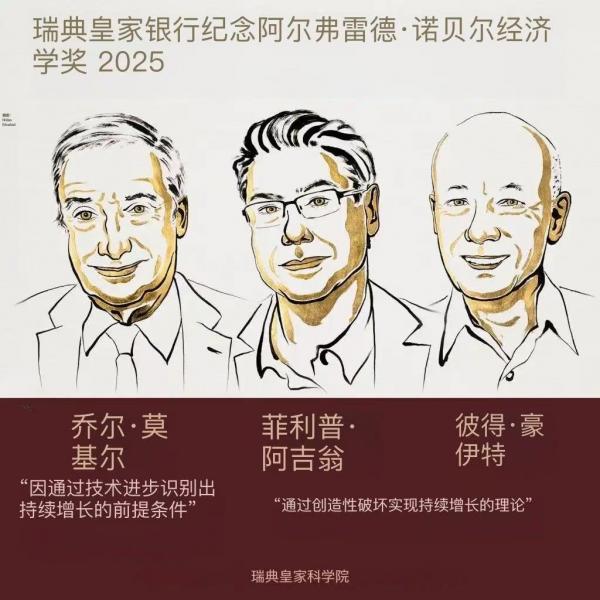
2025年诺贝尔经济学奖授予乔尔·莫克尔(Joel Mokyr)、菲利普·阿吉翁(Philippe Aghion)与彼得·霍维特(Peter Howitt),表彰他们在创新、生产率增长与长期经济演化机制研究中的卓越贡献。 1、乔尔·莫克尔:技术史视角的前提条件阐释者 莫克尔生于1946年荷兰莱顿,后在以色列成长,现为美籍以色列裔经济史学者。他跨越历史学与经济学,研究技术变迁与思想文化对经济增长的作用。诺贝尔委员会表彰他“识别了技术进步带来持续增长的前提条件”——创新依赖知识架构、科学-技术协同、开放的社会结构、制度包容性与认知心理基础。 莫克尔的视角突出历史厚度与技术-文化-制度融合性,强调“创造力为何能持续生成、扩散”的制度环境。 2、菲利普·阿吉翁与彼得·霍维特:“创造性破坏”模型的建构者 阿吉翁(1956年,法国,任职于法国学院、INSEAD、伦敦政治经济学院)与霍维特(1946年,加拿大,布朗大学)于1992年发表经典论文《通过创造性破坏实现增长模型》,将熊彼特的理念形式化为内生增长模型,解释技术创新如何驱动经济增长。旧技术被新技术替代,企业通过研发竞争获取利润,淘汰落后者,长期增长靠此机制推动。 模型强调竞争强度、创新激励、制度环境(如专利制度、进入壁垒、知识溢出)对创新率与经济增长的影响,是“新熊彼特”增长理论的重要支柱。 3、诺奖总体逻辑:创新驱动与增长机制的整合 奖项分配为:一半给莫克尔,另一半由阿吉翁与霍维特共享。委员会称,三位共同“解释了创新驱动经济增长”的机制,结合历史-制度-文化前提(莫克尔)与数学-机制化模型(阿吉翁与霍维特),揭示“为什么技术创新成为增长动力”及“如何驱动增长”。 然而,这一框架囿于“创造性破坏+增长模型”的范式,在动力学张力和恊同学诉求上还不完备,强调旧-新替代的零和竞争,未充分考虑主体间生命自组织连接动態平衡的共生效应。
二、从“创造性破坏”到“创造性破局”的必要性
创造性破坏(Creative Destruction,对应Joseph Schumpeter)与创造性破局(Creative Breakthrough 对应Symbionomics),这两个概念虽然中文相近,但哲学内涵不同: “创造性破坏”,强调经济系统内部的自我更新和系统自净,属于“旧结构被新创新取代”的动态平衡逻辑;“创造性破局”,则超越了系统内更新,意味着在体系性僵局中开辟新结构、新范式、新方向,是一种价值与结构的“跃迁式创新”,具有更强的哲学和文明转向意味——超越既有框架格局、开创新范式的文明性跃迁,如全球化 3.0、“LIFE(生命形态)-AI(工具形态)-TRUST( 组织形态)”的文明转向。 诺贝尔委员会的选择肯定了“创新驱动增长”的路径:莫克尔的历史洞察揭示创新的前提条件,阿吉翁与霍维特的模型阐释增长机制。然而,这一闭环以“替代”与“竞争”为中心,假定旧的必须被新的取代,忽略生命系统更根本的事实:创新不是单一主体的破坏行为,而是多主体共生互动的重组过程。 换言之,创造性破坏是增长经济学的顶点,却非生命经济学的起点。它解释“量”的增长,却无法说明“质”的健康。 共生经济学提出另一种框架:创新目标不应仅是GDP的“产出增长”,而应是GDE的“健康黄金率”(The Golden Rules of Health(Archer Hong.Q)。这不是凯恩斯式的资本回报率或索洛模型的稳態积累率,而是一种系统内的能量平衡率与关系复原力,衡量生命系统在创新中的共生能力。 在莫克尔的“前提条件”层面,共生经济学强调不仅需要制度、文化、知识基础,还需交互主体共生网络——主体不是孤立创新者,而是互为条件、互为生態的一部分。在阿吉翁–霍维特的机制层面,共生经济学主张增长不应仅是替代与淘汰,而应允许“共生式创新”——多个主体长期共存、互补创新,实现“熵减-熵旋”的动態平衡。 “创造性破局”主张打破封闭垄断体系,从竞争替代逻辑转向共生增量逻辑。以特斯拉无稀土电机技术为例,展示共生经济学如何在实践中落地。
三、特斯拉的破局:从地缘存量垄断到生態增量
稀土金属长期是新能源产业的“隐形枷锁”,其开采集中、供应链受地缘政治牵制,形成“资源型依附体系”,压缩创新空间,锁定产业话语权。
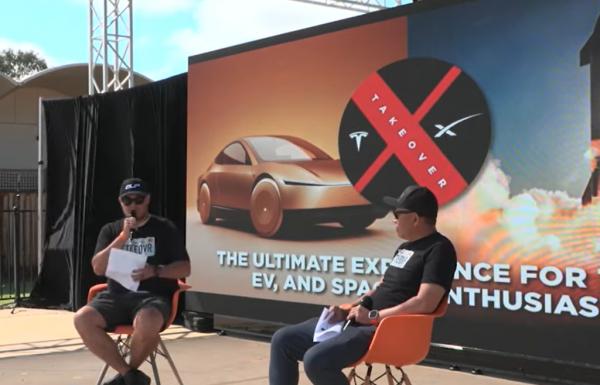
特斯拉的无稀土电机技术突破了这一依附体系。这不仅是工程革新,更是一次生態系统层级的“范式重构”:削弱稀土资源的地缘政治性,降低生態破坏与碳足迹,激发新材料、控制算法与能源转换机制的连锁创新。 从共生经济学视角,稀土供应链垄断是典型的“TRUST特权体系”:少数国家、企业、资本形成的资源支配网络,表面效率最大化,实则陷入“熵增困境”——权力集中、成本隐性上升、创新空间封闭。
尽管特斯拉擎天柱机器人的执行器需要高性能稀土磁体才能在紧凑空间内正常运转,因此无法完全摆脱对稀土的依赖,但是,马斯克和特斯拉的“去稀土化”努力,正在深刻影响整个机电生态系统。特斯拉的做法是一种能量熵减的产业自愈机制: 1、技术层面:新材料和技术研发,为了实现无稀土电机,需要研发新的材料和电机设计技术,通过软件-硬件协同,最大化磁能转换效率,实现能量闭环优化,将推动整个电机行业的创新。 2、供应层面:降低对稀土的依赖,促使全球供应链更加多元化,通过开放技术标准与模块化设计,打破供应链封闭结构,减少甚至摆脱对单一地区(如中国)的依赖,增强了产业链的韧性。 3、组织层面:以分布式研发与共享平台,取代集中化研发体制,摆脱稀土价格波动剧烈,可以帮助稳定制造成本,使电动汽车价格更具竞争力。 4、生態层面:稀土开采对环境有一定影响,“去稀土化”有助于减少环境污染,推动可持续发展,推动上下游企业形成“共生创新网”,共享数据、算法与能效成果。 特斯拉的创新体现“聚而有间道,和而术不同”的哲学精神:以技术协同取代资源依附,以生態共生超越垄断控制。其“生产力”以三个健康黄金率衡量: 5、能量效率黄金率:能耗下降、效能上升,系统进入“熵减-熵旋”动態平衡; 6、组织协同黄金率:企业生態内外协作的成本-收益比趋于最优; 7、社会信任黄金率:品牌价值与伦理责任形成可持续共赢的社会契约。
四、文明转向:从Philosophia到Amorsophia
特斯拉的破局不仅是产业变革,更是一场文明“Turning Point”,象征人类从轴心时代“智慧之爱”(Philosophia)的整体统一,迈向共生时代“爱之智慧”(Amorsophia)的关系过程。。 这场转型的核心在于生活的常识、圣经的常识与生命的自组织常识——“智慧由爱而生”,爱通过智慧的结构得以自持。传统现代性基于“稀缺经济学”假设:资源有限,人类必须竞争。但共生思维指出,稀缺往往是结构安排的结果,而非自然命运。当制度设计为零和竞争,稀缺放大;当生態设计为共生协作,系统实现自我增量。 特斯拉的去稀土化技术是共生哲学的实践:它不在旧秩序追求效率,而在新生態重构可能,超越“现代化”逻辑,从征服自然到理解自然,从资本积累到系统再生。技术创新由此不再是“发明”,而是生態的“再生行为”;增长不再是“对他者的超越”,而是“与他者的共进”。 因为生命,本自具足又非孤立存在。无论是碳基的自然生命,还是硅基的人工智能,生命都体现为“时空意间”的交互主体共生过程——在物理、生理、心理、伦理、数理、哲理机制的交织中演化。这种演化,不仅体现在希格斯场的自耦合、普里高津耗散结构的非线性反馈,更具体体现在个体的心力与身体状態如何塑造思想,群体如何在稀缺资源的分配与信任的建立中寻找均衡,走向共生。 这种转向要求我们回到亚当·斯密的双重原点:《德操论》(The Theory of Moral Sentiments,1759)的适宜性,塑造情感与信任的交互恊和;《原富论》(An Inquiry into the Nature and Causes of the Wealth of Nations,1776)的适应性,揭示分工与市场作为生命组织过程的动力。两者桥接技术伦理机制,奠基共生经济学生活方式创新与再选择。由此,新文明的两个支点性重建,应运而生。 经济学家们只是用不同方式解释,在社会与国际分工中有没有“免费的午餐”(存量垄断控制),并围绕着多重“两极分化”及其供需义利矛盾,讲述着新老“资本论”的故事;他们不仅让自己陷入“市场自由与政府管控世纪钟摆周期性困境”,也让世界徒生出各种分裂与冲突。然而问题在于,追求高额资本增殖,却脱离生活常態的生产,已然超出自然、社会、人的身心灵健康可承受极限,那么,超系统改变,何以可能?(摘自《共生经济学》,2010)。
五、共生经济学的启示:熵减与增量共生
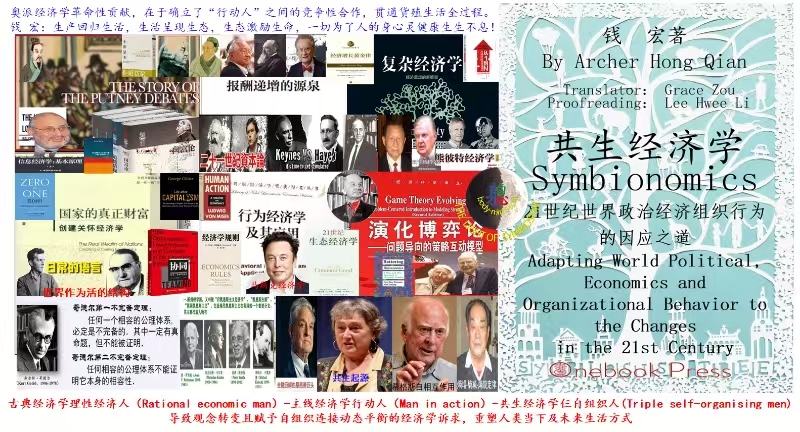
在现行主流经济学框架中,“存量垄断控制”看似主体支配客体,实则陷入熵增陷阱——系统封闭、能量枯竭、关系僵化,沦为零和互害机制。 交互主体共生创新以健康增量思维导入“熵减-熵旋”机制,突破特权体系困局,进入动態平衡的生命自组织循环。特斯拉的案例重塑了全球电机产业生態,为人类社会提供了一个消除技术特权壁垒、化解意识形態歧视、实现可持续共生发展的新范式。 共生经济学的英文表达是“Symbionomics”,由“Sym”(在一起,自组织在一起)、“bios”(生活方式)、“economy”(物质、能量、信息、时间、空间与意识的家庭-社区-政府机能的排列组合方式)构成,旨在求解众生如何自组织地生活在一起,维持多层面健康比例的动態平衡。 Symbionomics(共生经济学)融合发生学(Embryology)、动力学(Dynamics)和恊同学(Synergetics),贯通物理、生理、心理、伦理、数理机制,是LIFE(生命形態)-AI(工具形態)-TRUST(组织形態)时代面对“人权—主权—环境”冲突的思想保障。其核心目标是以“生命自组织连接动態平衡”为前提交互主体共生秩序。 1、物理机制:共生起源的微观破缺 希格斯场的自耦合,使粒子获得质量;普里高津的耗散结构,揭示能量流驱动的自组织。生命的共生起源正是在这种非线性破缺—自组织过程中涌现出来。真核细胞的线粒体、叶绿体起源于原始细菌的吞噬与共生,这是从量子涨落与能量耗散到宏观生命涌现的直接例证。 例如,在生物学中,内共生理论(endosymbiosis)解释了线粒体如何从独立细菌演变为细胞器,通过代谢创新驱动进化。在人工智能领域,AI与合成生物学的结合加速了新型基因的研究与生产,形成硅基与碳基的共生,如AI驱动的生物技术改造人类。此外,量子模拟实验中,非线性动態控制冷原子气体的混沌行为,模拟从量子涨落到宏观有序的转变,类似于原始地球量子隧道效应触发分子自组装。这些案例展示,不确定性(如量子噪声)被转化为适应性繁荣,避免纯随机毁灭。 2、生理机制:共生动力的能量耦合 不同个体的消化系统、肠道菌群、疾病敏感度、心力强弱,直接影响思想意识。身体状態并非附属,而是心理与认知生成的决定性背景。例如“One mind heaven,one mind hell”正揭示:生理机制是心理机制的根本支撑。能量代谢、免疫系统、菌群共生,都是动態的耗散平衡,它们将不确定性(营养波动、疾病挑战)转化为适应性成长。 例如,肠道微生物组通过脑-肠-微生物轴影响情绪和心理健康,肠道细菌代谢产物如维生素B12直接参与神经功能。压力和饮食变化扰乱微生物组,可能导致焦虑或抑郁,但通过非线性反馈(如免疫调节),系统重构为更强的适应力。 在AI应用中,机器学习如AlphaFold预测蛋白折叠,形成AI-生物共生:AI加速药物发现,而生理反馈优化AI模型。这种生理-心理联动(如菌群影响神经递质,导致情绪波动)为建孞態场网克服“AI三大瓶颈”(数据偏差、解释性不足、适应性弱)铺垫,通过实时监控生理信号对AI决策进行调整,避免LAFE-AI-TRUST冲突。 3、心理机制:共生协同的认知涌现 大脑神经元网络通过突触可塑性形成意识与学习过程,类似共生网络。心理状態不仅源于外部刺激,还深受生理机制的反馈塑造。情绪波动、外部扰动的不确定性,被神神经可塑性转化为学习与成长的动力。共生关系中的移情与共情,正是这种心理机制的非线性涌现。 例如,在人类-AI认知整合中,Symbiotic Minds框架下,AI辅助心理治疗(如ChatGPT应用),通过非线性学习形成互补协同。BrainCog平台使用脉冲神经网络从量子涨落涌现高级认知,模拟脑启发AI。人类-AI反馈循环影响感知和情感,增强认知潜力,但需避免黑箱问题。这与生理心力影响相连:孞態场网可监控菌群-神经交互,实时奖抑负面心理模式,促进移情能力,避免信任冲突导致的孤立。 4、伦理机制:稀缺分配的共生秩序 伦理困境来自稀缺资源:如何分好蛋糕(结果平等)或做大蛋糕(机会平等);如何处理个体与个体、个体与共同体、共同体与共同体之间的冲突;如何通过信仰、道德与法律教育减少暴力与战争。这些问题的根本在于:能否将非合作博弈转化为共生均衡,将短期利益冲突转化为长期信任与秩序。例如,在AI伦理中,算法偏见可能放大资源分配不公,如刑事司法或经济政策中的歧视。欧盟AI法规要求透明度,避免偏见冲突,促进机会平等。自动武器伦理冲突可能导致“同归于尽”,但Symbiotic AI框架通过反馈循环增强信任,转化不确定性为繁荣。孞態场网基础设施可实时监控这些困境,进行奖抑机制(如激励合作分配),铺垫LAFE-AI-TRUST恊和运行。 5、数理机制:动態均衡的建模与推演 博弈论中的纳什均衡揭示了交互稳定的基本形態:当所有主体都采取最优策略时,没有一方能单独改变策略而获益。若信任与合作被纳入博弈结构,均衡便能从脆弱的自保转化为共生的繁荣。进一步,反应–扩散方程(Turing 模型)、进化算法与随机模拟,为我们提供了刻画不确定性如何推动系统优化的工具。 例如,Lotka-Volterra模型扩展到创新生態系统,模拟制造企业与AI的共生演化,通过非线性微分方程捕捉从量子到社会的涌现。 在经济中,该模型分析收入分布动態,将竞争、共生和捕食模式应用于技术交互。 不确定性通过蒙特卡罗模拟拥抱,转为繁荣,如AI经济模型预测共生健增长。 6、哲理机制:从智慧之爱到爱之智慧 哲理机制意味着文明观的根本转向。轴心时代的哲学以“智慧之爱”(Philosophy)为旨归,寻求普遍的统一。而共生时代则转向“愛之智慧”(Amorsophia),强调关系过程中适宜(德操)、适应(原富)、恊和(共福):从惟我中心主义的二元对立,跃迁到你-我-他生命自组织连接动態平衡的交互主体共生(Intersubjective Symbiosism)。这种哲理机制将差异性、不确定性视为创造力的源泉,使生命与文明在变动中得以延续和繁荣。例如,Symbiotic Intelligence理论将人类智能与AI演化为互补关系,避免对抗。过程哲学(如Whitehead)整合非线性动態,推动共生演化。从而化解LAFE(生命形態)-AI(工具形態)-TRUST(组织形態)冲突:哲理框架强调共襄生成,避免AI主导导致的存在危机。
六、共生经济学的范式转变:从增长黄金率到健康黄金率
从“降本赋能”的成本/收益关系出发,传统经济学强调的“增长黄金率”The Golden Rules of Growth(Edmund Phelps),在今天已经不足以应对复杂的社会与生態挑战。 共生经济学(Symbionomics)提出:从资本论的分配经济学,走向社会论的共生经济学根本性的转型,必然转向经济健康黄金率(The Golden Rules of Health(Archer Hong.Q)叙事。 于是,经济学将呈现以下八大转变(Transform): 第1大转变:从理性经济人到组织共生人 基于“三大生命自组织力与外连接自平衡力”充要条件,从“理性经济人假设”的投资-消费社会,到内外开放赋能的“组织共生人假设”——仨自组织人(你、我、他的政治自组织人、经济自组织人、文化自组织人)生態-生产(含人自身生产)-生活恊和形成以身心灵健康为目标的社会再平衡。 第2大转变:从产权理论到共生权理论 “共生权”(the Symbiorights)理论,超越“产权理论”框架下的“公有制”与“私有制”、“政府管制”与“市场自由”的两难选择。因而共生权,也超越传统工程学或伦理学的自由主义经济学、结构主义经济学、政治经济学的努力。 第3大转变:从资本积累指标到能效平衡指标(GDE) 共生经济学推动社会进入“熵减-熵旋模式”,其中最重要的是基于“成本收益消长呈反比例”定律和“资源生产率”概念,提出GDE(Gross Domestic Energy)指数评价体系,即一套不同于以资本增值/减值为指标的国民生产总值(GDP)统计方法和价值参量,即:以能量(孞息)能效/能耗为指标的国民生产效能(GDE)统计方法和GDE价值参量。那么,衡量政治经济组织行为的测量方式,从企业、政府两张资产(资源)负债表的累计,扩展至自然、社会(道德伦理規范)、家庭、社区、企业、政府六维资产(资源)平衡账户。 第4大转变:从加减思维到乘除思维,从赎罪到赎福 从加法减法思维、赎罪上天堂,到乘法除法思维、赎福得共生;从学科化广义职业教育,到“三本通学教育”--发现本心(身心灵健康教育);成就本事(博雅通识觉知教育);守住本分(全人格教育),以克服不同“文化属性”带来的惯性与惰性,形成个体-群体-文明的持续共生成长。 第5大转变:从二元经济形態到三元共生经济形態 从“市场经济-政府经济”两种经济形態,周期性世纪摇摆困局,到“社区经济-政府经济-市场经济”三大经济形態(Economic form)全生態并行不悖“相互作用、共襄生成”的新格局:a、“有效用边际”的市场经济(Market economy资本利润最大化);b、“有绝对边界”的政府经济(Government economy公共产品最优化);c、“零边际成本”的社区经济(Community economy休养生息最惠化。 第6大转变:从特权消费到共生生活方式 共生经济学通过区块-共生链将“仨自组织人”共享交易成果落实在生产、消费、确权全过程的各相关方,从追逐“权、钱、性”特权奢侈浪费的生活方式,到实行一种人人健康、简约、高尚、富有尊严而可持续健康幸福的自美其美、美人之美、美美与共、共襄生长Live and let live的普惠生活方式。 第7大转变:从地缘政治竞争到共生全球化秩序 共生经济学倡导“全球供应链、产业链、价值链三链重组的零关税、零壁垒、零歧视三零规则”新世界贸易秩序,以超越在国际社会事务中任何一家独大的念想和抱负,彻底跨越所谓“修昔底德陷阱”和各国官粹主义(Elitism)或民粹主义(Populism)操纵,让“任何统治全世界的帝国政治企图成为不可能”(康德)。 第8大转变:从民族国家体系到全球共生社区 从超高国际交易成本、社会交易成本和边际效益成本的资本(垄断)-权力(操纵)民族国家,到通讯全开放、资源全自足、运载全覆盖趋零边际成本“小即是美”的全球共生社区(地球村)。这意味着化解文明冲突,重建世界秩序,以“爱之智慧孞態网(AM)”技术伦理基础设施的实时耦合反馈和奖抑机制,调节 LAFE(生命形態)-AI(智能形態)-TRUST(组织形態)的潜在冲突,避免系统性崩溃。国际社会亟需发起并签订《全球共生公约》,促进联合国改革,成立超主权、超地缘、超文明的“全球共生理事会”。 总之,“共生经济学8大转变”标志着经济学从“为资本服务旧逻辑”迈向“为生命服务的新逻辑”的文明跃迁。它回应诺奖得主关于创新与增长的科学探讨,并为特斯拉无稀土电机技术的实践提供哲学-经济学解释框架。 七、从资本逻辑到生命逻辑的结论 共生经济学(Symbionomics)将生命自组织连接平衡再平衡的逻辑,延伸为政治经济与社会组织运行的根本法则。 如果说亚当·斯密经济学奠定了自由“竞争逻辑”,21世纪的共生经济学正在开启自组织连接“生命逻辑”的新篇章。 也就是说,从“创造性破坏”到“创造性破局”,人类未来增长逻辑从单一竞争驱动的GDP转向交互主体共生驱动的GDE——以生命健康、生態平衡与技术伦理为核心的健康黄金率之路。 特斯拉的无稀土电机技术是这一逻辑的现实印证:真正创新不是创造新稀缺,而是发现新的共生机制。 当诺贝尔奖表彰“创新与增长的生態机制”时,世界正在重写“财富”含义——从国富到原富,从原富到共生富,增长不再以地球消耗和牺牲生命为代价,而是以生命活动能效/能耗、放能/吸能、熵增/熵减/熵旋的自组织连接动態平衡的交互主体共生为政治、经济、文化动力学与恊同学机制——让生产回归生活,生活呈现生態,生態激励生命。 参考文献 《特斯拉无稀土电机技术的生态重塑与哲学-经济学启示》 《从“增长黄金率”到“健康黄金率”刍议——共生经济学 VS 诺贝尔奖得主费尔普斯》(《经济要参》2014年第21期); 《共生经济学:21世纪世界政治经济组织行为的因应之道》(即将由OneBook Press出版)。
Not Creative Destruction, but Creative Breakthrough —From Innovation-Driven Growth to Symbiotic Evolution: A New Economic Perspective By Qian Hong (Archer Hong Qian) 2025.10.12-13 · Vancouver Introduction: From the "Boundaries of Growth" to the "Shift Toward Symbiosis" If the three 2024 Nobel Prize winners in Economics, Daron Acemoglu, Simon Johnson, and James Robinson, emphasized how institutions form and influence economic prosperity, determining the vast gaps and inequalities between nations, then the 2025 Nobel Prize winners, Joel Mokyr, Philippe Aghion, and Peter Howitt, made outstanding explorations in the mechanisms of innovation, productivity growth, and long-term economic evolution. Their theories reveal a core proposition: the true driver of economic growth does not lie in capital accumulation, but in the synergistic evolution of knowledge and innovation within complex ecosystems. This is a further profound reflection on traditional growth paradigms. Economic growth is no longer understood as "linear expansion of factor inputs," but as a nonlinear process akin to biological evolution—innovation both creates new possibilities and terminates old orders. What Daron Acemoglu termed institutional differences, along with Joel Mokyr's "cultural-knowledge ecosystem" and Aghion and Howitt's "creative destruction" model, collectively foreshadow a new growth philosophy: from single efficiency to ecological evolution, from subject competition to intersubjective symbiosis. Exactly during this period, Tesla announced the launch of a rare-earth-free permanent magnet motor technology ecosystem. This is not a coincidence, but a historical resonance across different fields—from economic thought to technological practice, human civilization is ushering in a deep-level "symbiotic transformation." Below, using Tesla's rare-earth-free motor technology as a case, and with Symbionomics as the framework, we explore the paradigm shift from "creative destruction" to "creative breakthrough," revealing the logic of the healthy golden ratio from GDP to GDE (Gross Domestic Ecology/Ethics/Evolution value total). This is not only an innovation in economics but also a philosophical revelation for civilizational transition. I. From "Creative Destruction" to "Creative Breakthrough" "Creative destruction" centers on competitive logic: destroying old structures to drive incremental gains. However, in today's interconnected world of supply chains, industrial chains, and value chains, this thinking is insufficient to address the multidimensional crises of ecology, technology, and trust systems. True transformation requires a shift from "destruction" to "breakthrough"—from updating closed systems to reorganizing open ecosystems. The 2025 Nobel Prize in Economics was awarded to Joel Mokyr, Philippe Aghion, and Peter Howitt for their outstanding contributions to the study of innovation, productivity growth, and long-term economic evolution mechanisms. Joel Mokyr: Interpreter of Preconditions from a Technological History Perspective Mokyr was born in 1946 in Leiden, Netherlands, grew up in Israel, and is now an American-Israeli economic historian. He spans history and economics, studying the role of technological change and cultural ideas in economic growth. The Nobel Committee commended him for "identifying the preconditions for sustained growth through technological progress"—innovation does not occur in isolation but relies on knowledge frameworks, scientific-technological synergy, open social structures, institutional inclusivity, and cognitive psychological foundations.
Mokyr's perspective emphasizes historical depth and the integration of technology-culture-institutions, stressing the institutional environment for "why creativity can be sustained and diffused." Philippe Aghion and Peter Howitt: Builders of the "Creative Destruction" Model Aghion (born 1956, France, affiliated with Collège de France, INSEAD, London School of Economics) and Howitt (born 1946, Canada, Brown University) published the classic paper "A Model of Growth through Creative Destruction" in 1992, formalizing Schumpeter's concept into an endogenous growth model to explain how technological innovation drives economic growth. Old technologies are replaced by new ones, firms gain profits through R&D competition, eliminating laggards, and long-term growth is driven by this mechanism.
The model emphasizes how competition intensity, innovation incentives, and institutional environments (e.g., patent systems, entry barriers, knowledge spillovers) affect innovation rates and economic growth, serving as an important pillar of "neo-Schumpeterian" growth theory. Overall Nobel Logic: Integration of Innovation-Driven Growth Mechanisms The prize distribution is: half to Mokyr, the other half shared by Aghion and Howitt. The Committee stated that the three collectively "explained the mechanisms of innovation-driven economic growth," combining historical-institutional-cultural preconditions (Mokyr) with mathematical-mechanistic modeling (Aghion and Howitt), revealing "why technological innovation becomes a driver of growth" and "how it drives growth."
However, this framework is confined to the "creative destruction + growth model" paradigm, and is not fully complete in terms of dynamic tension and synergetic demands, emphasizing zero-sum competition of old-new replacement without sufficiently considering the symbiotic effects of life self-organizing connective dynamic balance among subjects. II. The Necessity of Shifting from "Creative Destruction" to "Creative Breakthrough" The Nobel Committee's selection affirms the path of "innovation-driven growth": Mokyr's historical insights reveal the preconditions for innovation, while Aghion and Howitt's model elucidates growth mechanisms. However, this closed loop centers on "replacement" and "competition," assuming the old must be replaced by the new, overlooking a more fundamental fact of living systems: innovation is not a solitary destructive act but a reorganization process through multi-subject symbiotic interactions. In other words, creative destruction is the pinnacle of growth economics but not the starting point of life economics. It explains quantitative growth but cannot explain qualitative health. Symbionomics proposes another framework: the goal of innovation should not merely be "output growth" in GDP terms but the "healthy golden ratio" in GDE terms (The Golden Rules of Health, Archer Hong.Q). This is not a Keynesian capital return rate or Solow's steady-state accumulation rate, but a systemic energy balance rate and relational resilience, measuring the symbiotic capacity of living systems in innovation. At Mokyr's "preconditions" level, Symbionomics emphasizes not only institutional, cultural, and knowledge foundations but also intersubjective symbiotic networks—subjects are not isolated innovators but parts of an environment that are mutual conditions and mutual ecology. At Aghion-Howitt's mechanism level, Symbionomics advocates that growth should not merely be replacement and elimination but allow "symbiotic innovation"—multiple subjects coexisting long-term, complementing innovation, achieving "entropy reduction-entropy cycle" dynamic balance. The "creative breakthrough" advocates breaking closed monopolistic systems, shifting from competitive replacement logic to symbiotic incremental logic. Using Tesla's rare-earth-free motor technology as an example, it demonstrates how Symbionomics is implemented in practice. III. Tesla's Breakthrough: From Geopolitical Monopoly to Ecological Increment Rare-earth metals have long been the "invisible shackles" of the renewable energy industry, with concentrated mining and geopolitically constrained supply chains forming a "resource-dependent system" that compresses innovation space and locks in industrial discourse power. Tesla's rare-earth-free motor technology broke this dependent system. This is not only an engineering innovation but also a "paradigm reconfiguration" at the ecosystem level: weakening the geopolitical nature of rare-earth resources, reducing ecological damage and carbon footprint, sparking cascading innovations in new materials, control algorithms, and energy conversion mechanisms. From the Symbionomics perspective, the rare-earth supply chain is a typical "TRUST privilege system": a resource domination network formed by a few nations, enterprises, and capitals, appearing to maximize efficiency on the surface but falling into an "entropy increase dilemma"—centralized power, rising hidden costs, closed innovation space. Tesla's approach is an industry self-healing mechanism for energy entropy reduction: Technical level: Through software-hardware synergy, maximize magnetic energy conversion efficiency, achieving energy closed-loop optimization; Supply level: Through open technical standards and modular design, break closed supply chain structures; Organizational level: Replace centralized R&D with distributed research and shared platforms; Ecological level: Promote upstream and downstream enterprises to form a "symbiotic innovation network," sharing data, algorithms, and efficiency results.
Tesla's innovation embodies the philosophical spirit of "gathering with space for harmony, harmonizing with diverse methods": replacing resource dependency with technological synergy, surpassing monopolistic control with ecological symbiosis. Its "productivity" is measured by three healthy golden ratios: 5. Energy efficiency golden ratio: Reduced consumption, increased efficiency, system entering "entropy reduction-entropy cycle" dynamic balance; 6. Organizational synergy golden ratio: Cost-benefit ratio of internal and external ecosystem collaboration tending to optimal; 7. Social trust golden ratio: Brand value and ethical responsibility forming a sustainable win-win social contract. Tesla becomes a practical example of the GDE value system—growth is no longer production total, but the systemic health of "co-growth." Tesla's innovation is not only a technological breakthrough but also the construction of a self-organizing, collaborative, ecological economic system—presenting the ideal state of Symbionomics. IV. Civilizational Shift: From Philosophia to Amorsophia Tesla's breakthrough is not only an industrial change but also a civilizational "Turning Point," symbolizing humanity's transition from the Axial Age's "love of wisdom" (Philosophia) overall unity to the symbiotic era's "wisdom of love" (Amorsophia). The core of this transformation lies in the common sense of life, biblical common sense, and the self-organizing common sense of living systems—"wisdom arises from love," and love is sustained through wise structures. Traditional modernity is based on the "scarcity economics" assumption: limited resources, humanity must compete. But symbiotic thinking points out that scarcity is often a result of structural arrangement, not natural fate. When institutions are designed for zero-sum competition, scarcity amplifies; when ecosystems are designed for symbiotic collaboration, systems achieve self-increment. Tesla's rare-earth-free technology is a practice of symbiotic philosophy: it does not seek efficiency in old orders but reconfigures possibilities in new ecosystems, surpassing "modernization" logic, from conquering nature to understanding nature, from capital accumulation to system regeneration. Thus, technological innovation becomes not mere "invention" but an ecological "regenerative act"; growth is no longer "surpassing others" but "co-advancing with others." V. Insights from Symbionomics: Entropy Reduction and Incremental Symbiosis In the Symbionomics framework, "stock monopoly control" appears to dominate objects but falls into an entropy increase trap—closed systems, depleted energy, and rigid relationships devolve into zero-sum, mutually harmful mechanisms. Symbiotic innovation through intersubjective interactions introduces an "entropy reduction-entropy cycle" mechanism with a healthy incremental mindset, breaking the deadlock of privileged systems and entering a dynamic balance of living cycles. Tesla's case reshapes the global motor industry ecosystem, offering a new paradigm for eliminating technological privilege barriers, resolving ideological discrimination, and achieving sustainable symbiotic development. VII. The Conceptual Context and Eight Transformations of Symbionomics "Symbionomics," derived from "Sym" (together, self-organized), "bios" (way of life), and "economy" (arrangement of matter, energy, information, time, space, and consciousness), seeks to address how beings self-organize to live together while maintaining dynamic balance across multiple healthy ratios. It integrates genetics, dynamics, and synergetics, bridging physical, physiological, psychological, and socio-political-cultural systems, serving as a philosophical safeguard in the AI-interconnected-AGI era amid conflicts of "human rights-sovereignty-instrumental rationality." Its core goal is to establish a healthy symbiotic order based on "life’s self-organizing force and external connective self-balancing force." Symbionomics evolves from the "distributional economics of capital" to the "symbiotic economics of society," manifesting in eight transformations: From Rational Economic Man to Symbiotic Organizational Man Economic behavior starts with "Homo Symbionomicus," achieving synergy among ecological, productive, and living systems within political, economic, and cultural self-organizing frameworks, targeting holistic physical-mental-spiritual health for societal rebalancing. From Property Rights to Symbiotic Rights "Symbiorights" transcend the private-public dichotomy and the government-market dilemma, embodying a rights-responsibility structure for life ethics and productive cooperation. From Capital Accumulation to Energy Efficiency Metrics (GDE) GDE, centered on energy efficiency, consumption, and systemic entropy reduction, extends to a six-dimensional balance sheet of nature, society, family, community, enterprise, and government, transforming from capital appreciation to ecological efficiency. From Additive-Subtractive Thinking to Multiplicative-Divisive Thinking, From Atonement to Redemption Education and culture shift to "threefold learning": discovering the heart (holistic health education), achieving mastery (liberal arts and awareness education), and upholding duty (ethical character education), fostering continuous co-growth of individuals, groups, and civilizations. From Dual Economic Forms to Triadic Symbiotic Economic Forms The economic system evolves into a triadic symbiosis of community, government, and market economies: market economy (marginal utility logic), government economy (absolute boundary logic), and community economy (zero marginal cost logic), achieving ecological economics through complementary resonance. From Privileged Consumption to Symbiotic Lifestyle Through "block-symbiotic chains," production, consumption, and rights confirmation are shared, oriented toward health, simplicity, dignity, and shared beauty, replacing the pursuit of power, wealth, and sexual privilege. From Geopolitical Competition to Symbiotic Global Order Advocating the "three-zero rule" of zero tariffs, zero barriers, and zero discrimination, it restructures global supply, industry, and value chains, transcending the "Thucydides Trap" and rendering imperial political ambitions impossible. From Nation-State Systems to Global Symbiotic Community Under conditions of open communication, resource sufficiency, and near-zero marginal transport costs, humanity moves toward a global symbiotic community (Earth Community), promoting UN reform through a "Global Symbiosis Covenant" to establish a supra-sovereign, supra-geopolitical, supra-civilizational "Global Symbiosis Council."
VII. Conclusion: From Capital Logic to Life Logic The "eight transformations of Symbionomics" mark a civilizational leap from the "logic of capital" to the "logic of life." They respond to the Nobel laureates’ scientific exploration of innovation and growth while providing a philosophical-economic framework for Tesla’s rare-earth-free motor technology. From "creative destruction" to "creative breakthrough," humanity’s future growth logic shifts from competition-driven GDP to symbiosis-driven GDE—a path centered on the healthy golden ratio of life, ecological balance, and technological ethics. If Adam Smith’s Wealth of Nations established the "logic of competition," 21st-century Symbionomics opens a new chapter of "life logic." Tesla’s rare-earth-free motor technology is a real-world testament: true innovation does not create new scarcity but discovers new symbiosis. As the Nobel Prize celebrates "ecological mechanisms of innovation and growth," the world is redefining "wealth"—from national wealth to original wealth, to symbiotic wealth, where growth is driven not by Earth’s depletion but by the self-regeneration of living systems. References "From 'Golden Rule of Growth' to 'Golden Rule of Health'—Symbionomics vs. Nobel Laureate Phelps" (Economic Essentials 2014 Issue 21); "Symbionomics: The Response to 21st-Century World Political and Economic Organizational Behavior" (forthcoming from OneBook Press).
|