“我是基督徒,我也相信佐罗” “I Am a Christian, and I Also Believe in Zorro” ——“双子座法权政治”为何胜出引领世界?— The Twin Foundations of Modern Constitutional Civilization
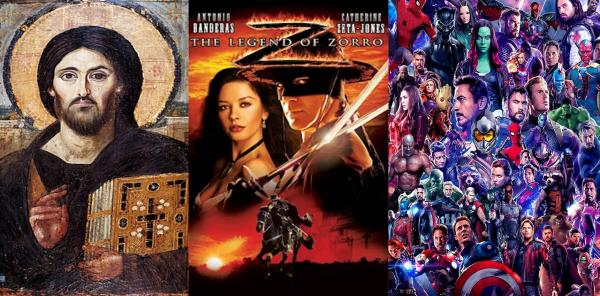
钱 宏(Archer Hong Qian) “我是基督徒,我也相信佐罗(Zorro)。”一句电影台词,竟像一道闪电,照亮了现代文明深处某种长期被忽略的秘密。 说出这句话的,是电影《佐罗》里的小男孩米科(Micah)。乍一听,不过是孩子式的天真表达:既相信上帝,也崇拜侠客。 然而,越想越觉得,这句话背后隐藏着一种极深的文明结构密码。
一、《Holy Bible》是“经”,更是“约” 它为什么会如此动人? 因为它巧妙地把“世人哪,耶和华已指示你何为善。他向你所要的是什么呢?只要你行公义(Do Justice),好怜悯(Love Mercy),存谦卑的心(Walk Humbly),与你的神同行。”(弥迦书6:8) 这里,我必须把一个萦绕在我心里几十年的感觉和信念说出来,这就是《Holy Bible》的中文翻译,不应当只是《圣经》,更贴切更入心的翻译应当是《圣约》。 当年利玛窦、马礼逊等传教士在翻译《Holy Bible》时,面临巨大的“本土化(Contextualization)”挑战。为了让中国知识分子和朝廷接受,不得不借用当时社会地位最高、最具神圣权威的词汇——“经”。只有用“经”,才能与《论语》《孟子》《道德经》平起平坐,展现其作为“天主/上帝之言”的至高地位。若直接译为《圣约》,恐被误解为“合同汇编”或“盟誓之书”,反而失去宗教启示的严肃性。 在中国传统文化语境中,“经”字(如儒家《五经》、佛经)带有极强的单向性和权威教条色彩。其本义是织布的竖线(经线),引申为不可更改的绝对真理、恒常之法。它强调的是“上对下”的单向宣示、规条、智慧结晶,却缺少了希伯来文化中最重要的Relational(关系性)维度。 显然,“经”与“约”的内涵,代表着两种完全不同的思维方式和价值取向。 《Holy Bible》的核心,从来不是一套单向僵硬的“经”,而是一个动态的“神与人立约、破约、守约、续约”的过程——这正是Covenant(圣约)一词更能精准捕捉的本质: 旧约(Old Testament)是律法之约(The Covenant of Law):神与以色列人在西奈山立约,以十诫和律法为规范,强调“你们若听从,就作我的子民”; 新约(New Testamen)是福音之约(The Covenant of the Gospel):神借着耶稣的宝血与全人类立新约,既延续律法的要求,更以恩典、信德、“八福”为规范; 启示录(Revelation)是共生之约(The Covenant of Symbiosis):彰显“神的帐幕在人间,他要与人同住”的终极约定,标志着神人(God-Man)、人人(Man-Man)、人物(Man-Creation)不再有圣所的阻隔,律法与福音在此走向了愛之智慧(Amorsophia)的“相互内住、永恒共生”(Mutual Indwelling and Eternal Symbiosis)。 从律法之约,到福音之约,再到共生之约,正是Covenant(圣约)不断完善的展现上帝愛之智慧(Amorsophia)的全过程。 这也是“圣约神学”在英美海洋文明思想史中,鲜明呈现出现代契约社会(如宪政、国际法)特征的根本原因。 有趣的是,佐罗恰恰就是一种“行公义”的现代文化象征。他戴着面具,在黑夜中骑马而来;既不属于王权,也不属于暴民;既反抗压迫,又保护弱小;既有拔剑而起的勇气,又始终保有边界感。 于是,一个非常重要的问题浮现出来:为什么英美文明中,总会不断出现这种“先知 + 侠客”的文化结构? 从亚瑟王骑士、罗宾汉、佐罗,到牛仔精神、陪审团传统、地方民兵文化及科幻超级英雄,它们似乎都在强调: 当制度出现冷漠与僵化时,普通人依然有责任站出来,守护正义与弱小者。这并不是“暴民政治”。 恰恰相反,它是一种被法理、信仰与边界意识约束着的行动伦理。而这,正是英美海权文明,与欧亚大陆陆权文明之间,一个极深层的差异——既有精神背景(圣约神学),也有地理背景(海洋环抱的岛国与大陆国家的文明形态差异)。 二、欧洲大陆的困境:在“哲人王”与“总体意志”之间摇摆 很多人以为,现代文明的问题,只是“民主”与“专制”的问题。其实远不止如此。 欧洲大陆数千年来,始终存在两种巨大的政治冲动。 一种来自 Plato。柏拉图相信,真正的理想国家,应由“哲人王”统治。因为大众无知、情绪化、容易被欲望驱动,所以必须由少数智慧精英来规划社会。 另一种,则来自 Jean-Jacques Rousseau。卢梭强调“人民总体意志”。然而,一旦“人民”被抽象化、神圣化,最后又很容易演变为:谁代表人民,谁就拥有无限权力。 于是,法国大革命之后,雅各宾派的断头台便开始滚动;再往后,巴黎公社、十月革命、极权革命、群众动员,也往往在“人民”的名义下,重新制造新的压迫。 于是,欧洲大陆长期陷于一种奇怪的循环: 要么是“精英替人民决定一切”;要么是“人民意志吞没个体”。 看似对立,其实同源。 因为它们都相信:必须存在一个“最高正确”。而一旦“唯一正确”出现,多元社会便很容易滑向极化、清洗与斗争。 三、中国特色殖官主义:泛滥的Elitism与可怜的Populism 如果说欧洲大陆的问题,是“哲人政治”与“总体意志”之间的摆荡,那么中华文明的问题,则更加复杂。 因为中国并不只是简单的“专制”和“刑徒经济”。 它长期形成了一种特殊的权力再生产结构——我称之为: Chinese Reproductive Officialdom(中国特色殖官主义)。 从商鞅“驭民六术”,到苏绰“驭官三术”,再到后来的科举—官僚—党国混合结构,无论“君天下”(秦王嬴政为始作俑者),还是“党天下”(蒋中正为始作俑者),其核心都不是“人民主体性”,而是:如何维持权力—资源—组织的循环稳定。 商鞅说:弱民、贫民、疲民、辱民、愚民、虐民。 苏绰则进一步提出:用贪官、反贪官、杀大贪。但永远改变不了“前面抓了偷牛贼,后面还有贼偷牛。” 这背后,其实是一整套“用权力制造忠诚”的治理逻辑。于是,中华历史上经常出现一种奇怪现象: 口头上讲“天下为公”“为人民服务”,实际运行却是:“权力优先、组织优先、关系优先”,“让领导同志先走”。所以,中国历史上真正反复上演的,往往不是“阶级斗争”,而是: 官官斗争; 民民斗争; 官民斗争。 而所谓“民粹主义(Populism)”,在大陆语境中,也常常被严重污名化。 那么,这世间有没有一种从一开始就确立“人民主体”的国体政体? 答案是有!今年是美利坚合众国建立250周年,事实上,美国宪法开宗明义写的: “We the People(我们人民)”。 本质上就是一种“人民主体性”宣言。 它并不等于“暴民政治”。真正的 Populism,原本是: 对精英垄断的不信任; 对普通人主体性的强调; 对地方自治与社区生活的维护; 对权力边界的持续警惕。 然而,在中国历史结构中,“人民”长期缺乏稳定的生命自组织连接空间,或者说“自治空间”。 人民往往: 被动员、被组织、被代表、被教育、被定义,却很少真正成为独立主体。 于是,便形成了一种极其吊诡的状态: 泛滥的 Elitism与可怜的 Populism并存。 精英主义高度膨胀,人民主义却始终发育不良。 四、1688:世界历史真正的转折点 很多中国人以为,西方真正强大的起点,是工业革命。 其实不然。真正改变世界历史方向的,是1688年的 Glorious Revolution。 因为它第一次在人类大型文明中,完成了一件前所未有的事情: 把“限制权力”,本身变成了国家合法性的来源。 而更关键的是: 英国并没有滑向后来法国式、俄国式的暴力革命或中国式殖官主义成王败寇赢者通吃的循环取代。 它没有彻底摧毁传统,也没有制造“人民总体意志”的绝对化。相反,它缓慢形成了一种极其特殊的“双子座法权政治”。 这对“双子星”,就是: English Bill of Rights(《权利法案》) Toleration Act 1689 (《宽容法案》) 前者,限制权力;后者,宽容异端。 前者解决“王权无限”;后者解决“真理垄断”。 于是,英国逐渐走出了一条超越欧洲大陆的: 柏拉图式精英政治,也超越卢梭式暴民政治的第三道路。 它不再追求:“谁拥有最终真理”;而是强调:“谁都不能垄断真理”。它不再依赖:“圣君”或“伟大领袖”;而是建立:即使坏人执政,社会也不至于毁灭的制度边界。
五、先知與侠客:海权文明真正的秘密 这时候,再回头看那句:“我是基督徒,我也相信佐罗。”就忽然明亮起来了。 原来,英美文明真正厉害的地方,并不只是海军、贸易与资本主义。而是它逐渐形成了一种: 《圣约》先知精神+经典侠客行动伦理+有限政府+地方自治+法理边界+宗教宽容之间的动态平衡。 这里的英雄,并不是凌驾法律的“救世主”。恰恰相反:真正的英雄,首先也必须受约束。 佐罗不能成为暴君; 蝙蝠侠不能取代法律; 牛仔不能无限扩张; 总统也不能成为国王。 所以,美国政治文化中,才会长期存在一种特殊的张力: 一方面,人们崇拜英雄;另一方面,又始终警惕英雄。 这其实正是: 《权利法案》与《宽容法案》这对“双子座法权政治”的文明光波。它让社会逐渐形成一种: 既允许差异,又维持秩序; 既限制权力,又保留行动力; 既尊重人民,又防止群众狂热; 既承认信仰,又避免神权垄断; 既有先知,又有侠客; 最终在规范社会生活中, 形成一种“自组织连接动态平衡”的交互主体共生(Intersubjective Sybmiosism)。 六、敢问路在何方? 今天,世界又一次站在巨大分岔口。 大陆陆权体系,依然深陷: 精英主义惯性; 组织崇拜; 权力路径依赖; “统一正确”焦虑。 而英美海权体系,虽然问题重重、撕裂严重,却依然保留着某种极其珍贵的东西: 普通人的主体性。 也因此,“行公义,好怜悯,存谦卑的心,与你的神同行”,至今仍不仅是一句宗教箴言。 它其实是一种文明结构原则。 因为一个真正健康的社会,从来不是: 靠圣人统治, 也不是靠暴民狂欢; 而是: 让权力有边界, 让人民有主体性, 让信仰限制傲慢, 让法理约束强权, 让英雄精神守护弱小, 并最终使不同主体之间, 能够形成一种交互主体共生(Intersubjective Symbiosism)的动态平衡。而这,或许才是当代人类真正要走的路。 一个真正健康的社会,从来不是:靠圣人统治,也不是靠暴民狂欢;而是:让权力有边界,让人民有主体性,让信仰限制傲慢,让法理约束强权,让英雄精神守护弱小,并最终使不同主体之间,能够形成一种交互主体共生(Intersubjective Symbiosism)的动态平衡。 而在《启示录》第21-22章的共生之约终极画面中,这一平衡达到了神学上的圆满:天人共生(神的帐幕在人间,神与人同住);不再有圣所(整个宇宙成为圣殿);万物复苏(生命树与生命河,叶子医治万民);宇宙大团圆(Alpha与Omega的愛之智慧圆满)。 更惊人的是:“我又看见一个新天新地……连海也不再有了”(启21:1)。“海”曾是海洋文明的保护屏障、契约流动的隐喻,却在终局中象征分离、混乱与不信任的退场。当神人完全共生,愛成为唯一律法时,任何“契约手段”都完成了历史使命,升华为永恒的、毫无阻隔的交互主体共生。 而这,或许才是当代人类真正要走的路。从陆地固化,到海洋契约,再到无海共生——圣约神学、海权文明与终极启示,在“双子座法权政治”的框架中,共通指向了人类文明的最高阶境界。
“I Am a Christian, and I Also Believe in Zorro”— The Twin Foundations of Modern Constitutional CivilizationArcher Hong Qian “I am a Christian, and I also believe in Zorro.”
A single line from a film flashes like lightning across the hidden depths of modern civilization, illuminating a secret long overlooked. The speaker is Micah, the young boy in The Legend of Zorro. At first glance, it sounds like the innocent imagination of a child: believing in God while admiring a masked hero. Yet the more one reflects on it, the more one senses that this sentence conceals a profound civilizational code.
I. Holy Bible: Not Merely “Scripture,” but “Covenant”Why is this sentence so moving? Because it brilliantly unites the prophetic spirit of: “What does the Lord require of you?
To do justice, to love mercy, and to walk humbly with your God.”
— Micah 6:8
with the chivalric spirit embodied by Zorro. For decades, I have carried a persistent conviction: The Chinese translation of Holy Bible should not merely be “Holy Scripture” (Shengjing), but more precisely and more deeply: The Holy Covenant (Shengyue). When missionaries such as Matteo Ricci and Robert Morrison translated the Holy Bible into Chinese, they faced the immense challenge of contextualization. In order to gain acceptance among Chinese scholars and imperial authorities, they borrowed the term “jing” (“scripture” or “classic”), the most sacred and authoritative word in the traditional Confucian world. Only by using “jing” could the Bible stand alongside The Analects, Mencius, and the Dao De Jing as a text of supreme authority. Yet the word “jing” in the Chinese tradition carries strong implications of: Its original meaning refers to the vertical threads of woven cloth — something fixed, permanent, and unquestionable. What it lacks, however, is the most essential dimension of the Hebrew worldview: relationality. Thus, “scripture” and “covenant” represent two fundamentally different modes of civilization. The essence of the Holy Bible has never been a frozen collection of commandments. Rather, it is a dynamic history of: This is precisely why the word Covenant captures its true nature far more accurately. The Old Testament is the Covenant of Law:
God establishes a covenant with Israel at Sinai through the Ten Commandments and the Law. The New Testament is the Covenant of the Gospel:
through Christ, grace, faith, and the Beatitudes deepen and fulfill the Law. And Revelation points toward what may be called the: Covenant of Symbiosiswhere: “The dwelling place of God is with humanity.”
— Revelation 21:3
Here, the separation between: God and humanity, humanity and humanity, humanity and creation
finally dissolves. Law and Gospel reach their culmination in what I call: Amorsophia — the Wisdom of Lovea state of: From the Covenant of Law,
to the Covenant of the Gospel,
to the Covenant of Symbiosis, the history of Covenant is nothing less than the unfolding revelation of God’s Amorsophia. This is also why Covenant theology profoundly shaped the maritime civilization of Britain and America, eventually giving rise to modern constitutionalism and international law. Interestingly, Zorro himself becomes a modern cultural symbol of “doing justice.” He rides through the night wearing a mask: belonging neither to monarchy nor to mob, resisting oppression while protecting the weak, wielding the sword courageously while never abandoning moral restraint.
And this raises an essential question: Why do English-speaking civilizations repeatedly produce this cultural archetype of: “Prophet + Knight”?From: King Arthur, Robin Hood, Zorro, frontier cowboys, local militias, jury traditions, and modern superheroes,
the same pattern reappears: When institutions grow cold or rigid, ordinary people still bear responsibility for defending justice and protecting the vulnerable. This is not mob rule. On the contrary, it is an ethic of action constrained by: law, faith, and boundaries.
And here lies one of the deepest distinctions between: The difference is both: spiritual (Covenant theology),
and geographical (the contrast between island maritime societies and continental land empires).
II. Europe’s Continental Dilemma: Between the Philosopher King and the General WillMany assume that the crisis of modern civilization is merely a struggle between democracy and authoritarianism. It is much deeper than that. For centuries, continental Europe has oscillated between two powerful political impulses. One originates with Plato. Plato believed that the ideal state should be ruled by philosopher-kings because ordinary people are emotional, ignorant, and driven by desire. The other impulse comes from Jean-Jacques Rousseau. Rousseau exalted the “General Will.” Yet once “the People” becomes abstract and sacred, whoever claims to represent the People may acquire unlimited power. Thus: all emerged in the name of “the people.” Continental Europe therefore fell into a recurring cycle: Either: or: Though seemingly opposed, both systems share the same assumption: There must exist a single ultimate correctness. And once “absolute correctness” emerges, pluralistic society quickly slides toward: polarization, purification, and political struggle.
III. Chinese Reproductive Officialdom: Inflated Elitism and Impoverished PopulismIf Europe’s problem lies in the oscillation between philosopher politics and collective will, China’s historical predicament is even more complex. China’s system has never simply been “despotism.” Over centuries, it developed a unique structure of power reproduction — what I call: Chinese Reproductive Officialdom (CRO)From Shang Yang’s “Six Techniques of Controlling the People,”
to Su Chuo’s “Three Techniques of Controlling Officials,”
to the later fusion of: the core concern was never true popular subjectivity, but rather: how to preserve the cyclical stability of power, resources, and organization. Thus, throughout Chinese history, what repeatedly emerged was not primarily: but rather: struggles among officials, struggles among the masses, and struggles between officials and the people.
Meanwhile, the term “Populism” in the Chinese context has often been deeply distorted and stigmatized. Yet the modern world does contain a constitutional order that explicitly affirms popular subjectivity from the beginning. The United States Constitution opens with the words: “We the People.”This is fundamentally a declaration of popular subjectivity. True populism originally meant: distrust of elite monopolies, affirmation of ordinary people as subjects, defense of local self-government, and vigilance against concentrated power.
But in Chinese historical structures, ordinary people rarely possessed stable spaces for self-organized civic life. The people were: mobilized, organized, represented, educated, and defined,
yet seldom allowed to become genuine independent subjects. Thus emerged a deeply paradoxical condition: Inflated Elitism and Impoverished Populism.
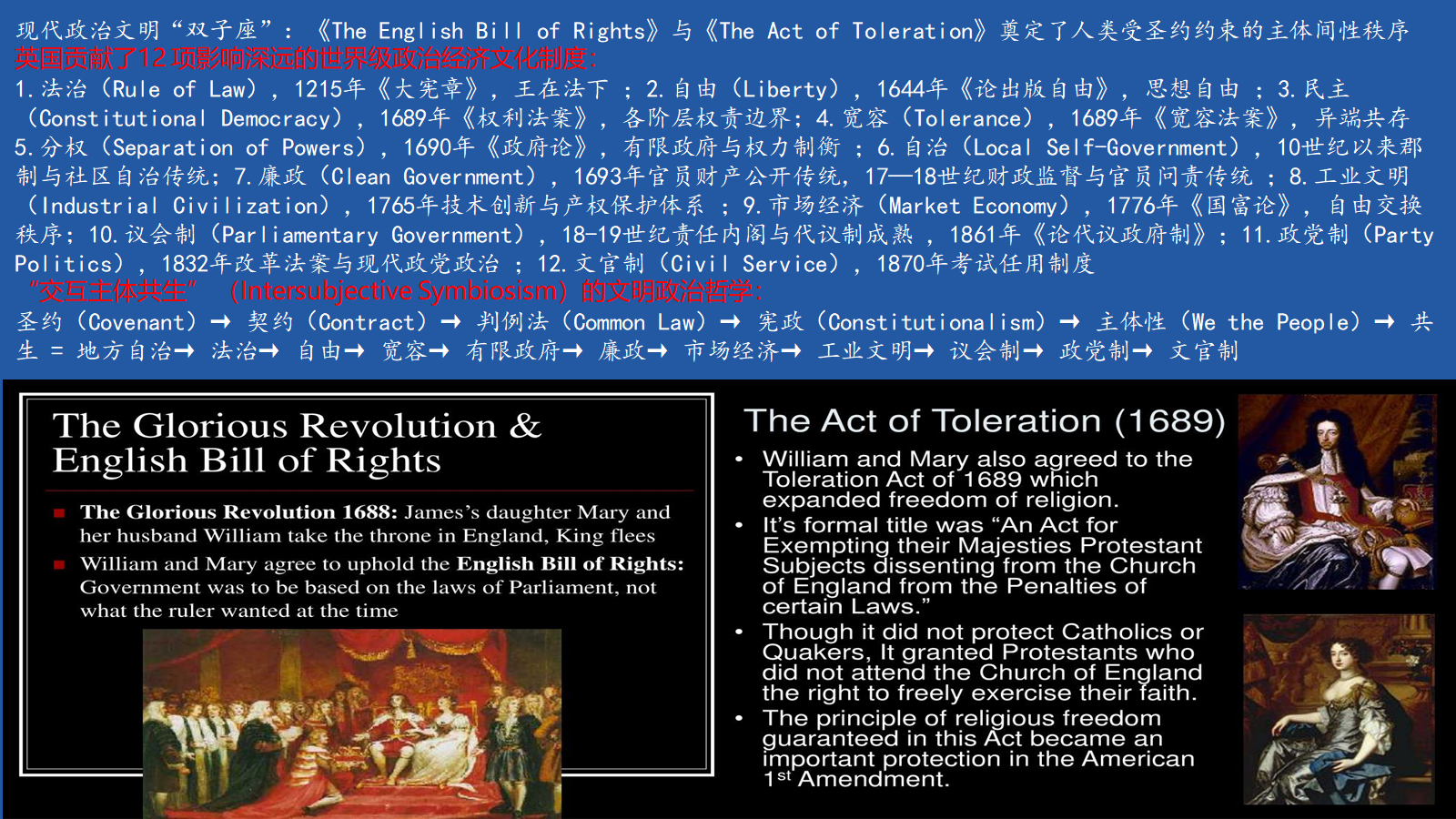
IV. 1688: The Real Turning Point of World HistoryMany assume that the Industrial Revolution marked the true beginning of Western power. It did not. The real turning point was the: Glorious Revolution of 1688.For the first time in a large civilization, humanity achieved something unprecedented: The limitation of power itself became the source of political legitimacy.More importantly, Britain avoided: the violent revolutionary cycles of France, the totalizing revolutions of Russia, and the winner-takes-all political cycles characteristic of Chinese Reproductive Officialdom.
Instead, Britain gradually formed a unique constitutional structure: The Twin Foundations of Modern Constitutional CivilizationThese twin foundations were: The first limited power. The second tolerated dissent. The first solved the problem of unlimited monarchy. The second solved the problem of monopoly on truth. Britain thus discovered a third path beyond continental Europe: It no longer asked: “Who possesses ultimate truth?”
Instead, it insisted: “No one may monopolize truth.”
It no longer relied upon: saints, emperors, or great leaders,
but constructed institutional boundaries strong enough that even bad rulers could not easily destroy society.
V. Prophets and Knights: The Hidden Secret of Maritime CivilizationNow the sentence suddenly becomes luminous again: “I am a Christian, and I also believe in Zorro.”
The true strength of Anglo-American civilization lies not merely in: naval power, trade, or capitalism,
but in the dynamic balance it gradually forged between: the prophetic spirit of the Holy Covenant, chivalric ethics, limited government, local self-government, constitutional boundaries, and religious tolerance.
The hero here is not a savior standing above the law. On the contrary: The true hero must also remain constrained. Zorro cannot become a tyrant. Batman cannot replace law. Frontier spirit cannot expand without limit. Presidents cannot become kings.
Thus American political culture has long sustained a peculiar tension: People admire heroes,
yet simultaneously remain suspicious of them. This is precisely the civilizational wave generated by: Together, they enabled a society that could: preserve order without destroying diversity, limit power without extinguishing initiative, respect the people without descending into fanaticism, affirm faith without establishing theocracy, honor prophets while still needing knights.
Ultimately, this produced a dynamic equilibrium of: Intersubjective Symbiosisma self-organizing balance among distinct human subjects.
VI. Where Does Humanity Go from Here?Today, humanity once again stands at a great civilizational crossroads. Continental land-power systems remain trapped in: Meanwhile, Anglo-American maritime civilization — despite all its crises and fractures — still preserves something extraordinarily precious: the subjectivity of ordinary people.Thus: “To do justice, to love mercy, and to walk humbly with your God”
remains not merely a religious proverb. It is a principle of civilizational structure itself. A truly healthy society is never built: Rather, it requires: power with boundaries, people with subjectivity, faith restraining arrogance, law restraining power, heroic spirit protecting the weak,
until different subjects can finally achieve: a dynamic balance of Intersubjective Symbiosism.And in the Covenant of Symbiosis revealed in Revelation 21–22, this balance reaches its theological fulfillment: God dwells with humanity, the cosmos itself becomes the temple, the Tree of Life heals the nations, and Alpha and Omega consummate the Wisdom of Love.
Most astonishingly: “And the sea was no more.”
— Revelation 21:1
The sea once symbolized: Yet at the end of history, it also symbolizes the disappearance of: division, chaos, and distrust.
When God and humanity fully coexist in symbiosis,
Love itself becomes the only law. At that moment,
all contractual mechanisms complete their historical mission,
transfigured into an eternal and unobstructed state of: Intersubjective Symbiosism.And perhaps this is the path humanity must ultimately walk: From: Within this trajectory,
Covenant theology,
maritime civilization,
and ultimate revelation
converge toward the highest horizon of human civilization.
|