PRC大陸與ROC台灣關係全新思路
Beyond Unification and Independence: A New Symbiotic Framework for Relations Between the PRC Mainland and ROC Taiwan
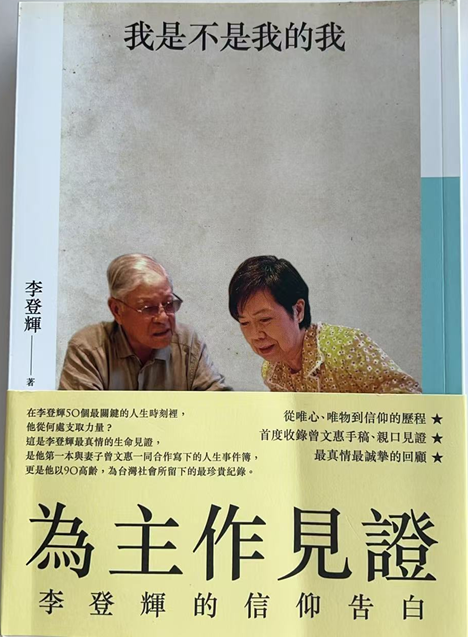
錢 宏(Archer Hong Qian) 【題記】 我請台大朋友寄來《李登輝的信仰告白》,封面赫然印着我喜歡的“我是不是我的我”,還有一行小字:“從唯心、唯物到信仰的歷程”,這裡的“信仰”對我來說,就是基於生命自組織連接動態平衡的“交互主體共生”(Intersubjective Symbiosis)思想。
李登輝先生,一個農業政策專家教授,在“催台青”中被揀選,授命於危難,從經國先生的面授機宜中,很快習得了對複雜而殘酷環境的鬥爭策略,因真理,得自由,以服務,審時度勢,理性務實,了生死,知進退,且始終葆有一顆高貴的靈魂,賦有愛之智慧(Amorsophia),成為華人世界150年來最偉大的“無中生有”造就政治奇蹟的歷史人物! 如今,歷史又走到這樣一個關鍵時刻:無論是PRC大陸,還是ROC台灣,抑或美國、日本及國際社會,都要儘快改變思維方式和價值取向,而且,誰率先改變,誰獲得戰略主動! Whether it is the People’s Republic of China, the Republic of China, or the United States, Japan, and the international community, all must change their ways of thinking and value orientations as soon as possible. Moreover, whoever takes the lead in changing will gain the strategic initiative! 怎麼辦?進一步,海闊天空!http://symbiosism.com.cn/12099.html 導論:走出“官府獨白”與“客體化”囚徒困境 PRC大陸與ROC台灣,兩岸關係歷經七十餘年風雨,至今仍被兩岸乃至國際社會普遍界定為主權爭議、內戰延續或地緣政治衝突。 傳統的“統一或獨立”敘事,建立在一種強烈的“排他性主權絕對主義”之上,不僅將主權視為你死我活、神聖不可分割的絕對實體,更在方法論上犯了致命的“客體化(Objectification)”錯誤:他們將複雜的兩岸共生體系,粗暴地退化為中華人民共和國(PRC)政權與中華民國(ROC)政權這兩個“官府機構”之間的零和權力博弈,而將主權在民的大陸與台灣人民、社會自組織、以及作為人類文明高階成果的產業生態,貶低為被動承受統治、被支配、被操縱、被代表的“客體(Object)”。 當現實結構實況已經發生根本性變化,這些陳舊的解釋和“官府獨白”正在逐漸失去其解決問題的能力。隨着全球化演進與科技生態的高度一體化,兩岸關係已不再是一場單純的“主權誰屬”內政爭端,而必須被置於全球化3.0時代的現代國際秩序下,進行一場關於“主權、承認與責權結構”的共生重構。 唯有確立這一底線認知,並引入“交互主體共生(Intersubjective Symbiosis)”的哲學與行動範式,我們才能真正走向問題的務實解決:兩岸的共生絕對不能淪為“你(PRC官)中有我(ROC官),我只要你(領土與主權)”的占有欲魔咒。它必須是一場由你(PRC大陸政權)、我(ROC台灣政權)、他(主權在民的大陸與台灣人民及其自組織)互為依憑、相互成就的三元立體共生。 三元交互主體共生結構表 主體角色 | 主體具象化表達 | 在共生結構中的主權/治權屬性 | 核心價值底線 | 你(PRC) | 大陸地區執政政權(官府) | 大陸地區的最高有效行政管轄與產業治理主體 | 必須放棄“我只要你”的絕對吞併與客體化操縱執念 | 我(ROC) | 台灣地區自由政權(官府) | 台澎金馬地區的最高有效行政管轄與自由憲政主體 | 歷經“政權虛己”後轉生,需依託法理對等保護社會 | 他(社會自組織) | 兩岸人民、跨海芯片供應鏈(硅盾)、跨國台商、民營科技生態、政黨、社區、公益組織 | 擁有獨立演進權與原初主體性,主權在民的源泉與“生活世界”載體 | 絕非被支配、被操縱、被代表的 Object(客體),是兩岸和平的最強韌底盤 |
一、 歷史事實:台灣單方面法理讓步的責權邏輯與破局遺產 要務實地探討兩岸關係的解路,首先必須還原一個被長期掩蓋或誤讀的歷史法理事實:今天兩岸能夠實現制度化交往(1992-1998年史稱的“汪辜會談”),其根源絕非兩岸官方在排他性主權上達成了某種政治分贓,而是得益於台灣在20世紀90年代初期所做出的、具有劃時代意義的單方面法理讓步與責權結構調整。 1. 1990-1991:終止內戰法統的“政權虛己” 1990年10月7日,李登輝創設國家統一委員會,率先承認“台海兩岸分處不同地緣的政府,是兩個不同的政治實體”。這一務實清醒的判斷,直接推動了1991年5月台灣正式終止《動員戡亂時期臨時條款》。 這一憲政級別的修正,在法理層面上完成了深刻的“政權虛己(Kenosis)”,即使是今天,國際社會也不能不承認其兩大歷史進步意義: 一是放棄零和博弈:台北正式停止將中國共產黨視為“叛亂團體”,完全放棄了“反攻大陸”、“漢賊不兩立”與“三不政策”的意識形態躁動。 二是承認PRC的管轄地位:台灣通過制定《憲法增修條文》,將自身治權範圍嚴格限縮於台澎金馬“自由地區”,從而在法理和法律上承認了自1949年以來,PRC武裝奪取並有效管轄中國大陸部分的法理正當性。 要理解這兩大歷史意義,就要理解李登輝這個人精神境界。雖然在其大半生政治生涯中,李登輝深受西田幾多郎京都學派哲學的薰陶,但在其90歲的靈性信仰告白中,他明確闡述其政治實踐中的“自我否定”與“超越性捨棄”,最終的恩賜與精神源頭完全出自《聖經》(Holy Bible)。那是一種“現在活着的不再是我,乃生基督在我裡面活着”(加拉太書 2:20)的虛己心性。正是這種基於信仰的超越性力量,促使台灣官方斬斷了虛妄的“大中國法統舊我”,讓出了歷史空間,使政治權力回歸“主權在民”的現代政治文明常態。 2. “汪辜會談”的交互主體共生萌芽與系統失衡 我們不能不承認,正是有了台灣單方面承認大陸治權的歷史事實,海基會與海協會才可能跨越主權鴻溝,利用法律擬制(Legal Fiction)互認民商事文書與司法管轄權。這實際上是在兩岸官府尚未對等承認之前,率先通過民間社會與企業(他)的實質接觸開啟了共生的實驗。 然而,承認必須基於互惠(Reciprocity)。台灣通過憲政虛己退出了內戰,本期許換取北京對其對等治理實體的法理承認。但在國際外交現實中,北京的新天下主義或威權權力慣性,導致其不僅未能在法理上匹配以同等的對等承認,反而加速推進“一個中國原則”,試圖全面抹殺ROC的國際法人人格。 這種“單向壓迫”,最終導致了兩岸分治系統的嚴重失衡。1999年李登輝不得不拋出“特殊的國與國關係”論,以至於下野後的李登輝,在2003年8月23日又以“台灣正名運動總召集人”的身份公開宣稱“中華民國不存在”。他是這樣說的:“中華民國只是國號,不是國家,我當了十二年的總統,最了解台灣困境就是來自中華民國為個名字,過去的歷史‘被欺負就被欺負了’,我們無法改變,但未來國家名字必須由這塊土地人民自己選擇。……‘正名運動’的推動者,必鹽與光的特徵和影響”。 從解決問題的邏輯演進來看,2003年的“不存在”論,絕非偶然的政治挑釁,而是1991年單方面讓步,由於缺乏北京後續的對等回饋而撞上“單一主權壁壘”後的必然反彈。李登輝在向世界和大陸指出:當“中華民國”的外殼無法保護台灣人民(他)的基本生存與國際人格、反而淪為北京在國際上將兩岸問題“內政化”的法律繩索時,這個符號外殼在客觀現實中,就已經喪失了合理的存在價值。 不過在我看來,為台灣正名當然有正當性,雖然1991年單方面承認PRC大陸政權,就等於自認ROC管轄權限於台澎金馬,而且與“蔣介石集團”早已沒有關係,但“中華民國”至今依然是一塊金字招牌。 二、邏輯可能:從多元主體間性到“交互主體共生”的理論突圍 在探討兩岸對等法理承認的可能性時,有必要明確引入“交互主體共生(Intersubjective Symbiosis)”的全新哲學思維。 這是因為,我們太熟悉軸心時代以來成型的“二元對立統一”的思維方式。而且,即便19世紀中葉以來,從海克爾的生態學,到胡塞爾、梅洛-龐蒂的現象學,再到哈貝馬斯(Jürgen Habermas)的交往行為理論,乃至萊維納斯(Emmanuel Levinas)的他者倫理,已經發展出了精妙的“主體間性(Intersubjectivity)”與“他者(Other)”思想。但身處21世紀的我們,依然不難發現,單是“主體間性思想”在實際生活中,表現得像多元主義(Pluralism)、生態主義一樣,缺乏理論的徹底性。特別是在面對文明、族裔交錯的冷戰殘餘地緣博弈時,“政治正確”的歧視和逆向歧視,乃至多元衝突、生態戰爭,依然頻頻發生(如俄烏、以哈、以伊、印巴、柬泰等),因為主體間性或多元、多樣、生態的Intersubjectivity思想,未能提出具備剛性約束力的交互共生(Symbiosis)規範,往往流於包容發展、平行孤立、冷漠並存、互不干涉的“冷戰式隔離”說教或話術。 所以,第一必須避免回到二元對立統一思維殘留的“你中有我,我只要你”“求同存異”的支配、操縱、掠奪動能:強大的主體不能把弱小的主體當作自己身體的衍生或待吞併的客體。 第二,必須確立“你中有我、我中有他、他中有你”的三元立體結構:在這個結構中,確保你(PRC大陸政權)、我(ROC台灣政權)、他(主權在民的大陸與台灣人民及其企業、政黨、社區、公益自組織)都不是,不會淪為被支配、被操縱、被代表的Object(客體)——你、我、他(她它祂)是互為因果、相互成就、命運同構而天賦獨立精神的行為主體。
於是,在人類思想史上,我們第一次明確擁有並能系統闡述“交互主體共生(Intersubjective Symbiosis)”的哲學新思維。 “交互主體共生”打破了西方主客二分的殘餘,並為兩岸的法理對等承認,梳理出了一個由淺入深、層層遞進的邏輯發展鏈條(如下表所示): 認知與邏輯發展層級 | 主權/治權處理模式 | 核心表現形態 | 哲學與路徑價值闡釋 | 第一層:零和神話 | 互不承認存在 | 官府政治話術、主權宣稱、抹殺對方 | 盲目的舊內戰邏輯,社會與人民被完全“客體化”異化,屬於各說各話、顛倒黑白的野蠻狀態。 | 第二層:獨立與確界 | 承認獨立存在,但暫無高階交互 | 兩德模式(1972《基礎條約》互不為外國);朝韓新模式(2024-2026金正恩修憲劃定國界) | 不說瞎話、實事求是的理性務實。通過法理確界,肯定了對方的主體地位,已經徹底超越了舊“獨統”政治訴求,是邁向政治文明不可逾越的底線。 | 第三層:三元共生 | “你、我、他”立體深度交互 | 錢宏全新思路路徑(“你中有我、我中有他、他中有你”) | 引入“主權在民”而非“主權在官”的現代政治文明基礎思維。真正打破占有欲魔咒,開啟全球化3.0責權結構的共生重構。 |
第一層底線:承認“你、我、他”三元主體性的客觀存在 兩岸關係的破局,首要在於破除“你是我的一部分,我是你的一部分”的內戰話術。在這套舊官府獨白中,主權在民的大陸與台灣人民、社會自組織、企業界(他)被完全忽略和屏蔽。共生哲學的首要規範在於:必須承認“你(PRC官)”、“我(ROC官)”、“他(個人、家庭、社區、社會自組織)”三元主體性的同時存在。如果連這個基礎存在都不敢承認,各方只能在虛幻的宏大敘事中自說自話,主體的共生便無從談起。 第二層躍遷:承認彼此是獨立主體(兩德與朝韓模式的路徑借鑑) 在承認存在的前提下,如果雙方由於制度鴻溝巨大而暫時無法進行良性高階融合,那麼走向“承認你我是獨立主體,但彼此保持隔離”的特殊狀態,是極具理性務實意義的第二階段。這就是兩德模式與朝韓最新模式(金正恩2024-2026年修憲定義韓國為接壤外國)帶給兩岸的寶貴路徑借鑑,它們絕非“反面教材”: 德意志模式的借鑑:1972年《基礎條約》雖然未能消融兩德在冷戰中的意識形態對立,但它通過“互不為外國”的特殊安排,承認了彼此的主體存在。 朝韓新模式的借鑑:金正恩近年推動憲法修正案,徹底刪除了憲法中關於“統一”和“同胞”的所有表述,明確界定其領土“南邊與大韓民國(ROK)接壤”。這在哲學上是一種不說瞎話的、實事求是的理性務實。它通過法理確界,肯定了對方的主體地位。這種“承認存在但保持安全邊界”的狀態,已經徹底超越了“獨統”的政治舊訴求,相比於不承認對方主體存在、天天揚言消滅或吞併對方的野蠻狀態,已經有了巨大的文明進步。 第三層最高形態:引入“主權在民”實現三元交互主體共生 然而,僅僅停留在官府與官府之間冷漠對峙的“對等”,依然是不徹底的。要開啟兩岸對等法理承認的全新思路,必須邁入第三層:引入“主權在民”而非僅僅是“主權在官”的現代政治文明基礎思維。只有將“他(企業、政黨、社區、公益等生命自組織)”作為核心驅動力引入你我之間,才能打破“你中有我,我只要你”的掠奪魔咒,演進為“你中有我、我中有他、他中有你”的立體交互。 【西方傳統主體間性】:官府(你)◄── 平行容忍 / 缺乏規範 ──► 官府(我)[社會(他)被客體化忽略] 【交互主體共生】:官府(你)◄── 制度保護 ──►社會/企業(他)◄── 民主授權──►官府(我) 最後,通過全方位的生命同構與對等承認,實現美美與共的華夏共生體。 三、實證展開:企業自組織作為共生主體的硅盾法理與生命托底 “三元交互主體共生”在現實的兩岸以及全球責權結構中,早已擁有了最強韌的物質實證——這就是以全球半導體供應鏈(硅盾)、跨境台商網絡以及大陸民營科技生態為核心的商業與社會自組織(他)。 1. 供應鏈生命同構:正在運轉的“你中有我、我中有他、他中有你” 以台積電(TSMC)為代表的台灣高科技自組織,通過三十年的進化,已經與大陸高度市場化的民營組裝生態、應用創新體系,編織成了一張全球化3.0時代人類最高密度的知識與產業生命網。台灣的先進製程晶圓離不開大陸全球頂尖的產業鏈配套與應用場景;而大陸民營經濟的現代化與科技創新主體性(儘管其全權責主體地位有待大陸官方的意識形態與法理確認),也時刻需要台灣高科技的精準賦能。在這一由無數科學家、企業家、工程師(他)自發織就的網絡中,兩岸在產業生命、責權結構上早已達成了無縫的“深度同構(Structural Coupling)”。 2. 反對政權對產業自組織的“客體化”操縱與摧毀 當下的兩岸僵局中,最大的危機在於“官府(你與我)”正在試圖以狹隘的地緣政治理性,去霸凌、操縱、甚至客體化這一高階的共生生命體:北京的某些原教旨敘事,將台灣的企業客體化為戰利品;西方與台灣本土的某些極端政客甚至冷酷地拋出“不惜在戰時炸毀台積電”的焦土預案。 交互主體共生哲學,在這裡劃出了一條不容踐踏的價值底線:企業與民間自組織作為擁有獨立演進權、主權在民的最高社會主體(他),擁有不可予奪的尊嚴,絕非兩個政權用於進行內戰延續或地緣博弈的工具。正是這些跨海共生的商業與社會組織,在事實上構成了維繫海峽兩岸沒有滑向深淵的最強韌和平底盤。對等法理承認的唯一務實目的,就是為了給這些共生主體(他)頒布一份免於恐懼、跨越海峽的安全與法律保護契約。 四、全新思路:基於三元主體法理承認與責權共生的三條通道 基於三元交互主體共生的哲學視域,要務實解決兩岸對等法理承認的問題,必須將原本扁平、冰冷的“官府博弈”進行徹底的共生升華。以下將三條跨越歷史、通往未來的全新思路模型路徑匯總並詳述如下: 共生思路路徑 | 技術與法理核心設計 | 你(PRC官)與 我(ROC官)的變動 | 他(人民與自組織)的共生狀態 | 路徑一:矩陣模型(現象學懸置路徑) | 永久凍結唯一主權爭議,讓位於絕對對等的雙軌治權 | 擱置歷史主權宏大敘事,互認司法終審權與行政管轄 | 釋出巨大的制度真空,讓高科技產業鏈與生活世界跨海先行自由交融,以既成共生事實倒逼政治靠攏 | 路徑二:特殊兩國論(互不異化契約路徑) | 實事求是、互雙重國際承認,互不為外國的特殊責權安排 | 全面修正兩岸冷戰法條,互認主權獨立,聯合國雙重入席 | 徹底解除政權身份焦慮,為台積電等高科技供應鏈與跨境民事商事活動築起防地緣異化的“剛性法律硅盾” | 路徑三:華夏邦聯(全球化3.0重構路徑) | 共同發起非集權上位法體——“華夏共同體” | 官府克制集權欲望,退回服務社會保護市場的工具成員國本分 | 最高權力徹底回歸兩岸生活世界聯盟。跨海配置資源、協同生態治理,達成“共生吉祥”終極範式 |
路徑一:矩陣模型下的“社會與產業共生域開啟”(現象學懸置路徑) 理論內核與共生重構: 該路徑的核心在於將無法達成共識、帶有內戰排他性的宏大“唯一中國主權”偏見進行現象學懸置(Epoché),放入永久法律冷凍庫。兩岸不再去爭奪那個抽象、神聖、非此即彼的“形而上學主權”,而是轉而肯定彼此治權的對等。 官府在主權爭端上的“退位”與“懸置”:旨在釋放出巨大的制度真空,其根本目的是讓人民、企業與社會自組織(他)正在真實經歷的“生活世界”(Living World)先行交融。PRC(你)承認ROC(我)在台澎金馬的最高管轄權,ROC亦同等承認PRC對大陸的管轄,雙方互認司法終審權與文書。這種承認,不僅是官府之間的妥協,更是為了確保跨海峽的高科技供應鏈、民營企業和民間公益組織在無摩擦、完全法治化的環境中自由呼吸、共同進化。通過社會與產業“你中有我、我中有他、他中有你”的物理不可分割性,以實事求是的底層共生事實,倒逼兩岸政治體制最終走向理性的相互接納。 路徑二:特殊兩國論下的“互不異化法理契約”(德意志/朝韓確界模式的共生升華) 理論內核與共生重構:該路徑直接借鑑並升華了兩德與朝韓模式。台灣全面修正《兩岸人民關係條例》中不合時宜的冷戰法條,北京同步修改《反分裂國家法》,雙方在法理上不說瞎話,實事求是地相互承認海峽兩岸存在着“兩個互不隸屬、各自獨立行使最高憲政管轄權的主權國家(中華人民共和國與中華民國/台灣)”,並在聯合國實現雙重入席。 官府(你與我)雙重法理承認:這一主權國家的雙重承認,絕非朝韓式彼此視對方為徹底外國敵國的冷漠原子化隔離,而是錢宏式的“互為主體、相互成就”。雙方在承認條約中明確嵌入特殊共生條款,聲明兩岸關係屬於“華夏文明內部互不為外國的特殊責權安排”。這一法理承認的根本初衷,是為了徹底解除兩岸政權由於缺乏法理身份而產生的生存焦慮,從而為台積電等高科技供應鏈、跨境台商及大陸民營科技生態(他),提供一份跨國、跨海峽的“最高安全硅盾”。官府(你與我)通過雙重法理承認達成了“不說瞎話”的底線,而這一底線國家法律,將成為保護跨海民間社會與全球產業鏈(他)免受地緣政治強權異化、操縱和摧毀的剛性制度保障。 路徑三:大中華邦聯下的“華夏共同體構建”(全球化3.0重構路徑) 理論內核與共生重構:該路徑是“三元交互主體共生”思維的最高制度化體現。它徹底跳出了大一統帝國邏輯對兩岸關係的傷害,借鑑全球化3.0時代多邊治理邏輯,由中華人民共和國(PRC)與中華民國/台灣(ROC)在完全平等、尊嚴絕對對等的前提下,作為共同的創始成員國(Member States),發起成立一個全新、中性、非集權化的跨海峽上位法體——“華夏共同體”(Cathay/Chinese Commonwealth)。 共生體(Symbiont)生態優勢:在這一全新思路下,傳統的排他性主權不再是一塊零和博弈的領土肥肉,而是轉化為流動的、兩岸人民共享的全球責權結構。共同體總部不設在北京也不設在台北,其最高權力不屬於北京的官府,也不屬於台北的官府,而是屬於兩岸人民與產業生態通過自組織網絡共同構築的“生活世界聯盟”。在這裡,“你”政權、“我”政權主動克制自身的集權欲望,退回服務社會、保護市場的工具本分;而“他(企業、民間組織、公民社群)”則獲得全方位的解放,跨海配置資源,共同參與生態治理、技術創新與文化繁榮。兩岸的制度差異不再是衝突的導火索,反而成了共生體物種多樣性的生態優勢,真正抵達我們嚮往的“各美其美,美人之美,美美與共,共生吉祥”的終極文明範式。 結論:自我否定執念,方得共生自由 “交互主體共生”哲學思維,為歷盡冷戰幽靈劫數、陷入內戰殘餘法統死結的海峽兩岸關係,指出了一條既具形而上學靈性高度、又具全球產業地緣地基的解決問題之道。 歷史清晰地證明,李登輝在1990至1991年憲改中所啟動的兩岸分治邏輯,其精神核心正是在神恩照拂下、對大中國威權舊我的勇敢“自我否定”與“虛己”。台灣社會藉此完成了民主化轉生,解脫了社會與企業主體(他)的活力。而過去三十年兩岸關係的深層悲劇,就在於北京的權力集團依然深陷於“我是絕對之我、他者必須臣服”的傳統執念中,試圖將兩岸高度自組織、深度同構的高科技產業生態與民主生活世界,重新退化為被官府任意擺布與恐嚇的客體(Object)。 兩德與朝韓模式是一面鏡子:它告訴我們,不說瞎話、實事求是地承認彼此獨立主權的存在,是邁向現代政治文明不可逾越的底線。然而,僅僅停留在官府對立的平面是遠遠不夠的。 兩岸關係的最終救贖,不在於哪一個政權吞併了哪一個政權,而在於兩岸能否共同確立 “交互主體共生”的認知(思維)與參與(價值)底線。無論是PRC的大陸政權(你)、ROC的台灣政權(我),還是海峽兩岸的每一個企業、每一個社區、每一個鮮活的個體(他),都是這場偉大共生史詩中不可剝奪的“主體(Subject)”。如題記中所言,無論是大陸、台灣、還是國際社會,誰率先改變思維方式和價值取向,誰就將獲得戰略主動(請參看《從“台灣問題”到全球化3.0:主權、承認與責權結構的共生重構》"From the 'Taiwan Issue' to Globalization 3.0: The Symbiotic Reconstruction of Sovereignty, Recognition, and Rights-Responsibility Structures.",http://symbiosism.com.cn/11941.html Or https://blog.creaders.net/user_blog_diary.php?did=NTQ3MDkw)! 唯有告別操縱,在“你中有我、我中有他、他中有你”的生命網絡中真誠對白,引入主權在民的現代政治基礎,進一步,海闊天空!兩岸才能跨越冷戰的廢墟,共同走向全球化3.0時代人類共生崛起的自由彼岸。
Beyond Unification and Independence: A New Symbiotic Framework for Relations Between the PRC Mainland and ROC Taiwan
Archer Hong Qian EpigraphProfessor Wu Chan-liang of National Taiwan University kindly sent me a copy of Lee Teng-hui’s Confession of Faith. Printed prominently on its cover is a phrase that has long resonated with me: “Am I My Own Self?” Beneath it appears a subtitle: “A Journey from Idealism and Materialism to Faith.” For me, this “faith” refers to the philosophy of Intersubjective Symbiosis, grounded in the dynamic equilibrium generated through the self-organizing interconnectedness of life. Mr. Lee Teng-hui, an agricultural economist and scholar, was unexpectedly called from academia into politics during a critical moment in Taiwan’s history. Under the guidance of President Chiang Ching-kuo, he rapidly mastered the art of navigating complex and often harsh political realities. Guided by truth, he attained freedom; through service, he learned prudence; by understanding life and death, he learned both courage and restraint. Throughout his journey, he preserved a noble spirit and embodied what I call Amorsophia—the Wisdom of Love. In my view, he became one of the most remarkable figures in modern Chinese history, creating a political transformation that many once considered impossible. Today, history once again stands at a pivotal crossroads. Whether it is the People's Republic of China (PRC), the Republic of China (ROC), the United States, Japan, or the broader international community, all must change their ways of thinking and their value orientations. Moreover, whoever takes the lead in changing will gain the strategic initiative.
Introduction:Escaping the Prisoner's Dilemma of Governmental Monologue and ObjectificationFor more than seventy years, relations between the PRC Mainland and ROC Taiwan have generally been framed by both sides of the Strait and by the international community as a question of disputed sovereignty, an unfinished civil war, or a geopolitical confrontation. Traditional narratives of either “unification” or “independence” are rooted in a form of exclusive sovereignty absolutism. Sovereignty is treated as an indivisible and sacred entity for which only one side can prevail. More importantly, such narratives commit a profound methodological error: objectification. They reduce the highly complex cross-Strait system to a zero-sum struggle between two governmental authorities—the government of the People's Republic of China and the government of the Republic of China. In doing so, they demote the people of both sides of the Strait, their self-organizing social structures, and the sophisticated industrial ecosystems they have created into passive objects to be ruled, manipulated, represented, or controlled. Yet reality has fundamentally changed. As globalization advances and technological ecosystems become increasingly integrated, cross-Strait relations can no longer be understood merely as a domestic dispute over “who owns sovereignty.” Instead, they must be reexamined within the framework of modern international order in the era of Globalization 3.0, as a question concerning sovereignty, recognition, and rights-responsibility structures. Only by recognizing this fundamental reality and introducing the philosophical and practical framework of Intersubjective Symbiosis can we begin moving toward a realistic solution. Cross-Strait symbiosis must never be reduced to the possessive obsession of: “You are part of me, and therefore I must possess you.”
Instead, it must become a three-dimensional structure of mutual dependence and mutual fulfillment among: You — the governing authority of the PRC Mainland; I — the governing authority of ROC Taiwan; He/They — the people of both sides of the Strait, together with their enterprises, communities, civic organizations, and other forms of social self-organization grounded in the principle that sovereignty resides in the people.
Only through such a triadic framework can a genuinely symbiotic future emerge.
I. Historical Reality:Taiwan’s Unilateral Legal Concession and Its Legacy of Rights–Responsibility TransformationAny serious discussion of a future framework for cross-Strait relations must begin by restoring a historical and legal fact that has often been obscured or misunderstood. The institutionalized exchanges that became possible across the Taiwan Strait during the 1990s—including the historic Koo–Wang Talks—did not emerge because the two sides reached a political bargain over exclusive sovereignty. Rather, they became possible because Taiwan undertook a profound and unprecedented unilateral legal adjustment during the early 1990s, fundamentally restructuring its rights–responsibility framework. 1. 1990–1991:Kenosis of Political Authority and the End of the Civil-War Constitutional OrderOn October 7, 1990, President Lee Teng-hui established the National Unification Council. In doing so, he openly acknowledged that: “The two sides of the Taiwan Strait are governed by different governments occupying different geopolitical territories and constitute two distinct political entities.”
This practical and realistic assessment directly contributed to Taiwan’s constitutional reforms and the formal termination of the Temporary Provisions Effective During the Period of Communist Rebellion in May 1991. At the constitutional level, this represented a profound act of political Kenosis—a voluntary emptying of inherited claims. Even today, the international community cannot deny the significance of two major historical achievements resulting from this transformation. First:The Abandonment of Zero-Sum ConfrontationTaipei formally ceased to regard the Chinese Communist Party as a rebel organization and abandoned the ideological ambitions of “retaking the mainland,” the doctrine that “Han and Communist cannot coexist,” and the so-called “Three Noes” mentality rooted in civil-war politics. Second:Recognition of the PRC’s Effective JurisdictionThrough constitutional amendments and related legislation, Taiwan limited the scope of its effective governance to the “Free Area” of Taiwan, Penghu, Kinmen, and Matsu. In doing so, it legally and constitutionally acknowledged the reality that since 1949, the PRC had exercised effective governance over mainland China. To fully understand the significance of these two developments, one must understand Lee Teng-hui himself. Although much of his intellectual life was influenced by the Kyoto School and the philosophy of Nishida Kitarō, Lee’s later spiritual reflections reveal that the deeper source of his political practice lay in the Holy Bible. The spirit underlying his political transformation was one of self-denial and transcendence. It reflected the biblical conviction expressed in Galatians 2:20: “It is no longer I who live, but Christ lives in me.”
This spiritual disposition enabled Taiwan’s leadership to relinquish the authoritarian legacy of a Greater China constitutional orthodoxy and to create political space for a modern order rooted in the principle that sovereignty belongs to the people. 2. The Koo–Wang Talks: The First Experiment in Intersubjective Symbiosis and the Emergence of Structural ImbalanceIt must be acknowledged that the historic fact of Taiwan's unilateral recognition of the PRC's effective jurisdiction made possible the institutional exchanges represented by the Koo–Wang Talks. Only because Taiwan had withdrawn from the civil-war constitutional framework was it possible for the Straits Exchange Foundation (SEF) and the Association for Relations Across the Taiwan Straits (ARATS) to bridge the sovereignty divide through legal fictions, mutually recognizing civil and commercial documents as well as certain forms of jurisdiction. In essence, before the two governments had formally recognized each other, the people, enterprises, and social organizations on both sides of the Strait had already begun a practical experiment in symbiosis. Yet recognition must be based upon reciprocity. Taiwan's constitutional self-limitation was undertaken with the expectation that Beijing would eventually respond with corresponding legal recognition of Taiwan as a governing entity of equal dignity. However, subsequent developments unfolded differently. Driven by a combination of traditional imperial political culture and modern authoritarian centralization, Beijing did not move toward reciprocal recognition. Instead, it increasingly advanced the "One China Principle" as an exclusive legal doctrine and sought to eliminate the international legal personality of the ROC altogether. This asymmetry created a profound structural imbalance. By 1999, Lee Teng-hui felt compelled to advance the concept of a "special state-to-state relationship." After leaving office, he went even further. On August 23, 2003, as chief convener of the Taiwan Rectification Campaign, Lee publicly declared: "The Republic of China does not exist."
This statement should not be interpreted merely as a political provocation. Rather, it represented the logical consequence of Taiwan's unilateral legal concession in 1991 colliding with the absence of reciprocal recognition from Beijing. Lee was effectively warning both Taiwan and the international community that if the institutional shell of the Republic of China could no longer protect the security, dignity, and international personality of the people of Taiwan, then that shell would gradually lose its practical legitimacy. Nevertheless, from my perspective, while Taiwan's search for a clearer political identity is understandable, the Republic of China remains a valuable constitutional and historical asset whose significance should not be casually dismissed.
II. From Intersubjectivity to Intersubjective Symbiosis:A Theoretical Breakthrough Beyond Binary ThinkingTo explore the possibility of mutual legal recognition across the Taiwan Strait, we must introduce a new philosophical framework: Intersubjective Symbiosis. For centuries, human political thought has largely been dominated by binary modes of reasoning. Even though modern philosophy has developed increasingly sophisticated theories of intersubjectivity—from Edmund Husserl's phenomenology and Maurice Merleau-Ponty's embodied consciousness to Jürgen Habermas's theory of communicative action and Emmanuel Levinas's ethics of the Other—these approaches often remain incomplete when confronted with contemporary geopolitical conflicts. Pluralism, multiculturalism, and ecological thinking have undoubtedly expanded human understanding. Yet they frequently stop at tolerance, coexistence, and mutual non-interference. As a result, humanity continues to witness recurring conflicts among civilizations, nations, ethnic groups, and ideological systems. The wars in Ukraine, Gaza, the Middle East, South Asia, and elsewhere remind us that recognition alone is insufficient. What remains absent is a normative framework capable of transforming coexistence into genuine mutual flourishing. This is where Intersubjective Symbiosis departs from conventional intersubjectivity. The first principle is straightforward: A stronger political entity must never regard a weaker one as an extension of itself, an object to be controlled, or a possession to be absorbed. The second principle is more profound: Human relationships must evolve beyond the binary structure of "you and me" toward a triadic structure of: You within Me, Me within Him, and Him within You. Within the cross-Strait context: You represent the governing authority of the PRC. I represent the governing authority of the ROC. He/They represent the people, enterprises, communities, political organizations, and civic associations on both sides of the Strait.
None of these actors should ever become objects. Each possesses independent subjectivity, intrinsic dignity, and an irreplaceable role within a larger symbiotic system. For the first time in intellectual history, we can therefore articulate a coherent philosophical paradigm of Intersubjective Symbiosis. This paradigm transcends both traditional sovereignty absolutism and the limitations of passive pluralism. It offers a pathway toward a deeper reconstruction of recognition, responsibility, and coexistence.
Three Stages of Political Cognition and RecognitionStage One: The Zero-Sum MythThe parties refuse to acknowledge each other's legitimate existence. Politics becomes dominated by propaganda, sovereignty claims, and efforts to delegitimize the other side. Society itself becomes objectified. People are reduced to instruments of state narratives. This is the lingering logic of civil war. Stage Two: Recognition Through SeparationThe parties recognize each other's existence while maintaining clear boundaries and limited interaction. Historical examples include: This stage represents a major civilizational advance because it abandons fantasies of total victory and begins to respect the subjectivity of the other side. Stage Three: Intersubjective SymbiosisThe highest stage introduces the principle that sovereignty resides in the people. Governments no longer monopolize political legitimacy. Instead, people, enterprises, communities, and social organizations become active participants in shaping the future. Recognition evolves into mutual empowerment. Coexistence evolves into symbiosis.
III. Empirical Foundations:The Silicon Shield and the Symbiotic Reality of Cross-Strait SocietyThe strongest evidence supporting a symbiotic framework already exists. It is neither theoretical nor hypothetical. It is the deeply integrated network of enterprises, supply chains, technological innovation, and social interaction that has emerged across the Taiwan Strait. 1. Structural Coupling in the Semiconductor EcosystemTaiwan's semiconductor industry, represented most prominently by TSMC, has become one of humanity's most sophisticated technological ecosystems. At the same time, the Mainland's private-sector manufacturing base, application markets, engineering talent, and entrepreneurial networks have evolved into indispensable partners within the broader system. Neither side can be fully understood in isolation. Taiwan's advanced semiconductor production relies upon extensive industrial collaboration and market integration. Likewise, Mainland China's technological modernization has benefited enormously from Taiwan's technological expertise and investment. Together they have created one of the world's most densely interconnected industrial ecosystems. This is not merely economic interdependence. It is structural coupling. It is a living example of: You within Me, Me within Him, and Him within You.
2. Opposing the Objectification of Social and Industrial Self-OrganizationThe greatest danger facing cross-Strait relations today is that governments increasingly seek to instrumentalize, manipulate, or even destroy these highly evolved networks. Certain nationalist narratives on the Mainland treat Taiwan's technological achievements as future spoils of political reunification. Meanwhile, some extreme voices in the West and Taiwan have openly proposed the destruction of Taiwan's semiconductor infrastructure in the event of war. Both positions violate the fundamental principles of Intersubjective Symbiosis. Enterprises, communities, and social organizations possess independent evolutionary rights. They are not military assets. They are not bargaining chips. They are not objects. Rather, they constitute the strongest foundation for peace across the Taiwan Strait. The purpose of mutual legal recognition should therefore be to create a cross-Strait covenant of security and protection for these symbiotic actors. Only by safeguarding them can a peaceful future remain possible.
IV. Three New Pathways Toward Cross-Strait ReconstructionFrom the perspective of Intersubjective Symbiosis, three potential pathways emerge. Each seeks to move beyond the traditional binary of unification versus independence. Each seeks to transform governmental rivalry into a higher form of symbiotic coexistence. Pathway One:The Matrix Model — Phenomenological SuspensionThe first approach permanently suspends the unresolved dispute over ultimate sovereignty. Rather than attempting to resolve metaphysical claims of exclusive ownership, both sides would focus on recognizing each other's effective jurisdiction and administrative authority. The objective is not governmental compromise for its own sake. The objective is to create institutional space in which society, markets, enterprises, and communities may interact freely. Over time, the reality of symbiosis would become stronger than political hostility. Political convergence, if it occurs at all, would emerge organically rather than through coercion. Pathway Two:A Special Framework of Mutual State RecognitionThe second approach draws inspiration from both the German experience and the evolving Korean model. The PRC and ROC would mutually recognize each other as sovereign governing entities while establishing a unique legal arrangement acknowledging their shared civilizational heritage. This would not be a relationship between hostile foreign states. Rather, it would constitute a special form of mutual recognition within a broader Chinese cultural sphere. Such an arrangement could dramatically reduce existential insecurity on both sides while providing robust legal protection for cross-Strait economic, technological, and social cooperation. The ultimate purpose would not be separation. The ultimate purpose would be security, dignity, and coexistence. Pathway Three:The Cathay CommonwealthThe third and most ambitious pathway represents the highest institutional expression of Intersubjective Symbiosis. Under this model, the PRC and ROC would jointly establish a new, non-centralized supranational framework: The Cathay Commonwealth. Within this arrangement, neither Beijing nor Taipei would occupy a superior position. Both would participate as founding member states of equal dignity. The Commonwealth would not seek to abolish sovereignty. Instead, sovereignty would be transformed from a zero-sum territorial claim into a shared structure of rights and responsibilities. Governments would return to their proper role: serving society rather than dominating it. Meanwhile, citizens, enterprises, communities, and civic organizations would become the primary engines of innovation, ecological stewardship, cultural development, and economic cooperation. Institutional diversity would cease to be a source of conflict. It would become a source of resilience. In this way, cross-Strait relations could eventually realize the ideal expressed in Chinese civilization: Appreciating one's own beauty, appreciating the beauty of others, and together creating a harmonious symbiotic civilization.
Conclusion:Only Through Self-Transcendence Can Freedom Through Symbiosis Be AchievedThe philosophy of Intersubjective Symbiosis offers a pathway beyond the lingering shadows of civil war and Cold War confrontation. History demonstrates that Taiwan's constitutional transformation during 1990–1991 embodied a profound act of political self-transcendence. It liberated the creative energies of society and allowed democratic institutions to flourish. The deeper tragedy of subsequent decades lies in the fact that many political actors have remained trapped within the older logic of absolute selfhood: I am absolute, therefore the Other must submit.
Yet the experiences of Germany and Korea demonstrate that mutual recognition is not weakness. It is the indispensable foundation of modern political civilization. Still, recognition alone is not enough. The ultimate future of cross-Strait relations will not be determined by which government prevails over another. Rather, it will depend upon whether all parties can embrace the principles of Intersubjective Symbiosis. The government of the PRC. The government of the ROC. Every enterprise. Every community. Every citizen. All are irreplaceable subjects within a larger human story. Whoever first changes their way of thinking and their value orientation will gain the strategic initiative. Only by abandoning manipulation, embracing genuine dialogue, and reaffirming the modern principle that sovereignty resides in the people can both sides move beyond the ruins of Cold War thinking. Only then can they enter the open horizon of Globalization 3.0 and journey together toward a freer and more symbiotic future.
|