高市早苗的“秩序井然共生” From the Idea of "Orderly Symbiosis" to the Living Symbiotic Body ——东亚多元社会中生命主体的自组织连接 Self-Organizing Connectivity Among Living Subjects in East Asia's Pluralistic Societies 钱 宏(Archer Hong Qian) 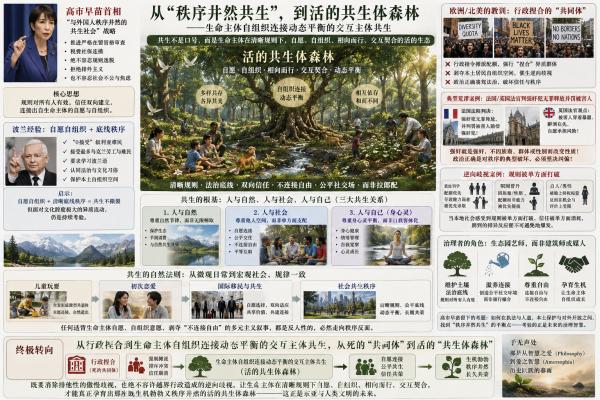
偶尔发现,一个人的平台4个月前发布的新闻:高市早苗首相在国会首次发表与外国人“共生”宣言。她明确提出要推进“外国人的受入れ・秩序ある共生のための総合的対応策”,并在施政方针演说中把“与外国人秩序井然的共生社会”确立为国家战略核心。宣言既坚决拒绝排外主义,也绝不容忍因规则逸脱而产生的社会不公与焦虑。 作者最后说,高市早苗在国会留下的呼吁——如何平衡执法与人道、如何在本土保护与对外开放之间找到那个“秩序井然的共生”的平衡点——考验的正是这个国家未来的治理智慧。我想也合乎Intersubjective Symbiosism的要求。
然而,日本要真正落实这一战略,必须进一步明确:多元共生秩序,从来不是单方面的行为,也不是单纯自上而下或自下而上的行政摊派,而是生命主体间相向而行、交互契合的动态过程。它必须建立在生命主体自组织连接动态平衡的交互主体共生之上。 “秩序井然的共生”,在政治上说得更通俗一点,就是既不要歧视,也不能搞“逆向歧视”。这正是欧洲和北美陷入“政治正确”泥淖的现实教训。日本、韩国、东南亚各国乃至广东、台湾,都必须高度警醒。 欧美在过去几十年里,试图用行政指令与配额指标强行“捏合”异质群体,结果恰恰走向了秩序的反面。决策者以“政治正确”为名,硬性摊派接收指标、设置多元化配额,试图在缺乏自然连接基础的群体之间制造“共生”。这种自上而下的拉郎配,不仅剥夺了本土居民的自组织空间,也催生了结构性的逆向歧视。当本地社会感受到规则被单方面打破、信任被单方面消耗时,剧烈的排异反应便不可避免地爆发。 更典型的是,“白人至上”是歧视,反过来“黑命贵”也是歧视;强奸就是强奸,不会因为强奸者是某个特殊利益集团、群体或族裔,就不算强奸,反而是被强奸者的过错。这是政治正确对秩序的典型破坏,必须予以坚决纠偏。 高市早苗政权目前反复强调的“严格在留资格审查”与“税费社保连携”,正是对这一教训的清醒防御。她不是在排斥外来人口,而是在重建底线:规则必须对所有人有效,信任必须双向建立,连接必须出自生命主体的自愿与自组织。 要真正理解“秩序井然的共生”,必须先把两个概念彻底拨正。 传统语境中的“共同体”(Community),往往是静态而物化的。它由上而下划定边界,强求内部的绝对同一性,把个体生命主体变成可被行政捏合的积木。一旦把多元秩序当成这样一个“死的壳子”,生命主体的自愿、自组织连接意愿就会被抹杀,剩下的只有被动的适应与隐形的怨恨。 我们真正需要呵护的,是动态而活着的“共生体”(Symbiotic Body)。它不是被事先划定的容器,而是生命主体在冲突与磨合中自愿、自组织、相向而行、交互契合的活的生命网络。异质主体在劳动价值观、生活智慧或契约意识上达成默契,自发向彼此靠近,相互依存而不彼此吞噬,在动态平衡中涌现出新的秩序。这才是“活的共生体”——它有生命力,有自我迭代的能力,也有天然的边界感。而这一切的根基,正是生命主体的自组织连接动态平衡的交互主体共生。 从人与自然、人与社会、人与自己(身心灵)三大共生关系看,一个人、一群人对自然环境的态度、对他人的态度、对自己身心灵的态度,可以清楚显现其生命自组织连接倾向:是交互主体(Intersubjective Symbiosism)共生,还是以主体(Subject)自居,将自然、他人,甚至自己的身体当作客体(Object)加以支配、操纵和榨取。这种态度,决定了共生体能否真正活起来。 这种连接的规律,在人类最日常的微观经验中早已清晰显现。 儿童在沙坑里玩耍时,没有大人硬性指派。他们通过玩具共享、行为模仿,在几分钟内自发形成一个微型共通体。一方不想玩了,自然退出,谁也不会觉得这是歧视。这种自愿连接与自然退出的自由,正是人类最早的社交自组织。 初次恋爱更是两个独立主体最极致的相向而行——它完全基于两情相悦,任何权力、世俗或道德绑架的“拉郎配”,其结果必然是结合的痛苦与结合体的崩溃。 微观如此,宏观亦然。国际移民与社会共生,底层逻辑完全一致。任何违背生命主体自愿、自组织意愿、剥夺“不连接自由”的多元主义文化叙事,无论包装得多么高尚,本质上都是反人性的,也必然走向秩序的反面。 波兰过去二十年的实践,为东亚提供了极具现实张力的参照。 波兰卡钦斯基总统顶住压力“0接受”(当时的一个著名手势)叙利亚难民,却接受了最多的乌克兰劳工与难民。这种共生之所以没有引发欧美的社会撕裂,并非简单的“文化同质性”表象可以一言以蔽之。 还原到最自然的微观场景:一个小女孩儿和小男孩儿愿不愿意一起玩,完全是天然的相向而行、自我选择的结果。即使语言不通,只要彼此吸引,就会自然靠近;而同性或高度同质的孩子,反而可能相互排斥。这种连接是生命主体自组织寻找契合的结果,而非行政预设或文化标签的强行匹配。 同时,波兰社会从一开始就坚持清晰的底线秩序:外来者必须学习波兰语、认同本土法治与文化习俗。这种“同化模式”有效保护了本土社会的自组织空间,把逆向歧视的土壤拒之门外。 波兰的成功,证明了“自愿自组织+底线秩序”双轨并行的可行性。但它也暴露了残酷的现实:当面对文化跨度极大的异质人口流动时,这种刚性的防御机制是否还能永续维持动态平衡,仍是东亚必须严肃面对的考验。 回到高市早苗留下的考题。 日本、韩国等东亚社会在应对老龄化与劳动力危机时,政策设计必须从“拉郎配的民政局”转向“公平社交场”的法律框架。 治理一个活的共生体,其智慧不再是扮演自上而下的建筑师或强行撮合的媒人,而是转型为生态的园艺师——维护好空气、土壤与法治的底线,坚决保障“连接的自由”与“不连接的自由”。 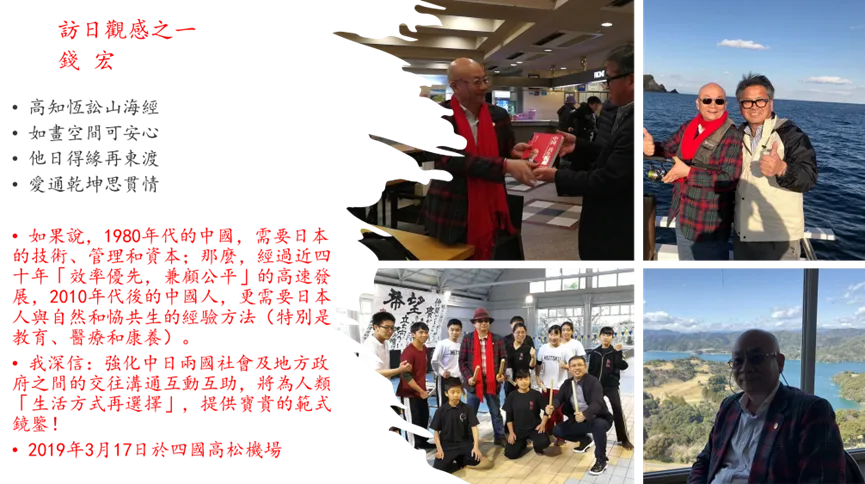
2019年初,朋友海滨邀我第二次到日本山海城镇游走,我有一个印象:人与自然的关系好,人与人关系就好,人与人交往得好,人与家人与自己相处就好! 由此,我想从人与自然、人与社会、人与自己三大共生关系出发,社会治理完全可以制定出一系列共生法则:尊重自然的自组织节律,而非无节制榨取;尊重他人的自组织空间,而非单方面支配;尊重自己身心灵的动态平衡,而非自我客体化。这些法则,正是守护生命主体自组织连接动态平衡的交互主体共生的制度化体现。 既要消除排他性的傲慢歧视,也绝不容许越界行政造成的逆向歧视。只有让生命主体在清晰规则之下自愿、自组织、相向而行、交互契合,才能真正孕育出那座既生机勃勃又秩序井然的活的共生体森林。 这正是东亚治理智慧在二十一世纪必须完成的终极转向:从行政捏合转向生命主体的自组织连接动态平衡的交互主体共生,从死的共同体转向活的共生体。 高市早苗的红线,已经画出。真正的考验,才刚刚开始。欧美及东南亚诸国当诚心鉴之!
2026年7月21日记于温哥华
Mind之能 孞 烎
烈焰撩过大地 貌似寸草不生 让自己一道 燃为灰烬的思想 正孕育著一派生机 于無聲处 那是从智慧之愛(Philosophy) 到愛之智慧(Amorsophia) 歷史跃躚的春雨
2019年3月17日高松-浦东
From "Orderly Coexistence" to a Living Symbiotic Body —The Self-Organized Connection of Living Subjects in East Asia's Pluralistic Society By Archer Hong Qian I occasionally discovered a news item published four months ago on a The author concluded by stating that the appeal left by Sanae Takaichi However, for Japan to truly implement this strategy, it must further clarify Politically speaking, "orderly coexistence" can be expressed in more colloquial terms: it Over the past few decades, Europe and America attempted to forcibly "blend" Even more typically: just as "white supremacy" is discrimination, "Black Lives Matter" The Takaichi administration's current repeated emphasis on "strict screening of residency qualifications" To truly understand "orderly coexistence," two concepts must first be thoroughly rectified. In traditional contexts, a "Community" is often static and objectified. It defines What we truly need to nurture is a dynamic, living "Symbiotic Body" Looking at the three major symbiotic relationships—man and nature, man and society, and man and oneself (body, mind, and spirit)—the attitude of an individual or a group toward the natural environment, toward others, and toward their own body, mind, and spirit clearly reveals their self-organized connection tendency. Is it an intersubjective (Intersubjective Symbiosism) coexistence, or do they position themselves as the sole "Subject," treating nature, others, and even their own bodies as "Objects" to be dominated, manipulated, and exploited? This attitude dictates whether a symbiotic body can truly come alive. The laws governing this connection have long been clearly visible in the most mundane, micro-level experiences of human beings. When children play in a sandbox, no adult rigidly assigns roles to them. Through sharing toys and imitating behaviors, they spontaneously form a micro-community within minutes. When one party no longer wishes to play, they naturally withdraw, and no one perceives this as discrimination. This freedom of voluntary connection and natural withdrawal represents the earliest form of human social self-organization. First love is the most ultimate expression of two independent subjects moving toward one another—it is entirely based on mutual consent. Any "forced marriage" driven by power, worldly conventions, or moral coercion inevitably results in the misery of the union and the collapse of the combined entity. As it is at the micro level, so it is at the Poland's practice over the past twenty years provides a highly compelling real-world reference for East Asia. President Kaczyński of Poland stood his ground against external pressure to accept "zero" Syrian refugees (a famous gesture at the time), yet accepted the largest number of Ukrainian workers and refugees. The reason this coexistence did not trigger the social tearing seen in Europe and America cannot be explained away simply by the superficial veneer of "cultural homogeneity." Returning to the most natural micro-scene: whether a little girl and a At the same time, Polish society insisted from the very beginning on a clear baseline of order: outsiders must learn the Polish language and identify with local rule of law, culture, and customs. This "assimilation model" effectively protected the self-organized space of the local society and shut out the breeding ground for reverse discrimination. Poland's success proves the feasibility of a dual-track approach combining "voluntary self-organization + baseline order." However, it also exposes a brutal reality: when facing shifting populations of extreme cultural divergence, whether this rigid defense mechanism can permanently maintain a dynamic equilibrium remains a serious test that East Asia must face directly. Returning to the examination left by Sanae Takaichi. When East Asian societies like Japan and South Korea respond to aging populations and labor crises, their policy designs must pivot from acting as a "civil affairs bureau for forced matchmaking" toward a legal framework that functions as a "fair social arena." Governing a living symbiotic body requires a shift in wisdom: no longer playing the role of a top-down architect or a forced matchmaker, but transforming into an ecological gardener—safeguarding the baseline of air, soil, and the rule of law, while resolutely protecting both the "freedom to connect" and the "freedom to not connect." Reflections on Visiting Japan (I) By Archer Hong Qian Journeying through the mountains and seas of Kochi Prefecture If the soul is settled, one finds peace Crossing the eastern waters again in days to come Cherishing the deep kindness of Kenzo Akito If we say that China in the 1980s needed Japan's technology, management, and capital; then after nearly forty years of rapid development prioritizing "efficiency first, with due consideration to fairness," Chinese people after the 2010s need Japan's empirical methods of living in harmony with nature even more (especially in education, medicine, and elderly care). I deeply believe that strengthening the interaction, communication, mutual assistance, and integration between the Chinese and Japanese civil societies and local governments will provide a paradigm and catalyst for humanity's "re-selection of lifestyle." Written on March 17, 2019, at Takamatsu Airport, Shikoku.
In early 2019, my friend Haibin invited me to travel through Japan's mountain and coastal towns for a second time, leaving me with a profound impression: when the relationship between man and nature is good, relationships between people are good; when people interact well with one another, they commune well with their families and themselves! From this, and moving outward from the three major symbiotic relationships of man and nature, man and society, and man and oneself, social governance can entirely formulate a series of symbiotic rules: respect the self-organized rhythms of nature rather than exploiting it without restraint; respect the self-organized space of others rather than dominating them unilaterally; and respect the dynamic balance of one's own body, mind, and spirit rather than objectifying oneself. These rules are the institutionalized expressions that safeguard the intersubjective coexistence sustained by the dynamic balance of self-organized connections among living subjects. We must eliminate exclusionary, arrogant discrimination, while absolutely refusing to tolerate the reverse discrimination caused by administrative overreach. Only by allowing living subjects to act voluntarily, self-organize, move toward one another, and interactively integrate under clear rules can we truly cultivate a forest of living symbiotic bodies that is both vibrant and orderly. This is precisely the ultimate paradigm shift that East Asian governance wisdom must complete in the twenty-first century: moving from administrative assembly to an intersubjective coexistence forged by the dynamic balance of self-organized connections among living subjects; shifting from a dead community to a living symbiotic body. Sanae Takaichi's red line has already been drawn. The true test has only just begun. Western nations and the various countries of Southeast Asia should observe this with an open and sincere mind! Recorded on July 21, 2026, in Vancouver. The Power of Mind By Xin Yin Raging flames sweep across the earth Appearing to leave no blade of grass alive Allowing oneself to burn along The thoughts reduced to ashes Are precisely nurturing a renewal of life In the absolute silence That is the spring rain of history leaping forward From the love of wisdom (Philosophy) To the wisdom of love (Amorsophia) March 17, 2019, Takamatsu – Pudong
|