信用即生產力!Creditworthiness Is a Productive Force!——從阿根廷主權信用評級三連升再論組織信託經濟學 — Revisiting the Economics of Organizational Trust in Light of Argentina’s Three Successive Sovereign Credit Rating Upgrades
錢 宏(Archer Hong Qian) 2026年11月28日於布宜諾斯艾利斯NIC Lerma公寓403室
題記:阿根廷米萊改革的經濟學新質論之三 從《阿根廷,我來了!》(之一)到《“我來喚醒雄獅,而非引領羔羊!”》(之二),再到本篇《信用即生產力!》(之三),三篇文章一脈相承,構成“阿根廷米萊改革的經濟學新質論”系列。 所謂經濟學新質論,是指米萊改革的現實實踐已經超越現行經濟學各家各派的理論範式,呈現出共生經濟學的新質特徵,其制度樞紐集中於一點:重建組織信託。 從重建組織信託入手,變革經濟發展模式與價值取向,讓生產回歸生活,生活呈現生態,生態激勵生命,已經成為當今世界各國經濟發展的必由之路。 信用即生產力。重建組織信託,能夠增進社會信用;信用增進,能夠解放生產力、提高生產率,使生產回歸生活,生活呈現生態,生態激勵生命。這是共生經濟學理解經濟發展的內在理路。 2026年5月5日、6月10日、7月21日,惠譽(Fitch)、標準普爾(S&P)和穆迪(Moody’s)先後上調阿根廷主權信用評級,分別達到B−、B−和B3。其中穆迪給予正面展望,另外兩家給予穩定展望。[Ⅰ] 三次評級上調雖仍處於非投資級範圍,卻為觀察阿根廷國家信用重建提供了具體的現實切入點。 兩天前,我在《“我來喚醒雄獅,而非引領羔羊!”——米萊改革的五大經濟底層邏輯與共生經濟學範式解析》中,已經提出貫通米萊改革諸項實踐的制度樞紐——重建組織信託。[Ⅱ] 今天,循着這一理路,我們可以進一步辨識信用與生產力之間的內在關聯,並重新審視現行經濟學對經濟發展動力的理解。 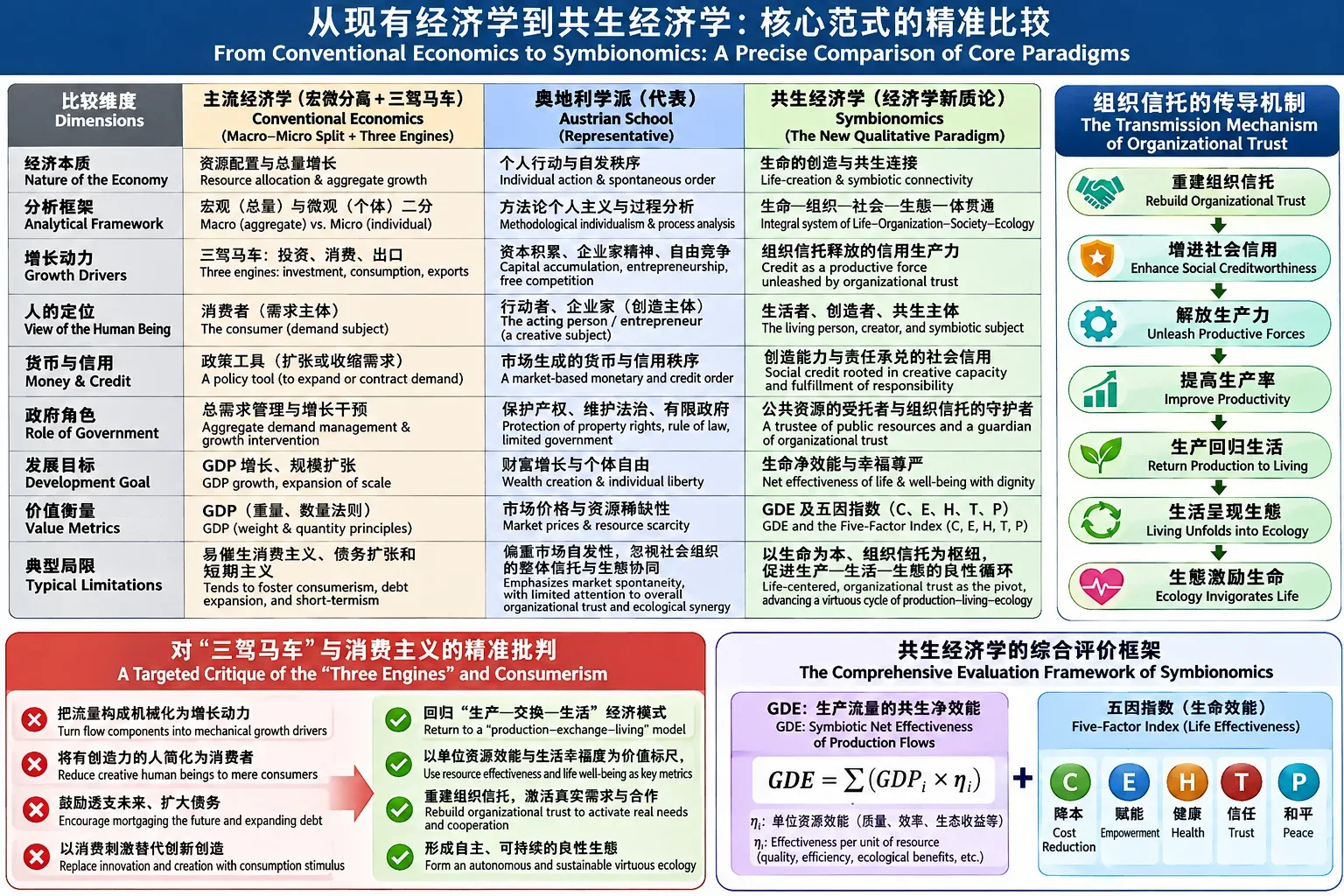
一、從國家信用回到組織信託 為什麼一個國家的信用會提高?評級機構考察的是債務人的償債能力與償債意願。共生經濟學進一步考察這種能力與意願賴以持續的組織關係。 國家信用的基礎,存在於千千萬萬個人、家庭、社區和企業的創造活動之中。政府以公共服務受託者的身份取得稅收、舉借債務、管理公共資源,對社會承擔相應的責任。財政紀律、貨幣信用、產權保護、契約履行,各自體現着不同層次的託付與承兌。受託者履行責任,社會便有理由增進信任;持續承兌形成信用,信用又使更廣泛的合作成為可能。 阿根廷獲得美國200億美元貨幣互換額度的信用背書,並隨後償還實際動用資金,正可以從這種關係來理解。外部信用背書改善合作預期,履行償債責任又為自身信用積累提供依據。額度與實際借款必須區別,但這一案例的經濟學意義正在於:信任降本,信用賦能,承兌增值。[Ⅲ] 前文歸納的五大經濟底層邏輯由此貫通:財富創造先於財富分配,體現生命主體的創造能力;政府受到財政約束,體現組織對受託資源的責任;貨幣具有信用,體現跨時間的價值承兌;自由競爭優於行政性特權,體現主體自主選擇與有效連接;制度穩定支撐長期繁榮,體現組織信託的持續性。五個方面共同構成信用生產力得以釋放的制度條件。 二、信用即生產力:財富生長於生命的有效連接 一個農民有種植的能力,另一個人懂得灌溉,還有人擁有種子、農具、運輸工具和市場知識。這些能力分散存在時,各有其限度;彼此信任、相互託付、履行承諾,便能形成有效分工,使各自的創造能力得到拓展。 信用的經濟意義從這裡開始。它使原本無法達成的合作得以達成,使短期合作能夠延伸為長期合作,使閒置資源重新獲得使用機會,使耗費於防範失信的時間與資源回到創造活動之中。即使勞動、資本與技術的存量沒有增加,社會也可能由此獲得更多有效產出。 信用即生產力;生產率則體現這種生產力在一定投入條件下實現的效能。融資利率下降只是其中一種表現,而且利息減少對借款人的收益並不自動等於全社會淨收益。真正的社會淨效能,來自風險損失、無效交易成本的減少,以及資源重新配置後創造的價值。 從家庭協作到國際分工,信用生產力始終貫穿於生命自組織連接動態平衡(動能)與交互主體共生(勢能)的相應相輔相成之中。重建組織信託,正是呵護並釋放這種生產力的制度實踐。 三、從既有經濟學的解釋回到共生經濟學的本原 奧地利學派能夠從個人行動、產權、企業家精神、分散知識、自發秩序和資本積累解釋阿根廷改革;貨幣主義能夠從貨幣穩定與通脹預期解釋信用改善;新制度經濟學能夠從交易成本、產權和可信承諾解釋制度效應;金融經濟學能夠從違約風險與風險溢價解釋評級變化;凱恩斯主義則可以考察財政調整、需求、就業及收入之間的關係。 這些解釋各有其認識價值。米塞斯《人的行動》與哈耶克《知識在社會中的運用》尤其揭示了個人自主行動與社會協調的重要性。[Ⅳ、Ⅴ] 諾思關於制度與交易成本的研究,也有助於理解信用改善的經濟後果。[Ⅵ] 共生經濟學的範式特徵,在於從生命本原貫通這些不同層次的關係:生命為何需要組織?組織為何獲得資源與權力?組織如何向生命承兌?信用怎樣在持續承兌中積累?這些問題貫穿財富創造、貨幣金融、國家治理與日常生活。 組織信託因此成為整個經濟學的基礎範疇。它既涵蓋奧地利學派所重視的自願契約,也涵蓋家庭互助、社區合作、公共資源託付以及跨代責任。共生經濟學由此將生產力的研究貫通到社會組織關係,並以生命淨效能檢驗這種關係的實際價值。 這種理論立場也區別於將貨幣信用擴張等同於生產力增長的思維。信用源於創造能力與責任承兌;脫離它們的貨幣擴張,可能透支信用,侵蝕生產力。 這裡還涉及現代經濟學的一個基礎性認識框架:宏觀經濟學與微觀經濟學的二分。微觀經濟學研究個人、家庭和企業的選擇,宏觀經濟學研究總產出、就業、物價與總需求。這樣的分析分工有其工具價值;然而,一旦把分析層次的區別固化為兩套經濟運行邏輯,便容易割裂具體生命主體的創造活動與社會整體的經濟效能。即使引入微觀基礎,也仍須回答組織如何受託、如何承兌,以及組織行為的成本最終由誰承擔。 全部歷史的第一個前提,是個人生命自組織連接的存在。國家經濟並無獨立於個人生命的創造主體;政府、企業、金融機構等組織擁有的資源與權力,都存在於具體的託付關係之中。從家庭到國家,組織規模可以不同,價值託付與責任承兌的基本關係卻一以貫之。宏微相濟的關鍵,在於生命主體之間的交互契合及其效能,而非把微觀行為簡單加總,再由宏觀決策反過來支配個人生活。 因此,阿根廷信用評級的改善,可以在既有經濟學中獲得多種局部解釋;共生經濟學所揭示的貫通性機制,則是組織信託的重建使信用得以積累,信用又使分散的創造能力實現更有效的連接。由此,個人的生產率、企業的經營效能與國家的綜合淨效能獲得了共同的研究基礎。 四、“三駕馬車”何以遮蔽經濟發展的內在動力? 投資、消費、出口,是人們在生產和生活中進行自主選擇與有效連接的具體表現。GDP支出法中的消費、投資、政府購買與淨出口,可以幫助我們描述經濟流量及其變化。“三駕馬車”的問題,出在把流量構成機械地升格為經濟發展的動力,並據此把社會生活作為拉動經濟增長的工具。 早在2019年,我就在國務院發展研究中心《經濟要參》第44期發表的《生態文明評價體系須有與之相應的經濟學思維——再論新國民“生產-交換-生活”賬戶核算體系》中,提出從“投資、內需、進出口”轉向“生產、交換、生活”,從重量、數量法則轉向質量、效能法則。[Ⅸ] 這一轉變涉及經濟學的價值原點與核算方式:以單位資源效能及生活幸福度、尊嚴感檢驗經濟活動,貫通家庭、社區、企業、政府與自然生態。 宏觀需求管理與微觀消費選擇之間,尤其容易出現價值目的的倒置:宏觀上追求支出增長,微觀上則把有生命、有創造能力、有自主生活節律的人簡化為消費者。生產者、創造者、公民及家庭成員的多重主體性由此被遮蔽。倘若政府以消費增長率為政績,企業以銷售流量為唯一目標,家庭以物質占有為生活尺度,三者便可能在GDP增長中共同透支未來。2019年的研究已經以服裝過度生產、重複勞動及刺激內需為例,揭示這一問題。 重建組織信託所釋放的信用生產力,能夠降低生產與生活成本,拓展就業、創業和合作機會,改善收入與生活預期。由此產生的投資、消費和國際交換,根植於生命主體的真實需要與自主選擇。人們有能力、有信心安排生活,自然會在需要時消費;有創造機會,自然會在適宜時投資;有互補優勢,自然會開展交換。經濟治理的着力點應當回到呵護這種生命活力及其良性生態。 試問:投資從哪裡來?消費憑什麼持續?出口競爭力從哪裡來?歸根結底,都離不開生命主體的創造能力與主體之間可信賴的合作關係。組織信託一旦改善,企業便有條件根據真實需要投資,家庭便有條件根據收入和生活預期安排消費,跨國主體便有條件根據互補優勢擴大合作。這些活動有其自身的生命節律,無須將它們設定為彼此獨立的機械驅動力。 尤其值得反思的是消費主義。消費本來是生活的組成部分。當消費被設定為經濟增長的目的,生活服務於生產統計,家庭就可能被鼓勵透支未來收入,企業就可能把縮短產品壽命作為擴大銷售的手段,政府也可能借債維持短期支出增長。 一所住宅更加節能,居民能源支出減少;一種醫療技術幫助人們保持健康,治療支出減少;一件耐用產品使用時間延長,重複購買減少;一個可信賴的社會,防範欺詐與處理糾紛的支出減少。這些變化都可能降低某些GDP流量,卻使生活更富裕、更從容,使社會資源更多地用於新的創造。 生活質量的改善,自然會帶來新的需要與新的經濟活動。家庭節省下來的資源,可以用於學習、旅行、創業、照護家人,也可以用於儲蓄,留待未來使用。由生命主體自主決定如何安排自己的生活,正是生命活力的展現。經濟學應當研究這些選擇怎樣增進生命效能,而無須預先規定人們必須多消費多少。 五、生產回歸生活,生活呈現生態,生態激勵生命 共生經濟學的生產、生活、生態、生命四個範疇,有着內在貫通的關係。生產體現生命創造能力,生活承兌生產效能;生活中的主體、資源與環境形成相互呵護、相互賦能的良性生態,生態又為生命開拓更豐富的創造空間。 良性生態具有開放性。個人、家庭、社區、企業通過新的有效連接,不斷發現新的可能性。信用在其中既是已有合作的承兌成果,又是未來合作的生產力條件。由此可見,重建組織信託與激活生命活力,本來就是相應相輔相成的過程。 殖官主義(Bureaucolonialism)的要害,則是背離組織信託,憑藉任何意識形態攫取決策免責權繁衍自己,好處自己拿,成本留給別人。以擴大經濟流量為名轉嫁決策成本,恰恰可能破壞上述良性生態。因此,財政約束之外,還須建立決策追責制,使組織權力與受託責任重新契合。 共生經濟學以GDE=Σ(GDPᵢ×ηᵢ)辨識生產流量的共生淨效能,以降本(C)、賦能(E)、健康(H)、信任(T)、和平(P)五因指數及生活基準檢驗改革。國家信用評級的改善,需要進一步聯繫家庭購買力、就業機會、健康水平、企業經營成本及公共服務效能來考察。評級衡量償債信用,生活基準檢驗組織向生命承兌的實際成果。二者相互聯繫,各有其衡量對象。 在生產、生活、生命的意義上說,共生經濟學(Symbionomics)就是組織信託經濟學。新近出版的《共生經濟學概論(修訂版)》與《將AI升格為AM》,分別從經濟淨效能與心智文明展開研究,其價值指向相通:讓組織、資本和技術服務於生命自組織連接與交互主體共生。 電鋸改革是破,五月公約是立,重建組織信託是貫通破與立的制度樞紐,提升生命效能是改革的價值歸宿。 信用即生產力!信任降本,信用賦能,承兌增值。 生產回歸生活,生活呈現生態,生態激勵生命。 受生命之託,向生命承兌。All for Life! 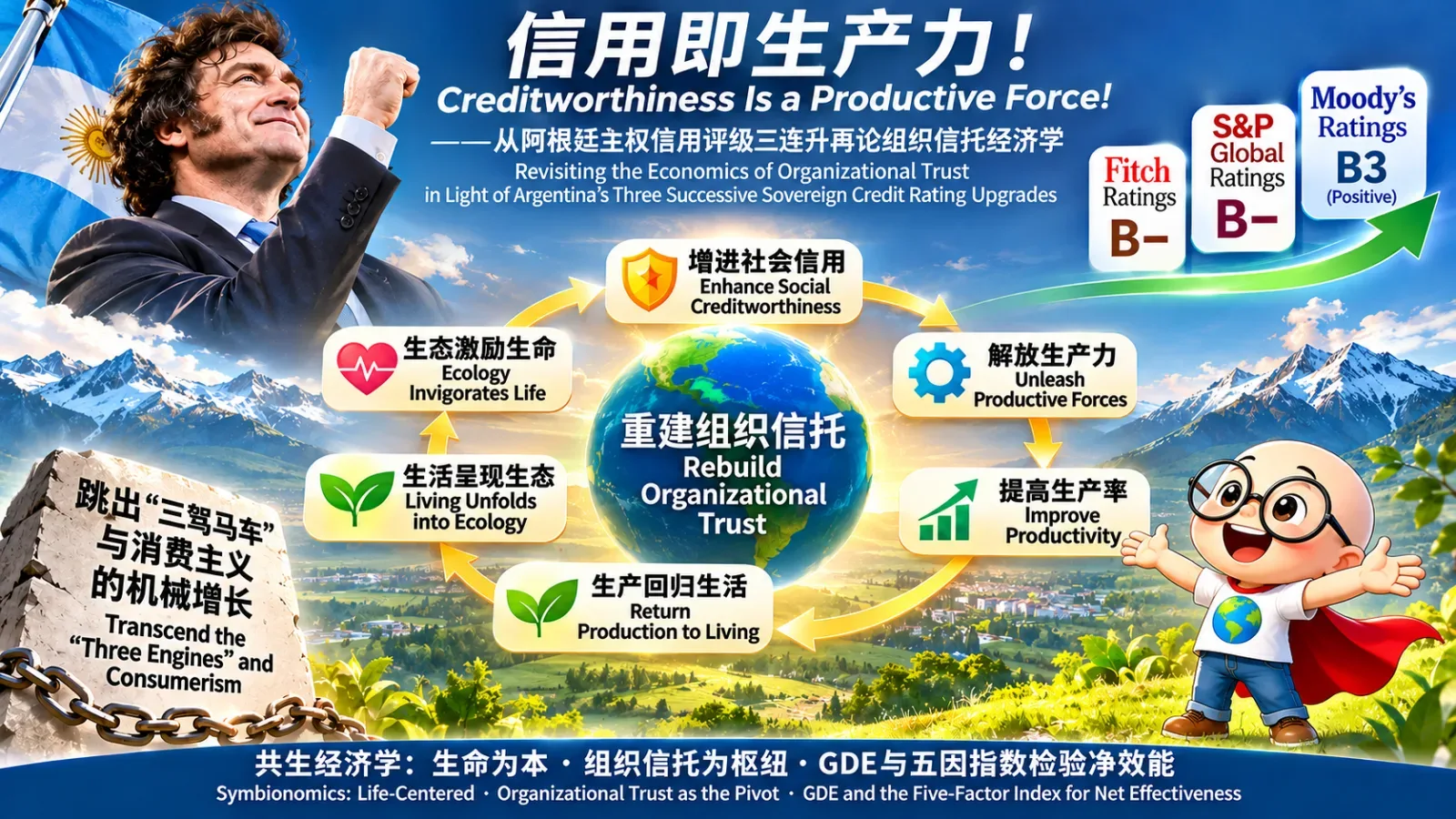
參考文獻及資料 Ⅰ. 阿根廷經濟部:Calificaciones Crediticias. https://www.argentina.gob.ar/economia/finanzas/relacion-con-inversores/calificaciones-crediticias Ⅱ. 錢宏:《“我來喚醒雄獅,而非引領羔羊!”——米萊改革的五大經濟底層邏輯與共生經濟學範式解析》,2026年11月26日撰,11月27日刊。https://www.ai-am.org/article/10445 Ⅲ. 錢宏:《共生經濟學貨幣通論》,2026年7月20日。https://www.ai-am.org/article/10181(互換案例為作者既有研究,實際提款及償還金額另待原始公告核驗。) Ⅳ. Ludwig von Mises. Human Action. 1949. Ⅴ. Friedrich A. Hayek. The Use of Knowledge in Society. American Economic Review, 1945. Ⅵ. Douglass C. North. Institutions, Institutional Change and Economic Performance. 1990. Ⅶ. 錢宏:《共生經濟學概論(修訂版)》,2026年。 Ⅷ. 錢宏:《將AI升格為AM》,2026年。 Ⅸ. 錢宏:《生態文明評價體系須有與之相應的經濟學思維——再論新國民“生產-交換-生活”賬戶核算體系》,國務院發展研究中心《經濟要參》,2019年第44期。 附錄:共生經濟學早期研究參考(《經濟要參》) 據全球共生研究院(IGS)2012—2020年發稿目錄,選列與本文論題相關的研究: (1)“生態統領,共生為魂”,2013年第3期;“生態經濟參量指標”,2013年第4期。 (2)《從“增長黃金率”到“健康黃金率”芻議——共生經濟學 VS 諾貝爾獎得主費爾普斯》,2014年第21期。 (3)《中國經濟潛力呼喚新經濟學思維》,2019年第31期。 (4)《再論國民“生產-交換-生活”賬戶核算體系》,2019年第44期(目錄簡題,全文題名見參考文獻Ⅸ)。 (5)《如何走出當前中國經濟困境?》,2020年第12期;《中國經濟社會結構性缺陷之癥結》,2020年第22期。
Creditworthiness Is a Productive Force!— Revisiting the Economics of Organizational Trust in Light of Argentina’s Three Successive Sovereign Credit Rating Upgrades Archer Hong Qian November 28, 2026, Room 403, NIC Lerma Apartments, Buenos Aires
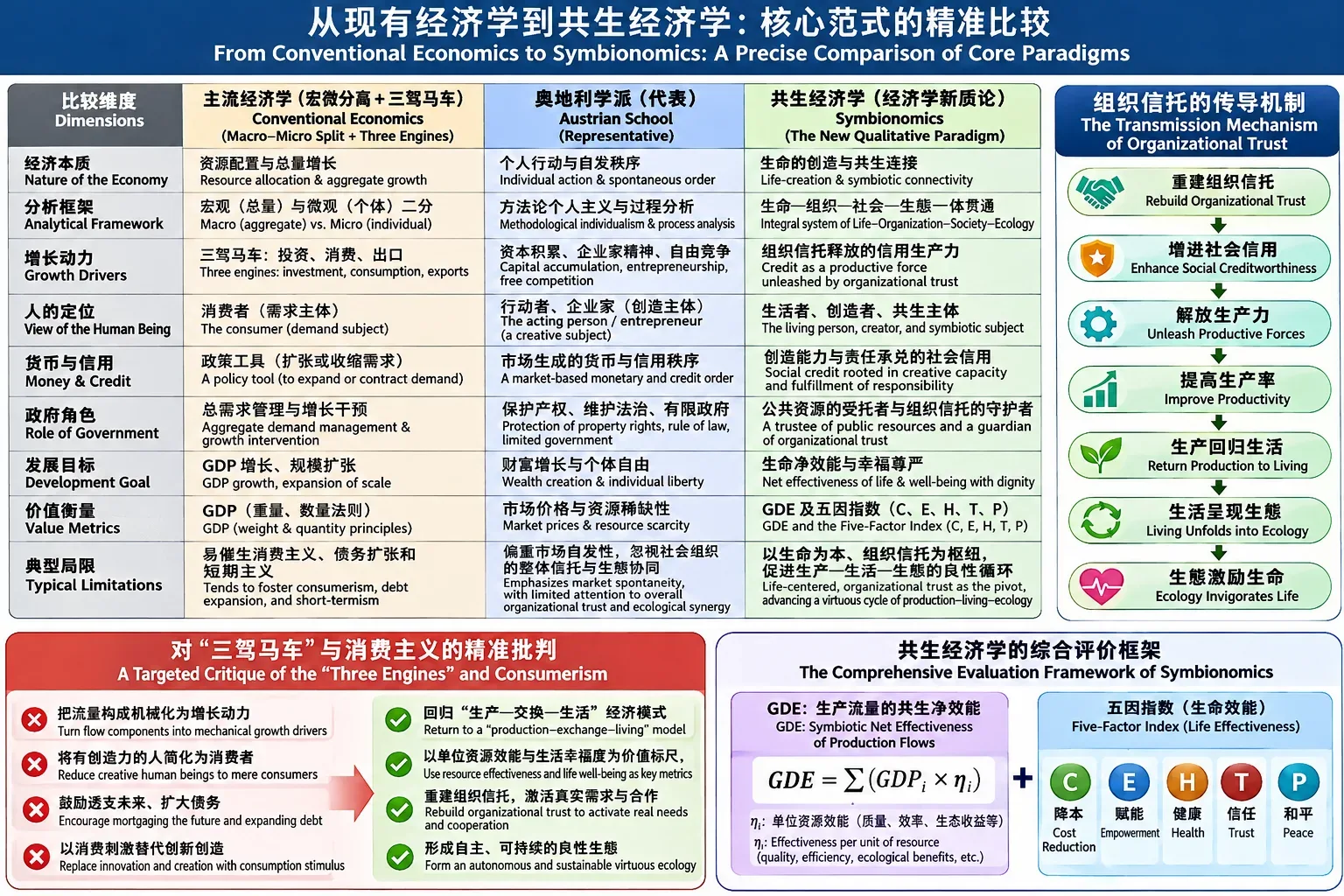
Prefatory Note: The New Qualitative Paradigm of Economics in Argentina’s Milei Reforms (III) From Argentina, Here I Come! (Part I), through “I Came to Awaken Lions, Not to Lead Lambs!” (Part II), to the present essay, Creditworthiness Is a Productive Force! (Part III), these three articles follow a coherent intellectual trajectory, constituting the series The New Qualitative Paradigm of Economics in Argentina’s Milei Reforms. The term “new qualitative paradigm of economics” refers to the distinctive characteristics exhibited by Milei’s reform practices, which transcend the theoretical paradigms of existing economic schools and reveal the new qualitative features of Symbionomics. Their institutional pivot converges upon one fundamental point: rebuilding organizational trust. Beginning with the reconstruction of organizational trust, transforming economic development models and value orientations, allowing production to return to living, living to unfold into a flourishing ecology, and ecology to invigorate life—this has become an imperative path for economic development in countries throughout the contemporary world. Creditworthiness is a productive force. Rebuilding organizational trust enhances social creditworthiness; enhanced creditworthiness unleashes productive forces and improves productivity, enabling production to return to living, living to unfold into a flourishing ecology, and ecology to invigorate life. This constitutes the intrinsic logic through which Symbionomics understands economic development. On May 5, June 10, and July 21, 2026, Fitch Ratings, Standard & Poor’s (S&P), and Moody’s successively upgraded Argentina’s sovereign credit ratings to B−, B−, and B3, respectively. Moody’s assigned a positive outlook, while the other two agencies maintained stable outlooks.[Ⅰ] Although these ratings remain below investment grade, the three successive upgrades provide a concrete point of departure for examining the reconstruction of Argentina’s sovereign creditworthiness. Two days ago, in my article “I Came to Awaken Lions, Not to Lead Lambs!” — The Five Fundamental Economic Principles of Milei’s Reforms: An Analysis through the Paradigm of Symbionomics, I identified the institutional pivot connecting Milei’s various reform practices: rebuilding organizational trust.[Ⅱ] Following this line of reasoning, we can now further elucidate the intrinsic relationship between creditworthiness and productive forces and reconsider how contemporary economics understands the driving forces of economic development. I. From Sovereign Creditworthiness to Organizational Trust Why does a nation’s creditworthiness improve? Credit rating agencies assess a debtor’s capacity and willingness to repay its obligations. Symbionomics goes further by examining the organizational relationships upon which the sustainability of that capacity and willingness depends. The foundation of sovereign creditworthiness lies in the creative activities of countless individuals, families, communities, and enterprises. As an entrusted provider of public services, the government collects taxes, incurs debt, and administers public resources, thereby assuming corresponding responsibilities toward society. Fiscal discipline, monetary credibility, property rights protection, and contractual fulfillment embody relationships of entrustment and fulfillment at different levels. When entrusted organizations fulfill their responsibilities, society has reason to deepen its trust. Sustained fulfillment builds creditworthiness, which in turn makes broader cooperation possible. Argentina’s receipt of credit backing through a US$20 billion currency swap facility from the United States, followed by the repayment of the funds actually drawn, can be understood precisely through this relationship. External credit backing improves expectations for cooperation, while the fulfillment of repayment obligations provides a foundation for accumulating creditworthiness of one’s own. Although the authorized facility must be distinguished from the amount actually borrowed, the economic significance of this case lies in the following proposition: trust reduces costs, credit empowers, and the fulfillment of commitments enhances value.[Ⅲ] The five fundamental economic principles identified in my preceding article are thereby interconnected: wealth creation precedes wealth distribution, reflecting the creative capacity of living subjects; government must be subject to fiscal constraints, reflecting organizational responsibility for entrusted resources; money must possess credibility, reflecting the fulfillment of value commitments across time; free competition takes precedence over administrative privilege, reflecting autonomous choice and effective connections among subjects; institutional stability supports long-term prosperity, reflecting the sustainability of organizational trust. Together, these five principles constitute the institutional conditions under which creditworthiness as a productive force can be unleashed. II. Creditworthiness Is a Productive Force: Wealth Flourishes through Effective Connections among Living Subjects One farmer possesses cultivation skills, another understands irrigation, while others have seeds, agricultural implements, transportation equipment, or market knowledge. When these capabilities exist in isolation, each has its limitations. Through mutual trust, reciprocal entrustment, and the fulfillment of commitments, an effective division of labor becomes possible, expanding the creative capacity of each participant. This is where the economic significance of creditworthiness begins. It makes previously unattainable cooperation possible, extends short-term cooperation into long-term relationships, enables idle resources to be put to use, and redirects the time and resources previously devoted to guarding against breaches of trust toward creative activities. Even without increasing the existing stocks of labor, capital, or technology, society may thereby achieve greater effective output. Creditworthiness is a productive force; productivity reflects the effectiveness realized by that productive force under given input conditions. Lower financing interest rates represent only one manifestation of this process. Moreover, the benefits borrowers obtain from reduced interest payments do not automatically constitute net benefits for society as a whole. Genuine social net effectiveness arises from reductions in risk-related losses and ineffective transaction costs, together with the new value created through the reallocation of resources. From cooperation within families to the international division of labor, creditworthiness as a productive force permeates the mutually corresponding and complementary relationship between the dynamic equilibrium of life’s self-organizing connections (kinetic energy) and intersubjective symbiosis (potential energy). Rebuilding organizational trust is precisely the institutional practice through which this productive force is nurtured and unleashed. III. From the Explanations of Existing Economic Schools Back to the Foundations of Symbionomics The Austrian School can explain Argentina’s reforms through individual action, property rights, entrepreneurship, dispersed knowledge, spontaneous order, and capital accumulation; monetarism can explain improvements in creditworthiness through monetary stability and inflation expectations; new institutional economics can explain institutional effectiveness through transaction costs, property rights, and credible commitments; financial economics can explain changes in credit ratings through default risk and risk premiums; Keynesianism can examine the relationships among fiscal adjustment, demand, employment, and income. Each of these explanations possesses its own intellectual value. Ludwig von Mises’s Human Action and Friedrich A. Hayek’s The Use of Knowledge in Society reveal, in particular, the importance of autonomous individual action and social coordination.[Ⅳ, Ⅴ] Douglass C. North’s research on institutions and transaction costs also contributes to our understanding of the economic consequences of improved creditworthiness.[Ⅵ] The distinctive paradigm of Symbionomics lies in its integration of these relationships at different levels, beginning with life as its fundamental point of departure. Why does life need organizations? Why are organizations entrusted with resources and authority? How do organizations fulfill their entrusted responsibilities toward life? How does creditworthiness accumulate through sustained fulfillment? These questions permeate wealth creation, monetary and financial activities, national governance, and everyday living. Organizational trust thus becomes a foundational category of economics as a whole. It encompasses the voluntary contracts emphasized by the Austrian School, as well as mutual assistance within families, community cooperation, the entrustment of public resources, and intergenerational responsibilities. Symbionomics thereby extends the study of productive forces into the realm of social organizational relationships and evaluates their actual value according to their net effectiveness for life. This theoretical position also differs from economic thinking that equates monetary credit expansion with the growth of productive forces. Creditworthiness originates in creative capacity and the fulfillment of responsibilities. Monetary expansion detached from these foundations may exhaust creditworthiness and erode productive forces. This brings us to another foundational conceptual framework of modern economics: the division between macroeconomics and microeconomics. Microeconomics studies the choices of individuals, families, and enterprises, while macroeconomics examines aggregate output, employment, prices, and aggregate demand. Such an analytical division has instrumental value. However, once distinctions between analytical levels become entrenched as two separate sets of economic operating principles, the creative activities of concrete living subjects can easily become disconnected from the economic effectiveness of society as a whole. Even when microfoundations are introduced into macroeconomic analysis, fundamental questions remain: How are organizations entrusted? How do they fulfill their entrusted responsibilities? Who ultimately bears the costs of organizational decisions? The first premise of all history is the existence of individual life’s self-organizing connections. A national economy has no independent creative subject separate from individual life. The resources and authority possessed by governments, enterprises, financial institutions, and other organizations all exist within concrete relationships of entrustment. From families to nation-states, organizational scales may differ, yet the fundamental relationship between entrusted value and the fulfillment of responsibilities remains consistent throughout. The key to the mutual complementarity of macroeconomic and microeconomic phenomena lies in the interactive alignment of living subjects and the effectiveness of their relationships, rather than in simply aggregating individual behavior and subsequently allowing macroeconomic decisions to dominate individual lives. Argentina’s improved sovereign credit ratings can therefore receive various partial explanations within existing economic theories. The underlying mechanism revealed by Symbionomics is that rebuilding organizational trust enables creditworthiness to accumulate, while creditworthiness allows dispersed creative capacities to establish more effective connections. Individual productivity, enterprise operational effectiveness, and national comprehensive net effectiveness thereby acquire a common foundation for economic inquiry. IV. How Do the “Three Engines of Economic Growth” Obscure the Intrinsic Dynamics of Economic Development? Investment, consumption, and exports are concrete manifestations of autonomous choices and effective connections made by people in the course of production and living. Consumption, investment, government purchases, and net exports in the expenditure approach to GDP accounting help us describe economic flows and their changes. The problem with the “three engines of economic growth” framework arises when the components of economic flows are mechanically elevated into the driving forces of economic development, thereby turning social life into an instrument for stimulating economic growth. As early as 2019, in my article An Ecological Civilization Evaluation Framework Requires a Corresponding Economic Mindset — Revisiting the New National “Production–Exchange–Living” Accounting Framework, published in Issue 44 of Economic Research Reference by the Development Research Center of China’s State Council, I proposed a transition from “investment, domestic demand, and imports and exports” to “production, exchange, and living,” and from the principles of weight and quantity to those of quality and effectiveness.[Ⅸ] This transition concerns both the fundamental value orientation of economics and its accounting methodology. It evaluates economic activities according to the effectiveness achieved per unit of resources, together with well-being and dignity in everyday living, thereby connecting families, communities, enterprises, governments, and the natural ecology. An inversion of values and purposes can readily arise between macroeconomic demand management and microeconomic consumption choices. At the macroeconomic level, expenditure growth is pursued; at the microeconomic level, human beings endowed with life, creative capacities, and autonomous rhythms of living are reduced to consumers. Their multiple forms of subjectivity—as producers, creators, citizens, and family members—are consequently obscured. If governments regard consumption growth rates as measures of political achievement, enterprises pursue sales volume as their sole objective, and families measure their quality of life by material possessions, all three may collectively mortgage their future in the pursuit of GDP growth. My 2019 research had already revealed this problem through examples involving excessive garment production, repetitive labor, and the stimulation of domestic demand. The productive force of creditworthiness unleashed through rebuilding organizational trust can reduce production and living costs, expand employment, entrepreneurship, and cooperation opportunities, improve incomes, and strengthen expectations for the future. The investment, consumption, and international exchange arising from this process are rooted in the genuine needs and autonomous choices of living subjects. When people possess the means and confidence to arrange their lives, they will naturally consume when they have a need, invest when suitable opportunities for creation arise, and engage in exchange when complementary advantages exist. The focus of economic governance should return to nurturing this vitality of life and its flourishing ecology. Consider the following questions: Where does investment come from? What makes consumption sustainable? Where does export competitiveness originate? Ultimately, all depend upon the creative capacities of living subjects and trustworthy cooperative relationships among them. Once organizational trust improves, enterprises are better positioned to invest according to genuine needs, families can arrange consumption according to their incomes and expectations for life, and subjects across national borders can expand cooperation according to their complementary advantages. These activities possess their own rhythms of life. There is no need to designate them as mutually independent, mechanical driving forces. Consumerism deserves particular reconsideration. Consumption is inherently a component of living. When consumption is established as the objective of economic growth, living becomes subordinate to production statistics. Families may then be encouraged to mortgage future income, enterprises may deliberately shorten product lifespans to expand sales, and governments may incur debt to sustain short-term expenditure growth. A more energy-efficient home reduces household energy expenditure; a medical technology that helps people remain healthy reduces treatment expenditure; a durable product with a longer service life reduces repetitive purchases; a trustworthy society reduces expenditure on fraud prevention and dispute resolution. All these changes may reduce certain GDP flows while making life more prosperous and less burdensome, allowing more social resources to be devoted to new creative activities. Improvements in quality of life naturally give rise to new needs and new economic activities. Resources saved by families can be devoted to education, travel, entrepreneurship, and caring for loved ones. They can also be saved for future use. The ability of living subjects to determine autonomously how to arrange their lives is itself a manifestation of life’s vitality. Economics should investigate how these choices enhance the effectiveness of life, without prescribing in advance how much more people must consume. V. Production Returns to Living, Living Unfolds into Ecology, and Ecology Invigorates Life The four fundamental categories of Symbionomics—production, living, ecology, and life—are intrinsically interconnected. Production embodies the creative capacity of life. Living realizes the effectiveness of production. The subjects, resources, and environments involved in living form a flourishing ecology of mutual care and empowerment, while ecology opens up richer possibilities for life’s creative activities. A flourishing ecology is open-ended. Through new and effective connections, individuals, families, communities, and enterprises continually discover new possibilities. Within this process, creditworthiness is both the outcome of commitments fulfilled through previous cooperation and a condition of productive forces for future cooperation. Rebuilding organizational trust and invigorating life are therefore inherently corresponding and mutually reinforcing processes. The essence of Bureaucolonialism lies in its betrayal of organizational trust: exploiting whatever ideology serves its purposes to seize the privilege of decision-making without accountability and perpetuate its own proliferation—appropriating the benefits while shifting the costs onto others. Transferring the costs of decisions in the name of expanding economic flows may undermine precisely the flourishing ecology described above. Consequently, fiscal constraints must be accompanied by a regime of decision-making accountability, bringing organizational authority and entrusted responsibilities back into alignment. Symbionomics employs GDE = Σ(GDPᵢ × ηᵢ) to identify the symbiotic net effectiveness of production flows. It evaluates reforms through the Five-Factor Index—Cost Reduction (C), Empowerment (E), Health (H), Trust (T), and Peace (P)—together with the living benchmark. Improvements in sovereign credit ratings must be further examined in relation to household purchasing power, employment opportunities, health conditions, enterprise operating costs, and the effectiveness of public services. Credit ratings assess creditworthiness in fulfilling debt obligations, while the living benchmark evaluates the actual outcomes of organizations fulfilling their entrusted responsibilities toward life. The two are interconnected, each with its own object of measurement. In terms of production, living, and life, Symbionomics is an Economics of Organizational Trust. My two recently published books, Symbionomics: An Overview (Revised Edition) and Elevating AI to AM, develop their respective inquiries from the complementary dimensions of economic net effectiveness and the civilization of mind. Their value orientations converge: enabling organizations, capital, and technology to serve life’s self-organizing connections and intersubjective symbiosis. The Chainsaw Reform dismantles entrenched structures; the Pact of May establishes the direction for reconstruction. Rebuilding organizational trust is the institutional pivot connecting dismantling and reconstruction, while enhancing the effectiveness of life is the ultimate value of reform. Creditworthiness is a productive force! Trust reduces costs, credit empowers, and the fulfillment of commitments enhances value. Production returns to living, living unfolds into a flourishing ecology, and ecology invigorates life. Entrusted by life, accountable to life. All for Life! 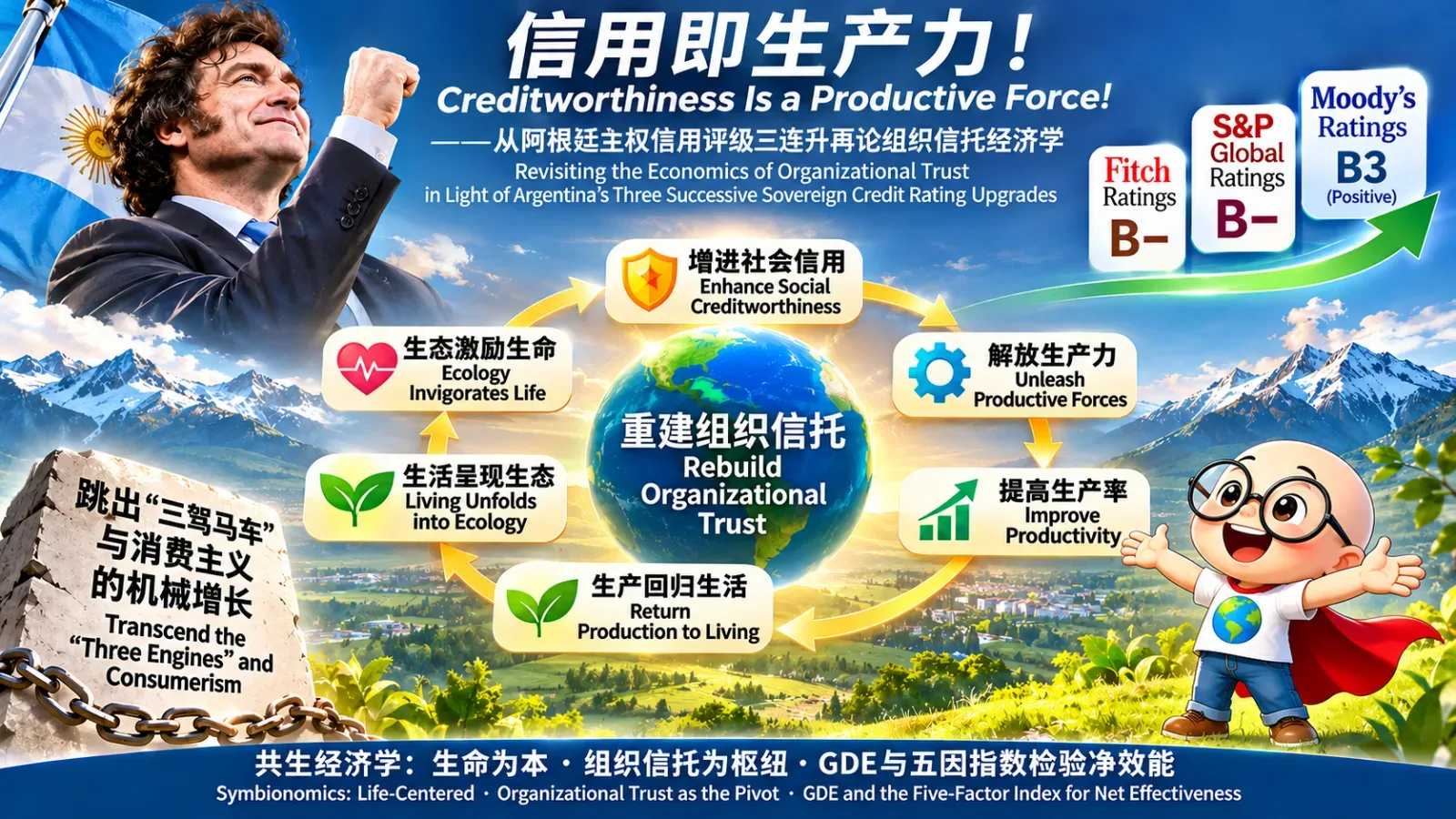
References and Research Materials Ⅰ. Ministry of Economy of Argentina. Calificaciones Crediticias (Sovereign Credit Ratings). https://www.argentina.gob.ar/economia/finanzas/relacion-con-inversores/calificaciones-crediticias Ⅱ. Archer Hong Qian. “I Came to Awaken Lions, Not to Lead Lambs!” — The Five Fundamental Economic Principles of Milei’s Reforms: An Analysis through the Paradigm of Symbionomics. Written on November 26 and published on November 27, 2026. https://www.ai-am.org/article/10445 Ⅲ. Archer Hong Qian. A General Theory of Money in Symbionomics. July 20, 2026. https://www.ai-am.org/article/10181 (The currency swap case draws upon the author’s previous research. The actual amounts drawn and repaid remain subject to verification against the original official announcements.) Ⅳ. Ludwig von Mises. Human Action. 1949. Ⅴ. Friedrich A. Hayek. “The Use of Knowledge in Society.” American Economic Review, 1945. Ⅵ. Douglass C. North. Institutions, Institutional Change and Economic Performance. 1990. Ⅶ. Archer Hong Qian. Symbionomics: An Overview (Revised Edition). 2026. Ⅷ. Archer Hong Qian. Elevating AI to AM. 2026. Ⅸ. Archer Hong Qian. “An Ecological Civilization Evaluation Framework Requires a Corresponding Economic Mindset — Revisiting the New National ‘Production–Exchange–Living’ Accounting Framework.” Economic Research Reference, Development Research Center of the State Council of China, Issue 44, 2019. Appendix: Selected Early Research on Symbionomics Published in Economic Research Reference The following studies relevant to the subject of this article are selected from the publication records of the Institute of Global Symbiosism (IGS) for the period 2012–2020. (1) “Ecology as the Guiding Principle, Symbiosis as the Soul,” Issue 3, 2013; “Parametric Indicators for Ecological Economics,” Issue 4, 2013. (2) “From the ‘Golden Rule of Growth’ to the ‘Golden Rule of Health’: A Preliminary Discussion — Symbionomics versus Nobel Laureate Edmund Phelps,” Issue 21, 2014. (3) “China’s Economic Potential Calls for a New Economic Mindset,” Issue 31, 2019. (4) “Revisiting the National ‘Production–Exchange–Living’ Accounting Framework,” Issue 44, 2019. (Abbreviated title in the publication records; see Reference Ⅸ for the complete title.) (5) “How Can China Overcome Its Current Economic Predicament?” Issue 12, 2020; “The Crux of China’s Structural Economic and Social Deficiencies,” Issue 22, 2020.
|