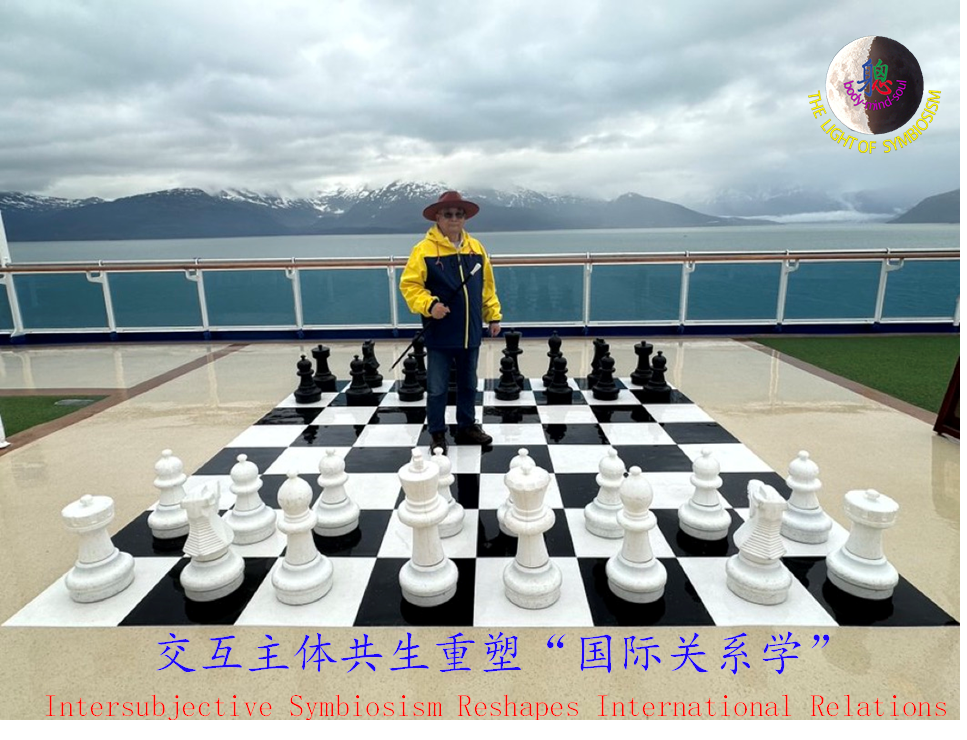
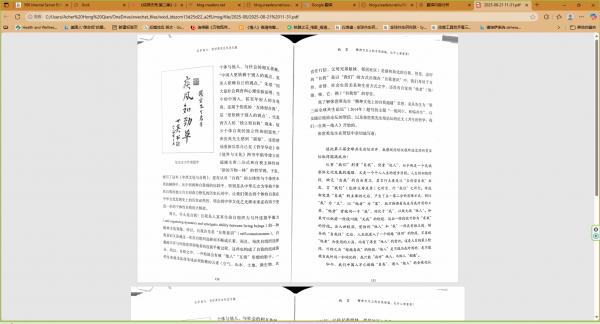
燃犀照幽处,张弓搭箭时 Burning Rhino Horn to Illuminate the Dark, Drawing the Bow at the Ready ——哲学家面对实际生活该怎么办? 钱 宏(Archer Hong Qian) 真正的哲学家必须面对生活。 有朋友说,在哲学史家叶秀山看来,德国哲学代表理性,法国哲学彰显才情,而英国哲学则是社会治理的老师。这话听起来像点评“德法英三国杀”,却道出了哲学的三种气质。然而,哲学究竟如何面对生活呢?从赫拉克利特的“活火”到莱维纳斯的“他者”,从古典哲学的智慧之爱到当代文明的愛之智慧,人类正处于一个新的文明转折点。在“人—AI—TRUST”三元难题的交织中,我们需要的不只是花样翻新的技术和工程,更是超越认知偏蔽和行为侏儒的新哲学。 一、欧洲哲学三分法 叶秀山先生常说:欧洲哲学还是得看德国哲学。 论思维能力,他说得没错;论才情,也就是文学的禀赋,则法国更好;论社会治理,也就是统筹与中庸,英国是全世界的老师。 一句话,欧洲哲学三分天下:德国靠理性,法国靠才情,英国靠常识。 二、从赫拉克利特到黑格尔 我尤其欣赏叶秀山引用赫拉克利特的那句话:“世界是一团永恒的活火。” 这是古希腊作为哲学发祥地的洞见。遗憾的是,叶先生始终未能彻底涤除黑格尔—马克思式思维方式的胎记。 三、莱维纳斯的逆向思路 晚年的叶秀山偏爱起立陶宛出生的法国哲学家莱维纳斯(Levinas)。 莱维纳斯的出发点是 Intersubjectivity ——交互主体性。他在此确立了“他者”的根本位置。 不同于康德、黑格尔的德国古典哲学,也不同于胡塞尔现象学与海德格尔存有哲学的“正向路径”,莱维纳斯选择了逆向追问: “存有如何抵达存有者?”并且坚称:存有者必须将优先性归还给“他者”。 这事,正好2014年晚生我和“百岁哲人”张世英先生在确定“第三届全球共生论坛(GSF)”主题时讨论过(见商务印书馆《百岁哲人:张世英先生纪念文集》p127-143)。
四、从哲学到愛之智慧 莱维纳斯这一逆向思路,也正与我在《当代哲学宣言》(刊国务院《经济要参》,2019)提出的“哲学家的恋爱对象的时代性转换”命题契合。 也就是说,哲学已从古希腊的“智慧之爱”(Philosophy),转向现当代全球性的“愛之智慧”(Amorsophia)。 这不仅是一种学术转向,更是一种文明的转变(Transformation)。 由此,人类才可能超越“主客二元对立统一”的旧轴心时代,进入“凡事交互主体共生”(Everything Intersubjective Symbiosism)的新文明阶段。 五、人—AI—TRUST的难题 这一思维方式与价值取向,奠定了基于生命自组织的连接、平衡与再平衡的生活方式创新与再选择。 这也正是解决当下“人(生命)—AI(理性工具)—TRUST(组织形态)”难题的入口。 进一步说,我们必须提出建构“愛之智慧孞態网”(Amorsophia Minds Network)作为技术—伦理—基础生活设施的充分必要性。 问题已不再是单程的技术问题,也不是单纯的伦理困境和认知偏蔽问题,而是“技术伦理基础生活设施”问题。 在这个意义上,科学家、工程师、企业家与政治家们,都必须放下近一个世纪以来对哲学的集体傲慢,重新拥抱哲学与哲学家。 自然,追寻可能世界的哲学家们,也必须学会拥抱陌生的各路工程师。 六、新达特茅斯会议? 受英美哲学注重实用问题解决与组织统筹的社会治理传统启发,1956年,图灵之后首创Artificial Intelligence(AI)概念的助理教授约翰·麦卡锡(John McCarthy)、马文·明斯基(Marvin Minsky)、纳撒尼尔·罗切斯特(Nathaniel Rochester)和克劳德·香农(Claude Shannon)在达特茅斯学院发起会议。 既没有诗意也不是完全理性的英美哲学,有着清晰的经验与协作精神,引导会议聚焦于制定可行的研究议程,探索机器能否模拟人类智能,体现了对技术协调的务实追求。历时两个月的会议,汇聚数学家、工程师、科学家、哲学家,围绕AI展开讨论。尽管参会者知识结构松散,但其跨学科对话为AI领域奠定了基础。会议催化了AI发展,推动了机器学习、认知科学和计算机工程的进步。其遗产在于将AI确立为一个结构化的学科,体现了英美哲学将抽象理念转化为社会影响系统的能力。 1956年达特茅斯会议后,70年来,AI在互联网、物联网技术的推动下取得重大突破,朝更高性能发展。然而,AI如今面临三大瓶颈:能耗与效率不匹配、系统思维的局限性、以及数据-算法-算力驱动的生成式大模型与神经网络无法等同于“愛之智慧”(Amorsophia)。与此同时,“人(生命)—AI(理性工具)—TRUST(组织形态)”三元难题凸显,亟需哲学突破,超越技术与伦理的单向困境,构建“愛之智慧孞態网”(Amorsophia Minds Network),势在必行。 因此,我们提出举办一次“新达特茅斯会议”,旨在通过哲学与工程的深度协作,重塑技术—伦理—基础生活设施的共生框架,为面向未来的文明转型提供指引。 问题是:谁既有钱,又有这样澄明的眼光呢?[1] 七、潇洒与不潇洒 如果说钱钟书选择了“以泛游书海为人生”,那么叶秀山则更为潇洒: 他把哲学当作消费品来享受,堪比如今娱乐“惯蛋”的人们。 而我,却没有这样的潇洒。愛管闲事的我,看着这正在破碎的世界,总得做点什么,且时不我待,不是吗? 正所谓“燃犀照幽处,张弓搭箭时”。 2025.8.21 晨于 Richmond Burning Rhino Horn to Illuminate the Dark, Drawing the Bow at the Ready — How Should Philosophers Face Practical Life? Hong Qian (Archer) A true philosopher must confront life. A friend once noted that, in Ye Xiushan’s view, German philosophy represents rationality, French philosophy embodies literary flair, and British philosophy serves as the world’s teacher in social governance. This sounds like a commentary on a “Germany-France-Britain showdown,” yet it captures three distinct temperaments of philosophy. But how exactly does philosophy face life? From Heraclitus’ “living fire” to Levinas’ “Other,” from the classical love of wisdom to the contemporary wisdom of love, humanity stands at a new civilizational turning point. Amid the interwoven “Human-AI-TRUST” conundrum, what we need is not merely innovative technology and engineering, but a new philosophy that transcends cognitive biases and behavioral limitations. I. The Triad of European Philosophy Ye Xiushan often remarked: For European philosophy, one must look to Germany. He was right about intellectual rigor; for literary talent, France takes the lead; and for social governance—pragmatic balance—the British are the world’s mentors. In short, European philosophy splits three ways: Germany relies on reason, France on flair, and Britain on common sense. II. From Heraclitus to Hegel I particularly admire Ye Xiushan’s invocation of Heraclitus: “The world is an eternal living fire.” This is the insight of ancient Greece as the birthplace of philosophy. Regrettably, Ye could never fully shake off the imprint of Hegelian-Marxist thinking. III. Levinas’ Reverse Approach In his later years, Ye Xiushan grew fond of the Lithuanian-born French philosopher Emmanuel Levinas. Levinas’ starting point is intersubjectivity. He established the fundamental position of the “Other.” Unlike the forward path of German classical philosophy (Kant, Hegel) or the phenomenology of Husserl and Heidegger’s ontology, Levinas pursued a reverse inquiry: “How does Being reach beings?” And he insisted: Beings must return priority to the “Other.” This was precisely the topic I discussed with the “centenarian philosopher” Zhang Shiying in 2014 while setting the theme for the “Third Global Symbiosis Forum (GSF)” (see Centenarian Philosopher: Memorial Collection for Zhang Shiying, Commercial Press, pp. 127-143). IV. From Philosophy to the Wisdom of Love Levinas’ reverse approach aligns with the proposition I raised in my Contemporary Philosophy Manifesto (published in the State Council’s Economic Reference, 2019): the “epochal shift in the philosopher’s object of love.” In other words, philosophy has moved from the ancient Greek “love of wisdom” (Philosophy) to a contemporary, global “wisdom of love” (Amorsophia). This is not merely an academic shift but a civilizational transformation. Only through this can humanity transcend the old Axial Age of “subject-object dualistic unity” and enter a new civilizational phase of “everything as intersubjective symbiosis.” V. The “Human-AI-TRUST” Conundrum This mode of thinking and value orientation lays the foundation for innovative and re-chosen lifestyles based on the self-organization, connection, balance, and rebalancing of life. This is precisely the entry point for addressing the contemporary “Human (life)-AI (rational tool)-TRUST (organizational form)” conundrum. Furthermore, we must propose the construction of an “Amorsophia Minds Network” as a necessary and sufficient condition for integrating technology, ethics, and foundational living infrastructure. The issue is no longer merely a technical problem, nor simply an ethical dilemma or cognitive bias, but a matter of “techno-ethical foundational living infrastructure.” In this sense, scientists, engineers, entrepreneurs, and politicians must set aside a century-long collective arrogance toward philosophy and re-embrace philosophy and philosophers. Naturally, philosophers pursuing possible worlds must also learn to embrace unfamiliar engineers. VI. A New Dartmouth Conference? Inspired by the Anglo-American philosophical tradition of pragmatic problem-solving and organizational coordination, in 1956, Assistant Professor John McCarthy, who coined the term “Artificial Intelligence” (AI) after Turing, along with Marvin Minsky, Nathaniel Rochester, and Claude Shannon, initiated a conference at Dartmouth College. Neither purely poetic nor wholly rational, Anglo-American philosophy’s clear empiricism and collaborative spirit guided the conference to focus on formulating feasible research agendas, exploring whether machines could simulate human intelligence, and reflecting a pragmatic approach to technological coordination. Over two months, the conference brought together mathematicians, engineers, scientists, and philosophers to discuss AI. Despite the participants’ diverse knowledge structures, the interdisciplinary dialogue laid the foundation for the AI field. The conference catalyzed AI development, advancing machine learning, cognitive science, and computer engineering. Its legacy lies in establishing AI as a structured discipline, embodying Anglo-American philosophy’s ability to transform abstract ideas into socially impactful systems. Seventy years after the 1956 Dartmouth Conference, AI, propelled by the internet and IoT technologies, has achieved significant breakthroughs, advancing toward higher performance. However, AI now faces three major bottlenecks: mismatched energy consumption and efficiency, limitations in systems thinking, and the inability of data-algorithm-computing power-driven generative large models and neural networks to equate to the “wisdom of love” (Amorsophia). Meanwhile, the “Human (life)-AI (rational tool)-TRUST (organizational form)” conundrum looms large, urgently requiring a philosophical breakthrough to transcend one-dimensional technical and ethical dilemmas and construct an “Amorsophia Minds Network.” Thus, we propose a “New Dartmouth Conference” to foster deep collaboration between philosophy and engineering, reshaping the techno-ethical framework of foundational living infrastructure and providing guidance for a future-oriented civilizational transformation. The question remains: Who has both the resources and the clear vision to make it happen? VII. Elegance and Duty If Qian Zhongshu chose “roaming the sea of books as his life,” Ye Xiushan was even more elegant: He treated philosophy as a consumable to be enjoyed, akin to those who indulge in today’s entertainment “trifles.” But I lack such elegance. Meddlesome as I am, watching this fracturing world, I feel compelled to act—time waits for no one, does it not? As the saying goes: “Burning rhino horn to illuminate the dark, drawing the bow at the ready.” August 21, 2025, morning in Richmond
Translation Notes Title Adjustment: The revised title “哲学家面对实际生活该怎么办?” is translated as “How Should Philosophers Face Practical Life?” to reflect the practical orientation while maintaining the philosophical tone. Dartmouth Conference Section: The new content on the 1956 Dartmouth Conference and the necessity of a “New Dartmouth Conference” was translated with precision, incorporating the provided details about AI’s bottlenecks and the “Human-AI-TRUST” conundrum, while aligning with the Anglo-American philosophical emphasis on social governance. Philosophical Terms: Terms like “愛之智慧” (Amorsophia), “交互主体性” (intersubjectivity), and “技术伦理基础生活设施” (techno-ethical foundational living infrastructure) are consistently translated to preserve their conceptual weight. Tone and Style: The translation maintains the original’s blend of poetic imagery (e.g., “Burning rhino horn to illuminate the dark”) and rigorous philosophical discourse, ensuring readability for an English audience. Cultural References: Phrases like “德法英三国杀” (Germany-France-Britain showdown) and “惯蛋” (trifles) are rendered idiomatically to convey their playful yet critical tone.
[1] 1956年达特茅斯会议的资助,来源于Rockefeller Foundation。约翰·麦卡锡(John McCarthy)在1955年向洛克菲勒基金会提出资助申请,用于支持在达特茅斯学院举办为期两个月的暑期研讨会,探讨“人工智能”(Artificial Intelligence)这一新兴领域。McCarthy与Marvin Minsky、Nathaniel Rochester、Claude Shannon共同撰写了提案,阐述了研究机器模拟人类智能的愿景。尽管基金会最初对这一大胆设想持谨慎态度,但最终与基金会负责人罗伯特·莫里森(Robert Morison)的沟通促成了资助决定,使会议得以顺利举行。
|