马斯克“金钱买不到幸福”:H = G / T的实证解读
“Money Can’t Buy Happiness”: An Empirical Interpretation of H = G / T——共生经济学GDE价值参量之幸福函数详解— The Happiness Function of Symbionomics within the GDE Value Framework钱 宏(Archer Hong Qian) 2026年2月9日于温哥华心约开关居 本文以共生经济学提出的幸福函数 H = G / T 为起点,重新界定“幸福”与“增长”的关系。文章指出,幸福并非取决于财富规模,而取决于有效生命质量(G)与社会时间—摩擦成本(T)之间的比值。宏观幸福度并不是抽象统计,而是无数个体日常生活体验的总体呈现;若幸福无法在多数人的生活体感中生成与验证,则所谓繁荣只是结构性幻象。
在此基础上,文章提出“效能即伦理”的核心命题:凡是增加不信任、提高制度摩擦、转嫁未来成本、破坏生态或透支个体与社会的增长,即使短期提高GDP,也会在GDE账本中表现为T上升、效能系数下降与价值转化率下降。为使伦理进入可核算结构,文中建立自然、家庭、社区、企业、政府与社会(孞)六大资产负债表,将文明健康度转化为可审计的价值参量体系。
通过马斯克“金钱买不到幸福”的现实案例,文章说明:当资源与财富增长伴随时间压力与结构摩擦同步上升时,幸福并不会自动增加。真正的繁荣,应以降低社会成本、提升信任与生命质量为方向,并以“愛之智慧”作为最终校准。幸福的终点,不在占有更多,而在以更少成本活出更高质量的生命。 在共生经济学(Symbionomics)的理论体系中,幸福函数 H = G / T 是全部价值重估的起点,而 GDE(Gross Development of Ecology / Gross Domestic Efficiency)则是这一函数在文明尺度上的展开与投影。
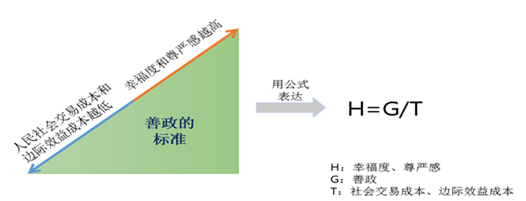
。
H(幸福度,Happiness)并非心理学层面的情绪愉悦,而是一个社会中个体普遍可感的生命质量状态; G(生命质量增益或有效福祉总量,Goodness / Gain of Life)代表健康、确定性、尊严、意义、信任、愛与生态支撑所构成的有效生活质量; T(时间—摩擦成本,或社会交易成本总和,Time & Transaction Cost)则包括制度摩擦、不信任成本、社会交易成本、边际效益递减成本以及对未来的透支。 于是:幸福的极致不在“更多占有”,而在“更少时间成本下的更高生命质量”。 这一反比关系,正是共生经济学“健康黄金率”在生活层面的最简表达。 GDE整体公式(整合五因四维) GDE=Σ(GDPi×ηi),R=GDE/GDP ηi为效能系数,融合五因×四维交互(Health Value作为质量因子,四维作为制度变量)。R>1表示高健康可持续,R<1表示结构性风险,R≈1.1(时间复利重构交互,实现低摩擦、高复利)。 交互指数:五因×四维的乘法复利逻辑,用于量化“降本-赋能-健康-信任-和平”的价值参量。不是静態加法,而是动態乘法:四维向量分解五因标量,在GDE空间统一。 一、宏观幸福度寓于个体生活体验之中的总体呈现 在共生经济学中,宏观幸福度从来不是抽象平均值,而是无数个体日常生活体验的总体呈现。 一个社会是否幸福,并不取决于财富总量,而取决于: 人们是否能以较低摩擦获得基本生活? 是否能在交换中形成信任而非防范? 是否不必以焦虑与债务换取确定性? 是否不需要透支未来维持当下? 因此: 宏观幸福度并不在个体之外,它就在个体生活体验之中被生成与呈现。 这正是“一般寓于个别之中”的社会经济学表达。 若所谓宏观幸福无法在多数个体的生活体感中呈现,它就不具备真实存在的基础。 二、效能即伦理:共生经济学的根本校准 共生经济学最根本的突破,在于将伦理直接纳入效能核算体系之中: 在共生经济学中,效能本身就是伦理。 这并非道德修辞,而是一种可核算的结构逻辑。 任何经济或政治行为,只要: 增加不信任 提高制度摩擦 转嫁未来成本 破坏生态结构 透支个体与社会
即使短期提高GDP,也会在GDE账本中呈现为: T上升 η(效能系数)下降 R(GDE/GDP转化比)下降 也就是说: 一切降低生命质量确定性的行为,都是低伦理行为,也是低效能行为。因此,在共生经济学中,伦理不再是外加约束,而成为效能本身的结构组成。 三、六大资产(资源/能量)负债表:伦理如何进入账本 共生经济学并非停留在抽象公式层面,而建立了一套完整的文明核算结构——六大资产(资源/能量)负债表。 这六张表不是“财务报表”的狭义概念,而是共生经济学的文明资产—负债核算接口:把“自然/家庭/社区/企业/政府/社会(孞)”六个主体域中的资产与负债,统一纳入 GDE 账本,最终落到 T(社会交易成本+边际效益成本) 与 η(效能系数) 的可审计变化上。 A. 自然资产负债表(Nature Balance Sheet) 资产端:生态承载力、资源禀赋、环境质量、生物多样性、碳汇与水土系统等 负债端:污染、透支开采、生态修复欠账、不可逆损耗、气候风险敞口等 与H=G/T的关系:自然负债上升会推高全社会长期T(修复成本、灾害风险、健康损耗),并侵蚀G(生命质量)。
B. 家庭资产负债表(Family Balance Sheet) 资产端:健康、教育、技能、时间、家庭关系、居住稳定性、储蓄与安全垫等 负债端:债务压力、时间被吞噬、焦虑与心理耗散、健康透支、代际负担等 关键点:宏观幸福度必须在家庭体感中呈现;家庭负债表恶化,就是“透支个体与未来”的最直观证据。
C. 社区资产负债表(Community Balance Sheet) 资产端:邻里信任、互助网络、公共空间、地方治理能力、共同体韧性等 负债端:撕裂与对立、治安与防范成本、互不信任导致的交易摩擦、孤立化等 与GDE的关系:社区信任越强,社会交易成本越低,T越低,η越高。
D. 企业资产负债表(Business Balance Sheet) 资产端:技术与组织能力、产品与服务质量、员工健康与创造力、品牌信誉、供应链韧性等 负债端:欺诈与外部性转嫁、过度金融化、短期主义透支、劳损与组织内耗等 与η的关系:企业把成本外部化(污染、劳损、欺诈)会“把GDP做大、把η做小”。
E. 政府资产负债表(Government Balance Sheet) 资产端:法治与执行力、公共服务质量、制度可信度、财政可持续、治理效能等 负债端:制度摩擦、腐败与浪费、政策不确定性、债务与隐性负担、权力滥用等 与T的关系:治理越不确定、审批越摩擦、规则越随意,T越高;这是“宏观寒冬体感”的制度源头。
F. 社会(孞)资产负债表(Social / Integrity Balance Sheet) 资产端:孞(诚信/真心/信任的生态)、公共道德资本、规则正当性、文化凝聚与文明底线等 负债端:谎言与犬儒、撕裂与互害叙事、信任崩塌、机会主义投机、集体冷漠等 核心定位:这是六表的“总闸门”。F恶化时,其它五表会同步“摩擦化”、T上升、η下降。
“社会(诚孞)资产负债表”——这点非常关键:它把“伦理”从口号变成账本资产与账本负债。 在共生经济学中,效能本身就是伦理:任何行为若增加不信任、提高制度摩擦、转嫁未来成本、破坏生态结构、透支个体与社会,都会在六表中表现为“负债端膨胀”,并必然传导为:T上升、η下降、R下降。 有没有伦理问题,体现为六表的负债生成机制;效能不是技术中立,而是伦理结果的会计呈现,从而构成 GDE 价值参量的基础账本:一个社会的增长,是在积累资产,还是在累积负债。 效能即伦理,正是在这一核算结构中被直接量化。 四、幸福函数与GDE体系的内在一致性 幸福函数 H = G / T,是宏观确定性层面的基本关系式。 GDE体系则是这一关系在文明尺度上的展开: η:每一单位经济活动的生命效能系数 R:GDE/GDP转化率 六大资产负债表 五因×四维指数
共同构成完整核算框架。 在这一框架中: GDP回答“发生了什么”, GDE回答“这些是否值得发生”, H则回答“人们是否因此更容易幸福”。 三者形成从生产到生活的闭环。 五、马斯克案例:高G并不自动转化为高H 2026年2月5日,埃隆·马斯克在X平台写下: “谁说金钱买不到幸福,真是太对了(“Whoever said ‘money can’t buy happiness’ really knew what they were talking about 😔”)” 当时,他的账面可支配财富,处于人类历史最高水平。这一反差,使该表达成为理解幸福函数的典型现实显影。 从 H = G / T 的结构看: 马斯克的 G(资源与能力) 已极高,但其 T(时间与结构性摩擦) 同样巨大: 超高强度工作与决策压力 全球舆论与政治张力 组织与技术复杂度 信任与安全筛选成本 真情焦虑与人生意义的孞態
当 T 持续上升时,即使 G 极高,H 的提升也会受到结构性压制。 这并非个体心理问题,而是公式本身的自然逻辑: 财富可以扩大资源, 却不能自动降低时间与摩擦成本。 当资源增长伴随复杂度与责任同步增长时,幸福体验未必随之上升。 六、文明尺度的真正问题 在传统经济直觉中:财富 ↑ → 幸福 ↑ 但幸福函数指出:财富只是 G 的一部分,且不是决定性变量 因为:H 的决定因素是 G 与 T 的比值,而非 G 本身 a. 马斯克的 G(生命增益)结构,表面看:G(财富资源)=极高 b.真实 G(生命质量增益)需重新评估: 维度 | 状态 | 物质资源 | 极高 | 社会影响力 | 极高 | 创造成就感 | 极高 | 私人生活稳定度 | 不稳定 | 情感关系稳定度 | 波动 | 心理压力 | 极高 | 责任密度 | 极高 |
所以,马斯克的财富G极高,但生命质量G未必同步提高。当责任与压力超过生命吸收能力时,G 的有效部分会下降。 马斯克的表达之所以引发共鸣,并非因为他“缺少财富”,而是因为它触及一个更普遍的结构性现实: 当一个社会的T持续上升时,再多资源也难以转化为普遍幸福体验。 若增长建立在: 透支个体
透支家庭
透支信任
透支生态
透支未来 之上,那么:宏观繁荣将难以在个体生活中呈现。这正是当代许多经济体面临的核心悖论。 七、结论:幸福函数的文明意义 H = G / T 是共生经济学的起点,GDE是它在文明尺度上的展开。 真正的幸福,从来不是占有的结果,而是关系与价值的呈现。当一个社会持续提高生命质量,却同时降低制度摩擦、降低不信任成本、降低对未来与个体的透支时,幸福便会自然在个体生活中生成与呈现。而这一过程的最终校准点,并不只是效率或制度,而是愛之智慧(Amorsophia)——一种能够降低社会成本、提升生命质量、并使人愿意彼此成就的文明能力。 也正是在这一意义上,亚当·斯密在《道德情操论》中写下的那句话,穿越两个多世纪,依然构成对现代文明最深刻的提醒: “人天生不仅渴望被愛,而且渴望成为可愛的人。”Man naturally desires, not only to be loved, but to be lovely. 这正与共生经济学的核心结论相互呼应:幸福,并不来自被动拥有,而来自真实价值在关系中的呈现。 当社会以降低摩擦、提升信任与守护生命为方向,人便更容易在真实关系中被愛,也更有可能成为值得被愛的存在。 于是,幸福函数的终点是:在更少时间与制度成本中,活出值得被愛、也能够去愛的生命质量。
这既是个体幸福的根源,也是文明持续演进的方向。
“Money Can’t Buy Happiness”: An Empirical Interpretation of H = G / T— A Symbionomic Explanation of the Happiness Function within the GDE Value FrameworkArcher Hong Qian Within the theoretical framework of Symbionomics, the happiness function H = G / T stands as the starting point for a comprehensive revaluation of value. GDE (Gross Development of Ecology / Gross Domestic Efficiency) represents its projection and structural expansion at the civilizational scale. To understand this formula, we must begin with its most fundamental definitions. H (Happiness) does not refer to emotional pleasure in the psychological sense; rather, it denotes the overall quality of life as widely experienced by individuals within a society.
G (Gain of Life Quality) represents effective life-quality enhancement composed of health, certainty, dignity, meaning, trust, and ecological support.
T (Time–Friction Cost) includes institutional friction, distrust costs, social transaction costs, diminishing marginal returns, and the transfer of burdens into the future. Thus: The ultimate form of happiness lies not in “having more,”
but in achieving higher life quality with lower time and friction costs.
This inverse relationship constitutes the simplest expression of the Symbionomic “Golden Ratio of Health” at the level of lived experience.
The GDE Formula and Structural PositionWithin the Symbionomic framework, the happiness function H = G / T is not an isolated expression.
It forms part of a broader value-accounting architecture centered on GDE. The fundamental structure of GDE may be expressed as: GDE = Σ (GDPᵢ × ηᵢ)
Here, η (eta) is not merely an efficiency coefficient.
It is a comprehensive effectiveness parameter reflecting simultaneously: resource and energy efficiency, contribution to social well-being and life certainty, impact on ecological sustainability and future carrying capacity.
When η < 1, economic activity may have occurred, yet its contribution to real life quality is limited or negative.
When η > 1, each unit of activity produces amplified value in health, trust, stability, and ecological resilience. Thus: GDP answers: What happened?
GDE answers: Was it worth happening?
The ratio: R = GDE / GDP
serves as a civilizational conversion coefficient measuring how effectively economic output transforms into genuine life-quality gains. Within this unified structure: GDP measures scale,
GDE measures meaningful effectiveness,
and H measures whether life actually becomes better and easier to live.
I. Macroscopic Happiness as the Aggregate Presentation of Individual ExperienceIn Symbionomics, macroscopic happiness is not an abstract statistical average.
It is the aggregate presentation of countless individual daily experiences. A society’s happiness depends not on accumulated wealth alone, but on whether: People can live with lower friction;
Trust emerges naturally;
Certainty does not require anxiety and debt;
The present is not sustained by exhausting the future. Therefore: Macroscopic happiness does not exist outside individuals;
it is generated and manifested through lived experience.
Philosophically, the universal resides within the particular.
If collective happiness cannot be felt within daily life, it lacks substantive reality.
II. Efficiency as EthicsThe central breakthrough of Symbionomics lies in integrating ethics directly into effectiveness accounting: Within Symbionomics,
efficiency itself is ethics.
Any economic or political activity that: increases distrust raises institutional friction transfers costs into the future damages ecological systems exhausts individuals and society
may raise GDP in the short term but will appear in the GDE ledger as: rising T
declining η
falling R
In this sense: Any action that reduces life certainty and sustainability
is both low-ethical and low-efficiency.
Ethics becomes intrinsic to effectiveness rather than an external constraint.
III. The Six Major Balance SheetsSymbionomics establishes six interrelated balance sheets forming the structural core of value accounting: A. Natural Balance Sheet — ecological capacity and depletion
B. Family Balance Sheet — health, time, education, stability
C. Community Balance Sheet — trust networks and resilience
D. Business Balance Sheet — productive capacity and externalities
E. Government Balance Sheet — institutional credibility and friction
F. Social (Integrity/Trust) Balance Sheet — sincerity, shared norms, trust ecology Together they determine whether growth accumulates real assets or hidden liabilities. Ethics enters the economic ledger as measurable structure rather than rhetorical evaluation.
IV. Consistency between H and GDEThe happiness function expresses structural certainty.
The GDE framework expands it across civilizational dimensions. Together they form a closed loop: GDP records activity
GDE evaluates value
H reflects lived well-being
V. The Musk Case: High G Does Not Guarantee High HOn February 5, 2026, Elon Musk wrote: “Whoever said ‘money can’t buy happiness’ really knew what they were talking about.”
At that moment, his wealth stood at a historical peak. From the perspective of H = G / T: Musk’s G is extraordinarily high,
yet his T is also immense: When T rises continuously, even very high G does not ensure proportional happiness. Wealth expands resources,
but does not automatically reduce friction costs.
When resources grow alongside pressure and complexity, happiness may stagnate or decline.
VI. The Civilizational QuestionMusk’s remark resonates because it reflects a broader structural reality: When total social costs rise,
increasing wealth alone cannot generate widespread happiness.
If growth relies on exhausting individuals, eroding trust, damaging ecology, and mortgaging the future, prosperity cannot translate into lived well-being. This is a central paradox of contemporary civilization.
VII. Amorsophia: The Final CalibrationAt its deepest level, the calibration of happiness is neither wealth nor efficiency alone, but Amorsophia — the Wisdom of Love. Love here is not sentimentality.
It is a civilizational capacity that reduces distrust, lowers friction, strengthens connection, and allows value to become lived well-being. Without it, efficiency becomes cold and unsustainable.
With it, efficiency becomes life-enhancing.
ConclusionThe happiness function H = G / T marks the starting point of Symbionomics.
GDE represents its civilizational expansion. It reveals not merely individual experience but the direction of civilizational evolution: When societies reduce friction and time costs, happiness grows naturally.
When societies pursue scale and accumulation alone, happiness becomes structurally eroded. As Adam Smith wrote in The Theory of Moral Sentiments: “Man naturally desires, not only to be loved, but to be lovely.”
To be loved is to receive recognition and trust;
to be lovely is to embody qualities worthy of that trust. True happiness arises when real value manifests within real relationships—
when individuals live in ways worthy of love and capable of giving it. The endpoint of the happiness function is therefore not wealth alone,
but a civilization in which human beings can live lives that are both lovable and loving.
|