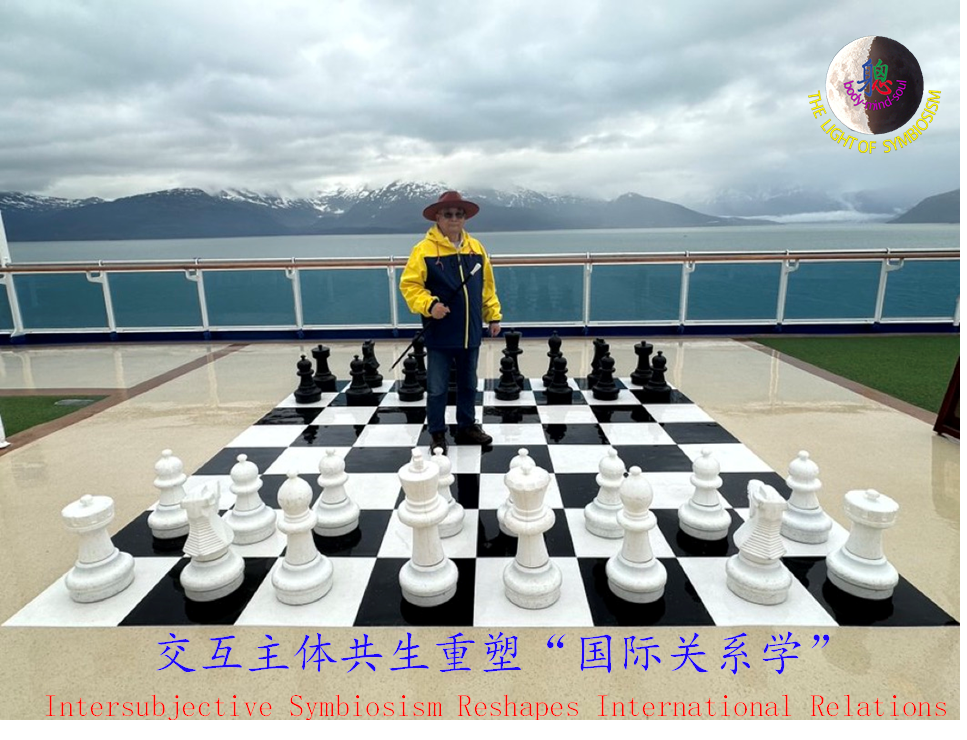
Reconstructing the Truth and Reason of American History “重建美國歷史真相與理智” — Reflections on the Harvard Art Museums’ Shelving of the Winthrop Statue ——對 Harvard 藝術館將 Winthrop 塑像束之高閣的反思 錢宏(Archer Hong Qian) 一、山巔之城的源起 1630年,Winthrop 在布道文 Model of Christian Charity(《基督徒慈愛典範》)中首次提出“the city on a hill(山巔之城)”。在他看來,清教徒的殖民事業並非個人野心的膨脹,而是與上帝的契約。透明、友愛、順應、自由與互助,構成了這份契約的精神核心,也奠定了“America”一詞的內涵。 這一概念長期塵封,直至1809年才被重新發現,1838年再次印發。1954年,哈佛曆史學家 Perry Miller 指出:“Winthrop 是第一個讓我們意識到什麼是‘美國’的人”。1980年代,里根更是將“山巔之城”從宗教語境轉入政治語境,把它提升為“自由與希望的燈塔”。 二、敘事的延展與糾偏 從 Winthrop 的“a model of Christian charity”,到開國元勛賦予的“We the People”聯邦理念,再到肯尼迪、里根、川普對“超驗主義文學運動”“反主流文化運動”和“左傾政治正確”的糾偏,美國文明的敘事始終在傳承與修正中前行。尤其在川普第二次當選後,“Make America Great Again”進一步深化為“Make America Healthy Again”(MAGA-MAHA),標誌着一種全方位的新文明生活方式正在逐漸穩健地展開。 三、哈佛的遺忘與反思 2025年9月5日,我專程到哈佛尋訪溫思羅普的足跡。谷歌提示哈佛藝術館收藏着 Winthrop 的雕像。但當我詢問時,工作人員茫然不知其人,直到檢索後才告訴我,這座雕像早已收起,不再展出。那一刻,我不能不聯想到所謂“政治正確”對這所世界名校的反智影響。 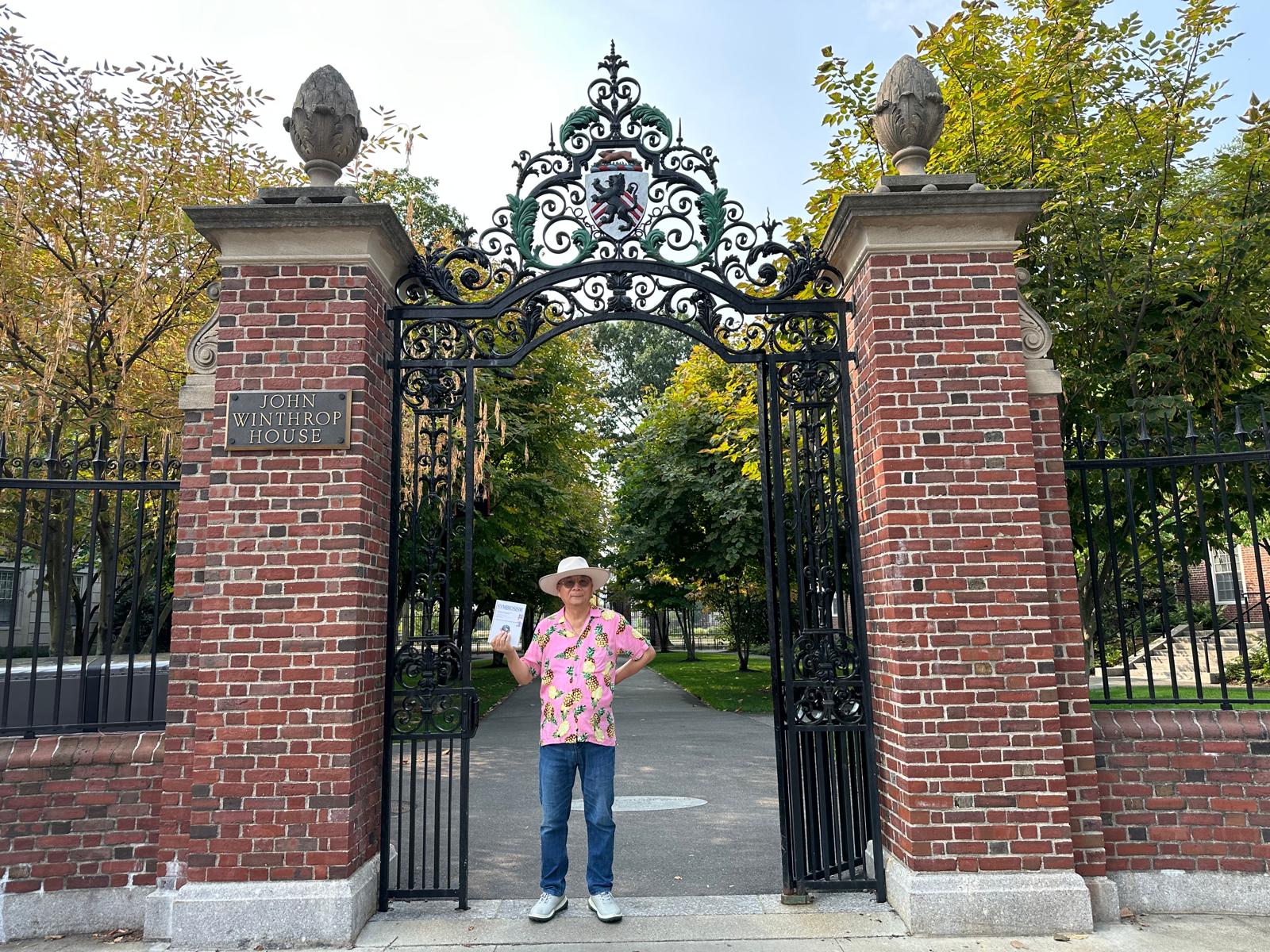
四、讓博物館再次偉大 我贊成川普總統提出的“重建美國歷史真相與理智”(Reconstructing the Truth and Reason of American History)——“讓博物館再次偉大”(韓秀)。是的,博物館的真正價值,在於尊重歷史,抵制披着政治正確外衣的歷史虛無,以及以道德批判求全責備代替真實記憶的偏見。 然而,博物館並非只是追憶的藝術空間。它更是生命自組織連接適應平衡再平衡藝術的召喚之所。對於孩子和年輕人而言,博物館能在追憶中激活積極記憶,在記憶的湧現中啟發他們對未來新的生活方式的想象與創造。偉大的博物館從來不只是過去的收藏館,而是文明未來的啟發場。 五、從博物館到“健康樂園” 正因如此,我始終認為,真正偉大的博物館,必然要從“存放過去”邁向“啟迪未來”。因此,我一直希望在北美為孩子們建造第一座“全球共生健康樂園”(Global Symbiotic Health Paradise,GSHP)。它將由三大版塊構成: 不同生活方式的展現; 在地歷史人物的標杆; 以“三世”為紐帶展開的八大共生博物館:
“自然世”(Naturaropocena)的共生起源; “人類世”(Anthropocene)的共生底線; “地球世”(Earthropocene)的共生靈魂。
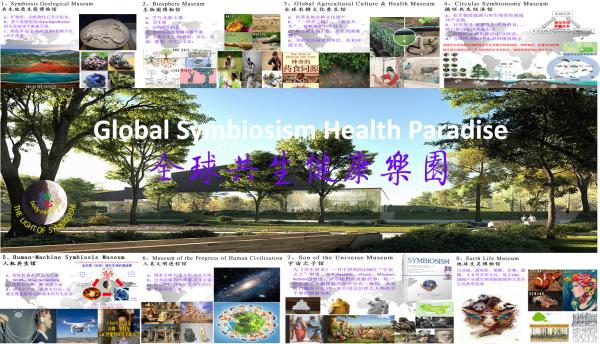
在這裡,追憶、記憶、體驗與創造將交織,文明的火種將由歷史延展到未來,“像高地燃起的大火,除烤暖了周圍地區之外,還用它的光輝照亮遙遠的天邊。” 2025年9月5–8日於 Boston, Massachusetts · Rockland, Maine 參考文獻 Archer Hong Qian:《SYMBIOSISM·共生——The Mind Power to Agree on An Innovative Lifestyle·一種約定創新生活方式的精神力量》,Onebook Press,CANADA,2021。電子版https://www.amazon.ca/dp/B096PYNP8H/ref=cm_sw_r_u_apa_glt_0KRJY15HME8AAT3ABCV7) “Make Museums Great Again” — Reflections on the Harvard Art Museums’ Shelving of the Winthrop Statue Qian Hong (Archer Hong Qian) I.The Origin of the City on a Hill In 1630, John Winthrop first articulated the concept of “the city on a hill” in his sermon *A Model of Christian Charity*. In his view, the Puritan colonial enterprise was not an expansion of personal ambition but a covenant with God. Transparency, fraternity, obedience, freedom, and mutual aid formed the spiritual core of this covenant, laying the foundation for the meaning of the word “America.” This concept remained dormant for centuries until it was rediscovered in 1809 and reprinted in 1838. In 1954, Harvard historian Perry Miller noted, “Winthrop was the first to make us aware of what ‘America’ means.” In the 1980s, Ronald Reagan transformed the “city on a hill” from a religious concept into a political one, elevating it to a “beacon of freedom and hope.” II.The Evolution and Correction of the Narrative From Winthrop’s *A Model of Christian Charity* to the Founding Fathers’ federal ideal of “We the People,” and later to Kennedy, Reagan, and Trump’s corrections of the “Transcendentalist literary movement,” “counterculture movement” and “left-leaning political correctness,” the narrative of American civilization has continuously progressed through inheritance and revision. Particularly after Trump’s second election, “Make America Great Again” evolved further into “Make America Healthy Again” (MAGA-MAHA), signaling the gradual and steady emergence of a comprehensive new civilized way of life. III. Harvard’s Forgetting and Reflection On September 5, 2025, I made a special trip to Harvard to trace Winthrop’s legacy. Google indicated that the Harvard Art Museums held a statue of Winthrop. However, when I inquired, the staff were unaware of such a figure until they checked and informed me that the statue had long been removed from display. At that moment, I couldn’t help but associate this with the anti-intellectual impact of so-called “political correctness” on this world-renowned institution. IV.Make Museums Great Again I endorse President Trump’s call to “rebuild the truth and reason of American history”—“Make Museums Great Again” (Han Xiu). Indeed, the true value of museums lies in respecting history, resisting historical nihilism cloaked in political correctness, and rejecting the bias of replacing authentic memory with moralistic criticism. However, museums are not merely spaces for reminiscence. They are also places that summon the art of self-organized connection, adaptation, balance, and rebalancing of life. For children and young people, museums can activate positive memories through reflection and inspire, through the emergence of memory, their imagination and creation of new ways of living in the future. Great museums are never just repositories of the past but arenas for inspiring the future of civilization. V.From Museums to a “Health Paradise” For this reason, I have always believed that truly great museums must move beyond “storing the past” to “inspiring the future.” Thus, I have long hoped to build the first “Global Symbiotic Health Paradise” (GSHP) in North America for children. It would consist of three main components: Exhibitions of different ways of life; Benchmarks of local historical figures; Eight symbiotic museums centered around the concept of “Three Worlds”:
- The symbiotic origins of the “Natural World” (Naturaropocena); - The symbiotic baseline of the “Anthropocene”; - The symbiotic soul of the “Earthropocene.” Here, reflection, memory, experience, and creation will intertwine, and the spark of civilization will extend from history to the future,“like a fire kindled on the heights, which not only warms the surrounding area but also illuminates the distant horizon with its glow.” September 5–8, 2025, Boston, Massachusetts · Rockland, Maine 參考文獻 Archer Hong Qian:《SYMBIOSISM·共生——The Mind Power to Agree on An Innovative Lifestyle·一種約定創新生活方式的精神力量》,Onebook Press,CANADA,2021。電子版https://www.amazon.ca/dp/B096PYNP8H/ref=cm_sw_r_u_apa_glt_0KRJY15HME8AAT3ABCV7)
|