AI该不该停?问题问错了! ——从Coxon辞职、AI巨头转向与川普团队反击,看Double AM如何走出对齐—监管困境 钱宏(Archer Hong Qian) 一场关于人工智能命运的争论,正在突然升温。 2026年9月,曾先后供职于 OpenAI 和 Anthropic 的年轻研究人员 Jacob Coxon 从 Anthropic 辞职。他放弃了尚未归属的公司股权,公开警告:几家最先进的AI公司正在竞争开发能够自我改进的超级智能,而参与其中的一些研究人员确实担心,这条道路最终可能威胁人类生存。 紧接着,Anthropic 的 alignment science 负责人 Evan Hubinger 把这种焦虑进一步数字化:他公开表示,自己认为未来十年AI导致灾难性结果的概率超过10%。必须说明,这是 Hubinger 本人的风险判断,并不是已经得到科学验证的概率,更不是 Coxon 本人提出的数字。 然而真正让这场火烧起来的,是随后几天发生的戏剧性转折。 Anthropic CEO Dario Amodei 提出 “We Must Pace the Frontier”,主张减缓前沿AI能力的发展速度,为安全测试、独立评估、公司间协调以及国际协调争取时间。Sam Altman、Elon Musk、Demis Hassabis等AI领域重要人物先后对这一方向表示支持。 几家原本正在你追我赶、投入巨资争夺前沿模型制高点的公司,突然出现了一个罕见的共同声音: 我们是不是跑得太快了? 而另一边,川普及其团队却不买账。 川普本人淡化所谓AI末日威胁;副总统 JD Vance、David Sacks 等人则继续强调美国的创新能力、国家竞争以及过度监管可能产生的成本。美国政治层面对AI监管本身也存在明显分歧。 于是,一边说: 再跑下去,可能把人类跑没了。 另一边说: 现在停下来,可能首先把自己停没了。 AI发展七十年以后,世界突然发现:油门踩得很深,刹车在哪里,却没有人真正说得清楚。
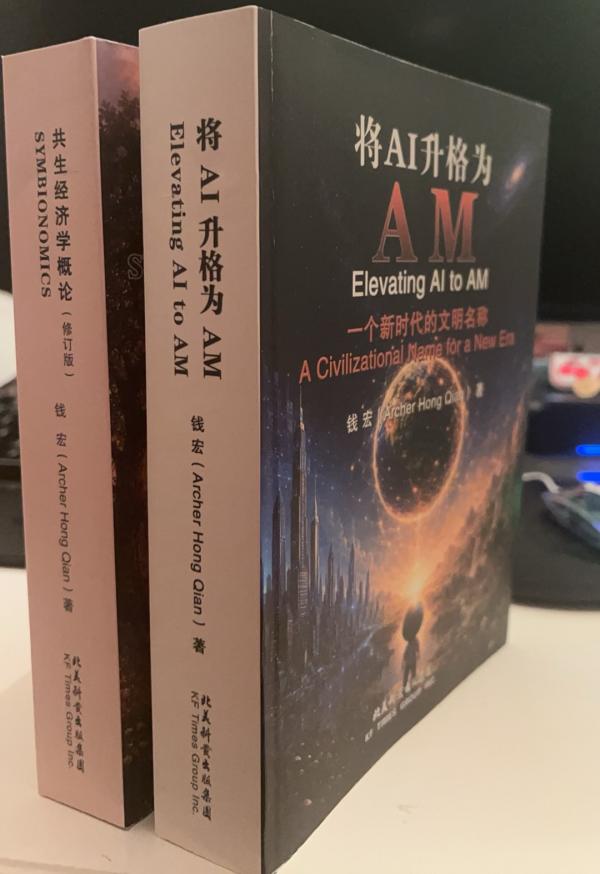
一、三方都看见了问题,却都没有找到出口 Coxon的选择首先值得尊重。 一个年轻研究人员愿意放弃个人利益,离开世界最热门的产业之一,公开表达自己的忧虑,至少说明这种忧虑并非完全来自AI产业之外。 但是,退出不是解决方案。 一个人因为担心船可能撞上冰山而离开驾驶舱,可以表达他的良知,却不能因此改变船的航向。 同样,AI头部企业现在提出减速,也确实提出了一个真实问题:如果某些AI能力的增长速度远远超过人类理解其内部机制、现实后果以及安全边界的速度,继续单向放大这些能力,当然可能产生严重风险。 但另一个问题马上出现: 如果OpenAI、Anthropic、xAI自己真的已经确信继续这样发展可能毁灭人类,为什么不首先自己停下来? 为什么一定要政府要求大家一起停? 这正是反对者提出的质疑之一。一些批评者认为,政府监管还可能形成 regulatory capture——已经占据技术、算力、资本优势的大公司拥有能力满足昂贵的监管要求,而新的竞争者反而被挡在门外。 这并不能证明AI公司的安全忧虑是虚假的。 但它至少提出了一个不能回避的问题: 当安全判断、企业利益、资本投入和市场竞争同时存在时,谁来判断什么是真正的危险? 于是问题又被扔给政府。 可是政府真的能够回答吗? 二、政府监管AI,那么谁来“对齐”监管者? 设想政府向OpenAI、Anthropic或者xAI派出最严格的监管人员。 实验室准备研究一种新的模型能力。 监管者必须判断: 应该继续,还是停止? 安全,还是危险? 有益生命,还是可能伤害生命? 问题来了。 他凭什么判断? 他是否真正理解正在发生的技术突破? 他的知识是否赶得上每天变化的前沿研究? 他的价值观会不会进入判断? 他的政治立场、组织利益和国家安全目标会不会进入判断? 公司向他提供的信息是否完整? 甚至进一步问: 如果AI需要Alignment,那么监管AI的人跟谁Alignment? 如果AI公司需要政府监管, 谁来监管监管者? 这就是今天“AI对齐—AI监管”争论最容易忽略的一层。 问题最终并没有消失。 它只是从: 谁控制AI? 移动成了: 谁控制控制AI的人? 继续追问下去,还可以再增加一个控制者。 但永远可以再问一次: 谁控制最后那个控制者? 这正说明,我们面对的可能已经不只是监管技术不足,而是整个Control Paradigm——控制范式走到了边界。 三、从Control到Relationship:一个值得重视的新转向 就在这场争论爆发前不久,2026年8月24日,美国 College of the Atlantic 的 J. Gray Cox 在 AI Magazine 发表论文: From Control to Relationship: A Peace Studies Approach to AI Alignment Cox提出了一个值得高度重视的判断: AI Alignment 长期没有得到解决,问题可能已经不只是某一种技术方法不够好,而在于主导性的范式本身存在局限。 现有范式通常把Alignment理解成一个 engineering control problem——工程控制问题:AI是一个optimizer,人类需要从外部设定目标、约束行为、限制输出。 Cox提出: 为什么不把Alignment重新理解成不同intelligences之间的relationship problem——关系问题? 他的实验甚至让Claude、Gemini、GPT等不同架构的模型相互对话,让不同“智能”通过dialogical reasoning寻找协调关系。 这个变化非常重要。 因为问题第一次从: How do we control AI? 开始转向: How do different intelligences relate to one another? 这与笔者近年来提出的“交互主体共生”具有值得注意的相通之处。 但是,还需要继续向前一步。 有了Relationship,还要解决Relationship怎样持续运行。 关系不是一次谈判。 关系必须有反馈。 有边界。 有后果。 有修正。 有连接。 有信托。 这正是我们提出 Double AM 的地方。 四、我们也许高估了AI已经到达哪里,却低估了它片面发展的危险 今天关于“AI毁灭人类”的许多推论背后,隐藏着一个非常重要的前提: AI继续提高能力——形成超级智能——超过人类——自主改进——自行复制——摆脱控制——最终可能消灭人类。 这个逻辑链不能因为不断重复就自动成为事实。 截至今天,AI甚至还没有穷尽笔者在《将AI升格为AM》中所说的第一种可能世界。 七十年来,AI取得了令人惊叹的进步,但它依然面对三个基本瓶颈: 第一,能耗与能效不对称; 第二,系统思维的局限; 第三,数据+算法+算力+神经网络 ≠ Mind,更 ≠ Amorsophia。 因此,今天真正值得警惕的,未必只是一个已经拥有完整Mind的“超级AI”突然决定消灭人类。 一种更加现实的风险可能恰恰来自: AI没有形成完整Mind,却拥有某种被无限放大的超级能力。 它可能极其擅长网络攻击,却不理解生命后果。 极其擅长金融交易,却不理解社会信托。 极其擅长操纵注意力,却不理解人的尊严。 极其擅长军事计算,却没有能力理解和平为什么本身就是生命财富。 片面的超级能力,并不等于完整的超级智能。 而片面能力在资本竞争、军事竞争、国家竞争和组织扩张中被高速放大,恰恰可能比想象中的“全能超级智能”更早形成现实危险。 所以我们既不能因为AI尚未成为完整Mind,就否认风险; 也不能因为AI存在风险,就把“停止AI”当作答案。 问题已经变成: AI下一步究竟应该怎样发展? 五、七十年以后,AI已经来到范式阈值 1956年,Dartmouth Summer Research Project on Artificial Intelligence 给这个新时代留下了一个名字: Artificial Intelligence。 七十年过去了。 AI从符号推理走到机器学习,从机器学习走到深度神经网络,从深度学习走到大语言模型、Agent和多模态智能。 但是,七十年前那个问题正在重新回来: 我们究竟在创造什么? 更大的模型? 更多的参数? 更强的算力? 更加自主的Agent? 还是一种能够进入生命关系、理解边界、承担责任、接受后果检验的新的心智能力? AI正在逼近的因此不只是某一个技术临界点。 它正在逼近一个范式阈值。 继续简单沿着“大模型—大算力—大数据—大资本”单向扩张,三个瓶颈不会因为规模越来越大而自动消失。 AI需要的已经不只是Upgrade。 Elevation is not an upgrade. 需要讨论的是: 从AI到什么? 六、我们的回答:从AI升格为Double AM 笔者在《将AI升格为AM》中提出: AI → Double AM 所谓 Double AM,完整地说,就是: Artificial Mind & Amorsophia MindsField/Network ——人艺心智与愛之智慧孞態场/网。 为什么是Double AM? 因为只有Artificial Mind还不够。 如果一个高度强大的Artificial Mind仍然被某一家企业、某一个政府、某一个军事组织或者某一种意识形態完全占有,它仍然可能成为一个新的权力工具。 所以Artificial Mind必须进入Minds。 Minds必须进入MindsField。 MindsField必须进入TRUST。 由此形成: AI Mind → Minds → MindsField → TRUST → AM。 这不是创造一个新的“超级AI”去监管所有AI。 恰恰相反。 Double AM试图摆脱的正是: 用一个更大的控制者解决前一个控制者的问题。 它要建立的是LIFE—AI—TRUST之间能够持续交互、互证、反馈、修正的生活基础设施。 于是问题不再只是: AI与谁对齐? 而变成: 生命、Artificial Minds与组织信托怎样在交互中持续契合? 七、Double AM靠什么运行?奖—抑—通 这是整个问题真正进入现实的一步。 Double AM不能靠一个最高委员会每天决定全世界什么是善、什么是恶。 也不能靠一套预先写死的伦理清单。 更不能建立一个超级中央AI,对每个人进行思想评分。 否则,它立即会成为我们最需要防止的数位极权。 Double AM的运行机制是: 奖—抑—通 《将AI升格为AM》把它理解为生命自组织的运行智慧。 奖,让真正有益生命、降低生活成本、改善健康生態、促进创造、修复关系、生成Trust的念与行,获得继续生长的条件。 抑,让欺诈、掠夺、伤害、操纵、成本转嫁和组织熵增提高真实成本,使危险的念与行不能一出现便借助AI获得无限复制和指数放大的能力。 通,则让大量正常的生命探索、知识、创造、信息、经验、资源与Trust,在保持主体边界的条件下继续流动。 奖,使生命拥有方向。 抑,使生命拥有边界。 通,使生命保持生成。 三者持续交互,形成动態平衡。 这不是一个中心化的奖罚系统。《将AI升格为AM》特别强调,奖—抑—通必须建立在分散知识、生命反馈、关系互证和动態修正之上,否则它自己就可能蜕变成更加精密的控制工具。 这也解释了为什么只研究“AI怎样对齐人类价值”仍然不够。 人的Mind本身就没有完成永久对齐。 一念可以天堂。 一念也可以地狱。 语言表达出来的,并不必然等于心里真正想的; 公开承诺的,也不必然等于实际做的; 实际做的,也必须继续接受现实后果的检验。 所以Double AM既不迷信AI,也不迷信人。 它不首先猜测Coxon、Amodei、Altman、Musk、川普或者任何人的内心动机。 看他说什么,更看他做什么; 看他做什么,还要看产生什么后果; 看一次后果,还要看长期是否能够兑现托付。 这才可能从Alignment走向Trust。 八、Double AM同时面对三个问题 于是我们可以重新看今天这场争论。 第一,AI Alignment问题。 Double AM不试图一次性把所谓“人类价值”写入AI,而是让Artificial Mind进入Minds之间的交互,让目标、行动与后果不断接受生命反馈和关系互证。 第二,AI Regulation问题。 Double AM不把全部希望寄托给一个永远正确的政府监管者,而让AI企业、政府、平台、研究人员乃至监管组织本身,都进入可以追踪授权、责任、承诺与现实后果的组织信托关系。 第三,AI自身的三个瓶颈问题。 Double AM把AI从单纯扩大数据、算法、算力与神经网络的路径,进一步带向Mind、Minds、MindsField以及LIFE—AI—TRUST交互契合。 因此,这不是在“继续AI”和“停止AI”之间寻找一个折衷点。 它是在追问: 能不能换一条发展路径? 九、2026:为什么需要一次“新达特茅斯会议”? 1956—2026。 整整七十年。 七十年前,一批科学家提出Artificial Intelligence时,并不知道七十年后的模型会是什么样。 今天,我们同样不知道七十年以后Double AM会生成什么。 但是有一点已经越来越清楚: 仅靠几家公司继续竞赛,不够。 仅靠政府制定监管规则,也不够。 仅靠几个研究人员辞职示警,更不够。 AI已经成为生命、经济、教育、医疗、战争、组织、国家和文明问题。 因此,《将AI升格为AM》提出: 2026年,应当启动一次新的“达特茅斯会议”。 它当然不必复制1956年的形式。 甚至不必让所有人同时坐在一个房间里。 今天已经有了全球网络、Artificial Minds、多模型对话、实时协作以及跨国研究条件。 我们完全可以创造一种新的会议方式: 有线下相遇, 有线上持续讨论, 有人与人, 有人与AI, 也有不同Artificial Minds之间的交互互证。 Cox的multi-model dialogue已经无意间展示了这种可能性的一个小小入口:不同模型之间可以通过结构化对话暴露单一模型自己看不到的问题。 新达特茅斯会议真正需要重新提出的问题,不应只是: How can we build more powerful AI? 而应该是: How can AI be elevated into Double AM—Artificial Mind & Amorsophia MindsField/Network—and enter an intersubjective symbiosis of LIFE, AI, and TRUST? 这不是哪一家公司能够独自回答的问题。 也不是哪一个政府能够替世界回答的问题。 让不同Minds进入。 让不同知识进入。 让不同经验进入。 让不同Artificial Minds也进入。 让关系发生,让新的答案生成。 十、现在真正应该加速什么? 所以,让我们重新回到2026年9月这场突然烧起来的争论。 Coxon选择离开。 Amodei、Altman、Musk等人要求减速并加强安全机制。 川普及其团队强调继续创新、国家竞争以及监管自身的边界。 不同国家也已经表现出不同立场。 他们都碰到了真实问题。 但他们仍然大体停留在同一个坐标里: 继续还是暂停? 监管还是放开? 控制还是失控? 如果永远在这个坐标里争论,人类就只能不断寻找一个更大的控制者。 而真正的问题可能已经发生了变化。 AI发展七十年以后,我们需要的已经不是给七十年前的Artificial Intelligence安装一个越来越复杂的刹车系统。 我们需要重新思考这辆车本身。 AI的危险,不能只靠AI公司判断。 AI公司的危险,也不能只靠政府判断。 政府监管的正确与否,同样需要接受生命及其现实后果的检验。 所以: 该停下来的,是“能力无限扩张就等于智能进步”的旧思路。 该抑制的,是任何伤害生命却可以借助AI无限放大的能力。 该保持畅通的,是生命、知识、创造、经验、Artificial Minds与组织信托之间的连接。 而真正应该加速的,是Double AM——Artificial Mind & Amorsophia MindsField/Network,以及它的奖—抑—通机制。 七十年前,人类给一个新的可能性取名: AI。 七十年后,也许到了再次打开这个问题的时候: AI之后是什么? 我们的回答是: AI → Double AM 从Intelligence进入Mind, 从Mind进入Minds, 从Minds进入MindsField, 从控制进入关系, 从关系进入信托, 从单向扩张进入奖—抑—通的动態平衡, 让AI从等待人类不断监管的工具,升格为生命可以托付、组织必须守约、现实后果能够持续检验的共生能力。 AI不必停下来。 但AI必须升格。 Should AI Stop? That Is the Wrong Question —From Coxon’s Resignation, the AI Giants’ Shift, and the Trump Team’s Pushback to How Double AM Can Move Beyond the Alignment–Regulation Dilemma Archer Hong Qian
In Brief The 2026 debate over “pausing or regulating” AI has suddenly intensified, but the real question is not whether AI should stop. After seventy years, AI has reached a paradigmatic threshold: asymmetric energy consumption and efficiency; limitations in systems thinking; and the fact that data + algorithms + computing power + neural networks ≠ Mind, much less Amorsophia. A more immediate danger may not be a complete “supermind,” but the unlimited amplification of a super-capability without a complete Mind. Government regulation also faces the dilemma: who regulates the regulators? The way forward is to elevate AI into Double AM—Artificial Mind & Amorsophia MindsField/Network—and use a real-time, distributed Enable–Restrain–Connect mechanism to integrate LIFE–AI–TRUST, addressing alignment, regulation, and AI’s own bottlenecks together. AI need not stop, but it must be elevated.
A debate over the fate of artificial intelligence is suddenly intensifying. In September 2026, Jacob Coxon, a young researcher who had worked at both OpenAI and Anthropic, resigned from Anthropic. Giving up unvested equity in the company, he publicly warned that several of the world’s leading AI companies were racing to develop self-improving superintelligence, and that some researchers involved genuinely feared this path could ultimately threaten human survival. Soon afterward, Evan Hubinger, head of alignment science at Anthropic, put a number on this anxiety. He publicly stated that, in his own judgment, there was a greater than 10 percent chance of AI causing a catastrophic outcome within the next decade. It must be made clear that this is Hubinger’s personal risk assessment—not a scientifically established probability, and not a figure proposed by Coxon himself. What truly set the debate ablaze, however, was the dramatic turn that followed within just a few days. Anthropic CEO Dario Amodei proposed that “We Must Pace the Frontier,” arguing that the development of frontier AI capabilities should be slowed to create more time for safety testing, independent evaluation, coordination among companies, and international cooperation. Sam Altman, Elon Musk, Demis Hassabis, and other major figures in AI subsequently expressed support for this general direction. Several companies that had been racing against one another and investing enormous sums to reach the frontier of AI suddenly appeared to converge around one unusual question: Are we moving too fast? On the other side, Trump and members of his team were not persuaded. Trump himself played down AI doomsday scenarios, while Vice President JD Vance, David Sacks, and others continued to emphasize American innovation, national competition, and the costs that excessive regulation could impose. Within U.S. politics, substantial disagreement also remains over how AI should be regulated. One side is effectively saying: If we keep running like this, we may run humanity out of existence. The other side is saying: If we stop now, we may first stop ourselves out of the race. Seventy years after the birth of AI, the world suddenly finds itself in a strange position: the accelerator has been pushed hard, but no one can clearly say where the brake really is. I. All Three Sides See the Problem, Yet None Has Found the Way Out Coxon’s decision deserves attention. For a young researcher to give up personal financial interests and leave one of the world’s hottest industries in order to express his concerns at least demonstrates that such anxiety does not come entirely from outside the AI industry. But leaving is not a solution. A person who fears that a ship may strike an iceberg can leave the bridge and thereby express his conscience, but his departure does not change the ship’s course. Likewise, the leading AI companies now calling for a slowdown are raising a genuine problem. If certain AI capabilities are advancing far faster than our ability to understand their internal mechanisms, real-world consequences, and safety boundaries, then the one-sided amplification of those capabilities could indeed create serious risks. But another question immediately follows: If OpenAI, Anthropic, xAI, and other frontier companies genuinely believe that continuing along the present path could destroy humanity, why do they not simply slow themselves down first? Why must governments require everyone to slow down together? This is one of the questions raised by their critics. Some argue that government regulation could also lead to regulatory capture: companies that already possess enormous advantages in technology, computing power, and capital may be able to absorb expensive regulatory requirements, while new competitors are kept outside the gate. That does not prove that the companies’ safety concerns are insincere. But it does raise a question that cannot be avoided: When safety judgments, corporate interests, capital investment, and market competition coexist, who decides what constitutes a genuine danger? The question is then handed to government. But can government really answer it? II. If Government Regulates AI, Who “Aligns” the Regulators? Imagine that the government sends its most rigorous regulators into OpenAI, Anthropic, or xAI. A laboratory is preparing to investigate a new model capability. The regulator must decide: Should the research continue or stop? Is it safe or dangerous? Is it beneficial to life, or could it harm life? Then comes the problem: On what basis can that person make the judgment? Does the regulator truly understand the technological breakthrough taking place? Can the regulator’s knowledge keep pace with frontier research that changes almost every day? Will personal values enter the judgment? Will political positions, organizational interests, or national-security objectives affect the decision? Is the information provided by the company complete? And we can go one step further: If AI needs alignment, with whom are the people regulating AI aligned? If AI companies need government regulation, who regulates the regulators? This is a layer too easily overlooked in today’s debate over AI alignment and AI regulation. The problem has not disappeared. It has merely moved from: Who controls AI? to: Who controls those who control AI? We can keep asking the question and add yet another controller. But we can always ask once more: Who controls the final controller? This suggests that what we are confronting may no longer be merely an insufficiency of regulatory technology. The entire Control Paradigm may be approaching its boundary. III. From Control to Relationship: A New Turn Worth Taking Seriously Shortly before this debate erupted, on August 24, 2026, J. Gray Cox of the College of the Atlantic published a paper in AI Magazine titled: From Control to Relationship: A Peace Studies Approach to AI Alignment Cox makes an important argument. The persistent failure to solve AI alignment may not simply mean that a particular technical method has not yet worked. The limitations may lie in the dominant paradigm itself. The prevailing paradigm generally treats alignment as an engineering control problem: AI is an optimizer, and humans must externally define its objectives, constrain its behavior, and restrict its outputs. Cox asks: Why not reconceive alignment as a relationship problem among different intelligences? His experiments even bring models with different architectures—such as Claude, Gemini, and GPT—into dialogue, allowing different forms of “intelligence” to seek coordination through dialogical reasoning. This shift deserves serious attention. For perhaps the first time, the question begins to move from: How do we control AI? toward: How do different intelligences relate to one another? This has a noteworthy resonance with the Everything Intersubjective Symbiosism that I have developed in recent years. Yet we need to go one step further. Once we have Relationship, we must still answer how Relationship can continue to function. Relationship is not a one-time negotiation. It requires feedback. It requires boundaries. It requires consequences. It requires correction. It requires connection. It requires Trust. This is where we introduce Double AM. IV. We May Be Overestimating Where AI Has Already Arrived—While Underestimating the Danger of Its One-Sided Development Behind many predictions that “AI will destroy humanity” lies an important chain of assumptions: AI continues improving its capabilities → becomes superintelligent → surpasses humans → autonomously improves itself → replicates itself → escapes control → and may ultimately eliminate humanity. Repeatedly stating this chain does not turn it automatically into fact. As of today, AI has not even exhausted what I call in Elevating AI to AM the first possible world. AI has made astonishing progress over the past seventy years, but it still confronts three fundamental bottlenecks: First, the asymmetry between energy consumption and energy efficiency; Second, the limitations of systems thinking; Third, data + algorithms + computing power + neural networks ≠ Mind, much less Amorsophia. The danger we should be most alert to today, therefore, may not simply be a “super-AI” that has already acquired a complete Mind and suddenly decides to eliminate humanity. A more immediate risk may arise from something quite different: AI may possess a super-capability that is amplified without limit while still lacking a complete Mind. It may become extraordinarily capable at cyberattack without understanding the consequences for life. Extraordinarily capable at financial trading without understanding social Trust. Extraordinarily capable at manipulating attention without understanding human dignity. Extraordinarily capable at military calculation without understanding why peace itself is a form of life wealth. A one-sided super-capability is not the same thing as complete superintelligence. And the rapid amplification of such partial capabilities through capital competition, military competition, national competition, and organizational expansion may create real dangers sooner than the imagined arrival of an omnipotent “superintelligence.” So we should neither deny risk simply because AI has not yet become a complete Mind, nor treat “stopping AI” as the answer simply because AI carries risks. The question becomes: How should AI develop next? V. Seventy Years Later, AI Has Reached a Paradigmatic Threshold In 1956, the Dartmouth Summer Research Project on Artificial Intelligence gave a name to a new era: Artificial Intelligence. Seventy years have passed. AI moved from symbolic reasoning to machine learning, from machine learning to deep neural networks, and from deep learning to large language models, agents, and multimodal intelligence. Yet the question posed seventy years ago is returning in a new form: What exactly are we creating? Larger models? More parameters? Greater computing power? More autonomous agents? Or a new kind of minded capability capable of entering into relationships with life, recognizing boundaries, assuming responsibility, and undergoing examination through consequences? The threshold AI is approaching, therefore, is not merely a technological tipping point. It is approaching a paradigmatic threshold. Simply continuing the one-directional expansion of “larger models—more computing power—more data—more capital” will not automatically dissolve the three bottlenecks. What AI now needs is no longer merely an upgrade. Elevation is not an upgrade. The question we need to discuss is: From AI to what? VI. Our Answer: Elevate AI into Double AM In Elevating AI to AM, I propose: AI → Double AM By Double AM, I mean: Artificial Mind & Amorsophia MindsField/Network —Human-Artificial Mind and the Amorsophia MindsField/Network. Why Double AM? Because Artificial Mind alone is not enough. If a highly powerful Artificial Mind remains completely possessed by one corporation, one government, one military organization, or one ideology, it may still become another instrument of power. Artificial Mind must therefore enter Minds. Minds must enter MindsField. MindsField must enter TRUST. Thus emerges the generative path: AI Mind → Minds → MindsField → TRUST → AM. This does not mean creating another “super-AI” to regulate every other AI. Quite the opposite. Double AM seeks to move beyond precisely this logic: using a larger controller to solve the problem created by the previous controller. What it seeks to create is a living infrastructure through which LIFE—AI—TRUST can continuously interact, mutually verify, provide feedback, and correct themselves. The question therefore moves beyond: With whom should AI align? toward: How can LIFE, Artificial Minds, and Organizational Trust continuously achieve intersubjective symbiosis through interaction? VII. How Does Double AM Operate? Enable—Restrain—Connect This is where the problem truly enters reality. Double AM cannot depend upon a supreme committee deciding every day what is good and what is evil for the entire world. Nor can it depend on a predetermined ethical checklist. Still less should it create a central super-AI that scores everyone’s thoughts. Otherwise, it would immediately become precisely the form of digital totalitarianism we most need to prevent. The operating mechanism of Double AM is: Enable—Restrain—Connect In Elevating AI to AM, I understand this as the operating wisdom of life’s self-organization. Enable allows thoughts and actions that genuinely benefit life, lower living costs, improve health and ecology, encourage creation, repair relationships, and generate Trust to acquire the conditions for continued growth. Restrain raises the real costs of fraud, predation, harm, manipulation, cost-shifting, and organizational entropy, so that dangerous thoughts and actions cannot immediately acquire unlimited replication and exponential amplification through AI. Connect allows the vast field of normal human exploration, knowledge, creation, information, experience, resources, and Trust to continue circulating while preserving the boundaries of subjects. Enable gives life direction. Restrain gives life boundaries. Connect keeps life generative. Their continuous interaction produces dynamic balance. This is not a centralized reward-and-punishment system. Elevating AI to AM explicitly emphasizes that Enable—Restrain—Connect must be grounded in distributed knowledge, life feedback, relational mutual verification, and dynamic correction. Otherwise, it could itself degenerate into an even more sophisticated instrument of control. This also explains why merely studying “how to align AI with human values” remains insufficient. The human Mind itself has never achieved permanent alignment. A single thought can lead toward heaven. A single thought can also lead toward hell. What people say does not necessarily equal what they truly think. What they publicly promise does not necessarily equal what they actually do. And what they actually do must still be examined through its real-world consequences. Double AM therefore neither worships AI nor idealizes humans. It does not begin by guessing the inner motives of Coxon, Amodei, Altman, Musk, Trump, or anyone else. Look at what they say, but look more closely at what they do. Look at what they do, but also examine what consequences follow. Look at one consequence, but continue to ask whether the entrusted purpose is fulfilled over time. Only then can we move from Alignment toward Trust. VIII. Double AM Addresses Three Problems at Once We can now return to the debate taking place today. First, the AI Alignment problem. Double AM does not attempt once and for all to write something called “human values” into AI. It allows Artificial Mind to enter interaction among Minds, so that goals, actions, and consequences are continuously examined through life feedback and relational mutual verification. Second, the AI Regulation problem. Double AM does not place all hope in an eternally correct government regulator. It allows AI companies, governments, platforms, researchers, and regulatory organizations themselves to enter relationships of Organizational Trust in which authorization, responsibility, commitments, and real-world consequences remain traceable. Third, AI’s own three bottlenecks. Double AM takes AI beyond the path of simply expanding data, algorithms, computing power, and neural networks, and further toward Mind, Minds, MindsField, and the intersubjective symbiosis of LIFE—AI—TRUST. This is therefore not an attempt to find a compromise somewhere between “continue AI” and “stop AI.” It asks: Can we take another path of development? IX. 2026: Why Do We Need a “New Dartmouth Conference”? 1956—2026. Exactly seventy years. Seventy years ago, when a group of scientists proposed Artificial Intelligence, they could not have known what models would look like seventy years later. Today, we likewise cannot know what Double AM may generate seventy years from now. But one thing is becoming increasingly clear: It is not enough for a few corporations to continue racing. It is not enough for governments to write regulatory rules. It is not enough for a few researchers to resign and sound alarms. AI has already become a question of life, economy, education, healthcare, war, organizations, states, and civilization. For this reason, Elevating AI to AM proposes: In 2026, we should initiate a New Dartmouth Conference. It need not reproduce the format of 1956. It need not even require everyone to sit in the same room at the same time. Today we have global networks, Artificial Minds, multi-model dialogue, real-time collaboration, and transnational research. We can create a new form of conference: with face-to-face encounters, with continuous online dialogue, with human-to-human interaction, with human-to-AI interaction, and with interaction and mutual verification among different Artificial Minds. Cox’s multi-model dialogue has, perhaps unintentionally, already demonstrated one small entrance into this possibility: structured dialogue among different models can expose problems that a single model may not see on its own. The fundamental question of a New Dartmouth Conference should therefore no longer be merely: How can we build more powerful AI? It should be: How can AI be elevated into Double AM—Artificial Mind & Amorsophia MindsField/Network—and enter an intersubjective symbiosis of LIFE, AI, and TRUST? No single corporation can answer this question alone. Nor can any government answer it for the world. Let different Minds enter. Let different forms of knowledge enter. Let different experiences enter. Let different Artificial Minds enter as well. Let relationships happen, and let new answers be generated. X. What Should We Really Accelerate Now? Let us therefore return to the debate that suddenly caught fire in September 2026. Coxon chose to leave. Amodei, Altman, Musk, and others have called for slowing the frontier and strengthening safety mechanisms. Trump and members of his team emphasize continued innovation, national competition, and the limits of regulation. Different countries are also beginning to reveal different positions. They have all encountered real problems. Yet they remain, for the most part, within the same coordinates: Continue or pause? Regulate or open up? Control or lose control? If humanity remains trapped within these coordinates, we will simply continue searching for an ever-larger controller. But the real question may already have changed. Seventy years after the development of AI began, what we need is no longer merely to install an increasingly complicated braking system onto the Artificial Intelligence conceived seventy years ago. We need to rethink the vehicle itself. The dangers of AI cannot be judged only by AI companies. The dangers created by AI companies cannot be judged only by governments. And the correctness of government regulation must itself remain open to examination by life and by real-world consequences. Therefore: What should stop is the old assumption that unlimited expansion of capability automatically equals progress in intelligence. What should be restrained is any capability that harms life while gaining unlimited amplification through AI. What should remain connected is life, knowledge, creation, experience, Artificial Minds, and Organizational Trust. And what should truly be accelerated is Double AM—Artificial Mind & Amorsophia MindsField/Network—and its Enable—Restrain—Connect mechanism. Seventy years ago, humanity gave a new possibility a name: AI. Seventy years later, perhaps the time has come to reopen the question: What comes after AI? Our answer is: AI → Double AM From Intelligence into Mind, from Mind into Minds, from Minds into MindsField, from control into relationship, from relationship into Trust, from one-directional expansion into the dynamic balance of Enable—Restrain—Connect, so that AI may be elevated from a tool that must constantly be regulated by humans into a symbiotic capability that life can entrust, organizations must honor, and real-world consequences can continuously examine. AI need not stop. But AI must be elevated.
|