沃什加息,川普不满却依然支持他?Warsh Raises Rates. Trump Is Unhappy—Yet Still Backs Him?——从共生经济学看2026年诺经奖与美联储利率之争 — A Symbionomics Perspective on the 2026 Nobel Prize in Economics and the Fed’s Interest Rate Dispute
钱 宏(Archer Hong Qian)
2026年10月14日晨于温哥华
人们普遍预测,川普亲自提名的凯文·沃什(Kevin Warsh)出任美联储主席后,很可能顺应川普长期要求降息的主张。可是,沃什上任后却在2026年9月宣布加息25个基点。川普对此表示不满,却依然支持他。 为什么? 难道川普又用错了人?还是沃什看到了比降低利率更重要的东西?
降息了,人们还是不敢消费、不愿投资;加息了,人们照样消费、投资、创业。
这一看似矛盾的经济现象,揭示了一个朴素而深刻的道理:经济发展的深层动力,来自人们对未来生活的信心,以及实现美好生活的自组织创造力。 共生经济学(Symbionomics)认为,利率调节资金成本,信心引导经济行为,组织信托激发生命创造。 经济活动的主体是活生生的人。人们敢于消费、愿意投资、乐于创造,源于对生活、彼此合作与未来发展的孞(信)。这样的孞,通过可验证、可追责、可承兑的组织信托,转化为持续的经济动力,并在降本、赋能、健康、信任、和平五大因素的交襄作用中,生成经济发展的生命活力。 2026年诺贝尔经济学奖授予罗伯特·霍尔(Robert E. Hall)和迈克尔·伍德福德(Michael Woodford)。霍尔揭示消费行为与未来收入预期的联系,伍德福德深入研究货币政策、价格形成与市场预期的关系。两位经济学家的贡献,使宏观经济稳定政策进一步建立在家庭与企业实际决策的微观基础之上。 川普与前任美联储主席鲍威尔之间的利率之争,恰好提供了一个耐人寻味的现实案例。 
川普长期要求降息,鲍威尔则依据通胀、就业和货币稳定等因素作出政策判断。川普的要求符合传统货币政策传导逻辑:降息降低融资成本,刺激消费与投资,推动近期GDP增长。作为总统,他希望经济增长更快、就业更多、市场更加活跃,也希望良好的经济表现体现其施政成效。 然而,川普亲自提名的凯文·沃什(Kevin Warsh)出任美联储主席后,美联储在2026年9月反而加息25个基点。 难道川普又用错了人?顺便说一句,日前在温哥华举办的复旦论坛暨国际金融峰会上,也有知名专家大骂“沃什什么都不懂!” 可事情恐怕远比这复杂。 倘若一个经济体在较高利率下,企业依然敢于投资,家庭依然愿意消费,人们依然相信劳动与创造能够带来更加美好的生活,那么,恰恰映衬出这种经济活力有着超越低利率刺激的内生动力。 当然,加息也可能源于通胀压力和经济需求旺盛。川普本人对这次加息表示不满,却依然表示信任沃什。 有网友不服抬杠:“那就降到-0.25%负利率!”我回他:【金融工具的作用敌不过组织信托的丧失;反之,重建组织信托可使金融工具上下其手】。对方默然。 此中机理有三:一是负利率在恐慌蔓延时只会加速资本躺平与耗散,无法逼出投资(如欧洲和日本央行曾经用过的“负利率”大招);二是当可预期、可追责的组织信托重建后,金融政策才能顺应人心、事半功倍地“上下其手”;三是证明了宏观预期的根基不是冰冷的利率数字,而是活生生的组织信任(T),直接击碎了现代金融工具的精英幻觉。 这一现实反差恰好提出了一个值得深思的问题: 经济政策能否从追求近期GDP的增长,进一步走向培育企业创造力、激励社会信任和增强人民对未来的信心? 川普是否已经完成这样的认识转变,尚可从政策实践中观察。然而,从共生经济学价值参量看,他的“常识新政”十大特征,已经呈现出从短期增长刺激走向释放社会自组织创造力的政策取向。沃什的加息,可以解读为对川普近两年施政所形成的经济韧性与未来发展潜力的一种信心表达。 所以,问题本身已经超出了总统与央行主席之间的利率分歧: 一个国家经济政策的成功,究竟体现为今天GDP增长了多少,还是人民对明天拥有多少信心、多少创造的自由、多少实现美好生活的可能? 一个年轻人相信明天会更好,就敢结婚、生育、买房;一个企业家相信创造能够获得回报,就敢扩大生产、雇用员工。即使资金成本有所上升,他们依然愿意投入。反过来,当工作朝不保夕,产权缺乏保障,政策朝令夕改,哪怕利率一降再降,人们也宁愿把钱留在口袋里。 经济发展由无数生命主体的心智、行为与组织关系交襄生成。生命本自具足,又非独存,Everything Intersubjective Symbiosism(万事交互主体共生),赋有不同主体性的人的信心,生长于可预期的自由、可信赖的制度、可持续的合作,以及劳动与创造能够获得公正承兑的组织关系。 这正是组织信托的意义:通过可验证、可追责、可承兑的受托关系,明确权力边界、责任归属与贡献损益,让创造得到尊重,让贡献获得确认,让价值实现承兑。组织信托使个人的孞(信)进入社会合作,使分散的创造汇聚为持续的经济动力。 投资今天,可能数年之后才形成产出;养育孩子、培育人才、建立信任、维护和平,甚至需要一代人的努力才能充分显现成效。GDP记录一定时期的经济产出,而经济发展的生命动力,还蕴藏在不断生成的创造能力与交互共生关系之中。 共生经济学提出GDE(国民生产效能总值),以降本(C)、赋能(E)、健康(H)、信任(T)、和平(P)五因指数,衡量经济增长向生命福祉的转化效能。降本释放创造空间,赋能增强生命活力,健康维系生命活性,信任促进合作与价值承兑,和平保障生命交互共生秩序。 五因交襄黄金率作用(Mutually Reinforcing Golden-Ratio Effects),使生命主体的创造力持续生成,也是组织信托成为贯通经济运行与生命发展的重要机制。 GDP回答生产了多少,GDE进一步衡量:增长给生命带来了什么,又为未来生成了什么? 宏观政策可以调节经济运行,组织信托能够激发生命创造;共生经济学(Symbionomics)致力于把未来的信心,转化为当下的创造,把经济增长,转化为可以真实承兑的生命福祉。 霍尔与伍德福德推动宏观经济稳定政策深入家庭与企业的行为及其预期,Symbionomics则揭示了更加深层的生成逻辑:信心如何通过组织信托,贯通经济、政治、文化三大自组织行为,激发生命主体的创造潜能,并在GDE五因交互(黄金率)作用中,持续生成经济发展的生命动力。 经济学由此从稳定经济运行,迈向创造值得期待的未来;从管理增长,迈向激发生命;从衡量财富,迈向衡量财富对生命发展的贡献。 降息难买信心,加息难阻未来(Rate Cuts Cannot Buy Confidence; Rate Hikes Cannot Stop the Future)。一个充满希望的社会,组织信(孞)托保障辖区居民“食、衣、住、行、信、健、安”,人民敢于消费,因为他们相信生活;企业敢于投资,因为他们相信创造;年轻人敢于成家立业,因为他们相信未来。 一个国家最珍贵的财富,是亿万生命主体对未来充满信心,并且拥有实现未来的自由与能力。 生产回归生活,生活呈现生態,生態激励生命。 这正是共生经济学所追寻的文明机制与秩序。
Warsh Raises Rates. Trump Is Unhappy—Yet Still Backs Him?— A Symbionomics Perspective on the 2026 Nobel Prize in Economics and the Fed’s Interest Rate Dispute Archer Hong Qian October 14, 2026 · Vancouver
It was widely expected that Kevin Warsh, personally nominated by President Donald Trump to chair the Federal Reserve, would follow Trump's longstanding calls for lower interest rates. Yet after taking office, Warsh announced a 25-basis-point rate hike in September 2026. Trump expressed dissatisfaction with the decision but continued to support him. Why? Had Trump appointed the wrong person again? Or had Warsh recognized something more important than lowering interest rates? Interest rates fall, yet people remain reluctant to consume or invest. Interest rates rise, yet people continue to spend, invest, and start businesses. This seemingly paradoxical phenomenon reveals a simple but profound truth: the deeper driving force of economic development lies in people's confidence in their future lives and their self-organizing creative capacity to build better lives. Symbionomics holds that interest rates regulate the cost of capital, confidence guides economic behavior, and Organizational Trust unleashes the creative power of life. The subjects of economic activity are living human beings. People dare to consume, choose to invest, and delight in creating because they have faith in life, in cooperation with one another, and in the future. Through Organizational Trust—entrusted relationships that are verifiable, accountable, and capable of value redemption—such faith becomes a sustained economic force. Through the mutually reinforcing interactions of five factors—Cost Reduction, Empowerment, Health, Trust, and Peace—it generates the living vitality of economic development. The 2026 Nobel Prize in Economic Sciences was awarded to Robert E. Hall and Michael Woodford. Hall illuminated the relationship between consumption and expectations of future income, while Woodford explored how monetary policy, price formation, and market expectations interact. Their contributions further grounded macroeconomic stabilization policy in the actual decisions made by households and businesses. The longstanding dispute over interest rates between President Donald Trump and former Federal Reserve Chair Jerome Powell provides a particularly intriguing real-world example. 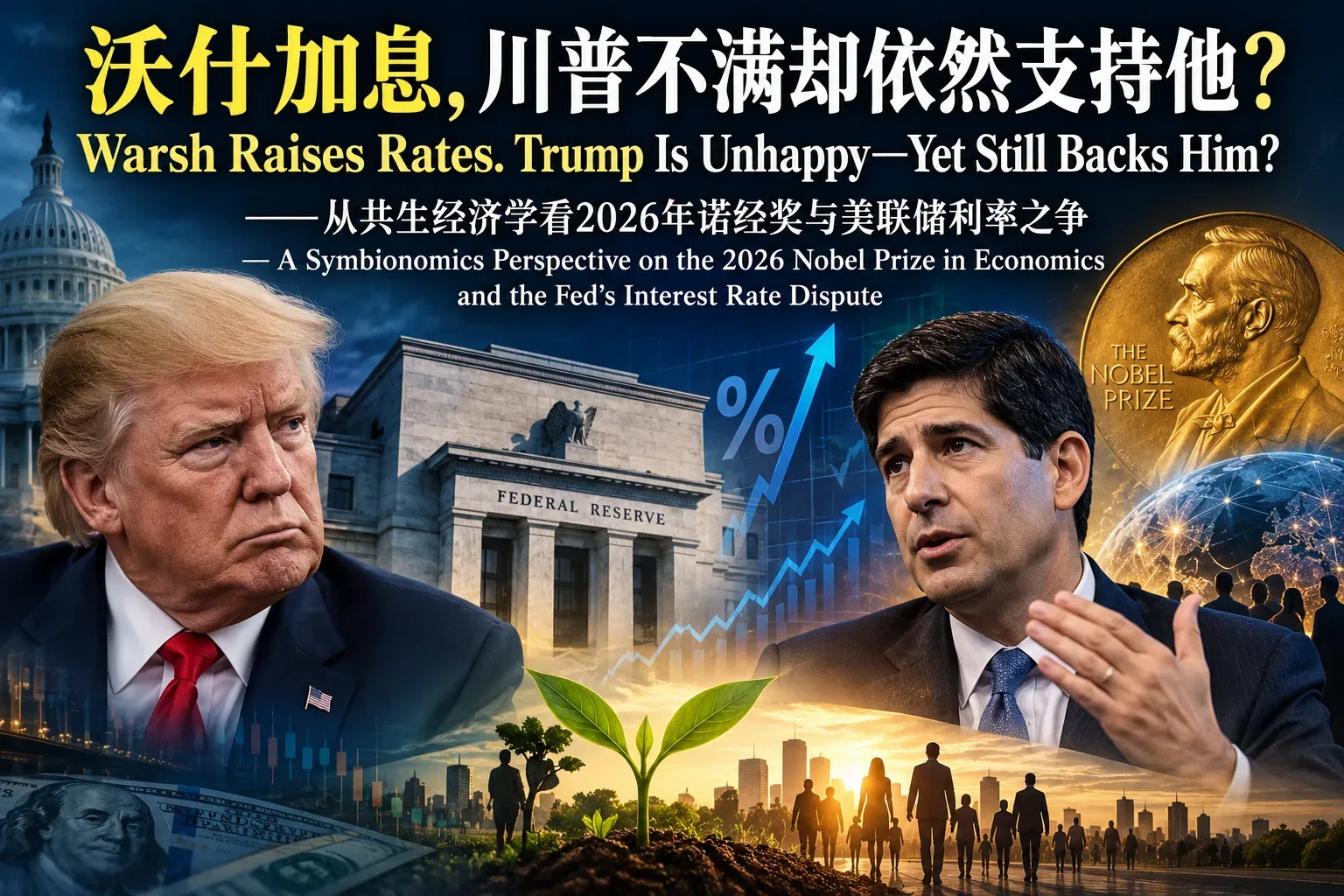
Trump repeatedly called for lower interest rates, while Powell made policy decisions based on inflation, employment, and monetary stability. Trump's position followed the conventional logic of monetary policy transmission: lower interest rates reduce financing costs, stimulate consumption and investment, and encourage near-term GDP growth. As president, he wanted faster growth, more jobs, and more active markets. He also wanted strong economic performance to reflect the achievements of his administration. Yet after Kevin Warsh, whom Trump personally nominated, became Federal Reserve Chair, the Fed actually raised interest rates by 25 basis points in September 2026. Had Trump appointed the wrong person again? Incidentally, at the recent Fudan Forum and International Financial Summit held in Vancouver, a well-known expert even exclaimed angrily, "Warsh doesn't understand anything!" But the reality may be far more complex. If businesses continue to invest, households continue to spend, and people continue to believe that their work and creativity can bring about better lives—even when interest rates are relatively high—this reveals an endogenous source of economic vitality that goes far beyond the stimulus of cheap money. Of course, interest rate hikes may also reflect inflationary pressures and strong economic demand. Trump himself expressed dissatisfaction with the rate increase, yet continued to voice confidence in Warsh. One online commenter, unwilling to concede the point, challenged me: "Then cut the interest rate to negative 0.25%!" I replied: "Financial instruments cannot overcome the loss of Organizational Trust. Conversely, rebuilding Organizational Trust enables financial instruments to work effectively in either direction." The commenter fell silent. Three mechanisms are at work here. First, when panic spreads, negative interest rates merely accelerate the idling and dissipation of capital, without compelling people to invest. The extraordinary negative-interest-rate measures once adopted by European and Japanese central banks provide relevant examples. Second, once predictable and accountable Organizational Trust has been rebuilt, financial policy can work in harmony with people's confidence and intentions, achieving far greater results with much less effort—whether interest rates move upward or downward. Third, this demonstrates that the foundation of macroeconomic expectations lies in living Organizational Trust (T), rather than cold interest-rate figures. It directly shatters the technocratic illusion that sophisticated financial instruments alone can command economic life. This striking contrast raises a question worthy of serious reflection: Can economic policy move beyond the pursuit of near-term GDP growth toward cultivating entrepreneurial creativity, strengthening social trust, and inspiring public confidence in the future? 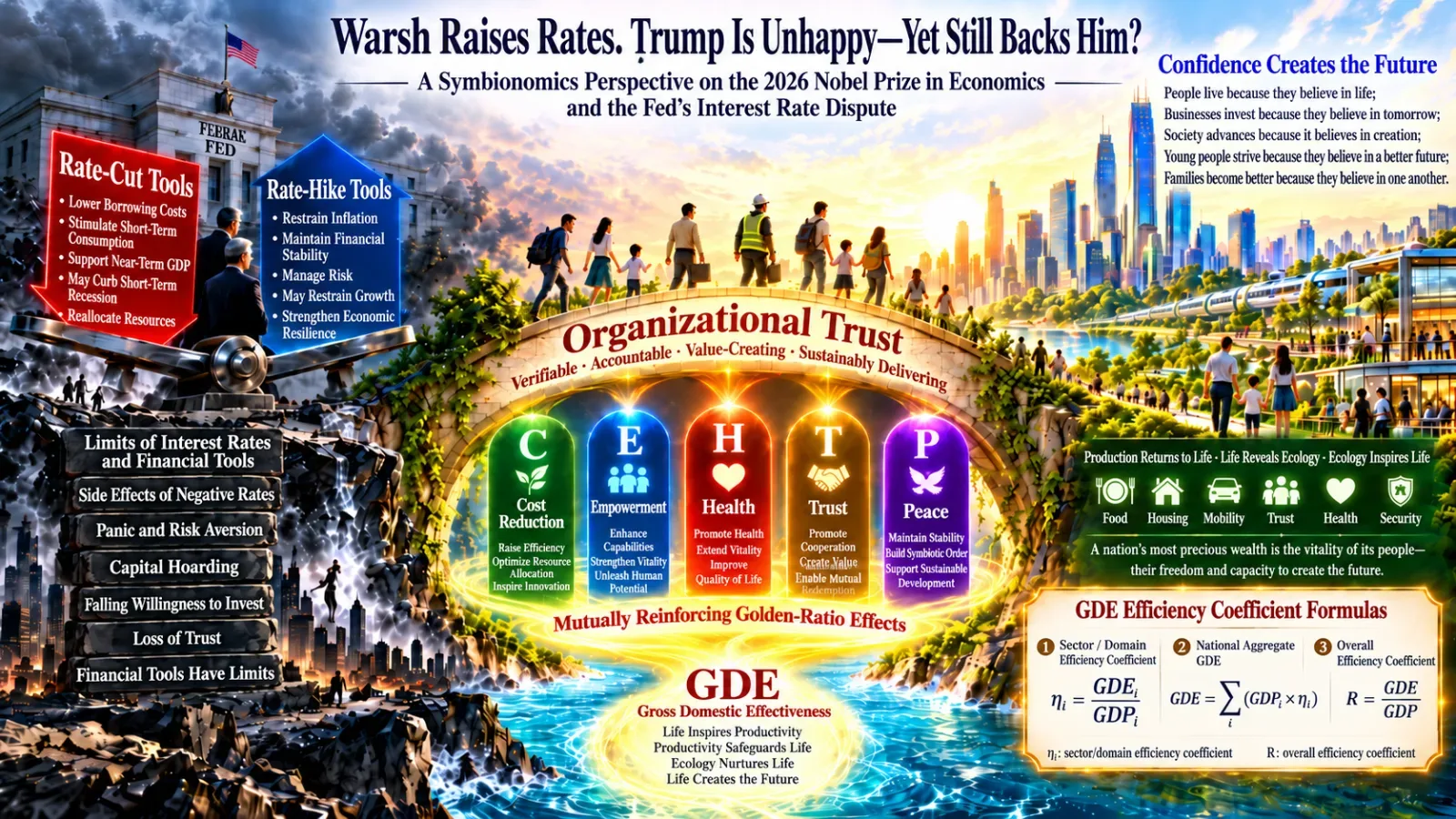
Whether Trump has fully undergone such a change in economic thinking remains to be seen in his policy practice. Nevertheless, viewed through the value parameters of Symbionomics, the ten defining characteristics of his Common-Sense New Deal already suggest a policy orientation moving from short-term growth stimulus toward unlocking society's self-organizing creative capacity. Warsh's rate hike can thus be interpreted as an expression of confidence in the economic resilience and future development potential generated by nearly two years of Trump's policies. The question, therefore, reaches far beyond a disagreement over interest rates between a president and a central bank chair: Should the success of a nation's economic policy be judged by how much its GDP grows today, or by how much confidence its people have in tomorrow, how much freedom they possess to create, and how many possibilities they have to build better lives? A young person who believes tomorrow will be better dares to marry, raise children, and buy a home. An entrepreneur who believes creativity will be rewarded dares to expand production and hire employees. Even when financing costs rise, they remain willing to commit their resources. Conversely, when employment is insecure, property rights lack protection, and policies change unpredictably, people would rather keep their money in their pockets—even if interest rates fall again and again. Economic development emerges through the mutually reinforcing interactions of the minds, behaviors, and organizational relationships of countless living subjects. Life is inherently complete in itself, yet never exists alone. This is the philosophical insight of Everything Intersubjective Symbiosism (EIS). The confidence of human beings, each endowed with a distinct subjectivity, grows from predictable freedom, trustworthy institutions, sustainable cooperation, and organizational relationships in which labor and creativity receive fair and credible value redemption. This is precisely the significance of Organizational Trust. Through entrusted relationships that are verifiable, accountable, and capable of value redemption, Organizational Trust establishes clear boundaries of authority, assigns responsibility, and records contributions, gains, and losses. It ensures that creativity is respected, contributions are recognized, and value is redeemed. Organizational Trust connects individual faith with social cooperation, transforming dispersed acts of creativity into a sustained driving force of economic development. An investment made today may not generate output for years. Raising children, nurturing talent, building trust, and maintaining peace may require an entire generation before their full effects become visible. GDP records economic output within a given period. Yet the living forces of economic development also reside in continuously emerging creative capacities and intersubjective symbiotic relationships. Symbionomics therefore introduces GDE (Gross Domestic Effectiveness), using five factor indices—Cost Reduction (C), Empowerment (E), Health (H), Trust (T), and Peace (P)—to measure the effectiveness with which economic growth is transformed into human well-being. Cost Reduction opens space for creativity. Empowerment strengthens the vitality of life. Health sustains life's inherent vitality. Trust facilitates cooperation and value redemption. Peace safeguards the order of intersubjective symbiosis among living subjects. The Mutually Reinforcing Golden-Ratio Effects of these five factors enable the creative capacities of living subjects to emerge continuously, while also providing an essential mechanism through which Organizational Trust connects economic activity with the development of life. GDP tells us how much has been produced. GDE goes further: What has growth contributed to life, and what has it generated for the future? Macroeconomic policy can regulate economic activity; Organizational Trust can unleash the creative power of life. Symbionomics seeks to transform confidence in the future into creativity in the present, and economic growth into human well-being that can be tangibly and credibly redeemed. Hall and Woodford advanced macroeconomic stabilization policy by grounding it more deeply in the behavior and expectations of households and businesses. Symbionomics reveals a more fundamental generative logic: how confidence, through Organizational Trust, connects the three great spheres of self-organizing behavior—economic, political, and cultural—unleashes the creative potential of living subjects, and continuously generates the vital driving forces of economic development through the interactive golden-ratio effects of the five GDE factors. Economics can thus advance from stabilizing economic activity toward creating a future worth anticipating; from managing growth toward unleashing the creative powers of life; and from measuring wealth toward measuring what wealth contributes to the development of life. Rate Cuts Cannot Buy Confidence; Rate Hikes Cannot Stop the Future. In a society filled with hope, Organizational Trust safeguards the seven essentials of people's lives within its jurisdiction: food, clothing, housing, mobility, trust, health, and security. People dare to consume because they believe in life. Businesses dare to invest because they believe in creativity. Young people dare to build families and futures because they believe in tomorrow. A nation's most precious wealth is the confidence of millions of living subjects in the future—and their freedom and capacity to make that future a reality. Production returns to life. Life manifests as ecology. Ecology inspires life. This is the civilizational mechanism and order that Symbionomics seeks to bring into being.
|