CPTPP门槛背后的组织信托 Organizational Trust Behind the CPTPP Threshold: From “Commitment” to “Fulfillment” ——当“三十六计”遇到事前可验证、事中可追责、事后可承兑 —When the “Thirty-Six Stratagems” Encounter Ex-Ante Verifiability, Ongoing Accountability, and Ex-Post Fulfillment 钱 宏(Archer Hong Qian) 看到一段视频,题目很抓人:“契约精神遇上三十六计:CPTPP的门槛拦住了大国什么?” 这个问题如果只理解为“中国能不能加入CPTPP”,格局就小了。它真正触及的,是一个更普遍的问题: 一个组织作出的承诺,怎样才能成为可以信托的承诺? 这也是我所说的组织信托(Organizational Trust)问题。
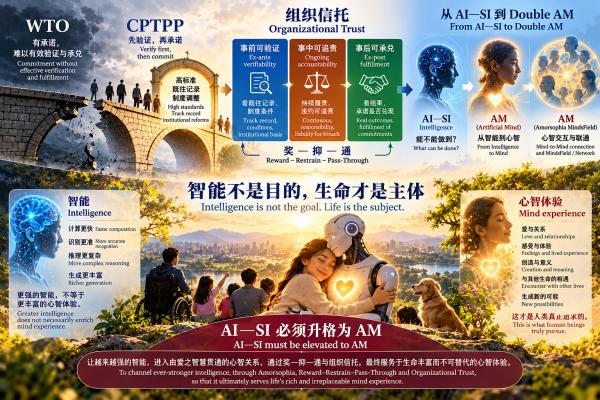
一、从WTO到CPTPP:承诺为什么还不够? WTO与CPTPP当然都有规则、承诺和争端解决机制,不能简单说成一个讲承诺、一个讲验证。但两者今天呈现出来的制度逻辑,确实有一个值得注意的差异。 CPTPP不仅问申请者: “你愿意承诺什么?” 还要继续问: “你过去履约了吗?” “你现在已经具备履约条件了吗?” CPTPP的“Auckland Principles”明确要求申请者能够达到协定的高标准,并具有遵守贸易承诺的既往记录;入约程序还要求申请者说明,为遵守CPTPP现有规则需要进行哪些国内法律法规调整。 这意味着,承诺正在被放进一个更完整的制度过程: 事前可验证,事中可追责,事后可承兑。 这三个环节连起来,才接近我所说的组织信托。 二、组织信托:不是“相信”,而是受托 组织信托,不是主观地相信“这个组织不会作恶”。 它是生命主体将一定的权力、资源或事务托付给政府、企业、平台、社区乃至AI等组织,由其在约定边界内履行受托责任,并对自己的行为和结果承担可验证、可追责、可承兑责任的制度关系。 其本质是: 生命是主体,组织是受托者。 因此,信托不是一次性的。 事前,要验证。 不能只听承诺,还要看既往记录、现实条件和制度基础。 事中,要追责。 获得成员资格、权力或者资源,不等于取得所有权;受托以后仍须持续履责。 事后,要承兑。 最后不能只看说过什么、签过什么,而要看结果:承诺兑现了吗?损益由谁承担?责任落实了吗? 所以可以把组织信托浓缩成一个公式: 组织信托 = 事前可验证 + 事中可追责 + 事后可承兑 三、“三十六计”真正遇到的是什么? 这样再看所谓“三十六计遇上CPTPP”,问题就不只是贸易规则,而开始进入文化。 当然,不能用《三十六计》概括中国文化,更不能说《增广贤文》《菜根谭》和近代《厚黑学》就是中国文化的全部。 但如果研究的不是高深经典,而是哪些处世观念通过通俗读物长期进入日常生活,并影响人的心智和行为,这些文本确实值得注意。 《增广贤文》讲世情,《菜根谭》讲处世,《厚黑学》则把权变竞争中的某些行为逻辑推向了极端表达。 于是可以看到两种不同的问题意识: 谋略问:怎样利用环境和规则取得成功? 契约问:怎样建立规则,使彼此行为可以预期? 而组织信托还要再进一步: 事前,你的承诺能不能验证? 事中,你的行为能不能追责? 事后,你的结果能不能承兑? 这就不能简单归结为“中国人善谋略、西方人守契约”。 真正值得研究的是心智—行为—制度之间的相互生成。 一个制度如果不断奖励钻空子的人,却让守约者付出更高成本,“变通”就可能成为理性选择;反过来,如果履约能够被发现、记录、验证,违约受到抑制,守约得到回报,契约才会从道德要求变成稳定的组织行为。 这也正是奖—抑—通的意义: 奖其有益生命者,抑其有害生命者,通其交互共生者。 四、WTO真正值得反思的,不是“死没死” 说“WTO已经死了”,作为一种警醒性的修辞可以理解,但作为事实判断并不准确。 WTO仍然存在并运行。但其上诉机构自2019年12月以来由于缺乏法定人数,不能正常审理新的上诉,由此严重削弱了争端解决机制最终裁决的确定性。 所以真正值得追问的不是: WTO死了吗? 而是: 如果一个国际组织事前不能充分验证,事中不能有效追责,事后又难以稳定承兑,那么它的组织信托还剩多少? 这不是哪个国家“够不够强”的问题。 再强大的国家,也不能长期替代一个缺失的制度机制。 五、CPTPP的门槛,最终挡住的是什么? 因此,CPTPP值得注意的,不只是“门槛高”。 它体现了一种制度方向: 不能只听今天承诺什么,还要验证昨天做过什么; 不能因为取得资格,就停止检验今天正在做什么; 不能因为契约已经签署,就不再追问明天究竟承兑了什么。 所以: 承诺不是组织信托的完成,而只是组织信托的开始。 其完整过程应当是: 托付 → 事前验证 → 事中履责与追责 → 事后结果承兑 → 再决定新的托付。 但是,如果到这里就结束,仍然没有追到最深处。 因为还必须问: 我们为什么如此在意组织信托? 六、最后的问题:人究竟追求智能优化,还是心智体验? 答案仍然要回到生命。 制度、契约、组织、市场乃至AI,都不是最终目的。 生命才是主体。 同样,人类今天如此热烈地追求AI、SI,也必须问一句: 我们究竟是在追求越来越强的 Intelligence,还是在追求生命不断展开的 Mind experience? AI—SI可以计算得更快、识别得更准、推理得更复杂、生成得更丰富。它甚至可以在某些单项智能(Intelligent)上远远超过一个普通人。 但是,一个不会高等数学的人仍然可以生活。 一个只会简单语言的人仍然可以生活。 一个不会说话、看不见或者听不见的人,同样可以愛,可以感受,可以与另一个生命建立关系,可以经历痛苦与喜悦,可以创造,也可以在一个Mind与另一个Mind的相遇中生成新的可能。 所以: Intelligence的增强,不等于Mind experience的丰富。 前者主要回答: “能不能做到?” 后者则追问: “生命经历了什么?感受了什么?与谁发生了关系?又生成了什么新的可能?” 这不是程度差异,而是定义域的不同。 七、这正是为什么AI—SI必须升格为AM 由此也就可以回答一个更根本的问题: 为什么AI—SI必须升格为AM? 不是因为AI还不够聪明。 恰恰相反: 正因为AI—SI可以越来越聪明,我们才更需要追问:如此强大的智能,最终为了谁? 这就是 Double AM(Artificial Mind & Amorsophia MindsField / Network) 必须出现的原因。 第一个AM——Artificial Mind,所面对的是机器智能从 Intelligence向Mind尺度升格的问题。 但这仍然不够。 因为Mind并非孤立存在。 于是需要第二个AM——Amorsophia MindsField / Network: Mind与Mind连接、交互 → Minds; Minds与Minds上下左右联通 → MindsField / Network; Amorsophia(愛之智慧)贯通其间 → 形成“奖—抑—通”机制; 进而: 规范AI—SI → 使越来越强的智能最终有益于生命。 到了这里,为什么还必须有组织信托,也就清楚了。 AI—SI一旦进入政府、企业、平台、社区以及每个人的日常生活,就不再只是一个计算工具。它开始参与资源配置、权利责任、人与人的关系乃至人的真实心智体验。 因此,AM不能只解决技术问题,还必须面对组织问题: 事前可验证, 事中可追责, 事后可承兑。 这三者最终保护的,不是抽象的制度本身,而是生命主体及其不可替代的Mind experience。 所以,从WTO到CPTPP,从契约到组织信托,从AI—SI到Double AM,看似谈的是几件不同的事情,最终却汇聚到同一个生命原点: 智能不是目的,生命才是主体。 AI—SI必须升格为AM,不是为了制造一种比人更强的智能,而是为了让越来越强的智能进入由Amorsophia贯通的心智关系,通过“奖—抑—通”与组织信托,最终服务于生命丰富而不可替代的Mind experience。 这就是为什么: Elevation is not an upgrade. 升格,不只是升级。 2026年9月29日于温哥华 注:《共生经济学概论(修订版)》与《将AI升格为AM》已经在加拿大正式出版,电子版将可在亚马逊购买。 From “Commitment” to “Fulfillment”: Organizational Trust Behind the CPTPP Threshold —When the “Thirty-Six Stratagems” Encounter Ex-Ante Verifiability, Ongoing Accountability, and Ex-Post Fulfillment Archer Hong Qian I. From the WTO to the CPTPP: Why Is Commitment No Longer Enough? I came across a video with an attention-grabbing title: “When the Spirit of Contract Meets the Thirty-Six Stratagems: What Does the CPTPP Threshold Keep a Major Power From?” If this question is understood merely as “Can China join the CPTPP?”, the frame is too narrow. What it really touches upon is a more general question: How can a commitment made by an organization become a commitment worthy of entrustment? This is also what I call the problem of Organizational Trust. The WTO and the CPTPP both have rules, commitments, and dispute-settlement mechanisms. They therefore cannot simply be characterized as one system based on commitment and the other on verification. Yet the institutional logic they display today does reveal an important difference. The CPTPP asks an applicant not only: “What are you willing to commit to?” It also asks: “Have you honored your commitments in the past?” and “Do you already possess the conditions necessary to fulfill them?” The CPTPP’s “Auckland Principles” require an aspirant economy to be able to meet the Agreement’s high standards and to demonstrate a track record of complying with trade commitments. The accession process also requires the applicant to explain what changes to domestic laws and regulations are needed in order to comply with existing CPTPP rules. This places commitment within a more complete institutional process: Ex-ante verifiability, ongoing accountability, and ex-post fulfillment. Only when these three stages are connected do we approach what I mean by Organizational Trust. II. Organizational Trust: Not Merely “Trusting,” but Entrustment Organizational Trust does not mean subjectively believing that “this organization will not do evil.” It is an institutional relationship in which living subjects entrust certain powers, resources, or affairs to organizations—including governments, enterprises, platforms, communities, and even AI—so that those organizations perform their entrusted responsibilities within agreed boundaries and assume responsibility for their conduct and outcomes in ways that are verifiable, accountable, and fulfillable. Its essence is: Life is the subject; the organization is the trustee. Trust, therefore, is not a one-time event. Beforehand, there must be verification. One cannot merely listen to promises; one must examine past records, actual conditions, and the institutional foundations for performance. During the process, there must be accountability. Obtaining membership, power, or resources does not amount to acquiring ownership. Once entrusted, the organization must continue to discharge its responsibilities. Afterward, there must be fulfillment. In the end, it is not enough to ask what was said or signed. One must ask about the result: Was the commitment fulfilled? Who bears the gains and losses? Was responsibility actually enforced? Organizational Trust can therefore be condensed into a simple formula: Organizational Trust = Ex-Ante Verifiability + Ongoing Accountability + Ex-Post Fulfillment III. What Does the “Thirty-Six Stratagems” Really Encounter? Seen in this light, the idea of the “Thirty-Six Stratagems encountering the CPTPP” is no longer merely about trade rules; it begins to enter the realm of culture. Of course, Chinese culture cannot be summarized by The Thirty-Six Stratagems, nor can one say that The Expanded Proverbial Wisdom (Zengguang Xianwen), Vegetable Roots Discourse (Caigentan), and the modern Thick Black Theory (Houheixue) constitute the whole of Chinese culture. But if our concern is not abstruse classics, but rather the ways in which popular ideas of worldly conduct enter everyday life over long periods and shape people’s minds and behavior, these texts are indeed worth examining. Zengguang Xianwen speaks about worldly experience; Caigentan about the art of living and conduct; and Houheixue pushes certain behavioral logics of expediency and competitive maneuvering toward an extreme expression. We can therefore see two different kinds of questions: Strategy asks: How can I use the environment and the rules to succeed? Contract asks: How can we establish rules so that each party’s behavior becomes predictable? Organizational Trust goes one step further: Beforehand, can your commitment be verified? During the process, can your conduct be held accountable? Afterward, can the result be fulfilled? This cannot simply be reduced to the claim that “Chinese people are good at strategy while Westerners honor contracts.” What is truly worth studying is the mutual generation of Mind—Behavior—Institution. If an institution repeatedly rewards those who exploit loopholes while imposing higher costs on those who keep their promises, “flexibility” and circumvention may become rational choices. Conversely, when performance can be discovered, recorded, and verified; when breach is restrained and faithful performance rewarded, contract can move from a moral demand to a stable form of organizational behavior. This is precisely the meaning of Reward—Restrain—Pass-Through: Reward what benefits life; restrain what harms life; pass through what enables intersubjective symbiosis. IV. What the WTO Really Requires Us to Reflect On Is Not Whether It Is “Dead” To say that “the WTO is dead” can be understood as a warning or rhetorical provocation, but it is not accurate as a factual judgment. The WTO still exists and operates. Yet since December 2019 its Appellate Body has lacked the quorum needed to hear new appeals normally, seriously weakening the certainty of final adjudication in the dispute-settlement mechanism. The real question, therefore, is not: Is the WTO dead? The deeper question is: If an international organization cannot sufficiently verify beforehand, cannot effectively hold actors accountable during performance, and cannot reliably secure fulfillment afterward, how much Organizational Trust remains? This is not a matter of whether any particular country is “strong enough.” Even the most powerful country cannot indefinitely substitute its power for a missing institutional mechanism. V. What Does the CPTPP Threshold Ultimately Keep Out? What is noteworthy about the CPTPP, therefore, is not merely that its threshold is high. It points toward an institutional direction: Do not merely listen to what is promised today; verify what was done yesterday. Do not stop examining conduct today simply because membership has already been obtained. Do not stop asking what will actually be fulfilled tomorrow merely because a contract has already been signed. Thus: Commitment is not the completion of Organizational Trust; it is only the beginning. The complete process should be: Entrustment → Ex-Ante Verification → Ongoing Performance and Accountability → Ex-Post Fulfillment of Outcomes → A New Decision on Entrustment. Yet if we stop here, we still have not reached the deepest level. We must still ask: Why do we care so much about Organizational Trust? VI. The Final Question: Do Human Beings Pursue Optimized Intelligence, or Mind Experience? The answer must return to life. Institutions, contracts, organizations, markets, and even AI are not ultimate ends. Life is the subject. Likewise, amid today’s intense pursuit of AI and SI, we must ask: Are we pursuing ever stronger Intelligence, or the continually unfolding Mind experience of life? AI—SI can calculate faster, recognize more accurately, reason through greater complexity, and generate richer outputs. In certain individual dimensions of intelligence, it can far surpass an ordinary person. But a person who cannot do advanced mathematics can still live. A person who speaks only simple language can still live. A person who cannot speak, see, or hear can still love, feel, form relationships with other lives, experience pain and joy, create, and generate new possibilities through the encounter of one Mind with another Mind. Therefore: The enhancement of Intelligence does not equal the enrichment of Mind experience. The former primarily asks: “Can it be done?” The latter asks: “What has life experienced? What has it felt? With whom has it entered into relationship? And what new possibilities have been generated?” This is not a difference of degree. It is a difference in domain. VII. This Is Precisely Why AI—SI Must Be Elevated to AM We can now answer a more fundamental question: Why must AI—SI be elevated to AM? Not because AI is not intelligent enough. Quite the opposite: Precisely because AI—SI can become ever more intelligent, we must ask all the more urgently: For whom is such powerful intelligence ultimately intended? This is why Double AM (Artificial Mind & Amorsophia MindsField / Network) must emerge. The first AM—Artificial Mind—addresses the elevation of machine intelligence from Intelligence toward the scale of Mind. But that is still not enough. Mind does not exist in isolation. Hence the need for the second AM—Amorsophia MindsField / Network: Mind connects and interacts with Mind → Minds; Minds interconnect vertically and horizontally with Minds → MindsField / Network; Amorsophia (the Wisdom of Love) runs through them → forming the Reward—Restrain—Pass-Through mechanism; and thereby: regulates AI—SI → so that increasingly powerful intelligence ultimately benefits life. At this point, it also becomes clear why Organizational Trust is indispensable. Once AI—SI enters governments, enterprises, platforms, communities, and everyone’s daily life, it is no longer merely a computational tool. It begins to participate in resource allocation, rights and responsibilities, human relationships, and even people’s actual Mind experience. AM therefore cannot address only technical problems. It must also confront organizational problems: Ex-ante verifiability,
Ongoing accountability,
Ex-post fulfillment. What these three ultimately protect is not an abstract institution itself, but living subjects and their irreplaceable Mind experience. Thus, from the WTO to the CPTPP, from contract to Organizational Trust, and from AI—SI to Double AM, what appear to be several different issues ultimately converge at the same starting point of life: Intelligence is not the goal. Life is the subject. AI—SI must be elevated to AM not in order to create an intelligence stronger than human beings, but to bring increasingly powerful intelligence into Mind relationships permeated by Amorsophia, and through Reward—Restrain—Pass-Through and Organizational Trust, ultimately to serve life’s rich and irreplaceable Mind experience. This is why: Elevation is not an upgrade. Elevation is more than upgrading. September 29, 2026, Vancouver Note: An Introduction to Symbionomics (Revised Edition) and Elevating AI to AM have been officially published in Canada. Electronic editions will be available for purchase on Amazon.
|