行蕴谈心的行为,是由五位百法中的51位心所有法和24位不相应行法构成的: Migration Node talks about behaviors of the heart (i.e., mind), is composed of 51 “heart subordinate laws” and 24 “non-corresponding migration laws” among the “Five Positions of Hundred laws”: 10.4.4.1 心所有法 Heart Subordinate Laws;10.4.4.1.1 遍行法 Omnipresent Laws;10.4.4.1.2 别境法 Circumstantial Laws;10.4.4.1.3 善法 Benevolent Laws;10.4.4.1.4 根本烦恼 Fundamental Annoyances;10.4.4.1.5 随烦恼 Following Annoyances;10.4.4.1.6 不定法 Uncertain Laws 10.4.4.2 不相应行法 Non-Corresponding Migration Laws 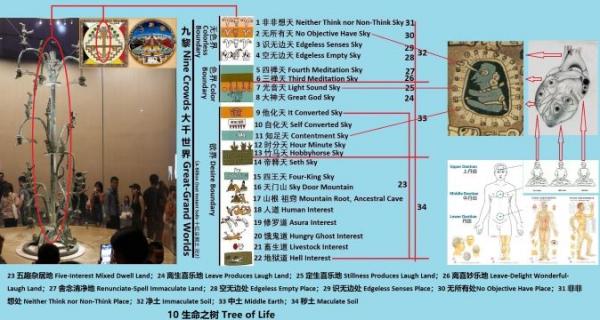
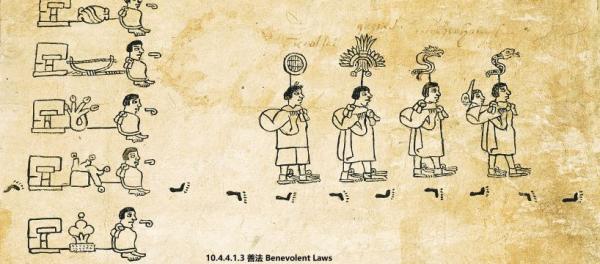
10.4.4.1 心所有法 Heart Subordinate Laws 心所有法,义为此51位法从属于心,为心所有;亦名心地法。心地,是说此法为心神之所履。什么是心神?心神泛指八识,亦作八位心王:眼识、耳识、鼻识、舌识、身识、意识、意(即前意识、即夏娃识、末娜识)、和无意识(亦作神识)。心所有法被分成了6类:遍行法,别境法,善法,根本烦恼,随烦恼,和不定法。 Heart Subordinate Laws mean that these 51 laws are heart-kings’ servants, followers, also known as heartland laws. Heartland laws mean that the 51 laws are heart-kings’ tour places. Heart-kings refer to the eight senses: eye sense, ear sense, nose sense, tongue sense, body sense, intent-sense (i.e. consciousness), intent (i.e. preconsciousness, aka. Eve-sense), and unconsciousness (aka. God-sense). All heart subordinate laws are divided into six categories: Omnipresent Laws, Circumstantial Laws, Benevolent Laws, Fundamental Annoyances, Following Annoyances, and Uncertain Laws. 10.4.4.1.1 遍行法 Omnipresent Laws 遍行是说此作意、触、受、想、思,五法普遍通行于一切心、一切地、一切时。一切心就是眼识、耳识、鼻识、舌识、身识、意识、前意识、无意识,和善心、恶心、无记心。对于道德中性的法,人少有记忆,故名无记心。一切地就是九地,参见插图10-23 至31。一切时就是过去时,现在时,和未来时。 Omnipresence means that attention, touch, acceptance, think, and mean, the 5 laws are universally pervasive in all hearts, in all lands, and in all times. All hearts are eye-sense, ear-sense, nose-sense, tongue-sense, body-sense, intent-sense, pre-consciousness, unconsciousness, and the benevolent heart, ferocious heart, memoryless heart. For morally neutral laws, people have little memory, so it is called memoryless heart. All lands are the nine heartlands from figs. 10-23 to 31. All times are the past, present, and future. (一)作意,警心为性,于所缘境引心为业。作意能够作动于意,故名作意。它能警觉策动逢缘应起的心及心所有法,引导它们趣于自己的所缘境,这就是作意的业用。 (二)触,即根识和尘的三和合,分别变异,令心和心所有法触境为性,受想思等所依为业。业是身口意习气的体用和功能。开始时,根处的境变异。依于先业,此时的触领心的作用,有与心相似的功能,能令心及心所有法接触所缘的境相。此三合和能引生领纳所缘境的受,引生采取所缘形相的想等。这就是所说的受想思等所依为业。 (三)受,领纳顺境、逆境、非顺非逆境为性,起苦、忧、舍、喜、乐为业。 (四)想,取像成境为性,施设种种名言为业。 (五)思,令心造作为性,于善境、中性境、恶环境中役心为业。思能辨别善恶美丑等境相,由是令心发起正邪等身口意业。 (1) Attention means making intent, its nature is to alert heart, its karma is to lead heart to the being aggregated environment. Attention can drive intent, so it means "making intent". It can alert and instigate hearts and heartland laws that should arise in response to objective environment, and leads them to interest their own objective environment, which is Attention’s karmic usages. (2) Touch is the threesome of root, sense, and environment. Discriminating mutations and letting heart and heartland laws to touch the environment is touch’s nature. Being depended by acceptance, think, and mean, etc. heartland laws is touch’s karma. Karma is bodily usages and functions of “bodily orally and intentionally habits”. At the beginning, environmental mutation happens at root place. Depending on the prior karma, currently touch is leading as function of heart (i.e., mind), which function is like a heart, to let heart and heartland laws to contact that mutant objective environment. The threesome can induce birth of acceptance that can receive the objective environmental mutation. The threesome also can induce the birth of think that can pick up the objective mutation phenomena, the same to mean, etc. heartland laws, and touch provides them power. This is saying that Touch’s karma is the being depended for Acceptance, Think, and Mean, etc. heartland laws. (3) Acceptance, which nature is to receive favorable, neutral, and adverse environments, which karma is to arouse bitter, gloom, renunciation, delight, and laugh. (4) Think, its nature is to fetch images to form environment; its karma is to construct and establish kinds of names and speeches. (5) Mean, its nature is to cause heart to create, its karma is to labour heart in benevolent, neutral, and ferocious environment. Mean can distinguish good, evil, beauty, and ugliness, etc., which causes heart arousing good, evil, etc. bodily, orally, and intentionally karma. 10.4.4.1.2 别境法 Circumstantial Laws 别境义为此法于个别的心境出现,有五位:欲、胜解、念、定、慧。 (一)欲,于所乐境相,希望为性,勤依为业。欲通于善恶和中性这三种伦理道德性,若对善法起欲,能发正勤,由是精进助成善事。 (二)胜解,即决议,于决定境,印持为性,不可引转为业。佛教中最典型的四胜解,亦作四无碍解(参见15.9节《善慧地》)。 (三)念,即读、咒,于曾习境,令心明记不忘为性,定依为业。 (四)定,于所观境,令心专注不散为性,智依为业。定是身心稳定,主客观相应而动的状态,亦作一心。 (五)慧,于所观境简择为性,断疑为业。慧是解知之心,是一种智;但在某些方面,两者相反,成事之智是智,了事之智是慧。佛教中常用金刚来比喻慧;在英语中,金刚义为哲学家之石。 Circumstantial Laws mean that the laws are circumstantial, appear in some environments, and there are five of them: desire, victorious interpretation, spell, stillness, and gnosis. (1) Desire, its nature is to arouse hope in enjoyable environment, its karma is the being depended for Diligence. Desire is compatible with benevolent, neutral, and ferocious moralities; if arousing desire on benevolent laws, desire can arousal correct diligence, thus diligently advance, good deeds are achieved. (2) Victorious Interpretation, on decided environment, its nature is to resiliently hold; its karma is that cannot be led to alter. The most typical Victorious Interpretations in Buddhism are also called the “Four Non-Hindrance Interpretations” (cf. section 16.9 "Benevolent Gnosis Heartland”). (3) Spell, that is, read, curse, on the once-acquired environment, its nature is to make the mind clearly remember and not forget, its karma is the being depended for Stillness. (4) Stillness, on being observed environment, its nature is to let heart focus, not be dispersed; its karma is the being depended for Intelligence. Stillness is bodily and mentally stable state, in which subjective and objective change correspondingly; also known as One Heart. (5) Gnosis, on being observed environment, its nature is selection, its karma is severing suspicion. Gnosis is the heart of interpreting know, is a kind of intelligence; but in some ways, the two are opposites, the intelligence of establishing affair is intelligence, the intelligence of terminating affair is gnosis. In Buddhism, Vajra is often used as a metaphor for gnosis; in English, Vajra means philosopher's stone. 10.4.4.1.3 善法 Benevolent Laws 善法有11位:信、惭、愧、无贪、无嗔、无痴、精进、轻安、不放逸、行舍、不害。 (一)信,于实德能,深忍乐欲,心净为性;乐善为业。胜解即是忍,是信的因;乐欲是信的果。信略有三种。(A)信实有,即于一切实事和道理,深信忍耐可为有。(B)信有德,即信四胜谛(参见第12至15章)为实,信可为有,信即是有。(C)信有能,即对于一切世间及出世间的善法,深信自己及他人,只要肯学习,都能获得那些成就。 (二)惭,依自法力,崇重贤善为性,止息恶行为业。 (三)愧,依世间力,轻拒暴恶为性,止息恶行为业。 (四)无贪,于有、乐等境,无着为性;作善为业。 (五)无嗔,于苦、逆等境,无恚恨为性,作善为业。另外,无贪、无瞋、正念和正定在佛教中被称为四法迹(如图10.4.4.1.3),义为此四是古代圣人留下的足迹。 There are 11 benevolent laws: belief, shame, sin, greedless-ness, non-irritability, non-ignorance, diligently advance, light ease, non-indulgence, acting renunciation, harmlessness. (1) Belief, it is ardently tolerant with and desire to factual fortunes and virtues, its nature is heart’s immaculateness, its karma is laughingly to do goods. Victorious Interpretation is tolerance, is reason for belief; laughingly desire is belief’s fruit. There are three kinds of belief. (A) Belief to factually haves, that is to deeply believe all actualities and principles, and to deeply believe in that tolerances can be haves. (B) Belief to Virtues, that is to believe in that Four Victorious Cruxes (cf. chapter 12 to 15) are factuality; beliefs can be haves, belief is have. (C) Faith to able, that is to all mundane and transcending mundane benevolent laws, deeply believe in that oneself and other, if willing to study, all can gain those achievements. (2) Shame, by depending on one’s own juristic power, its nature is respecting sages and valuing benevolences, its karma is to stop and terminate ferocious behaviors. (3) Sin, by depending on mundane power, its nature is to easily refuse ferocious behaviors, its karma is to stop and terminate ferocious behaviors. (4) Greedless-ness, in have, and laugh etc. environments, its nature is non-obsession, its karma is to do goods. (5) Non-irritability, in bitter and adverse etc. environments, its nature is absence of no vexation and hate, its karma is to do good. In addition, non-greed, non-irritability, correct spell and correct stillness are called the Four Juristic Traces (see fig. 10.4.4.1.3) in Buddhism, meaning that these four are the footprints left by ancient sages.
(六)无痴,于诸理事或于四谛理,明解为性,作善为业。无痴是三无漏根之一。什么是三无漏根?如说一个尘世之人衷心向佛,愿意学习和修习佛法,他或她就有了第一个无漏根,未知当知根。当他懂得了四胜谛(参见第12至15章),就获得了第二个无漏根,已知根,即无痴。当她修成了无上正等正觉,就证得了第三个无漏根,具知根。 (七)精进或勤,于善恶的修断事中,勇悍为性;满善为业。精进有五种:1被甲精进,即有势;2加行精进,即有勤;3无下精进,即有勇;4无退精进,即坚猛;5无足精进,即不舍善轭。 (八)轻安,远离粗重不舒适的感觉,调畅身心;堪任为性,转依为业。契经说此法是由定所滋养,故远离粗重,身心调畅。当禅定修习者获得轻安,他们喜欢轻安,愿意继续修习,保持轻安,不愿意说粗话、做坏事,破坏轻安的状态,所以说轻安的业是转依。 (九)不放逸,以无贪、无嗔、无痴、精进四法为体;于修养善法断除恶法的事务中,防修为性,成满一切世间及出世间善事为业。 (十)行舍,行舍时的心即是平等正直之心;无功用住为性;静住为业。无功用住,又名无功用行,又名不用处定,又名止观,是修习者达到了 “内无能取,外无所取” 的修行阶段,安住于无所得的状态,进行 “出尘”来清理身心。 (十一)不害,于诸有情,不为损恼,无嗔为性,悲愍众生为业。 (6) Non-ignorance, its nature is interpretations clearly of life theories, or interpretations clearly of Four Cruxes theories, its karma is doing goods. Non-ignorance is one of the three non-defilement roots. What are the three non-defilement roots? Such as, a mundane fool sincerely believes in Buddha and is willing to learn and practice Buddhism, he or she has the first non-defilement root, root of unknowing what should be known. By the time he understands Four Victorious Cruxes (cf. chapter 12 to 15), he has the second non--defilement root, root of having known, which is non-ignorance. Upon proving Anuttara Samyak Sambodhi, which is Sanskrit, English is Upmost Correct-Equality Correct-Perception, she is connect to the third non-defilement root, root of all knowing all seeing. (7) Diligently Advance on affairs of cultivating benevolent laws and severing ferocious laws, its nature is valiant effort, its karma is to fulfill benevolence. There are five kinds of diligently advances: 1) armored diligently advance, i.e., having potency; 2) extra effort advance, i.e., having diligence; 3) non-inferior advance, i.e., having bravery; 4) no-retreating advance, i.e., valiant; and 5) unsatiable advance, i.e., not giving up on benevolent juristic traces. (8) Light Ease is afar from heavy and rough uncomfortable feelings, body and heart are easily pleasant; its nature is trustworthy to carry duty, its karma is conversion. The Harmonious Contract Sutra says that this law is nourished by stillness, so it is afar from bodily heavy and rough. When meditation lovers gain Light Ease, they love it, are willing to study and practice more, not willing to speak dirty or behave badly to ruin Light Ease, hence Light Ease’s karma is conversion. (9) Non-Indulgence is with the four laws of greedless-ness, non-irritability, non-ignorance, and diligently advance as its body. On affairs of nurturing benevolent laws and severing ferocious laws, non-indulgence’s nature is defending cultivation; and its karma is to fulfill all mundane and transcending mundane benevolent affairs. (10) Acting Renunciation, while one is acting renunciation, its heart is even equality, straight forward; its nature is useless dwell; its karma is quietly dwell. Non-Usage Dwell, aka Functionless Migration, aka Not to Use Place Stillness, aka Samatha-vipassana, is practitioner who has achieved “inner has not human who is capable to fetch, outside there is nothing to be fetch”, is practicing “ousting dusts” to cleaning up the flesh body and mind. (11) Harmlessness, not annoyed with sentient beings, its nature is non-irritability, its karma is sorrowfully sympathizing with sentient beings. 返回 Return
|