目录 Content:12.1 欲界 Desire Boundary;12.1.1 地狱趣 Hell Interest;12.1.2 畜生趣 Livestock Interest;12.1.3 饿鬼趣 Hungry Ghost Interest;12.1.4 修罗趣 Asura Interest;12.1.5 人趣 Human Interest;12.1.6 欲天趣 Desire Sky Interest;12.2 色界 Color Boundary;12.3 无色界 Colorless Boundary;12.4 统观大千世界 General View of the Great Grand Worlds. 苦谛谈三千大千世界(如图12)的众生相是一大苦具。三千大千世界是由十亿尘刹土世界构成的。尘刹土是一瞬间的感知,亦作一小世界。土是身土义,亦作佛。佛是梵语,觉义,圣人义。古人称一千位一小千,一百万为一中千,十亿为一大千。古人在读时,先看见三组三个零,就读出了三千,又看见三千是一个数字,就读成了 三千大千世界。实际上三千大千世界和大千世界的意义相同。 Bitter Crux talks about phenomena that Three-Grand Great-Grand Worlds (see figure 12) of sentient beings are a big bitter aggregate. The Three-Grand Great-Grand Worlds are composed of 1,000,000,000 dust instant soils. The dust instant soil means the momentary body and mind, is also called a small world. The soil means perception, Buddha. Buddha is a Pali word, means Perception, sage. The ancients called a thousand a small grand, a million a medium grand, and a billion a great grand. When ancients read it, they first saw three groups of three zeros and read three grands. Then saw that three thousand are one number, so they read it as three-grand great-grand worlds. In fact, the Three-Grand Great-Grand Worlds and the Great-Grand Worlds have the same meaning. 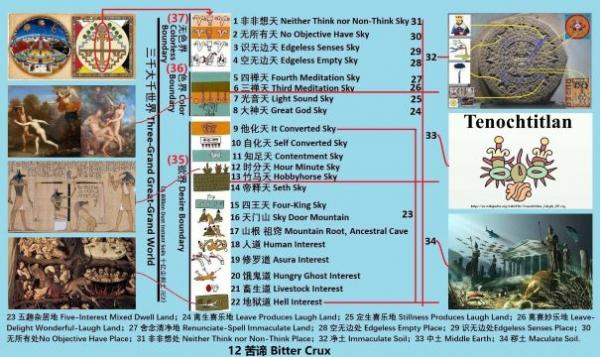
12.1 欲界 Desire Boundary依据对根本十戒的遵守与违犯,古德把众生分成了六类,称作六道,或六趣。根本十戒亦可分为十恶戒和十善戒。 十恶戒是:(一)杀生,(二)偷盗,(三)邪淫, (四)妄语,(五)绮语,(六)恶口,(七)两舌,(八)悭贪,(九)嗔恚,(十)邪见。 古人根据对十恶戒的违犯程度,把恶人分成了三类,称作三恶趣(如图12-22至20),或三恶道,分别是地狱趣、畜生趣、和恶鬼趣。 Based on the observance or violation of the Ten Fundamental Precepts, Ancient Virtues divided all sentients into six categories, called the six paths, or six interests. The Ten Fundamental Precepts can also be divided into the Ten Ferocious Precepts and Ten Benevolent Precepts. The ten ferocious precepts are: 1. killing, 2. stealing, 3. heretical sexual conduction, 4. delusional speech, 5. flowery speech, 6. ferocious speech, 7. two-tongue, 8. stingy greed, 9. hatred irritability, and 10. heretic. According to the degree of violation of the ten ferocious precepts, the ancients divided the ferocious sentient beings into three categories called the Three Ferocious Interests (see figures 12-22 to 20), or the Three Ferocious Paths, which are the hell interests, the livestock interests, and the hungry ghost interests. 不作以上十恶,就是十善: (一)不杀生,或不唯不行杀害,更能实行救护。 (二)不偷盗,或不唯不行非予取,更能实行给施。 (三)不邪淫,或不唯不行淫邪,更能实行清净。 此前三戒是身戒,是约束身体行为的戒律。什么是不杀生?如自己不亲自杀生,不帮助别人杀生,不制造运输杀人的武器装备,不建议怂恿和歌颂死亡。 Not committing the above ten ferocities are the Ten Benevolences: (1) not to kill, or not only not to kill but also to save lives. (2) not to steal, or not only not to steal but also to practice donation. (3) not to commit heretical sex, or not only not to commit heretical sex but also to practice immaculateness. The previous three precepts are body precepts that govern bodily physical behavior. What is it to refrain from killing? Such as one does not kill personally, does not help others to kill, does not manufacture or transport weapons and equipment for killing, does not recommend encourage and eulogize death. (四)不妄语,或不唯不行诳惑,更能言说真实语。 (五)不绮语,或不唯不行魅惑,更能作利益语。 (六)不恶口,或不唯不行粗犷,更能善言安慰。 (七)不两舌,或不唯不行离间,更能从中调和。此四是口戒。 (4) not to speak delusionally, or not only not to muddle and deceive, but also to speak truthfully. (5) not to use flowery speech, or not only not to seduce, but also to speak for the benefit of others. (6) not to speak of coarse ferocious language, or not only not to speak ferociously, but also to speak kindly to console. (7) not to two-tongue, not only not to sow discord, but also to conciliate and harmonize. The four are oral precepts. (八)不悭贪,或不唯不行悭吝,更能进行施舍。 (九)不嗔恚,或不唯不行愤恚,更能恒生慈念。 (十)不邪见,或不唯不行邪见,更能信行四谛因果理。此三是意戒。 (8) not to be stingy greed, or not only not to be stingily greed, but also to perform donation. (9) not to be resentfully irritated, or not only not to be angry, but also to be able to bear merciful spell. (10) not to be heretical, or not only not to be heretical, but also be able to believe and implement the causes and fruits of the Four Victorious Cruxes. The three are intentional precepts. 古人根据对此十善戒的违犯程度,把善人分成了三类,分别是修罗趣(如图19),人趣(如图18),和天趣(如图15至1)。 六趣亦作六道,是说此类人正行进在去往地狱、恶鬼等处的道路上。本章后文对此六趣做进一步的分析和辨别。 According to the degree of violation of these Ten Good Precepts, Ancient Virtues divided the good people into three categories, namely, Asura Interest (see figure 19), Human Interest (see figure 18), and Sky Interest (see figures 15 to 1). Six Interests are also known as Six Paths. Path means that such people are traveling on the road to hell, hungry ghost, and so on places. These six interests are further analyzed and identified below in this chapter. 古德又根据众生的种性把众生分成了三界。界是因义,种子义,是生命之树的四大种之一(参见10.2节)。 欲界,如插图35所示,义为此界众生,都是从欲望的种子而有,都有饮食、睡眠、性交等色声香味触五欲。 那还有没有欲望的人吗?插图36是色界,那种境界的人没有男女差别,也没有饮食的欲望,和睡眠的需求。插图37是无色界,是纯粹的思想意识状态,没有身体的感觉,自然就没有饮食、睡眠、和性生活的需求。 Ancient sages divided all sentients into three boundaries according to their seed nature. The boundary means cause, seed, is one of the four big seeds (see section 10.2) of the Tree of Life. Desire Boundary, as shown in Illustrations 35, means that all beings in this boundary are born from the seeds of desires, have the five desires of color, sound, smell, taste, and touch, such as eating, sleeping, and sexual intercourse. Are there any who have no desires? Fig. 36 is Color Boundary, where there is no difference between men and women, and there are no desires for food, drink, or sleep. Fig. 37 is Colorless Boundary, which are pure conscious states, with no bodily feelings, so naturally there is no need at all for food, drink, sleep, or sexual intercourse. 返回卢岩回忆录的目录 Return to Catalog of Luyan Memoirs
|