目录 Catalog:10.4.1 色蕴 Color Node;10.4.2 受蕴 Acceptance Node;10.4.3 想蕴 Think Node;10.4.4 行蕴 Migration Node;10.4.5 识蕴 Sense Node 生命树的五蕴是色蕴,受蕴,想蕴,行蕴,和识蕴,是五个业习气的积聚体。什么是业?古代身口意行为习惯的集聚统称作业。业就是三业:身业、口业、意业。身业是身体行为习惯的积聚,此身即是。口业是语言行为习气的积聚,此口所讲的就是。意业是思维习气的积聚,此心所想的就是。业对于生命之树来说,就好像是落叶乔木的树干(如插图10-1至22)。冬天时叶子落光了,树失去了生命的迹象。春天时,环境适合了,树干就发枝散叶,树又变得生机盎然。生命树的生长与繁荣表现在业习气的形成和枯萎。 Life Tree’s five nodes are color node, acceptance node, think node, migration node, and sense node, the five accumulations of karmic habits. What is karma? In ancient times the aggregation of body, mouth, and intent behavioral habits was collectively called karma. Karma is the three karmas: body karma, oral karma, and intent karma. Body karma is the accumulation of bodily behavioral habits, which this flesh body is. Oral karma is the accumulation of habits of oral behaviors, which is what the mouth speaks. Intentional karma is the accumulation of habits of thoughts, and what the heart (i.e., mind) thinks is what it is. Karma is to life tree like the trunk of a deciduous tree (see Figure 10-1 to 22). In winter, the leaves fall off and like the tree loses its life. In spring, when conditions are right, the trunk sprouts branches and leaves, and the deciduous tree becomes full of life again. The growth and prosperity of life tree is reflected in the formation and withering of karmic habits. 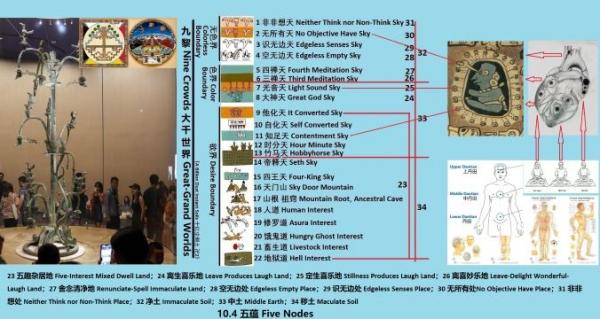
五蕴是五种业的积聚体,是从色受想行和识,这五个方面来讲解业的。此五蕴具有集性、取性、和有性,所以亦作五取蕴。五蕴能统摄五位百法中的前94位有为法,不摄无为法(参见10.6.4 离系果),因为无为法与 “集,有,和取” 的性质相违,与 “舍,等,和空” 的性质相应。 The five nodes are the accumulation of the five types of karma, which are explained in terms of the five aspects of karma, namely, color, acceptance, think, migration, and sense. The five nodes have the nature of aggregate, fetch, and have, so they are also known as Five Fetch Nodes. The five nodes can assimilate the first 94 of the “5 positions of 100 laws”, but not the none-as laws (see 10.6.4 Off-is Fruit), because none-as laws contradict the nature of “aggregate, have, and fetch”, and are corresponding to the nature of “renunciation, equality, and empty”. 返回 Return
|