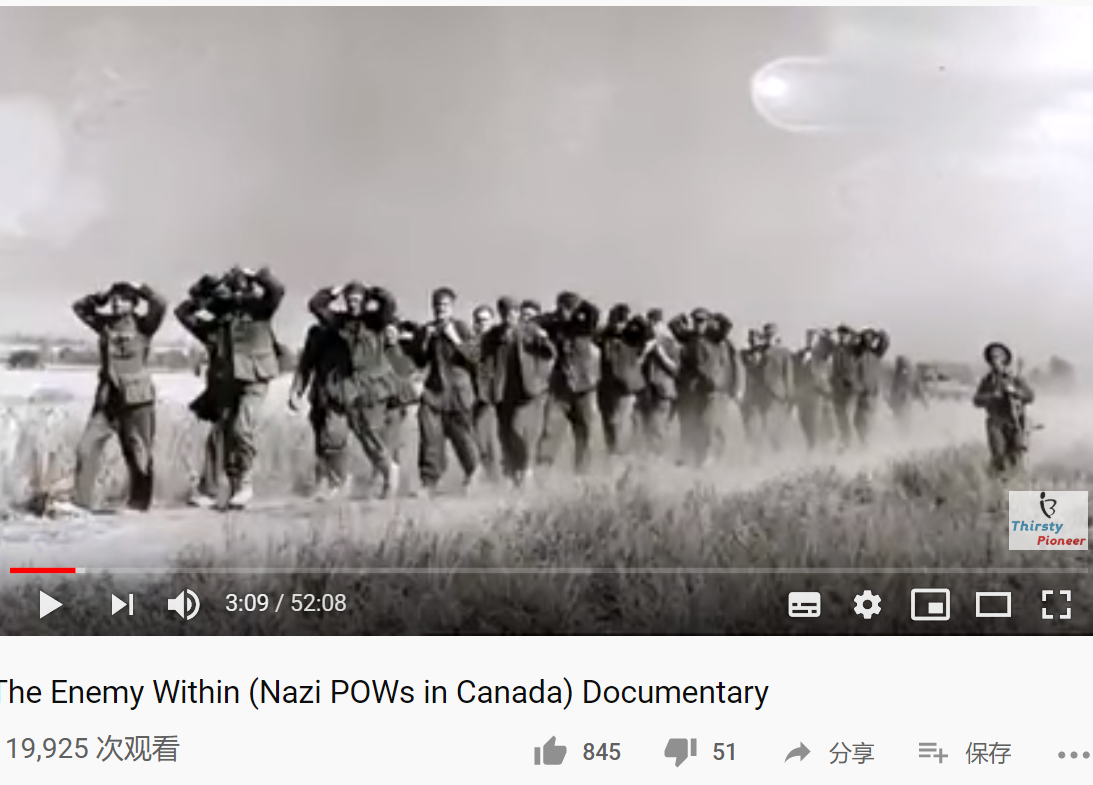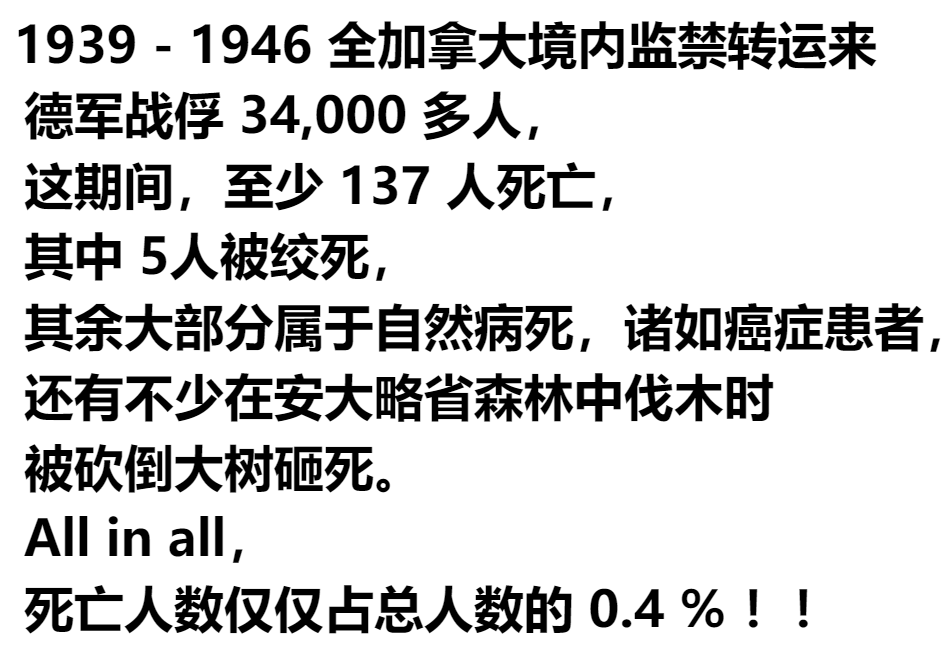
艾克同志( 盟军总司令,1890-1969 )有奇招儿:
1945年4月 —— 9月 将500多百万缴械的德军战俘 不叫 POW 美军另称为 Disarmed Enemy Forces 囚禁在德国境内莱茵河沿岸的19个露天大营 故意活活 活活 饿死 渴死 晒死 病死 其中的 100 万 ! 并“唤来”其余 76,000,000 德国民众全体 围 观 看 ! 
加拿大作家詹姆士·巴克切:
百万德国战俘被美军故意虐待致死
2009年06月15日 09:05 凤凰网历史综合
编者按:这篇文章中加拿大作家詹姆士·巴克切描述了二战结束后,美军在道德 优越感之下,对500多万德国战俘采取的种种虐待行为。就数字而言,100万德军 战俘因而死去,并无明证,编者同样存疑。但是,从我们从其他的记述和著作中 看到的事实而言,美军在二战中普遍存在杀戮俘虏和虐待俘虏的行为是毋庸置疑 的,区别只在于多和少的问题。当然,这里面有种种原因,但是自艾森豪威尔而 起,采取如此的手段对待同类,尤其是未必曾经参与过种种暴行的普通军人(绝大 多数战俘是德国国防军,与党卫军不同,他们未必直接参与了纳粹的暴行),无疑 同样是人类文明的悲哀。 1945年,在反法西斯同盟国打击下,德国和日本先后于5月和8月宣布向同盟国 投降。由于艾森豪威尔实行了一套美国“战俘新思维”,大量德军战俘死于人为 地饥饿、疾病和无医无药。虽然对于受虐致死的德军战俘数量,几十年来都有 不同的说法,但有一点勿庸置疑——很多战俘都遭到非人待遇。 詹姆士·巴克切:一百万德国战俘被虐待致死 加拿大作家詹姆士·巴克切的1986年去法国访问二战时法国抵抗运动英雄 RAOUL LAPORTERIE。 在查找了众多的资料和访问了众多的当时人后,他意外发现了 一个惊人的,却很少为人所知的秘密:第二次世界大战结束时,在美军的德国 战俘集中营里,有一百万已经投降的德国战俘死于人为地饥饿、疾病和无医 无药。他用了三年时间查访了当时盟国(美,英,法,苏等)的政府档案,与 当事人谈话。记录了以下事实。 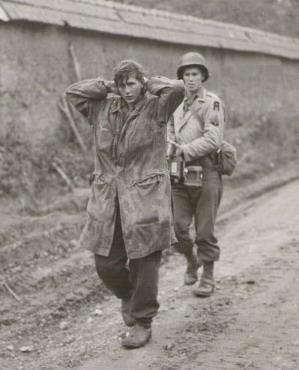
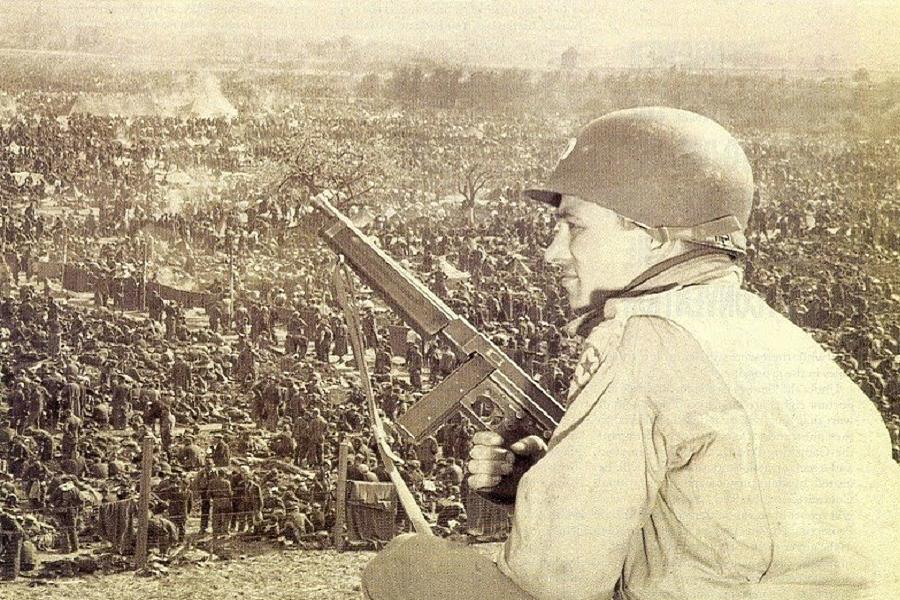
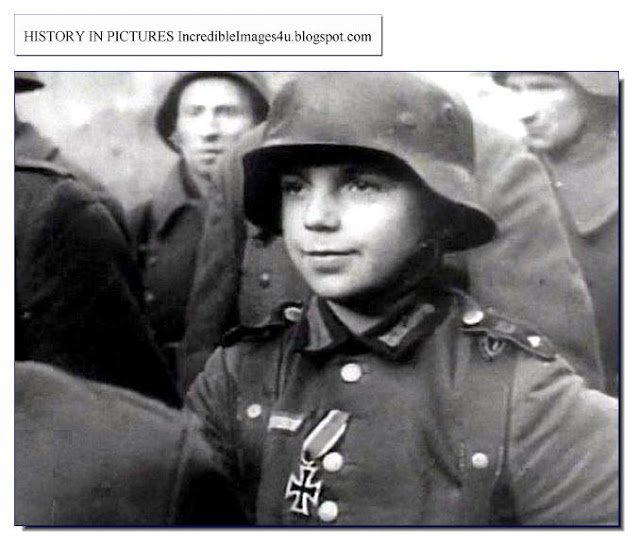
一位美国士兵押解一位只有16岁的德军狙击手
全民深入开展学习二战后美军惩治德军脑残战俘之高超艺术:
1. 对于新来的战俘, 2 - 4 天之内,不提供任何食物、饮水 ! 刚刚关进号子里的新犯,都要饱享一顿 杀威棒;而送进莱茵 大营的德军新战俘,则要首先饱受 杀威饿。4天饥饿下来, 放你跑,你都跑不了几步远;
2. 然后,仅提供美国产的鸡蛋粉、奶粉、饼干、巧克力、咖啡, 在饮水供应受到严格控制的情况下,这样的食品迅速地吸干了 战俘的体内水分,让你拉不出粑粑, 便秘、便秘、再便秘, 肛裂、肛裂、再肛裂 ! 活活憋死你个小丫挺养的 !!!
3. 看守大营的美军严禁战俘和外界发生任何联系,附近的居民 如果向战俘提供食品,发现后立遭 不带任何事先警告地 当 场 击 毙 !!
4. 瑞士红十字会曾尝试给“莱茵大营”提供食品、医药和生活 物资,这些物品在到达之后,又被欧洲人民解放军总司令 艾森豪威尔同志下令 运回你妈的 瑞士;
5. ......
美丽恬静的莱茵河沿岸田园风光 By Courtesy of 自由鸟博主


http://blog.creaders.net/u/2612/201908/355853.html
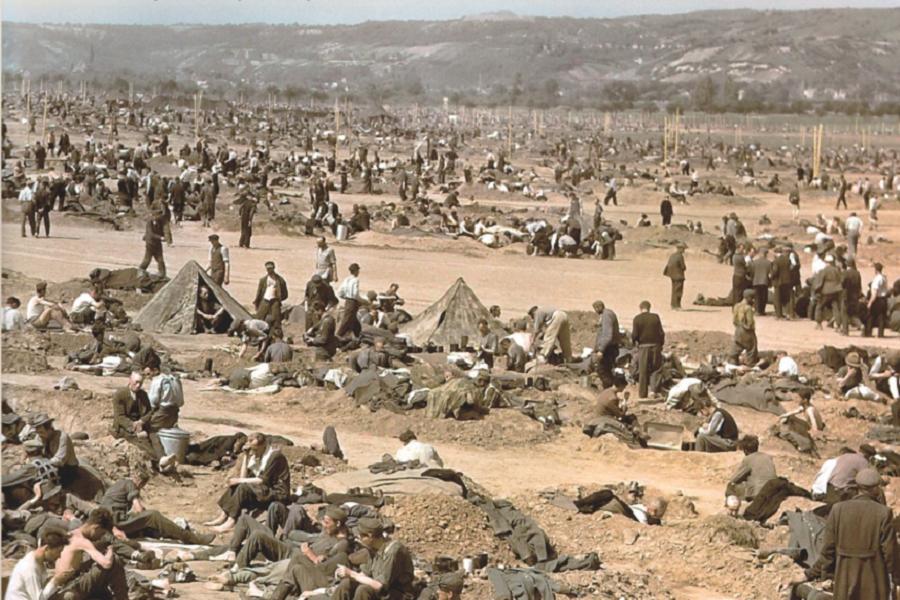
至1945年五月,德国向美,英,法三国投降人数的分布大致是:蒙哥马利的英军 受降50万德国俘虏,英国-加拿大联军受降二百万人,这些俘虏大多数在德国 投降后放回了家,其中有30万人被送往法国作为“重建法国”的劳动大军。美国 在欧洲和北非受降五百二十五万人。美国处理德国战俘的作法不同于英、法、 加等国。 当时驻欧洲盟军最高统帅部司令是艾森豪威尔将军,不愿与英军合作处理德国 战俘。因为英国人按照日内瓦公约处理战俘,即:战俘在吃饭,住宿等基本生活 条件方面不能亚于俘虏他们的军队的士兵待遇,有与家人通信的自由,红十字会 定期访问战俘营地。 艾森豪威尔决定自搞一套。在1945年4月,他提出一项建议,建议将德国战俘 分成两种等级:1、投降的战俘。2、缴了械的敌对武装力量。第一类人按日内瓦 战俘公约处理,第二类人,按照艾森豪威尔的指示,仍旧按敌对武装力量处理, 即,即使他们投降了,也可以杀死他们。实际上到了1945年8月,所有的德国 战俘都归入了第二类,即缴了械的敌对武装力量。英国拒绝了这一建议,美国 就在他们自己的战俘营开始执行艾森豪威尔的指示。 从1945年五月国际红十字会的材料表明,所俘获的德国战俘的健康状况,除 受伤者外,基本上是健康的。但是在美军的战俘营里,情况迅速地恶化。 詹姆士·巴克切在《其他的损失》一书中宣称,在二战结束前后,在所谓 “解放”欧洲大陆的美国军队的战俘营里,有接近一百万德国武装部队战俘 由于饥饿和美军的故意虐待而死亡。 这个数字在西方历史学界引起巨大震动,对巴克切的数字提出肯定或者质疑的 论文大量出笼。但无论这些论文的作者同意或者否定巴切克的具体数据与否, 他们最终也不得不承认如下事实:“美国人曾经像纳粹分子那样残忍地对待 德国战俘”。 后来一个美军战俘营卫兵在他的《艾森豪威尔的死亡战俘营》一文中,回忆了 在莱茵河附近的一座关押德军的战俘营中的见闻:五万多名德国俘虏被带刺的 铁丝网圈在无遮无掩的野地上,他们被迫在潮湿多雨而且寒冷的天气里,在 泥地上睡觉。吃的饱饱的美国士兵眼看着德国人吃着用野草做成的汤,同时在 没有厕所的情况下,像畜牲一样在自己的粪便中睡觉,然后开始慢慢地悲惨 死去。当有些美国士兵将食物扔过铁丝网后,美国军官们甚至威胁要枪毙这些 “不守纪律”的战友和部下。而当德国妇女们向铁丝网那边的德军战俘们投掷 食物时,美国军官则玩起了真格的:一直把枪里的子弹全部打完才肯罢手,他们 把这叫做“打靶训练”。纳粹德军在东部战线对付苏联战俘和敢于向他们提供 食物的苏联平民的手段,美国军人无师自通的全学会了。 这种情况在美国人的众多德军战俘营非但不罕见,而且是及其平常普遍。众多 见证人描绘的不同的美军的战俘营,几乎全都是一个样子的: 德国们战俘们被 赶到露天下用铁丝网围起来的黄土坡上,既没有给他们营建遮蔽风雨和太阳的 房屋和帐篷,也没有提供有树荫的场所,甚至连一床毯子都没有。德军战俘在 多数情况下,只能自己用手在地上刨洞,然后象地老鼠一般蜷在里面躲避风雨 和烈日的侵袭。而那些身体孱弱,无力刨洞的人,就只能在露天里任凭风吹 雨打,为了抵抗彻骨的寒冷,惟一的解决之道就是一堆人挤在一齐以彼此的 体温取暖。但那些有洞住的人有时也不值得羡慕,碰上大雨,土洞的泥土松动 而塌方,他们就被活埋在里面。 这还不是主要问题。主要问题是战俘们得不到食物和饮水。当时的情况并不是 食物缺乏,由当时盟军和国际红十字会披露的材料,美军在欧洲的食品总部有 大量食品囤积,国际红十字会有十万吨食品储存在瑞士,但是饥饿却在战俘营 里蔓延。 一位当时只有18岁的德国战俘,战后成为历史学家的 Charles Von Luttichau 回忆道:“我们住在周围围着铁丝网的,非常拥挤的露天土坡上,食物异常缺乏, 一天吃一顿,数量只有美国士兵的十分之一,很多人迅速瘦得只剩下皮包骨头。 我向一位美国军官说,他们这样作违背了日内瓦公约,他回答我: ‘日内瓦公约与你们无关,你们没有任何权利。’” 有两位曾经在美军驻欧洲医疗队工作的医生James Mason和 Charles Beasley 曾视察过位于 Rhine的战俘营,在1950年他们写道:“大约十万名衣衫褴褛的人 挤在齐膝盖深的泥浆里,肮脏,憔悴,瘦弱,目光无神……”疾病很快在德国 战俘营里蔓延,主要是痢疾、伤寒、坏疽和肺炎。 美国的军医还有记载“极度营养不良”和“衰竭”而死亡的。由于营地里没有 厕所,患痢疾和伤寒的病人,能动的还走去铁丝网内大便,走不动的就只能 就地解决,躺在泥地上的病人常常是全身糊满自己的大便。这无疑加速了疾病 的传播。国际红十字会要求视察战俘营的要求屡次被美军拒绝,战俘在无医 无药的情况下,生命“自动地消失”了。这是造成战俘大量死亡的主要原因。 另一位战俘Wolfang Iff回忆道:“在我所在的战俘营里有一万人,每天有三十 至四十具尸体被抬出营地。我曾经作抬尸体的工作,我们把尸体放在手推车上 运出营门外,脱去他们的衣服,一层层地装进铁皮车厢码放起来。” 美国人的生财之道 精明的美国人很快就从这些德国战俘身上发现了生财之道,他们开始用救命的 食物和对某些德国战俘来说比食物还宝贵的香烟来搜刮战俘们身上他们认为 值钱的东西,或者说“纪念品”。 在战俘营外也是如此,德国男人一面向美国占领军抱怨俄国人是怎样打死了 他的男孩,强奸了德国妇女,一面把自己的妻子和女儿献上以换取在恶劣条件 下急需的物资。 一位德国妇女曾在日记中愤怒地指责俄国士兵在强奸了她之后只留下了一个 烟盒(按一个苏联老兵的说法,一般只给一个肉罐头)。在美国人身上,他们 能得到的更多。 几十年过去了,大量的战俘最终消失了,他们的相关档案材料也被销毁。在 这种情况下,很难判断詹姆士·巴克切所谓“百万战俘”死亡之说是否准确, 但大量德国俘虏由于美国“战俘新思维”而死去的事实则是确凿无疑。
我的元首私人律师 Hans Michael Frank ( 23 May 1900 – 16 October 1946 )
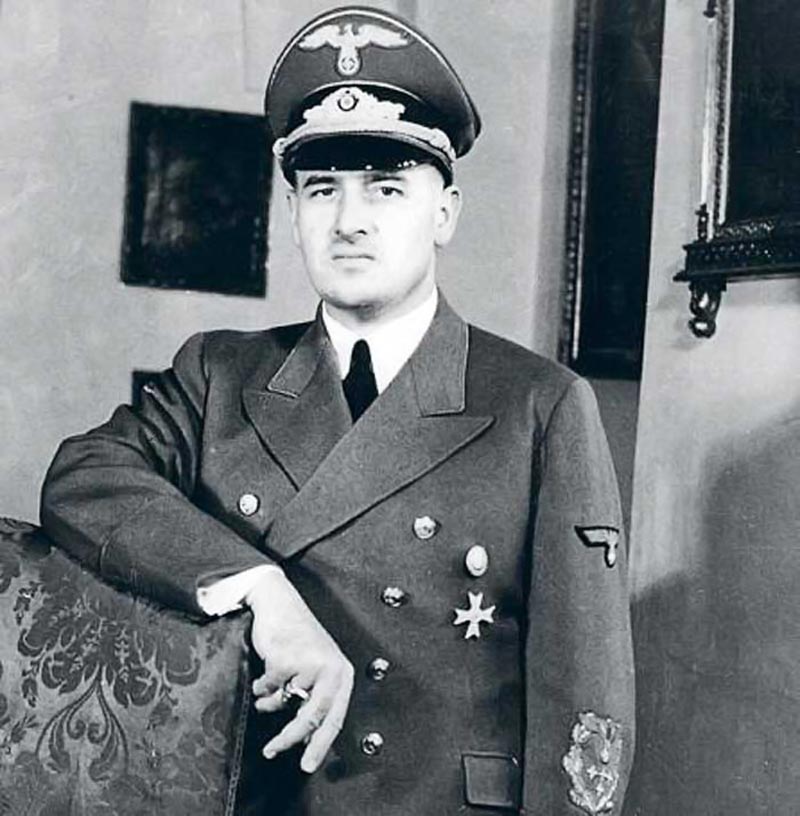
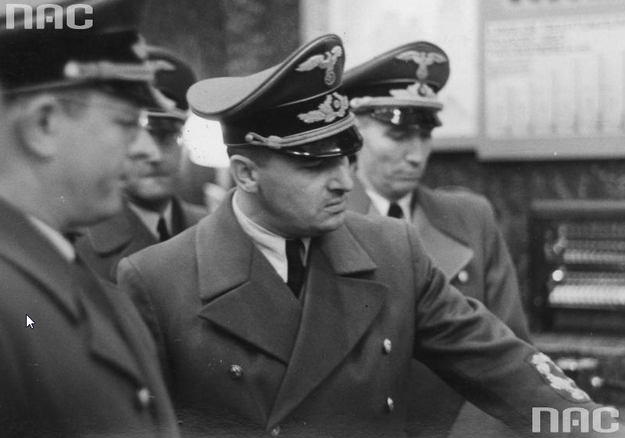
Gubernator Hans Frank (drugi z lewej) w towarzystwie niemieckich funkcjonariuszy zwiedza zakład przemysłowy w Generalnej Guberni 
Unusual Hitler photo from 1933, with Hans Frank 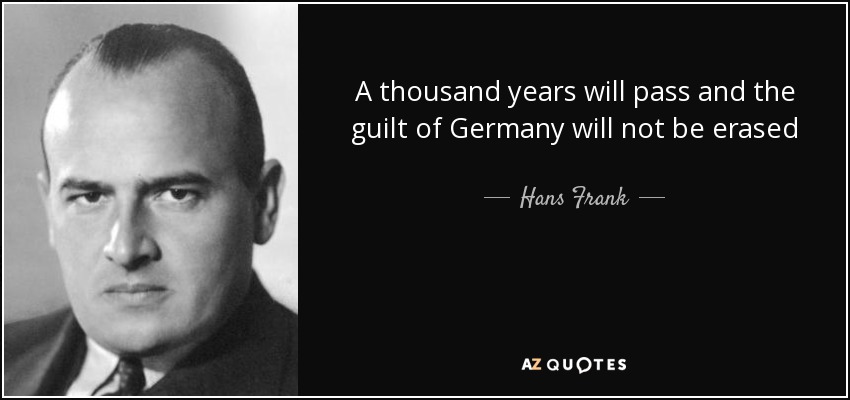
A thousand years will pass and the guilt of Germany will not be erased. 千年易过,德国的罪孽难消。 —— 我的元首私人律师 Hans Michael Frank ( 23 May 1900 – 16 October 1946 )
A thousand years will pass and the guilt of Germany will not be erased. 千年易过,德国的罪孽难消。 —— 我的元首私人律师 Hans Michael Frank ( 23 May 1900 – 16 October 1946 )
Ike and the Disappearing Atrocities 艾克与消失不见停战后虐俘暴行

By STEPHEN E. AMBROSE ( January 10, 1936 – October 13, 2002,
《 兄弟连 》一书作者,年仅 66 岁)
The New York Times Archives 1991
时间: 1945年4月 —— 1945年9月 地点: 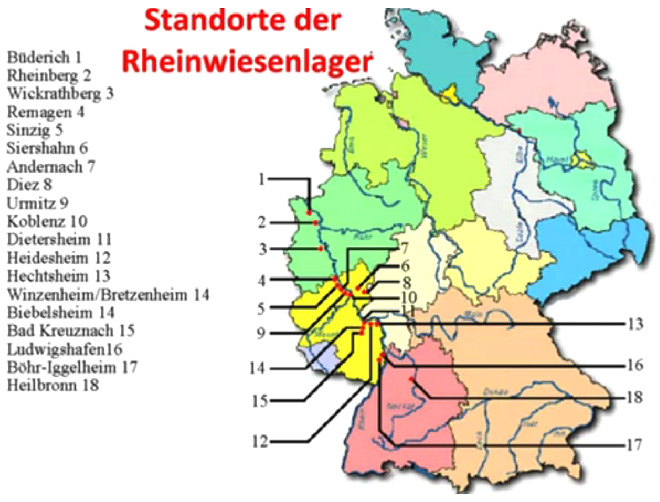
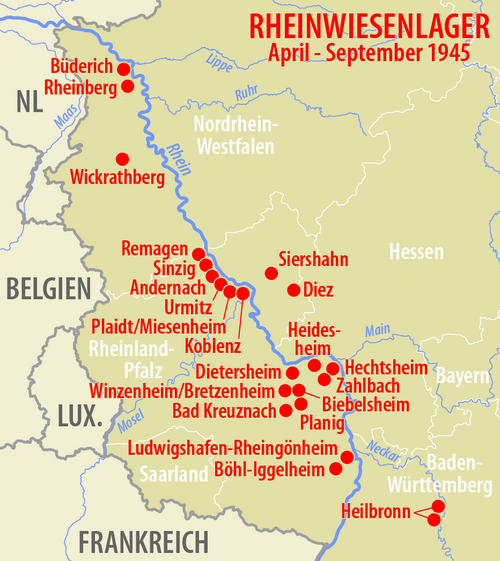
名称:The Rheinwiesenlager ( Rhine meadow camps ) 莱茵河露天战俘大营 关押人数: 五百余万 !! https://baike.baidu.com/item/%E8%8E%B1%E8%8C%B5%E5%A4%A7%E8%90%A5 德军战俘死亡人数: 弥天大谎的美方: 3,000 - 10,000; 本书作者:“受害者的数量无疑超过80万, 几乎可以肯定超过90万,可能超过100万”
Seldom has the publication of a historical monograph on a subject ordinarily of interest only to a few specialists -- the treatment of prisoners of war -- received so much attention or excited so much anger as James Bacque's "Other Losses." Published in 1989 in Canada, it was the subject of a cover story in the popular Canadian magazine Saturday Night, of a British Broadcasting Corporation documentary, of two German television documentaries and of a coming Canadian Broadcasting Corporation documentary. (The Canadian book, I should say immediately, carries a jacket blurb from me that was taken out of context and used without permission.) It has been discussed on American television, in Time magazine and in many other news media outlets. In its German edition, it was a runaway best seller. The British edition elicited major reviews in The Times Literary Supplement and elsewhere. Prima Publishing of California intends to publish the book in May, which could fan the flames in the United States. The reason for the notoriety is the author's conclusion that Gen. Dwight D. Eisenhower, as head of the American occupation of Germany in 1945, deliberately starved to death German prisoners of war in staggering numbers. Mr. Bacque charges that "the victims undoubtedly number over 800,000, almost certainly over 900,000 and quite likely over a million. Their deaths were knowingly caused by army officers who had sufficient resources to keep the prisoners alive." 谷歌同学译文:
很少有关于通常只对少数专家感兴趣的主题的历史专着的出版 - 对战 俘的待遇 - 如詹姆斯·巴克的“其他损失”那样受到如此多的关注或 兴奋。 1989年在加拿大出版,它是加拿大流行杂志“星期六之夜”, 英国广播公司纪录片,两部德国电视纪录片和即将举行的加拿大广播 公司纪录片的封面故事。 (我应该立即说,这本加拿大书籍带有一件 夹克,从我的背景中取出,未经允许而使用。)美国电视台,时代杂 志和许多其他新闻媒体已经讨论过这个问题。在德国版本中,它是一 款失控的畅销书。英国版引起了“泰晤士报文学增刊”和其他地方的 重要评论。加利福尼亚州的普瑞玛出版公司打算在5月份出版这本书, 这可能会在美国掀起火花。
臭名昭着的原因是作者的结论是,德怀特·D·艾森豪威尔将军作为 美国在1945年占领德国的领导人,故意以惊人的数字饿死德国战俘。 巴克先生指出,“受害者的数量无疑超过80万,几乎可以肯定超过 90万,可能超过100万,他们的死亡故意造成了有足够资源让囚犯活 着的军官。”
根据巴克先生的说法,艾森豪威尔的方法很简单:他将囚犯的名称 从“日内瓦公约”要求的“战俘”(POW)改为与美国地理标志相同 的口粮给予“解除敌人部队“(DEF),这让他可以减少他们的饥饿 度。巴克先生说,D.E.F.也被剥夺了医疗用品和住房。他们死了数十 万。他们的死亡被军队记录所掩盖,将其列为“其他损失”,显示每 周手头囚犯总数,出院人数等等。
因此,巴克克先生因发现这起令人发指的罪行而感到愤怒,他在一次 电话采访中引用了他的话:“美国人应该取下艾森豪威尔的每一尊雕 像,以及他的每一张照片,除了说,'这是一个做了非常邪恶的事情, 我们感到羞愧的人。' “问题立即出现。如果有一百万人死亡,尸体 在哪里?艾森豪威尔是否拥有如此巨大的权力,以至于他可以大规模 地挨饿并保守秘密?这些难民营,特别是莱茵河沿岸的过境营,是艾 森豪威尔政策的结果,还是1945年春季和夏季欧洲盛行的混乱局面的 结果,无疑是苦难吗?
先前没有历史研究或写作经验的加拿大小说家巴克先生在他的介绍中 说:“毫无疑问,许多学者都会在本书中找到缺点,我只欢迎他们的 批评和进一步的研究,这可能有助于经过漫长的谎言之后,让我们重 拾真相。“去年12月,新奥尔良大学的艾森豪威尔中心邀请了这一时 期的一些顶尖专家对这些指控进行审查。包括我在内的与会者计划以 书面形式发表论文。
我们的第一个结论是,巴克先生已经做出了重大的历史发现。 1945 年春季和夏季,德国囚犯普遍遭到虐待。由于粮食配给不足和医疗保 健不足,男子遭到殴打,被拒绝供水,被迫在没有住所的露营地生活。 他们的邮件被扣留。在某些情况下,囚犯为了对付他们的饥饿,制造 了一种水和草的“汤”。男人不必要地和不可原谅地死去了。必须面 对这一点,而且巴克先生的信誉是他迫使我们这样做。
我们的第二个结论是,当学者进行必要的研究时,他们会发现巴克先 生的工作更糟糕,而不是毫无价值。这是严重的 - 不可否认,它的最 基本的方面是有缺陷的。 Bacque先生滥用文件;他误读了文件;他忽 略了相反的证据;他的统计方法是绝望的妥协;他没有试图看到他在与 更广泛情况的关系中收集的证据;他没有试图去看比较的背景;他把话 放在主要来源的口中;他忽视了决定性地处理他的中央指责的现成和 绝对重要的来源;而且,由于这些和其他缺点,他得出结论并提出明显 荒谬的指控。
然而,除了对Bacque先生的调查结果的评估之外,这次会议 - 连同 这本书本身 - 引发了一个更大的问题:那些不是专家的读者如何判 断一项新的,令人吃惊,甚至是令人发指的索赔的工作?如果没有知 识或时间进行调查,他们如何知道作者是否在“长夜谎言之后”终于 披露了真相,或者只是误导了一个不知情的公众?
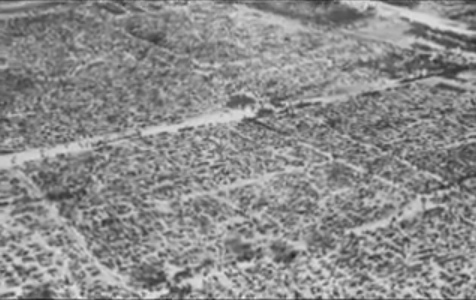
1945年鸟瞰莱茵河Disarmed Enemy Forces露天大营




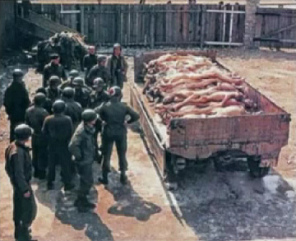
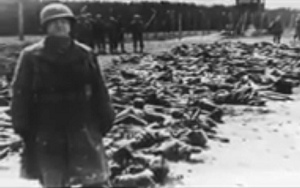

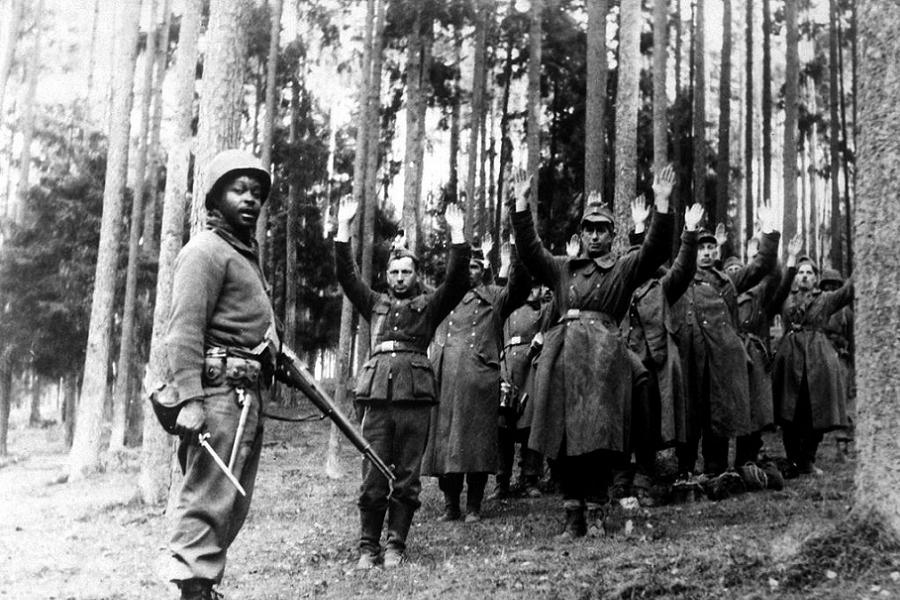
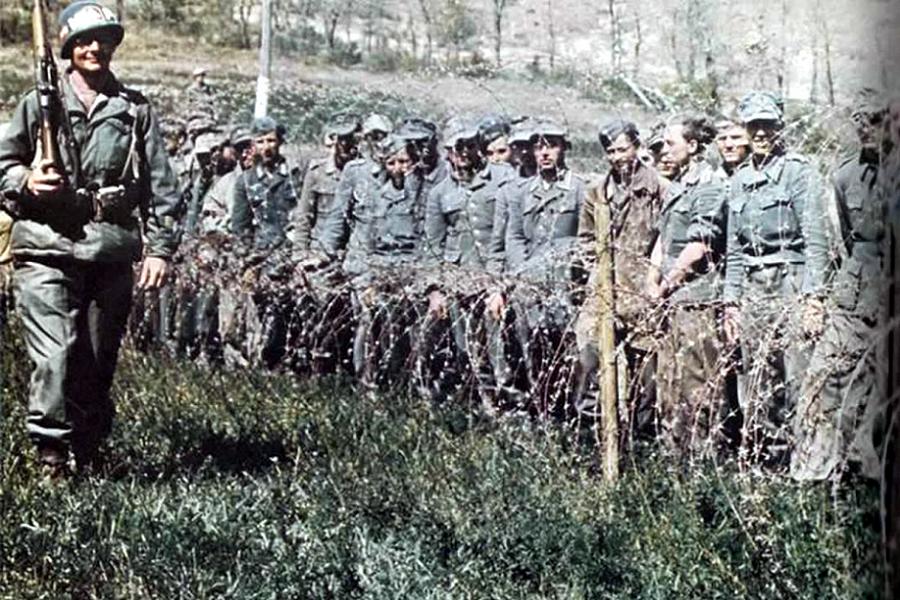


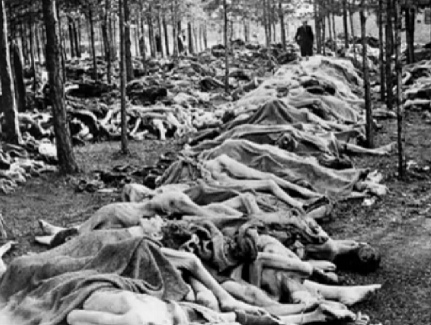
Piles of dead bodies of carectic humans, according to the "Americans" these are dead Jews, but according to new research these are dead German soldiers 1945 至于巴克先生的说法,最直接的问题是艾森豪威尔的动机:艾克为什 么要做这样的事情?巴克先生回答说艾森豪威尔恨德国人。现在绝对 是真的,在1945年春天,艾森豪威尔对德国人的愤怒非常大。他从未 试图掩饰这些感受:1948年出版的“欧洲十字军东征”中写道:“在 我个人的反应中,随着冲突月份的磨合,我对德国人的态度越来越强 烈。”他表示,他曾向死者的妻子和母亲签署了数万封吊letters信, 他写道:“我知道没有更有效的手段发展对侵略战争负责者的不朽仇 恨,而不是承担义务试图向其遗失的家属表示同情。“集中营的暴露 增加了他的情绪。
艾森豪威尔是热衷于脱瘾的支持者,但并不是因为他恨德国人或相信 集体有罪。相反,他相信有德国人致力于民主,而占领的任务就是找 到他们并将他们带到前台。在1945年法兰克福的一次演讲中,他宣 称:“这个职业的成败将由50年后的德国人的性格来判断,当他们开 始实行自己的民主时,让德国人有机会这样做,及时。“这听起来并 不像一个同时因饥饿的一百万年轻德国人而导致死亡的人。
巴克先生完全误解了艾森豪威尔在占领中的立场和活动。他对艾森豪 威尔的每一项决策都承担全部责任,从不承认他有上级从他接受政策 指令和命令 - 特别是陆军参谋长;欧洲咨询委员会以英国,苏联和美 国政府的名义和权力行事;参谋长联席会议;参谋长联席会议,即美国 联合参谋长和英国参谋长联席会议;和英美政府首脑。新奥尔良外交 背景会议报告由渥太华大学的布赖恩维拉指出,艾森豪威尔上级的政 策是要让德国人认识到他们失败的事实,他们已经把自己带到了自己 身上,用其他方式来“对待”粗糙。“反向化是该政策的一个方面。 另一个原因是,与德国平民相比,德国囚犯得不到比解放国平民或流 离失所者(D.P.)更高的水平。
对于巴克先生的指控来说,核心主张是他认为1945年欧洲没有粮食 短缺。他指出德国的仓库里充满了食物。他说红十字会有食物。他 最令人印象深刻的证据之一是,一辆来自日内瓦的火车上装载着红 十字会送给德国囚犯的食品包被迫退去。
这令人震惊 - 食物可用,男人饿了,美国军官下令列车返回日内瓦。 但是有一个原因:盟国政府已经决定,红十字会的食品包将用于养活 流离失所者,其中德国有200多万流离失所者,艾森豪威尔对这一政 策的命令是明确的。所以D.P.拿到了那些食品包裹。在一个饥饿的世 界里,必须要确定粮食的优先次序是无法描述的痛苦,但是必须完成, 谁能够与这个决定争论呢?
阿拉巴马大学伯明翰分校的James Tent在他关于德国食物形势的会议 报告中说,毫无疑问,这是严重的短缺。不过,正如泰恩特先生指出 的那样,仓库里储存的食物没有分发给靠近饥饿饮食的囚犯。再次, 这是令人震惊的,直到原因被指出。盟国政府在1945年至1846年的冬 天害怕饥荒,他们正在储存粮食。即使有储备,他们也几乎没有过冬, 而且在欧洲粮食短缺被克服的三年之前。
巴克先生的神话是艾森豪威尔的噩梦。没有食物短缺?艾森豪威尔在 1945年2月写下了参谋长乔治马歇尔将军的信件:“我非常关心粮食 状况......我们现在在欧洲大陆没有储备供公民使用。”
1945年4月25日,艾森豪威尔给联合参谋部写信说:“除非立即采取 措施尽可能充分发展粮食资源,以便为德国人提供最低限度的需求, 普遍的混乱,饥饿和在即将到来的冬季,疾病是不可避免的。”
这些 - 以及许多类似的信息 - 在投降之前就已经结束了。 5月的第 一周后,艾森豪威尔所有关于他被要求在被占领的德国供养多少人的 计算变得非常不足。由于两个原因,他严重低估了。首先,德国士兵 向西方盟军投降的数量远远超过了预期的数量(超过500万,而不是 预期的300万),因为德国士兵越过易北河冲上了俄国人。对于德国 平民也是如此 - 从东到西有数百万人逃离,共计约1300万人,并成 为艾森豪威尔的责任。其次,解放奴隶的数量远超预期,超过200万。 总之,艾森豪威尔甚至在得知德国有超过1700万人在他们的食物之外 喂食之前就面临着短缺。
没有食物短缺?这是1945年7月德国军事总督的报告:“西德的整个 食品形势可能是最严重的占领问题,西部地区的平均食物消费量现在 比普遍接受的生存水平低大约三分之一水平。” 9月份的报告宣称, “来自本土的食物不能满足目前普通消费者的日常口粮水平,即每天 1,550卡路里。”
巴克先生说,囚犯每天接受1,550卡路里的热量,他认为这样的口粮 意味着饥饿缓慢。他显然从来没有在德国或在解放国家看过平民得到 什么。在1945年的巴黎,平民的卡路里水平为1550。在配给持续的英 国,这只是略高一点。在俄罗斯,配给量还在持续下降。如上所述, 德国平民的官方配给量为1550,但通常没有达到。在1945年夏天的 维也纳,官方配给量有时会下降到500。
有这样的常识。任何在1945年夏天在欧洲的人都会大吃一惊,听说 没有粮食短缺。
根据巴克先生的说法,艾森豪威尔私下秘密地以险恶的意图,将投降 的德国士兵从战俘身份转变为解除武装的敌军。事实上,指定的改变 是一个政策问题。这个决定不是由艾森豪威尔做出,而是由他的上司, 特别是欧洲咨询委员会做出的。也没有人企图保密。所有涉及英国, 俄罗斯和美国政府的权力的人都是这样做的,他们对地位变化的原因 非常直截了当。
根据巴克先生的说法,艾森豪威尔亲自秘密地,以险恶的意图,将投 降的德国士兵从战俘身份转变为解除武装的敌军。事实上,指定的改 变是一个政策问题。这个决定不是由艾森豪威尔做出,而是由他的上 司,特别是欧洲咨询委员会做出的。也没有人企图保密。所有涉及英 国,俄罗斯和美国政府的权力的人都是这样做的,他们对地位变化的 原因非常直截了当。
发生的事情很简单:盟军无法按照“日内瓦公约”的要求,为数百万 与他们自己的部队一起吃饭的德国囚犯提供食物。即使有了食物,盟 国也不会为比德国平民更高的水平喂养德国囚犯,更不用说西欧解放 国的平民了,更不用说流离失所者了。人。但是美国和其他盟国已经 签署了具有条约效力的日内瓦公约。他们不希望违反它,所以他们使 用了新的名称“解除武装的敌军”。向现场指挥官发出的命令很简单: 不要给德意志联邦共和国比德国平民更高的食物。 
An American soldier and liberated prisoners of the Mauthausen concentration camp. Austria, May 1945. —US Holocaust Memorial Museum 
Female German Luftwaffe POWs listen to a comrade playing the harmonica at Camp Vilvoorde (June, 1945). The camp was managed by British forces of the 21st Army Group and housed over 12,000 Axis POWs, both men and women. 
British Auxiliary Territorial Service Lance Corporal Jean Burck of New Malden, Surrey, England speaks to a group of female German POWs at Camp Vilvoorde. 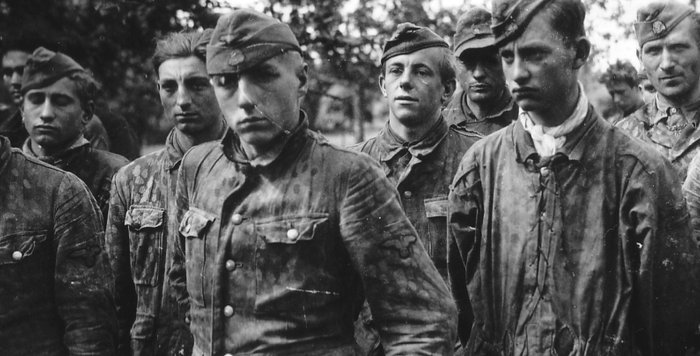
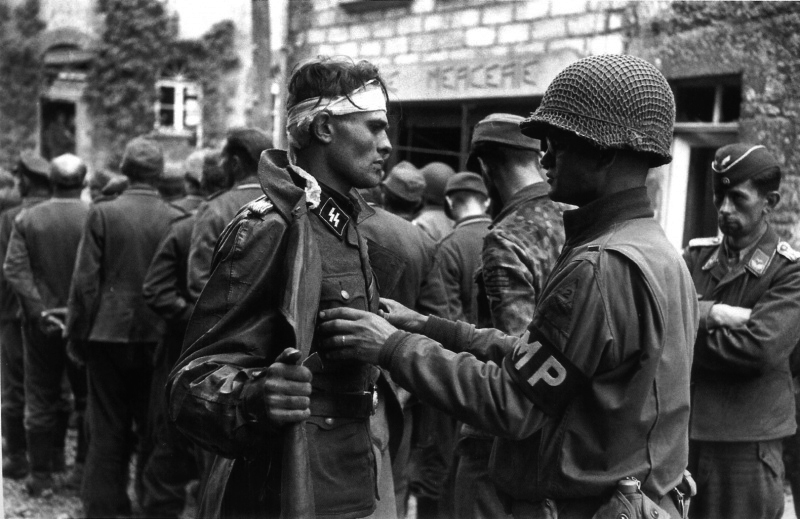

Three Blitzmädel at the moment of capture by American troops in 1945 Note the weapons cases in the background 

SS women camp guards are paraded for work in clearing the dead. The women include Hildegard Kanbach (first from left) , Irene Haschke (centre, third from right), the Head Wardress, Elisabeth... 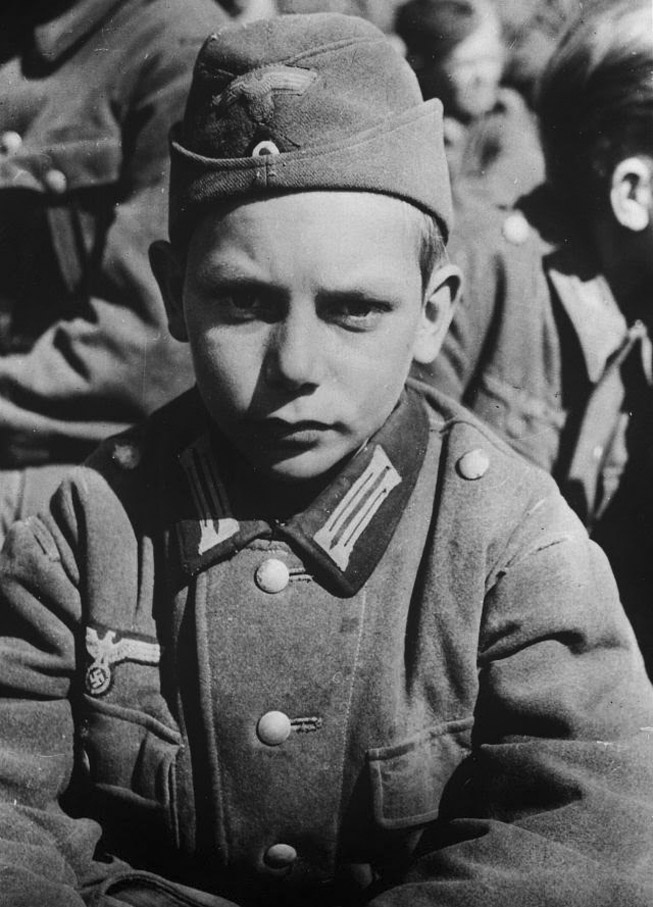
.. Youth boy (also seen above in group photo), a mere 13 years old when photographed here after being captured by the American war machine. May 1945 . 

High-ranking U.S. Army officers inspect the newly liberated Ohrdruf concentration camp. 
关于Bacque先生的另一个结论,他通过一个分析系统达到了他100万 人死亡的耸人听闻的数字,几乎所有试图检查他的统计数字和方法的 人都被困住了。由于店员打字错误,他确实犯了一个错误。他在陆军 医疗报告中看到了7万名囚犯的数字,然后根据这个数字计算了美国人 手中所有囚犯的总死亡率,并在报告中提到了21,000人死亡。也就是 说,他得出了他最基本的结论,即所有难民营的死亡率为30%,将 21,000人的死亡人数除以7万名囚犯。然而,70,000的数字应该高出 10倍。文件中的所有其他数字清楚地表明正确的囚犯人数是700,000。 这会使死亡率不是30%,而是3%。
事实上,正如陆军军事史中心部的阿尔伯特考德里向会议报告,德国 囚犯的整体死亡率为1%。考德里先生的结论得到另一位会议参与者 德国弗莱堡军事历史办公室的主要负责人Rudeiger Overmans的强烈 支持,他正在撰写德国官方的战争历史的最后一卷,即所有原因造成 的死亡总数在美国人手中的德国囚犯不能超过56,000人。
最后,美国陆军剧院教务长的每周报告中有一列题为“其他损失”的 数字。在这里,巴克先生发现他的“失踪的百万人”。
“其他损失”是什么?巴克先生采访了1945年退伍的陆军上校菲利 普·劳本,他是艾森豪威尔总部德国事务部的成员。他写道,劳本 上校告诉他“其他损失”意味着“死亡和逃跑”。
“有多少逃跑?”巴克先生问道。
“非常非常小,”劳本上校回答。巴克先生说,他们不到百分之一 的百分之一,没有解释他是如何达到这样一个数字的。
英国广播公司关于“其他损失”的纪录片制片人尼尔卡梅隆在会议 上告诉记者,他从巴克先生那里获得了采访录像带。卡梅伦先生看 起来很清楚,巴克先生已经让一位老人同意了巴克先生用过的话, 然后放在他的嘴里。卡梅伦先生对劳本上校进行了自己的摄像采访; 在其中,劳本上校表示,他被巴克先生误导,并对“其他损失”一 词的含义错误。
CNN的大卫霍金斯想要接受劳本上校的采访。劳本上校在一封信中解 释道:“我并不困难,我91岁,法定失明,我的记忆力已经降到一个 相当不可靠的程度,而且我正在接受正规的医疗护理。在我与巴克克 先生的交谈中,经常提醒他,自1945年以来的40多年里,我的记忆力 一直在恶化。
“巴克先生给我看的数字......在我看来,在考虑到转移和排放之后, 除了死亡和逃跑以外,没有什么能够弥补总数,即”其他损失“。我 误解了。”
因此,Bacque先生唯一证明“其他损失”是死亡掩盖期的指控有两次 否定了Bacque先生坚持说的话。
那么“其他损失”是什么?在许多情况下,他们是从一个区域转移 到另一个区域,这是由于各种原因定期完成的,没有一个是阴险的, 并且都在每周报告的脚注中正确记录。
但是在1945年8月的军事总督报告中显示了最多的“其他损失”。 (这些月度报告位于堪萨斯州阿比林艾森豪威尔图书馆,华盛顿国 家档案馆和其他地方;它们是占领各方面的基本资料来源,包括粮食 短缺和囚犯;巴克先生没有引用它们,他没有证据证明他们是这样做 的。)8月份的报告列出了美军撤出的解除武装敌人的数量,以及那 些被转移到英国和法国进行强迫劳动的人数。
报告还说:“另外一组663,576人被列为'其他损失',主要由 Volkssturm [人民民兵]成员发布,未经正式解除。”
看到这里发生的事情几乎没有想象力。人民民兵包括年纪较大的男 子(60岁以下,主要是第一次世界大战退伍军人)和16岁或有时甚至 更少的男孩。美国警卫和营地当局告诉老人回家照顾他们的孙辈,男 孩们回家后回到学校。随着Bacque先生忽略的其他区域的转移,这些 人将所有“失踪的百万人”都计算在内。
简而言之,Bacque先生在每次重大费用和几乎所有的小费用上都是 错误的。艾森豪威尔不是希特勒,他没有经营死亡营,德国囚犯没 有死于数十万人,1945年粮食严重短缺,对于“解除武装的敌军” 指定或关于专栏“其他损失”。巴克先生的“失踪的万人”是民兵 中的老男人和年轻男孩。
尽管如此,巴克克先生提出的观点是无可辩驳的:一些美国的G.I. 和他们的军官能够像纳粹一样残暴地行事。我们并没有对美德的垄 断。他质疑我们要重新提出这个问题,做所需的研究,以了解完整 的事实。对于这一贡献,他值得感谢。但是,至于他如何提出他的 发现,我又转向了阿尔伯特考德里:“作者有理由对他的成就感到 满意,他没有作为历史学家的失败声望,'其他损失'只能增强他的 地位。一位小说家。”
最后还有更大的问题。它召开了专家会议来挑战Bacque先生的指控。 个别学者犹豫不决,因为这样做需要检查他的研究 - 实际上是重写 他的书。相反,他们中的许多人在英国,法国,德国和加拿大的评 论中表示,他们无法相信巴克克先生所说的关于艾森豪威尔的事实 是真实的,但他们不能反驳它。巴克先生拥有所有奖学金的工具;它 看起来令人印象深刻,甚至连学者也不例外。
在这种情况下,读者要做什么?我建议他或她相信常识。当面对大 屠杀未曾发生过的学校时,请问明显的问题。如果答案不明确,则 收费尚未得到证实。在Bacque先生的案例中,有两个这样的问题: 尸体在哪里?这本书是否符合我们对艾森豪威尔性格的描述,因为 我们从无数其他来源中了解到这一点?最终,在像这样的情况下, 它通常是使我们最接近真相的明显问题。
除了Stephen E. Ambrose之外,新奥尔良大学艾森豪威尔会议的 参与者还包括:
纽约州立大学的托马斯·巴克,奥尔巴尼,中欧军事史专家; 艾森豪威尔中心的Guenter Bischof,奥地利职业专家; 尼尔卡梅伦,BBC纪录片“其他损失”的制作人; 陆军军事史中心部的Albert Cowdrey; 德国历史研究所的Alex Frohn; 军事历史办公室的军事历史学家Ruediger Overmans; 因斯布鲁克大学的罗尔夫斯坦宁格,有关占领德国的两卷历史的 作者; 阿拉巴马大学伯明翰大学的James Tent,“莱茵河任务”的作者; 渥太华大学的Brian Villa,“未经授权的行动:蒙巴顿和迪耶普 袭击”的作者。 Eisenhower's method, according to Mr. Bacque, was simple: he changed the designation of the prisoners from "Prisoners of War" (P.O.W.), required by the Geneva Convention to be fed the same rations as American G.I.'s, to "Disarmed Enemy Forces" (D.E.F.), which allowed him to cut their rations to starvation level. Mr. Bacque says the D.E.F. were also denied medical supplies and shelter. They died by the hundreds of thousands. Their deaths were covered up on Army records by listing them as "other losses" on charts showing weekly totals of prisoners on hand, numbers discharged and so forth. So outraged is Mr. Bacque by his discovery of this heinous crime that he has been quoted in a wire service interview as saying Americans "should take down every statue of Eisenhower, and every photograph of him and annul his memory from American history as best they can, except to say, 'Here was a man who did very evil things that we're ashamed of.' " Questions immediately arise. If there were a million dead, where are the bodies? Did Eisenhower have such vast power that he could order starvation on a mass scale and keep it a secret? Was the undoubted suffering in the camps, especially the transit camps along the Rhine, the result of Eisenhower's policy or the result of the chaotic conditions that prevailed in Europe in the spring and summer of 1945? Mr. Bacque, a Canadian novelist with no previous historical research or writing experience, says in his introduction: "Doubtless many scholars will find faults in this book, which are only mine. I welcome their criticism and their further research, which may help to restore to us the truth after a long night of lies." Last December, the Eisenhower Center at the University of New Orleans invited some leading experts on the period to examine the charges. The conference participants, including me, plan to publish the papers in book form. 
Our first conclusion was that Mr. Bacque had made a major historical discovery. There was widespread mistreatment of German prisoners in the spring and summer of 1945. Men were beaten, denied water, forced to live in open camps without shelter, given inadequate food rations and inadequate medical care. Their mail was withheld. In some cases prisoners made a "soup" of water and grass in order to deal with their hunger. Men did die needlessly and inexcusably. This must be confronted, and it is to Mr. Bacque's credit that he forces us to do so. Our second conclusion was that when scholars do the necessary research, they will find Mr. Bacque's work to be worse than worthless. It is seriously -- nay, spectacularly -- flawed in its most fundamental aspects. Mr. Bacque misuses documents; he misreads documents; he ignores contrary evidence; his statistical methodology is hopelessly compromised; he makes no attempt to see the evidence he has gathered in its relationship to the broader situation; he makes no attempt to look at comparative contexts; he puts words into the mouth of his principal source; he ignores a readily available and absolutely critical source that decisively deals with his central accusation; and, as a consequence of these and other shortcomings, he reaches conclusions and makes charges that are demonstrably absurd. Apart from its assessment of Mr. Bacque's findings, however, the conference -- along with the book itself -- raises a larger issue: how are readers who are not experts to judge a work that makes new, startling, indeed outrageous, claims? Without the knowledge or the time to investigate, how are they to know if an author has finally revealed the truth "after a long night of lies," or is simply misleading an unwary public? As for Mr. Bacque's claims, the most immediate question is that of Eisenhower's motive: why on earth would Ike do such a thing? Mr. Bacque answers that Eisenhower hated the Germans. Now it is absolutely true that in the spring of 1945, Eisenhower's anger at the Germans was very great. He never attempted to hide these feelings: in "Crusade in Europe," published in 1948, he wrote, "In my personal reactions, as the months of conflict wore on, I grew constantly more bitter against the Germans." He relates that he signed tens of thousands of letters of condolence to the wives and mothers of his fallen men, and he wrote, "I know of no more effective means of developing an undying hatred of those responsible for aggressive war than to assume the obligation of attempting to express sympathy to families bereaved by it." The uncovering of the concentration camps added to his emotion. Eisenhower was an enthusiastic supporter of denazification, but not because he hated the Germans or believed in collective guilt. To the contrary, he believed that there were Germans who were committed to democracy and that the task of the occupation was to find them and bring them to the fore. In a speech in Frankfurt in 1945, he declared: "The success or failure of this occupation will be judged by the character of the Germans 50 years from now. Proof will come when they begin to run a democracy of their own and we are going to give the Germans a chance to do that, in time." This does not sound like a man who simultaneously was directing the death by starvation of one million young Germans. Mr. Bacque completely misunderstands Eisenhower's position and activity in the occupation. He puts full responsibility on Eisenhower for every policy decision, never recognizing that he had superiors from whom he took policy directives and orders -- specifically, the Army Chief of Staff; the European Advisory Commission, acting in the name and with the authority of the British, Soviet and American Governments; the Joint Chiefs of Staff; the Combined Chiefs of Staff, that is, the American Joint Chiefs and the British Chiefs of Staff; and the heads of the British and American Governments. The report at the New Orleans conference on the diplomatic background, by Brian Villa of the University of Ottawa, noted that the policy of Eisenhower's superiors was to impress upon the Germans the fact of their defeat, the fact that they had brought it on themselves and in other ways to "treat 'em rough." Denazification was one aspect of that policy. Another was that German prisoners would not be fed at a higher level than German civilians, than the civilians of the liberated nations, or than the displaced persons (D.P.'s). An assertion that is central to Mr. Bacque's accusation is his contention that there was no European food shortage in 1945. He points to warehouses in Germany full of food. He says that the Red Cross had food available. One of his most damning pieces of evidence is that a train from Geneva loaded with food parcels sent by the Red Cross to feed German prisoners was forced to turn back. This is shocking -- food was available, men were hungry and American officers ordered the train to return to Geneva. But there was a reason: the Allied Governments had decided that Red Cross food parcels would be used to feed displaced persons, of whom there were more than two million in Germany, and the orders to Eisenhower on this policy were explicit. So D.P.'s got those food parcels. It is painful beyond description to have to set food priorities in a hungry world, but it had to be done, and who could argue with the decision? In his conference report on the food situation in Germany, James Tent of the University of Alabama-Birmingham says there was no question that there were severe shortages. Still, as Mr. Tent points out, there was food stocked in warehouses that was not distributed to prisoners living on a near-starvation diet. Again, this is shocking, until the reason is noted. The Allied Governments were fearful of famine in the winter of 1945-46, and they were stockpiling food. Even with the reserves, they barely got through the winter, and it was three years before the European food shortage was overcome. Mr. Bacque's myth was Eisenhower's nightmare. No food shortage? Eisenhower wrote the Chief of Staff, Gen. George C. Marshall, in February 1945: "I am very much concerned about the food situation. . . . We now have no reserves on the Continent of supplies for the civil population." And here is Eisenhower writing to the Combined Chiefs of Staff on April 25, 1945: "Unless immediate steps are taken to develop to the fullest extent possible the food resources in order to provide the minimum wants of the German population, widespread chaos, starvation and disease are inevitable during the coming winter." These -- and many, many similar messages -- went out before the surrender. After the first week of May, all of Eisenhower's calculations as to how many people he would be required to feed in occupied Germany became woefully inadequate. He had badly underestimated, for two reasons. First, the number of German soldiers surrendering to the Western Allies far exceeded what was expected (more than five million, instead of the anticipated three million), because of the onrush of German soldiers across the Elbe River to escape the Russians. So too with German civilians -- there were millions fleeing from east to west, about 13 million altogether, and they became Eisenhower's responsibility. Second, the number of slave laborers liberated was much greater than anticipated, by more than two million. In short, Eisenhower faced shortages even before he learned that there were 17 million more people to feed in Germany than he had expected. No food shortage? This is the report of the Military Governor for Germany in July 1945: "The food situation throughout Western Germany is perhaps the most serious problem of the occupation. The average food consumption in the Western Zones is now about one- third below the generally accepted subsistence level." The September report declares, "Food from indigenous sources was not available to meet the present authorized ration level for the normal consumer, of 1,550 calories per day." Mr. Bacque says that the prisoners were receiving 1,550 calories a day, and he contends that such a ration means slow starvation. He apparently never looked at what civilians were getting, in Germany or in the liberated countries. In Paris in 1945, the calorie level was 1,550 for civilians. It was only slightly higher in Britain, where rationing continued. It was much lower in Russia, where rationing also continued. As noted, the official ration for German civilians was 1,550, but often not met. In Vienna in the summer of 1945 the official ration sometimes fell to 500. There is such a thing as common sense. Anyone who was in Europe in the summer of 1945 would be flabbergasted to hear that there was no food shortage. According to Mr. Bacque, Eisenhower personally, secretly, and with sinister intent changed the status of surrendered German soldiers from prisoners of war to disarmed enemy forces. In fact, the change in designation was a policy matter. The decision was made not by Eisenhower but by his superiors, specifically by the European Advisory Commission. Nor was any attempt made to keep it secret. All those involved acted with the authority of the British, Russian and American Governments, and they were perfectly straightforward about the reason for the change in status. What happened is simple enough: the Allies could not afford to feed the millions of German prisoners at the same level at which they were feeding their own troops, as required by the Geneva Convention. Even had the food been available, the Allies were not going to feed German prisoners at a higher level than they were able to feed German civilians, not to mention the civilians of the liberated countries of Western Europe, and not to mention as well the displaced persons. But the United States and other Allied nations had signed the Geneva Convention, which had the force of a treaty. They did not wish to violate it, so they used the new designation of "Disarmed Enemy Forces." The orders to the field commanders were straightforward: do not feed the D.E.F.'s at a higher scale than German civilians. With regard to another of Mr. Bacque's conclusions, he arrives at his sensational figure of one million dead through a system of analysis that has left almost everyone who has tried to check his statistics and methods befuddled. He did make one mistake because of a typing error by a clerk. He saw a figure of 70,000 prisoners in an Army medical report and then calculated the total death rate for all prisoners in American hands on the basis of that number and the 21,000 deaths also mentioned in the report. That is, he arrived at his most basic conclusion, a death rate in all camps of 30 percent, by dividing the 21,000 deaths by the 70,000 prisoners. However, the 70,000 figure should have been 10 times higher. All other figures in the document make it clear that the correct number of prisoners was 700,000. This would make the death rate not 30 percent but 3 percent. In fact, as Albert Cowdrey of the Department of the Army's Center of Military History reported to the conference, the overall death rate among German prisoners was 1 percent. Mr. Cowdrey's conclusion, strongly supported by another conference participant, Maj. Ruediger Overmans of the German Office of Military History in Freiburg (who is writing the final volume of the official German history of the war), is that the total death by all causes of German prisoners in American hands could not have been greater than 56,000. Finally, there is the matter of the column of figures in the weekly reports of the United States Army Theater Provost Marshal entitled "Other Losses." It is here that Mr. Bacque finds his "missing million." What were the "other losses"? Mr. Bacque interviewed Philip S. Lauben, a retired Army colonel who was a member of the German Affairs Branch of Eisenhower's headquarters in 1945. He writes that Colonel Lauben told him "other losses" meant "deaths and escapes." "How many escapes?" Mr. Bacque asked. "Very, very minor," Colonel Lauben replied. Mr. Bacque says they were less than one-tenth of 1 percent, with no explanation of how he arrived at such a figure. Neil Cameron, the producer of the BBC documentary about "Other Losses," told the conference that he had obtained from Mr. Bacque the tape of the interview. It seemed clear to Mr. Cameron that Mr. Bacque had got an old man to agree with words that Mr. Bacque used and then put in his mouth. Mr. Cameron did his own on-camera interview with Colonel Lauben; in it, Colonel Lauben said he was misled by Mr. Bacque and was wrong about the meaning of the term "other losses." David Hawkins of CNN wanted to do an interview with Colonel Lauben. Colonel Lauben turned him down, explaining in a letter: "I'm not being difficult. I am 91 years old, legally blind, and my memory has lapsed to a point where it is quite unreliable. Furthermore I am under regular medical care. Often during my talk with Mr. Bacque I reminded him that my memory had deteriorated badly during the 40 odd years since 1945. "Mr. Bacque read to me figures. . . . It seemed to me that, after accounting for transfers and discharges, there was nothing left to make up the grand total except deaths and escapes, i.e., the term 'Other Losses.' I was mistaken." Thus, Mr. Bacque's only witness for the charge that "other losses" was a cover-up term for deaths has twice repudiated what Mr. Bacque maintains that he said. What then were the "other losses"? In many cases they were transfers from one zone to another, something that was regularly done for a variety of reasons, none of them sinister, and all duly recorded in footnotes on the weekly reports. But the greatest number of "other losses" is revealed in the August 1945 Report of the Military Governor. (These monthly reports are in the Eisenhower Library in Abilene, Kan., in the National Archives in Washington and elsewhere; they are a basic source on every aspect of the occupation, including food shortages and prisoners; Mr. Bacque did not cite them and there is no evidence he examined them.) The August report lists the numbers of disarmed enemy forces discharged by American forces and those transferred to the British and French for forced labor. The report continues: "An additional group of 663,576 are listed as 'other losses,' consisting largely of members of the Volkssturm [ People's Militia ] released without formal discharge." It takes little imagination to see what happened here. The People's Militia consisted of older men (up to 60 years of age, mainly World War I veterans) and boys of 16 or sometimes less. American guards and camp authorities told the old men to go home and take care of their grandchildren, the boys to go home and return to school. Along with the transfers to other zones that Mr. Bacque ignores, these people account for all the "missing million." In short, Mr. Bacque is wrong on every major charge and nearly all his minor ones. Eisenhower was not a Hitler, he did not run death camps, German prisoners did not die by the hundreds of thousands, there was a severe food shortage in 1945, there was nothing sinister or secret about the "disarmed enemy forces" designation or about the column "other losses." Mr. Bacque's "missing million" were old men and young boys in the militia. Nevertheless, Mr. Bacque makes a point that is irrefutable: some American G.I.'s and their officers were capable of acting in almost as brutal a manner as the Nazis. We did not have a monopoly on virtue. He has challenged us to reopen the question, to do the research required, to get at the full truth. For that contribution, he deserves thanks. But as to how he presented his discovery, I turn again to Albert Cowdrey: "Surely the author has reason to be satisfied with his achievement. He has no reputation as a historian to lose, and 'Other Losses' can only enhance his standing as a writer of fiction." There remains, finally, the larger issue. It took a conference of experts to challenge Mr. Bacque's charges. Individual scholars have hesitated to take him on because to do so required checking through his research -- in effect, rewriting his book. Instead, many of them have said in their reviews in Britain, France, Germany and Canada that they cannot believe what Mr. Bacque says about Eisenhower is true, but they cannot disprove it. Mr. Bacque has all the paraphernalia of scholarship; it looks impressive enough to bamboozle even scholars. Under these circumstances, what is a lay reader to do? I suggest that he or she trust common sense. As when confronting the Holocaust-never-happened school, ask the obvious questions. If the answers aren't clear, the charges have not been proved. In Mr. Bacque's case, two such questions are: Where are the bodies? and Is this book consistent with our picture of Eisenhower's character as we know it from innumerable other sources? Ultimately, in cases such as this one, it is often the obvious questions that bring us closest to the truth. In addition to Stephen E. Ambrose, the participants at the Eisenhower conference at the University of New Orleans were: Thomas Barker of the State University of New York, Albany, a specialist on central European military history; Guenter Bischof of the Eisenhower Center, a specialist on Austria in the occupation; Neil Cameron, the producer of the BBC documentary on "Other Losses"; Albert Cowdrey of the Department of the Army's Center of Military History; Alex Frohn of the German Historical Institute; Ruediger Overmans of the Militargeschichtliches Forschungsamt (Office of Military History); Rolf Steininger of the University of Innsbruck, author of a two-volume history of the occupation of Germany; James Tent of the University of Alabama-Birmingham, author of "Mission on the Rhine"; Brian Villa of the University of Ottawa, author of "Unauthorized Action: Mountbatten and the Dieppe Raid.




**********************************************************************************************************************

面对美帝 一声断喝 —— 不能改的 坚决不改 ! 
中国与美国贸易酣战已经 幸福进入中国体感最舒服的阶段 !

2003年1月27日 党和国家伟大领袖胡锡进总编同志 语重心长教导我们人民说:



|