Musk: It's not that Mars is a plan B — it's that we want to become a multiplanet species and a spacefaring civilization. Ultimately, with life throughout the solar system, and then beyond our solar system to other star systems. That I think is a future that is very exciting and inspiring, compared to one where we stay on Earth forever, until some eventual extinction event.
馬斯科:不是說火星是B計劃,而是我們想成為一個多行星物種和
一個太空文明。最終,生命遍及整個太陽系,然後超越我們的
太陽系,到達其他恆星系統。與我們永遠留在地球上,直到最終
滅絕的事件相比,我認為這是一個非常令人興奮和鼓舞的未來。
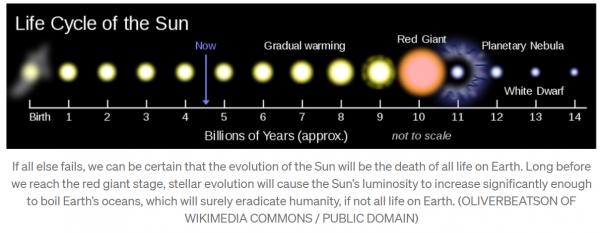
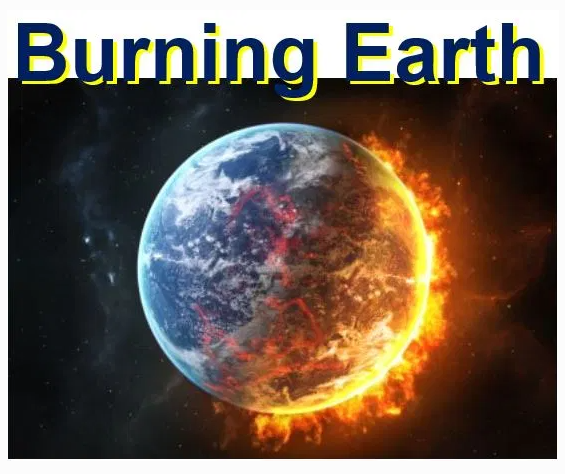
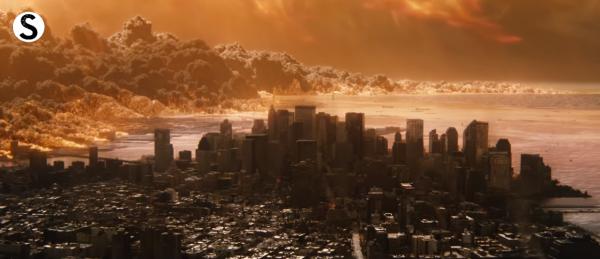
I mean, eventually the sun's just going to get bigger
and evaporate the oceans. And so, at some point,
we better do something.
我的意思是,最終太陽會變得愈來愈大並蒸發掉
地球上所有海洋。因此,在某個時候,我們最好
做點什麼。
And I think urgency is important for making life multiplanetary, because this is the first time in the 4-1/2-billion-year history of Earth that it has been possible. And this window of opportunity could be open for a long time, and hopefully it is. But it might also be open for only a short time. And it's not necessarily that civilization will end, but our technology level could subside. It could be that we don't end with a bang, but with a whimper. And so, while it's still possible, I think we should take action. But Mars, to be clear, is not going to be some luxurious resort.
Washington, D.C. -- The Earth's oceans will disappear in about one billion years due to increased temperatures from a maturing sun, but Earth's problems may begin in half that time because of falling levels of carbon dioxide in the atmosphere, according to a Penn State researcher.
"The sun, like all main sequence stars, is getting brighter with time and that affects the Earth's climate," says Dr. James F. Kasting, professor of meteorology and geosciences. "Eventually temperatures will become high enough so that the oceans evaporate."