2021-06-14 09:54:58
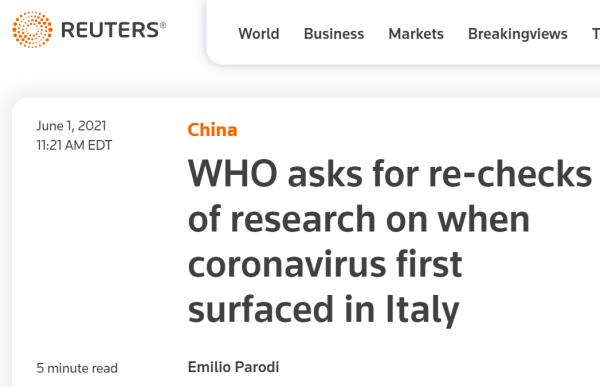
时间是最好的试金石! 疫情之下,逝去生命已永远逝去,但真相终将揭晓! 最近,在美国的煽动下,关于新冠病毒溯源的话题,再度引起世界热 议,不过世卫组织的一个动作,却很可能让美国想要借机抹黑中国的 计划破灭。 据路透社当地时间6月1日报道,世卫组织已要求意大利米兰国家肿瘤 研究所提供2019年采集的含有新冠病毒抗体的血液样本,送往荷兰 鹿特丹大学检测。 今天,意大利米兰国家肿瘤研究所向记者确认,此事属实。米兰国家 肿瘤研究所媒体负责人表示,暂无法透露进一步信息,但将在未来几 天就此事发布新闻公报。 据意大利负责新冠溯源调查工作的科学家透露,这些血液样本显示, 早在2019年10月,新冠病毒就已经传播到了欧洲。 其实,去年11月 意大利某学术研究杂志上发表的论文,就已印证了 这一观点, 该论文显示,研究者在2019年10月的肺癌筛查中,就发现了拥有新 冠病毒抗体的血液样本,这说明当时新冠病毒就已经在意大利出现, 并有患者的身体因此主动形成了抗体。而这份样本恰恰是来自意大利 出现疫情最早,也是疫情最严重的伦巴代地区。 如果世卫组织本次调查结果依然遵循了该研究结果,那就相当于列出 了铁证,证明中国并不是世界上最早爆发疫情的国家。美国还想要在 新冠病毒起源的问题上诬蔑中国,从科学逻辑上就说不通! 果然假的真不了,一切自有分晓,美国的阴谋诡计,终于要栽了!! 历史终将证明:中国,是清白的!武汉,是清白的!!!
http://shizheng.xilu.com/20210614/1000010001177411.html

这是上文提到2021年6月1日路透社有关报道的节选 —— 一个要点,两次提及 —— 意大利有关病毒 专家从未怀疑过新冠病毒的起源地为武汉;武汉 爆发冠状病毒疫情的时间点,要比公开报道的2019 12月(亦或11月17日)提早几个月。
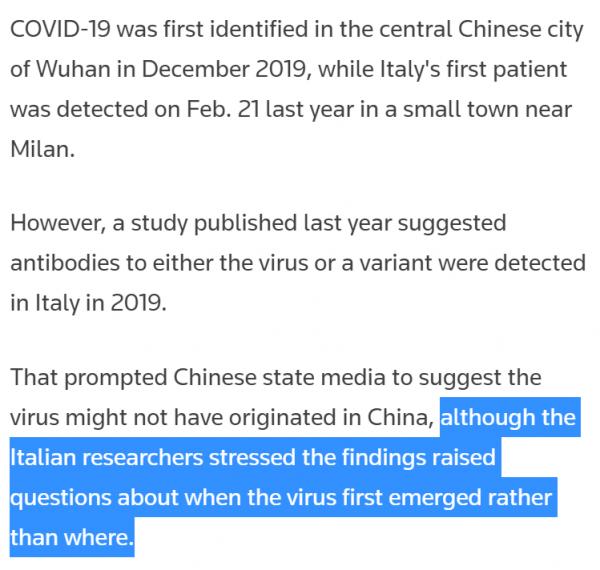
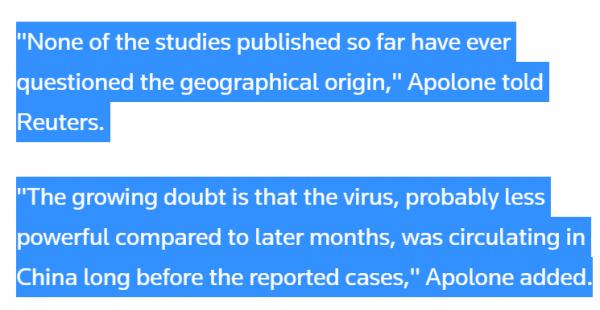
上面出现的人名 Apolone,即 Giovanni Apolone 为

这一论文的第一作者,其全篇论文英文版链接如下:
https://journals.sagepub.com/doi/full/10.1177/ 0300891620974755


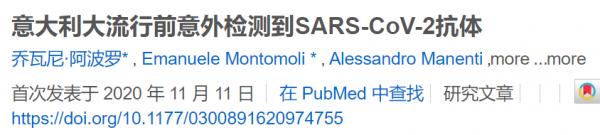
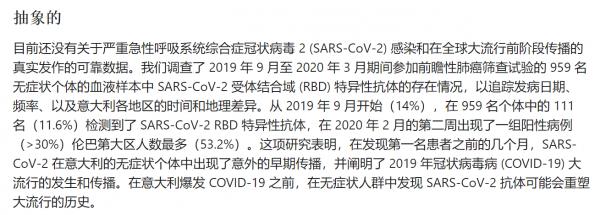
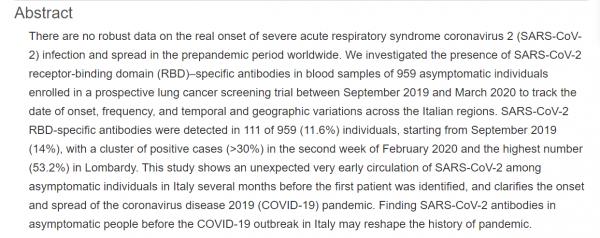
https://journals.sagepub.com/doi/full/10.1177/ 0300891620974755


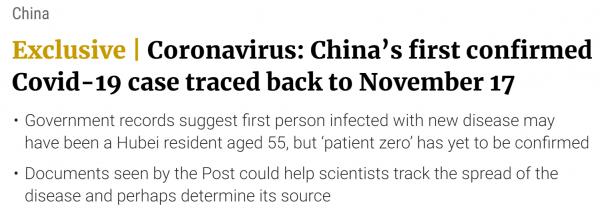
http://://www.scmp.com/news/china/society/article/ 3074991/coronavirus-chinas-first-confirmed-covid-19 -case-traced-back

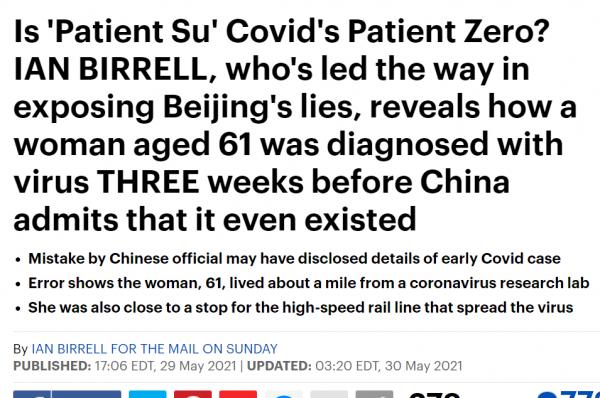
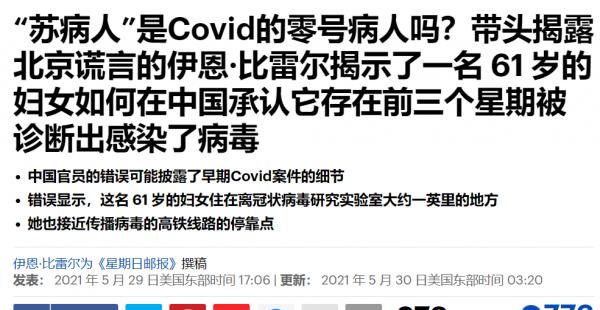
一位中国主要官员的错误可能已经披露了武汉第一批疑似感染 Covid-19 的人的姓名、地址和详细信息,而北京当局声称他们发现了最初的病例前三周。 发送给一家中国医学杂志的屏幕截图显示,这个惊人的错误显示,这位 61 岁的妇女,被称为“苏患者”,住在距离该市一个主要冠状病毒研究实验室约一英里的地方。 她也接近高铁线路的停靠站,据信该线路在将病毒传播到拥有 1100 万人口的城市中发挥了关键作用。 下议院外交事务委员会主席汤姆·图根哈特(Tom Tugendhat)议员说:“现在是中国公开所有档案的时候了,这样世界才能找到有关这一流行病起源的真相。 “如果没有认识到我们都需要分享知识并从任何错误中吸取教训,我们就无法防范未来的风险。” 其中包括一名在 2019 年 9 月下旬生病的患者疑似死亡。
他说:“有一名患者于 9 月 29 日发病的数据。” '数据显示,该患者未进行核酸检测,临床诊断为疑似病例。病人已经死亡。数据尚未得到证实。 这位学者随后详细介绍了 11 月 14 日至 21 日向武汉医生报告的另外两例疑似病例,以及 12 月 8 日之前向世界卫生组织报告的其他几例病例——这是中国向世界卫生组织提供的“最早发病病例”的日期。 健康时报的文章包括教授数据库中两个 11 月病例的屏幕截图。虽然个人信息被模糊了,但有些信息是可见的,包括医院名称和居住地。 照片显示,苏患者在武汉荣军医院接受治疗,鉴于楼房和街道号码,几乎可以肯定住在卓道泉街开乐贵岩社区,距离医疗中心约 600 米。 医院和住所都位于红山区,附近的几个实验室都在进行与蝙蝠相关的冠状病毒研究。 其中包括由中国疾病控制中心运营的实验室,其生物安全水平位居全球第二,距离酒店仅一英里多一点,而武汉病毒研究所运营的市中心站点距离酒店不到三英里。
A mistake by a leading Chinese official may have disclosed the name, address and details about one of the first people suspected of being infected with Covid-19 in Wuhan, three weeks before Beijing authorities claim they detected the initial case. The astonishing error, revealed in a screen-grab sent to a Chinese medical journal, shows that the 61-year-old woman, known as ‘Patient Su’, lived about a mile from one of the city’s main coronavirus research labs. She was also close to a stop for the high-speed rail line that is believed to have played a key role in spreading the virus around the city of 11 million people. Tom Tugendhat MP, chairman of the Common’s foreign affairs committee, said: ‘The time has come for China to open up all its files so the world can find the truth about the origins of this pandemic. ‘We cannot protect against future risks if there is not recognition that we all need to share knowledge and learn from any mistakes.’ This latest development emerged as the result of an interview given to a Chinese medical journal by the scientist tasked with compiling the country’s official data on cases. Professor Yu Chuanhua, professor of biostatistics at Wuhan University, told Health Times that he had 47,000 cases on his national database of confirmed and suspected cases by late February 2020. These included one suspected fatality of a patient who fell ill in late September 2019. ‘There is data on a patient who became ill on September 29,’ he said. ‘The data shows the patient has not undergone nucleic testing and the clinical diagnosis is a suspected case. The patient has died. The data has not been confirmed.’ The academic then detailed two more suspected cases reported to Wuhan doctors on November 14 and 21, along with several others before December 8 – the date that China gave to the World Health Organisation for the ‘earliest onset case’. The Health Times article included a screenshot of the two November cases on the professor’s database. Although personal details were blurred out, some were visible, including the hospital name and home district. They show Patient Su was treated at Rongjun Hospital in Wuhan and, given the building and street numbers, almost certainly lived in the Kaile Guiyan community on Zhuodaoquan Street, about 600 metres from the medical centre. Both the hospital and the residence are in the Hongshan district near where much of the bat-related coronavirus research was taking place in several laboratories. These include a laboratory run by China’s Centre for Disease Control with the second-highest global levels of biosecurity little more than one mile away, while downtown sites run by Wuhan Institute of Virology are less than three miles away.
https://www.dailymail.co.uk/news/article-9632921/Is- Patient-Su-Covids-Patient-Zero-asks-IAN-BIRRELL.html
|