如果你曾經看過求真知博2015年1月3日費心轉帖下面文章的報道, 11個月過後,閒來無事的話,不妨再多看一眼,因為其內容圖文並 茂化了一點,另外還有一些補充。
這一次,不要說公孫博,任誰走過路過沒有錯過瞥一眼,都會按捺 不住地斥責,這不又是標題黨!分明是後者智斗前者,怎麼倒過來 了?
魯迅一九二六年四月十二日在《紀念劉和珍君》一文中說,我已經 說過:我向來是不憚以最壞的惡意來推測中國人的。藝萌博2015年 12月10日《中國人的雄辯是一種公共話語的惡疾》一文中詳述王蒙 的小小說《雄辯症》。依照魯迅先生和王蒙同志的教誨,不妨網絡 時代新思維一把。
都說1970年至1990年代初期, 

故事主角——荷蘭一位酷愛歌劇、對於共產主義深惡痛絕的數學 老師彼得森(化名)同志受命於美國中央情報局指導下的荷蘭王 國情報局,以荷蘭馬克思列寧主義黨總書記的身份,前後25次訪 問中國,受到毛、周、鄧的親切接見,在北京人民大會堂、釣魚 台國賓館、北京飯店、五星酒店蹭吃蹭喝又騙錢。從來就沒有身 處過黨國決策最高層、對於軍國大政知道個屁的草民、小民、屁 民、黎民、刁民,怎麼就能人云亦云地一口咬定,這不正是傳說 中的局中局、計中計、騙中騙?你騙我,我騙民?或許,前五、 六次來訪,沒有看出破綻,後來經過前方駐荷蘭代辦處、大使館 (其中就有上文說過、 
於1979年2月至1981年2月中國首任駐外特命全權女大使、居住偶 家斜對面的丁雪松同志)以及中共中央對外聯絡部負責迎來送往 接待貴賓同志們的內查外調,早已嗅出異樣、識破其中有詐並報告 給精明透頂的恩來總理。而隨後多年的所有交往皆屬於順水推舟, 心照不宣,相互利用。你得實惠, 

我獲吾道不孤的名聲,everything was meant for home consumption. 1989年6·4之後,甚至還惦記着讓荷共總書記彼 得森同志致電黨中央聲明支持平暴。
國軍(可不是國民黨軍隊的簡稱,全稱為國民革命軍)實際擊斃 日寇40多萬,共軍呢?近日有位名人算過來算過去,區區2,000左 右,其中最多一次擊斃465名,卻被黨國媒體演藝界和集會鋪天蓋 地的譽為抗日戰爭中的中流砥柱;切身涉及多數在此觀博、碼博諸 位在內的1,600多萬知識青年荒廢學業、上山下鄉、蹉跎青春、勞 動改造的終身瘡疤,被拔高美化成了錘鍊一代人的豐功偉業,被贊 美為偉大統帥面對蘇俢亡我之心不死的英明備戰戰略部署;砍頭、 火燒、割喉、人神共憤的伊斯蘭國,在中國社科院中東問題專家、 副研究員田文林和《環球時報》總編胡錫進同志的筆下被描繪為百 姓安居樂業、臣民情緒穩定的人民解放區;北京首次拉響霧霾最高 級別警報,被贊展現王安順市長同志提頭來見的治理決心: 


所以,荷共一案,別說是偉光正現眼丟人長達二十多年,那壓根 兒就是偉大領袖的誘敵深入,將錯就錯,智控荷共,開門放狗。 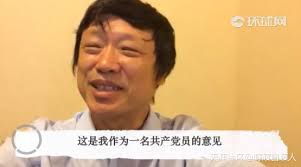


中國共產黨優秀黨員、久經考驗的忠誠的共產主義戰士、五毛司令 胡錫進同志,就是這樣邏輯思維的。
卡爾·馬克思1852年撰文《路易·波拿巴的霧月十八日》第一章 (《馬克思恩格斯全集》第八卷第121頁)中說,
黑格爾在某個地方說過,一切偉大的世界歷史事變和人物可以 說都出現兩次。他忘記補充一點:第一次是作為悲劇出現,第 二次是作為鬧劇出現。 Hegel remarks somewhere that all great world - historic facts and personages appear, so to speak, twice. He forgot to add: the first time as tragedy, the second time as farce.
—— Karl Marx 1852 The Eighteenth Brumaire of Louis Bonaparte
印證卡爾上述英明論斷的一個惟妙惟肖的例證,莫過於十年文革、 十年紅歌的第一次和幾年前熙來哥率先倡導的第二次:


現在這幾年,北京景山公園內前朝遺老遺少的革命群眾自發性活 動除外,還有官辦紅歌歌詠大賽嗎? 


再者,如果說,我們的朋友遍天下、北京——萬國來朝、萬黨來覲 世界革命的中心、朝鮮、阿爾巴尼亞、越南三國英雄人民高大上財 爺的時代,是作為悲劇第一次出現,眼下,實現中國大夢百年戰略、 一帶一路一路撒錢,平哥媛媽老大兩口子出訪一次,國庫里幾百億 美元不見了,再出訪一次,又幾百億不見了,而家裡的億萬蟻民吸 毒氣吃毒食麵對房價學費醫療費瑟瑟發抖,這陸地海上絲綢之路沿 線如此之多國家的政府官員,是不是多少有點兒像 —— 一個人偷 着樂一次並不難、難的是二十多年來每天每偷着開懷大樂特樂的荷 共總書記彼得森同志那樣,在考察目的地向着各自國家的官民按捺 不住心中無限的喜悅,大聲疾呼:
人傻、錢多,速來 !
“荷蘭馬列主義黨總書記彼得森” 2014-12-3 9:35:24

這幾天,最有喜感的一則消息莫過於下面這條:
文革中,來自全球各地的共產黨在拜謁中國領袖的同時,幾乎都能收到為數不等的“革命支票”。比如切格瓦拉就拿走六千萬美金。此情此景激發了美國中情局的奇思妙想,他們通過荷蘭情報機關,選中了一個到過中國的名為彼德·貝維的數學老師,執行“紅色鯡魚”計劃,以此刺探中國的情報。
 
彼德·貝維化名為彼得爾森,在荷蘭成立了“荷蘭馬克思列寧主義黨”,自任總書記。這個只有幾個群眾演員的政黨僅僅依靠一堆虛構的黨員花名冊,就輕而易舉的騙過了中國駐荷蘭大使館(1972年之前應該是代辦處——引者注),迅速成為“中國人民的老朋友”。作為發達的資本主義國家的共運代表,在中方的邀請下,彼得爾森自1970年開始,前後25次訪問中國,先後得到了毛澤東、周恩來等人的接見。通過和領袖們的接觸,彼得爾森不費吹灰之力就了解了中共高層諸多的高層內幕和人事變動,為中情局提供了極為難得的一線情報。當然,必不可少的,是每次彼得爾森訪問中國都能帶回中方給予的“革命經費”。這樣的資助直到八十年代末蘇東劇變後才終止,此時彼得爾森已經從中國拿走超過一百萬英鎊。 
這些錢,除了出版專門用於糊弄中國駐荷蘭大使館的荷蘭版《共產黨人》,絕大部分都成了荷蘭情報機關的額外補貼。
彼德·貝維晚年對在中國的國賓待遇還是念念不忘,他說,“中國有非常不錯的廚師”。他的虛假政黨終結後,又成了一個專門為荷蘭退休者利益代言的政黨主席。這個黨成員同樣不多。但彼德·貝維說:“這回每個黨員都是真的。”
呵呵!想起來了,文革時期,許許多多國家的“馬列主義政黨”來訪,對他們的稱呼一般是“某某國共產黨(馬列)”,這些黨的頭面人物一般都得到“我黨”領導人的接見,有些甚至上天安門,獲得“世界革命領袖”毛澤東的親炙。每當“我黨”有什麼喜喪事,報紙上又是一大批世界各國“馬列主義政黨”發來的賀電或者唁電。實在有“我們的朋友遍天下”又或者“吾道不孤”的感覺。
妙極了,我的“文革”收藏物里,就有一張1976年9月15日的《廣州日報》,裡面就有各國“馬列主義政黨”發來哀悼毛澤東的唁電。哈哈!真的就有“荷蘭馬列主義黨”的唁電,黨的書記正是這位彼得森。

嗚呼!當年我們中國人鳩形鵠面,勒緊褲腰帶“支援世界革命”,原來錢銀就落在這些“滾錢滾糧票”(粵語中的俗語,意即騙錢騙糧票)之徒的手裡,我們都當了冤大頭,細細思量,不亦悲乎?
*****************************************
附:當年常上天安門的“新西蘭共產黨總書記“威爾科克斯和 “澳大利亞共產黨(馬列)主席”愛.弗.希爾:


說起這位“新西蘭共產黨總書記”,我又有一個故事。
吾友某君,移民新西蘭,坐“移民監”期間,結識了一位新西蘭人士。這位新西蘭人士帶他到自家閣樓,翻出一本蒙塵的英文版《毛主席語錄》,裡面有毛的親筆簽名,還有照片若干。這位新西蘭人士問吾友,照片裡這個中國領導人是何人?吾友作了解答,並謂:這些東西很有價值啊。後來這位新西蘭人托倫敦朋友拿去拍賣,賣了個大價錢云云。
我對朋友說:這位新西蘭人士的先祖,必定是這位“新西蘭共產黨總書記威爾科克斯”。
新西蘭人對“新西蘭共產黨”的“豐功偉業”已經茫無所知了,而這位“總書記”的後人,也只有在塵埃中追尋他的爪痕了。
******************************************************
附錄: 顛倒黑白,政府安排。請細看中共中央
宣傳部唆使鳳凰電視台網站怎樣造謠惑眾、編造瞎 話兒、生生插進英文原文從未提及、極大縮水(十 分之一?)的饋贈荷共活動經費美元總金額30萬, 怎樣將主要接待人物毛澤東、周恩來、鄧小平三位 精明領袖降格扭曲成四人幫:
外國特務扮左翼騙四人幫30萬美元計劃代號“愚型兒” 有了中國的資金支持,皮特·博維得以廣泛的旅行在歐洲以及歐洲以外的地方結交朋友。“中國人總是用美元支付”,他說。
核心提示:有了中國的資金支持,皮特·博維得以廣泛的旅行在歐洲以及歐洲以外的地方結交朋友。“中國人總是用美元支付”,他說。
鳳凰歷史綜合自英國《獨立報》、荷蘭媒體及《人民日報》資料報道
皮特·博維今天只能拄着拐杖行走,以至於他呼籲應該在火車站安裝自動扶梯。恐怕誰也想不到,他曾經是個呼風喚雨的人物,在北京和莫斯科會見過共產主義世界領導人。
文革“四人幫”肆虐期間,皮特·博維經常來華訪問。作為“荷蘭馬列主義黨”的黨魁,他突破了意識形態的阻礙,參觀了那些大多數西方領導人參觀不到的地方。但他從來不是紅色旗幟的擁護者,而只是一個間諜,這個政黨的工作人員主要也是荷蘭特工。
1955年,莫斯科當局開始為青年節慶典做準備。當一個朋友問皮特·博維是否願意為荷蘭情報機構(國內保安局)服務,去一趟莫斯科時,他同意了。於是他成為了荷蘭的“莫斯科青年聯歡節組織委員會”的領導,審核那些申請去莫斯科的人。當700人的代表團坐火車抵達莫斯科時,他也直接飛到那裡會見了赫魯曉夫。
1958年,中國也組織了自己的青年節慶典,皮特·博維又被邀請,從阿姆斯特丹來到北京。隨後,他開始定期訪問荷蘭的中國大使館,並秘密加入荷蘭共產黨。中蘇分裂後,荷蘭情報部門指示皮特·博維成立了“荷蘭馬列主義黨”,並化名為克里斯·彼得森擔任黨魁,緊跟北京的路線。這項大膽的行動的代號叫做“愚型兒計劃”。
1963年,當皮特·博維再一次回到北京時,接受了一次正式的共產主義教育,他被招待入住最好的酒店,當然這也是有條件的,他被安排學習毛澤東思想。
有了中國的資金支持,皮特·博維得以旅行在歐洲以及歐洲以外的地方結交朋友。“中國人總是用美元支付”。他陸續從中國騙取了30萬美元。
在中方的邀請下,彼得爾森先後25次訪問中國,先後得到了毛澤東、周恩來等人的接見。這讓荷蘭情報部門非常振奮,因為從沒有一個特工這麼近距離接觸過中國領導人。
當毛澤東逝世時,這個假冒的左翼政黨竟然還像模像樣地給北京發了一封“唁電”:
北京中國共產黨中央委員會:
我們謹代表荷蘭馬克思列寧主義黨的黨員和中央委員會對傑出的馬克思列寧主義者、我們敬愛的同志、你們黨的主席毛澤東的逝世表示最誠摯的哀悼。
毛澤東主席在歷史上的地位將不可動搖地銘記在全世界工人的心中。
我們的主要任務應該是繼續學習毛澤東同志的令人永誌不忘的榜樣。
毛澤東同志永垂不朽!
主席霍赫
書記彼得森
一九七六年九月九日於哈勒姆
在荷蘭,中國大使被告知這個政黨已經超過500黨員,但“實際上只有25名特工和15名蠢到真的加入我們的人”。
皮特·博維這些行為當然也有風險,他曾被告知,如果事情敗露,不會有人幫他的,一切責任都要由他自己承擔,但是他晚年提及這段經歷並不後悔,“我為我做的事情感到驕傲”。
現在,皮特·博維在他居住的17000人的荷蘭小鎮上成了名人。
Mr Chips turns out to be 007
Dutch maths teacher admits fake communist party scam that fooled Mao Zedong Jon Henley Saturday 4 December 2004 00.03 GMT A 76-year-old retired Dutch maths teacher described yesterday how for more than 25 years he was feted by communist leaders around the world as the inspired head of a radical Marxist-Leninist party that never, in fact, existed. As Chris Petersen, head of the supposedly 600-member Marxist-Leninist party of the Netherlands, Pieter Boevé travelled to Beijing more than two dozen times and met Mao Zedong. He was also welcomed with open arms in Albania by Enver Hoxha, and in the eastern bloc capitals of Europe. "In fact we had at most a dozen members, none of whom had the faintest idea of the truth," Mr Boevé said yesterday from his home in the seaside resort of Zandvoort. "The whole thing was a hoax, set up by the secret services to learn all they could about what was going on in Marxist Peking." The Mao regime was so impressed by the revolutionary zeal of Mr Petersen/Boevé and his MLPN that it gave him regular briefings on the chairman's latest thinking at the Chinese mission in The Hague. Beijing even funded the non-existent party's newspaper, De Kommunist, which was written entirely by Dutch secret service (BVD) agents. Advertisement "We took everybody in," Mr Boevé said proudly yesterday. "As far as I know, the MLPN was the only wholly fake radical party to have existed, and certainly the only one to have really worked. We passed inside information on every Maoist policy nuance to all the western intelligence forces. It was a wonderful adventure." Mr Boevé was first recruited by the BVD in 1955 when he visited a World Student Congress in Moscow. Soon after, he was invited to China, then still the Soviet Union's ally, for a similar communist youth junket. After the Sino-Soviet split of the early 1960s, the Chinese began courting western communists and, egged on by the BVD, Mr Boevé played along. "I was invited to Peking for a month-long course on the wisdom of Chairman Mao," he said. "It was quite a baptism of fire. I hadn't read a great deal of Marx or Lenin at that stage, let alone Mao. But I soon got very proficient. I could spout for hours." The foundation of the MLPN was announced by De Kommunist in 1969. Its main role was to undermine the official Dutch Communist party, the KPN, by denouncing its deviant beliefs and unreliable conduct, and to garner information on - and gain access to - the Maoist elite in Beijing. In the latter task, it was successful beyond the BVD's wildest dreams. "They adored us," Mr Boevé said. "I was invited to all the big events - Army Days, Anniversaries of the Republic, everything. There were feasts in the Great Hall of the People and long articles in the People's Daily. And they gave us lots of money." Advertisement Most European Maoist groups, unable to keep up with an endless string of purges and policy about-turns, had lost faith by the mid-1980s, and the MLPN gradually began winding down its activities. But as late as 1989, after the Tiananmen student uprising, Mr Boevé was invited to Beijing to praise the regime's crackdown. The existence of Project Mongol, as it was dubbed by the BVD, was successfully kept secret until this September, when another former agent, Frits Hoekstra, published a book about the service's glory days. It caused something of an uproar in the Netherlands, a country where a fair few genuine former radicals now occupy leading positions in public life. Mr Boevé, who was never a salaried spy and who, despite his extra-curricular activities, rose to become headteacher of a top Dutch grammar school, said he was at first unwilling to have his name revealed. "My family knew, but no one else," he said. "As far as my friends and former colleagues were concerned, all my travel was to do with educational exchanges." Since the revelations about his former life as one of the west's most productive spooks, Mr Boevé said reactions have varied from shock and disbelief - "How can we ever trust you again?" - to mild amusement. "My fellow members of the Zandvoort town council call me 007," he said. "I don't mind. I'm satisfied with what I've done with my life. I've travelled the world at someone else's expense, and I feel did my bit. And it was certainly fun."
谷歌機器一秒鐘翻譯版本:
芯片先生原來是007
荷蘭的數學老師也承認,上當毛澤東假共產黨騙局 喬恩·亨利 星期六2004年12月4號00.03 GMT 一名76歲的退休荷蘭的數學老師昨天描述了如何為超過25年,他通過宴請共產黨領導人在世界各地為靈感的頭一個激進的馬克思列寧主義政黨,從來沒有,事實上存在的。 正如克里斯·彼得森,荷蘭據稱600名成員組成的馬克思列寧主義政黨的負責人彼得Boevé前往北京二十多個次,會見毛澤東。他也張開雙臂歡迎阿爾巴尼亞由恩維爾·霍查,並在歐洲的東歐集團的首都。 “事實上,我們有最多十幾個成員,沒有一個人擁有真理的微弱的想法,”Boevé先生從他的家在贊德沃特的海濱度假勝地昨天說。 “整個事情是一場騙局,設立特務機關學習所有他們可以什麼馬克思北京是怎麼回事。” 毛澤東政權是由彼得森先生/Boevé和他MLPN的革命熱情,這給了他在董事長的最新思想定期通報在海牙中國駐如此深刻的印象。北京甚至出資不存在的黨的報紙,德共產黨人,這是由荷蘭的秘密服務(BVD)的代理商完全寫。 廣告 “我們採取了每一個人,”Boevé先生自豪地昨日表示。 “據我所知,MLPN是唯一完全假的激進黨已經存在,而且肯定是唯一一個有真正奏效。我們通過內部信息上的每個毛主義政策細微之處給所有西方情報部隊。這是一個美好冒險。“ Boevé先生最早是由國安局招募在1955年時,他參觀了世界學生代表大會在莫斯科舉行。不久後,他被邀請到中國,則仍是蘇聯的盟友,對於類似共產主義公費旅遊。經過20世紀60年代初的中蘇分裂,中國人開始討好西方的共產主義者和,由國安局的慫恿下,Boevé起到先生一起。 “我被邀請到北京為毛主席的智慧一個月的漫長的過程,”他說。 “這是火相當的洗禮。我從來沒有在這個階段閱讀了大量馬克思列寧或者,更別說毛澤東,但我很快就變得非常精通。我能噴好幾個小時。” 該MLPN的基礎是由德共產黨人在1969年它的主要作用是宣布要破壞荷蘭官方共產黨,KPN,通過譴責其離經叛道的信仰和不可靠的行為,並爭取信息 - 並訪問 - 毛澤東精英在北京舉行。 在後者的任務,它是成功的超越了國安局的最瘋狂的夢想。 “他們崇拜我們,”Boevé先生說。 “我被邀請到所有的大事件 - 。軍天,共和國的紀念日,一切有在人民和長文章在人民日報的人民大會堂節日和他們給了我們很多錢。” 大多數歐洲毛派團體,無法跟上清洗無盡的字符串和政策有關匝,已經失去了信心由80年代中期,與MLPN逐漸開始逐步減少其活動。但遲至1989年,天安門學生運動後,Boevé先生被邀請到北京讚美政權的鎮壓。 蒙古項目的存在,因為它被冠以了BVD,成功一直秘而不宣,直到今年九月,當另一位前經紀人,弗里茨胡克斯特拉,出版了一本有關該服務的光輝歲月。這引起了荷蘭一個國家,一個公平的幾個真正的前激進分子目前占據公共生活方面處於領先地位的東西一片譁然。 Boevé先生,誰從來就不是一個工薪間諜誰,儘管他的課外活動,上升到成為一個頂級的荷蘭文法學校的校長說,他起初不願意有自己的名字透露。 “我的家人知道,但沒有其他人,”他說。 “至於我的朋友和前同事而言,我所有的旅行是做教育交流。” 因為他以前的生活作為西部最具生產力的間諜之一的啟示,Boevé表示的反應是從震驚和難以置信變化 - “我們怎樣才能再信任你嗎?” - 輕度娛樂。 “我親愛的贊德沃特鎮議會的成員打電話給我007,”他說。 “我不介意。我很滿意我用我的生命所做的一切。我已經走遍了世界,在別人的犧牲,我覺得做我的位,而且它肯定是有趣。”
In From the Cold: He Was a Communist For Dutch Intelligence Comrade 'Chris Petersen' Was Big in China and Albania;
'Project Mongol' Tell-All By ANDREW HIGGINS Staff Reporter of THE WALL STREET JOURNAL December 3, 2004; Page A1 ZANDVOORT, Netherlands -- As secretary-general of the Marxist-Leninist Party of the Netherlands, Chris Petersen traveled the globe during the Cold War, wowing Communist leaders with his revolutionary zeal and anticapitalist diatribes. "I could make speeches for hours and you would think that Mao Tse-tung himself had been my teacher," recalls the now-retired party chief. The Chinese Communist Party was so impressed, it regularly gave the ranting Dutchman the full red-carpet treatment in Beijing: banquets in the Great Hall of the People, an audience with Mao, envelopes stuffed with cash and tributes in the People's Daily. Albania's Communists were also big fans. Now, with communism all but dead, the Dutchman has decided to come clean: Both he and his party were a sham. He says he was never a Maoist but an opera-loving math teacher moonlighting for Dutch intelligence. His name, his politics and his party, he says, all were concocted in a plot to penetrate militant Marxist subculture. "Nothing was real," says the ex-Mr. Petersen, who now lives under his real name, Pieter Boevé, here in Zandvoort, a seaside resort town west of Amsterdam. The only genuine part of a revolutionary career that lasted decades, he says, was a fondness for Chinese food: The Chinese Communist Party, Mr. Boevé recalls, had excellent cooks. [Pieter Boeve] The Central Intelligence Agency, which got regular updates on the mock Maoist movement, dubbed it "Operation Red Herring," according to Dutch intelligence. (The CIA won't comment.) The Dutch called it "Project Mongol." The unmasking comes at an uncomfortable time for Dutch security services, now under fire for post-Communist bungling. Having infiltrated Maoist groups with gusto, they lost track of an Islamic radical blamed for the murder last month of filmmaker Theo van Gogh. Mr. Boevé, who appeared on television in a recent documentary about the Dutch secret service while wearing a fake beard and Groucho Marx plastic nose and glasses, says his past exploits provide tips that could help con Islamist extremists, but he doesn't envy anyone who might try: "It's very dangerous," he says. In a country where erstwhile Maoists and other radicals have become pillars of the establishment, the exposure of the phony Marxist-Leninist Party of the Netherlands, or MLPN, has caused dismay and embarrassment. Frits Hoekstra, a former high-ranking security official, shocked former colleagues in September by publishing a book that described Project Mongol and other escapades. The interior minister ordered an investigation into whether state secrets were divulged. Former Maoists are aghast. [red herring]Albanian dictator Enver Hoxha, gesturing, meets Pieter Boeve, right, in Tirana, Albania. "I totally wasted 12 years of my life," says Paul Wartena, an ex-MLPN member who was so dedicated to the cause he used to donate 20% of his salary to the fake party. He says he "had some doubts now and then" about the MLPN but stayed loyal because "I was very naive and Mr. Boevé was such a good actor." Now a researcher at a university in Utrecht, Mr. Wartena wants Dutch intelligence to pay him back for all his donations. Mr. Boevé, now 74, scoffs at his acolyte: "He was an idiot." Mr. Boevé says he, too, is upset that his caper leaked but that Mr. Hoekstra's book forced him in from the cold. Conning so many people, says Mr. Boevé, was "not the most beautiful thing," but it was a great adventure. He visited China about 25 times, made frequent trips to Albania and duped radical leaders in the West. After each journey, he went to a safe house in Amsterdam to pass on tidbits of information. Set up and run by spooks in 1969, his party, the MLPN, had its own newspaper, De Kommunist, written and edited by the secret service. As well as Mr. Boevé playing Chris Petersen, the secretary-general, it had a chairman (another fraud) and a Central Committee stacked with secret agents. To add authenticity, the party let Mr. Wartena and a handful of other true believers join its otherwise nonexistent ranks, telling them that they were part of a network of underground cells. Mr. Boevé first started working as an informant for the Dutch secret service, then known as the BVD, in the late 1950s and started using a fake name. Invited to Moscow for a youth festival in 1957, he attended a reception hosted by Nikita Khrushchev and briefed Dutch intelligence. Mr. Hoekstra, a former head of counterintelligence against Soviet-bloc countries and author of the recent book, says Mr. Boevé's recruitment wasn't at first seen as a big deal, but, rather, as part of routine tracking of local Communists. [Frits Hoekstra] Shortly after the Moscow festival, however, Mr. Boevé got an invitation to China, then still aligned with the Soviet Union. While in China, he kept hearing Chinese officials curse Moscow, which had just cut funding to Beijing. The move marked the start of the Sino-Soviet split -- and of Mr. Boevé's role as an unlikely prize agent. Desperate for allies against Moscow, China searched out Communists in Europe and elsewhere. Mr. Boevé, encouraged by the BVD, offered his services. He visited China in the early 1960s for a six-week course on Mao Tse-tung Thought. He says he got good at mimicking Chinese propaganda. The main difficulty, he says, was keeping up with the wild zigzags of Chinese politics: his hosts kept getting purged. Chinese diplomats in Holland invited the man they knew as Chris Petersen to their mission in The Hague and gave money to help finance a Maoist newspaper secretly edited by the BVD. The result was De Kommunist. Mr. Hoekstra, the former spy and now a business consultant, says he once wrote a screed against the Dutch government. "As a civil servant, it was very satisfying," he says. After a year, De Kommunist announced with fanfare in 1969 the foundation of the Marxist-Leninist Party of the Netherlands. "In order to limit as far as possible the danger of penetration by enemy elements," it explained, "the MLPN organization shall be based largely on the cell system, obliging all members to the greatest possible secrecy." For the next decade, the fake party helped the Dutch secret police divide Holland's legitimate Communist movement, keep tabs on Maoist groups and gain access to China's elite. "Petersen" issued regular communiques -- all drafted by the BVD -- denouncing real Communists as sellouts and urging voters to reject them. Mr. Hoekstra, the former intelligence officer, said the facade of Maoist fervor did sometimes wobble. On one occasion, he says, "Petersen" started talking in public about how to take advantage of tax deductions, not something a Maoist is supposed to worry about. He says there was concern the Chinese might smell a rat, but that faded. The Dutch, he says, had the Chinese embassy bugged and heard diplomats singing "Petersen's" praises. "We could hear everything," says Mr. Hoekstra. By the 1980s, purges and ideological U-turns had exhausted most Maoists in Europe, and the BVD began to lose interest in the ruse. China was no longer an enemy but a big trading partner. De Kommunist shut down. The MLPN fizzled. Mr. Boevé, though, kept going. In 1989, when troops shot dead hundreds of protesters around Tiananmen Square, he issued a statement praising the resolve of the Communist Party in restoring order. Shortly afterward, he was back in Beijing, hailing the party and its leaders. In a small apartment crowded with an electric organ and piles of books, Mr. Boevé rustles through plastic shopping bags full of yellowing MLPN tracts and other mementos. One is a copy of a photograph of himself meeting Enver Hoxha, Albania's Communist dictator from 1944 until his death in 1985. Advancing age has finally slowed Mr. Boevé down. He walks with a cane and can't climb stairs. His involvement with China is limited to visits to a local Chinese restaurant. He draws giggles by humming the "East is Red," a Maoist anthem. "It's a very nice tune," he says. His political horizons have shrunk to Zandvoort. He sits on the local council and lobbies for better housing for the elderly. He has even set up yet another party: It represents old people. It doesn't have many members, but, says Mr. Boevé, "This time they are all real." Posted on April 7, 2012 
Pieter Boevé, a.k.a. Comrade "Chris Petersen" As leader of the Marxist-Leninist Party of the Netherlands, Pieter Boevé was fêted by the world’s communist dictators for 40 years. What they didn’t know was that he was an undercover agent. Finally unmasked, he tells all to Stephen Castle There was one catch: the leader of the Marxist-Leninist Party of the Netherlands wasn’t really a communist at all. Stephen Castle reports 
Enver Hoxha, gesturing, meets Pieter Boeve, right, in Tirana, Albania. Once Pieter Boevé called the masses to the barricades. Today, he waggles his walking stick at his local train station in the Netherlands. As the founder of a political party for the elderly, he is calling for an escalator to be installed. There’s no stopping some people. For Mr Boevé spent much of the Cold War preaching the word of Mao and Marx in the West. He was fêted in Beijing, toasted in Moscow and met the leaders of the Communist world. Once Pieter Boevé called the masses to the barricades. Today, he waggles his walking stick at his local train station in the Netherlands. As the founder of a political party for the elderly, he is calling for an escalator to be installed. There’s no stopping some people. For Mr Boevé spent much of the Cold War preaching the word of Mao and Marx in the West. He was fêted in Beijing, toasted in Moscow and met the leaders of the Communist world. Yet now, Mr Boevé peruses a menu at a café in the Dutch seaside town of Zandvoort. He muses over a Chinese option – “Chicken Beijing Lunch” – and rejects it. And then he confirms a secret that fooled the Communist world for generations. He was no lover of the red flag. He was, in fact, a spy all along. Through the years of the Cultural Revolution and Nixon’s visit to China, he made regular trips behind the bamboo curtain. The then Mr Petersen skilfully navigated his way through the ideological lurches of his Communist hosts and visited places off limits to almost everyone else in the West as the leader of the Marxist-Leninist Party of the Netherlands (MLPN). Mr Boevé’s incredible story has made him something of a celebrity in this town of 17,000, where he is greeted in the supermarket as the “James Bond of Zandvoort”. Over 35 years Mr Boevé met Nikita Kruschev in Moscow, Enver Hoxha in Tirana, and shook hands with Chairman Mao. But the Marxist-Leninist Party of the Netherlands he led was a sham, staffed mainly by Dutch agents. The revelation of his extraordinary life has left left-wing activists across Europe wondering whether their comrades through the 1970s and 1980s were all they seemed to be. As a 25-year-old student and part time mathematics teacher, Mr Boevé was always an unlikely recruit to the cause of Communism. True, he was a political campaigner but his allegiance was to the Dutch liberal party, the forerunner of today’s centre-right VVD, which was instinctively capitalist in outlook. As an increasingly confident Soviet Union sought to project its image in the West, the authorities in Moscow began preparations for a youth festival to be held in the country’s capital in 1955. Bizarrely, a request for candidates to go to Moscow for the token price of 150 guilders was sent to the Dutch liberals among other political parties. A friend in the party who worked for the Dutch secret service (BVD) approached Mr Boevé and asked if he would be willing to go to Moscow and report back to the service. Yes, said Mr Boevé, not knowing that he was embarking on a 35-year adventure of deceit and double-dealing that would give him access to some of the most senior figures of Communist Cold-War politics. Even now, 50 years on, sipping a cola next to the fire in the Café Neuf in Zandvoort, Mr Boevé seems a little vague about why he opted for such a life. He was, he insists, never paid by the BVD though it later provided a car big enough to transport reams of Communist propaganda, and stepped in to make up his salary when he took time off between jobs to attend a lengthy indoctrination course in Beijing. He says he retained a strong aversion to the Communist system and believes he helped, in some small way, to win the Cold War. But Mr Boevé’s main motivation may have been the intoxicating excitement of leading such an exotic double life. At one point in our conversation he turns to me and says: “Wouldn’t you have liked the chance to do something like that?” Multilingual and, by his own admission a good actor, Mr Boevé managed to blag his way into becoming the leader of the Dutch organising committee for the Moscow youth festival, vetting those who applied to go to Moscow. His BVD controllers could not believe their luck as a list of Communist sympathisers fell in their lap. While the rest of the 700 Dutch delegation took the train to Moscow, Mr Boevé was flown there, met Mr Kruschev (“a nice man”) and made a broadcast in Dutch on Radio Moscow. In 1958, China organised its own youth festival and Mr Boevé was invited. Initial Chinese suspicious of the young Dutch liberal were overcome and he embarked on a five-day journey from Amsterdam to Beijing. That was followed by regular visits to the Chinese embassy in the Netherlands which led to an invitation to shed his “bourgeois ideas” and join the Dutch Communist Party. As a teacher, membership of the CP was impossible, so Mr Boevé’s new political allegiance was a secret to everyone except the BVD. Then came the Sino-Soviet split which also divided Communist sympathisers. Dutch intelligence saw a chance to split the far left and prompted Mr Boevé to help set up the MLNP to follow Beijing’s line. Its propaganda may have been funded by the Chinese embassy in the Netherlands, but the organisation was controlled by seven or eight BVD agents including Mr Boevé, who adopted the pseudonym Chris Petersen. By 1963 he was back in Beijing, this time for a formal Communist education. He was put up at the best hotel and treated as a VIP but the hospitality came with a price tag: lengthy study of the thought of Mao. “I learnt how to think in the Chinese way. It even became possible for me to make a speech in a Mao style,” he recalls. Meanwhile, Mr Boevé held down a job as director of a technical school in Schoonhoven near Rotterdam. With financial backing from the Chinese, what became known as Operation Mongol did not even cost any money. “In fact it made a profit”, says Mr Boevé. “The Chinese always paid in dollars.” By virtue of his party position and links with the Chinese, Mr Petersen was introduced to Communists in a host of countries, travelling extensively around Europe and beyond. The Albanian embassy in Paris fixed up a visit to Tirana where Mr Boevé met Mr Hoxha (who “seemed a nice man though we know he was not” and who spoke “excellent French”). More trips to Bejing followed with audiences with Deng Xiaoping, Chou En-lai (a “clever, educated man who spoke German and French”), and even Mao himself. Though this was only a handshake, it afforded much celebration at the BVD, which had never had any agent so close to the Chinese leader. Back at home, Chinese diplomats in the Netherlands were told the MLPN had a membership of about 500 but the party was really made of “about 25 agents and about 15 people stupid enough to join us”, says Mr Boevé. The Chinese were not the only ones to be fooled: one Dutch academic even donated 20 per cent of his salary to the party, money he now wants refunded by the BVD. Meanwhile, Dutch secret service agents became experts in Maoist ideology, denouncing the evils of their capitalist government. Although the Chinese knew Mr Petersen’s real name, they did not bother to monitor his movements or, if they did, failed to spot regular meetings with a BVD controller. Other clues were overlooked, including one occasion when Mr Boevé spoke publicly about how to manage the tax system in order to pay less – not usually a Maoist preoccupation. Mr Boevé told his wife (from whom is he now separated) and two sons about his double life and seems phlegmatic about the risks. He says: “I was told, ‘if you make a mistake. If you are put in prison and you admit that you are an agent, we cannot help you. You will be on your own, and you know what that means in those countries.’ But I was never afraid, I was so sure that everything was so well organised here.” Didn’t all the lying and deceit get him down? On the contrary, he says: “I am a little proud of what I have done. I have led a good life and I have added something to humanity.” Mr Boevé only revealed his role after being exposed in a book written by a former BVD agent, Frits Hoekstra. The revelation has placed the spotlight on his new political party for the elderly. But he still faces a struggle to make a group of three local councillors into a real political force. But all that time in Beijing has left him prepared for the battle to come. He might just get his escalator. As Chairman Mao once put it: “A journey of a thousand miles starts with a single step.”
|