你从未见过 / You Invariably Disdain to Glance at 你从来不屑一看的
毛泽东主席亲切会见切·格瓦拉同志一行谈话全文
The Full Transcript of Conversation Between Chairman
Mao Zedong and Comrade Ernesto “Che” Guevara
Time: 4:20 PM – 6:30PM, 19 November, 1960
Venue: Qingzhen Hall in Zhongnanhai
Particpants: Cuban Side – Head of Delegation and President of National
Development Bank, Major Ernesto Che Guevara, and All Other Members of
Delegation; Chinese Side – Zhou Enlai, Li Xiannian, Geng Biao, Shen Jian,
Lin Ping.
Interpreters: Cai Tongguo, Liu Xiliang
Recorder: Zhang Zai
毛泽东主席与古巴代表团埃内斯托·切·格瓦拉同志谈话全文
时间: 1960年11月19日下午4时20分 至 6时30分
地点: 中南海勤政殿
参与者:古巴方面 - 国家开发银行代表团团长兼主席埃内斯托·切·格瓦拉
同志暨所有其他代表团成员; 中方 - 周恩来,李先念,耿飚,申健,林平。
口译员:蔡同国,刘希良; 录音:张载
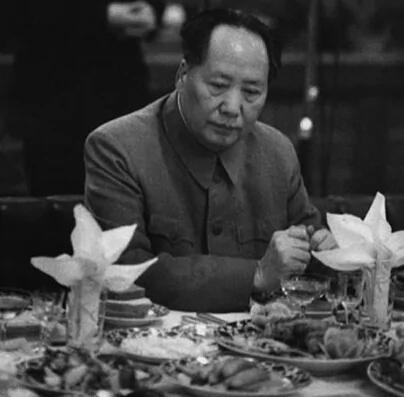
Chairman [Mao Zedong]: Cuban Delegation, welcome.
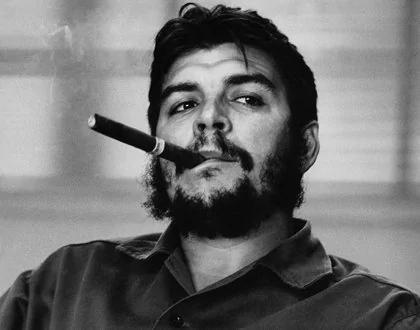
[Ernesto “Che”] Guevara: It is a great pleasure [for us] to have this opportunity of greeting Chairman Mao [in person]. We have always venerated Chairman Mao in our struggle. We are an official delegation, representing Cuba, but members of our delegation were born in four nations.
Chairman: You are an Argentinean.
Guevara: Born in Argentina.
Chairman: Where else were people in the delegation born?
Guevara: [Ramiro Fernando] Maldonado [Secretary-General, Revolutionary Social Party of Ecuador] is an Ecuadorian, [economist Albán] Lataste a Chilean, I was born in Argentina, all the rest [were] born in Cuba. Although some of us were not born in Cuba, the Cuban people do not resent us by saying we were not born in Cuba. We actually defend the Cuban revolution. Fidel [Castro] represents the will of all Latin Americans.
Chairman: You are internationalists.
Guevara: The internationalists of Latin America.
Chairman: Asian people, African people, and the entire socialist camp support you. Last year you visited a few Asian countries, [didn’t you]?
Guevara: A few countries, such as India, Siam [Thailand], Indonesia, Burma, Japan, Pakistan.
Chairman: Except for China, [you] have you been to all major Asian countries.
Guevara: That’s why I am now in China.
Chairman: Welcome to you.
Guevara: Our internal situation had yet to stabilize when I left Cuba last year, which was why we dealt carefully with the outside world, unlike now. [Now] the domestic situation is consolidated and we can be firmer.
Chairman: The present international situation is better than last year.
Guevara: The entire nation is united, but every day the imperialists are expecting us to split.
Chairman: Apart from workers and peasants, who else have you united with?
Guevara: Our government represents workers and peasants. Our country still has a petite bourgeoisie which has a friendly relationship and cooperates with us.
Chairman: [Are there] no national bourgeoisie?
Guevara: The national bourgeoisie were basically importers. Their interests were entangled with imperialism and they were against us. [This is why] we destroyed them, both economically and politically.
Chairman: They were comprador bourgeoisie. [They should] not be counted as national bourgeoisie.
Guevara: Some people depended entirely on imperialism. Imperialism gave them capital, technology, patents, and markets. Although they lived in their own country, their interests were entangled with imperialism, for example, sugar traders.
Chairman: Sugar entrepreneurs.
Guevara: They were. Now the sugar business has been nationalized.
Chairman: You have basically expropriated all US capital.
Guevara: Not basically, but all. Perhaps some capital escaped [from expropriation]. But it is not that we do not want [to expropriate it].
Chairman: Did you offer compensation after expropriation?
Guevara: If [a sugar company] purchased over three million tons of sugar from us [before expropriation], [we] would offer a compensation of 5 percent-25 percent [of the value of sugar purchased]. [People] unfamiliar with the situation in Cuba would find it difficult to comprehend the irony embedded in this policy.
Chairman: According to the press, you returned the capital and profits on a 47-caballeria per year basis with an annual interest rate of 1 percent.
Guevara: Only [the companies] that purchased over 3 million tons of sugar would be compensated. No procurement, no compensation. There were two Canadian banks, relatively big. We did not nationalize them, which is consistent with our domestic and foreign policies.
Chairman: To temporarily tolerate the presence of some imperialist companies is strategically acceptable. We too have a few [imperialist companies] here.
Premier [Zhou Enlai]: Just like the HSBC [Hong Kong and Shanghai Banking Corporation], whose presence is just symbolic.
Guevara: These Canadian banks in Cuba are the same as the HSBC here.
Chairman: You [should] unite workers and peasants, namely, the majority.
Guevara: Some people from the bourgeoisie went against us and joined the enemy’s camp.
Chairman: Those who go against you are your enemies. You have done a great job in suppressing counter-revolutionaries.
Guevara: Counter-revolutionaries conducted aggressive activities. [For example,] sometimes [they] occupied a few islands, [in which case] they would be annihilated soon afterwards. Nothing to worry about. [We] executed their leader by shooting whenever [we] captured them. Their equipment was parachuted, all from the US.
Chairman: You have also captured several Americans [didn’t you?]
Guevara: [They were] tried immediately and executed by shooting.
Premier [Zhou Enlai]: The American government protested and you responded.
Chairman: You are firm. Be firm to the end, this is the hope [of the revolution], and imperialism will find itself in greater difficulty. But waver and compromise, and imperialism will find it easier [to deal with you].
Guevara: In the first stage of our revolution, Fidel proposed a way to solve the public housing problem, because the government bears the responsibility to make everyone own a house. We confiscated properties of big house owners and distributed them among the people. Small house owners keep their properties as usual.
Chairman: And then?
Guevara: Now we are in the second stage of the revolution, i.e. to end the phenomenon of one man exploiting another. With close reference to the domestic and international situation, we are working on consolidating our regime: eradicating illiteracy and unemployment (which is in a particularly grave situation), developing the industrial sector, and furthering land reform.
Chairman: Excellent. You have influenced Latin America, and even Asia and Africa. They will be influenced as long as you do well.
Guevara: Particularly Latin America.
Chairman: Latin American petite bourgeoisie and national bourgeoisie are afraid of socialism. For a substantial period, you should not rush on the social reform. This approach will do good to win over Latin American small bourgeoisie and national bourgeoisie. After victory, Jiang Jieshi’s [Chiang Kai-shek’s] businesses and those businesses previously owned by Germany, Italy, and Japan but later converted into Jiang’s assets were all nationalized, which enabled state-owned capital to account for 80 percent of all industrial capital. Although national bourgeoisie occupied only 20 percent [of all industrial capital], they employed more than 1 million workers and controlled the entire commercial network. It took us nearly 7 years to solve this problem. [We] gave them jobs, voting rights, joint private-and-public management and interest buy-outs, in the hope of solving this problem. This [combined] solution made them satisfied and delivered a relatively good effect abroad. After looking at this solution, although the Asian bourgeoisie were not entirely happy, they agreed that it was an acceptable way to unite them, and it was fine to use the policy of buy-outs. The problem of the urban handicraft sector and petite bourgeoisie was tackled, likewise, by means of cooperatives.
Guevara: We should borrow experience from other countries, including China and other socialist countries. As for the bourgeoisie, we give them respect, jobs, and money, wishing they do not go abroad. We also give wages to technicians. Traditionally, we do not have a handicraft industry; therefore no problem appears in this regard. We have united the unemployed into cooperatives which in return gave them jobs.
Chairman: The US does not want Cuba to have national bourgeoisie. This is the same case for Japan in Korea and China’s Northeast [i.e. Manchuria], and for France in Vietnam. They did not allow local people to build bigger plants.
Guevara: This phenomenon resembles [what happened in] Latin America. In order to destroy feudalist forces, imperialism fostered the national bourgeoisie. The national bourgeoisie may have also asked for a higher import tax. But they did not stand for national interests; they were, in fact, colluding with imperialism.
Chairman: I have a question. Is the Brazilian steel industry connected with the US in terms of capital?
Guevara: Major Brazilian metallurgical factories were founded with American capital.
Premier [Zhou Enlai]: What’s the percentage of American capital? Brazil produces 1.6 million tons of steel [annually].
Guevara: The overall amount of capital for the largest Brazilian factory is not quite clear. But technologically, it entirely depends on the US. Brazil is a big country, yet there is actually no substantial difference between it and other Latin American countries.
Chairman: I have another question. It took more than two years for you from initially landing on Cuba to the moment of ultimate victory. You united peasants and won a victory. Is there any possibility that other Latin American countries could follow this model?
Guevara: This question cannot be answered in one way [yigaierlun]. Indeed, you have more experience and more insightful analysis [than us]. In my opinion, Cuba faced a more difficult setting for revolution than other Latin American countries. There was, however, only one favorable factor: we gained victory by exploiting the negligence of the imperialists. The imperialists did not concentrate their forces on dealing with us. They thought Fidel would ask for loans after victory and cooperate with them. [By contrast,] initiating revolution in other Latin American countries would face the same danger as Guatemala—the US interfering by dispatching marines.
Chairman: Are there any differences [among these Latin American countries] in terms of the domestic situation?
Guevara: Politically, there are [differences]. But socially speaking, [all these countries] fall into only two or three categories. Three countries have [an ongoing] military struggle. They are Paraguay, Nicaragua, and Guatemala.
Chairman: The US now has turned its spear [duifu] on Guatemala and Nicaragua.
Guevara: In Columbia and Peru, the possibility for a great people’s revolution movement emerges.
Chairman: In Peru, as I said, the majority of the people need land. Also in Columbia.
Guevara: The case of Peru is interesting. It has always had a custom of primitive communism. The Spanish during their reign brought in feudalism and slavery. But primitive communism did not die out due to that. On the contrary, it survives until now. The communist party won the election in Cuzco. This struggle [for communist victory in election] is entwined with racial struggle. Many native Indians live in Peru, but only the white people and the white/Indian mestizos could own land and be landlords.
Chairman: The local people have a population of from 9 million to 10 million, whereas the Spanish population there is measured only at ten thousand.
Guevara: These figures might have been exaggerated. Peru has 12 million people, of which 10 million are native and 2 million are whites.
Chairman: [Peru is] similar to South Africa. South Africa has only 3 million British.
Premier [Zhou Enlai]: There are 3 million British, 1 million Dutch, 1 million half-bloods, 8 million Blacks, and half a million Indians. People of the latter two categories live in the most miserable situation of all. Only the white people have voting rights.
Guevara: Peru still has slavery. Land is normally sold with humans.
Premier [Zhou Enlai]: Like Tibet in the past.
Guevara: In those backward areas, inhabitants do not use money. When it comes to selling, [the seller] puts the goods for sale and copper coins on each side of a balance as to measure them. Notes are not used there.
Chairman: The situation in Columbia is somewhat different [, isn’t it]?
Guevara: Columbia has weaker feudalism but faces a far stronger Catholic presence. Landlords and the Catholic Church gang up with the US. The native Indians are poor but not slaves. Guerilla forces used to be present in Columbia, but now they have stopped fighting.
Chairman: Does Cuba have diplomatic relations with other Latin American countries?
Guevara: Several countries colluded with each other and severed their relations with Cuba. These countries are Haiti, the Dominican Republic, and Guatemala. Columbia, El Salvador, Honduras together declared the Cuban ambassador persona non grata. Brazil withdrew its ambassador, which however was for another reason.
Permier [Zhou Enlai]: So together there are 7 countries.
Chairman: In that case, [Cuba] has relations with most countries: 19 [Latin American countries] minus 7 equals 12.
Guevara: [Cuba] has no relations with the first 3 [i.e. Haiti, the Dominican Republic, and Guatemala]. In the latter 4 countries [Columbia, El Salvador, Honduras and Brazil], there are Cuban chargé d’affaires, though no Cuban ambassador. For Cubans going to Brazil, it is just like going to the other side of the so-called Iron Curtain.
Chairman: What are the natures of the wars in Guatemala and Nicaragua? Are they people’s wars?
Guevara: I cannot provide an accurate answer. My impression is that [the war in] Guatemala is [people’s war] while [the war in] in Nicaragua is just one of the normal kind. [They are] distant [from Cuba]. I have no idea [of the nature of their wars]. [What I said] is just a subjective answer.
Chairman: Is what happened in Guatemala connected to [Jacobo] Arbenz [Guzman]?
Guevara: I have only seen the declaration of Arbenz on this issue before I left for China. The revolution [there] is perhaps of a popular nature.
Chairman: So Arbenz is now in Cuba?
Guevara: Yes, in Cuba.
Chairman: He has been to China and the Soviet Union. A nice person.
Guevara: We trust him. He made mistakes before, but he is upright, firm, and could be trusted.
(Chairman invited all members of the delegation for dinner, during which they also had the following conversation)
Guevara: Between China and Cuba there are two things almost identical which very much impress me. When you were waging revolution, Jiang Jieshi’s attack upon you was [called] encirclement and suppression [weijiao], two words that were also used by reactionaries in our place. The strategies [used by them] are the same.
Chairman: When alien entities enter the body, white cells will encircle and suppress them. Jiang Jieshi treated us as bacteria and wanted to destroy us. We’ve fought against him off and on for 22 years, with two cooperations and two break-ups which naturally prolonged the time. In the first cooperation, we committed [the mistake of following] rightist opportunism. Within the party the rightist group emerged. The result was that Jiang Jieshi purged the party, opposed communism, and suppressed with war, which happened during the Northern Expedition. The second period, from 1924 to 1927, was of nothing but war. We were left with no way, just like Batista not leaving you any way out but killing people. Jiang Jieshi taught us and also, the Chinese people, just like Batista taught you and the Cuban people alike: besides picking up arms and fighting, there is no other way out. We all did not know how to fight, nor did we prepare to fight. The Premier and I are intellectuals; he (referring to Li Xiannian, Vice-Premier) was a worker. But what other choice were [we] left with? He [Jiang Jieshi] wanted to kill.
(Chairman raised a glass to propose a toast to the success of the Cuban people’s revolution and the health of all member of the delegation)
Chairman: Once the war broke out, it continued for the following ten years. We built up base-areas, but committed [the mistake of following] rightist opportunism; when the policy leaned excessively to the left, [we] lost the base-area consequently, and were forced to go away, which was the Long March. These errors taught us—basically we made two errors, one rightist and another leftist—and a lesson was learned. When Japan broke into China with a war, we again cooperated with Jiang Jieshi, an episode you didn’t have.
Guevara: It’s lucky that [we] did not have [it].
Chairman: You didn’t have the possibility of cooperating with Batista.
Guevara: Batista had no conflict with the Americans.
Chairman: Jiang Jieshi is the dog of Britain and the US. When Japan invaded [China], Jiang Jieshi did not approve. In the third period, [which lasted for] 8 years [1937-45], [we] cooperated with Jiang Jieshi to fight against Japan. The cooperation was not a good one, [for] Jiang Jieshi represented the comprador capitalist class, being the comprador of Britain and the US. In the fourth period, arriving after Japan was repelled, Jiang Jieshi attacked; we spent one year on defending [against him] and then struck back, which all together cost three years and a half; in 1949, [we] achieved overall success and Jiang Jieshi fled to Taiwan. You don’t have Taiwan Island.
Premier [Zhou Enlai]: You have Binuo Island [the Isle of Pines]. But before Batista had the time to flee to this island, they captured the Isle of Pines.
Chairman: It’s very good to capture it.
Guevara: The possibility of a US attack remains.
Premier [Zhou Enlai]: The Americans attempted to attack the Isle of Pines.
Chairman: So American imperialism is our shared enemy, also the shared enemy of people of the world. You all look very young.
Guevara: We hadn’t even been born when you started to wage revolution, except him (referred to Maj. Suñol) having already been born. He, 35 years old, is the old man among us.
Chairman: In the past, we struggled in war. Now [we] should struggle in construction.
[Commandante Eddy] Suñol: Defend the revolution.
Guevara: China also shares another thing with Cuba. The situation evaluation [produced in] the 1945 CCP party congress reads: some urban people despised villages; our struggle was divided into two parts: one was to conduct guerrilla warfare in mountainous areas and the other was to strike in cities; people who promoted striking held in contempt those who fought guerrilla warfare in mountainous areas. In the end, those who promoted strikes failed.
Premier [Zhou Enlai]: Very similar.
Chairman: Gaining comfort from squandering forces—this is adventurism. [When they are] unable to pay attention to villages, it is not at all easy for urban people to ally with peasants.
Premier [Zhou Enlai]: It dawned on me after I read your article of October 5 (referred to Guevara’s note published in the magazine Verde Olivio about research on Cuba’s revolutionary ideology). I read the abstract of this article and the issues that you raised. [You] could be regarded as an intellectual.
Guevara: [I’m] yet to reach the stage of being an intellectual.
Chairman: [You have] become an author. I, too, read the abstract of this article, and very much agree with your points. [The article] could possibly influence Latin America.
Premier [Zhou Enlai]: Have you brought the full text with you?
Guevara: would try to find out.
Chairman: You raised three principles in your articles. People could defeat reactionaries. [They] don’t have to wait for all conditions to become matured so as to start revolution. What was the third principle?
Guevara: The third principle is that in Latin America, the main task lies in rural areas.
Premier [Zhou Enlai]: It’s very important to connect [revolution] with rural areas.
Guevara: We very much stick to this point.
Premier [Zhou Enlai]: Some Latin American friends did not heed peasants, whereas you very much heeded this point and succeeded. The Chinese revolution is the same: many people did not attach importance to the contribution of peasants, whereas Comrade Mao Zedong very much heeded this point.
Chairman: The enemy taught us, not allowing us to exist in cities. He [Jiang Jieshi] wanted to kill people. What else could you do?
Guevara: A point in Chairman Mao’s works is found by Fidel [Castro] to be very important, which I failed to notice at the beginning. That is to treat war prisoners generously: to cure their wounds and send them back. [We] realized this point which helped very much [in our struggle].
Chairman: This is the way to disintegrate enemy troops.
Premier [Zhou Enlai]: Your article also touched on this point.
Guevara: This [point] was later added. Originally, we took away shoes and clothes from prisoners, because our soldiers did not have [any shoes or clothes]. Yet later Fidel forbade us from doing this.
(Chairman raised his glass and proposed a toast to the health of Fidel).
Guevara: [People] couldn’t eat well when waging guerrilla warfare. [We] were also short of spiritual food. [We] couldn’t read materials.
Premier [Zhou Enlai]: When Chairman Mao fought guerrilla warfare, he often sent people for newspapers.
Chairman: Treat newspapers as information. The enemy’s newspapers often leaked enemy’s moves, which was one source of information. We began the revolution with several thousand people; [the size of troops] then became over ten thousand, and later grew into three hundred thousand, at which point [we] committed the leftist mistake. After the Long March, three hundred thousand shrank to twenty five thousand. The enemy became less afraid of us. When the Japanese invaded [China], we wanted to cooperate with Jiang Jieshi. He said that we could [cooperate with him], because given [that there were] so few [of us], he did not fear us. The purpose of Jiang Jieshi was to let the Japanese annihilate us. But [he] did not expect us, after we fought with Japan, to grow from twenty thousand to one million and several hundred thousand. When Jiang Jieshi’s four million troops, after the Japanese surrendered, began to attack us, we had one million troops, and base-areas had a population of one hundred million. Within three and a half years, we defeated Jiang Jieshi. That [warfare over these years] was not guerrilla warfare anymore; that was large-scale warfare. Planes, cannons, tanks, as mentioned in your article, all failed to play any critical role. Back then, Jiang Jieshi had them all, while we had none of them. Only later on [we] captured some cannons.
Premier [Zhou Enlai]: In the late period, [we] even captured tanks.
Chairman: The main [type of weaponry we captured] was artillery, which enabled us to set up artillery divisions, artillery brigades, or artillery regiments. They were all US equipment.
Premier [Zhou Enlai]: After Beijing was liberated, we had a parade. All were US equipment. Back then, the American hadn’t left. The US Consulate General and military attaché also came and watched.
Guevara: In my early time in war, the people I led barely exceeded a company. Once, a tank was captured and we were then filled with extreme joy. But Fidel wanted to take it away. I was unhappy, and agreed to submit only after a bazooka was brought to me for exchange.
Chairman: Although planes fly in the sky every day, they could hardly make any casualties. [People] could dress in camouflage. Green clothes could be used to change one’s appearance. You are all wearing uniforms. You were all soldiers.
Guevara: Rodriguez (Deputy Foreign Minister) was not. He was then suffering in jail.
Chairman: You (referring to Rodriguez) look very young.
Rodriguez: 25 years old.
Chairman: You (referring to Mora and Suñol) were soldiers.
Guevara: Mora’s father was shot dead in war. Suñol has been wounded three times, in 6 parts [of his body]. I myself have been wounded two times. Rodriguez has been tortured in prison. We had very few men at first. Fidel even fought with his own gun. [We were] only twelve people.
Chairman: Weren’t there eighty something people?
Guevara: The size decreased gradually, with only twelve people left in the end.
Chairman: These twelve people are seeds. The temperature in your place is good.
Guevara: [Cuba is] at 22 degrees north.
Chairman: Your lands are also good.
Guevara: All lands could be cultivated. Coconut trees could be planted in areas of sand. But it’s difficult to grow crops in the mountains.
Chairman: So [the population of] your country could at least grow to 30 million.
Guevara: Indonesia’s Java Island has as many as 50 million [people].
Chairman: You should thank [General Rubén Fulgencio] Batista [y Zaldívar], in the same way we thank Jiang Jieshi. He offered us lessons by killing people.
[Alberto] Mora [Becerra]: We are grateful to Batista also because he drove more people to our side.
Chairman: We have another teacher, which is imperialism. It is our long-term educator. The best teacher is American imperialism. You too have two teachers, Batista and American imperialism. [As far as I know,] Batista is now in the US. Is he thinking of a restoration?
Guevara: Batista’s followers are now split into 5 factions, which have together elected 5 presidential candidates. These candidates have views different from each other. Some oppose Batista while others behave like Batista more or less.
Chairman: They all are no match for Batista. How old is Batista?
Guevara: 60 years old.
Chairman: Our Jiang Jieshi is now 74 years old, craving to return to Beijing every day.
Mora: These 5 candidates were all party leaders. People know their names and they too crave to return to Cuba every day.
Guevara: They departed from Central America, four-five days after our victory, and planned to land in Cuba. They said they came to overthrow Batista without being informed that we have already obtained the victory for the revolution.
Chairman: There are many Central American countries. In my opinion, the Dominican Republic is promising, for people there all rally against [Rafael Leonidas] Trujillo [Molina].
Guevara: It is difficult to say. Trujillo is the most mature [changshu] dictator in Latin America. The Americans are thinking to get rid of him.
Chairman: The Americans do not like Trujillo?
Guevara: Everybody opposes him, therefore he has to be replaced.
Premier [Zhou Enlai]: Like [South Vietnamese leader] Ngo Dinh Diem and [South Korean leader] Syngman Rhee.
Chairman: Ngo Dinh Diem is now whining the most [dafalaosao].
Premier [Zhou Enlai]: The life of a client is not easy.
Chairman: The Americans now do not like Jiang Jieshi. We become fonder of him. Those who are 100 percent pro-American are worse than Jiang, who is just 99 percent pro-American. He still wants to retain his own influence.
Premier [Zhou Enlai]: This is dialectical.
[Commandante Eddy] Suñol: I think you are expecting Jiang Jieshi to come back.
Chairman: As long as he disconnects himself from the US, we shall provide him a place in our government.
Premier [Zhou Enlai]: Better if he could bring back Taiwan along with him.
Chairman: It seems that he is not interested in coming back though.