Ambivalent Allies: Lessons from John Ciorciari’s “China and the Pol Pot Regime”
One of the more predictable and hackneyed complaints emanating from Washington, D.C. about Chinese foreign policy behavior is Beijing’s refusal to use its leverage to shape Pyongyang’s behavior in a way that is more conducive to regional stability. This complaint ignores Beijing’s quite reasonable fear of a North Korean political meltdown in which millions of North Koreans could stream across the relatively porous border into China and settle in one of the most economically-depressed parts of the country, putting impossible demands on the state. Put simply, China is not cozying up to its socialist buddy; Beijing is petrified of a North Korean implosion, which is nothing short of an existential crisis for China’s leaders.
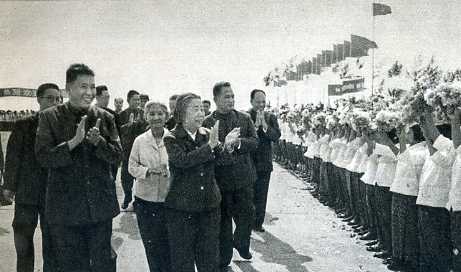
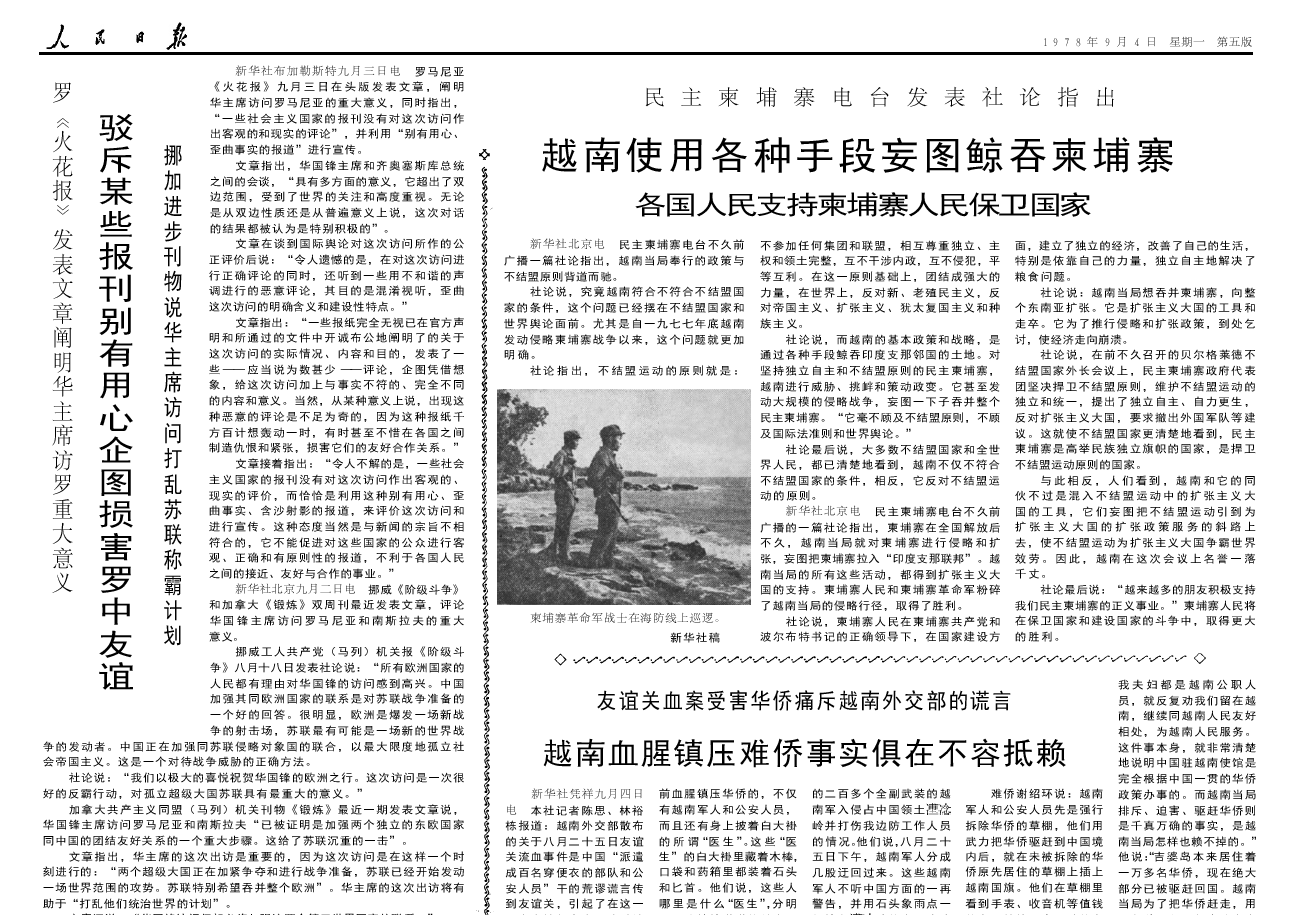
This scenario is instructive because it echoes some of the lessons of a different time (the mid-to-late 1970s) (and place Southeast, rather than Northeast, Asia) introduced in John Ciorciari’s excellent article, “China and the Pol Pot Regime.” In Ciorciari’s words, the Sino-Cambodian bilateral relationship was “a complex partnership characterized by mutual suspicion and held together more by convergent strategic aims and functional cooperation than ideational affinity” (216) and further distinguished by “Chinese weakness and the subordination of humanitarian concerns to the PRC’s fragile strategic investment” (235). Indeed,
China’s conception of its strategic interests weakened Beijing’s leverage and enabled the DK [Democratic Kampuchea] leadership to manage the relationship to a significant degree. The Sino-DK case study is an important example of weak states’ ability to exert influence and autonomy in asymmetric alliances, sometimes to the detriment of their larger allies (217).
This, Ciorciari suggests, portends “lessons of great relevance to China’s contemporary foreign relations” (217). I fully agree.
In the spirit of full disclosure, Ciorciari and I have crossed paths many times over the past five years, and we have commented on earlier drafts of each other’s work, including this piece (and he has generously shared his field notes with me). Moreover, there is a limit to the amount of data available on this subject and a simple perusal of our collective footnotes and bibliographies shows no small amount of overlap. Perhaps more to the point, Ciorciari and I are largely in agreement in the conclusions that each of us has drawn from the data, that is, that China and Democratic Kampuchea were joined at the hip but that despite this, Chinese influence on DK policy was at best minimal.
Rather than critiquing Ciorciari’s article, therefore, I would like to expand upon some of the larger discussions that the piece itself opens up, and in such a way engage parts of Ciorciari’s argument as well as those of others he cites to deepen the conversation on this very important yet under-studied topic.
Although Ciorciari states up front that the “article draws on detailed field interviews with former Khmer Rouge cadres who worked alongside Chinese officials between 1975 and 1979” (216), his approach focuses much more on the top-down than the bottom-up in terms of his levels of analysis, as he himself says: “policy at lower levels unsurprisingly mirrored the PRC’s high-level approach” (229), the exception being his terrific discussion on pages 226 to 230.
Ciorciari’s level of analysis in examining this key historical relationship makes this article particularly useful in understanding more contemporary bilateral engagements on the part of Beijing.
First of all, Ciorciari makes what may seem to be an obvious point, but one that seems to be anything but: Beijing’s insistence on nonconditionality of its aid actually weakened its ability to influence the recipient of such aid. This is, of course, one of the ideas that make Sophie Richardson’s analysis[1] of the bilateral relationship so credible, that is, Beijing’s willingness to subvert immediate self-interest to the longer-term imperatives of non-interference. But given the dire warnings of many in the policy community about China’s ability to pull the rug out from under traditional, conditional foreign aid and thus muscle its way into a position of international influence at the expense of, say, the West, the weaknesses inherent in nonconditionality should be underscored, as Ciorciari does so nicely here.
Second, Ciorciari echoes an important point that Beijing’s policies toward DK were remarkably consistent throughout the three years, eight months and twenty days of Pol Pot’s rule. I would go a step further: the full gamut of Chinese politics – from ultra- nihilistic leftism to über pragmatism – were on display from April 17, 1975 (when the Khmer Rouge marched into Phnom Penh and Chairman Mao Zedong was shoring up support behind the leftist faction) to the Vietnamese invasion at the very end of 1978 (coinciding with the Third Plenum of the Eleventh Central Committee in China, which put China on the course of economic reform it remains upon today). In other words, the tenure of the Khmer Rouge provides a critical case to test Beijing’s foreign policy consistency. It thus provides an extremely potent argument against those who say that the bilateral relations were influenced by the domestic politics of the two countries. Such a claim makes Chinese foreign policy behavior at that time far more similar to what it is today, a point that is at the core of Richardson’s analysis and which Ciorciari’s strongly implies.
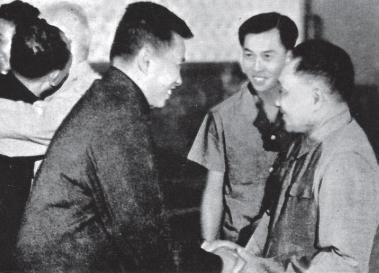
Third, I have argued that different levels of analysis might suggest wildly differing motivations that nonetheless fueled similar-looking behavior. Radical Maoists like Zhang Chunqiao or Chen Yonggui drew on the Cambodian revolutionary experiment to build up support at home, ultimately unsuccessfully. Non-ideological pragmatists like Deng Xiaoping and even Hua Guofeng could justify their continued support of Pol Pot based on their strategic preoccupation with Vietnam (indeed, on June 22, 1979, the minister of economic relations with foreign countries Chen Muhua told visiting US cabinet secretary Joseph Califano, “If the Cambodian people have to pay for China’s interests, so be it”).[2] Regardless of their ideological orientation, therefore, Chinese elites had no room to consider the suffering of the Cambodian people.
That responsibility fell to those Chinese who were on the ground in Democratic Kampuchea. But by their very presence on Cambodian soil, these Chinese technical experts and advisers have been saddled with an implied cognizance and even a suggested complicity in the horrors that were unfolding in DK. And it is worth asking: is this fair?
The question on most people’s minds when the topic of Chinese aid for DK comes up is what, if anything, the Chinese knew. Ciorciari’s assertion that Chinese expatriates’ “access to information about events outside of their immediate workplace, including atrocities, was quite limited and dependent on rumours and euphemistic reports from their Cambodian counterparts and handlers” (219) is consistent with my findings.[3] No doubt many people will read this with some degree of incredulity, but it is important to remember several things.
First of all, even those people closest to the killings taking place in the countryside did not see what actually happened to those taken off and killed. Memoirs describe people as having ‘disappeared,’ rather than having been publicly executed[4] (of course, there were instances when people accidentally stumbled upon jungle killings in progress or came across corpses that showed signs of torture and execution).[5] If these people could not exactly say what had happened to Khmer Rouge victims – neighbors and family members who lived among them – the carefully billeted Chinese experts (who, in any case, did not live among the villagers) were at least one degree of separation (and probably more) from this.[6]
Second, as David Chandler and others have argued, Santebal-21 (also referred to as “S-21” and “Tuol Sleng,” where up to fourteen thousand men, women, and children were tortured into making phantasmagoric confessions before being killed) was notable by the imperative that its very existence was to be kept secret.[7] A number of DK cadres giving testimony at the Extraordinary Chambers in the Courts of Cambodia (ECCC) were unaware of S-21, and it seems even less likely that the Chinese could be trusted with knowledge of S-21 and what was done there. Again, such knowledge would have defeated the very purpose of Tuol Sleng.
In other words, it is not unreasonable to suggest that the Chinese did not know exactly how, why, when, or under what circumstances DK killed its own citizens.
Of course this is not to say that the Chinese felt everything was going smoothly, either. Officials who had been their conduits to the DK ministries disappeared with uncomfortable regularity, never to return. Many of these Chinese saw Cambodian workers who were on starvation diets and who worked long hours with little relief. That the Chinese technicians knew that these workers were living under singularly oppressive conditions is suggested by the fact that they would give extra food and cigarettes to the Cambodians when Khmer Rouge cadres were not looking and made a point of never criticizing Cambodian workers in front of their (Cambodian) superiors.[8]
The fact of the matter is that many of the Chinese who were on the ground in Cambodia were themselves just beginning to emerge from under the political cloud they had been under since the Anti-Rightist Movement of 1957-1958, when the intellectual class in China was punished for daring to criticize PRC governance after being asked to do so by Mao Zedong. The Chinese experts, to put it bluntly, had a pretty good idea of what it looked like to be on the sharp end of political purge, even if what they had experienced was mild by comparison.[9]
Others have argued that the Chinese trained the Khmer Rouge cadres in the arts of torture and confession. Youk Chhang has made this specific claim several times.[10] He presumably is drawing from David Chandler and Steve Heder, both extraordinary Cambodia scholars (also cited by Ciorciari), who note a Chinese connection[11]; Sophie Richardson quotes a personal communication with Steve Heder in which he says that “S-21 [the KR’s main torture facility] combatants were trained by the Chinese as ‘special forces’…[although] there was no training in torture per se.”[12]
I cannot comment on Heder’s first observation (and there is evidence that the photographers at S-21 were, in fact, trained by the Chinese[13]). His second observation is, however, consistent with my understanding of the Chinese approach to political malfeasance, which deviated quite strongly from Soviet and DK practice. In China, Mao introduced rectification doctrine (zhengfeng) as a way of rehabilitating – through reeducation – errant cadres and citizens who exhibited “non-antagonistic contradictions.” Recollections of Chinese political prisoners from the 1950s through the present note a pattern of procedure that could not be more different from those in place at S-21.[14] Tuol Sleng invokes Darkness at Noon far more than Life and Death in Shanghai.[15] Where Chinese practice – as distinct from doctrine – began to resemble DK practice was in the debasement of Chinese rectification procedures, particularly during the radical phase of the Cultural Revolution (1966-1969).
Indeed, one of the few things the Khmer Rouge excelled in was in torturing and killing people they deemed threatening or ‘unnecessary’ (“your survival is no gain, your destruction is no loss”).[16] Moreover, given the DK obsession over self-sufficiency, it seems extremely unlikely that the Khmer Rouge would have asked the Chinese to teach them how to torture and execute enemies of the regime.
In sum, the data supports Ciorciari’s assertion that “the evidence connecting China to the management of the internal security apparatus is indirect, and no compelling proof has [yet] emerged” (227-228).
Of course, some minor quibbles with Ciorciari are inevitable, none of which detract from his main argument or the quality of his research. Deng Xiaoping did not reemerge after his April 1976 purge until July 1977 (not October 1976, as Ciorciari asserts on page 224). Ciorciari mentions an interview with a former DK official named Kan as his source for the claim that “in exchange for machinery, Democratic Kampuchea sent large regular shipments of rice, grain products, and other materials to China” (222). When I tried to locate Kan in January 2013, I was unsuccessful (I ended up with a family of boat builders deep in the Kampong Thom jungle whose patriarch went by that same name) and could therefore not follow up on this line of inquiry. But the shipping records available at the Cambodian National Archives do not anywhere list a shipment of rice to China. They do, however, list exports of 5,250 tons of rice in May 1977, 5,190 tons in October 1977, and 6,263 and 8,360 tons in January and February, respectively, all of which was destined for Madagascar.[17] Finally, it is not accurate to label, as Ciorciari does, Khieu Samphan and Ieng Thirith as members of the Standing Committee of the Communist Party of Kampuchea (CPK). Ieng Thirith certainly was not, and Khieu Samphan attended CPK meetings more as a functionary or note-taker than a ranking member of substance or standing.
The tepidness of my ‘critique’ serves to underscore the quality, integrity, and importance of Ciorciari’s analysis. I believe it is by far the best article-length encapsulation of the relationship between China and Democratic Kampuchea that exists, and it should be required reading for anybody interested in the Khmer Rouge more generally.
Andrew Mertha is Professor of Government at Cornell University. His publications include The Politics of Piracy: Intellectual Property in Contemporary China (Cornell University Press, 2005), China’s Water Warriors: Citizen Action and Policy Change (Cornell University Press, 2008), and Brothers in Arms: Chinese Aid to the Khmer Rouge, 1975-1979 (Cornell University Press, 2014). His current project explores the bureaucratic politics of “thought work” in China. Mertha received his Ph.D. in Political Science from the University of Michigan in 2001.










![Brothers in Arms: Chinese Aid to the Khmer Rouge, 1975a€“1979 by [Mertha, Andrew C.]](https://images-na.ssl-images-amazon.com/images/I/51n4zjYGJ%2BL.jpg)



 !
!