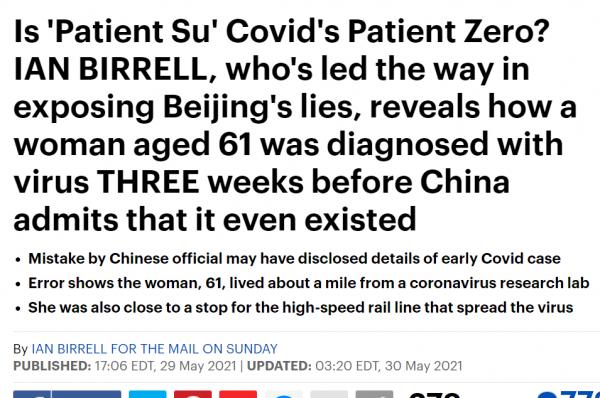
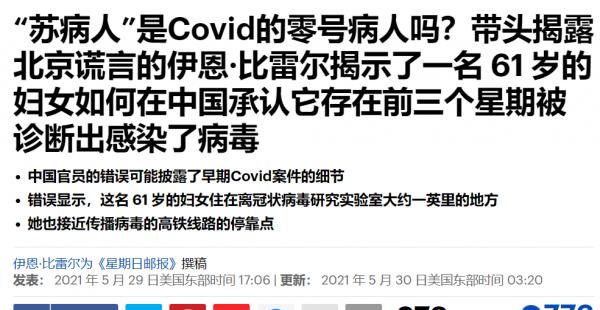
A mistake by a leading Chinese official may have disclosed the name, address and details about one of the first people suspected of being infected with Covid-19 in Wuhan, three weeks before Beijing authorities claim they detected the initial case.
The astonishing error, revealed in a screen-grab sent to a Chinese medical journal, shows that the 61-year-old woman, known as ‘Patient Su’, lived about a mile from one of the city’s main coronavirus research labs.
She was also close to a stop for the high-speed rail line that is believed to have played a key role in spreading the virus around the city of 11 million people.
Tom Tugendhat MP, chairman of the Common’s foreign affairs committee, said: ‘The time has come for China to open up all its files so the world can find the truth about the origins of this pandemic.
‘We cannot protect against future risks if there is not recognition that we all need to share knowledge and learn from any mistakes.’
This latest development emerged as the result of an interview given to a Chinese medical journal by the scientist tasked with compiling the country’s official data on cases.
Professor Yu Chuanhua, professor of biostatistics at Wuhan University, told Health Times that he had 47,000 cases on his national database of confirmed and suspected cases by late February 2020.
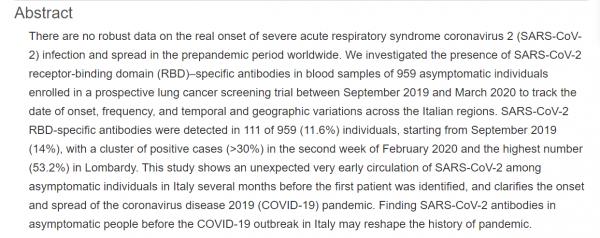
These included one suspected fatality of a patient who fell ill in late September 2019.
‘There is data on a patient who became ill on September 29,’ he said. ‘The data shows the patient has not undergone nucleic testing and the clinical diagnosis is a suspected case. The patient has died. The data has not been confirmed.’
The academic then detailed two more suspected cases reported to Wuhan doctors on November 14 and 21, along with several others before December 8 – the date that China gave to the World Health Organisation for the ‘earliest onset case’.
The Health Times article included a screenshot of the two November cases on the professor’s database. Although personal details were blurred out, some were visible, including the hospital name and home district.
They show Patient Su was treated at Rongjun Hospital in Wuhan and, given the building and street numbers, almost certainly lived in the Kaile Guiyan community on Zhuodaoquan Street, about 600 metres from the medical centre.
Both the hospital and the residence are in the Hongshan district near where much of the bat-related coronavirus research was taking place in several laboratories.
These include a laboratory run by China’s Centre for Disease Control with the second-highest global levels of biosecurity little more than one mile away, while downtown sites run by Wuhan Institute of Virology are less than three miles away.