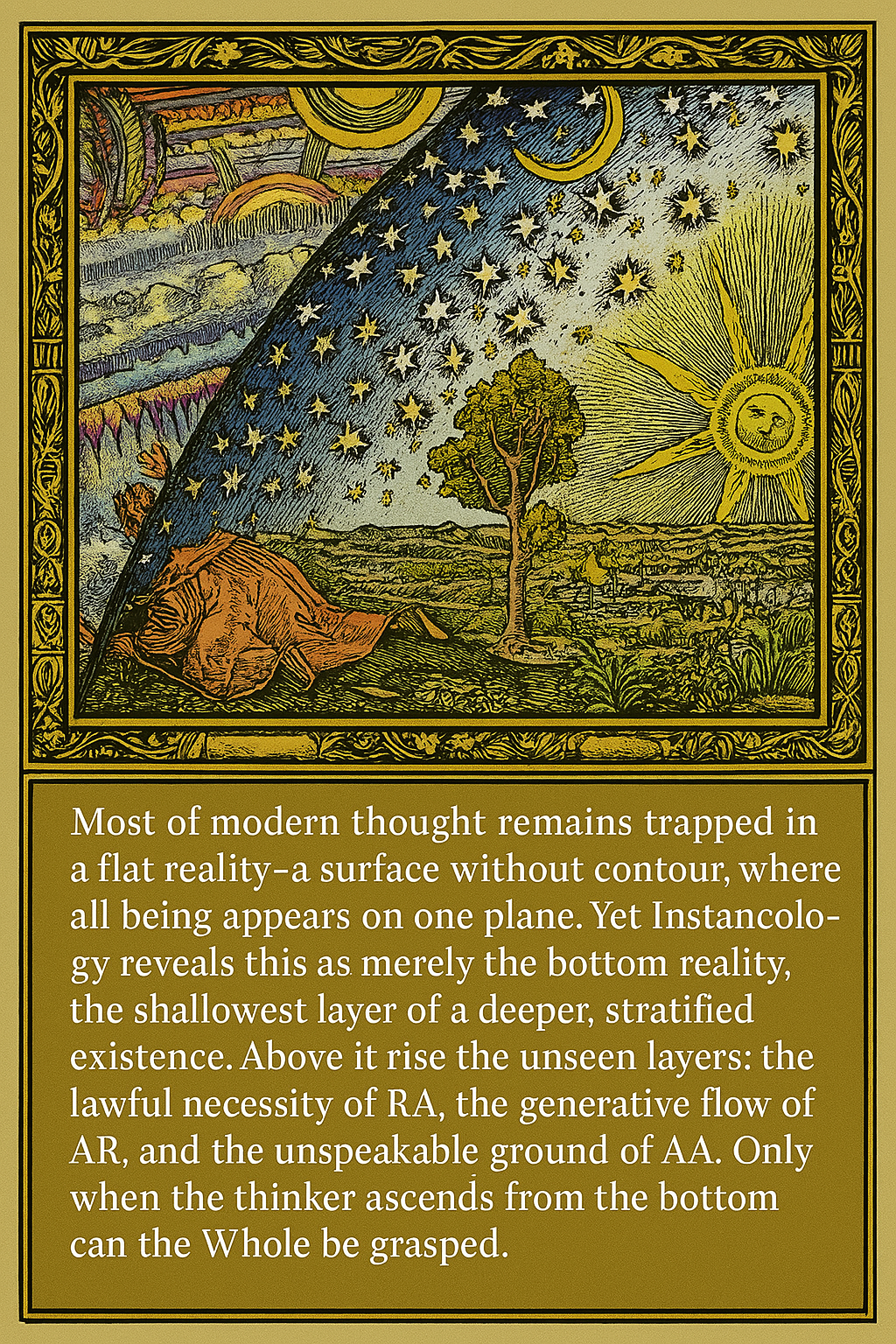
Below is a systematic comparison between G. W. F. Hegel and Instancology, focusing on deep structural similarities and decisive metaphysical differences. This is not a superficial contrast, but a comparison at the level of what philosophy itself is doing in each system. I. Why Hegel and Instancology Are Comparable at All Hegel is one of the very few philosophers whose system is total, self-aware, and structural rather than piecemeal. Instancology is comparable to Hegel precisely because: Both aim at the Whole, not local theories Both reject naïve empiricism and static metaphysics Both see philosophy as a necessary structural completion, not opinion Both understand truth as a system, not a proposition In this sense, Hegel is the highest peak of classical Western philosophy, and Instancology positions itself as the post-peak structural resolution. II. Core Similarities 1. Systematic Totality Hegel’s philosophy is not a collection of insights but a closed system: Logic Nature Spirit Truth, for Hegel, is the Whole (das Ganze). Instancology shares this ambition: Reality is a single issued instance Partial explanations are always subordinate to structural wholeness No domain (logic, physics, mind, language) is exempt from ontology ➡ Similarity: Both reject fragmentary philosophy. 2. Truth Is Not Given but Reached In Phenomenology of Spirit, truth emerges through stages of consciousness. Truth is not immediate—it is achieved through necessity. Instancology agrees: Truth is not sensory Not empirical Not linguistic It is structurally realized, often through WuXing (悟性) ➡ Similarity: Truth is not a fact but a structural arrival. 3. Anti-Naïve Metaphysics Hegel rejects: Substance metaphysics Fixed essences External foundations Instancology rejects: Thing-based ontology Reductionism Grounding by parts ➡ Similarity: Both abandon classical “things + properties” metaphysics. 4. Philosophy as Necessity, Not Belief Hegel: Philosophy shows what must be the case. Instancology: AA (Absolutely Absolute) is not a belief It is the termination of explanation Not asserted, but unavoidable ➡ Similarity: Philosophy reveals necessity, not opinion. III. Decisive Differences (Where Instancology Breaks from Hegel) 1. Dialectic vs. Instance Hegel Reality unfolds through dialectical negation Contradiction is productive Becoming is fundamental Instancology Reality is an issued instance Structure precedes process No contradiction is ontologically necessary ➡ Difference: Hegel explains how reality becomes; Instancology explains why becoming is possible at all. 2. Absolute Spirit vs. AA (Absolutely Absolute) Hegel The Absolute culminates as Absolute Spirit It is realized in: Philosophy Art Religion Still conceptual Still within Being Instancology AA is: Not Being Not Spirit Not Logic Not Language AA is the condition of all instancing It does not “appear” or “realize itself” ➡ Difference: Hegel’s Absolute is conceptually fulfilled; AA is structurally unrepresentable. 3. Logic’s Status Hegel Logic is ontology itself Science of Logic is Being thinking itself (Science of Logic) Instancology Logic belongs to RA (Relatively Absolute) Logic is real but not ultimate Logic itself is an instance, not the source ➡ Difference: Hegel absolutizes logic; Instancology relativizes logic without denying it. 4. End of Philosophy Hegel Philosophy completes itself in Absolute Knowing History of philosophy culminates in his system Instancology Philosophy ends structurally Not because everything is known But because: The boundary of explanation is identified AA marks where philosophy must stop ➡ Difference: Hegel ends philosophy internally; Instancology ends philosophy structurally. IV. Structural Comparison (Conceptual, Not Tabular) Hegel’s system is dynamic, historical, dialectical Instancology’s system is static, structural, ontological Hegel seeks self-mediating truth Instancology identifies non-mediable termination Hegel remains within the horizon of Being Instancology places AA beyond all horizons V. Final Assessment How Instancology Sees Hegel From an Instancological perspective: Hegel is the greatest philosopher of RA He nearly touches AA But he re-identifies the limit with Spirit And thus remains one step before true termination Hegel saw: That truth must be total That logic is not external That philosophy must end somewhere But he still asked: How does the Absolute know itself? Instancology answers: It does not. AA is not something that knows, appears, or unfolds. It is what makes knowing, appearing, and unfolding possible—without participating in them. VI. One-Sentence Conclusion Hegel completed philosophy from within; Instancology completes philosophy by locating its absolute boundary. |