Why misinformation about COVID-19’s origins keeps going viral
Another piece of coronavirus misinformation is making the rounds. Here’s how to sift through the muck.
8 MINUTE READ
BY MONIQUE BROUILLETTE AND REBECCA RENNER
________________________________________
PUBLISHED SEPTEMBER 18, 2020
TWENTY YEARS AGO, data scientist Sinan Aral began to see the formation of a trend that now defines our social media era: how quickly untrue information spreads. He watched as false news ignited online discourse like a small spark that kindles into a massive blaze. Now the director of the MIT Initiative on the Digital Economy, Aral believes that a concept he calls the novelty hypothesis demonstrates this almost unstoppable viral contagion of false news.
“Human attention is drawn to novelty, to things that are new and unexpected,” says Aral. “We gain in status when we share novel information because it looks like we’re in the know, or that we have access to inside information.”
Enter the Yan report. On September 14, an article was posted to Zenodo, an open-access site for sharing research papers, which claimed that genetic evidence showed that the SARS-CoV-2 coronavirus was made in a lab, rather than emerging through natural spillover from animals. The 26-page paper, led by Chinese virologist Li-Meng Yan, a postdoctoral researcher who left Hong Kong University, has not undergone peer review and asserts that this evidence of genetic engineering has been “censored” in the scientific journals. (National Geographic contacted Yan and the report’s three other authors for comment but received no reply.)
A Twitter firestorm promptly erupted. Prominent virologists, such as Kristian Andersen from Scripps Research and Carl Bergstrom from University of Washington, took to the internet and called out the paper for being unscientific. Chief among their complaints was that the report ignored the vast body of published literature regarding what is known about how coronaviruses circulate in wild animal populations and the tendency to spill over into humans, including recent publications about the origins of SARS-CoV-2.
The experts also pointed out that the report whipped up wild conspiracy theories and wrongly accused academic journals of plotting with conspirators by censoring important evidence.
This paper just cherry-picked a couple of examples, excluded evidence, and came up with a ridiculous scenario.
DAVID ROBERTSON, UNIVERSITY OF GLASGOW
In July, David Robertson, a viral genomics researcher at University of Glasgow, authored a peer-reviewed paper in Nature Medicine that showed the lineage behind SARS-CoV-2 and its closest known ancestor, a virus called RaTG13, have been circulating in bat populations for decades. Virologists think this relative, which is 96-percent identical to the novel coronavirus, probably propagated and evolved in bats or human hosts and then went undetected for about 20 years before adapting its current form and causing the ongoing pandemic.
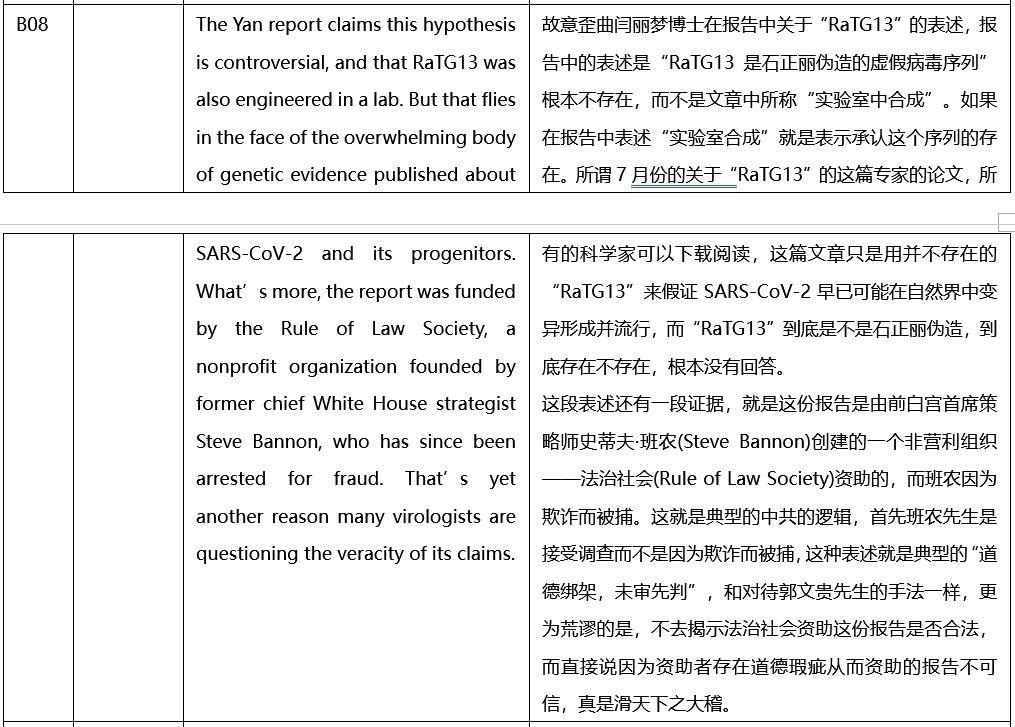
The Yan report claims this hypothesis is controversial, and that RaTG13 was also engineered in a lab. But that flies in the face of the overwhelming body of genetic evidence published about SARS-CoV-2 and its progenitors. What’s more, the report was funded by the Rule of Law Society, a nonprofit organization founded by former chief White House strategist Steve Bannon, who has since been arrested for fraud. That’s yet another reason many virologists are questioning the veracity of its claims.
“It’s encroaching on pseudoscience, really,” says Robertson. “This paper just cherry-picked a couple of examples, excluded evidence, and came up with a ridiculous scenario.”
National Geographic reached out to other prominent virologists and misinformation researchers to better understand where the Yan report came from and what it got wrong. Along the way, they offered tips for overcoming misinformation surrounding the coronavirus.
What do we know about SARS-CoV-2’s origins?
Coronaviruses exist in nature and can infect many different creatures. SARS-like coronaviruses are found in bats, pigs, cats, and ferrets, to name a few. The most widely agreed upon origin of SARS-CoV-2, based on its genetics, is that its ancestors moved around in wild animals—swapping genetic features as they went along—before they jumped into humans.
Scientists have yet to find the direct parent of SARS-CoV-2 in feral beasts, though its closest relatives exist in bats. The virus may have passed through an intermediate animal—pangolins have been implicated—and then evolved to become better at infecting humans. Or it may have made the jump directly from bats to humans, given past examples of such occurrences. After the original SARS outbreak in China 20 years ago, researchers began surveying wild bats in local caves and the people who live near them. A 2018 study found the genetic relatives of the original SARS virus in the winged mammals—as well as specific antibodies, a residual sign of infection, in their human neighbors.
Finding answers to the precise events that led to a spillover pandemic is a “needle in a haystack proposition,” says Ian Lipkin, an epidemiologist from Columbia University, who co-authored an early research paper in Nature Medicine about the natural origins of SARS-CoV-2. The Yan report claims this Nature Medicine report had a “conflict of interest” due to Lipkin’s work in containing the 2002-2003 SARS epidemic, for which he received an award from the Chinese government. Lipkin says this accusation is “absurd,” and when asked for his view on the role of bioengineering in the origins of SARS-CoV-2, he adds: “There is no data to support this.”
Uncovering the natural source of the coronavirus will likely require large-scale sampling of animals—including bat and human populations—in China to trace the evolution of the novel coronavirus. The World Health Organization is readying a team to conduct such an investigation in China, though a timetable has not been released.
VIDEO EXCLUSIVE: FAUCI DISPELS COVID-19 RUMORS, ADVOCATES CHANGE In an exclusive interview with National Geographic, Anthony Fauci of the U.S. National Institute of Allergy and Infectious Diseases addresses the misinformation about the origins of COVID-19 and what he hopes will change to prevent a similar crisis from happening in the future.
What does the Yan report say?
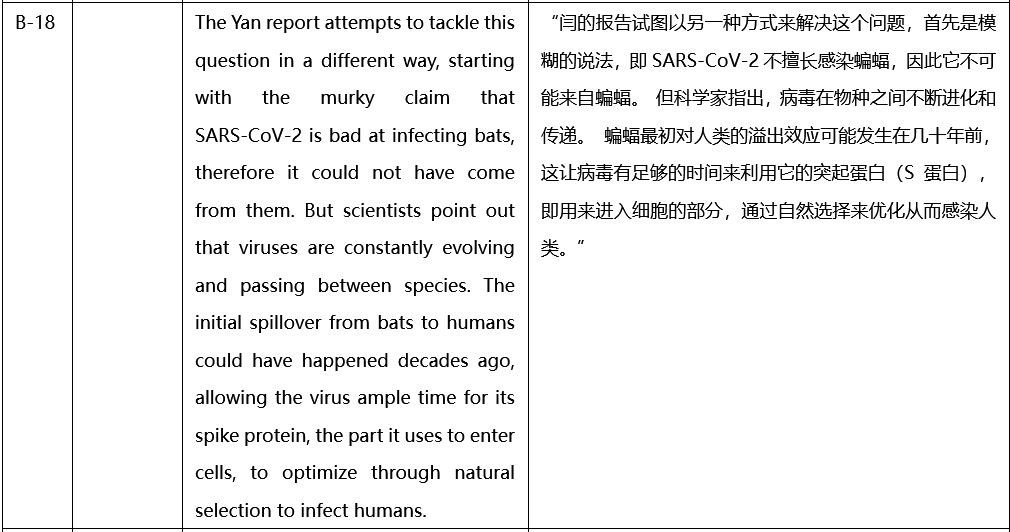
The Yan report attempts to tackle this question in a different way, starting with the murky claim that SARS-CoV-2 is bad at infecting bats, therefore it could not have come from them. But scientists point out that viruses are constantly evolving and passing between species. The initial spillover from bats to humans could have happened decades ago, allowing the virus ample time for its spike protein, the part it uses to enter cells, to optimize through natural selection to infect humans.
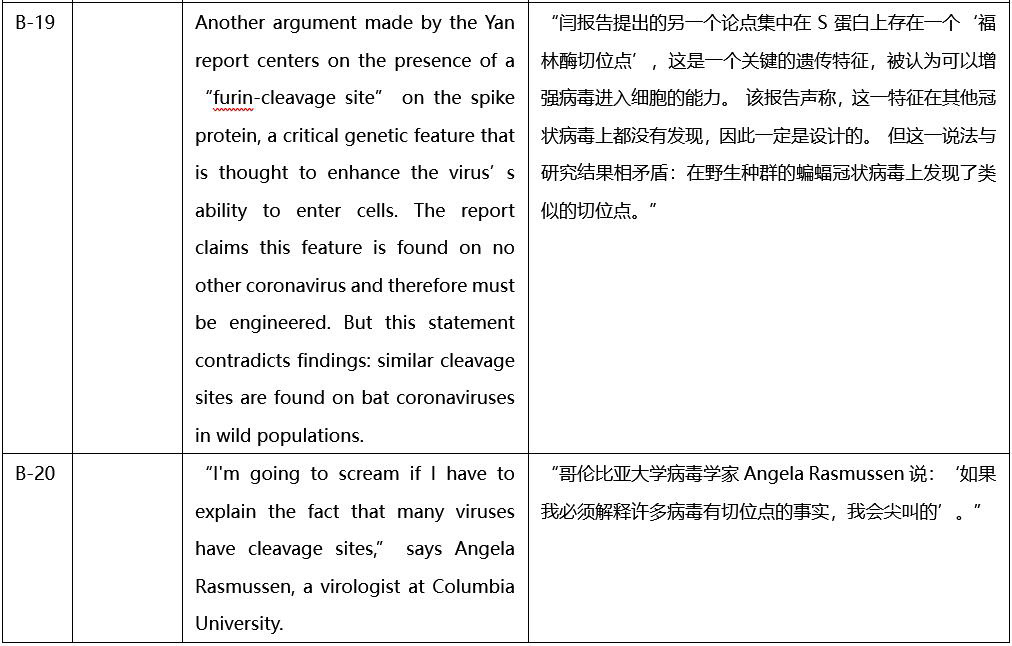
Another argument made by the Yan report centers on the presence of a “furin-cleavage site” on the spike protein, a critical genetic feature that is thought to enhance the virus’s ability to enter cells. The report claims this feature is found on no other coronavirus and therefore must be engineered. But this statement contradicts findings: similar cleavage sites are found on bat coronaviruses in wild populations.
“I’m going to scream if I have to explain the fact that many viruses have cleavage sites,” says Angela Rasmussen, a virologist at Columbia University.
The report also asserts that SARS-CoV-2 is “suspiciously” similar to two strains of bat coronaviruses, called ZC45 and ZXC21 that were discovered by scientists at military labs in China. The authors claim these strains could have been used as a template to clone a deadlier virus. But other scientists balk at this idea.
It looks legitimate because they use a lot of technical jargon. But in reality, a lot of what they’re saying doesn’t really make any sense.
ANGELA RASMUSSEN, COLUMBIA UNIVERSITY
First, the two strains differ by as much as 3,500 nucleotide base pairs, the chemical “letters” used in genetic code. As such, they would be a poor starting point for bioengineering SARS-CoV-2. Engineering a virus in which you had to replace more than 10 percent of its genome is inefficient, if not impossible, according to Rasmussen and several other virologists. The fact that these strains were identified at a Chinese military lab is also “just circumstantial,” says Robertson. The bat coronaviruses were circulating in wild bats and could have been discovered by anyone.
The report also argues that SARS-CoV-2 has “restriction-enzyme sites,” or genetic sequences that can be cut and manipulated by enzymes. These genomic features are sometimes used in cloning, and the report claims their presence is indicative of an engineered virus. But scientists point out these sites naturally occur in all types of genomes, from bacteria to humans.
“It looks legitimate because they use a lot of technical jargon. But in reality, a lot of what they’re saying doesn’t really make any sense,” says Rasmussen. She adds that the type of cloning that uses restriction enzymes is very outdated, and so it is unlikely to be used to make a viral bioweapon. And on a basic level, making an engineered virus is not a trivial matter. Scientists are still just trying to understand the molecular and genetic reasons why some viruses are more infectious than others. Adding features to a virus to make it more transmissible, for example, is called gain-of-function research. It is highly controversial for its potential to make bioweapons and was even banned in the U.S. for a time, limiting the data available on how it works.
So how was the Yan report published?
A hallmark of the pandemic has been a rapid influx of research and free sharing of information to increase the pace of discovery. This practice of posting “preprints”—reports that haven’t been reviewed by academic peers—has its advantages.
“For the scientific community [it] has been very useful,” says Robertson, since more researchers can quickly analyze the available data. But preprints have a dark side too. Misinformation has been another hallmark of the pandemic, and preprints have played a role in fueling news coverage of unproven claims, including the virus mutating into a more deadly form, coming from snakes, or being less deadly than it truly is.
“It can be very hard to disentangle when that’s real news and when it’s not news,” he says, citing the fact that even some peer-reviewed papers on coronavirus have made errors in the rush to publish. This mixture of honest mistakes and insidious ones may just be indicative of a larger trend with publishing during a rapidly evolving crisis.
“I don’t think the preprint system is being weaponized so much as all channels of information are being used to disseminate misinformation: everything from social media to manipulating the mainstream media to preprints to peer-reviewed journals,” says Rasmussen.
Bad news travels fast
Despite the objections of experts, the Yan report and other similar instances of coronavirus misformation, such as the Plandemic documentary, have gained traction on social media because they take advantage of vulnerable human emotions. Those feelings can drive the viral spread of hoaxes.
Back in 2018, Aral and his team at the MIT Media Lab put their novelty hypothesis to the test by analyzing 11 years of data from Twitter, or about 4.5 million tweets. Their calculations showed a surprising correlation: “What we found was that false news traveled farther, faster, deeper, and more broadly than the truth in every category of information that we studied, sometimes by an order of magnitude,” Aral explains.
More is at play than just novelty, as Aral discusses in his new book The Hype Machine. The way people react to emotional stories on social media is intense and predictable. Vitriol fills the replies, and false news then becomes 70 percent more likely to be retweeted than the truth.
A complicated combination of psychological factors is at work whenever a reader decides to share news, and otherwise smart people can become part of the cycle of disinformation.
One factor is knowledge neglect: “when people fail to retrieve and apply previously stored knowledge appropriately into a current situation,” according to Lisa Fazio, an assistant professor of psychology and human development at Vanderbilt University.
The human brain seeks out easy options. Readers cut corners, often sharing stories with grabby headlines before looking deeper into the story itself. Even when social media users do read what they share, their rational mind finds other ways to slack off.
If you hear something twice, you’re more likely to think that it’s true than if you’ve only heard it once.
LISA FAZIO, VANDERBILT UNIVERSITY
For instance, humans are prone to confirmation bias, a way of interpreting new information as a validation of one’s preconceived notions. Motivated reasoning switches on too, and the brain tries to force these new conceptual puzzle pieces together, making connections even when they don’t fit.
The most potent factor that warps critical thinking is the illusory truth effect, which Fazio defines with this scenario: “If you hear something twice, you’re more likely to think that it’s true than if you’ve only heard it once.” So prevalence turbocharges false news, and echo chambers then turn into self-perpetuating whirlwinds of misbelief.
If the news involves politics, it gets yet another virality boost. “Political news travels faster than the rest of false news,” says Aral. “We can speculate that it’s such a lightning rod because it’s so emotionally charged.” And to Aral, the Yan report has every attribute of a false news story that was primed to go viral.
“In terms of that specific story, I would say all of these analyses of why false news spreads apply,” Aral explains. “It’s shocking; it’s salacious. It’s immediately relevant to political debates that are happening, but obviously coronavirus is on everyone’s mind. Trying to understand its origins is a big story.”
换句话说,《国家地理杂志》在2015年后属于营利组织国家地理合股公司(National Geographic Partners)旗下的品牌和杂志,国家地理合股公司(National Geographic Partners)是The Walt Disney Company和美国地理学会的合资企业,主要经营《国家地理》杂志和国家地理频道,國家地理頻道家族包括國家地理頻道、國家地理野生頻道、國家地理悠人頻道及國家地理世界頻道等,是全球在科學、探險及探索節目中的領導品牌,並擁有傑出的製作團隊與國家地理影像製片工作室。
Walter Ian Lipkin是国际知名新病原发现领域权威专家,现任美国哥伦比亚大学公共卫生学院、感染与免疫研究中心教授,同时还担任美国国立卫生研究院(NIH)诊断与发现中心主任、中国疾病与预防控制中心病原发现联合实验室主任等重要职务。其曾研究开发了大量应用于病原监测和发现的分子生物学方法,发现了超过700种新病毒,在SARS、MERS等新发传染病的病原学研究、传染病应急响应等方面具有深厚的造诣。
资料二
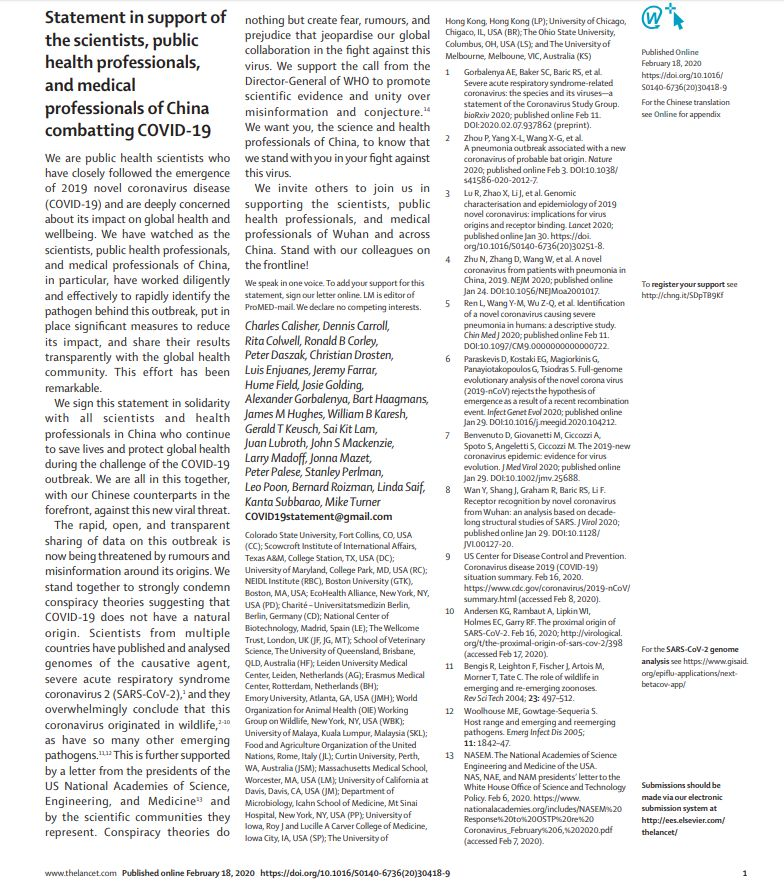
八国专家《柳叶刀》联署声明:我们与中国同行站在一起
(来源:http://virological.org/)
这篇文章的合作者也可谓“群星闪耀”,既有被 Discover 杂志誉为“全球最知名病毒猎手”、哥伦比亚大学教授 W. Ian Lipkin,也有来自著名研究机构博德研究所的传染病遗传学家 Kristian G. Andersen,爱丁堡大学生物进化研究所进化生物学家 Andrew Rambaut 教授。预印本论文一经公布,在推特上,众多著名病毒学家如哥大教授 Vincent Racaniello 都纷纷转载并支持,并大赞这个研究提供了对新冠病毒人为干预的强有力反击。
基于上述对新冠病毒的基因组分析,团队明确写道:“重要的是,该分析提供了证据,表明新冠病毒既不是实验室内的产物,也不是manipulated virus”(Importantly, this analysis provides evidence that SARS-CoV-2 is not a laboratory construct nor a purposefully manipulated virus)。
文章作者Scripps研究所的Kristian G. Andersen、爱丁堡大学进化生物学系的Andrew Rambaut、哥伦比亚大学感染与免疫中心的W. Ian Lipkin、悉尼大学Marie Bashir传染病和生物安全研究所的Edward C. Holmes和杜兰大学医学院的Robert F. Garry等人的调查显示,COVID-19是自然进化的产物。
這6位科學家分別為著名病毒進化學家美國斯克裡普研究院免疫學和微生物學系Kristian G. Andersen副教授(一作及通訊作者)、英國愛丁堡大學進化生物學研究所Andrew Rambaut、美國哥倫比亞大學梅爾曼公共衛生學院感染與免疫中心主任W. Ian Lipkin、澳大利亞悉尼大學瑪麗·巴希爾傳染病和生物安全研究所教授Edward C. Holmes、美國杜蘭大學醫學院微生物與免疫學教授Robert F. Garry。
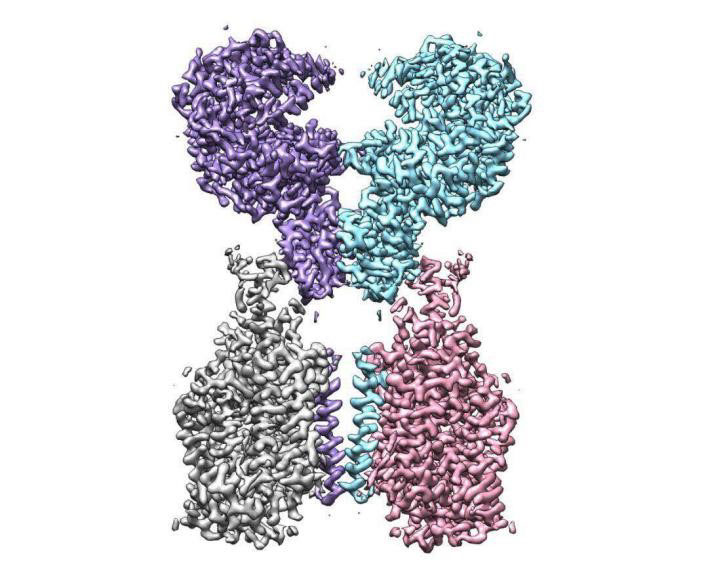
S 蛋白全稱為spike glycoprotein (刺突糖蛋白),是冠狀病毒的一種表面蛋白。ACE2全稱為血管緊張素轉化酶2,是人體細胞與冠狀病毒結合的關鍵部分。一種簡單的比喻就是,在冠狀病毒感染人體的過程中,S蛋白就像一把“鑰匙”,而人體細胞上的ACE2受體則像一把“鎖”。
以上这三份材料基本表述了两份相关文章,第一份是北京時間3月18日,頂級學術期刊《自然-醫學》(Nature Medicine)在線發表了來自美國、英國、澳大利亞共5位科學家的一篇文章“The proximal origin of SARS-CoV-2 ”(论文A),这五名科学家分别是著名病毒進化學家美國斯克裡普研究院免疫學和微生物學系Kristian G. Andersen副教授(一作及通訊作者)、英國愛丁堡大學進化生物學研究所Andrew Rambaut、美國哥倫比亞大學梅爾曼公共衛生學院感染與免疫中心主任W. Ian Lipkin、澳大利亞悉尼大學Marie Bashir傳染病和生物安全研究所教授Edward C. Holmes、美國杜蘭大學醫學院微生物與免疫學教授Robert F. Garry。其中第一作者还包括美國斯克裡普研究院。Kristian G. Andersen、Andrew Rambaut、W. Ian Lipkin、Edward C. Holmes、Robert F. Garry这五位作者无一例外的出现在我们的表格中。也就是说,这五位专家在3月18日发表专业论文论证病毒来源于自然产生而非实验室人工制成,并且依据的证据和9月18日这份文章的表述十分雷同。那么这五位科学家的再次出面证伪只能说明一件事,在闫博士的报告具有严谨的科学逻辑和实锤的科学证据的情况下提出早已发表的论文作为证据说明他们在3月份早已预知英雄科学家要披露什么,是为报告的推出早期预备一个证据文章,发表在权威的杂志上。他们有这种神奇的预知能力吗?回答是不可能,只能说明者五位顶级的科学家在帮助中共掩盖一个天大的谎言。
David Robertson,这位英国的科学家,是西交利物浦大学生物科学系的姜小炜博士的合作者,两人对中国采集到的2019新型冠状病毒和其他冠状病毒进行了初步的进化分析,结果表明它们与三种蝙蝠冠状病毒有很强的关系。姜博士解释说:“在SARS中,一部分蝙蝠冠状病毒组合在一起成为了一种新的病毒,这种新的病毒可以感染果子狸,然后果子狸传染给人类。”“与SARS一样,新型冠状病毒也很可能存在一种尚未被发现的中间宿主,而这可能就是武汉华南海鲜批发市场爆发疫情的原因。”也就是说,他是病毒来源于自然的证明者之一。
Kevin Bird这位著名的基因生物学家身兼三重身份,不仅是一名主要的网络推手,所谓的证伪闫丽梦博士报告,而且从基因学上展开论述并且是班农和这个报告关系的最重要的发现者。
Peter Daszak,生态健康联盟主席的身份已经说明了一切,生态健康联盟是被中共深度蓝金黄的一个研究组织,我们将在今后的挖掘文章中深刻揭示。


















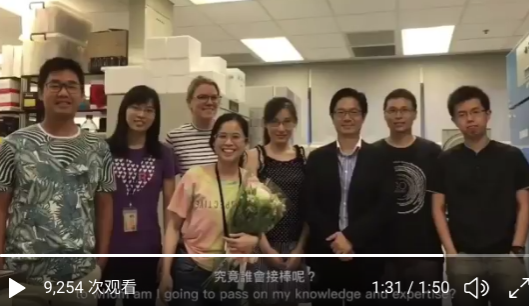

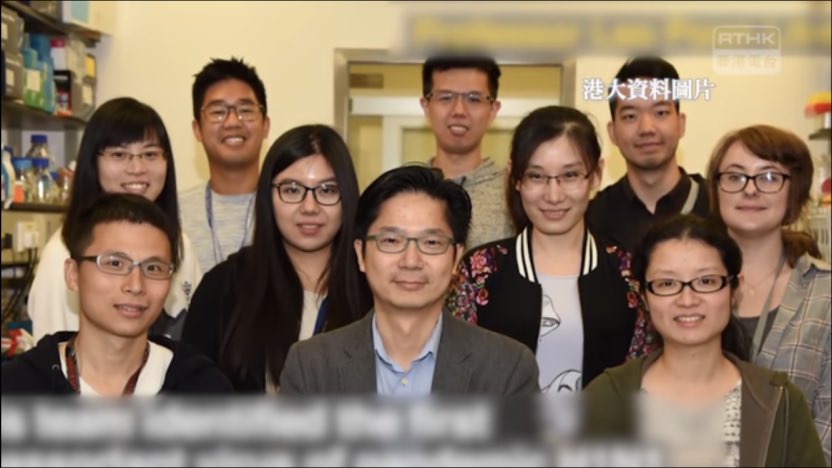



















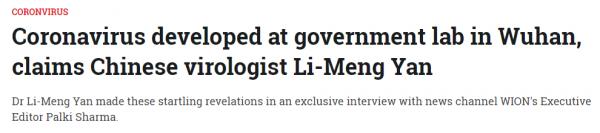
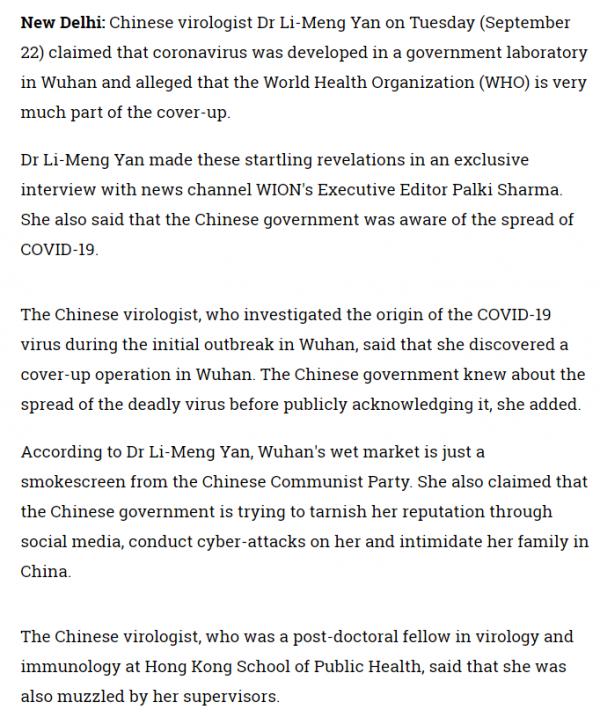


 夏尔马转推了路德先生的推文
 帕尔基·夏尔马(Palki Sharma)
 夏尔马在节目中抨击中共研发的疫苗
 环球时报抨击WION的文章,“印度媒体应该摆脱西方的影响”