A little learning makes the whole world kin. --Proverbs xxxii, 7.
I went often to look at the collection of curiosities in Heidelberg Castle, and one day I surprised the keeper of it with my German. I spoke entirely in that language. He was greatly interested; and after I had talked a while he said my German was very rare, possibly a "unique"; and wanted to add it to his museum.
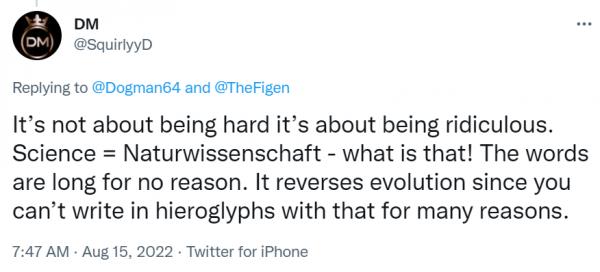
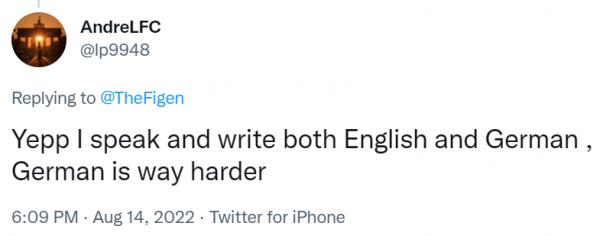
If he had known what it had cost me to acquire my art, he would also have known that it would break any collector to buy it. Harris and I had been hard at work on our German during several weeks at that time, and although we had made good progress, it had been accomplished under great difficulty and annoyance, for three of our teachers had died in the mean time. A person who has not studied German can form no idea of what a perplexing language it is.
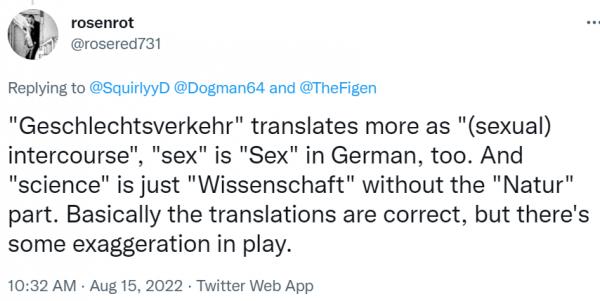
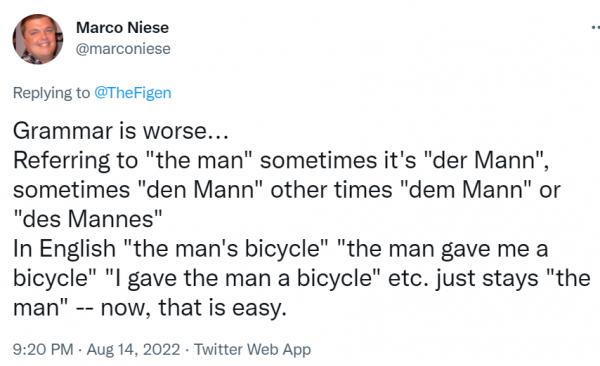
Surely there is not another language that is so slipshod and systemless, and so slippery and elusive to the grasp. One is washed about in it, hither and thither, in the most helpless way; and when at last he thinks he has captured a rule which offers firm ground to take a rest on amid the general rage and turmoil of the ten parts of speech, he turns over the page and reads, "Let the pupil make careful note of the following EXCEPTIONS." He runs his eye down and finds that there are more exceptions to the rule than instances of it. So overboard he goes again, to hunt for another Ararat and find another quicksand. Such has been, and continues to be, my experience. Every time I think I have got one of these four confusing "cases" where I am master of it, a seemingly insignificant preposition intrudes itself into my sentence, clothed with an awful and unsuspected power, and crumbles the ground from under me. For instance, my book inquires after a certain bird--(it is always inquiring after things which are of no sort of no consequence to anybody): "Where is the bird?" Now the answer to this question--according to the book--is that the bird is waiting in the blacksmith shop on account of the rain. Of course no bird would do that, but then you must stick to the book. Very well, I begin to cipher out the German for that answer. I begin at the wrong end, necessarily, for that is the German idea. I say to myself, "REGEN (rain) is masculine--or maybe it is feminine--or possibly neuter--it is too much trouble to look now. Therefore, it is either DER (the) Regen, or DIE (the) Regen, or DAS (the) Regen, according to which gender it may turn out to be when I look. In the interest of science, I will cipher it out on the hypothesis that it is masculine. Very well--then THE rain is DER Regen, if it is simply in the quiescent state of being MENTIONED, without enlargement or discussion--Nominative case; but if this rain is lying around, in a kind of a general way on the ground, it is then definitely located, it is DOING SOMETHING--that is, RESTING (which is one of the German grammar's ideas of doing something), and this throws the rain into the Dative case, and makes it DEM Regen. However, this rain is not resting, but is doing something ACTIVELY,--it is falling--to interfere with the bird, likely--and this indicates MOVEMENT, which has the effect of sliding it into the Accusative case and changing DEM Regen into DEN Regen." Having completed the grammatical horoscope of this matter, I answer up confidently and state in German that the bird is staying in the blacksmith shop "wegen (on account of) DEN Regen." Then the teacher lets me softly down with the remark that whenever the word "wegen" drops into a sentence, it ALWAYS throws that subject into the GENITIVE case, regardless of consequences--and therefore this bird stayed in the blacksmith shop "wegen DES Regens."
N.B.--I was informed, later, by a higher authority, that there was an "exception" which permits one to say "wegen DEN Regen" in certain peculiar and complex circumstances, but that this exception is not extended to anything BUT rain.
There are ten parts of speech, and they are all troublesome. An average sentence, in a German newspaper, is a sublime and impressive curiosity; it occupies a quarter of a column; it contains all the ten parts of speech--not in regular order, but mixed; it is built mainly of compound words constructed by the writer on the spot, and not to be found in any dictionary--six or seven words compacted into one, without joint or seam--that is, without hyphens; it treats of fourteen or fifteen different subjects, each enclosed in a parenthesis of its own, with here and there extra parentheses, making pens with pens: finally, all the parentheses and reparentheses are massed together between a couple of king-parentheses, one of which is placed in the first line of the majestic sentence and the other in the middle of the last line of it--AFTER WHICH COMES THE VERB, and you find out for the first time what the man has been talking about; and after the verb--merely by way of ornament, as far as I can make out--the writer shovels in "HABEN SIND GEWESEN GEHABT HAVEN GEWORDEN SEIN," or words to that effect, and the monument is finished. I suppose that this closing hurrah is in the nature of the flourish to a man's signature--not necessary, but pretty. German books are easy enough to read when you hold them before the looking-glass or stand on your head--so as to reverse the construction--but I think that to learn to read and understand a German newspaper is a thing which must always remain an impossibility to a foreigner.
Yet even the German books are not entirely free from attacks of the Parenthesis distemper--though they are usually so mild as to cover only a few lines, and therefore when you at last get down to the verb it carries some meaning to your mind because you are able to remember a good deal of what has gone before. Now here is a sentence from a popular and excellent German novel--which a slight parenthesis in it. I will make a perfectly literal translation, and throw in the parenthesis-marks and some hyphens for the assistance of the reader--though in the original there are no parenthesis-marks or hyphens, and the reader is left to flounder through to the remote verb the best way he can:
"But when he, upon the street, the (in-satin-and-silk-covered- now-very-unconstrained-after-the-newest-fashioned-dressed) government counselor's wife MET," etc., etc. [1]
肯定没有另一种语言如此草率和无系统,如此狡猾和难以掌握。一个人在里面四处漂流,以最无助的方式;最后,当他认为他已经掌握了一条规则,可以在十个词类的普遍愤怒和混乱中提供坚实的基础,以休息时,他翻过一页,读到:“让学生仔细记下以下例外。” 他低头看了看,发现规则的例外情况比它的实例要多。于是他再次落水,去寻找另一个亚拉腊,寻找另一个流沙。这一直是,并将继续是我的经历。每当我认为我掌握了这四个令人困惑的“案例”之一时,一个看似微不足道的介词就会闯入我的句子,披着可怕而出人意料的力量,从我脚下粉碎大地。例如,我的书询问某只鸟——(它总是在询问对任何人都无关紧要的事情):“那只鸟在哪里?” 现在这个问题的答案——根据这本书——是那只鸟因为下雨而在铁匠铺里等着。当然没有鸟会那样做,但是你必须坚持这本书。很好,我开始用德语破解这个答案。我的出发点必然是错误的,因为那是德国人的想法。我对自己说,“REGEN(雨)是阳性的——或者它可能是阴性的——或者可能是中性的——现在看太麻烦了。因此,它要么是 DER(the)Regen,要么是 DIE(the ) 再生,或 DAS (the) Regen,根据我看时可能会发现的性别。为了科学的利益,我将根据它是男性的假设对其进行加密。很好——那么 THE rain 就是 DER Regen,如果它只是处于被提及的静止状态,没有扩大或讨论——主格;但是如果这雨在周围,以一种一般的方式在地面上,那么它肯定是定位的,它正在做某事——也就是说,休息(这是德语语法中做某事的想法之一),并且这将雨水注入 Dative 案例,并使其成为 DEM Regen。然而,这场雨并没有停止,而是在积极地做一些事情——它正在下落——可能会干扰鸟儿——这表明运动,它具有将其滑入宾格并改变 DEM Regen 的效果进入 DEN Regen。” 完成这件事的语法占星后,我自信地回答并用德语陈述这只鸟留在铁匠铺“wegen (on account of) DEN Regen”。然后老师轻轻地让我失望,说每当“wegen”这个词进入一个句子时,它总是把那个主题扔进GENITIVE格,不管后果如何——因此这只鸟留在了铁匠铺“wegen DES Regens” 。”
注意——后来,我被更高的权威告知,有一个“例外”允许人们在某些特殊和复杂的情况下说“wegen DEN Regen”,但这个例外不适用于除下雨之外的任何事情。
词性有十个,都很麻烦。在德国报纸上,一句普通的句子是一种崇高而令人印象深刻的好奇心;它占据一列的四分之一;它包含了所有的十个词类——不是按规则的顺序,而是混合的;主要由作者现场构筑的复合词构成,在任何字典中都找不到——六七个词紧缩成一个,没有接缝或接缝——也就是没有连字符;它处理十四或十五个不同的主题,每个主题都用自己的括号括起来,到处都有额外的括号,用笔做笔:最后,所有的括号和重新括号都集中在一对大括号之间,其中一个放在majestic句子的第一行,另一个放在最后一行的中间——在动词之后,你第一次发现这个人在说什么;在动词之后——据我所知,这只是一种装饰——作者用“HABEN SIND GWESEN GEHABT HAVEN GEWORDEN SEIN”或类似的词来铲起,纪念碑就完成了。我想这个结束的欢呼是一个男人签名的繁荣的本质——不是必要的,但很漂亮。当你把德国书放在镜子前或站在你的头上时,它们很容易阅读——以扭转这种结构——但我认为学习阅读和理解一份德国报纸是必须始终做到的事情对外国人来说仍然是不可能的。你第一次知道这个人在说什么;在动词之后——据我所知,这只是一种装饰——作者用“HABEN SIND GWESEN GEHABT HAVEN GEWORDEN SEIN”或类似的词来铲起,纪念碑就完成了。我想这个结束的欢呼是一个男人签名的繁荣的本质——不是必要的,但很漂亮。当你把德国书放在镜子前或站在你的头上时,它们很容易阅读——以扭转这种结构——但我认为学习阅读和理解一份德国报纸是必须始终做到的事情对外国人来说仍然是不可能的。你第一次知道这个人在说什么;在动词之后——据我所知,这只是一种装饰——作者用“HABEN SIND GWESEN GEHABT HAVEN GEWORDEN SEIN”或类似的词来铲起,纪念碑就完成了。我想这个结束的欢呼是一个男人签名的繁荣的本质——不是必要的,但很漂亮。当你把德国书放在镜子前或站在你的头上时,它们很容易阅读——以扭转这种结构——但我认为学习阅读和理解一份德国报纸是必须始终做到的事情对外国人来说仍然是不可能的。