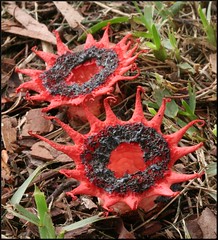
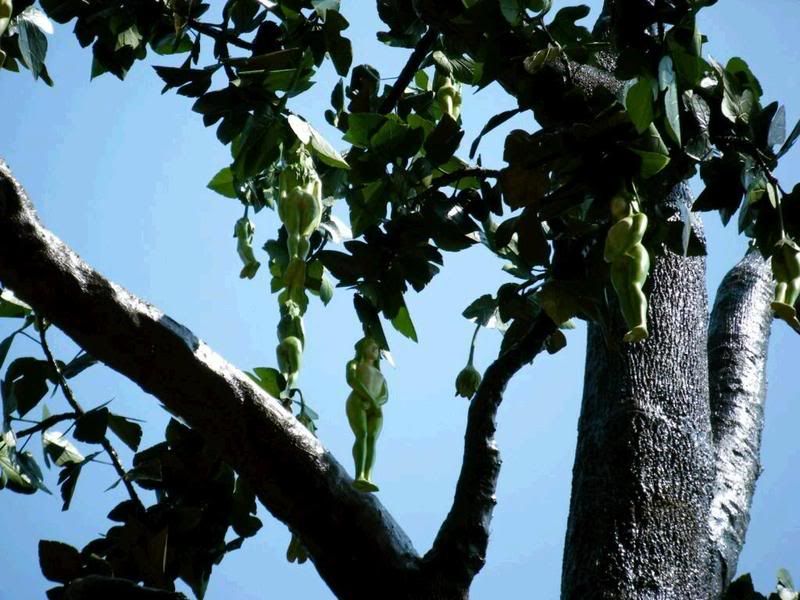
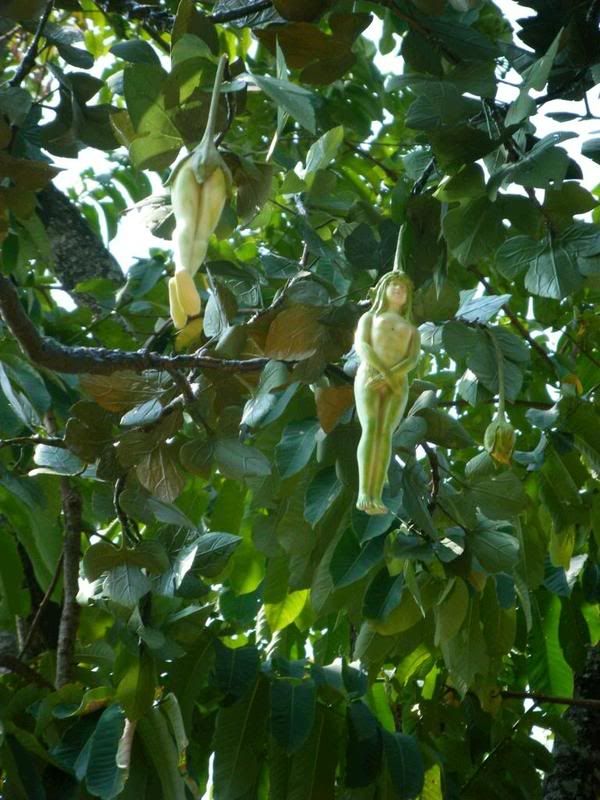
顺带列出几个价值不菲的非正常"水果" : 鲜美的植物菌苞果

  
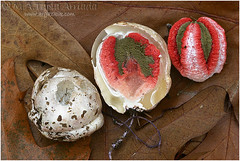
茶苞 , 又叫茶树泡,“茶匏”, 主要是由于油茶树的花蕾(或幼果)受真菌(细丽外担菌 Exobasidium gracile(Shirai)Syd.)感染后形成的,民间又名“茶泡”、“茶桃”等;而由油茶树嫩叶受真 菌感染后形 成的则为“茶耳”;两者均可食,尤以色白者为佳。每年夏天生长,悬在树冠 上,苹果大 小,淡的苹果绿/白色,内空,正底有一小孔,远看像是一只白的汽灯罩。外形象桃子,只有一层半透明的皮(类似桔子皮)。“茶苞” 水分不多,有一种清淡的甜味。传说吃了这人间仙果会 飘于仙界! 茶苞有时有小虫进出,故品尝之先,要检查一下。这些无辜小生命在自然界共生相栖,可别不小心杀了生。

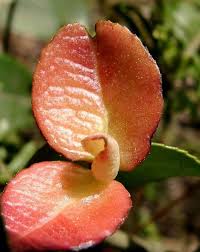  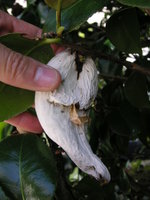

茶耳朵“狗舌头” 油茶树叶 (染真菌后的) 畸形水果 很像玉雕 晶莹剔透
甜味的茶耳(Teaear),又称茶挂、茶耳朵。


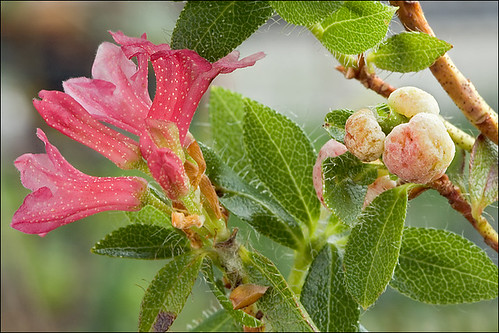
杜鹃花苹果 Azalea Apple
Exobasidium rhododendri (Fuckel) C.E.Cramer
这种菌果没长在茶树上,而是长到杜鹃花科 树形杜鹃(Rhododendron arboreum)植物-----尼泊尔(Nepal) 的国花(Rhododendron arboreum)上去了。 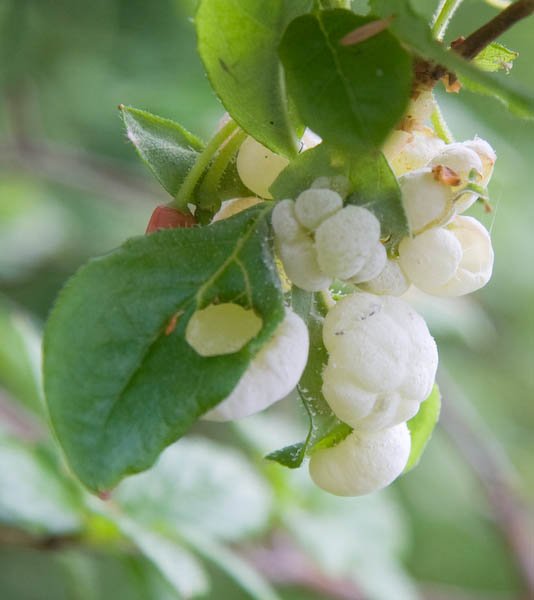
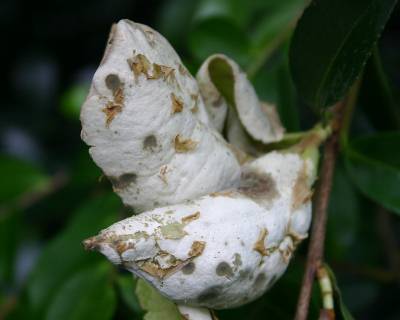
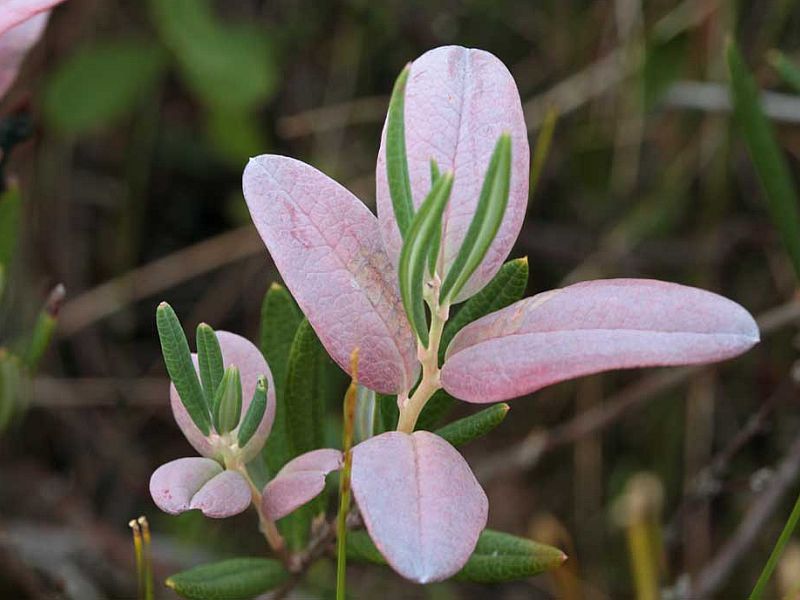
camellia leaf gall Exobasidium camelliae 杜鹃花树叶"耳朵"
Exobasidium rhododendri, also known as Azalea Apple is a gall-like, parasitic fungus that grows in bogs and wet places on Rhododenron species. The fruit-bodies are fleshy to fruit-like, 1 to 5 cm and start as a swelling on the leaf surface, light yellow-green turning pinkish and then white and powdery. I find it fruiting on the leaves and sometimes the flowers of wild azaleas. Season is spring to mid-summer.
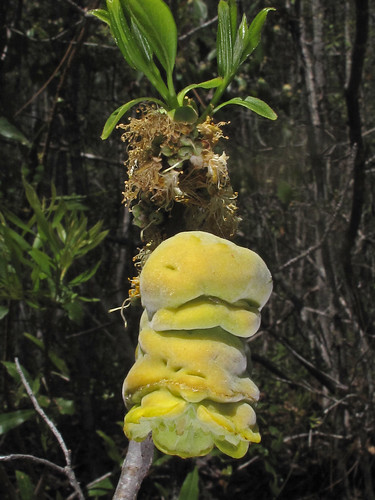
Exobasidium symploci, flower gall, on Symplocos tinctoria, Altamaha Wildlife Management Area, Buffalo Swamp Tract, McIntosh County, Georgia
This was a difficult one to identify. It took me about an hour but I found an obscure reference. This gall is formed by the fungus, Exobasidium symploci. Galls form on the leaves, buds, and flowers of horse sugar: plants.usda.gov/java/profile?symbol=SYTI This one formed on a flower. The bottom of the gall has remnant flower parts. I noticed old galls from previous years so it is not detrimental to the shrub. Most of the horse sugar shrubs in the immediate area were infected. For more information, read page 5 of this document: www.lsuagcenter.com/NR/rdonlyres/C3C28B35-6F94-4986-8BDA 
地底下的花生果也有可能长成菌果(另一种真菌),估计很少有人这么一株一株地拔出来检查他的劳动果实变坏了没有。 Here's the bad boy, underground white mold. You can see the white mycelium and one of the pods was starting to rot. This can be a real problem and can really only be found with scouting and pulling up random plants. Often a problem in hot dry conditions. . 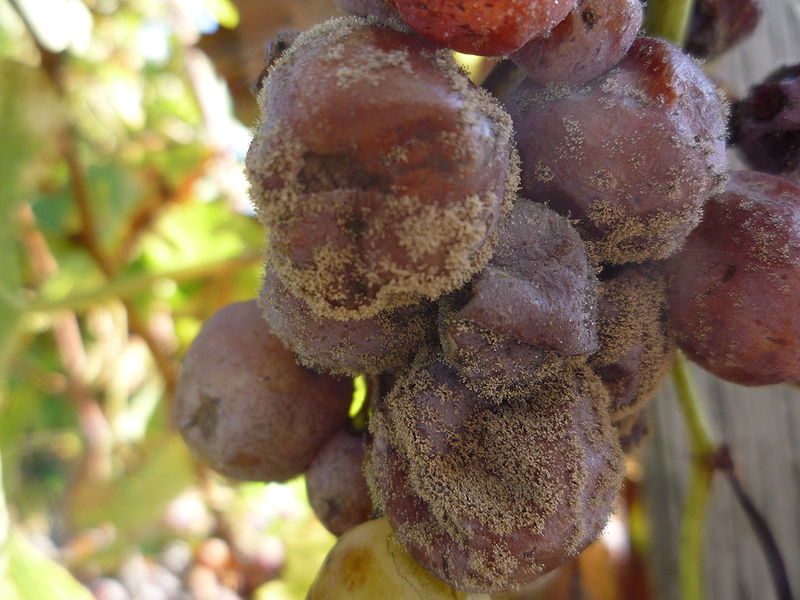
Botrytis cinerea "grey mould" 比较难看的菌果,可是由它酿造的果酒非常美味。实际上水果酒包括葡萄酒也得这么酿造 Have you ever enjoyed a glass of sweet dessert wine? It's all thanks to a fungal parasite called Botrytis cinerea, or "grey mould". It is a pathogen which can infect a number of different crop plants including beans, strawberries, cucumbers, tomatoes, and grapes. Unlike many parasites, Botrytis cinerea is not obligately parasitic - it can alternate between living as a parasite, or as detrivore which digests dead organic matter. While this fungi is a cause for headache for most farmers, in vitriculture, it is also known as "noble rot". A late infection by B. cinerea in white grapes lead to drying of the grape berries which increase the sugar concentration without increasing acidity. Maybe a good dessert wine brought to us thanks to the "noble rot" would be a good way to accompany the course of parasites you have been enjoying this week. 美国这东部几年一种大量种植的蔷薇科Rosaceae观赏树结的小苹果也大量为一种真菌侵染,鼓了很大的勇气,还是敢看不敢吃。 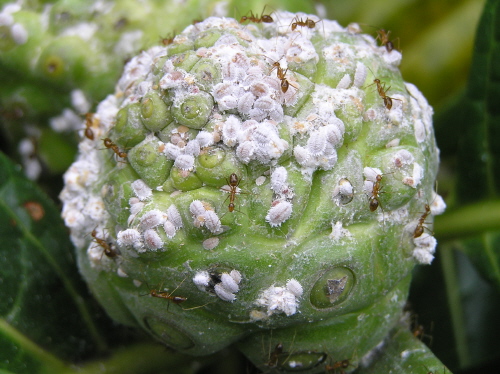
Mealybugs (unidentified): asparasites of noni fruits.
体现着菌-虫-果的某种生长关系

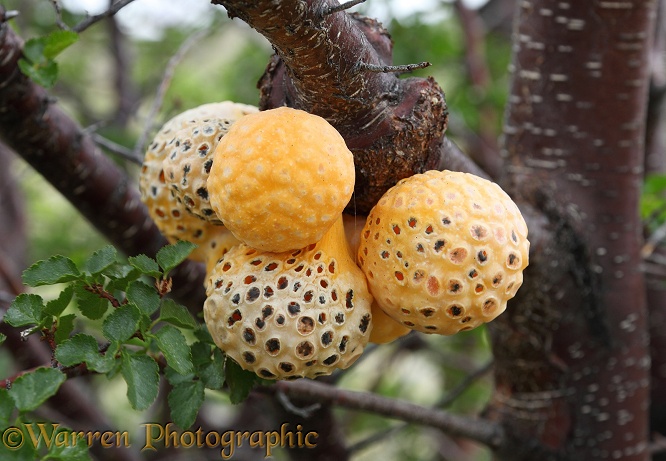
印第安面包果 Cyttaria espinosae parasitic fungal fruit on Southern Beech tree. Patagonia. Also called "Beech strawberries" on southern-beeches. Edible. Here's another parasite that people eat on purpose. Cyttaria espinosae is a fungus that is a parasite of beech trees (Nothophagus) and is native to Chile, where locals call it Digüeñe, Lihueñe or Quideñe. The fungus produces fruiting bodies that look remarkably like golf balls - and for a similar reason. The little divots in the fruiting body seem to promote air flow around them - which helps the fungal spores disperse in the wind. Locals like to serve them in salads and it supposedly has a gelatinous texture. 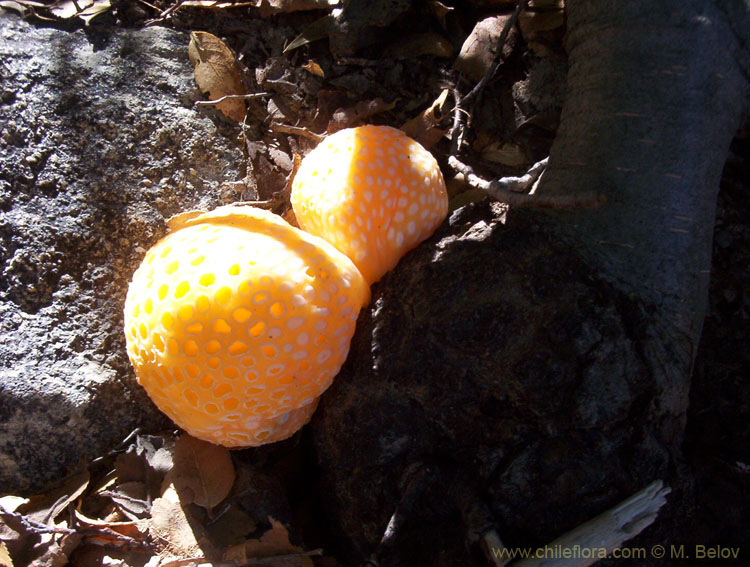
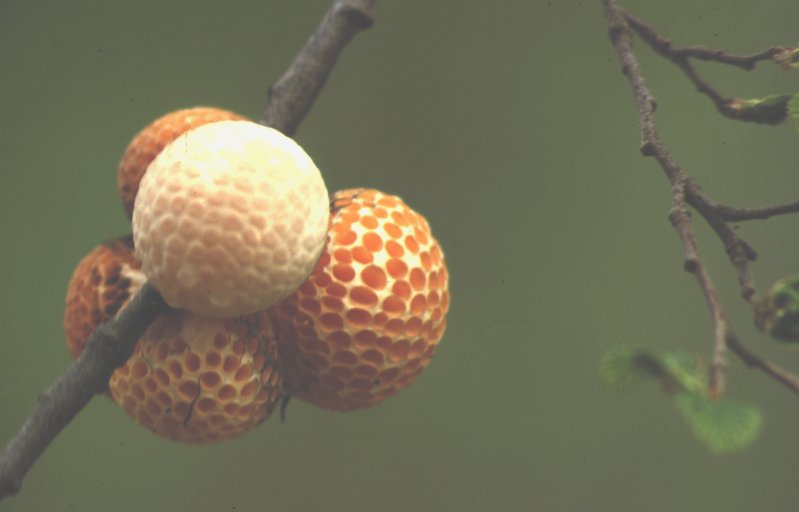

Indian Bread (parasitic fungalfruit) 一种印第安菌生水果, 长在树节上,Indian Bread,南美当地印第安人当饭吃的水果 (from fryking (赤道企鹅)) Wood Fruits Digüeñes, edible Chilean parasite mushrooms which grow on beech trees, a staple spring food of local Indians for more than eight thousand years 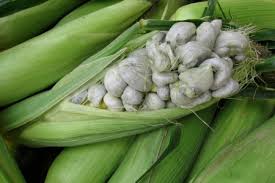
 
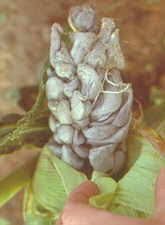 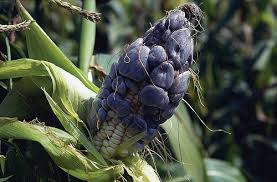
土苞子开花 -------玉米匏 Corn smut is a disease of maize caused by the pathogenic plant fungus Ustilago maydis. U. maydis causes smutmaize (Zea mays) and teosinte (Euchlena mexicana). Known in Latin America as huitlacoche, it is eaten, usually as a filling in quesadillas and other tortilla-based foods. 玉米匏, 玉米黑粉米是一种鲜美真菌Ustilago maydis 感染幼嫩玉米而产生的。 英语叫corn smut. 接出的不是玉米粒而是甜鲜可口的蘑菇泡,颜色分白,灰,绿,紫,黑,蓝等等和它们的混杂过渡色。不熟悉的人看了很吃惊,可是种植者会 乐开怀,因为那"果 实"比起玉米来是既好吃又昂贵,吃不了从来不愁卖个好价钱,或者干制和做罐头留着以后享受。

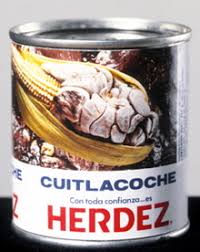 
在 墨西哥,玉米匏被叫作huitlacoche (“维特拉柯奇”),是一种正规食品,有多种吃法,在饭店里常见。还被制成罐头。味道鲜美的类似蘑菇。现 在美国加洲, 有人可以直接用这种菌种种出鲜美的huitlacoche 作食品,而不用通过种玉米来生产它。它常同其他蘑姑在一起卖,10到20美元一磅。有的人喜欢生吃(吃 起来像炒面, 微甜鲜,墨黑墨黑的,吃得满嘴满脸乌黑,很不雅观)。高粱上 也有,但是好像除了中国别人不种高粱,所以大概知道研究开发的不多见 ....中国叫它乌米。美 国有罐装的 huitlacoche (也拼作 "cuitlacoche") 供出售。

Ustilago avenae (Pers.) Rostr. Host: oat (Avena spp. L.) 长在雁麦上的同类真菌果 sulphureus


茭白 我们熟知的茭白也是Ustilago属真菌感染产生的,所 以它是特殊的鲜美蔬菜。茭草黑粉菌 Ustilago esculenta 为担子菌亚门(Basidioy cotina),蕉孢纲(Teliosporae),黑粉菌科(Ustiluginaceae), 黑粉菌原 (Ustilago)真菌。菌丝寄生在植物菰即茭草(Zizania caduuciflora)上。当然,这回不是寄生在花托 上,而是主茎中,所以,它是只蔬菜而不是水果。
土苞子开花卖好价钱,就跟从哪里偷来或天上掉下来中的奖似的,不论雅 俗自然都有一乐。古人也说感到最好吃的是偷来的,大文豪苏东坡的文字为证: “就中香美,除是偷尝”。
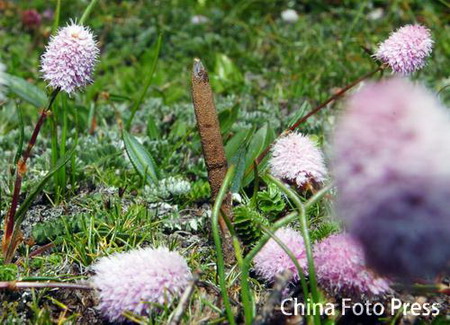
中华虫草"冬虫夏草"学名:Cordyceps sinensis 为麦角菌科真菌冬虫夏草菌Cordyceps sinensis(Berk.)Sacc.寄生在蝙蝠蛾科昆虫 蝙蝠蛾Hepialus armoricanus Oberthur幼虫上的子座和幼虫体的复合体 麦角菌科植物冬虫夏草菌寄生在蝙蝠蛾科昆虫蝙蝠蛾越冬幼虫体上而长成的的子座与虫体复合体就是中华虫草"冬虫夏草"(学名:Cordyceps sinensis)。中华虫草益肾补阳、补肺益阴药,现在已经成了所谓的软黄金。它始载于清乾隆吴仪洛著《本草备要》,简称虫草。以前品尝过清蒸虫草,感觉如果不看着吃,完全象是一种韧而脆的美味植物,口感很不错。
虫草由肉座菌目麦角菌科虫草属的冬虫夏草菌寄生于高山草甸土中的蝠蛾幼虫,使幼虫僵化,在适宜条件下,夏季由僵虫头端抽生出长棒状的子座而形成(即冬虫夏草菌的子实体与僵虫菌核构成的复合体)。主要产于中国青海、西藏、新疆、四川、云南、甘肃、贵州等省及自治区的高寒地带和雪山草原。夏季,蝠蛾需要产卵于地面的浅土中,经过孵化变成幼虫后钻入潮湿松软的土层。如果运气不佳让土里的麦角菌发现了,就直接侵袭幼虫,在幼虫体内一起生长。
经过一个冬天,到第二年春天来临,虫体达到四至五厘米长的最佳形象时,因为携带气温适合传播孢子菌丝开始生长而大限到了,到夏天时长出地面,菌孢养料充足生长迅速,虫体一般为四至五厘米,菌孢一天之内即可长至虫体的长度,这时的虫草称为“头草”,质量最好;虫草时间长了会长出假根须,民间根据这些特征称它冬虫夏草。 有趣的是,这类真菌很专一,非自己的目标昆虫不选,因此也挽救了大量其他昆虫的性命。这也就是在中国西北,基本上只有蝠蛾幼虫需要担心自己的安全,若换到南美,那里有的地方的昆虫可谓生活在水深火热之中,因为当地类似麦角菌科真菌的种类丰富烂漫,有找飞蛾做伴的真菌,也有分别找知了、玛蚱、甲壳虫,甚至有一种专门找蚂蚁为家,这些各类专性真菌也都是一种真菌只攻击一种昆虫,长出的"植物",不用说,那就是形态和颜色的大汇合。 More: new research for the coming halloween: http://www.npr.org/2011/10/30/141832947/invasion-of-the-mind-controlling-parasites 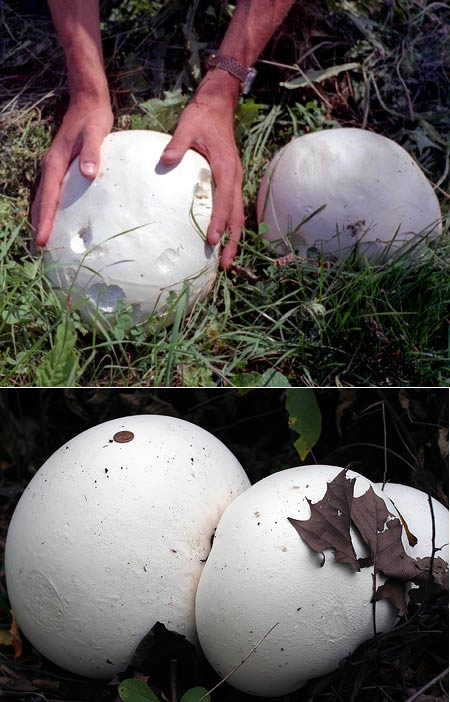
 
 
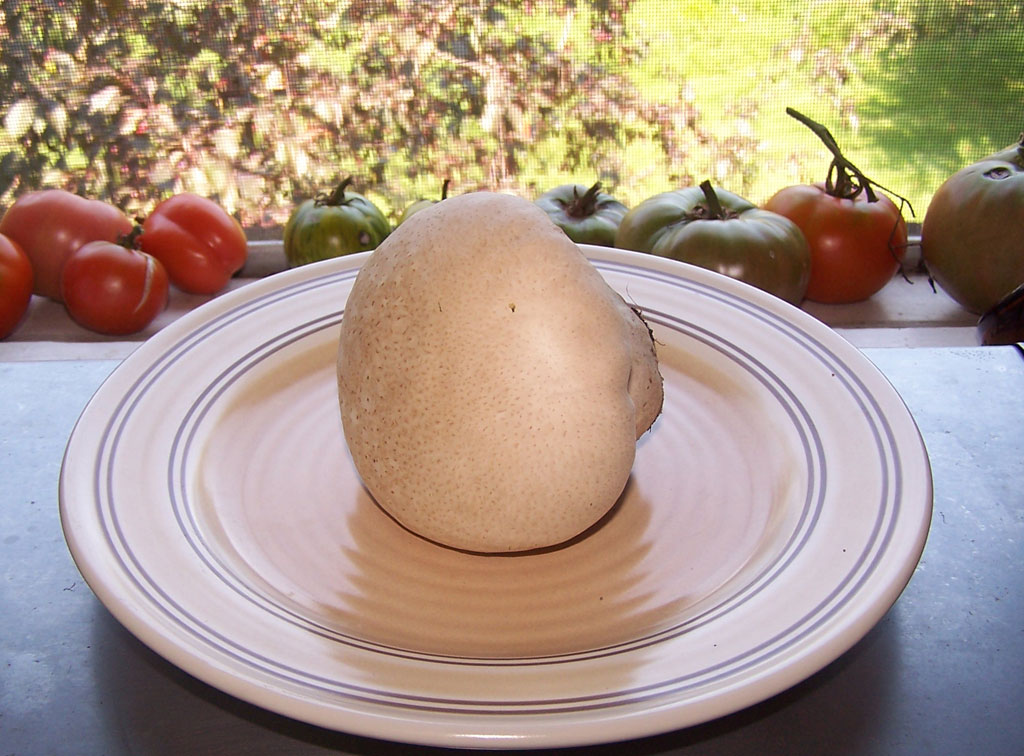
Giant Puffball (Calvatia gigantea) Mushroom The Giant puffball (Calvatia Gigantea) The giant puffball, Calvatia gigantea, is easily recognized by its size and shape. Typical specimens are about the size of a soccer ball, and more or less round. However, it can be much larger (a 5-foot, 50-pound specimen is on record!), and its shape can be more "blob-ish" than round, especially when it attains enormous sizes. But it is never shaped like an inverted pear, since it lacks the sterile base portion common to many other puffballs.
我也采到过巨马勃蘑菇,当时没查资料,不敢吃,就一直观察,直到从白变黄棕色,最后喷出深咖啡色的孢子。它其实在白色时很美味,下面一位还用它做"煎鸡排"晚餐。

I cut it up into bread slice thickness.

I noticed quickly that I had way too much to consume by myself, and ended up giving some to my neighbour.

I dredged it in flour, salt and black pepper.

I shook off the dredging powder and laid the pieces aside. I was wondering what it would taste like, but soldiered on.

Soon a rich scent filled the kitchen - and the mushroom began to resemble chicken strips.

It smelled glorious. It didn't smell like normal button mushrooms, more like - well, more like chicken and zucchini.

Into the frying pan, I put a little bit of olive oil, and butter. Once it was hot, I laid the strips of the Giant Puffball onto the pan. It sizzled. Nice to have a giant dinner.
from: http://www.wellsphere.com/add-adhd-article/the-hunt-harvesting-cooking-and-eating-a-giant-puffball-calvatia-gigantea-mushroom/1387265
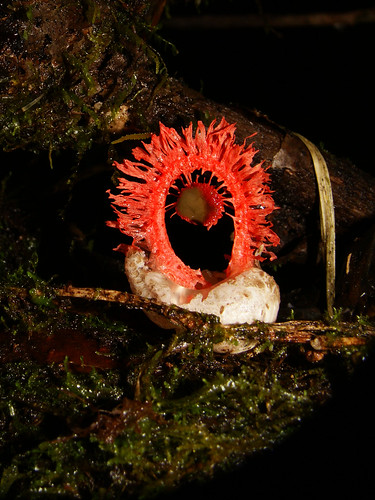
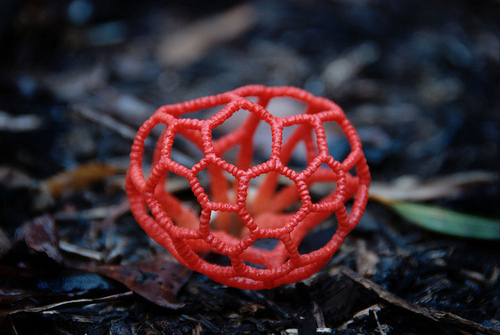
下面这种类似球型的真菌是纯粹的真菌,它和星角菌一样,都与竹荪菌是近亲。
--End--
http://www.mushroomthejournal.com/mhma/edibles Some Edible and Medicinal Wild Mushrooms of the Mid Hudson Region
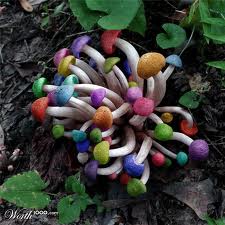
The last ones are fake pictures, just for fun: Jobs blue apple
 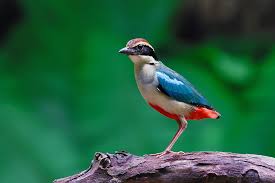 
Question: 上图中的小鸟和下图里的苹果和不是雪白的而是紅顏色的山楂花 -----都是自然界真实存在的么? Yep.
Enjoy and protect THE nature.



红色 山楂树花 C.l.‘Paul’s Scarlet’, C.coccinea and C. laevigata 知道通常情况下哪些食物会有毒吗,相信只要大家知道是有毒的食物就不会有人 会食用吧。可是,有这么一些水果是有毒的,但是还有很多人群都在食用它,那么,到底是哪些水果有毒的呢? 1、有毒水果 —— 芒果:生石灰捂黄 青芒果用生石灰捂黄,使表皮看起来黄澄澄的,但吃起来却没有芒果味,也存在过量使用防腐剂的问题。 2、有毒水果 ——桃:用工业柠檬酸浸泡 水蜜桃用工业柠檬酸浸泡,桃色鲜红、不易腐烂。这种化学残留会损害神经系统,诱发过敏性疾病,甚至致癌。半熟脆桃,加入明矾、甜味素、酒精等, 使其清脆香甜。明矾的主要成分是硫酸铝,长期食用会导致骨质增生、记忆力减退、痴呆、皮肤弹性下降以及皱纹增多等问题。白桃用硫磺熏制,还会 有二氧化硫的残留。 3、有毒水果 ——梨:催长素令其早熟 使用膨大素、催长素令其早熟,再用漂白粉、着色剂(柠檬黄)为其漂白染色。处理过的梨汁少味淡,有时还会伴有异味和腐臭味。这种毒梨存放时间短,易腐 烂。 4、有毒水果 ——香蕉:用氨水催熟 用氨水或二氧化硫催熟,这种香蕉表皮嫩黄好看,但果肉口感僵硬,口味也不甜。二氧化硫对人体神经系统造成损害,还会影响肝肾功能。 5、有毒水果 ——柿子:用酵母催熟 生柿子用酵母或催熟剂来催熟,但柿子的甜度大减。还有果农在生柿子蒂巴处点上“一试灵”使之红透。这些化学药剂都会产生残留,使柿子带毒。 6、有毒水果 ——大枣:用化学剂染色 用开水泡,不管多青的枣用开水一泡利马变红。还有果贩用化学染色剂染色,用工业石蜡打蜡,使大枣带毒。 7、有毒水果 ——桂圆:喷洒硫变艳 喷洒硫酸或酸性溶液浸泡,使其颜色鲜艳。硫酸具有较强的腐蚀性,会灼伤人的消化道。还容易引发感冒、腹泻以及强烈咳嗽。 8、有毒水果 ——荔枝:硫酸浸泡改色 用硫酸溶液浸泡、或用乙烯利水剂喷洒,使变色的荔枝变得鲜红诱人,但很容易腐坏。这类溶液酸性较强,会使手脱皮、嘴起泡,还会烧伤肠胃。还有果贩会用 硫磺熏制,而二氧化硫对眼睛、喉咙会产生强烈刺激,导致人头昏、腹痛、腹泻。二氧化硫还会致癌。 9、有毒水果 ——柑橘:工业石蜡抛光 柑橘类水果储存中超量使用防腐剂,在出售中用着色剂“美容”,用工业石蜡抛光。工业石蜡的杂质中含有铅、汞、砷等重金属,会渗透到果肉中,使用后会导 致记忆力下降、贫血等症状。 10、有毒水果 ——苹果:催红素增色 用膨大素催个,催红素增色,防腐剂保鲜。过量使用膨大素、催红素、防腐剂会伤害肝脏。零售果贩还会给苹果打上工业石蜡,目的是保持水分,是果体鲜亮有 卖相。 11、有毒水果 ——西瓜:膨大剂催大 超标使用催熟剂、膨大剂和剧毒农药,这种西瓜皮上的条纹不均匀,切开后瓜瓤新鲜,瓜子呈白色,有异味。 12、有毒水果 ——葡萄:放入乙烯变紫 把尚未成熟的青葡萄放入乙烯利稀释溶液中浸湿,过一两天青葡萄就变成了紫葡萄。这种葡萄颜色不均,含糖量少,汁少味淡,长期食用对人体有害。 The funny group 假水果和人工修饰的水果也是永远的话题: 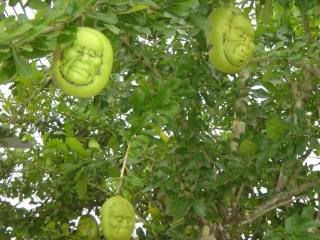 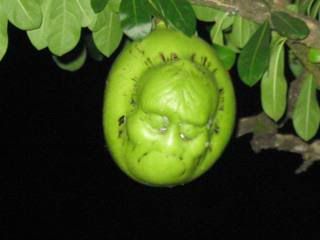
|