|

Stephen Ambrose 写的美国近代史 (书和电影)
[看到下面一段就可以理解美国的学风是多么硬朗和它教育出的学生多么强势:
当Stephen Ambrose被导师,美国最著名的历史学者William B. Hesseltine挑剔论文的文笔时,他抽出导师的著作里夹的编辑评语反击自己的老师说: "What's this! 你的著作的编辑评语里面说 "学术优秀,文法很糟糕",你凭什么这么极端地挑剔我的论文?"
William Hesseltine 回答说: 因为你的老师比我的老师要伟大和知名得多!]

很爱看Stephen Ambrose写的关于美国近代史和二次世界大战的书, 原因是他客观,公正到朴实和谦虚的地步,一生坚持为参加反对越战 (为此和自己的哥哥甚至父亲隔阂了不少)而自豪。他对从总统到政治家的评价严守公正客观原则,甚至要求史学文章尽量少使用形容词以减少非客观描述的可能性。
在其中一本他后期写的<To America: Personal Reflections of an Historian> 里,Stephen Ambrose 强调使用公正 honest and fair 来对待任何事情。他被指定写了艾森豪威尔的传记和尼克松传记,他说Eisenhower在这点上给他巨大鼓励。
中国要学的就是这种把自己放在公正的位置上的处事方式。因为从理论上讲想扳倒"公正"的人,都是被扳倒的宿命。
当然,Stephen Ambrose也只是站在自己的美国人立场上来谈论公正,而且他的书也被攻击者挑出过引用和写作的错误。
Stephen Ambrose 有3个西方史学界少有的优点: 1. 对弱势力比较公正(一直维护有色人种的公正权益,他对现实的和哪怕是历史文献中的种族歧视都十分反对,揭露了许多伟大的美国政治家,包括林肯 华盛顿和杰佛逊 ----估计其他人也强不了多少----的人权虚伪); 2. 反战,并因此当面得罪当时的总统尼克松而被大学劝退,丢掉教授职位; 3. 对事实非常尊重,不去做丝毫美化和改动正面人物的任何错误。这也是他坚持要求史学文章必须尽量少地使用形容词的原因。
他还有个特色是擅长于军事历史 ( <拯救大兵雷恩>的书或DVD都是上乘之作),Stephen Ambrose为WWII走访了世界许多战场遗址和坚持对等会见战场上敌我两方面的当事人。(Stephen Ambrose Tours http://www.stephenambrosetours.com/about.html )
顺便说,Eisenhower在WWII后从政掌握大位在退下总统一职之后, 给Stephen讲过自己对一家饭店的"愤怒" (美国是在Eisenhower的后任肯尼迪总统被刺后才设立了总统随身保镖制度) ------ 因为那里竟然没看得起他这么个总统,上的菜是半凉的,并且 "女厨师把鼻涕掉进了" 正给Eisenhower做的咖啡里。
愤怒之外? Eisenhower只是在离开后才敢发作,那个发作也仅仅是跟Stephen Ambrose 讲"一定不要去那家饭店"。他认为再多做表示就有损自己的前总统身份和违反公正的原则了。
Stephen Ambrose的照片和著名书籍
-----纪念这位讲求公正的美国历史学者
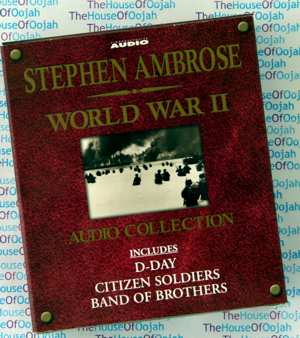

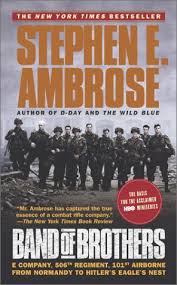

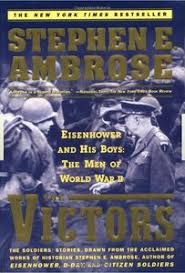


D-Day Speach
Stephen Ambrose was born in Lovington, Illinois, where his father was the town doctor. With the outbreak of World War II, Dr. Ambrose joined the Navy, and the family traveled with him to various postings in the United States until he went overseas.
The patriotic atmosphere of the war years has remained part of Stephen Ambrose's life and work ever since. At war's end the family settled in Whitewater, Wisconsin. Stephen entered the University of Wisconsin as a pre-med student, planning to follow in his father's footsteps, but his first college-level class in American history permanently changed his direction in life. He discovered a passion for original research, and for telling the inspiring stories of American heroes in print and at the lecturer's podium.
 A chance visit to New Orleans during spring break further determined the course of his life. He "fell in love with that old bag of bones of a city," he says, and after completing a doctorate in history, he began a30-year teaching career at the University of New Orleans. His first book Halleck, was published in 1962. It sold under 1,000 copies in its first printing, but caught the eye of one of Ambrose's heroes. The 28 year-old professor was amazed to receive a phone call from former President Dwight Eisenhower, who invited him to write his authorized biography.
For five years, Ambrose met regularly with the former President at Eisenhower's farm in Gettysburg, Pennsylvania. He enjoyed the cooperation of Eisenhower's friends and associates, and full access to his presidential papers. The two-volume biography that resulted remains the definitive work on the 34th President, and established Stephen Ambrose as one of America's foremost historians.
Ambrose briefly interrupted his career at New Orleans to accept an appointment at the University of Kansas, but the outspoken professor and his new employers gratefully parted company after Ambrose and his wife were criticized for heckling President Nixon during his visit to the Kansas campus. Ironically, one of Ambrose's most ambitious works in later years was a three-volume life of Nixon, in which the author found much to admire in the administration of a President he had deeply disliked at the time.
 Ambrose's work attained unprecedented heights of popularity with his masterful account of the Lewis and Clark expedition, Undaunted Courage. This volume still sat atop the best-seller lists when it was joined by another work from Ambrose, Citizen Soldiers, the GI's view of World War II in Europe from D-Day to the surrender of Germany. His book on Lewis and Clark has stimulated renewed public interest in the history of the Missouri territory. Publication of Citizen Soldiers accompanied a massive renewal of public interest in the Second World War and the Americans who fought it; Ambrose served as historical consultant for Steven Spielberg's film about D-Day, Saving Private Ryan. Spielberg and Tom Hanks later produced a television miniseries based on Ambrose's Band of Brothers.
 |
After retiring from his chair as Boyd Professor of History at the University of New Orleans, Dr. Ambrose served as the Director Emeritus of the Eisenhower Center, and the founder and President of the National D-Day Museum in New Orleans. He was a contributing editor for the Quarterly Journal of Military History, a member of the board of directors for American Rivers, and a member of the Lewis and Clark Bicentennial Council Board.
Stephen Ambrose and his wife Moira made their homes in Bay St. Louis, Mississippi and Helena, Montana. In all, Ambrose wrote more than 30 books including Crazy Horse and Custer, Nothing Like It in the World, D-Day - June 6, 1944 and Wild Blue: The Men and Boys Who Flew the B-24's Over Germany.
Stephen Edward Ambrose
(January 10, 1936 – October 13, 2002) was an American historian and biographer of U.S. Presidents Dwight D. Eisenhower and Richard Nixon. He was a long time professor ofhistory at the University of New Orleans and the author of many best selling volumes of American popular history.
Beginning late in his life and continuing after his death, however, many reports and evidence have continued to surface documenting long time patterns of plagiarism, falsification, and inaccuracies in many of his published writings and other work. In response to one of the early reports, Ambrose said he was not "out there stealing other people's writings."
Early life Ambrose was born in Lovington, Illinois to Rosepha Trippe Ambrose and Stephen Hedges Ambrose. His father was a physician who served in the U.S. Navy during World War II. Ambrose was raised in Whitewater, Wisconsin,[1] where he graduated from Whitewater High School. His family also owned a farm in Lovington, Illinois and vacation property in Marinette County, Wisconsin.[citation needed] He attended college at the University of Wisconsin-Madison where he was a member of Chi Psi Fraternity and played on the University of Wisconsin football team for three years.[2]
Ambrose originally wanted to major in pre-medicine, but changed his major to history after hearing the first lecture in a U.S. history class entitled "Representative Americans" in his sophomore year. The course was taught by William B. Hesseltine, whom Ambrose credits with fundamentally shaping his writing and igniting his interest in history.[3] While at Wisconsin, Ambrose was a member of the Navy and ArmyR.O.T.C.. He graduated with a B.A. in 1957. He also married his first wife, Judith Dorlester, in 1957, and they had two children, Stephenie and Barry. According to Ambrose, Judith died at age 27, when he was 29.[4] A year or two later he married his second wife, Moria Buckley, and adopted her three children, Hugh, Grace, and Andrew.[5] Ambrose received a master's degree in history from Louisiana State University in 1958, studying under T. Harry Williams.[3] Ambrose then went on to obtain a Ph.D. from the University of Wisconsin–Madison in 1963, under William B. Hesseltine.[3][6]
Career Academic positions Ambrose served as a professor of history at several universities from 1960 until his retirement in 1995, having spent the bulk of his time at the University of New Orleans, where he was Boyd Professor of History.[6] During the academic year 1969-70, he was Ernest J. King Professor of Maritime History at the Naval War College. In 1970, while teaching at Kansas State University, Ambrose participated in heckling of Richard Nixon during a speech the president gave on the KSU campus. Given pressure on the KSU administration and having job offers elsewhere, upon finishing out the year Ambrose offered to leave and the offer was accepted.[4][7] Ambrose also taught at Louisiana State University,Johns Hopkins University,Rutgers University, U.C. Berkeley, and a number of European schools.[3]
Ambrose was the founder of the Eisenhower Center at the University of New Orleans and President of the National World War II Museum inNew Orleans, Louisiana. The National Geographic Society provided Ambrose with an Explorer-in-Residence position.[8]
Writings Ambrose's earliest works concerned the Civil War. He wrote biographies of the generals, Emory Upton and Henry Halleck, the first of which was based on his dissertation.[9]
Early in his career, Ambrose was mentored by World War II historian Forrest Pogue.[10][11] In 1964, Ambrose took a position at Johns Hopkins as the Associate Editor of the Eisenhower Papers, a project aimed at organizing, cataloging and publishing Eisenhower's principal papers. From this work and discussions with Eisenhower emerged an article critical of Cornelius Ryan’s The Last Battle, which had depicted Eisenhower as politically na?ve, when at the end of World War II he allowed Soviet forces to take Berlin, thus shaping the Cold War that followed.[12] Ambrose expanded this into a book, Eisenhower and Berlin, 1945: The Decision to Halt at the Elbe.[13]
In 1964, after Eisenhower had read Ambrose's biographies of Halleck and Upton and his history of West Point, Ambrose was commissioned to write the official biography of former president and five-star general.[13] This resulted in a two-volume work, published in 1970 and 1984, that is considered "the standard" on the subject.[14] Ambrose also wrote a three-volume biography of Richard Nixon. Although Ambrose was a strong critic of Nixon, the biography is considered fair and just regarding Nixon's presidency.[15]
His books, Band of Brothers (1992) and D-Day (1994), presented from the view points of individual soldiers in World War II, brought his works into mainstream American culture. His Citizen Soldiers, and The Victors became bestsellers. He also wrote the popular book,The Wild Blue, that looked at World War II aviation. His other major works include Undaunted Courage about the Lewis and Clark Expedition andNothing Like It in the World about the construction of the Pacific Railroad. His final book, This Vast Land, an historical novel about the Lewis & Clark expedition written for young readers, was published posthumously in 2003.

Television, film, and other activities The HBO mini-series, Band of Brothers (2001), for which he was an executive producer, glorified American troops and helped sustain the fresh interest in World War II that had been stimulated by the 50th anniversary ofD-Day in 1994 and the 60th anniversary in 2004. Ambrose also appeared as a historian in the ITV television series, The World at War, which detailed the history of World War II. He was the military adviser for the movie Saving Private Ryan. In addition, Ambrose served as a commentator for Lewis & Clark: The Journey of the Corps of Discovery, a documentary by Ken Burns.[8]
In addition to his academic work and publishing, Ambrose operated a historical tour business, acting as a tour guide to European locales of World War II.[9]
Awards In 1998, he received the National Humanities Medal.[1] In 2000, Ambrose received the Department of Defense Medal for Distinguished Public Service, the highest honorary award the Department of Defense offers to civilians.[8] In 2001, he was awarded the Theodore Roosevelt Medal for Distinguished Service from the Theodore Roosevelt Association.[16] Ambrose won an Emmy as one of the producers for the mini-series Band of Brothers.[8] Ambrose also received the George Marshall Award, the Abraham Lincoln Literary Award, the Bob Hope Award from the Congressional Medal of Honor Society, and the Will Rogers Memorial Award.[8]
S A Book list: - To America: Personal Reflections of an Historian
- Nothing Like It In the World: The Men Who Built the Transcontinental Railroad 1863-1869
- Comrades: Brothers, Fathers, Heroes, Sons, Pals
- Witness to America: An Illustrated Documentary History of the United States from the Revolution to Today
- Lewis & Clark: Voyage of Discovery
- The Victors: Eisenhower and His Boys, the Men of World War II
- Americans At War
- Rise To Globalism: American Foreign Policy (1938-1997)
- Citizen Soldiers: The U.S. Army from the Normandy Beaches to the Bulge to the Surrender of Germany, June 7. 1944 - May 7, 1945
- American Heritage New History of World War II
- Undaunted Courage: Meriwether Lewis, Thomas Jefferson, and the Owning of the American West
- D-Day June 6,1944: The Climactic Battle of World War II
- Band of Brothers: E Company, 506th Regiment, 101st Airborne From Normandy to Hitler's Eagle's Nest
- Eisenhower and the German POWs: Facts Against Falsehood with Gunther Bischof
- Nixon: The Ruin and Recovery of a Politician, 1973-1990
- Eisenhower: Soldier and President
- Nixon: The Triumph of a Politician, 1962-1972
- Nixon: The Education of a Politician, 1913-1962
- Pegasus Bridge: June 6, 1944
- Eisenhower: The President
- Eisenhower: Soldier, General of the Army, President-Elect, 1890-1952
- Milton Eisenhower: Educational Statesman
- Ike's Spies: Eisenhower and the Espionage Establishment
- Crazy Horse and Custer: The Parallel Lives of Two American Warriors
- General Ike: Abilene to Berlin
- The Military and American Society
- Rise to Globalism
- The Supreme Commander: The War Years of General Dwight D. Eisenhower
- The Papers of Dwight David Eisenhower vols. 1-5
- Institutions in Modern America
- Eisenhower and Berlin, 1945: The Decision to Halt at the Elbe
- Duty, Honor, Country: A History of West Point
- Upton and the Army
- Halleck, Lincoln's Chief of Staff
- Wisconsin Boy in Dixie
|
|