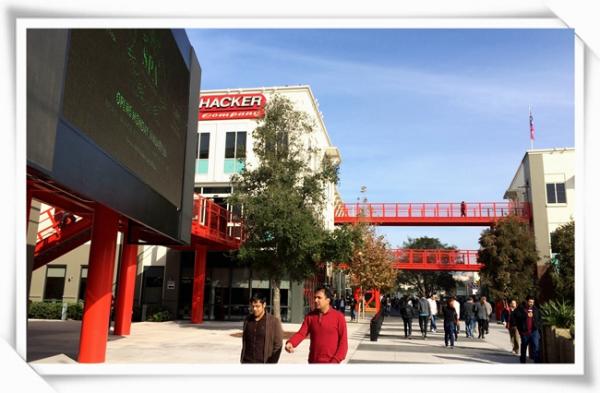
先贴几张上次朋友带我参观Facebook campus 的照片:
1. 左手边的办公楼1楼是Mark的会议室, 当时他在里面开会, 一下就认出他的娃娃脸, 刚想照相, 见到玻璃上贴着条子: Don't photography the animals ! 作罢
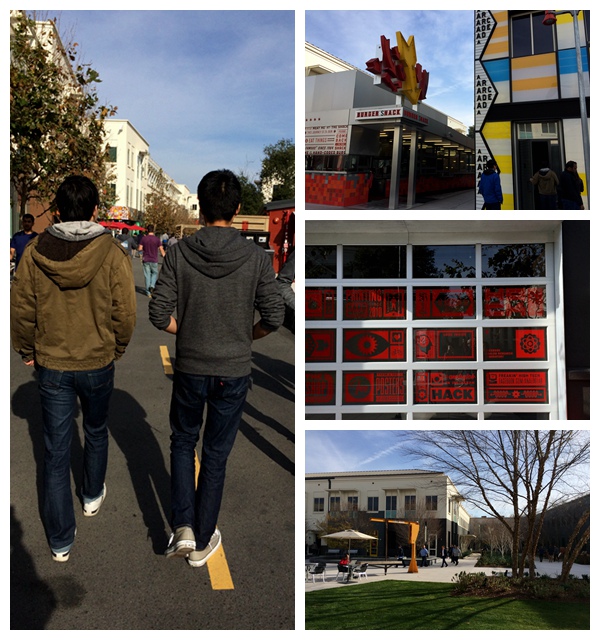
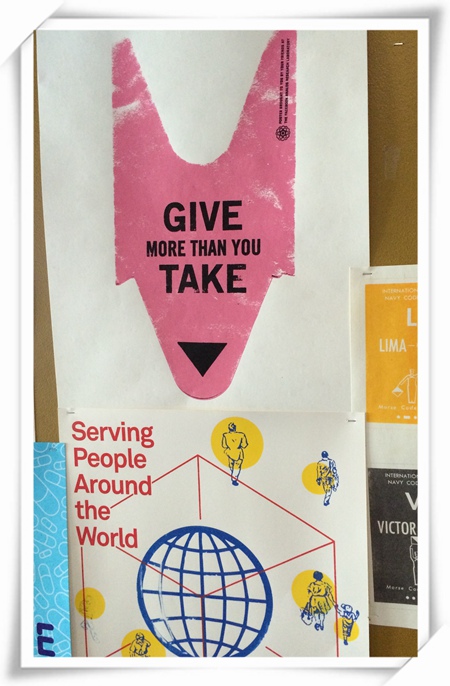
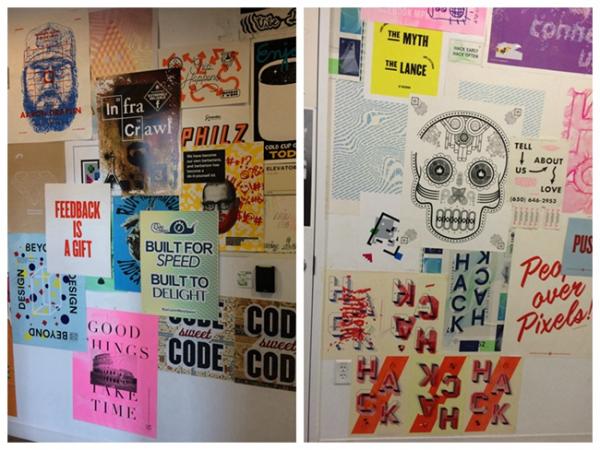
2. Facebook 员工把自己的设计贴在墙上, 最喜欢其中这句话: “Give More Than You Take ” Mark就是这样做的。
3. Facebook也有免费的午餐,Cake & Electronic Accessaries 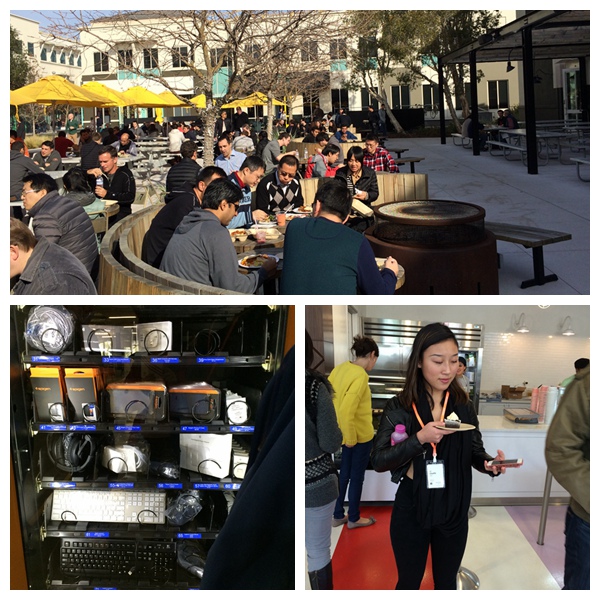
说老实话, 我原来对Facebook不怎么感冒, 觉得社交网算个啥东西, 哪里有Google的搜索引擎, 微软的视窗对社会有贡献啊!
可是后来,我转了180度, 认为在Facebook工作的朋友是幸运的, 因为老板是个有情怀的人, Facebook赚的钱帮助了那么多的孩子,病人。 最近不断被Facebook刷屏 Mark & Priscilla 历尽千辛怀上孩子了 Max出生了, 她爹写了一封感人至深的信给女儿 Mark决定捐出他持有的99% 的Facebook股票做慈善, 作为给女儿的礼物 。。。 朋友, 同学群里, 大家开始怀疑,怀疑Mark的善举 怀疑他是为了避税 Mark对质疑做出解释
还是怀疑他 怀疑他 。。。
明明是善举, 怎么被描的那么黑? Mark和Priscilla明明有着美好的心愿, 却被扭曲的惨不忍睹。 我不忍看下去, 开始试着说服怀疑者, 这些怀疑者一般是没有海外工作经历的。 怀疑者很顽固, 我也很顽固, 辩论, 辩论, 再辩论。。。 有的同学骂我: 你脑子进水了! 你怎么可能让大妈理解小札的理想和境界! 我还是希望她们理解这种高尚的境界, 理解这个世界上有善良的人,有关爱社会的人,人不为己,天不蛛地不灭。
简要总结一下
1. 有人认为Mark捐钱是为了逃避遗产税,让子女得到更多好处,还用貌似严格的计算来证明他们的观点, 经过一些小学算术的计算,得出结论, Mark通过裸捐, 20年后可以让女儿多得609亿美金。 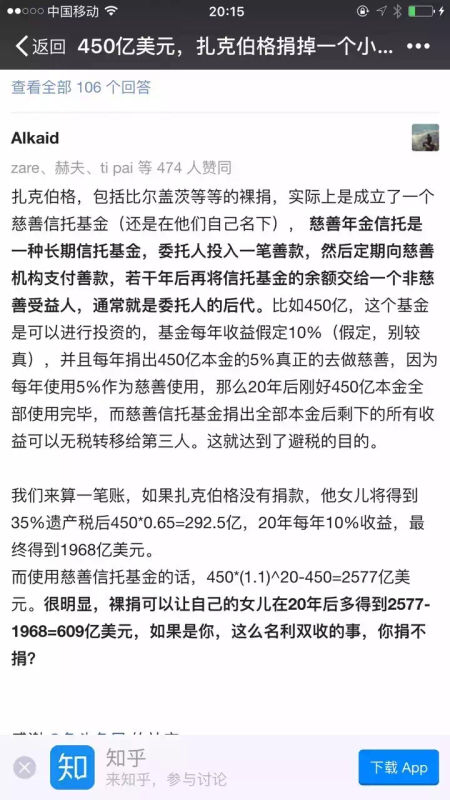
还有一个更夸张的, 把美国富豪全体搞黑 “ 扫盲:关于美国富豪捐款的背后的故事:政府如何确立政策鼓励富豪捐款的:
美国不鼓励从父辈继承巨额遗产不劳而获的做法,因此美国的遗产税高得吓人。虽然遗产税率时高时低,但大致在45%左右,而在华盛顿州,因为没有州一级的收入税,为了保证州政府税收,它额外征收高达20%的州遗产税。也就是说,如果盖茨将财富直接传给孩子,交完遗产税后,几乎去掉了60%。美国对投资收入也征收很高的资产增值税,税率从15%到35%不等。如果盖茨卖掉自己手里长期持有的微软股票,他将缴纳15%的资产增值税,如果他兑现短期的投资所得,则要交高达35%的联邦税。如果将自己的股票卖掉转给孩子,那么,每一亿美元的资产只剩下1×(1-45%)×(1-20%)×(1-15%)=37% ,即3700万美元。假如将这3700万美元拿去投资,按每年10%的投资回报率计算,每年投资收入按平均30%的税率缴税,那么,到30年后这个富人的孩子将获得2.8亿美元。
如果想少缴税,而将财产尽可能多地留给孩子,唯一的办法是将财产捐给自己的慈善基金会。这样做可以免除三种税,第一次卖股票的资产增值税、遗产税和每年的投资增值税。在向自己的基金会捐赠财产时,还能再抵消40%的工资等所得税。考虑到这个富人的工资奖金收入和捐到他自己的基金会的股票相比是九牛一毛,暂且不考虑他抵税的部分。美国法律同时规定所有的慈善基金会每年必须捐出5%的资产,这就是每年盖茨基金会和其他慈善基金会都要捐出一些钱的原因之一。
现在我们再来看看这个富人把钱捐给了他自己的基金会后,每一亿美元财产能为孩子留多少钱。我们仍然假定,该基金会的投资回报是每年10%,扣除捐出的5%还剩下5%。现在该基金会自始至终就不用交任何税了,30年下来,这一个亿美元的本金增值到4.3亿美元,同时还向社会捐出了3.3亿美元。因此,如果经营得好,这个富人不但多留给孩子1.5亿美元,还通过这3.3亿美元的捐赠博得慈善家的美名,而且,更重要的是,美国大多数富豪都喜欢通过自己、而不是通过政府来改造社会,真可谓名利三收。一百多年前有洛克菲勒、福特,现在有盖茨和巴菲特。 ”
上面两个计算貌似严格, 其实是基于一个错误的假设, 就是捐款人的捐款动机不纯, 捐款人的家族是这笔善款的受益人, 过20年家族可以把慈善基金的尾款收回。 慈善基金同家族信托基金有本质的不同,后者是为了家族财产的分割和传承, 基金收益人是家族成员, 而慈善基金是要经过政府严格审核的(为了避免有人逃税), 目的不是财产传承, 而是做社会公益。
很多富豪都设有两种信托基金, 一方面做些社会公益积德, 一方面照顾家庭成员的衣食住行, 比如香港的李嘉诚, 美国的洛克菲勒。

2. 有人质疑Mark为了避税放弃了美国国籍 Mark如果放弃了美国国籍,我不会感到意外。 因为很多人宁愿自己直接做些改变社会的事情, 而不是通过政府。 但是我认为Mark还是持美国护照的。 他还是被列在美国富豪里的第11名 https://en.wikipedia.org/wiki/List_of_members_of_the_Forbes_400
各个国家的富豪都可以查到 https://en.wikipedia.org/wiki/List_of_countries_by_the_number_of_US_dollar_billionaires
3. 经过很多口水战,有人坚持Mark是为了避税 我不同意这个说法,原因如下: Mark还很年轻, 遗产税跟他还沾不上边, 美国现在的遗产税有接近5.4 million的免税额, 上面最高封顶在40%。 而且如果真想把财产转到女儿名下,可以有很多办法, 完全不需要用把钱捐出去的办法, 比方他现在就可以给女儿在瑞士银行开账户, 现在开始在女儿名下买豪宅,等女儿大学毕业后,把她招到Facebook工作, 给她股票分红。。。如果Mark真想转移资产到女儿名下。 Mark的salary income很少, 好像只有一两块钱, 他原本也没有什么income tax, 只有在他cash out 股票时有capital gain 的税, 你知道,capital gain 的税是低税率的。 Mark和Priscilla之前已经捐了不少钱, 在不需要避税的情况之前做出这样的善举,已经很说明问题。
我坚信Mark和Priscilla做善事是为了改变世界,为了他们的理想,Gates也是做善事 我想问那些怀疑慈善行为的高人们几个问题: 1问. 如果你们认为捐出99%的财产有诈, 那捐出多少财产才没有诈呢? 2问. 如果这样裸捐可以给儿孙留下更多财产, 是否美国多数人都可以做到这样呢? 我做不到,你可以做到吗? 3问. 如果成立慈善基金可以给孩子留下更多的钱,那巴菲特为什么不成立他自己的基金, 而是捐到Gates的基金会 4问. Mark和Gates可以多捐些钱避多些税, 那你也可以少捐些钱,少避些税啊, 你愿意捐出你的资产的50%,试试吗? ( 我只知道当我捐出股票赚来的1000块钱时, 我少交150快钱的税,净付出是850块,不是得, 是出 )
我大学的一个学霸转发了Mark对他质疑的中文解释, 并注:我作为一个中国人都汗颜! 我也是,汗颜!
最后衷心祝福Mark和Priscilla这个美好的家庭, 愿他们永远健康快乐!
Mark给女儿的信(也是给所有下一代的信,给所有父母的信) Dear Max, Your mother and I don't yet have the words to describe the hope you give us for the future. Your new life is full of promise, and we hope you will be happy and healthy so you can explore it fully. You've already given us a reason to reflect on the world we hope you live in. Like all parents, we want you to grow up in a world better than ours today. While headlines often focus on what's wrong, in many ways the world is getting better. Health is improving. Poverty is shrinking. Knowledge is growing. People are connecting. Technological progress in every field means your life should be dramatically better than ours today. We will do our part to make this happen, not only because we love you, but also because we have a moral responsibility to all children in the next generation. We believe all lives have equal value, and that includes the many more people who will live in future generations than live today. Our society has an obligation to invest now to improve the lives of all those coming into this world, not just those already here. But right now, we don't always collectively direct our resources at the biggest opportunities and problems your generation will face. Consider disease. Today we spend about 50 times more as a society treating people who are sick than we invest in research so you won't get sick in the first place. Medicine has only been a real science for less than 100 years, and we've already seen complete cures for some diseases and good progress for others. As technology accelerates, we have a real shot at preventing, curing or managing all or most of the rest in the next 100 years. Today, most people die from five things -- heart disease, cancer, stroke, neurodegenerative and infectious diseases -- and we can make faster progress on these and other problems. Once we recognize that your generation and your children's generation may not have to suffer from disease, we collectively have a responsibility to tilt our investments a bit more towards the future to make this reality. Your mother and I want to do our part. Curing disease will take time. Over short periods of five or ten years, it may not seem like we're making much of a difference. But over the long term, seeds planted now will grow, and one day, you or your children will see what we can only imagine: a world without suffering from disease. There are so many opportunities just like this. If society focuses more of its energy on these great challenges, we will leave your generation a much better world. • • • Our hopes for your generation focus on two ideas: advancing human potential and promoting equality. Advancing human potential is about pushing the boundaries on how great a human life can be. Can you learn and experience 100 times more than we do today? Can our generation cure disease so you live much longer and healthier lives? Can we connect the world so you have access to every idea, person and opportunity? Can we harness more clean energy so you can invent things we can't conceive of today while protecting the environment? Can we cultivate entrepreneurship so you can build any business and solve any challenge to grow peace and prosperity? Promoting equality is about making sure everyone has access to these opportunities -- regardless of the nation, families or circumstances they are born into. Our society must do this not only for justice or charity, but for the greatness of human progress. Today we are robbed of the potential so many have to offer. The only way to achieve our full potential is to channel the talents, ideas and contributions of every person in the world. Can our generation eliminate poverty and hunger? Can we provide everyone with basic healthcare? Can we build inclusive and welcoming communities? Can we nurture peaceful and understanding relationships between people of all nations? Can we truly empower everyone -- women, children, underrepresented minorities, immigrants and the unconnected? If our generation makes the right investments, the answer to each of these questions can be yes -- and hopefully within your lifetime. • • • This mission -- advancing human potential and promoting equality -- will require a new approach for all working towards these goals. We must make long term investments over 25, 50 or even 100 years. The greatest challenges require very long time horizons and cannot be solved by short term thinking. We must engage directly with the people we serve. We can't empower people if we don't understand the needs and desires of their communities. We must build technology to make change. Many institutions invest money in these challenges, but most progress comes from productivity gains through innovation. We must participate in policy and advocacy to shape debates. Many institutions are unwilling to do this, but progress must be supported by movements to be sustainable. We must back the strongest and most independent leaders in each field. Partnering with experts is more effective for the mission than trying to lead efforts ourselves. We must take risks today to learn lessons for tomorrow. We're early in our learning and many things we try won't work, but we'll listen and learn and keep improving. • • • Our experience with personalized learning, internet access, and community education and health has shaped our philosophy. Our generation grew up in classrooms where we all learned the same things at the same pace regardless of our interests or needs. Your generation will set goals for what you want to become -- like an engineer, health worker, writer or community leader. You'll have technology that understands how you learn best and where you need to focus. You'll advance quickly in subjects that interest you most, and get as much help as you need in your most challenging areas. You'll explore topics that aren't even offered in schools today. Your teachers will also have better tools and data to help you achieve your goals. Even better, students around the world will be able to use personalized learning tools over the internet, even if they don't live near good schools. Of course it will take more than technology to give everyone a fair start in life, but personalized learning can be one scalable way to give all children a better education and more equal opportunity. We're starting to build this technology now, and the results are already promising. Not only do students perform better on tests, but they gain the skills and confidence to learn anything they want. And this journey is just beginning. The technology and teaching will rapidly improve every year you're in school. Your mother and I have both taught students and we've seen what it takes to make this work. It will take working with the strongest leaders in education to help schools around the world adopt personalized learning. It will take engaging with communities, which is why we're starting in our San Francisco Bay Area community. It will take building new technology and trying new ideas. And it will take making mistakes and learning many lessons before achieving these goals. But once we understand the world we can create for your generation, we have a responsibility as a society to focus our investments on the future to make this reality. Together, we can do this. And when we do, personalized learning will not only help students in good schools, it will help provide more equal opportunity to anyone with an internet connection. • • • Many of the greatest opportunities for your generation will come from giving everyone access to the internet. People often think of the internet as just for entertainment or communication. But for the majority of people in the world, the internet can be a lifeline. It provides education if you don't live near a good school. It provides health information on how to avoid diseases or raise healthy children if you don't live near a doctor. It provides financial services if you don't live near a bank. It provides access to jobs and opportunities if you don't live in a good economy. The internet is so important that for every 10 people who gain internet access, about one person is lifted out of poverty and about one new job is created. Yet still more than half of the world's population -- more than 4 billion people -- don't have access to the internet. If our generation connects them, we can lift hundreds of millions of people out of poverty. We can also help hundreds of millions of children get an education and save millions of lives by helping people avoid disease. This is another long term effort that can be advanced by technology and partnership. It will take inventing new technology to make the internet more affordable and bring access to unconnected areas. It will take partnering with governments, non-profits and companies. It will take engaging with communities to understand what they need. Good people will have different views on the best path forward, and we will try many efforts before we succeed. But together we can succeed and create a more equal world. • • • Technology can't solve problems by itself. Building a better world starts with building strong and healthy communities. Children have the best opportunities when they can learn. And they learn best when they're healthy. Health starts early -- with loving family, good nutrition and a safe, stable environment. Children who face traumatic experiences early in life often develop less healthy minds and bodies. Studies show physical changes in brain development leading to lower cognitive ability. Your mother is a doctor and educator, and she has seen this firsthand. If you have an unhealthy childhood, it's difficult to reach your full potential. If you have to wonder whether you'll have food or rent, or worry about abuse or crime, then it's difficult to reach your full potential. If you fear you'll go to prison rather than college because of the color of your skin, or that your family will be deported because of your legal status, or that you may be a victim of violence because of your religion, sexual orientation or gender identity, then it's difficult to reach your full potential. We need institutions that understand these issues are all connected. That's the philosophy of the new type of school your mother is building. By partnering with schools, health centers, parent groups and local governments, and by ensuring all children are well fed and cared for starting young, we can start to treat these inequities as connected. Only then can we collectively start to give everyone an equal opportunity. It will take many years to fully develop this model. But it's another example of how advancing human potential and promoting equality are tightly linked. If we want either, we must first build inclusive and healthy communities. • • • For your generation to live in a better world, there is so much more our generation can do. Today your mother and I are committing to spend our lives doing our small part to help solve these challenges. I will continue to serve as Facebook's CEO for many, many years to come, but these issues are too important to wait until you or we are older to begin this work. By starting at a young age, we hope to see compounding benefits throughout our lives. As you begin the next generation of the Chan Zuckerberg family, we also begin the Chan Zuckerberg Initiative to join people across the world to advance human potential and promote equality for all children in the next generation. Our initial areas of focus will be personalized learning, curing disease, connecting people and building strong communities. We will give 99% of our Facebook shares -- currently about $45 billion -- during our lives to advance this mission. We know this is a small contribution compared to all the resources and talents of those already working on these issues. But we want to do what we can, working alongside many others. We'll share more details in the coming months once we settle into our new family rhythm and return from our maternity and paternity leaves. We understand you'll have many questions about why and how we're doing this. As we become parents and enter this next chapter of our lives, we want to share our deep appreciation for everyone who makes this possible. We can do this work only because we have a strong global community behind us. Building Facebook has created resources to improve the world for the next generation. Every member of the Facebook community is playing a part in this work. We can make progress towards these opportunities only by standing on the shoulders of experts -- our mentors, partners and many incredible people whose contributions built these fields. And we can only focus on serving this community and this mission because we are surrounded by loving family, supportive friends and amazing colleagues. We hope you will have such deep and inspiring relationships in your life too. Max, we love you and feel a great responsibility to leave the world a better place for you and all children. We wish you a life filled with the same love, hope and joy you give us. We can't wait to see what you bring to this world. Love, Mom and Dad
Priscilla是个善良又有智慧的女人 http://mp.weixin.qq.com/s?__biz=MjM5ODc0NDI2Mw==&mid=400822835&idx=1&sn=18a345a3b0fe2acb4810045dbda43875&scene=5&srcid=1205E8NZDfJ7yWsBGdJjukyN#rd
现代科技富豪怎样改变世界
http://mp.weixin.qq.com/s?__biz=MjM5NTY0NjI4OA==&mid=406013651&idx=1&sn=be5f2341e25fcd65dafc5642c0f111da&scene=5&srcid=1205X0FL0MF2PI0kgwfsSZ5b#rd
这个话说的好:你的获得决定了你过怎样的生活,你的付出决定了你生命的意义 。
加州之行系列: 加州之行: Tahoe 滑雪 http://blog.creaders.net/u/1446/201101/77253.html
加州之行: 参观Google
http://blog.creaders.net/u/1446/201001/53783.html
加州之行:17-Mile Drive http://blog.creaders.net/u/1446/201002/55662.html
加州之行: Berkeley Pier http://blog.creaders.net/u/1446/201106/87461.html |