2026-5-10
日本在明治30年代(1897)出版相當多的畫報,其發起是受到西方美術的影響,但發展則有其歷史因素,畫報流行年代剛好是在石版印刷流行的時期,也正好在甲午戰爭與日俄戰爭這段期間,比起文字的戰爭報導,圖文並茂的畫報更受到時人的歡迎,其後由於照相攝影技術的發展,以石版印刷所成的畫報也開始被取代。
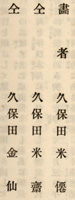
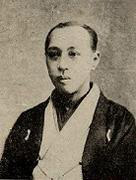
久保田米价,Kubota Beisen (1852-1906),与他的两个儿子久保田米齊,Kubota Beisai (1874-1937) 和久保田金仙,Kubota Kinsen (1875-1954),是日本明治時代的畫家,主要以歷史畫、風俗畫、漫畫、小說插畫廣為人知,1894年起開始擔任從軍畫家,描繪一系列的日清戰鬥畫報』。
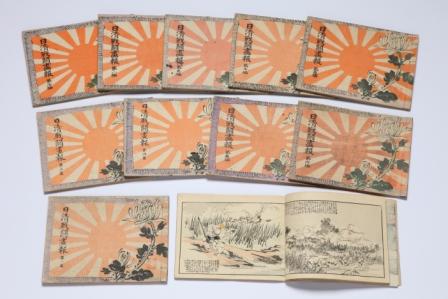
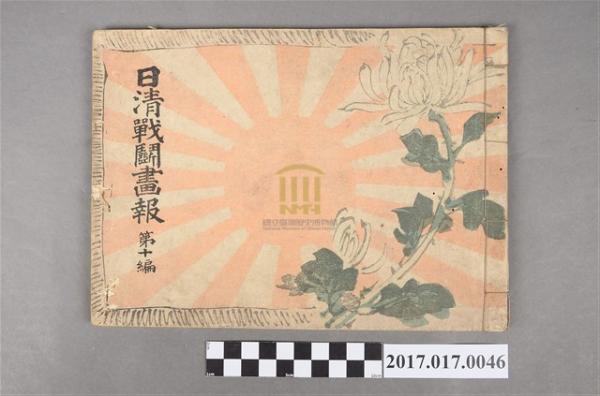
本書為久保田米价畫《日清戰鬥畫報》第10編,国立台湾历史博物馆认为本编應是日清戰爭畫報的最後一篇,而且认为是儿子久保田米斋的作品。
其实根据美国俄勒冈大学博物馆的资料,应该还有一本,第11编。
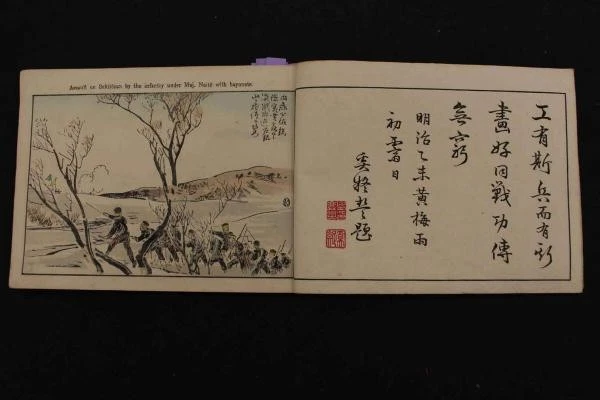

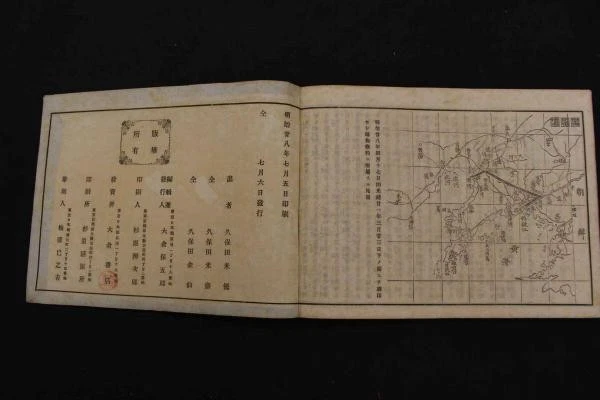
你想连博物馆都闹不明白也收不全的东西,自然其发行量和存世量就比较少,弥足珍贵的了。
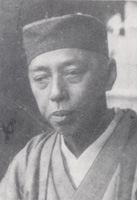
久保田米齋自小就天赋异禀,是神笔马良。但是他的绘画天赋,差一点就被他老爸给毁了。
Beisen was born in Kyoto in 1852 to Yamagiya Otoshichi, an inn-keeper. From an early age he displayed a love of drawing. Chaikin, cited above, tells us that the young artist painted graffiti on houses in his town including renditions of severed heads that he had seen displayed on the banks of the Kamogawa, which he was subsequently made to whitewash over. His father, expecting his son to follow him as an inn-keeper, did not encourage his artistic bent. However, at the age of 16 he was allowed to study with the Kyoto painter Suzuki Hyakunen (1825-1891) in the evenings. An 1898 letter from the journalist and editor Fukai Eigo, written to Arthur Diósy, founder of the Japan Society, discusses Beisen’s early struggle to pursue his passion.
His father, once discovering the secret pursuits of the future artist, went so far as to throw his brushes, and other materials for drawing, into a river near by. The career of one of the masters of pictoral (sic) art in Japan was begun under these unfavourable circumstances, and it was only after his parents perceived the failing health of their son that Kubota Beisen was allowed by them to follow his inclination freely.
Beisen went on to study at the Kyoto studio of the artist Kono Bairei (1844-1895) with whom he developed a close relationship.
Despite Beisen’s training with Hyakunen and Bariei he is considered largely self-taught by many sources with a unique style incorporating Western perspective and shadow and displaying “bold design and lightness of touch.” He was described as “the first painter in the Japanese style who has freed himself from the fetters of the old rules.”
Initially, Beisen earned a living by drawing designs to be used on fans and clothing destined for export, but by 1878 he was sufficiently established as an artist to be asked by Bairei to join him at the Kyoto Prefectural Art School 京都府画学校, co-founded by Bairei and the painter Mochizuki Gyokusen 望月玉泉 (1834–1913). He later taught at the school.
In 1886, along with Bairei, he founded the Kyoto Young Painters Study Group (Kyoto Seinen Kaiga Kenkyukai), aimed at helping train and promote young painters with a focus on talent rather than lineage. In that same year he was ordered to decorate the ceiling and doors of one of the rooms in the newly built Imperial Palace.6
In 1889, Beisen left for France to visit the Paris World Fair held in 1890 where he was awarded a gold medal. It was to be the first of at least two trips to the West. Upon his return in 1890 he co-founded the Kyoto Fine Art Association (Kyoto Bijutsu Kyōkai) with Kono Bairei. In 1890 after a stint as an illustrator at the Kyoto newspaper Kyoto Nippo, Beisen moved to Tokyo and went to work at Kokumin Shimbun, founded by Toktoki Sohō and “one of the most influential and enterprising daily newspapers in Tokio.” He is considered Japan’s first major newspaper artist and in 1893 he attended the World's Columbian Exhibition at Chicago as the newspaper’s artist-correspondent where he received a first class medal. He visited a number of cities during this trip to the United States, including Philadelphia where he received “the attention of Philadelphia society and the artists” and lectured (with use of an interpreter) “under the auspices of the Academy of Fine Arts.” While in Philadelphia he was hosted by the American realist painter Robert Henri (1865-1929).
Beisen gave "a demonstration of quick-sketch brush-and-ink technique [and] for a brief period after meeting Kubota, John Sloan [American realist painter, 1871-1951] and Henri carried around a brush and bottle of ink to make on-the-spot sketches."
一国之英雄,自然就是他国之狗熊。久保田米价父子的绘画,给他们家族赢来了泼天的富贵和名誉。
Writing in 1911, the American artist Henry P. Bowie who studied under Beisen for five years in the 1890s, described his teacher as "...one of the most popular and gifted artists in the empire." "Every stroke of his brush seemed to have magic in it. In many ways he was one of the cleverest artists Japan has ever produced. He was an author as well as a painter, and wrote much on art."
In 1894 Beisen and his two sons Beisai 米斎 (1874-1937) and Kinsen 金僊 [金仙] (1875-1954) accompanied the Japanese army as war correspondents and illustrators for the Kokumin Shimbun. His illustrations, assisted by his sons, of that war were immensely popular and served as the basis for many of the vivid triptychs created by print artists who had never visited the front in Korea or China.
On his return from the front, where he contracted dysentery, Emperor Meiji summoned “him to the General Headquarters…to draw pictures in the Imperial presence. In Japan, such an honour is very rarely accorded to artists, and the fact that Kubota Beisen was favoured in this way testifies to the high position occupied by him."
即便是俄勒冈大学的博物馆,也只是收集了其中的八本(第二编到第九编),但博物馆自己说只有六本。
Beisen’s drawings from the front were published in eleven volumes from October 21, 1894 through July 6, 1895 and titled 日清戦闘画報 Nisshin Sentō Gahō (Illustrated Account of the Sino-Japanese War). Six of those volumes are represented in this collection.
《日清戰鬥畫報》為日本明治時期出版的戰爭畫報系列,由京都畫家久保田米僊(Kubota Beisen)主編,內容記錄1894至1895年間的甲午戰爭過程與相關事件。全系列共十一冊。本冊第十一编为《凱旋編》,出版於明治二十八年八月,為該系列的最終篇,描繪戰爭結束後的凱旋儀式與臺灣接收過程。
內容自廣島 、京都 、橫濱 至東京,記錄天皇與皇后探視傷兵、慶典閱兵及皇族凱旋等場面。以及臺灣相關主題,描繪日本軍隊登陸鵝鑾鼻 、李經方(1855年—1934年)於艦上簽署移交書、臺北設立總督府、及當地風俗與建築景象。書中插圖附英文對照,如Her Majesty the Empress visiting the wounded soldiers in Hiroshima、Triumphal festival in Kyoto、Delivery of Taiwan (Formosa) 等。
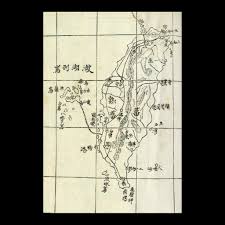
書末附有印刷版權頁,右側附一幅《臺灣地圖》,標示「澎湖列島」、「臺北」、「基籠」、「淡水」、「臺南」、「鳳山」、「打狗」等地名與交通路線,及標示「生蕃」、「熟蕃」分界。
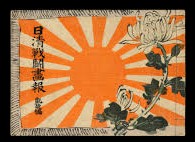
日清戰鬥畫報 凱旋編
Egakareta Nisshin Sensō
作者:久保田米僊
發賣所:大倉書店
出版:明治28年,(1895)
日文,130x170 mm,木版彩印,和裝摺本
|