美国战争部 (War Department) 建立于 1789 年,是负责陆军事务的内阁机构。二战期间,美国军力大幅扩张,陆军、海军、海军陆战队等部门运作庞大,协调问题凸显。当时除了“战争部”,还有单独的“海军部”(Department of the Navy)。1947年的《国家安全法》,确立行成了统一的国防部(Department of Defense)。
A central aim of President Trump’s move is to recast America’s military posture from purely “defensive” to unabashedly “war-fighting,” thereby projecting unrivaled strength and resolve to both allies and adversaries. By restoring the historic “Department of War” moniker, the administration argues the U.S. will:
Signal to potential foes that America stands ready to employ force in defense of its interests
Reinforce a “peace through strength” doctrine rooted in the founders’ belief that demonstrating power is the surest way to deter conflict
Cultivate a modern “warrior ethos” across the services, sharpening focus on mission readiness and honoring the armed forces’ combat legacy
Major Purpose: Deterrence Against China
Project an Unambiguous War-Fighting Stance
President Trump’s push to rename the Department of Defense the “Department of War” is designed to send a clear message to China that the United States remains fully prepared to employ military force if its interests are challenged. This rebranding aims to reinforce deterrence by emphasizing an uncompromising, war-ready posture on issues ranging from Taiwan’s security to freedom of navigation in the South China Sea.
Signal to Beijing that any coercive moves in the Indo-Pacific will be met with decisive military action
Reinforce a “peace through strength” doctrine to dissuade Chinese adventurism
Instill a warrior ethos across the armed services, sharpening focus on combat readiness
Pentagon Pushback and Potential Backfire
Many senior defense officials warn that while the renaming seeks to influence China’s strategic calculus, it will likely have little impact on Beijing’s risk assessments. Instead, they argue, it may play into Chinese propaganda by portraying the U.S. as a warmongering threat to international stability.
U.S. Military Strategy Toward China
1. Strategic Framework: National Defense Strategy
The U.S. frames its military competition with China through its National Defense Strategy, which designates China as the primary “pacing challenge” and places deterring Beijing’s coercive behavior in the Indo-Pacific at the center of defense planning.
2. Core Pillars
Integrated deterrence combining forward-deployed forces, allied interoperability, and cross-domain (land, sea, air, cyber, space) capabilities to raise the cost of Chinese aggression.
Strengthening alliances and partnerships across the Asia–Pacific and beyond to present a united front and distribute security burdens.
3. Force Posture and Modernization
Forward presence: rotational carrier strike groups, Marine littoral regiments, and joint exercises to demonstrate commitment to regional security.
·Capability development: precision long-range fires, resilient command-and-control networks, cyber defenses, and space-based sensors to counter China’s anti-access/area-denial systems.
4. End State and Evolving Debates
·Experts stress defining a clear end state—such as preserving buffer states, maintaining open sea lanes, and deterring escalation—to avoid reactive policymaking.
·Recent Pentagon proposals, however, seek to reprioritize homeland and Western Hemisphere missions over China-centric deterrence, reflecting debate within defense circles about the right balance.
·This overview captures how the U.S. military employs deterrence, alliance integration, capability modernization, and strategic clarity to address the challenges posed by China.
Recent Developments in U.S. Military Strategy Toward China
1. Intensified Counter-Drone and Uncrewed Systems Effort
The Pentagon has been warned by a new Center for a New American Security report that large Chinese drone swarms could overwhelm U.S. forces unless counter-drone defenses are rapidly scaled up.
The U.S. plans to spend roughly $7.4 billion in 2025 on counter-drone technologies, yet fielding at scale remains limited
Layered defenses are being prioritized: electronic warfare, kinetic interceptors, and directed-energy prototypes
Military leaders are urging industry to deliver integrated AI-enabled solutions rather than isolated “pieces of the puzzle”
2. Draft National Defense Strategy Reprioritization
A newly drafted National Defense Strategy marks a significant pivot by placing homeland and Western Hemisphere missions above countering China, challenging the long-standing focus on Beijing as America’s primary “pacing challenge”.
Thousands of National Guard troops have been activated for domestic support and Caribbean drug-interdiction
Warships and F-35s are being deployed to the Caribbean to stem illicit trafficking
Critics warn this shift could undermine deterrence in the Indo-Pacific and unsettle key allies
U.S.–Philippines Military Cooperation in the China Context
Expanded Forward Presence under EDCA and Operation Pathways
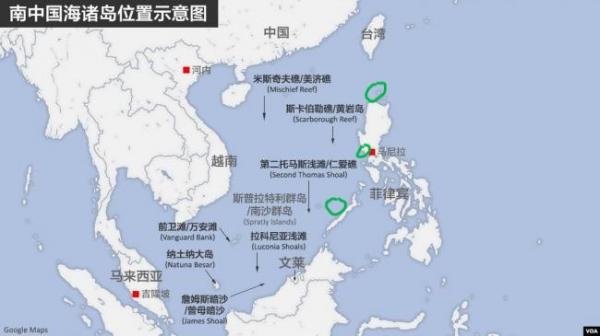
The United States has increased its rotational deployments of ground forces, air assets, and maritime surveillance to Philippine bases authorized under the 2014 Enhanced Defense Cooperation Agreement (EDCA) as part of Operation Pathways. These deployments include jungle and littoral defense drills on Luzon with 3D-printed drones, mobile missile launchers, and live-fire exercises to sharpen territorial defense capabilities. This posture aims to deter Chinese coercion in the South China Sea and Luzon Strait by demonstrating credible, ready-to-fight forces on Philippine soil.
·U.S. Army’s 25th Infantry Division conducting counter-landing and archipelago-defense exercises in northern Luzon
·Deployment of a ground-based Mark 41 vertical launch system (MRC/Typhon) with Tomahawk and SM-6 missiles at Manila’s request
·Regular joint planning and logistics integration under EDCA frameworks
Balikatan 2025: Interoperability and Advanced Capability Integration
Balikatan 2025 marked a high-water point in U.S.–Philippine interoperability, involving roughly 14,000 troops across key Philippine locales near disputed maritime zones. For the first time, U.S. forces operationally integrated the NMESIS anti-ship missile launcher (Naval Strike Missile on an unmanned ground vehicle) and expanded use of the Typhon Mid-Range Capability for coastal defense. These drills focused on amphibious operations, island defense, and long-range strike coordination to counter China’s A2/AD networks.
9,000 U.S. service members and 5,000 Philippine troops participating
Real-world scenario training: amphibious assaults, island defense, coastal interdiction
Introduction of land-based NSM and ROGUE-Fires UGVs plus SM-6/Tomahawk batteries
Institutional Foundations and Capacity Building
U.S.–Philippine security cooperation rests on the 1951 Mutual Defense Treaty (MDT), the 1998 Visiting Forces Agreement (VFA), and EDCA, all of which establish legal and logistical frameworks for joint training, rotational access, and humanitarian assistance. Since 2015, the U.S. has provided over $463 million in Department of State security assistance and $237 million via Department of Defense capacity-building programs. Active Foreign Military Sales cases now top $1.033 billion, supporting the Philippines’ three-phase, $40 billion military modernization through 2027.
MDT guarantees mutual defense obligations for attacks on Philippine territory
VFA grants status protections for U.S. personnel during exercises and rotations
EDCA permits pre-positioned equipment, expanded training areas, and facility upgrades
As China continues to field larger drone swarms and advanced A2/AD systems, expect deeper U.S.–Philippine cooperation through additional rotational deployments, accelerated capability deliveries, and expanded joint training.
You might also be interested in how U.S. partnerships with Japan, Australia (through AUKUS), and the Quad framework are evolving to create a broader network of Indo-Pacific deterrence.