| 美国犯罪率最高的十大都市 最近和国内的朋友聊天,发现了一个有趣的事实:做父母亲的,很多都想自己的孩子能够有机会到美国来学习,甚至是生活,而年岁比较小的孩子,却以美国的犯罪率太高为理由,来警告自己的父母亲,美国是个很不安全的国家。 也是的,最近在电视里,我也经常看到犯罪的新闻,和我们记忆中的在国内的情形相比,似乎也是太高了一点。同时,看来,国内政府和新闻媒体对美国阴暗面的强调,还真的是起了作用,虽然这种忽悠性质的作用之后短期的麻痹比较年幼的孩子。虽然这些孩子长大之后,很多人也会后悔,自己当初怎么会那么的幼稚和容易被人欺骗。 今天看到下面的这则文章,给了我一个数字化的比较结果:美国犯罪率到底严重到什么程度。什么地方最严重,为什么? 密西根州似乎是一如既往,依然是占据着老大和老二的前二把交椅,当仁不让。这种局面估计很难在可以预见的未来有所改善。我初步查了一下这个位列第一的Flint城市的数据和历史,一个在地图上看前不着村后不着店的城市,在几十年的时间内,人口规模已经下降了几乎一半。留下来的,估计是那些没有能力离开的人群。 当年,很多非洲裔美国人,为了逃离南方的种族歧视,来到经济蒸蒸日上的密西根,在随后,又为了平等的就业权利,还一再的做政治上的抗争。随着时间的流逝,非洲裔如愿以偿的获得了自己的政治权利,可是,却没有能力,最终给自己的后人留下什么有价值的“遗产”。这到底是谁的不幸呢?真的是,像奥巴马这样的政治家所说的,从奴隶开始的命运,就永远也无法靠自己的双手来改变吗? 如果真的是这样的话,那么,百年之后,整个美国,会不会成为今天的底特律呢? 非洲裔的大量进入,在汽车业蒸蒸日上的时候,为该地带来了大量的劳力补充。对于一个气候条件不怎么好的地方来说,应该也是难得的事情。不幸的是,这些后来者,最终却将早期在这里谋生的大量白人给“驱逐”走了。现在的该市,已经多数是非洲裔居民了。长期的高犯罪率,已经让这座曾经生机勃勃的城市,慢慢的变成了一座死城。新的投资者不敢注入资金,只是敢说话(唱高调)的当地“投资者”,又个个口袋空空。有点门路的,都想办法溜之大吉,来个此地不留爷,自有留爷处。 底特律也面临类似的结局。 让人有点吃惊的是,很多加州的城市名列其中。离大名鼎鼎的加州柏克莱分校所在地不远的奥克兰,也一直名列其中。不过,一位在那附近最出租房投资的朋友告知说,离校区比较近的地方的投资的环境还不错。可能是因为租金的吸引力,保住了比较高的地产价,让治安环境得以保留在比较安全的水准上。 在奥克兰,亚裔和西班牙裔,也在犯罪率方面做出了不小的“贡献”。白人占据25.9%, 黑人占有27.3%在比例上是第一大族裔, 而亚裔人口也高达17%。所以说,美国的犯罪率高,看来,还不仅仅只是一个种族差异的问题,而是经济差异产生的。 按照贝克的犯罪经济学理论,人们犯罪,并不是因为人格坏,而是理性选择的结果。这句话也在一个角度意味着:穷人就是“命贱”,为为了很多在富人看来很不值得的事情,而冒犯法律,违规违法。 确实是:我自己也曾经听到过这样的故事,有人因为毒瘾上来,而可以为了区区100美元而杀人!并且是当着年幼孩子的面,枪杀孩子的母亲! 犯罪率高的地区,都有共同的特点:就业不佳,平均收入不高,文化水准不怎么地,···。一句话,都是些不怎么得意和得志的人在那里过日子。我不是很能理解:为什么他们就不能学学中国偷渡客的那种改变自己命运的精神,好好的博弈一回?! 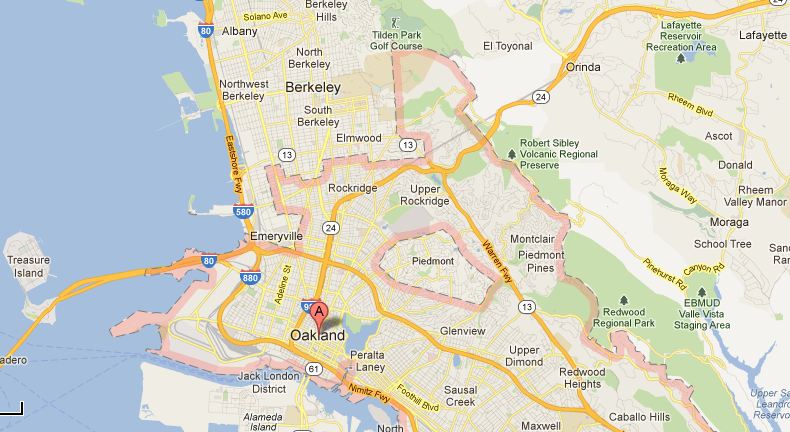
连接: 凤姐的“洗脚妹”画面玷污了美国的美容业形象(附图) The Most Dangerous Cities in America June 11, 2012 by 247wallst Today, the FBI announced that violent crime dropped 4% in 2011, compared to a 5.5% drop in 2010. Nationally, the murder rate fell 1.9% from 2010, and robbery, forcible rape and assault fell 4% each. However, among the cities with the highest violent crimes rates, the trend is not entirely positive. A 24/7 Wall St. review of 2011 FBI crime data shows that violent crime rose in more than half of the cities that have among the highest rates in the country. In seven of the 10 cities, murder rates increased. In eight of the 10, burglary went up. Strained budgets are forcing police layoffs that many cities cannot afford to make. More than half of local police departments that responded to a national survey reported cuts in the 2011 fiscal year, according to the Police Executive Research Forum, an organization of police executives from across the country. Many are cutting police forces through planned layoffs and attrition. More than half of the cities with the highest violent crime rates are cutting law enforcement budgets and police forces as well. However, unlike the national picture, the situation is worse for these cities, which depend on tax bases that are shrinking faster than most. The cities with the highest crime rates tend to have particularly high poverty rates, high unemployment and low median income. Two of the worst-off cities, Flint and Detroit, Mich., both have had well-publicized budget woes. Flint was taken over by an emergency city manager after failing to pay its bills in 2011. Detroit is facing similar budget problems and recently came to a temporary oversight agreement with the state. While PERF notes that budget cuts appear to be slowing in police departments in the United States, most departments are still cutting. According to the group’s April report on local police budgets, this includes many of the cities on this list. Oakland, Calif., cut its budget by 7% in the current fiscal year, with an additional 5% cut on the way, according to PERF. In the past two years, the city lost 80 police officers to layoffs and another 108 to attrition. This occurred despite increases in both violent and property crime in 2011. Similarly, while the Detroit Police Department reported no cuts for fiscal year 2012, the city is planning a 15% cut next year. Detroit also has one of the highest crime rates in the country. On its website, the FBI cautions against using crime data to compare city violence because rankings tend to be simplistic and ignore factors that influence crime, as well as the different ways crimes are measured and reported. “Data users should not rank locales because there are many factors that cause the nature and type of crime to vary from place to place,” the FBI warns. Congressional Quarterly, which publishes and analyzes FBI crime statistics each year, referred to crime rate in terms of the “safest” and “most dangerous” cities. However, the publication recently dropped the terms “safe” and “dangerous” due to the concerns of criminologists, Dr. Rachel Boba Santos told 24/7 Wall St. Despite these objections, Dr. Boba Santos said the data is useful to get a feel for the needs of a particular community and to look at a specific city’s trends on a year-over-year basis. She said the data also is used at the federal level to determine funding resources for different communities, comparing crime rates. Based on the FBI’s Uniform Crime Report, 24/7 Wall St. identified the 10 U.S. cities with populations of 100,000 or more with the highest rates of violent crime per 1,000 residents. Using the estimated populations and crime incidents from UCR, which measures incidents of eight types of violent and nonviolent crime for 2011, 24/7 Wall St. calculated the incidence of the four types of violent crime per 1,000 persons for that year: murder, forcible rape, robbery and aggravated assault. In addition to crime data, 24/7 Wall St. reviewed median income and poverty rates for these cities from the U.S. Census Bureau for 2010, the most recent available year. We also included average 2011 unemployment rates for these cities, provided by the Bureau of Labor Statistics. These are the 10 cities with the highest rates of violent crime. 10. Stockton, Calif.
> Violent crimes per 1,000: 14.1
> Population: 295,136
> 2011 murders: 58
> Median income: $45,606
> Unemployment rate: 20.2% In 2010, Stockton had an unemployment rate of 18.4%, among the worst in the nation for large cities. In 2011, the labor market worsened and unemployment rose to 20.2%, well more than double the national average of 8.9% and the highest of any of the cities on this list. Violent crime rates also have worsened, increasing from 13.8 crimes per 1,000 people in 2010. Though Stockton has long had high crime rates, the 58 murders recorded in Stockton last year were an all-time record for the city. This month, to curb the increasing crime rates in the city, police decided to prioritize violent crime and to no longer respond to property crimes in the city unless certain criminal conditions were met. 9. Baltimore, Md.
> Violent crimes per 1,000: 14.2
> Population: 626,848
> 2011 murders: 196
> Median income: $38,346
> Unemployment rate: 10.5% Baltimore managed to decrease its violent crime rate slightly from 14.6 per 1,000 in 2010 to 14.2 last year. This coincides with a 12% decrease in murders. However, Baltimore still has the sixth-highest homicide rate of any U.S. city with a population above 100,000. Baltimore’s murder rate has been dropping steadily, but with 341 forcible rape cases in 2011 and the 11th-highest aggravated assault rate in the country, many residents are victims. In 2010, Baltimore made plans to layoff 193 police due to budget cuts. 8. Atlanta, Ga.
> Violent crimes per 1,000: 14.3
> Population: 425,533
> 2011 murders: 88
> Median income: $41,631
> Unemployment rate:12.1% Compared to most American cities, Atlanta has extremely high incidences of both violent and property crimes. The city’s 8.27 aggravated assaults per 1,000 people is one of the 10 highest rates among the country’s largest cities, as is the city’s 70.84 property crimes per 1,000 people. Atlanta also has one of the nation’s highest rates of motor vehicle theft, with a total of 5,371 incidents in the city last year. Vehicle theft likely will remain an issue throughout 2012 as well; in March almost 100 individuals were arrested as part of a single auto theft operation. 7. Birmingham, Ala.
> Violent crimes per 1,000: 14.8
> Population: 213,258
> 2011 murders: 54
> Median income: $30,212
> Unemployment rate: 10.9% New on the list this year is Birmingham, which ranks among the top five cities in the U.S. for forcible rape and property crime rates. The city also has among the highest rates of burglary and larceny-theft. Like many other high crime cities, Birmingham has one of the highest poverty rates in the country, at 25.1%. Despite the rampant crime, officials announced last year that they planned to lay off 148 employees of the sheriff’s department in an effort to reduce the budget by $12.3 million. 6. Little Rock, Ark.
> Violent crimes per 1,000: 14.9
> Population: 194,988
> 2011 murders: 37
> Median income: $44,415
> Unemployment rate: 7.2% Though Little Rock’s 2011 violent crime rate is down from 2010, when there were 15.2 violent crimes for every 1,000 people, in many ways the city’s crime rate has not truly improved. Although in 2010 there were only 25 murders in the city, in 2011 there were 37. Additionally, incidents of forcible rape increased from 149 to 161, while the number of property crime incidents increased by 708, or almost 5%. According to the Little Rock Police Department’s COMPSTAT reports, the total number of violent, property and arson crimes has experienced a net increase since 2001, although with slight declines in more recent years. 5. Memphis, Tenn.
> Violent crimes per 1,000: 15.8
> Population: 652,725
> 2011 murders: 117
> Median income: $37,045
> Unemployment rate: 11.1% In 2011, Memphis defied the national trend of declining crime rates in major U.S. cities. The rate of violent crimes per 1,000 people increased, from 15.4 to 15.8. This was the product of increases in murders, which rose from 89 to 117 cases, and aggravated assault incidents, which rose by 100 cases. A rising unemployment rate, which grew 1.2% to 11.1% in 2011, likely has not helped to reduce criminal behavior. With a current budget deficit of $45 million, Mayor Wharton says he may need to consider “taking boots off the street,” by laying off members of the police force in the near future. 4. Oakland, Calif.
> Violent crimes per 1,000: 16.8
> Population: 395,317
> 2011 murders: 104
> Median income: $49,190
> Unemployment rate: 15.6% Oakland historically has been among the most crime-ridden cities in California, with a violent crime rate this year of 16.8 per 1,000 people. There were 14 more murders in 2011 than in 2010, causing Oakland to maintain the ninth-highest murder rate in the country two years in a row. Oakland is the number one city for both robbery and motor vehicle theft rates in the country. Oakland city councilmember Desley Brooks, who wants to allocate $11 million in revenue to the police force, acknowledges the increased violent crime, saying, “we cannot ignore that we have had an increase in violent crime, and so we cannot continue to do the same thing the same way and expect that it’s going to be a different result.” 3. St. Louis, Mo.
> Violent crimes per 1,000: 18.6
> Population: 320,454
> 2011 murders: 113
> Median income: $32,688
> Unemployment rate: 11.7% Although the total number of murders in the city has decreased by 31 since 2010, crime in St. Louis did not improve overall last year. Violent crime rates in St. Louis have risen dramatically, from 17.5 to 18.6 cases per 1,000 people. And the city’s murder rate is still the fourth highest in the nation, its robbery rate is the fifth highest in the nation and its aggravated assault rate is third highest in the nation. Despite these troubling facts, the St. Louis Police Department recently faced potentially drastic budget cuts, that may require the elimination of 100 street-patrolling officer positions through attrition. 2. Detroit, Mich.
> Violent crimes per 1,000: 21.4
> Population: 713,239
> 2011 murders: 344
> Median income: $25,787
> Unemployment rate: 19.9% Long regarded as one of the poorest cities in the U.S., with a 32.3% poverty rate and nearly 20% unemployment in 2010, Detroit has the second-highest violent crime rate in the country. Homicide increased by 11% in 2011, while robbery and aggravated assault are fourth and second highest in the country, respectively. Nonviolent crime is also an issue, with burglary, motor vehicle theft and arson rates in the top 10 rankings in the country. Due to an 18% decrease in the budget, Detroit has begun taking steps to decrease police funding by introducing “Virtual Precincts.” The plan requires citizens to report crime to a call center because there are no police patrols between the hours of 4 p.m. and 8 a.m. 1. Flint, Mich.
> Violent crimes per 1,000: 23.4
> Population: 102,357
> 2011 murders: 52
> Median income: $22,672
> Unemployment rate: 18.9% According to the FBI examined, no city with more than 100,000 residents had a higher violent crime rate than Flint. In 2011, there were 2,392 incidents of violent crime in Flint, which has a population just above 100,000. That same year, there were just 1,246 violent crimes in all 10 of the safest cities in America — which have 13 times as many residents as Flint among them. Flint has the second-highest murder rate and the highest rates of aggravated assault, burglary and arson in the nation. According to Flint Mayor Dayne Walling: “there are too many guns on the street and it’s easy for individuals with evil motives to take another human being’s life.” Though the violent crime has long been a problem in Flint, in 2010 the city laid off 20 of its 140 police officers, a decision that diminished both the police’s street presence and response times to crime. Michael B. Sauter, Douglas A. McIntyre, Ashley C. Allen, Alexander E. M. Hess, Lisa Nelson and Samuel Weigley 连接: 凤姐的“洗脚妹”画面玷污了美国的美容业形象(附图) |