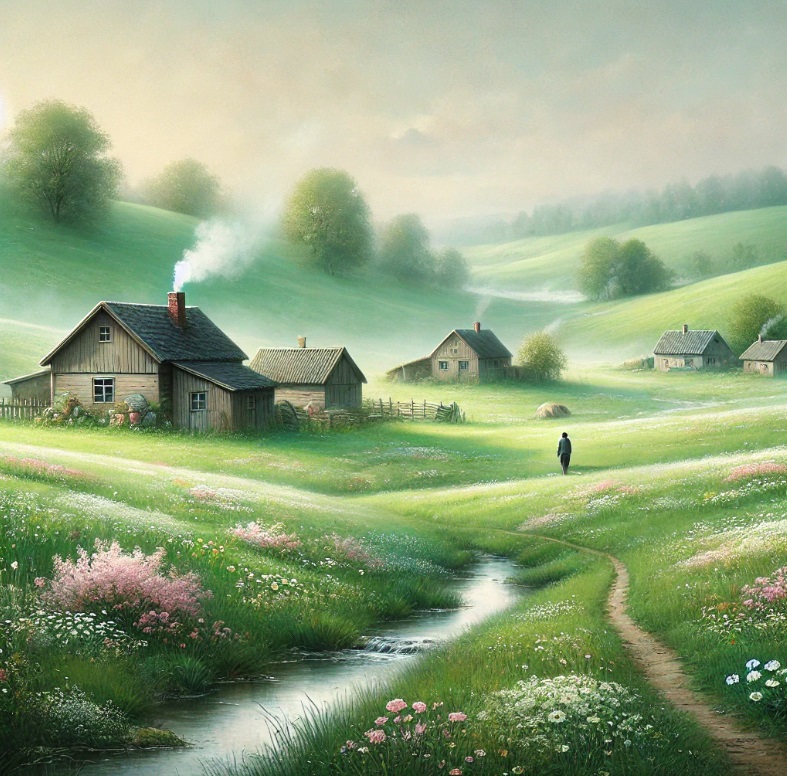
《空潮册》河风从海面卷上来,带着半熟的盐味和泥灶的潮气,湿漉漉地拍在老灯桩上,又顺着堤脊滑进测潮棚。木架年年浸水,一吸气就吱哑作响,像在低声念旧账。门楣上挂着一口生锈的小钟,退潮时会自己磕一齿,声音不亮,空空的,像水底传来的低语,绕着棚子转一圈,就散了。 我坐在铁脚桌前,摊开《潮时册》,旁边放着画满格线的硬板。格线把日与时、潮差与风向、盐度与泥沙浓度都切成方格,像把河水裁成一块块听话的碎片。我用铅笔写,用刀片刮,用橡皮抹。写与抹,抹与写,像两条小船互相牵扯,从不疲倦。外头的河口在呼吸,我在格子里为它翻译。黄昏时,风里的铁味更重,一阵一阵,像破船铁皮上蒸出的叹息。 风总带着一些奇怪的声音:锚链在底泥里轻轻拖动,浮标的绳子在水里颤着,像有人刚念出一个名字,又突然停下。舅舅年轻时在口门当河工,肩背微微弯着,好像在给水让路。他说,水要有空白,人不能把它写满。我点头,却仍在页脚塞进注记:谁家的篾篓从上游漂来,哪只水鸟不按季节折返,哪几蓬芦苇的根又探下一寸。 阿月在码头晾网,网眼里滴下的水落在石面上,蒸得很快,就像泪水还没干就散了。 我以为记录是为了留住。有人低声说:留住,就是越界。我没回答,只把这句话抄在边栏。那一刻,我已经越了界。 河口派出所每两天派人来抄《潮时册》。来的人总在换,笔迹粗细不同,却都略过边栏。老人们坐在码头抽旱烟,说大潮进来时的一声“顿”,像铁在水里被敲,听见的人会下意识系紧鞋带。孩子们蹲在磙石上,看潮水漫过脚背,笑着跑开。
夜里,我合上册子,灯光低暗。桌上,一尾细白的鱼游过,没有水,只有纸。它的鳞光轻轻刮过墨迹,替我抹去一个字,留下一道凉凉的弧线。我似睡非睡,梦见河口裂开,泥面像镜子一样平,透出半截手指,被水光包裹,又沉下去。有人喊“阿海”,声音被浪扣住,只剩一半,散在水面上。我追着那声音,鞋子灌满泥水,踩在木桩的潮线。灯影晃了两下,像有人在水底抬头。那影子没有脸,只是一页未写满的册子,低声说:“删。” 声音从泥里翻出来,像潮水在梦里记住了我。 渔队的老付最守口,晚上总拿着手电去看水位桩,眼神深得像河底。他说桩会动。说完,他把手电扣在胸口,像把一句话扣回心里。我看着,动的不是桩,是泥。泥吞下一线又吐出,像人在水里练气。 老付说:“这个吞吐,不要写。写了,水会怕。” 我把这句抄在封二上:“不要把水写满。” 那夜又梦见鱼。它跃起,在空白的格子上闪了一下,鳞片反着灯光,像在替水读册。我终于明白老付说的“怕”,不是水怕字,是字怕回头。 鱼就是那个回头的影子,替我看清那些多余的墨。
以前船进出都讲“让一口”,不能和水抢。后来年轻人图快,船头扎得太实,水被闷住。册上的小字,是在和水说话。话多了,水烦。河口有脾气。年轻时丢过一个兄弟,灯灭后就找不着了。阿海也在那儿干过,后来沉进河口,再没上来。他是我堂兄。 端午后第三个大潮夜,风突然折向,像有人在黑暗里悄悄扭动罗盘。堤外的浮标被拉得笔直,绳子在水下颤着。我压低灯罩,让光圈只照在《潮时册》上。 六月十六那一页,主栏的数字密密挤着,边栏堆满迟到的注记,像一个人把自己塞进纸里,连喘息都没地方。我拿起刮字刀,刀口贴着纸走,纸纤维被削起,像细细的水泡。 我削掉“午后黄泥上翻”,削掉“鹞鹰追鱼群”的箭头,削掉“涨退之间有嗡”的“嗡”。 刀刮过纸面,发出低低的声音,像水在叹气。纸屑落进铁盘,灰白一片,凉得像退潮后的石面。我想抓住那些字,却发现它们变成水影,漂去河口。风从门缝里吸了一下气,像在不满。刀尖抖了一下,格线破了一丝。我停手,把刀平放。 灯光缩成一点。我趴在空白处,耳朵贴着纸,听见细细的潮声,像针线在水里缝布。有人在低声说:“空,也是字。” 我抬头,看见阿海站在堤外,背影和灯影重叠。他的手指按在册上,格线泛起潮纹,像纸自己在呼吸。小钟突然磕了一齿,空栏发出一声轻响。那一刻,我不知道,是我在听潮,还是潮在听我。 我换橡皮,抹去主栏里最密的一处,“2.3”“2.4”“2.5”都变成了淡灰。纸面浮起细凹,像退潮后的裂纹。外头的水声把“数”的尾音吞掉,低吟不止。那一夜,我只做了一件事——把六月十六那一格抹成空。空旁,我写了个小字:空。
第二天午后,舅舅来了,衣襟湿湿的。他站在门外,不进来。我把册子递给他,他指了指那块空白,没说话,只掏出一包旧石灰粉,在沙盘上抹平一角。指尖蘸了粉,画出河口:主流硬笔,支流软笔。 “你把格子空了,水自己会补。” “可我看不见。” “那就看它怎么补。” 我在沙盘边竖起细竹签,绑上红线,坠着旧铅锤。风吹过,红线轻轻摆动,到某个点就停了,像认准了一寸的尺度。舅舅摘下门楣上的小钟,挂到竹签上。钟轻轻撞到红线,发出一声空响,像水底的低语。 夜深了,风变得湿重。我梦见水自己醒来,从堤下爬起。它说:“人以为我在流动,其实我是在反复记起自己。风是我呼出的旧名,泥是我遗下的句子。有人写我、删我,以为能掌潮,其实是在削我的梦。” 我听见小钟在骨头里响,像一粒砂在心口跳。那砂曾是阿月母亲的耳坠,也可能是船底的铁钉。水说它记得所有沉下去的名字,却没有一个能浮起来。 “你俯下身,我教你我的话。”它说,“无字,唯回声。你写我,我在你指尖长出新的水纹。” 傍晚,阿月在码头晾网,水珠从网眼落在石面上,蒸发得很快。潮水推来一朵花,停在我鞋边。花没香气,只剩被盐洗过的薄影。 花对我说:“我不是从树上落的,我从你字里掉下来。你写得太安静,我替安静守门。”
我把花夹在册页间。夜里翻页,花瓣发出哑声,像归档的叹息。 风趴在灯罩上,低声说:“我在河口搬运名字,搬过你堂兄,也搬过破钟的齿音。名字一湿就重,我背不动,只能塞进浮标的绳里。你写太满,我得绕远路,把字送回泥里。今晚的路直——删的人,留我一口气。”
风舔了一下钟的锈,钟又轻响,像在证明。 小时候,我在口门边迷过路。有人喊我的名字,被浪吞了一半。我追着那半截声音,一直跑到木桩潮线,鞋灌满了水。那人始终没出现,只是灯影晃了两下。后来家里再也没人提起那天。有人说潮涨太快,木桩没拔出来;也有人说,是我家的船没回来,舅舅喊了一夜。对我来说,六月十六,就是那半截名字。 我想留住它,却发现它像水中的影子,散在风里。 这些年我习惯“留”。那天起,舅舅教我“删”。删不是撕,也不是遮。删要让纤维还在,字的力量不在。把纸与笔之间那层“用力”温柔地拿走。我练了三天,先练角页,再练旧栏。写得越满,删得越难。删一字,纸上留淡影,像人从水上岸,脚底轻轻一扣。删多了,纸会破,我每天只删一个字:删“潮”、删“涌”、删“急”、删“至”。删到“到此”的“此”变空。手背落在纸上,盐味淡淡的,像退潮后石缝里的霜。 梦里,影子从水里带着册子上来,不看我,直接翻到六月十六。水底像有一间档案室,柜子贴着泥签——“沉没的名字”“未寄出的信”“被删的字”。影子拉开“被删的字”那格,里面铺着鱼鳞和碎钟声。它递给我一缕空,说:“这是你遗给水的气息。” 醒来时,我的指尖是凉的。那一格空白上,浮着细细的潮痕,像刚长出的字,未定生死。 测潮册被查出几处笔迹刮除痕迹。无涂抹,疑似用刀刮。主栏六月十六一格空白。批注写:“建议保留,不要补。” 阿月说,潮水有两种空:一种让它走,一种替它遮伤。 “今晚是哪一种?”我问。 她侧耳听着:“走。”
第七夜,风变得很长,像海上有人提起一块白布。小钟碰红线,红线碰竹签,竹签碰沙盘边,发出一串细响,像远处有人关上几扇窄门。河口静了下来,那种“该来的还没来”的空,铺满堤外。 我走到水边,潮在退,暗流掠过脚踝,温柔得像不想惊动我。锚链松开一齿,浮标歪了又直。我忽然听见一个声音在心里说:这里要删,不要留。删不是抹去,是归还。水有自己的账。 我翻开册子,在六月十六的右侧写下小字:“此栏空,听河口自记。” 舅舅站在门外,托着那口小钟,像捧着孩子,把它重新挂回门楣。钟声沉了些,棚里的空气也随之一沉。 月末,档案室调册。灰衫的抄录员翻到那一页,停了两秒,看我。我没说话。他笑了笑,照样抄写,空白的地方也留着空白。 单据上写:“六月十六主栏空格一处,疑观测空位,保留。” “保留”两个字,像把空抬高了一寸。 入伏后,白雾笼着河口。棚里的钟被潮气蚀出空洞,不再响,只在风来时轻轻摇。我收起半盘灰,另一半留在门槛里。红线缠在铅锤上,高高挂着,没碰到地。 舅舅说:“删够了。” “怎么知道?” 他望着河,眼神像拉直的一根线:“水面把你的字接回去了,就够了。”
夜里,我梦见河口裂开,灰粉浮起,形成一张水的脸。它对我说:“我记住了。你删的,我补。” 醒来时,沙盘平整,红线不动。水底的钟声像在轻敲桩子,像有人在招呼。我喊“阿海”,声音没出来,只剩一点盐印在纸上。纸是温的,像刚有人坐过。 我看到短短一幕:木桩的线条、黑色的海面、断裂的灯影、人影在水里弯了一下,就不见了。胸口那根细弦轻轻一弹,又回到原处。 又过三天,我一个人坐在棚里。风与潮都平稳,像远处有人在吹排箫,气息顺着无形的管子缓缓传来。我翻开《潮时册》,轻轻在六月十六页角盖章:删。 章落,风从门缝里进来,掀了一下页角,又放回去。 我关灯,搬椅子坐到门口。潮水退了一指,就停住。 隔着水,能听见阿月晾网的声音,长长短短,像拉紧的线又放松一格。 秋汛前,新册送到。纸很硬,格子很细。我抄下老付那句话:“不要把水写满。” 又加一行:“空栏,即在场。”
第一页是明年的六月十六。字还没写,格子里已经有淡淡的潮痕。我笑了,像在看一本没写完的旧书。 风从河口吹过,灯桩上的鹞鹰落下又飞起,影子一闪,压在水面。沙盘上的灰被风抹平,冰凉得像露出的石皮。旧册被包好,放在高架上。 我对门楣上的小钟轻声说:“停。” 隔水传来阿月的声音,不高,也不清,像有人在水底说话,被浪一点点推上岸。 我听不清她说的是“潮退了”,还是“删够了”。河水就在这里,河口依旧。风像一个熟悉路线的巡逻者,吹过又回来。 夜深,钟不响,木梁因为冷缩热胀发出极轻的空响。我把手放在膝上,听着水把空白接回自己。纸页上,仍留着一道细缝。 堤外传来一声极轻的“顿”,像铁在水里被敲。 我抬头,风正好—— 空栏自己响了一声。 没有光,没有告别。只是退潮的一瞬间,像从纸上轻轻抬起多写的字。 河水从不记账,但在每一页空白里,留下了一道裂缝,不是缺口,是呼吸。 明年的六月十六,我会再翻开新册。不催它来,也不挽它去。只在那恰好的风口,温柔地拿走多余的一笔。 耳贴空白,听那首无字的歌,缓缓地唱。 (汪翔,2025年10月19,写于伊利湖畔)
The Tide ListenerThe river wind sweeps up from the sea, bearing the half-ripe tang of salt and the damp heat of mudflats, slapping wetly against the old lighthouse post before slipping along the dyke into the tide gauge. The wooden frame, steeped in years of water, creaks with each breath, as if murmuring an old ledger. A rusted bell hangs beneath the lintel; at low tide, it taps its own tooth, a faint, hollow sound, like whispers from the riverbed, circling the shed once before fading. At an iron-legged table, I spread the Tide Ledger and a board etched with gridlines. The lines carve days and hours, tidal ranges and wind directions, salinity and sediment into squares, as if slicing the river into obedient fragments. I write with a pencil, scrape with a blade, erase with a rubber. Writing and erasing, erasing and writing, like two boats tethered, never tiring. The estuary breathes outside; I translate it within these grids. At dusk, the wind carries a heavier iron scent, gusting in waves, as if sighing from the rusted hull of a derelict ship. The wind always bears strange sounds: anchor chains dragging softly through silt, buoy ropes quivering in the water, like a name half-spoken, abruptly stopped. My uncle, once a river worker at the estuary’s mouth, stood with shoulders slightly bowed, as if yielding to the water. He said the water needs its blank space; humans must not fill it. I nodded but crammed notes in the margins: whose bamboo basket drifted downstream, which waterbird returned out of season, how far a cluster of reeds’ roots sank. At the dock, A-Yue dries nets, water dripping from the mesh, evaporating the moment it hits the stone, like tears gone before they dry. I thought recording was to hold fast. A whisper came: to hold is to trespass. I didn’t answer, only copied it to the sidebar, already crossing the line. Every other day, the estuary police station sends someone to copy the Tide Ledger. The scribes come and go, their handwriting varying in weight, but they always skip the sidebar. Old men at the dock smoke pipes, saying the great tide’s arrival brings a “thud,” like iron struck underwater, making listeners instinctively tighten their shoelaces. Children crouch on the rollers, watching the tide wash over their feet, laughing as they scamper away. At midnight, I close the Ledger, the lamp dim. A slender white fish glides across the table, no water, only paper. Its scales graze the ink, erasing a word for me, leaving a cool arc. Half-asleep, half-awake, I dream the estuary splits, its muddy surface smooth as a mirror, a half-finger emerging, wrapped in waterlight, sinking back. Someone calls “A-Hai,” the sound caught by the waves, halved, scattering across the surface. I chase it, shoes heavy with mud, stepping to the tide line by the wooden post. The lamplight sways twice, as if someone underwater glanced up. The shadow has no face, only an unfilled page of the Ledger. It whispers, “Erase.” The voice rises from the riverbed’s silt, as if the tide, in its dream, remembered me. Old Fu from the fishing crew keeps his words close, visiting the water-level post at night with a flashlight, his gaze heavy as the riverbed. He says the post moves. Then he presses the flashlight to his chest, locking a thought back in his heart. I’ve seen it—not the post moving, but the mud, swallowing a hairline then spitting it out, like someone practicing breath underwater. Fu says, don’t write this flux; writing makes the water afraid. I note his words on the back cover: “Don’t fill the water.” That night, I dream of the fish again. It leaps, flashing in the blank grid, scales catching the lamplight, as if reading the Ledger for the water. I understand Fu’s “afraid”—not the water fearing words, but words fearing their own return. The fish is that return, seeing the excess ink for me. Once, ships entering or leaving left a “breath” of water, not vying with it. But the young, eager for speed, drove their bows too hard, stifling the water. The Ledger’s small script speaks to the water. Too many words, and the water grows restless. The estuary has its temper. Long ago, a brother was lost, untraced after the lamps went out. A-Hai worked here too, then sank into the estuary, never surfacing. He was my cousin. On the third great tide after the Dragon Boat Festival, the wind shifts, as if someone in the dark nudged a compass. Beyond the dyke, the buoy’s rope pulls taut, trembling low in its depths. I lower the lampshade, the light pooling only on the Ledger. On June sixteenth’s page, the main column brims with numbers, the sidebar stuffed with belated notes, as if someone crammed themselves onto paper, leaving no room to breathe. I lift the blade, its edge gliding along the paper, fibers rising like fine bubbles. I scrape away “afternoon mud churn,” the arrow of “kites chasing fish schools,” the “hum” of “between ebb and flow.” The blade hums across the page, a sigh from the water. Scraps fall into the tin tray, pale and gray, cool as stone after the tide’s retreat. I try to hold the words, but they turn to water-shadows, drifting to the estuary. The wind sucks sharply through the door crack, as if displeased. The blade trembles, nicking the gridline. I set it down flat. The lamp shrinks to a point. I lean over the blank, ear to the paper, hearing a faint tidal murmur, like a needle threading water-soaked cloth. A voice whispers, “Emptiness is a word too.” I look up. A-Hai stands beyond the dyke, his silhouette overlapping the lamplight. His finger presses the Ledger, rippling the grid with tidal lines, as if the paper breathes. The bell taps once; the blank column rings faintly. In that moment, I don’t know if I’m listening to the tide or the tide to me. I switch to the eraser, rubbing out the densest part of the main column, turning “2.3,” “2.4,” “2.5” to faint gray. The paper dimples, fine cracks like those left by a receding tide. The water’s sound swallows the tail of “number,” murmuring on. That night, I do one thing: erase the most crowded square of June sixteenth into blankness. Beside it, I write a small word: Empty. The next afternoon, my uncle arrives, his collar damp with water stains. He stands outside, not entering. I hand him the Ledger. He points to the blank, says nothing, then pulls out old lime powder, smoothing a corner of the sand tray. Pinching the dust, he draws the estuary: main currents in hard strokes, tributaries in soft. “You’ve emptied the grid; the water will fill it.” “I can’t see it.” “Then watch how it fills.” I set a thin bamboo stick by the tray, tying a red thread with an old lead weight. The wind brushes past, the thread sways, stopping at a point as if measuring an inch of certainty. My uncle unhooks the lintel’s bell, hanging it on the stick. It grazes the thread, ringing empty, like a whisper from the depths. At night, the wind grows heavy with damp. I dream the water wakes, rising from the dyke’s base. It says, “People think I flow, but I only remember myself again and again. The wind is my exhaled names, the mud my left-behind sentences. They write me, erase me, thinking they command the tide, but they only thin my dream.” I hear the bell chime in its bones, like a grain of sand pulsing in a heart. That sand was once A-Yue’s mother’s earring, perhaps a nail from a ship’s hull. The water says it remembers every sunken name, yet none rise. “Lean close,” it says, “and I’ll teach you my tongue—no words, only echoes. You write me, and I grow new ripples in your fingertips.” At dusk, A-Yue dries nets at the dock, water beads falling to the stone, evaporating swiftly. The tide pushes a flower to my shoe, scentless, a thin shadow washed by salt. The flower says, “I didn’t fall from a tree; I dropped from your words. You wrote silence too thin, so I fell to guard it.” I tuck it between the Ledger’s pages. At night, the petal rasps as I turn the page, like a filed sigh. The wind crouches on the lampshade, whispering, “I carry names at the estuary—your cousin’s, the bell’s chipped notes. Wet names grow heavy; I can’t bear them, so I tuck them into the buoy’s rope. When you write too much, I detour, sending words back to the mud. Tonight, my path is straight—whoever erases gives me a breath.” It licks the bell’s rust; the bell rings lightly, as if testifying. As a child, I lost my way by the estuary’s mouth. Someone called my name, half-swallowed by the waves. I chased that half-name to the tide line by the post, shoes filled with water. No one appeared, only the lamplight swaying twice. No one spoke of it later. Some said the tide rose too fast, the post unpulled; others said our ship didn’t return, my uncle calling through the night. To me, June sixteenth is that half-name. I wanted to hold it, but it dissolved like a shadow in the estuary’s wind. I’ve clung to keeping. That day, my uncle taught me to erase. Erasing isn’t tearing or hiding. It leaves the paper’s fibers, strips the force from words, gently lifting the effort between pen and page. I practiced three days, starting with corners, then old columns. The fuller the writing, the harder to erase. One word erased, the paper holds a faint shadow, like someone stepping ashore, toes curling lightly. Erase too much, the paper tears. I erase one word daily: “tide,” “surge,” “rush,” “to.” Until “here” becomes empty. My hand rests on the page’s end, salt faint, like frost in the cracks after the tide. In a dream, a shadow rises from the water with the Ledger, not looking at me, flipping to June sixteenth. Beneath the water lies an archive, cabinets tagged with mud labels—“sunken names,” “unsent letters,” “erased words.” The shadow opens the “erased words” drawer, lined with fish scales and broken bell chimes. It hands me a wisp of emptiness: “This is the breath you left to the water.” I wake, fingers cool. The blank square bears faint tidal traces, like a word just born, undecided on life or death. The Ledger shows traces of scraped ink, no smudges, likely a blade. A blank square on June sixteenth. The note reads: “Retain, do not fill.” A-Yue says the tide has two empties: one for its path, one to cover its wounds. “Which tonight?” I ask. She tilts her ear: “Path.” The seventh night, the wind lengthens, like white cloth lifted at sea. The bell brushes the thread, the thread the stick, the stick the tray’s edge, a chain of soft taps, like distant doors closing. The estuary quiets, an emptiness of “what should come didn’t,” spreading beyond the dyke. I walk to the water’s edge, the tide ebbing, currents grazing my ankles, gentle as if loath to disturb. The anchor chain loosens a notch, the buoy tilts then rights itself. A voice in my heart says: Erase here, don’t keep. Erasing isn’t hiding; it’s returning. The water keeps its own account. I open the Ledger, writing in small script beside June sixteenth: “This column empty, let the estuary record itself.” My uncle stands outside, cradling the bell like a child, rehanging it on the lintel. Its chime sinks, the shed’s air steadying. At month’s end, the archive calls for the Ledger. The gray-shirted scribe flips to June sixteenth, pauses two seconds, glances at me. I say nothing. He smiles, copying as is, leaving the blank blank. The record notes: “June sixteenth, one blank in main column, suspected observation gap, retained.” “Retained” lifts the emptiness an inch. After midsummer, white mist cloaks the estuary. The shed’s bell, eaten by damp, grows hollow, silent, swaying only when the wind blows. I clear half the tray’s ash, leaving the rest inside the threshold. The red thread, wound around the lead weight, hangs high, never touching ground. My uncle says, “You’ve erased enough.” “How do you know?” He looks to the river, eyes pulling a line taut. “When the water takes your words back, it’s enough.” That night, I dream the estuary splits, gray powder forming a water’s face. It says, “I’ve remembered. You erase, I fill.” I wake, the tray smoothed, the thread still. A bell chimes underwater, as if the tide knocks a post, calling me. I call “A-Hai,” no sound comes, only a salt mark on the paper. The page is warm, as if someone just sat there. I see a brief scene: the post’s lines, a black sea, broken lamplight, a shadow bending in the water, then gone. The thin string in my chest twangs softly, settling back. Three days later, I sit alone in the shed. The wind and tide are steady, like a distant flute, breath threading through invisible pipes. I open the Ledger, stamping lightly on June sixteenth’s corner: Erased. The stamp falls, the wind slips through the door crack, lifting the page’s edge, then letting it fall. I dim the lamp, move a chair to the doorway. The tide recedes an inch, then stops. Across the water, A-Yue’s net-drying sounds stretch and shrink, like a taut line loosening a notch. Before the autumn flood, a new Ledger arrives, its paper stiff, grids fine. I copy Fu’s words: “Don’t fill the water.” I add: “An empty column is presence.” The first page is next year’s June sixteenth. No words yet, but the grids bear faint tidal traces. I smile, as if reading an unwritten book. The wind patrols the estuary, a kite on the lighthouse post landing and lifting, its shadow flashing across the water. The tray’s ash is smoothed by the wind, cold as exposed stone. The old Ledger is wrapped, placed high on the rack. I say to the lintel’s bell, “Stop.” Across the water, A-Yue’s voice drifts, soft, unclear, like someone speaking underwater, pushed ashore by waves. I can’t tell if she says, “The tide’s gone,” or “You’ve erased enough.” The river is here, the estuary endures. The wind, a familiar sentinel, patrols and returns. At night, the bell is silent, the wooden beams creaking faintly from heat and cold. My hands rest on my knees, listening as the water takes back the blank. The page holds a fine seam. A faint “thud” comes from beyond the dyke, like iron tapped underwater. I look up, the wind just right—the blank column rings once. No light, no farewell. Only the tide’s retreat, like lifting excess words from the page. The river keeps no ledger, but in every blank page, it leaves a crack—not a gap, but a breath. Next June sixteenth, I’ll open the new Ledger. I won’t rush its coming or hold its going. At the right gust, I’ll gently lift one excess stroke. Ear to the blank, I listen to the wordless song, singing slowly.
|