| 中国人投巨资打造中国城意欲何在? 托利多(Toledo)虽然是俄亥俄州的第四大城市,但是,其经济繁荣程度,和排在它全面的克利夫兰、辛辛那提、哥伦布这三位大哥相比,实在是不知道该怎么样比。不论是地利还是人和,这座位于俄亥俄州与密西根州交界处的小城市,都早已不再占有优势了。 在历史上,这里曾经得益于来自底特律的繁荣带来的地利优势,而一度欣欣向荣。今天,随着底特律的败落,如果它期望只是靠自己的一己之力,再来个起死回生,恐怕也不是一件容易的事情。经济的繁荣,靠砸钱(中国模式!),很多时候恐怕也不是成功之道吧,至少对于长期而言,短期的政绩工程自然是“与众不同”了。 虽然如此,中国人却有不信邪的主。这不,大手笔的中国投资者,就已经开始在这里布局,期望在这个拥有“地利优势”的地方,借助于低廉价格的地皮,来打造一个繁荣的巨大中国城。 打造富有特色并且繁荣昌盛的中国城的梦想,好像很多年之前就有不少的人在谈论,也有不少的人砸下大量的真金白银,在一个个大大小小的城区,打造一个个没有特色的中国城。到目前为止,成功的程度,似乎也不是很理想。 很多人以为,最近几十年来中国城相对三十年之前的大繁荣的趋势,在今后,还应该会被继续的发扬光大。但是,这些人似乎忽视了一个巨大的现实差异:今天在美国出现的中国人,华裔什么的,已经和几十年前的那些老移民,那些口口声声“祖国的昌盛和繁荣才是自己在海外得以站直的本钱”的人,有着巨大的不同。再者,这批新的华裔,在获得学位,找到不错的工作之后,很多人又非常自然地开始了,自己和家人彻底的脱离和中国城关系的新生活了。很多人,一年都难得有几次机会,到城市中心的中国城去看看了。他们开始真真实实的融入美国的主流文明了。 这种对中国城冷落的必然性,将带给那些希望过去的快速发展趋势“必然”会继续的人们,以很大的负面惊喜。中国人在美国的生活方式和生活环境,已经是远不同于早期的中国移民了。这些以厚实的知识为基础的中国人和华裔,已经完全有能力,在一个没有中国城的环境下生活的更好,他们之中越来越多的人,也更乐意按照更为美国化的生活方式来生活了。 如果你看不到这种变化的来临和它所带来的巨大影响,而继续的想当然,按照传统的思路来改变美国的生活格局,或者,只是按照你在中国所获得的成功经验,来在美国再造辉煌,时间带给你的,很可能就不是欢声笑语,而是簌簌的泪珠了。 最近,为了繁荣俄亥俄州的城区经济,四家赌场已经开始营业。为了这些赌场,业主们已经奋斗了好几年,在一次次的投票否决之后,依然锲而不舍,终于在这次巨大的金融危机之后,“乘人之危”,让俄亥俄人不得不低下自己高贵的头颅,而认可了这种怎么样看都是劳民伤财的“投资”之举的合法性。 很多人就此预测,基于这种赌场经济的拉动,俄亥俄将会很快迎来城市中心区的再次繁荣和昌盛。 我个人觉得,这要么是一些人的异想天开,要么是有些人的有意识忽悠,虽然他们自己都不可能相信,这样的时代会再次来临。 “兵者,鬼道也”,可能说的就是这种玩法吧。 虽然我个人最近也在这个小城投入了百万之众,但是,我所投资的地点,是该城市唯一也是最繁忙的购物中心——Franklin Park Mall。我无意,也无力去改变该地区的商业格局,充其量只是借力打力罢了。在那个城市,对于我,好像还没有第二个商业区值得投入巨资的。 对于在美国类似“中国城打造”这样的大手笔和高风险投资,其资金来源,如果是来自国内和国内相关的投资者,是不是也值得中国政府相关部门好好的关注一下呢?如果这些资金是来自政府和纳税人的口袋,如果是有人用类似在国内的做法,来在美国搞空手套白狼,或者是“借花献佛”,结果又在美国的土地上搞就一个个的烂尾楼,那么,谁来买单的问题,是不是也是一个很重要的政治问题了? Why are the Chinese investing in Toledo?
By Graham Webster, contributor
FORTUNE -- In March 2011, Chinese investors paid $2.15 million cash for a restaurant complex on the Maumee River in Toledo, Ohio. Soon they put down another $3.8 million on 69 acres of newly econtaminated land in the city's Marina District, promising to invest $200 million in a new residential-commercial development. That September, another Chinese firm spent $3 million for an aging hotel across a nearby bridge with a view of the minor league ballpark.
The investors have framed their purchases as a gateway for further investment opportunities in the Midwest. The newly sold hotel is about an hour's drive from the Detroit airport, and on its website, the hotel's purchaser, Five Lakes Global Group, advertises Toledo as a "5-star logistics region" with access to Cleveland, Columbus, Dayton, Chicago, and Detroit.
With a population of 287,000, Toledo is only the fourth largest city in Ohio, but it lies at the junction of two important highways -- I-75 and I-80/90. "My vision is to make Toledo a true international city," Toledo's Mayor Mike Bell told the Toledo Blade.
Bell, an independent who took office in 2010, has made repeated visits to China to court investors. A welcome message from Bell, subtitled in Chinese, appears on Five Lakes' Chinese website. Five Lakes' Chinese name might be better translated as "Great Lakes" Global, and the company's website advertises a regional investment forum to take place in Toledo in September, with speeches by Bell and Ohio Governor John R. Kasich.
While the national economic conversation on China is preoccupied with Chinese-held government debt, local governments have been working for deals that benefit local economies. Bell is not alone: many mayors and other local officials have traveled to China to meet with potential investors and visit joint ventures between U.S. and Chinese companies. Just recently, Iowa Governor Terry Branstad accepted an invitation to visit China after the state hosted visiting Chinese Vice President and presumptive next leader Xi Jinping. Indiana's Lieutenant Governor Becky Skillman this month led her second trade mission to China. And Atlanta Mayor Kasim Reed led his own team a few weeks ago.
Chinese citizens are second only to Canadians in the number of real estate investments in the U.S., according to the National Association of Realtors. The Rhodium Group, a global economic consultancy, ranks information technology, hospitality, and real estate as the top three areas of Chinese private investment in the U.S. From 2003 to 2011, Rhodium counted 236 private investment deals worth a total of $6.3 billion. Of those, 10 fell under hospitality, real estate, and entertainment.
Toledo is not alone in experiencing an influx of overall Chinese investment in recent years. While most deals in Rhodium's data took place on the coasts, seven China-Ohio deals were recorded from 2008 to 2011, compared with none from 2003 to 2007.
China's super-rich have good reason to diversify their holdings. In China the possibility of a real estate bubble and uncertainty about the banking system can make U.S. real estate, even away from the metropolis, an appealing bet.
In early June, Beijing again cut interest rates, finally weakening demand for loans after years of rapid investment in things like airport infrastructure, which may or may not pay off. Peking University
Professor Michael Pettis cautions that non-performing loans (NPLs) could jeopardize the economic system for ordinary people.
There is at least one more reason some investors would turn to the U.S.: Foreign investors who put at least $1 million into a U.S. business and meet other requirements can be eligible to apply for a green card. The minimum investment in high-unemployment areas, such as East Toledo, is $500,000.
Just who is investing in Toledo? The restaurant complex and riverfront development investors have been identified as Yuan Xiaohong and Wu Kin Hung, working through a company called Dashing Pacific Group Ltd. The investors behind the Five Lakes Global Group have not been identified.
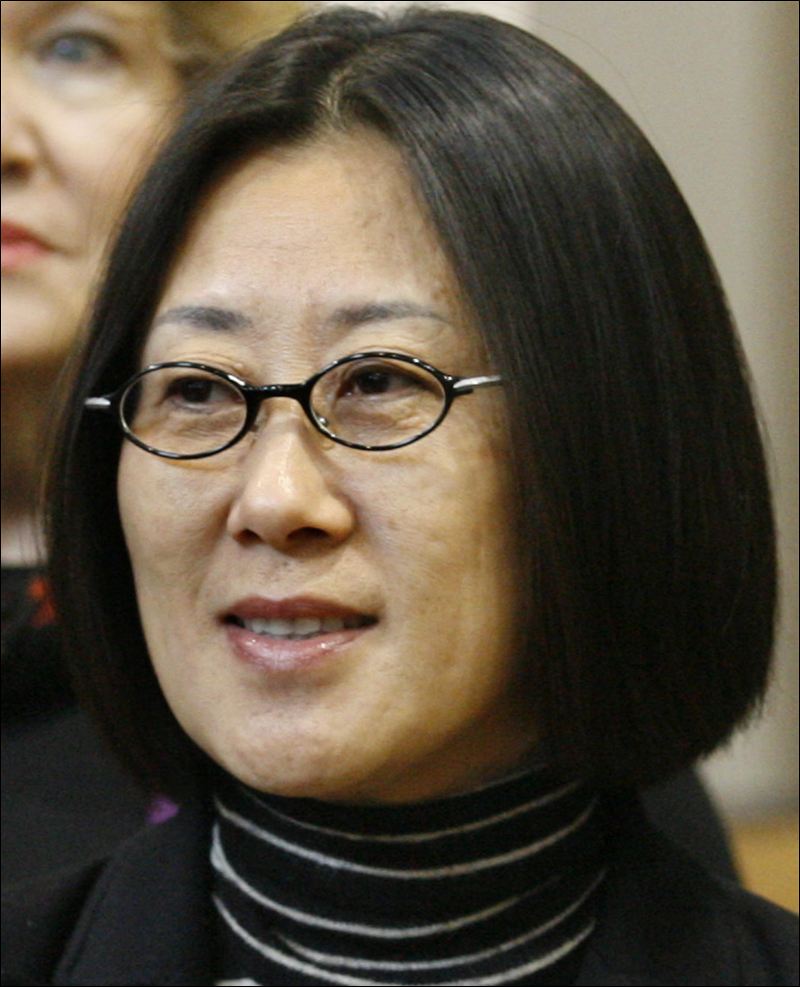
Yuan Xiaohong (袁小红)
The Toledo Blade has covered the deals extensively, but both its reporting and a Chinese investigation the paper commissioned turned up only limited information about Yuan and Wu's backgrounds and very little on Five Lakes.
One of the parties to the Five Lakes hotel sale told the Blade the investors behind Five Lakes Global are not the same as those from Dashing Pacific. They may be tied in some way, however. Both companies
list the same Toledo lawyer as registered agent on their incorporation documents, and Simon Guo (Guo Zhixin), who was credited with introducing Bell to Wu and Yuan according to the Blade, is also listed as "chairman" of Five Lakes Global on the company's Chinese website.
The Blade's investigators found that Wu was once a government bureaucrat working on development in Shenzhen, a southern Chinese city near Hong Kong that has grown from a village to a hub of global manufacturing since China's economic opening began in the '70s. The investigators speculated that a man with his background would have become quite rich and would have no trouble raising the $200 million proposed to develop the Toledo Marina District. Yuan told the paper she is a Hong Kong citizen originally from the Chinese province of Inner Mongolia.
More than a year after the riverfront land was purchased, the announced $200 million development has yet to break ground. Dashing Pacific is in a legal dispute with tenants at its restaurant complex. The lease
provides for separate metering and billing for utilities, and the tenants claim Dashing Pacific has not lived up to the contract.
Joe Clarke, an attorney for the tenants, says he has asked the court to hold Dashing Pacific in contempt after it failed to respond to a preliminary injunction ordering that it install separate meters. An attorney listed for Dashing Pacific did not return a phone call seeking comment.
As for the two Chinese firms, Toledo residents are as curious as anyone. "Nobody here, including myself, knows much about them," Clarke says.
|