2015-05-21 【Aiden in English】
Family Feud is a fun game show that the school's gifted teacher, Mr. Hinz, hosts on Olympic Day every year. The 6th graders are privileged to play, while the lucky 4th and 5th-grade classes have the opportunity. So now, I announce that we're welcoming Montgomery's Olympic Halftime Show! At halftime, the Mountaineers were in a solid second place out of four teams. Yet, after the first round, it didn't seem so anymore. People could say we were lucky, but for the most part, the Mountaineers demolished the Scouts. The game works because the classes are selected from two teams each, and they play, followed by another from the same team. Family Feud is a game where a survey asks a certain number of people a question. Soon, each family member walks to a desk in the center to hear the question. Once the question is answered, both people must grab the bean bag in the center, and whoever holds it first answers it. There are hundreds of answers, but only the ones that the surveyed people said are correct. If you grabbed the bean bag, the goal is to get the answer that most people answered in the survey. If it gets right, your family can play and answer the other answers, but if not, the opposing team can steal and play. Once playing, the team has three strikes before the survey is turned over to the other team. The team can steal by just giving one correct answer. If neither family can complete the study, the points (i.e., the total number of people who answered the same as your answer) are awarded to the original team. Opinion and judgment also play an essential role in the outcome of this game. For example, one survey asked, "What Would You Give to a wannabe cowboy as an 'ift?" Someone said a lasso, but a strike mark appeared. During the revealing stage, "rope" appeared as the number five most picked answer. It's a unit for torture; a rope is a lasso. Oh boy, at the time, if that team had known the results, they would have become the unhappy campers. (Get it? Theme?) The Olympics are supposed to measure a person's physical prowess, not their mental capacity. Family Feud was worth more to the Mountaineers than any other team because we dominated, especially when we were the underdogs. The halftime show looked like a cure for an incurable disease. The Mountaineers collected the most points, giving our opponents no points at all. This is the beauty of a school: you're not athletically inclined, but there's always another route. Everyone must contribute; the only reason the Mountaineer is still in the game is because of Family Feud. 【红霞译】
“家庭问答”是一个极其有趣的游戏比赛,每年我校智优班老师杭茨“家主”先生都要在奥林匹克节上亲自主持这个节目,初中一年级学生实力最佳,而小学四五年级的师弟学妹们也有幸同台较量,我宣布蒙哥马利“巨人山”小学奥林匹克运动会中场休息表演现在开始!
中场休息时,登山者队成绩名列全校四个代表队中的第二,可是经过头一轮“家庭问答”交锋之后,排名大有改观。你可以说我们运气好,不过大多数情况下,登山者队依据实力勇克童子军队。比赛在两个队之间进行,每队各选两名队员相互比试,然后再各派一对选手进行较量。“家庭问答” 根据公众对某个问题的普遍看法而确定答案对错,双方推出一名代表到台中央抢答问题,发问后,谁先抓住沙包,谁才有权回答问题,其正确与否视普查结果而定,百分比越高的答案,得分的可能性越大。如果答对了,你的队可以继续回答下面的问题;如果答错了,对方可以偷过来回答问题。比赛中,一个队有三次这样的机会,一旦三次都没有答对,那么该轮到对方回答。无论两方哪一方答错,便给对手增加得分的可能;倘若双方都没有答对,原队得分(看法迥异不分伯仲)。
观点和评判在本场比赛中起到了重要作用,譬如:有这么一个调查结果涉及到,“如果你要赠送给牛仔一件礼物,那么它是什么?”有人回答说套索,但被打上了叉号,直到谜底揭晓时方才恍然大悟,原来第五号“绳索”是大众公认的正确答案。这不成心跟人过意不去,绳索就是套索。天呀,假如当时回答问题的那个队得知这样一个结果,肯定会变成一帮被气疯了的营员。(明白吗?奥林匹克节的主题?)
当今奥运会应该只衡量个人的体能素质而非才智素质, “家庭问答” 显然让登山者队占了便宜,而对其他队却无关宏旨,因为这是我们克敌制胜的法宝,尤其当初身处劣势的情况下,中场比赛让我们发挥出自己的优势。登山者队几乎控制了赛场局势,使对手丧失得分手段。 这就是校园文化的美德之所在,即使没有运动天赋,你仍可另辟蹊径发挥一技之长。登山者队之所以取得傲人的成绩,靠的是“家庭问答”。
Today in History(历史上的今天): 2015: 2015 Olympic Day Part-3(2015年奥林匹克节之三) 2015 Olympic Day Part-1(2015年奥林匹克节之一)
2015 Math24 Tournament(2015年口算24点锦标赛) 2014: Mont ES Band Spring Concert(蒙小春季管乐会) 2010: 写给光华中文学校家长的一封信(A Letter to GHCS Parents) 2009: 浪漫(Romance) 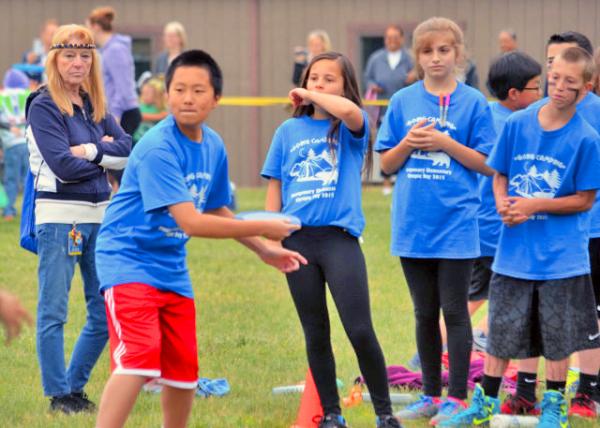 Frisbee @ Montgomery ES Frisbee @ Montgomery ES
(蒙哥马利小学·飞盘 05-21-2015) 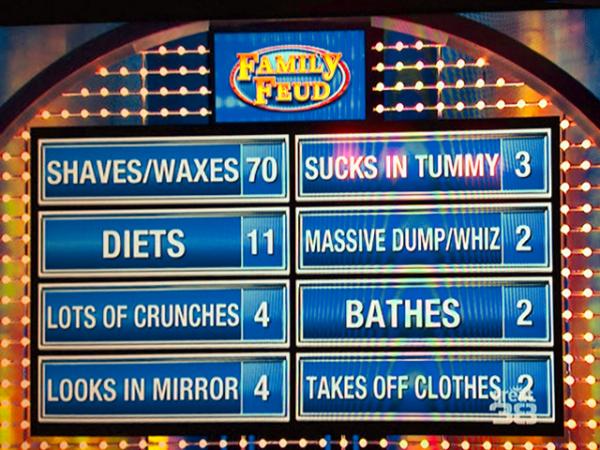 Family Feud (《家庭问答》 益智游戏) Family Feud (《家庭问答》 益智游戏)
Crosslinks(相关博文): Fifth Grade Olympic Day(五年级奥林匹克节) Trivia over the Indian Ocean(印度洋上百科知识问答) 6th Grade(初中一年级)
|