2013-01-10 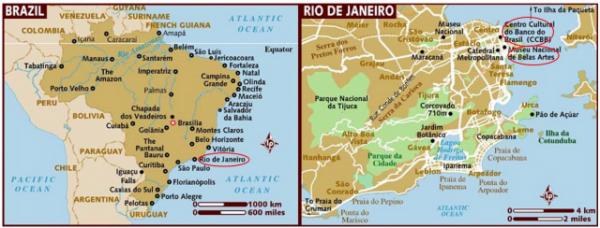
【Aiden in English】
This summer, torrential rain was highly unusual in Rio de Janeiro. We spent the whole morning watching the rain pour on and on. By noon, nothing was improving unless somebody called raindrops the size of bird pellets growing to the size of golf balls "improving." When a streak of sunlight came through the clouds, Mom took the chance and set the tone for us to explore. At the back of my head, I thought there was no way this would be good. I didn't know if I saw the light with an umbrella. The clouds hid it well when we went out. Mom was particularly interested in the National Library of Brazil. We borrowed an umbrella from our hotel and marched on pebble-paved streets to Cinelandia Square downtown. When I entered the building, my breath got lost as the light came through the window on the top. There were six floors and about 9 million books for a country. Mom asked if any tours were available, and the staff assembled a group for us in English right there. Meanwhile, they took our belongings to the locks and didn't even let us take our cameras past the stairs. I guessed that the place was super important. When the tour group gathered together, we began introducing its history. In Europe, a Portuguese man named Dom João VI established the Royal Library of Lisbon in 1808. With 1.5 million books, the collection didn't seem to come quickly—floors of books stacked up endlessly. The library also had rare books like the first edition of the famous "Os Lusiadas" by Luís de Camões, the Portuguese National Epic; the first edition of Mozart's scores; the Mainz Bible of 1462 by Gutenberg; the originals of Carlos Gomes' scores (a Brazilian composer of the 19th century); and others. Since the older books came from Europe, I couldn't believe I barely read anything when standing in the most extensive library in Latin America, the 7th largest national library in the world according to UNESCO. I should have learned a little Portuguese before I came. The building was constructed in an eclectic style, blending Art Nouveau and Neoclassical elements in 1910. Amid the main facade, a portico with six Corinthian columns flanked allegories of the Press, Bibliography, Paleography, Cartography, Iconography, and Numismatics. A bronze statue on the right side of the entrance represented intelligence, and another on the left represented the pursuit of knowledge. The materials are sourced from around the world, including Belgian chandeliers, German staircases, Italian granite, and British doors, among others. My ankles were so painful when I walked in the rain with a pair of Croc sandals. After returning to the hotel, I checked the weather, and gloom settled over me. With no doubt, tomorrow it was going to rain again. In 1987, Rio de Janeiro, including Carioca Landscapes between the Mountain & the Sea, was inscribed as a UNESCO World Heritage Site. 【红霞译】
入夏以来,里约热内卢“一月河”气候一反常态,时不时连降暴雨,今天整整一个早上,我们望着窗外发呆;到了中午,雨情丝毫没有改观,相反雨点由鸟粪那点小骤变成高尔夫球这般大,天空依旧阴沉沉的,妈妈终于沉不住气,打算豁出去就近走走看看。我觉得妈妈十有八九憋得慌,只要雨伞撑过头顶,前方的路况完全看不清楚,因为乌云早已抢先把余晖挤出天边。
妈妈对巴西“余烬之木”最大的国家图书馆饶有兴趣,于是我们从酒店借来雨伞,沿着鹅卵石铺就的街区,慢慢朝市中心剧院广场方向走去。一走进大楼,只见光线从天窗射下来,全国九百万图书收藏在眼前这座六层楼高的建筑内,我差点没晕过去。妈妈打听参观事宜,工作人员很快帮我们组织,配上英语导游,同时要求把随身携带的背包甚至相机全部寄存起来,看来该图书馆级别非常,等游客全部到齐,导游开始对我们抚今忆昔。
早在1808年,欧洲葡萄牙“港口”英国王室约翰“神慈”六世开始筹集兴办里斯本“避风港”皇家图书馆,经过千辛万苦,收集了150万册图书并搬到这里,把楼道内外塞得满满登登。
图书馆收藏了不少罕世珍贵书籍,譬如:路易斯·卡蒙斯著作的葡萄牙民族史诗《卢西亚达斯“葡萄牙人”》初版、莫扎特乐谱初版、1462年古登堡出版的《美因兹巨型圣经》、19世纪巴西最著名的作曲家卡洛斯·戈梅斯作品原稿等。虽说古书来自欧洲,可我简直不敢相信,置身于拉美最大、联合国科教文组织公认的世界第七大国家图书馆内,自己竟然目不识丁,真应该来前学点葡萄牙文。
该图书馆建筑汲取了新艺术流派及新古典风格之精华,门厅正面有六根哥林斯式高柱,两侧装饰象征出版印刷、书志目录、古文书字、地图制作、肖像图解和钱币徽章六项分类;入门口右侧铜像代表智慧,左侧铜像代表研究。建筑材料来自五湖四海,譬如:比利时吊灯、德国楼梯、意大利花岗石、英国门阑等不一而足。 穿着“鳄鱼牌”凉鞋雨中长征,脚脖子累得酸痛。回到下榻之后,我查了一下天气预报,阴霾不散,明天肯定继续下雨。 2012年,拥有山海之间卡里奥卡“里约本土”风光的里约热内卢被联合国教科文组织纳入《世界遗产名录》。 Today in History(历史上的今天): 2010: 澳洲商业中心悉尼(Sydney, Australia) 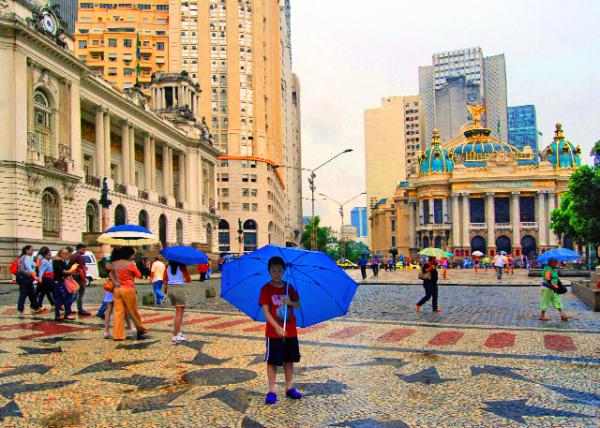 Cinelandia Square, a Hub for Cultural Events, Historical Landmarks, & Art Deco Architecture Cinelandia Square, a Hub for Cultural Events, Historical Landmarks, & Art Deco Architecture
(西尼兰迪亚“剧院之地”广场·文化活动、历史地标和装饰艺术建筑的中心 01-10-2013) 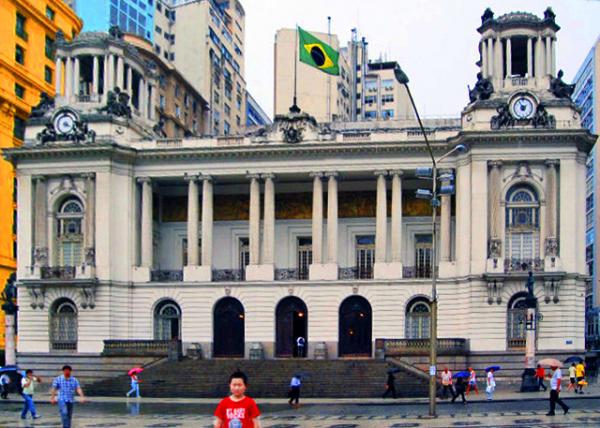 Palácio Pedro Ernesto or Municipal Chamber of Rio de Janeiro, a Prime Example of French Beaux-Arts Design Palácio Pedro Ernesto or Municipal Chamber of Rio de Janeiro, a Prime Example of French Beaux-Arts Design
(佩德罗·埃内斯托“磐石·坚决”宫 | 里约热内卢市议会——法国美术设计的典范 01-10-2013)
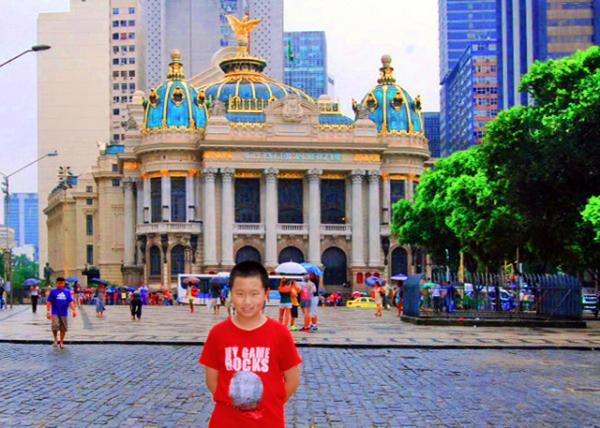 Municipal Theatre, an Eclectic Style from 1909, Inspired by the Paris Opéra Municipal Theatre, an Eclectic Style from 1909, Inspired by the Paris Opéra
(市立剧院·1909年落成、源于巴黎歌剧院折衷主义风格的建筑 01-10-2013) 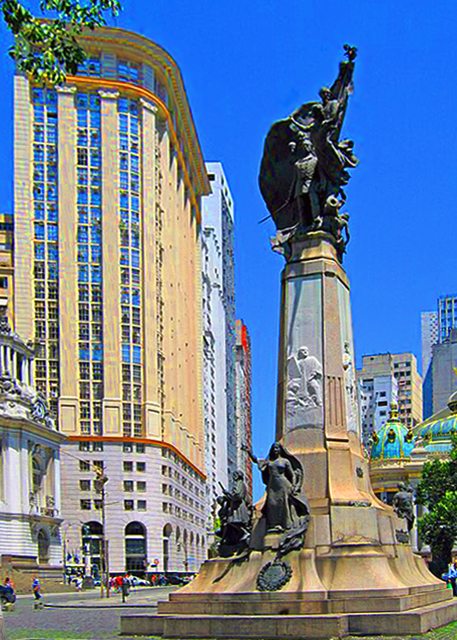
Monument to Floriano Peixoto @ Cinelandia Square (西尼兰迪亚广场·铁元帅《弗洛里亚诺·佩肖托“开花·小鱼”》纪念碑)
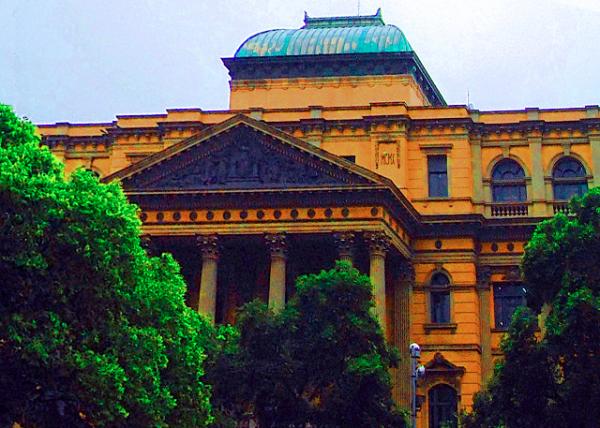 Façade of National Library of Brazil, the Largest Library in Latin America in the Early 19th-Century Neoclassical Design Façade of National Library of Brazil, the Largest Library in Latin America in the Early 19th-Century Neoclassical Design
(巴西国家图书馆正面·19世纪早期新古典主义设计的拉丁美洲最大图书馆) 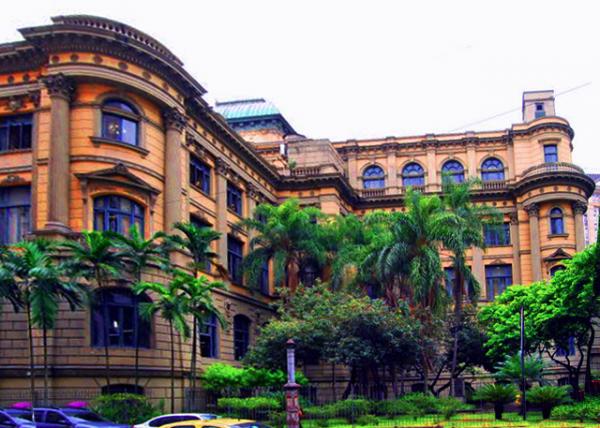 Back of the National Library of Brazil, the 7th Largest in the World Back of the National Library of Brazil, the 7th Largest in the World
(巴西国家图书馆背面·世界第七大图书馆) 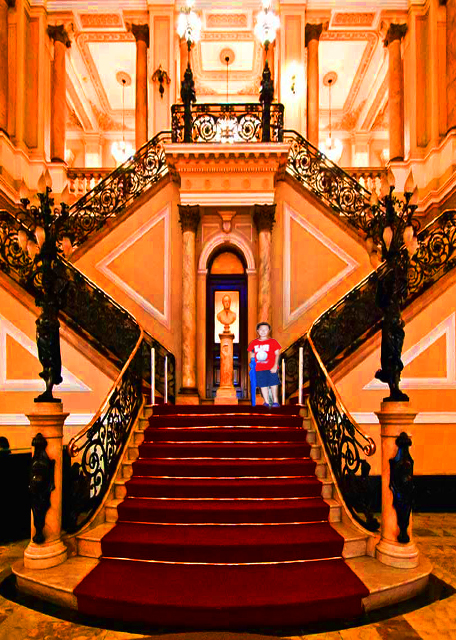
Main Staircase w/ a Bust of King John VI Ornamented Marble Staircases w/ Bronze Balustrades @ National Library of Brazil (巴西国家图书馆·主楼梯与约翰六世国王半身像,饰有大理石楼梯和青铜栏杆 01-10-2013) 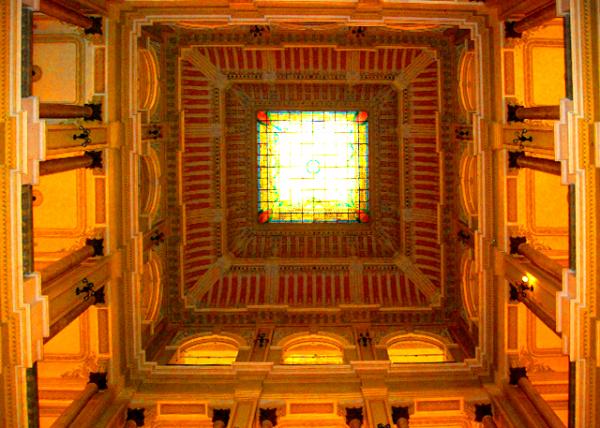 National Library of Brazil w/ a Stained-Glass Dome Skylighted w/ an Iron Structure National Library of Brazil w/ a Stained-Glass Dome Skylighted w/ an Iron Structure
(巴西国家图书馆·装有铁质天窗的彩绘玻璃穹顶) 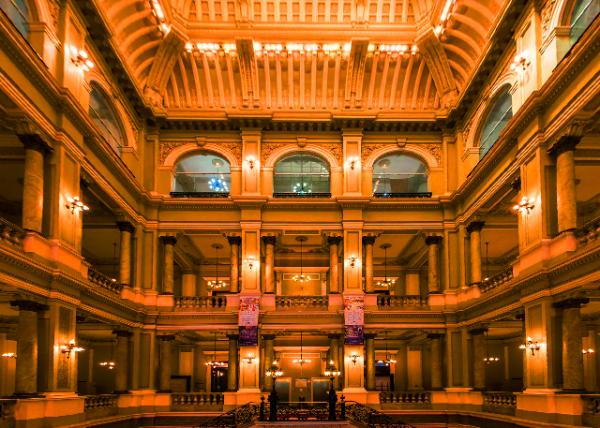 Entrance Hall @ National Library of Brazil Entrance Hall @ National Library of Brazil
(巴西国家图书馆·入口大厅) 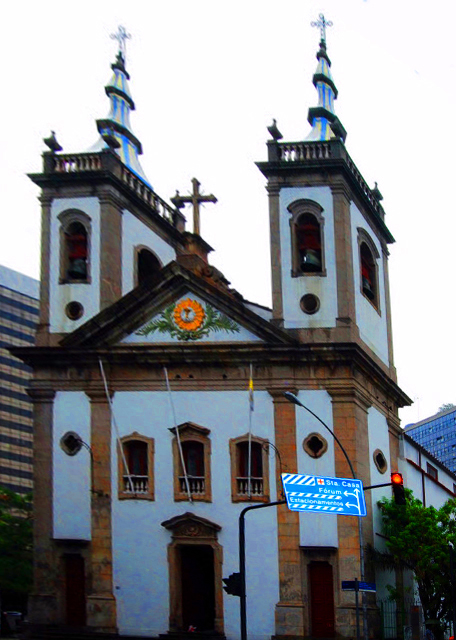
Façade Church of Santa Luzia, the Birthplace of Samba (圣卢西亚“光明”教堂·桑巴舞的发源地)
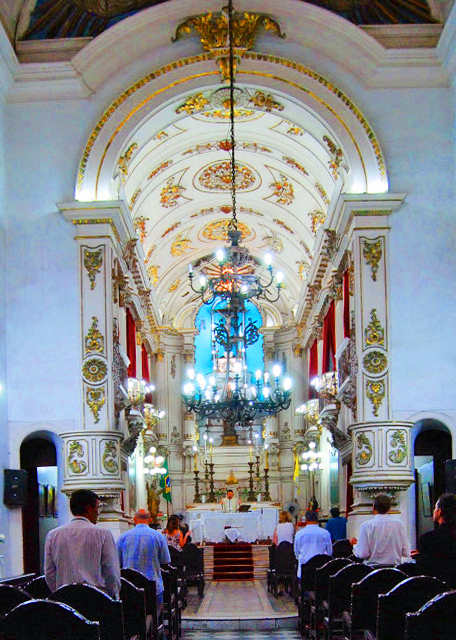
Church Santa Luzia w/ Its “Roda de Sambas” (圣卢西亚教堂·聚会)
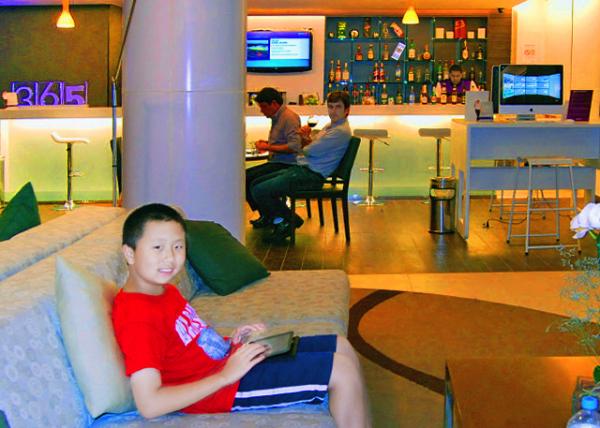 Lounge of Novotel Rio De Janeiro Dumont Lounge of Novotel Rio De Janeiro Dumont
(里约山区·诺富特酒店——休息厅 01-10-2013) 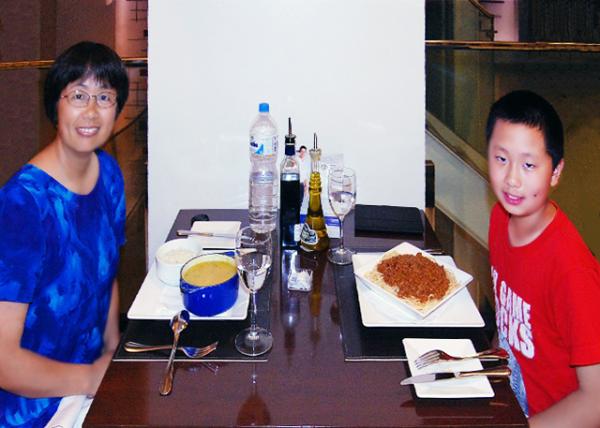 Dinner @ Novotel Rio De Janeiro Dumont Dinner @ Novotel Rio De Janeiro Dumont
(里约杜蒙·诺富特“山区·新颖酒店”——晚餐 01-10-2013) 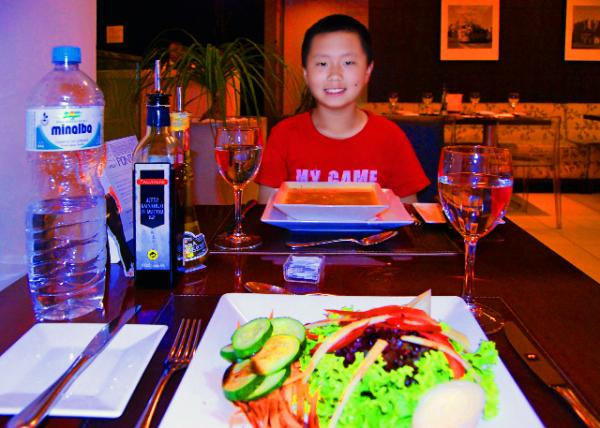 Menu @ Novotel Rio De Janeiro Dumont Menu @ Novotel Rio De Janeiro Dumont
(里约杜蒙·诺富特酒店——菜谱 01-10-2013) 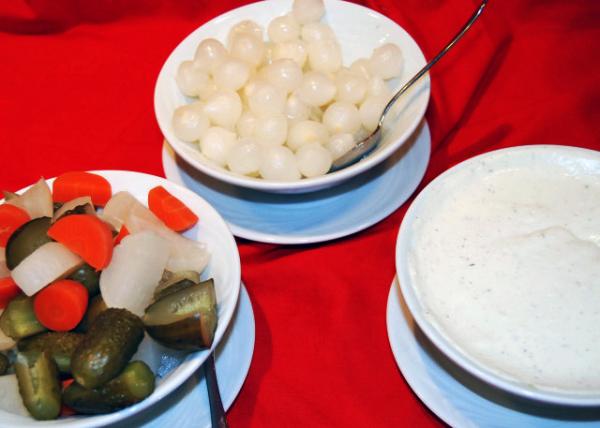 Side Dishes @ Novotel Rio De Janeiro Dumont Side Dishes @ Novotel Rio De Janeiro Dumont
(里约杜蒙·诺富特酒店——小菜) Crosslinks(相关博文):
Brazil(出游巴西)
South America(漂流南美洲) 小学四年级(4th Grade)
|