2015-06-29
【Aiden in English】
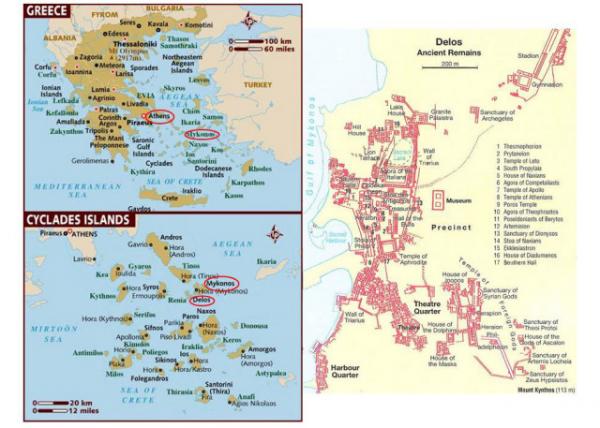
Honestly, I don't know much about Apollo and the goddess Artemis. Sure, they're one of the 12 Olympians in Greek Mythology. Well, as for the details, I learned a great deal on the island of Delos in Greece. Delos is an island 7.0 kilometers/4.3 miles long and 2.5 kilometers/1.6 miles wide. Like the town of Mykonos, everything had to be white since the heat was unbearable. The only thing is that all the buildings are in ruins, ranging from the 3rd millennium B.C. to the Paleochristian era. The archaeological site consisted of walls and pillars with no roof. They left just enough to see a sacred site to which the pilgrims paid tributes, as well as the square houses where people lived. Delos was a very populated island and a prosperous trading port at the time. Markets flourished in the center. Merchants came and went. People from all over the Mediterranean came here. This place was also arguably the first multicultural city. Oddly, they had the same religion. Delos was a Cyclades Island dedicated to Apollo and Artemis. The legend says that Zeus fell in love with a Titaness, Leto, and his wife, Hera, was angry. She cursed the baby. Not a single person in Greece would accept. What happened was that two children came: Apollo and Artemis, brother and sister. As I mentioned, please refrain from asking for details, as I don't have much information. But somehow, people came to this island and settled down here. They celebrated the god of the Sun joyfully, because Apollo was the god of music and sounded terrific at the parties the people participated in. The other god these people celebrated was the opposite of Apollo, but not Artemis. Dionysus was the god of wine. He originated from an Indian god of wine, and the Greeks adopted him, considering that everyone, even 5,000 years ago, loved alcohol. And what I must say, I would love to be a part of that religion, when all the other Islam, Christian, Jewish, etc., the people following Dionysus are the partiers. I am saying the true parties! As a prayer, people got drunk. Yep, they drank their bladders full of wine and danced into the night until they were knocked out cold. The party was usually followed by a few, uh, an inside-out stomach. The island of Delos is one of Greece's most famous archaeological sites, filled with the history of gods, and people pray their stomachs to one of them. But for me now, it's a learning opportunity. 【红霞译文】
坦率地说,我对阿波罗“太阳神”和阿尔特弥斯“月亮女神”了解不多,没错,他们是希腊神话十二个奥斯匹克神中的两位,至于详细情节,我总算在出游希腊提洛“清澈”岛之后才加深了认识。
提洛岛全长7.0公里/4.3英里,总宽2.5公里/1.6英里。与米科诺斯“石堆”岛相似,由于天气热得够呛,因此所有建筑物一律被涂成白色;不同的是,这个从公元前3,000年伊始横贯古基督教时代的历史名城如今早已变成了废墟,所谓考古遗址无非是一堆上无片瓦下无卓椎的残垣断壁,唯有朝圣者祭拜之地和平衣百姓生活场所仍然依稀可见,作为当时繁荣兴旺的贸易港口,提洛岛曾一度人口稠密,城中市场热闹非凡,小商小贩们忙里忙外,地中海人纷纷从四面八方云集于此,提洛岛堪称史上第一个多元化城市,奇怪的是所有人共有同样的宗教信仰。
提洛岛是基克拉迪“环”群岛上献给阿波罗和阿尔特弥斯的岛屿,传说中宙斯因爱上勒托“泰坦女神”而惹怒了他的夫人赫拉“天后”,她发誓要让勒托在希腊找不任何地方生孩子,没想到阿波罗和阿尔特弥斯兄妹俩却先后降生在提洛岛上。我有言在先,千万莫问我到底怎么回事,因为我自己也不太清楚,无论如何,移民们来到提洛岛并定居了下来。大家载歌载舞,以极其热烈的形式颂扬阿波罗,主要因为阿波罗掌管音乐,而音乐带给聚会无限欢乐。同时,百姓也会庆祝另一位神,不是阿尔特弥斯,而是狄俄尼索斯“酒神”。狄俄尼索斯最早源于印度,希腊人毫无保留地将他融入自己的文化之中,即使在五千年前的过去,古人照样嗜好喝酒。鉴于所有追随酒神的回教徒、基督徒、犹太徒这么热衷聚会,我郑重声明本人巴不得成为那个宗教团体一员。教徒们一边祷告,一边喝酒,真的,不喝得烂醉不跳得失控,谁都不肯善罢甘休,可以说每次狂欢总有几位吐爬下的。 就这样,提洛岛因蕴藏着大量神话历史包括那位让多少人肝脑涂地的大仙而一跃成为希腊最有名的考古遗址之一,但对我而言,不失为一次学习机会。
Today in History(历史上的今天): 2015: Cycladic Mykonos, Greece(希腊环岛风城轶情) 2013: Drama Camp-1(戏剧夏令营之一) 2012: Fat Friday(逍遥星期五) 2011: Drama-Sports Camp-2(文体营之二) 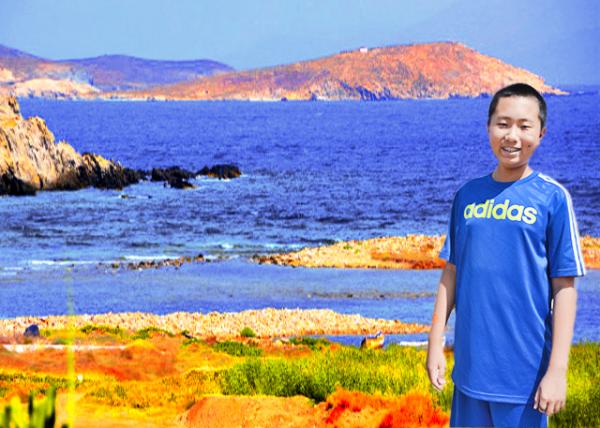 Rhenia or the Great Delos Rhenia or the Great Delos
(雷内亚“圣地”岛·大提洛岛 06-29-2015) 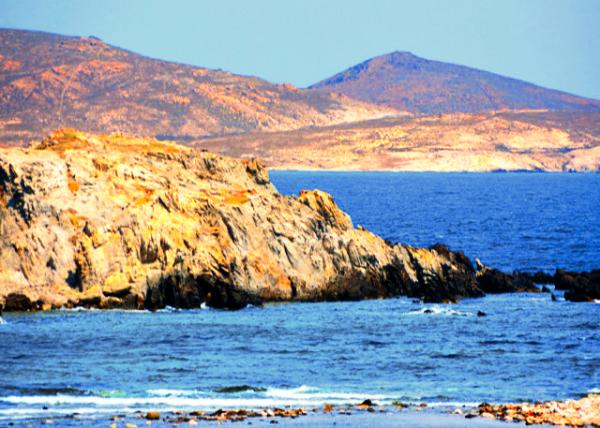 Rhenia, an Uninhabited, Protected Archaeological Island Next to Delos Rhenia, an Uninhabited, Protected Archaeological Island Next to Delos
(雷内亚岛·无人居住、受保护的考古岛屿,紧邻提洛岛)
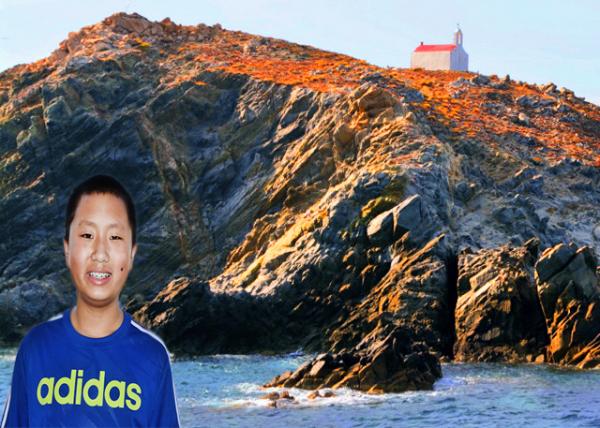 St. George (Agios Georgios) on the Rocky Islet of Mpaos Close to Mykonos St. George (Agios Georgios) on the Rocky Islet of Mpaos Close to Mykonos
(圣乔治“农夫”教堂·位于米科诺斯岛附近岩礁小岛姆帕奥斯“美丽”上 06-29-2015) 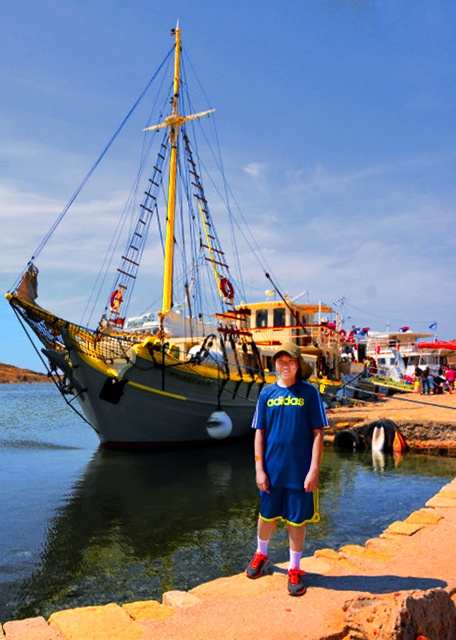
Dolphins of Delos (“提洛岛海豚”渡轮 06-29-2015)
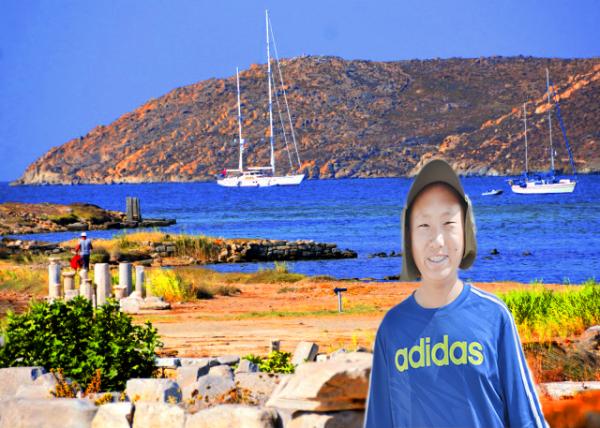 Sacred Harbor (圣港 06-29-2015) Sacred Harbor (圣港 06-29-2015)
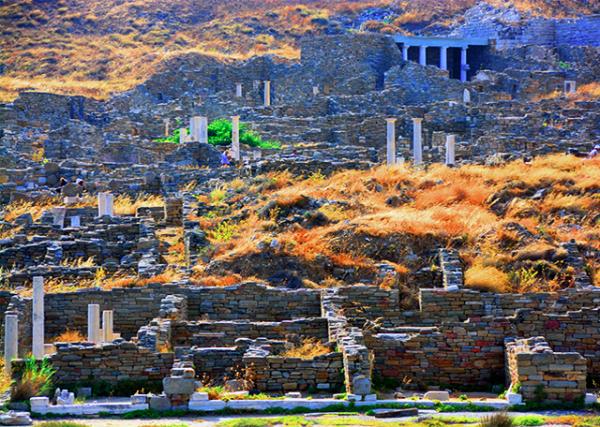 House of Hermes (赫尔墨斯“众神的使者”之家) House of Hermes (赫尔墨斯“众神的使者”之家)
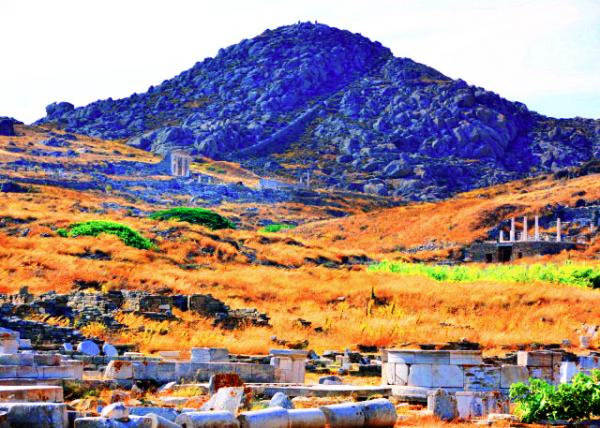 Mount Cynthus & Temple of Isis Mount Cynthus & Temple of Isis
(辛西娅“月亮女神”山与伊希斯“生育女神”神庙)
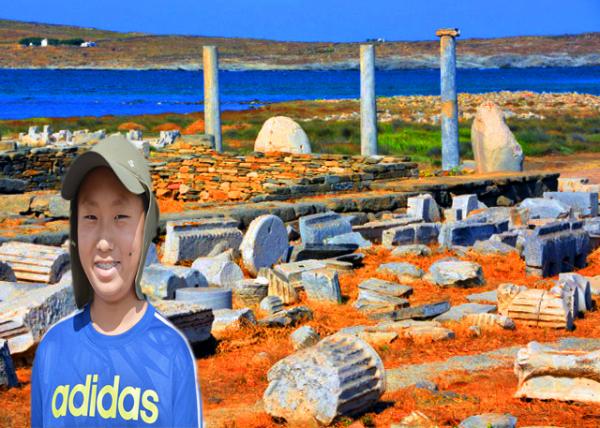 Artemision (阿尔忒弥斯“狩猎女神”圣所 06-29-2015) Artemision (阿尔忒弥斯“狩猎女神”圣所 06-29-2015)
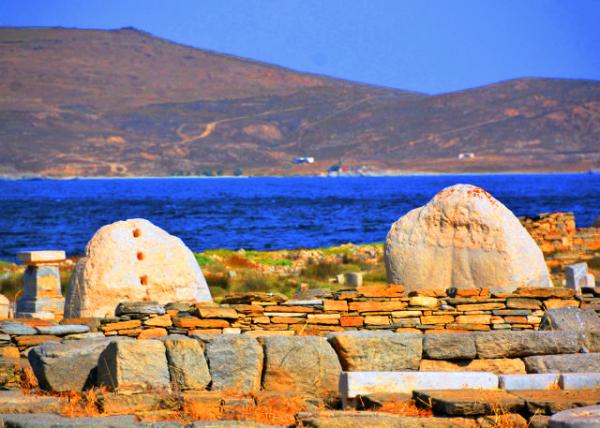 Nikos & Colossus of Naxians Nikos & Colossus of Naxians
(尼科斯“人民的胜利”与纳克森“尊严”人巨像) 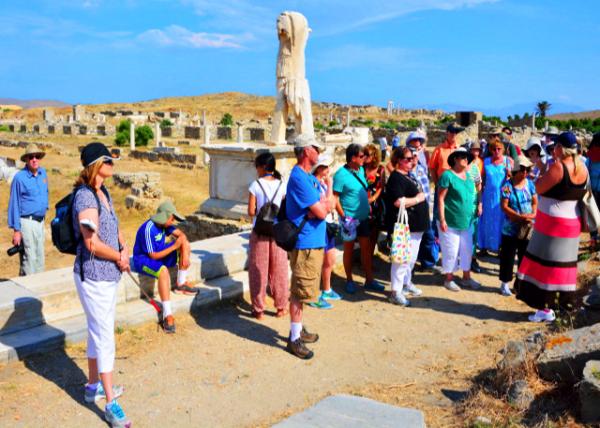 Archaeological Site (考古学遗址 06-29-2015) Archaeological Site (考古学遗址 06-29-2015)
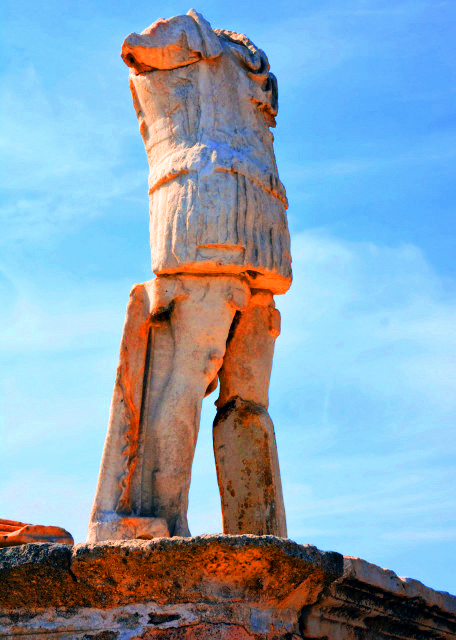
Stone Headless Statue of Men (无头石人雕像)
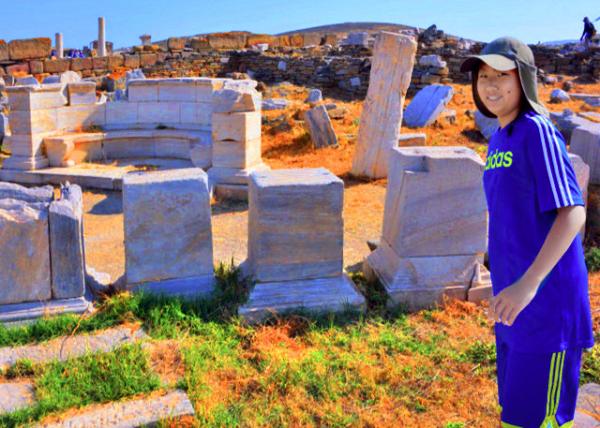 Portico of Philip V Portico of Philip V
(腓力“爱马仕”五世柱廊 06-29-2015) 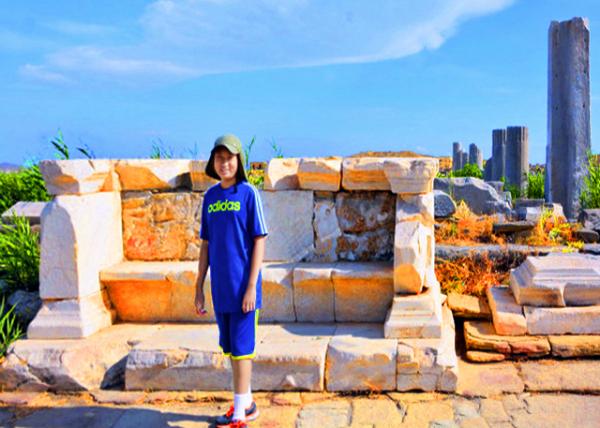 Portico of Philip V (腓力五世柱廊 06-29-2015) Portico of Philip V (腓力五世柱廊 06-29-2015)
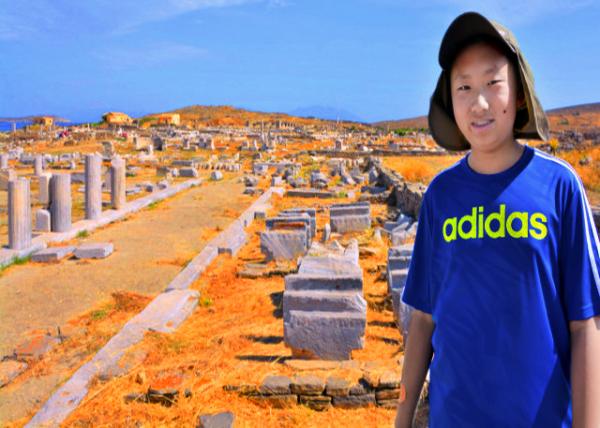 Sacred Way (圣道 06-29-2015) Sacred Way (圣道 06-29-2015)
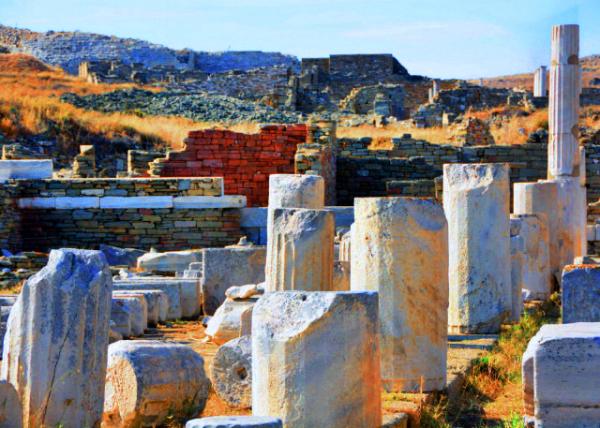 Sanctuary (圣所) Sanctuary (圣所)
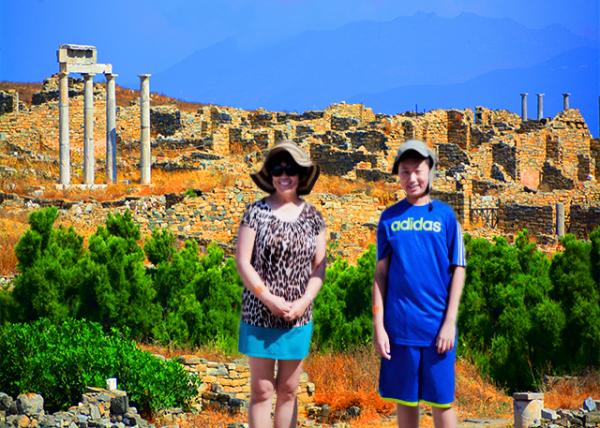 Temple of Apollo (阿波罗“毁灭者”庙 06-29-2015) Temple of Apollo (阿波罗“毁灭者”庙 06-29-2015)
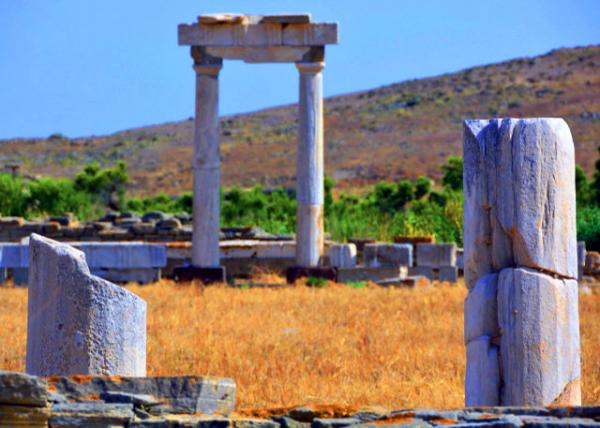 Agora of the Italians (意大利人集市) Agora of the Italians (意大利人集市)
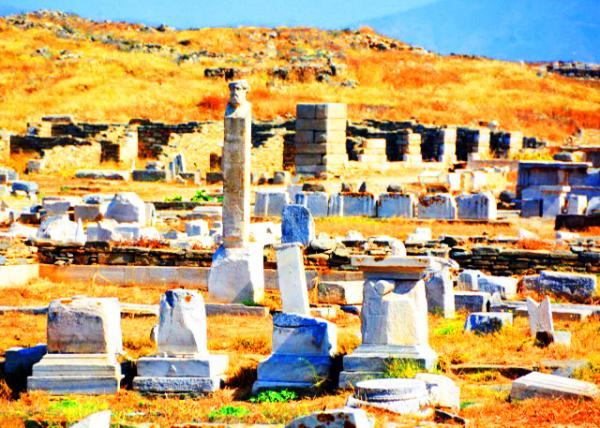 Bust of Hermes (赫尔墨斯半身像) Bust of Hermes (赫尔墨斯半身像)
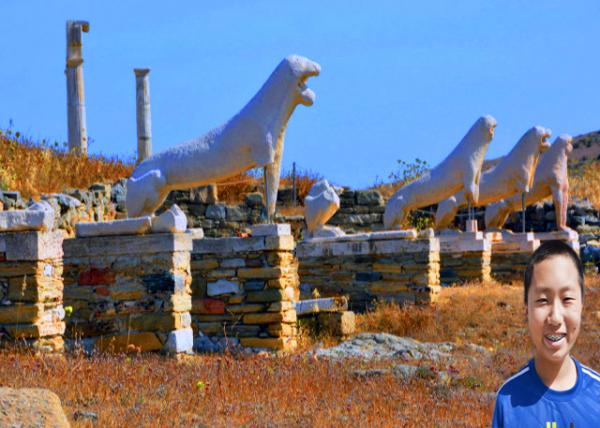 Terrace of the Naxian Lions (纳克逊狮子台 06-29-2015) Terrace of the Naxian Lions (纳克逊狮子台 06-29-2015)
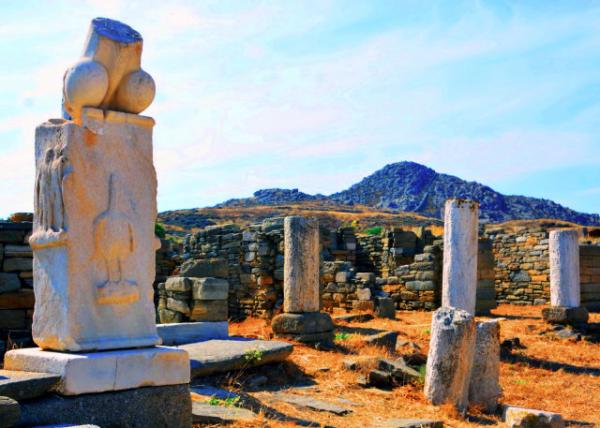 Stoibadeion, Dedicated to the God Dionysus Stoibadeion, Dedicated to the God Dionysus
(斯托伊巴迪翁“垛”·献给酒神狄俄尼索斯“宙斯之子”的神庙遗址) 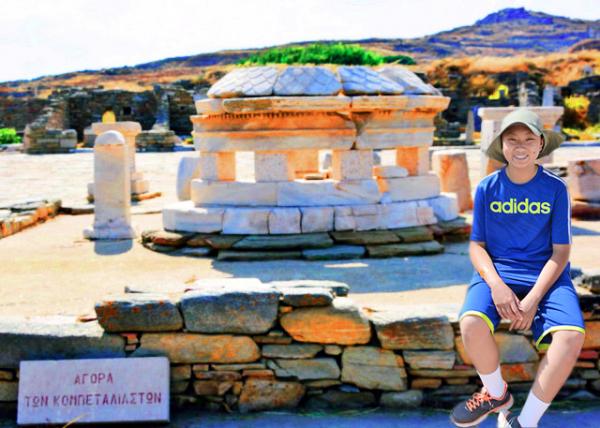 Agora of the Competaliasts (竞争者集市) Agora of the Competaliasts (竞争者集市)
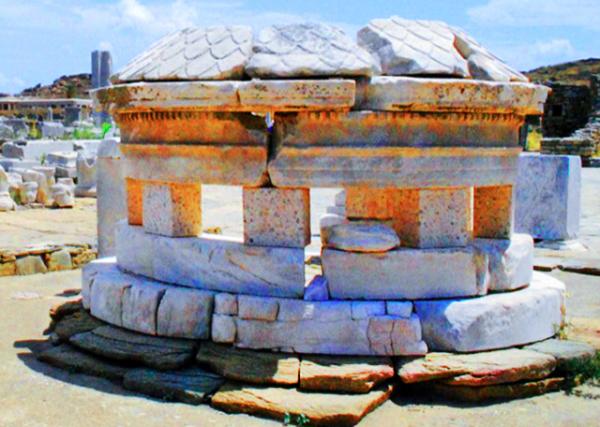 Bases of a Square & a Round Marble Monument, Dedicated to Hermes Bases of a Square & a Round Marble Monument, Dedicated to Hermes
(方形和圆形大理石纪念碑的基座·均献给赫尔墨斯)
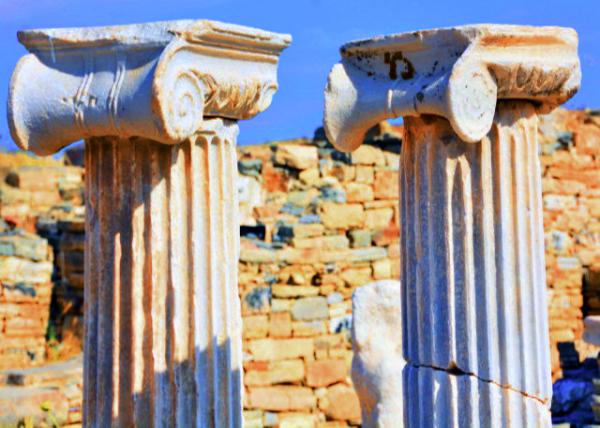 Apollo Greek Mythology Site (阿波罗古希腊神话遗址) Apollo Greek Mythology Site (阿波罗古希腊神话遗址)
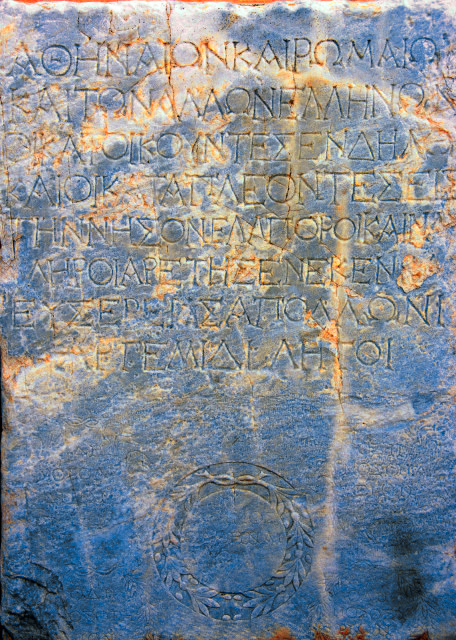
Ancient Tablet (古代碑刻) 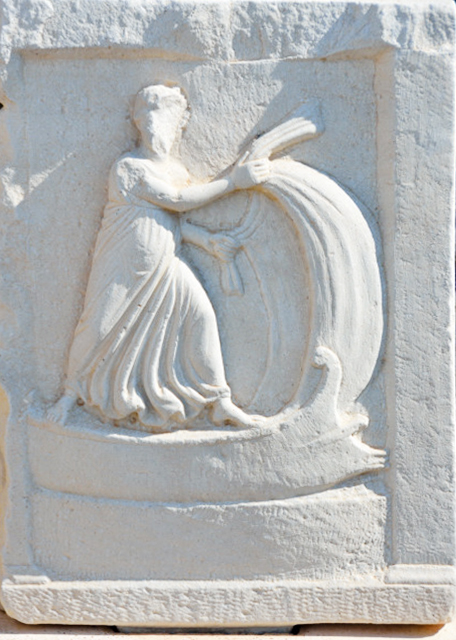
Artemis (阿尔忒弥斯) 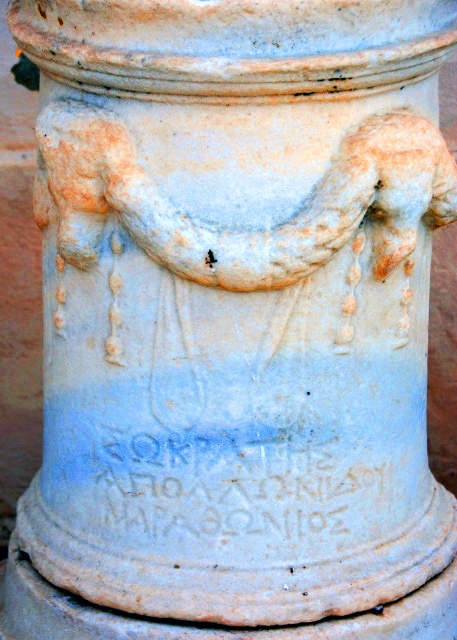
Bull Heads (牛头饰物) 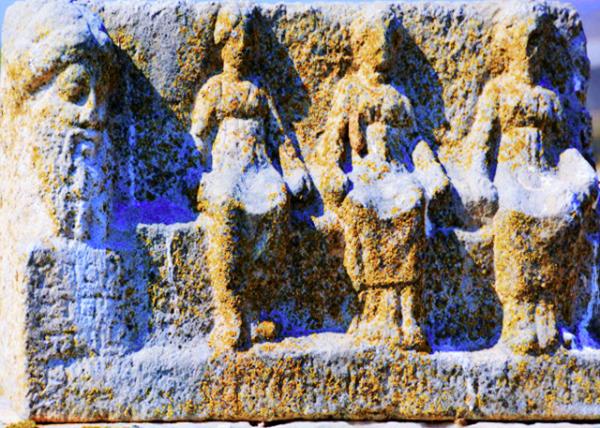 Minoan Fountain Relief (米诺斯人喷泉浮雕) Minoan Fountain Relief (米诺斯人喷泉浮雕)
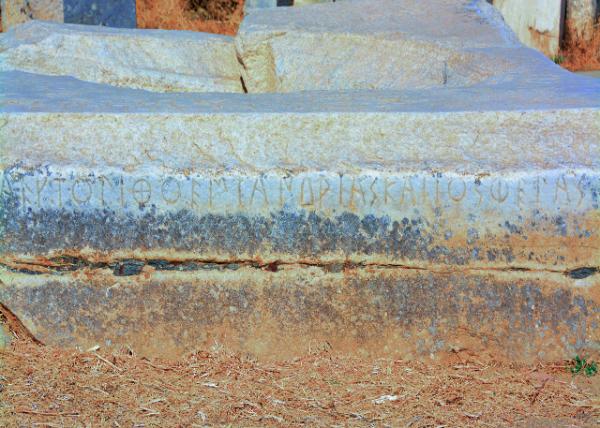 Tablet Inscription (石刻碑文) Tablet Inscription (石刻碑文)
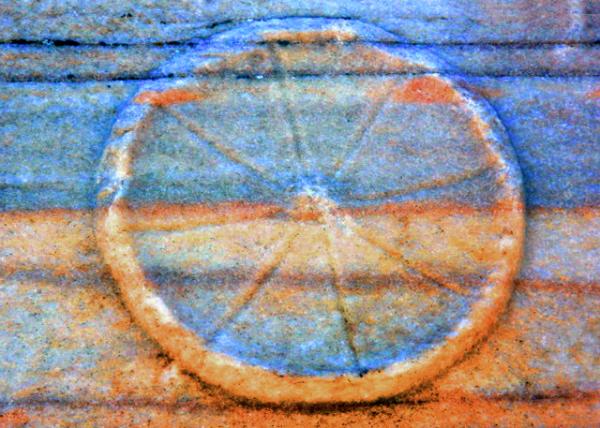 Wall Decor (墙饰) Wall Decor (墙饰)
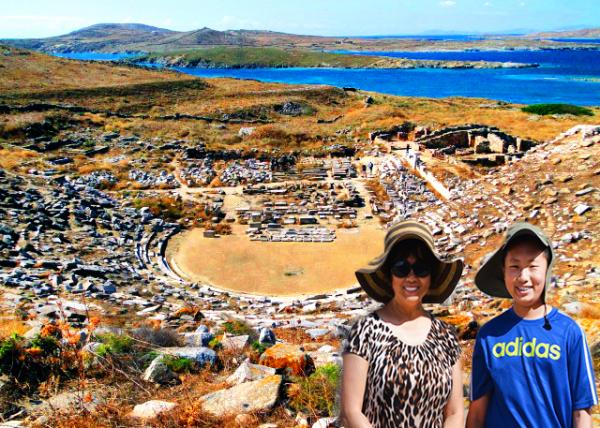 Ancient Greek Theater, Constructed in the Mid-3rd Century B.C. Hellenistic Structure Ancient Greek Theater, Constructed in the Mid-3rd Century B.C. Hellenistic Structure
(古希腊剧场·公元前3世纪希腊化时期建筑 06-29-2015) 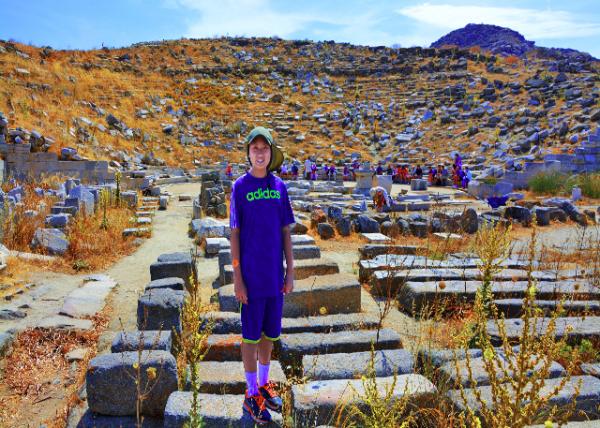 Ancient Greek Theater w/ a Large 5,000–6,500 Seat Capacity, the Central to Festivals Honoring Apollo & Dionysus Ancient Greek Theater w/ a Large 5,000–6,500 Seat Capacity, the Central to Festivals Honoring Apollo & Dionysus
(古希腊剧场·拥有约5000至6500个座位,祭祀阿波罗和狄俄尼索斯的节日中心 06-29-2015) 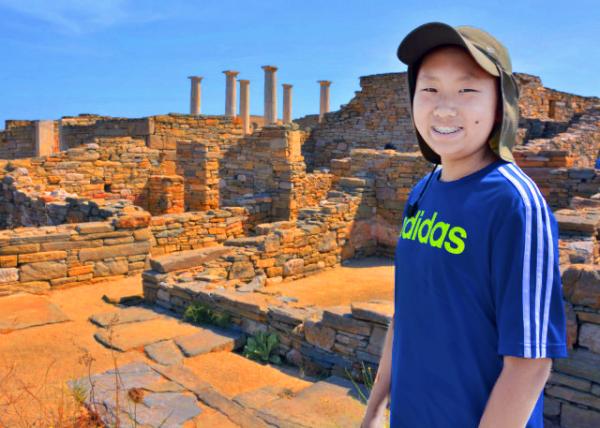 House of Cleopatra House of Cleopatra
(埃及艳后克利奥帕特拉“父之荣”宫 06-29-2015) 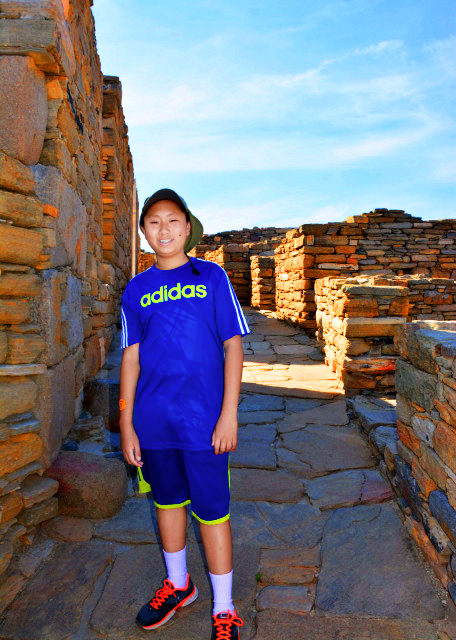
Temple of Foreign Gods (外来神庙 06-29-2015) 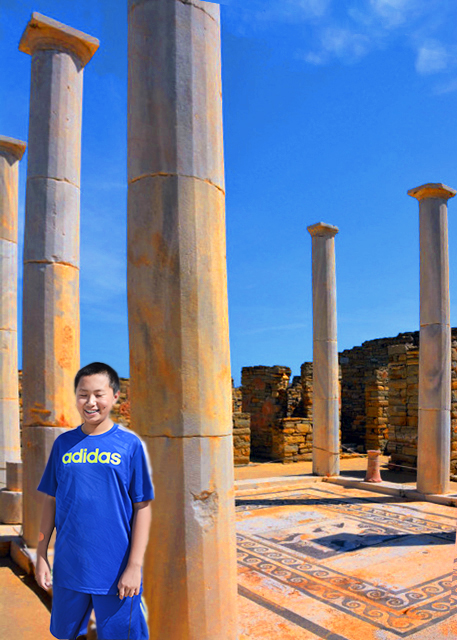
Mansion of Dionysos, Named after a Mosaic of the Greek God Dionysus Riding a Panther (酒神故居·以希腊神狄俄尼索斯骑豹的马赛克图案命名 06-29-2015) 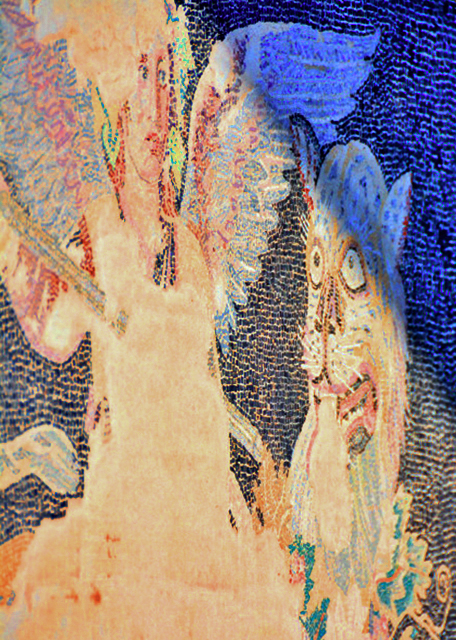
A Hellenistic Greek Mosaic Depicting the God Dionysos as A Winged Daemon Riding on A Tiger (希腊化时期的马赛克·描绘了酒神狄俄尼索斯作为骑着老虎的有翼恶魔) 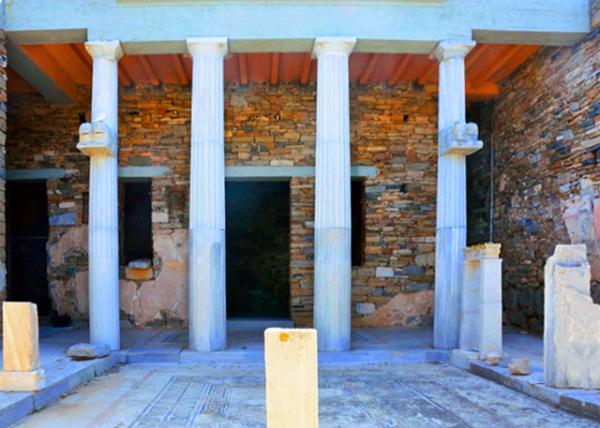 House of Trident (波塞冬的三叉戟之家) House of Trident (波塞冬的三叉戟之家)
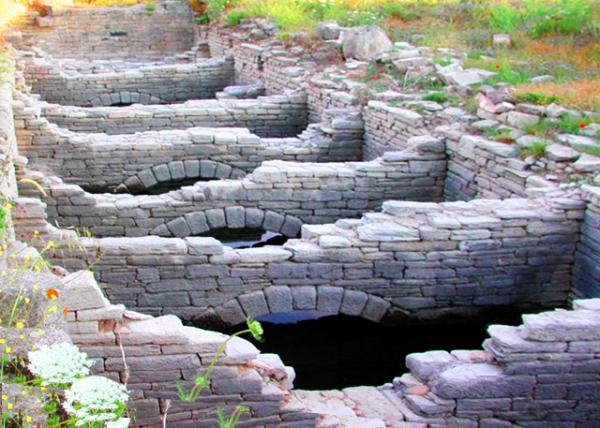 Central Cistern (中央蓄水池) Central Cistern (中央蓄水池)
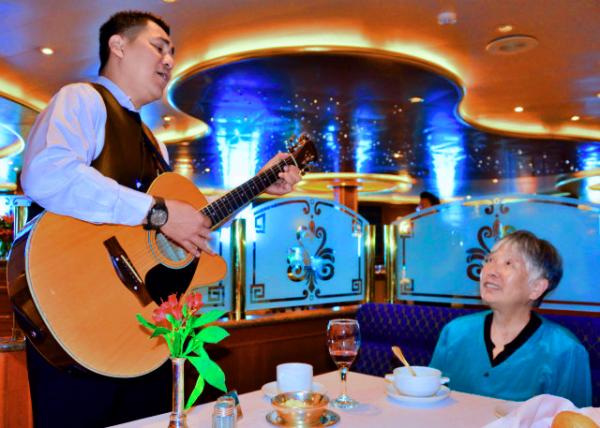 Botticelli Dining Rm @ Emerald Princess Botticelli Dining Rm @ Emerald Princess
(“公主·翡翠”号游轮——波提切利“小桶”餐厅 06-29-2015) 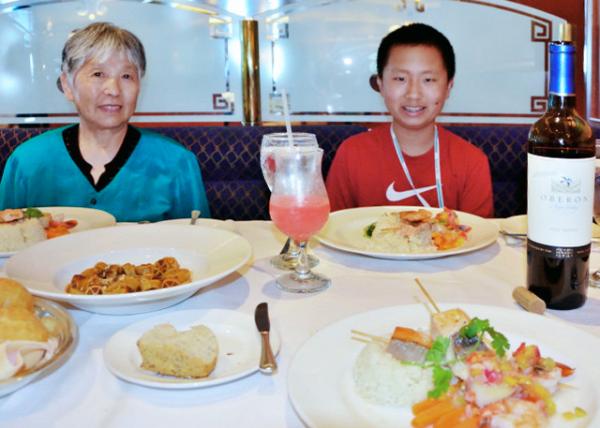 Dinner @ Botticelli Dining Rm Dinner @ Botticelli Dining Rm
(波提切利餐厅·晚餐 06-29-2015) Crosslinks(相关博文):
Greece(出游希腊)
Europe(欧洲掠影) 6th Grade(初中一年级)
|