2018-07-10
【Again and Again, I Have Seen Life's Evil】 Eugenio Montale (1896—1981) 〖Nobel Prize in Literature in 1975〗 Again and again, I have seen life's evil: it was the strangled brook, still gurgling, it was the curling of the shriveled leaf, it was the fallen horse.
I have known no good except the miracle that reveals the divine Indifference: it was the statue in the drowsy trance of noon, the cloud, the cruising falcon. —— • —— • —— • —— • —— • —— • —— • —— 【《生活之恶》】 欧亨尼奥·蒙塔莱“高贵·丘陵”(1896生—1981卒) 〖1975年诺贝尔文学奖〗 我时时遭遇 生活之恶的侵袭: 它似乎喉管扼断的溪流 暗自啜泣, 似乎炎炎烈日下 枯黄萎缩的败叶, 又似乎鸟儿受到致命打击 奄奄一息。
我不晓得别的拯救 除去清醒的冷漠: 它似乎一尊雕像 正午时分酣睡朦胧, 一朵白云 悬挂清明的蓝天, 一只大鹰 悠悠地翱翔于苍穹。
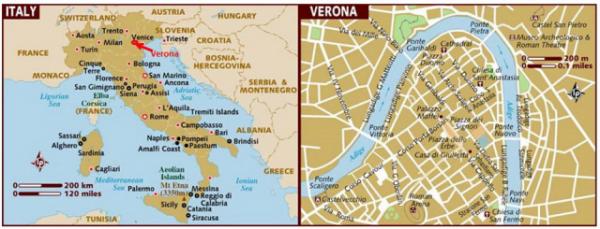
【注】维罗纳“真实”被称为“小罗马”并非自封,而是历史赋予的敬意——这里的罗马“力量”遗产保存得比意大利任何城市都好,甚至超过了罗马本身。竞技场建于公元一世纪,比罗马斗兽场更古老,是世界第三大罗马圆形剧场,白色与粉色大理石的72个拱门至今巍然矗立。每年夏天,歌剧节在此举行,《阿依达“快乐”》的咏叹调在星空下于古老石墙间回荡,让人忘记身处哪个时代。 城北的博尔萨里“制袋匠”门(Porta Borsari)建于公元前一世纪,石灰岩拱门上刻着拉丁文铭文,记录着修建者的名字。古罗马剧场坐落在阿迪杰“溪流”河左岸山坡上,观众坐在2,000年前的石阶上,看着河水缓缓流过,听着莫扎特“来自沼泽地”的弦乐四重奏。百草广场曾是罗马的公共广场,古罗马讲坛石柱、中世纪与文艺复兴建筑、红砖与白色大理石拼成的地面,层层叠压着2,000年的时光。 第一次走在维罗纳的石板路上,我忍不住伸手去触碰那些斑驳的拱门与圆柱。罗马帝国早已灭亡,但竞技场还在上演歌剧,剧场还在回响音乐,城门还在注视着每一个路过的人。我终于明白,“小罗马”的“小”字,不是大小的比较,而是一种谦卑的敬意——这座城市没有试图超越罗马,只是沉默地替罗马保存着它最珍贵的石头记忆。 2000年,维罗纳被联合国教科文组织纳入《世界遗产名录》。 Today in History(历史上的今天):
2018: Verona, Home to Romeo & Juliet(意大利维罗纳·罗密欧与朱丽叶的故乡)
2017: Bratislava, Tatra Tiger SVK(斯洛伐克首都兄弟荣耀·满地老虎)
2016: Glendalough Monastery, Ireland(爱尔兰格兰达洛·两湖谷修道院)
2014: Bug Show @ Soccer YMCA Camp(昆虫到访基督教青年会夏令营)
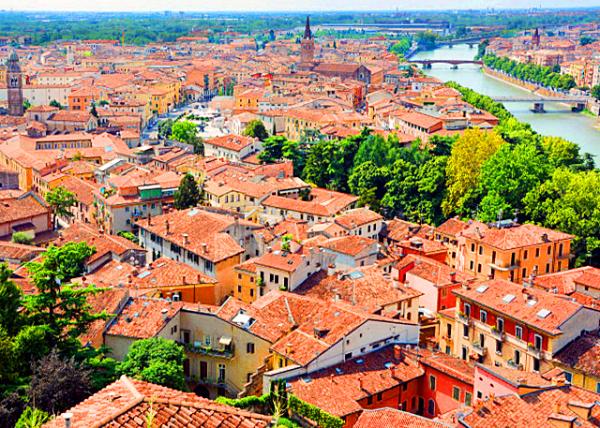 Adige River Bank (阿迪杰河畔) Adige River Bank (阿迪杰河畔)
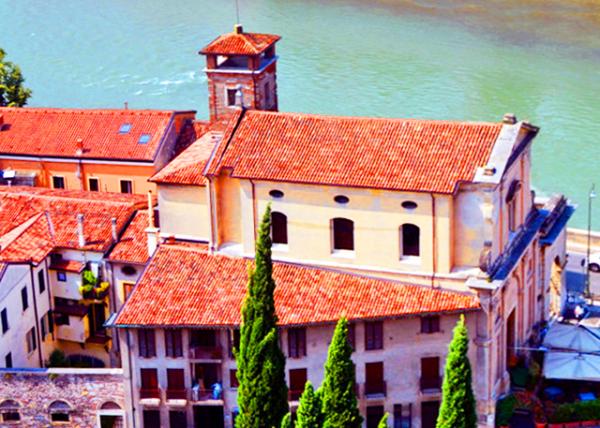 Chiesa del Redentore or Church of the Redeemer @ Adige River Bank Chiesa del Redentore or Church of the Redeemer @ Adige River Bank
(阿迪杰河畔的救世主教堂)
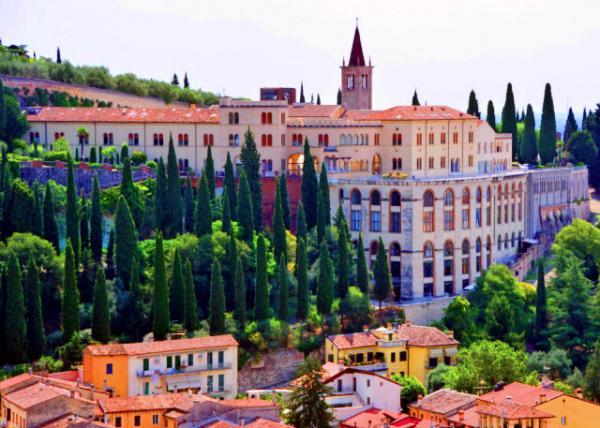 Castel di San Pietro Built in the 19th Century by the Austrians Castel di San Pietro Built in the 19th Century by the Austrians
(圣彼得“磐石”城堡·19世纪由奥地利人建造) 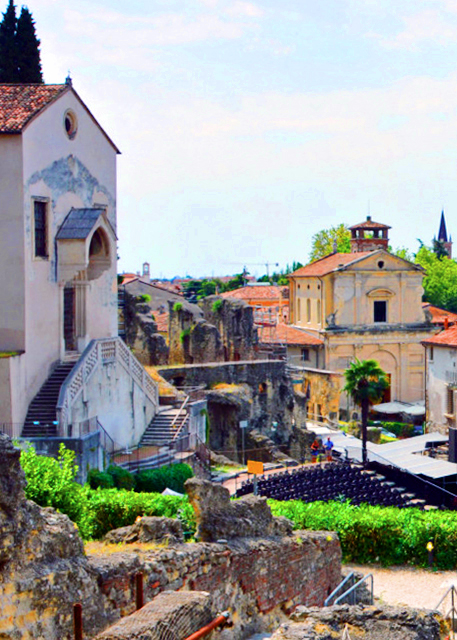
Church of Archaeological Museum (考古博物馆教堂) 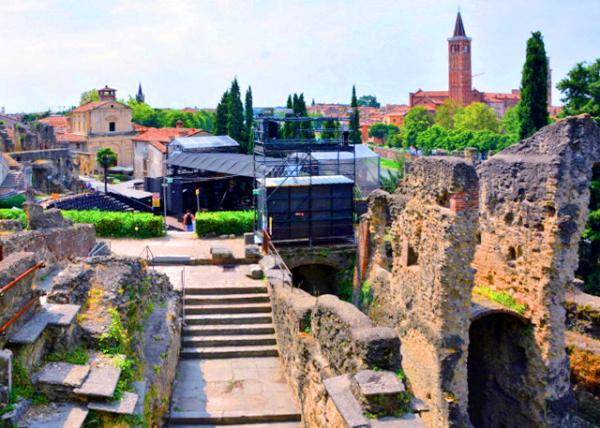 Roman Theater of the Archaeological Museum Roman Theater of the Archaeological Museum
(考古博物馆·罗马剧院) 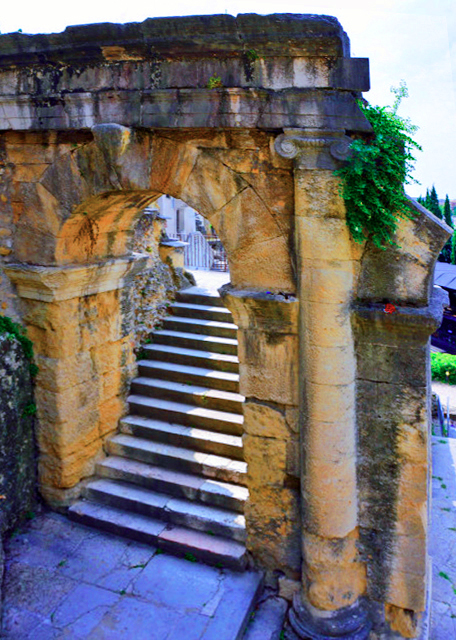
Doorway of Roman Theater, Archaeological Museum (考古博物馆·罗马剧院大门) 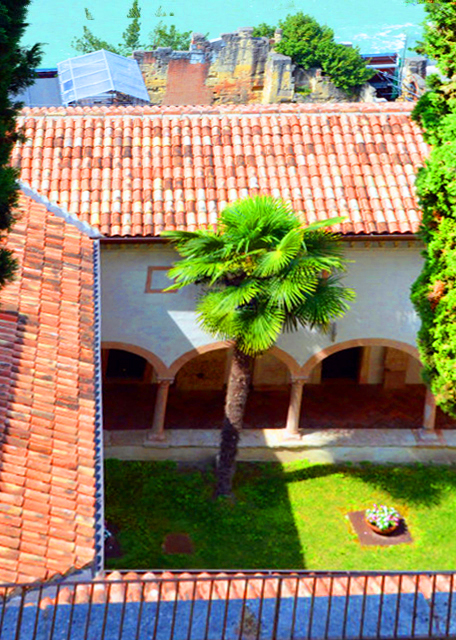
Courtyard of the Archaeological Museum (考古博物馆·罗马剧院) 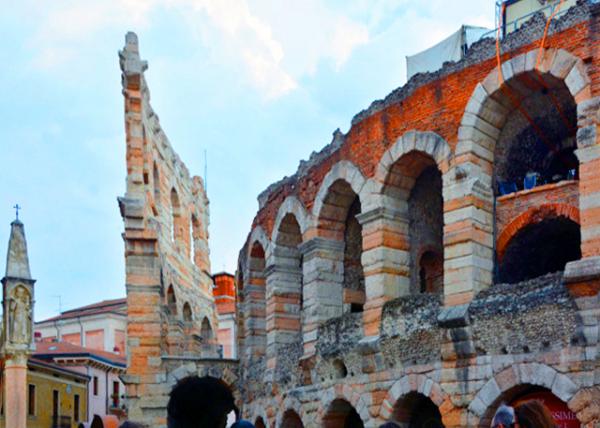 Exterior of Arena di Verona, the Roman Amphitheater, Built in the 1st Century AD for the Fights of Gladiators Exterior of Arena di Verona, the Roman Amphitheater, Built in the 1st Century AD for the Fights of Gladiators
(维罗纳竞技场外观·罗马圆形剧场建于公元1世纪,用于角斗士的战斗) 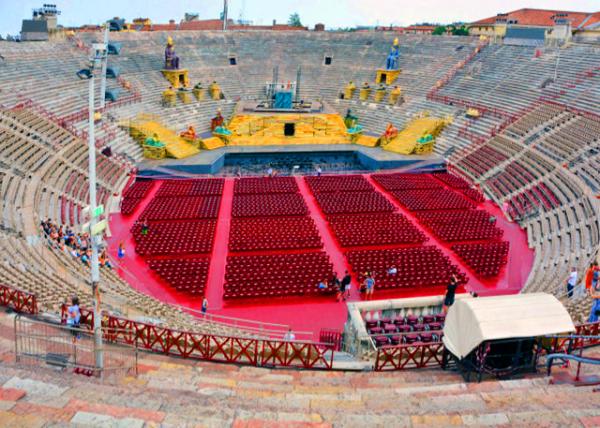 Interior of Arena di Verona, the 3rd Roman Amphitheater in Size among Those Still Existing & Used in Summer for Opera, Concerts & Events Interior of Arena di Verona, the 3rd Roman Amphitheater in Size among Those Still Existing & Used in Summer for Opera, Concerts & Events
(维罗纳竞技场内景·现存规模第三大夏季用于歌剧、音乐会和活动的罗马圆形剧场) 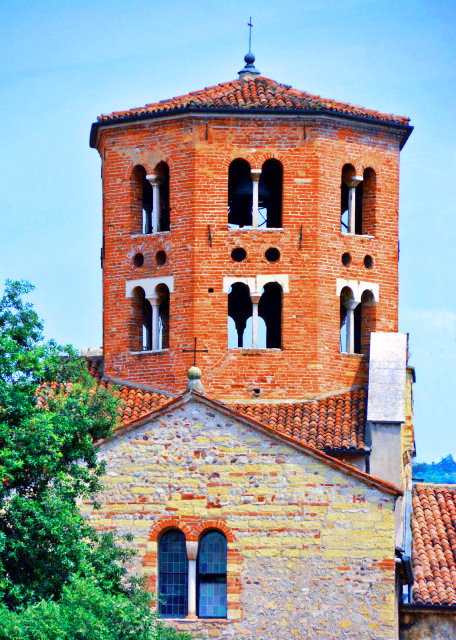
Chiesa di Santo Stefano (圣史蒂芬“皇冠”教堂) 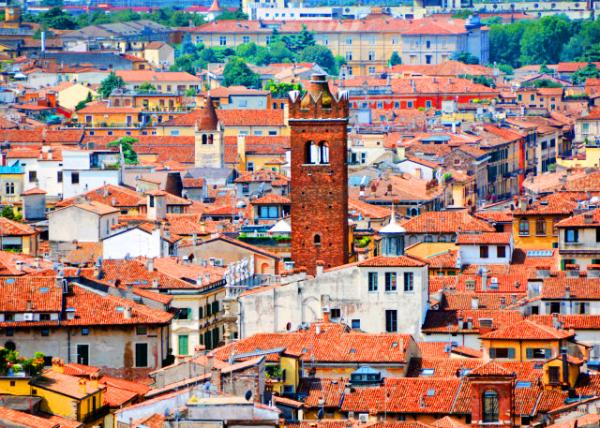 Gardello Tower Equipped in the 15th Century as the 1st Public Clock Tower Gardello Tower Equipped in the 15th Century as the 1st Public Clock Tower
(加德罗“力量”塔·建于15世纪,第一座公共钟楼) 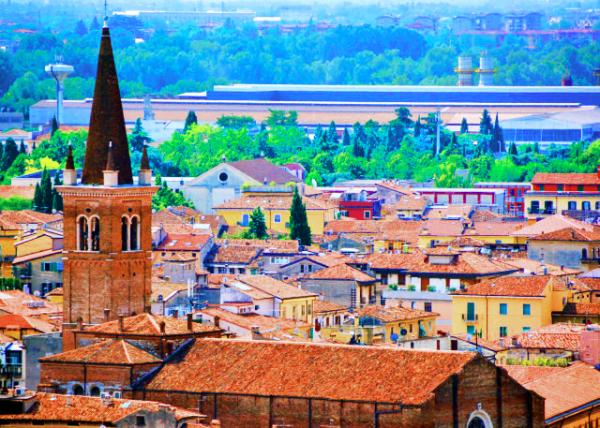 Sant'Anastasia (圣阿纳斯塔西娅教堂) Sant'Anastasia (圣阿纳斯塔西娅教堂)
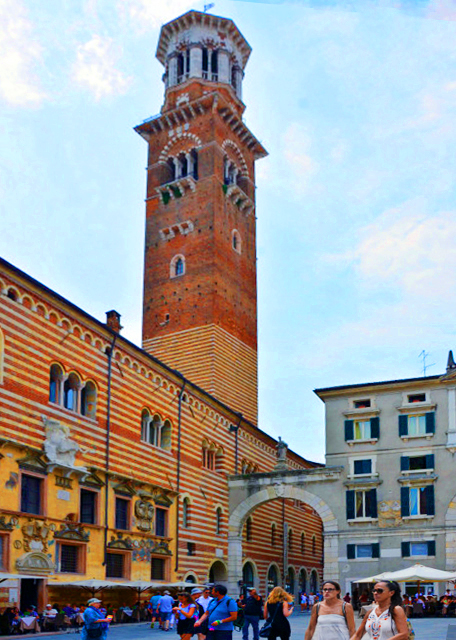
Palazzo della Ragione, a Symbol of the City's Power (拉焦内“市政”宫·城市力量的象征) 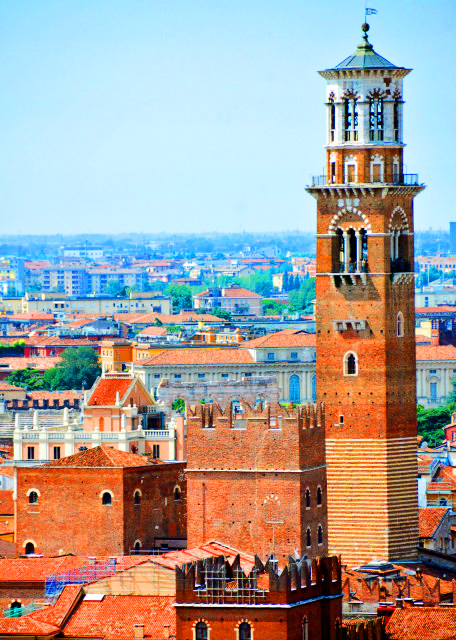
Torre dei Lamberti Built in the 12th Century as a Part of the Palazzo della Ragione (兰伯蒂“光明大地之子”塔·建于12世纪,拉焦内宫的一部分) 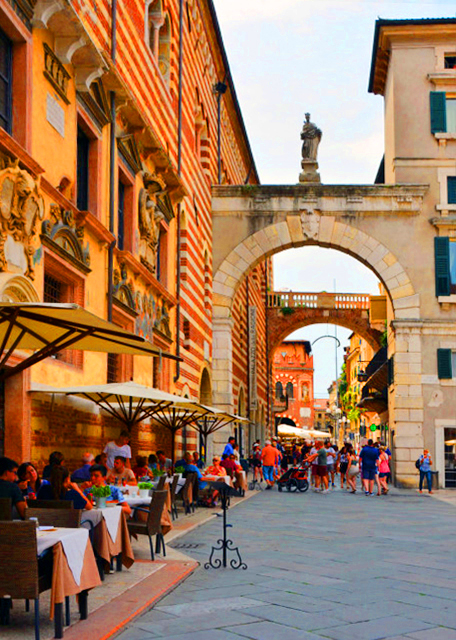
Piazza dei Signori, the Center of Political Life Since the Middle Ages (领主广场·中世纪以来政治生活的中心) 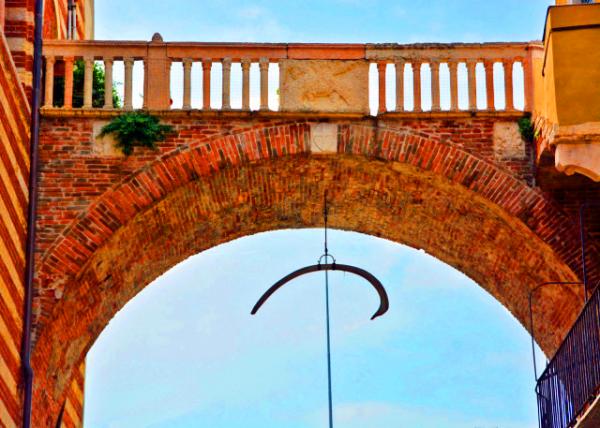 Arco della Costa, as Local folklore says that the bone will fall on the first honest person to walk beneath the arch, though this has never happened. Arco della Costa, as Local folklore says that the bone will fall on the first honest person to walk beneath the arch, though this has never happened.
(鲸骨拱门即凯旋门·据当地民间传说称,这块骨头将落在第一个走过拱门下的诚实人身上,尽管这种情况从未发生过。) 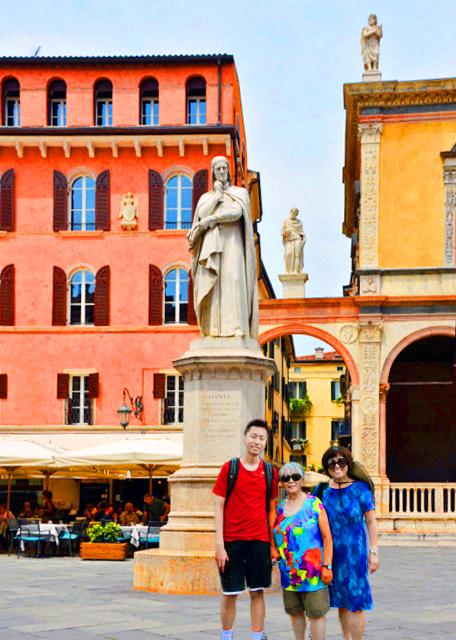
Statua di Dante Alighieri @ Piazza Dante (但丁广场—但丁·阿利吉耶里“永恒·圣矛”雕像 07-10-2018) 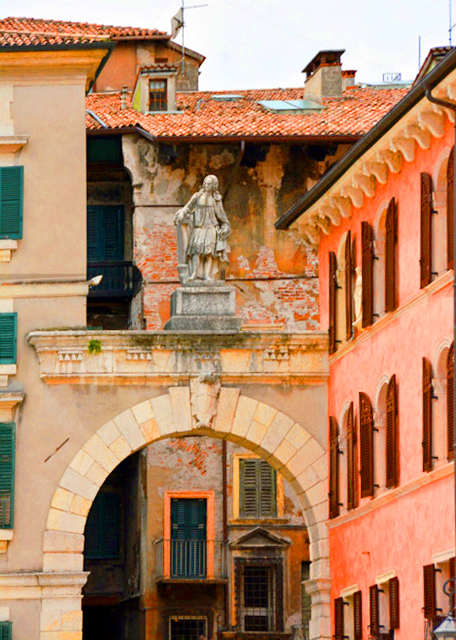
Statue of Scipione Maffei & Façade of Old Palace on Piazza dei Signori (领主广场上意大利剧作家雕像《西皮奥内·马菲》与古宫殿正面观) 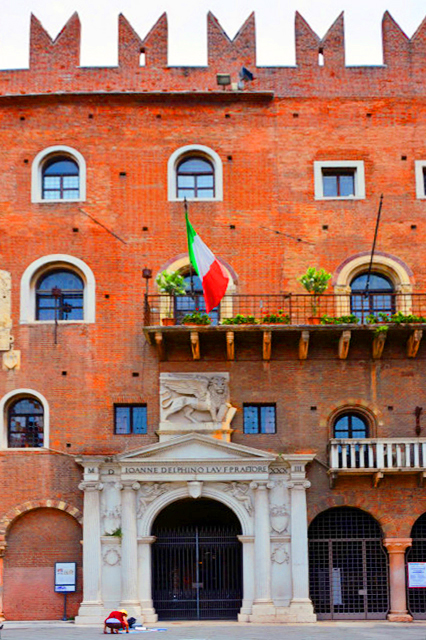
Palazzo del Podestà or Palazzo del Governo (波德斯“执政官”宫·现为省府) 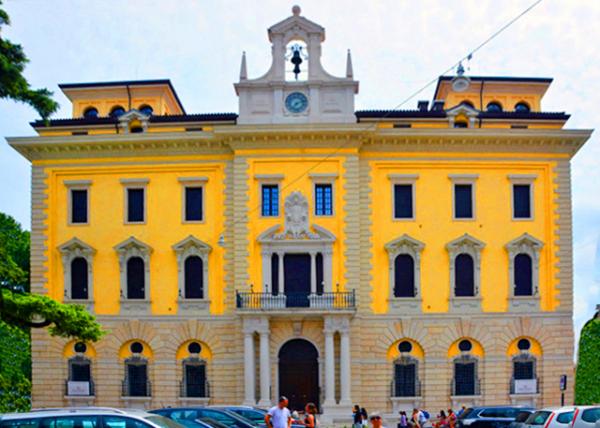 Hotel Relais Palazzo del Capitano Hotel Relais Palazzo del Capitano
(卡皮塔诺“统领”宫乡村酒店) 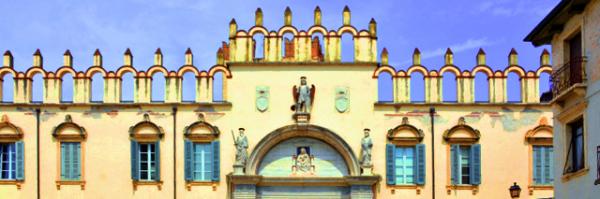 Palazzo del Vescovado (维斯科瓦多“主教”宫) Palazzo del Vescovado (维斯科瓦多“主教”宫)
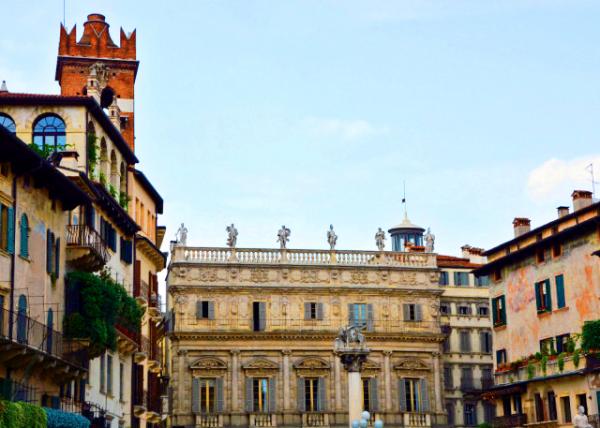 House Museum Palazzo Maffei House Museum Palazzo Maffei
(马菲“神赐”宫故居博物馆) 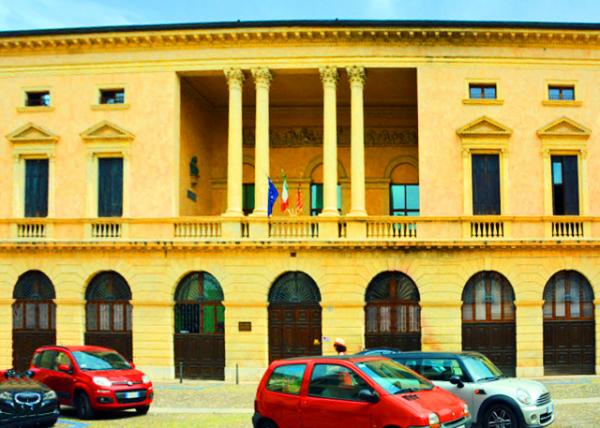 Palazzo delle Scuole Aportiane Emphasized the Development of Human & Christian Values in Students Palazzo delle Scuole Aportiane Emphasized the Development of Human & Christian Values in Students
(阿波尔蒂“力量”学校宫·强调学生的人性和基督教价值观的发展) 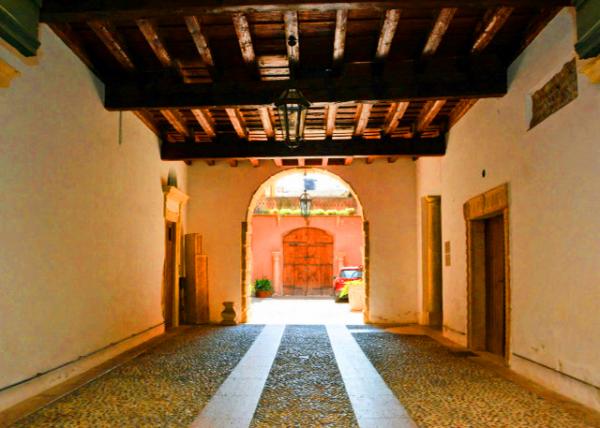 Wooden Trussed Ceiling (木制桁架天花板) Wooden Trussed Ceiling (木制桁架天花板)
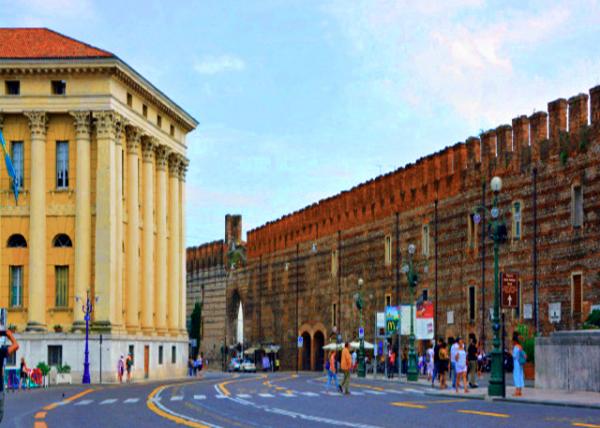 City Hall & Citadel on Piazza Bra City Hall & Citadel on Piazza Bra
(布拉“宽阔”广场·市政厅与城墙)
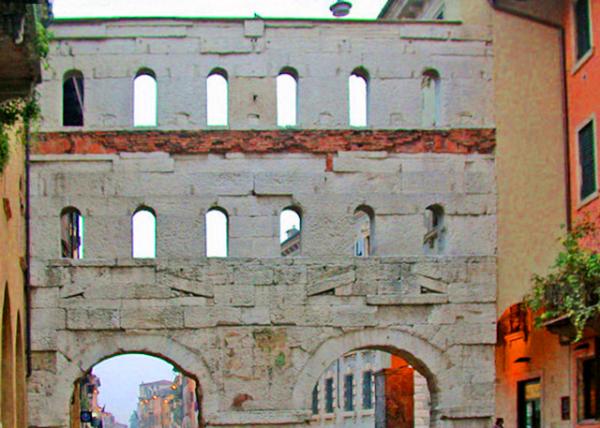 Porta Borsari Retro, an Ancient Roman Gate & the Main Entrance to the City During the Roman Era Porta Borsari Retro, an Ancient Roman Gate & the Main Entrance to the City During the Roman Era
(古博萨里门背面· 古罗马大门,罗马时期城市的主要入口) 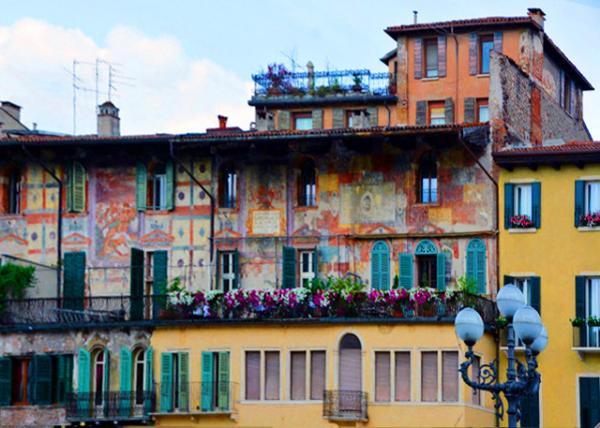 Casa dei Mazzanti on Piazza Erbe in the 13th Century Casa dei Mazzanti on Piazza Erbe in the 13th Century
(百草广场·十三世纪修建的马赞蒂“棒子”之家) 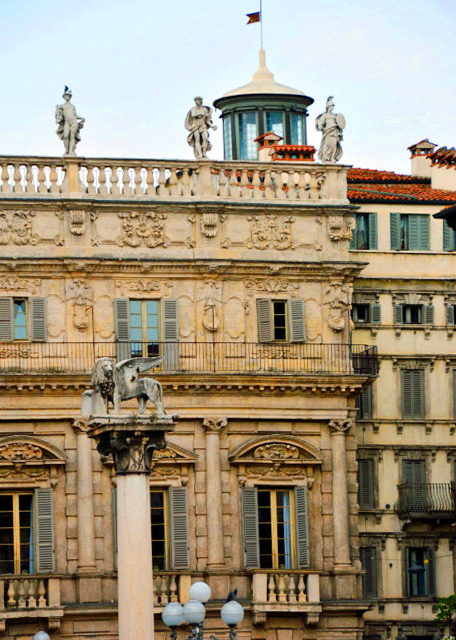
Leone Marciano, a Symbol of the Venetian Republic in Piazza delle Erbe (圣马可“战神”狮柱·百草广场威尼斯共和国的象征) 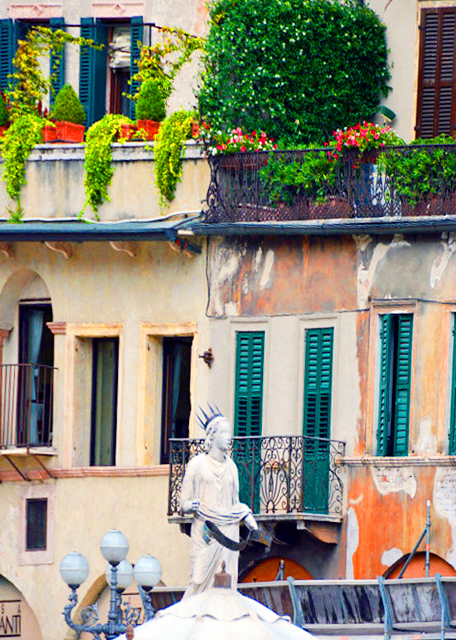
Fountain of Madonna Verona, Piazza Erbe (百草广场·维罗纳圣母喷泉) 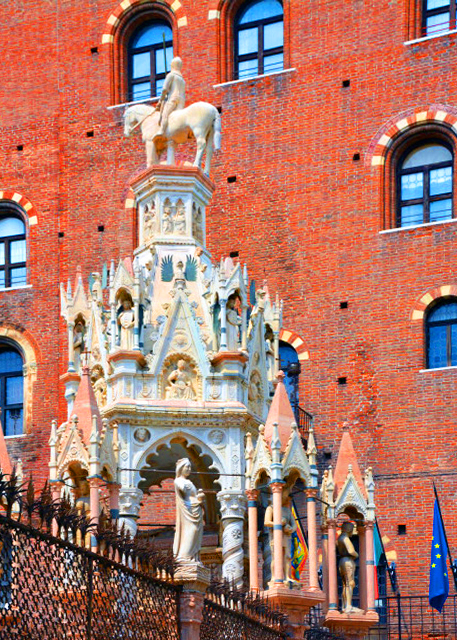
Tomb of Cangrande, Santa Maria Antica (古圣母教堂·坎格兰德“好狗”之墓) 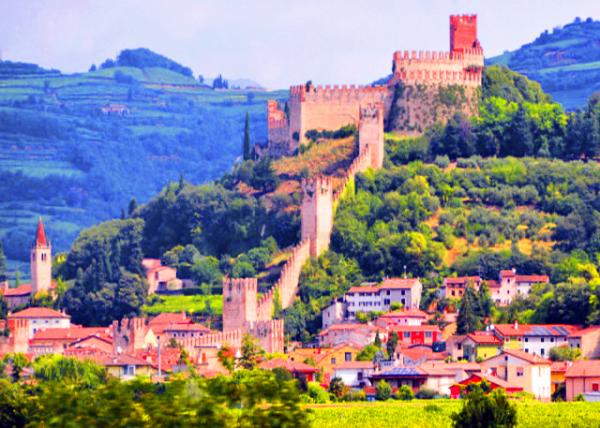 Castle of Soave, Veneto (威尼托·白酒城堡) Castle of Soave, Veneto (威尼托·白酒城堡)
Crosslinks(相关博文):
Italy(出游意大利)
Europe(欧洲掠影) 9th Grade(高中一年级) |