2016-06-26
【Aiden in English】
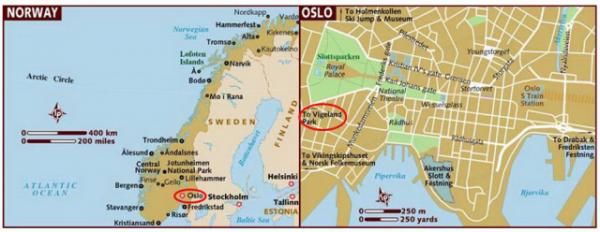
In science class, we learn that life is a cycle. Back to the basics, all organic items are recycled into the earth through decomposition, heat, and pressure, which break our bodies down to dust and nothingness. I understand it is life. For kids with Thanatophobia, however, it benefits no one. Imagine a father thing to calm a crying child, saying, "It's okay, son, 'cause when you die, the ants gonna crawl all o'er you and they gonna eat you! Then you gonna go into the ground, curl up, and never see the sun again!" Yeah, it's not the best idea, yet it is life, and we, as mature people, put this into random places. We study, worship, and, oddly, sculpt statues of this idea. Oslo contains many odd artists. One made an iceberg out on the shallow harbor waters, calling it a monument of floating glass and steel icebergs. The main feature is the Vigeland Sculpture Park, located within the naturalistic Frogner Park, featuring unique statues. The sculptor Gustav Vigeland (1869-1943) was fascinated with how dead people are absorbed back into the environment and "reborn," figuratively speaking. Although it sounds much like a religion, Vigeland was religious, and the sculptures didn't depict a particular religion. Some may say they represent reincarnation, which hints at the influence of Hinduism and Buddhism. However, Vigeland never revealed his religion to the public, as the only information he provided was that it meant a great deal to him personally. So, we have a faith that deeply expresses death, which is an excellent lead to nowhere. The statues featured five figures, all of which were naked. They included babies, teens, middle-aged individuals, the elderly, and skeletons, all of which had two genders. The sculptor had explicitly designed them to be naked, symbolizing the universal meaning of his art. In the park, three main attractions were hosted in the center: a pedestal, a fountain, and a bridge. Each one contained the same idea of recycling our bodies. The first showed a ring of people from life to death. The child is born, and he sees his parents die. The statues express the genuine emotions of the people in the scene, as each one changes the theme of the overall picture. In the end, the child grows old and, unsurprisingly, dies. In the center of the Ring rose a tall pillar, the Monolith, that sat above the entire park. It measured 14 meters/46 feet in height. At the bottom was a group of ... dead people. At least, that's what I would assume since their arms were bent, and their backs were probably broken. In the middle, a struggling section of people climbing to the top, where they were transformed into children and babies and flew wherever Vigeland wanted them to go. That destination is a mystery to this day, and so is the pillar's meaning. Many theorists have ideas, but nothing has been proven. Another interesting idea in my mind was the dragons. Four statues marked four entrances to the park, each depicting a figure standing with a dragon touching their body. Two stood near the front gate, where one Woman was standing with a dragon creeping up her back while the other was with the dragon in front of her, as she hated it. The guide explained that the dragon represented evil in whatever suture this was, as we Chinese are extremely infuriated, but it is what it was. The dragon creeping up the Woman's shoulder symbolizes the acceptance of evil, and the other statue symbolizes the fight against the dark side. The Vigeland Sculpture Park contains all the main aspects of a world religion. It is about an idea of what happens after death, a cycle of life, and an idea expressed to people, guiding them and instructing them on what to do and what not to do. It is a way of living, and although Vigeland lived in the 19th and 20th centuries, he expressed many ideas that remain relevant today. 【紅霞譯】
科學課上我們學過生命循環,按照基本常識一切有機物質必將回歸自然,分解、加熱乃至高壓都能讓人體化為灰燼,我明白死亡實為生命的延續。對於膽小怕死的幼童來說,解釋過多反倒於事無補,試想當爹的為了安撫嚇哭的孩子說:“兒子想開點,等你百年之後,螞蟻肯定跑來陪你,直到天荒地老!到那時你將化作一抔黃土,無聲無息地蜷伏地下,再也無法重見天日!”唉,用這種方法教育孩子雖然並不可取,但是自然規律實際就是如此,隨着年齡日趨長大思想逐漸成熟,朋友之間經常把“死”字當成調侃生活的素材,有人研究死亡,另有人敬畏死亡,更為離譜地還有人美化死亡,用雕刻藝術盡情渲染生命終結。
奧斯陸人才輩出,藝術家們在水位低淺的前海沿唾手雕琢起一座冰山──浮動的玻璃鋼冰山,當然最具代表性的藝術作品應首推位於弗羅格納“沃土肥田”自然公園內的巨石雕塑群。就其造型構思而言,雕塑家古斯塔夫·維格蘭“神杖·維京人土地”(1869-1943)幻想死人如何被環境吐故納新,又怎樣“脫胎換骨”轉世重生,儘管聽起來帶有宗教色彩,雕塑家本身確實信教,但其作品並非局限在宗教範疇。或許有人會說巨石雕塑表現生死輪迴,隱含印度教及佛教思想,然而雕塑家從未公開過個人信仰,僅僅表示創作過程有助於加深宗教意識,照此說來人們信仰的就是宣揚死亡救贖的宗教,其終極目標難以實現。巨石公園的雕像歸為五類,它們渾身一絲不掛,人物對象包括兒童、青少年、成年、老年以及骷髏,並且男女參半;雕塑家之所以精心設計赤身裸體,無非在於體現大自然中形體與線條的藝術之真;整個公園主要把雕塑群分成三個景區:圓台階、噴泉和石橋,每一景區都遵循周而復始的主題思想。第一個景區展示圈成圓圈的人們生死過程:嬰兒誕辰之後目睹父母辭世,隨着情節發展,每幅作品都表現出真實情感;最終孩子長大變老,無一例外地踏上通往墳墓的道路;圓台階中央矗立着一個生命之柱,大約高達14米/46英尺,是公園制高點。生命之柱的底層由死人組成,至少我這麼推測,因為他們手臂彎曲,後背脊梁骨折;在中間一層,民眾苦苦掙扎,個個竭盡全力朝上爬,他們中不乏幼童嬰兒,全部擺開姿態奔向……雕塑家指定的地方,截至到目前為止,前方目的地不祥,這正是生命之柱的奧秘所在,為此招來不少理論家苦思冥想,但推敲結果一直無法得到證實。
在我看來另外一個極為有趣的構思就是大龍,公園四個入口處各有一幅雕像,每幅雕像都描述有關大龍撫摸人體的情景。前門有兩條大龍:一條從背後伸出詭秘的雙臂擁抱女人;另一條則從正面擁抱女人,好像招致女人不滿。導遊解釋道,在這裡大龍代表邪惡,當心別激起我們中國人民憤,估計雕塑家對之缺乏了解。言歸正傳,前一個表示女人與惡魔同流合污;後一個則象徵正義力量與黑暗勢力進行殊死搏鬥。 巨石雕塑公園集世界宗教思想之大成,將人死後所發生的事情、轉世輪迴以及人生在世該做的不該做的等全部用雕塑手法表達出來,無愧於為人處世的行動準則,儘管雕塑家生活在19─20世紀,但他的許多思想仍然值得現代人學習。
Today in History(歷史上的今天): 2016: Oslo, the City of Tiger in Norway(挪威奧斯陸·老虎之城) 2015: Istanbul, the Gate of Felicity TUR(土耳其伊斯坦布爾·東西合璧) 2015: Istanbul w/ Grand Bazaar, Turkey(土耳其伊斯坦布爾·大巴扎集市) 2015: Istanbul w/ Hagia Sophia, Turkey(土耳其伊斯坦布爾·聖索菲亞大教堂) 2014: Chili's(紅辣椒燒烤酒吧) 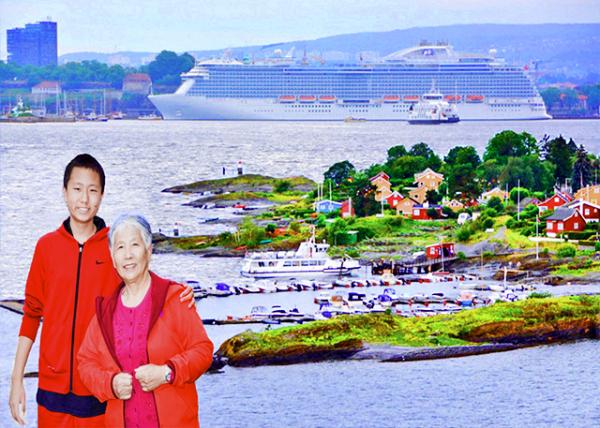 Emerald Princess Birthed over Oslofjord in Oslo
(“公主·翡翠”號遊輪停靠在奧斯陸奧斯陸峽灣之上 06-26-2016) 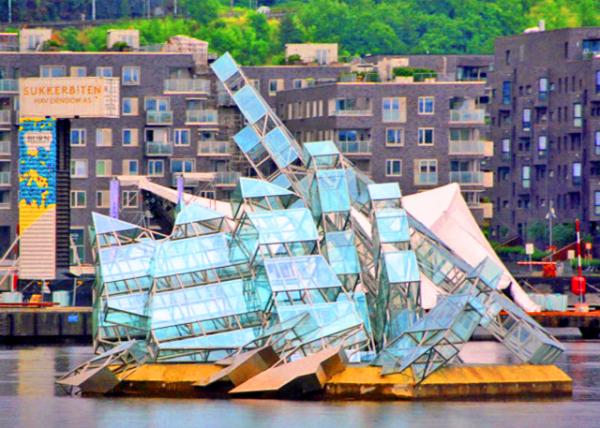 Monument of Floating Glass & Steel Iceberg
(浮動玻璃鋼冰山紀念碑) 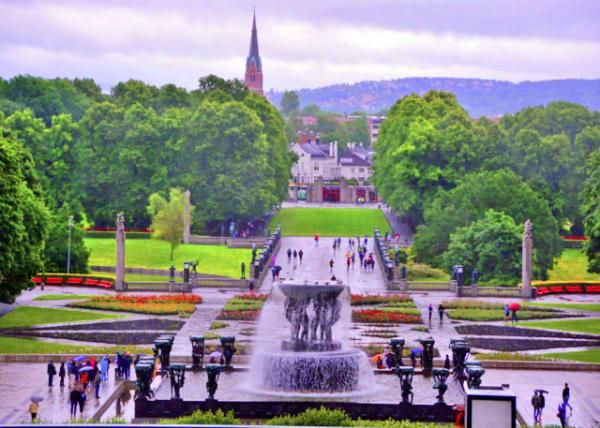 Frogner Park (弗羅格納公園)
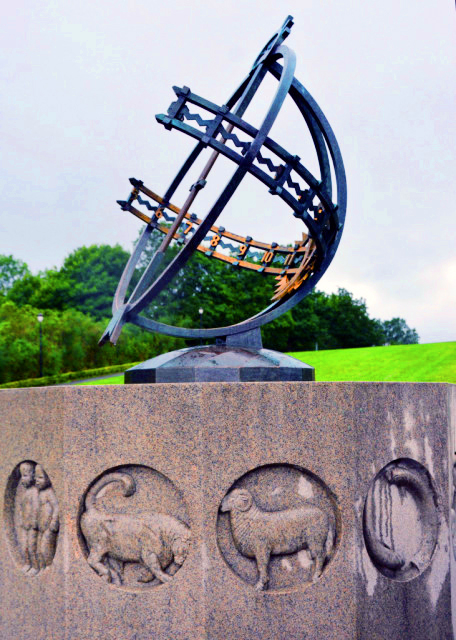
Sundial (日晷) 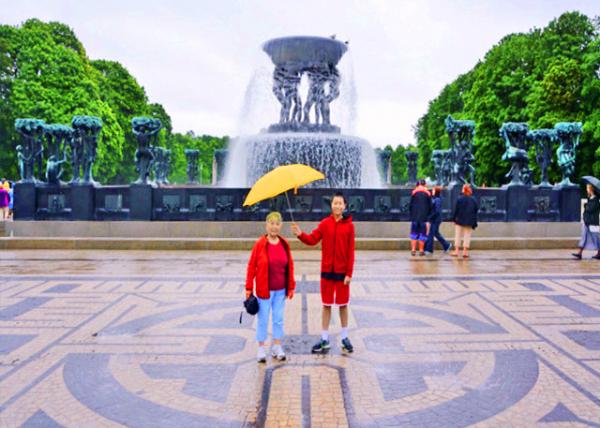 Vigeland Sculptures
(維格蘭雕塑作品 06-26-2016) 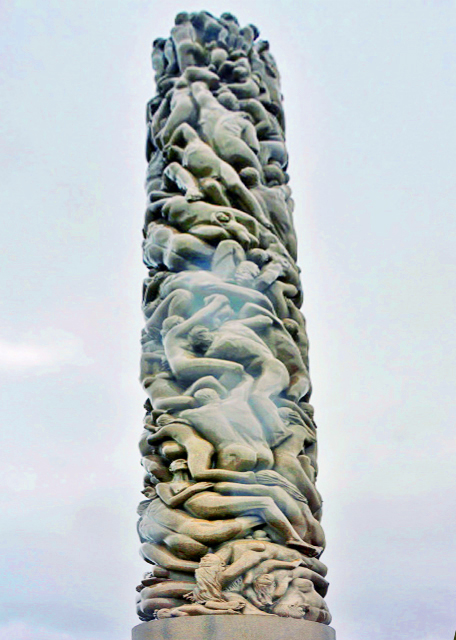
The Monolith (巨石) 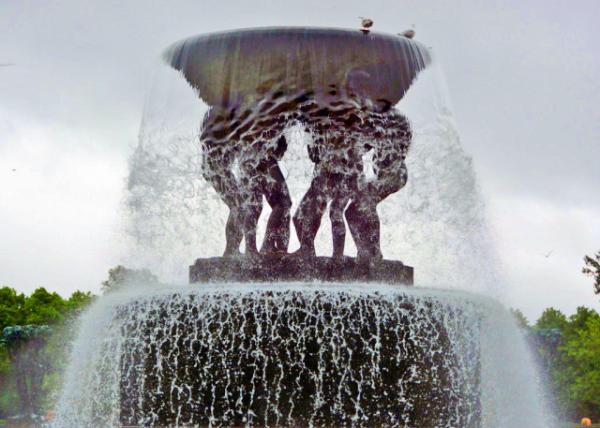 The Great Fountain (大噴泉)
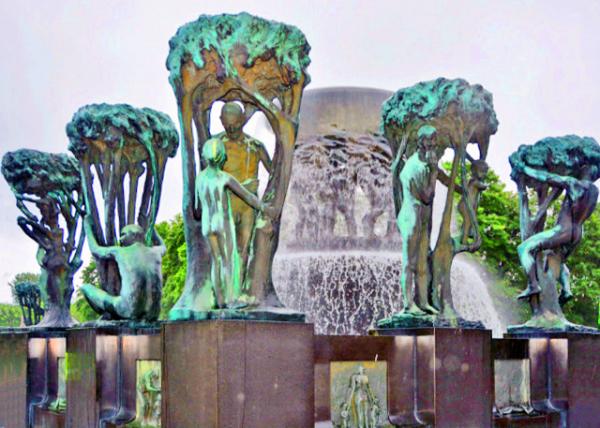 Fountain w/ Tree Group (噴泉與樹叢)
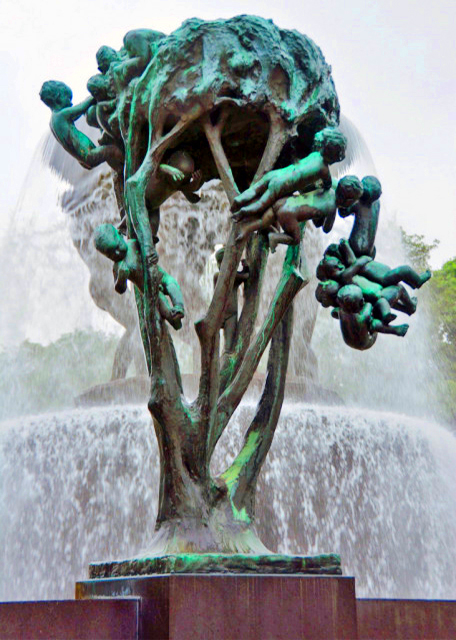
The Unfolding Life of Man (展示生命)
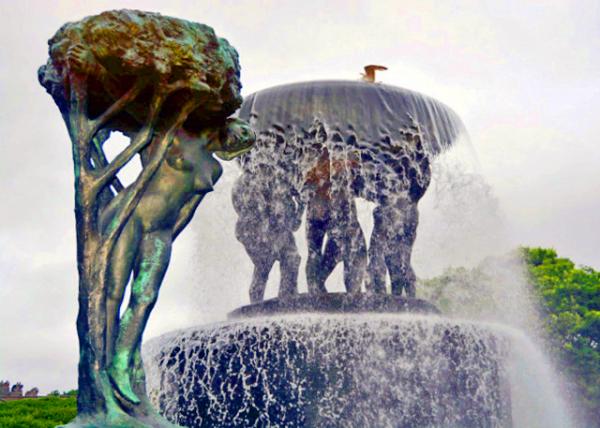 The Unfolding Life of Man (展示生命)
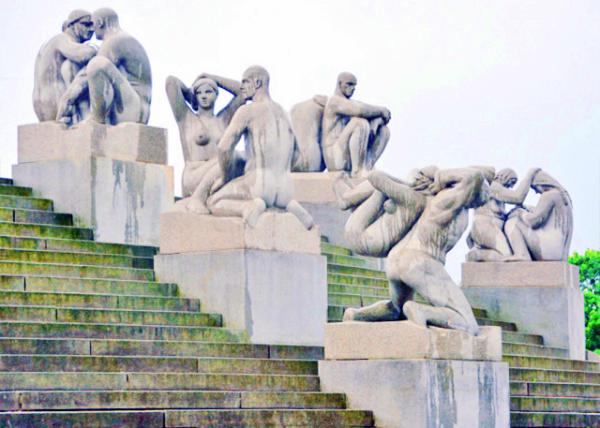 Embrace of Life (擁抱生活)
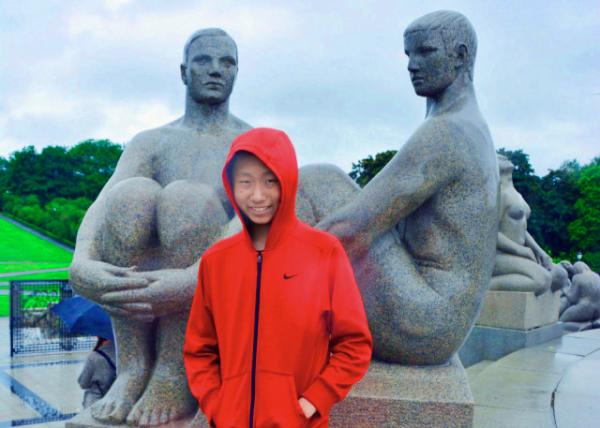 Embrace of Life (擁抱生活 06-26-2016)
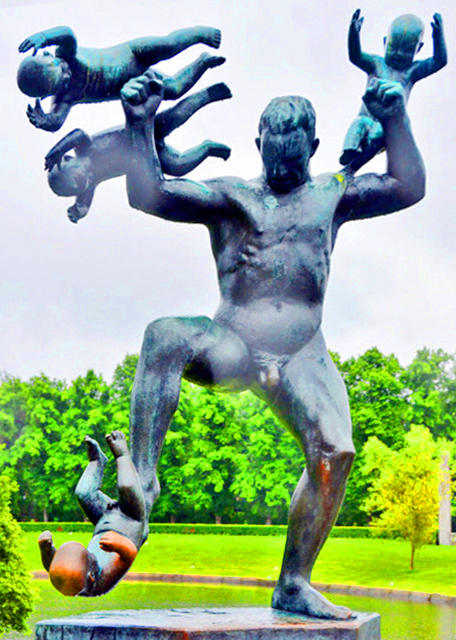
Man Chasing Four Geniuses (《追逐四位天才的男人》) 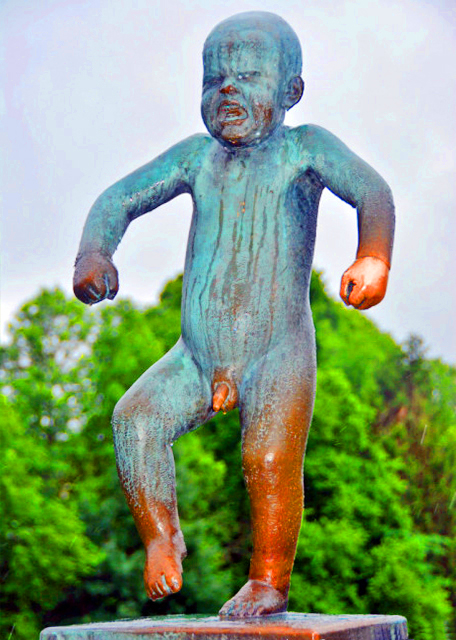
Angry Boy (雕塑《憤怒的男孩》)
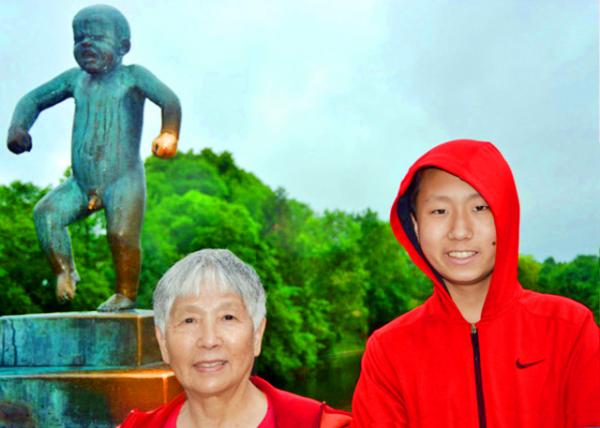 The Angry Boy's Golden Hand
(《憤怒的男孩》的金手 06-26-2016) 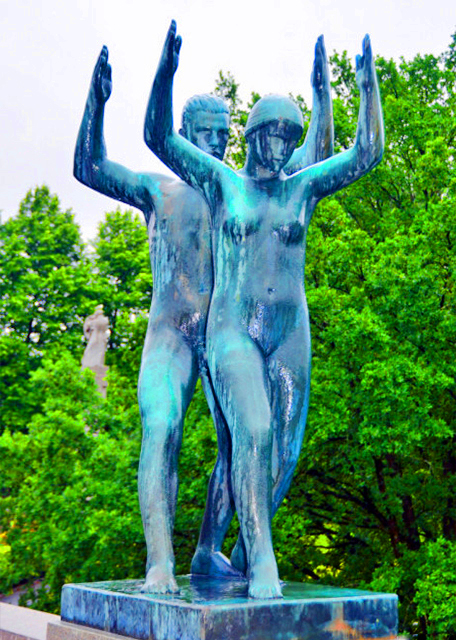
Man & Woman (雕塑《男人與女人》) 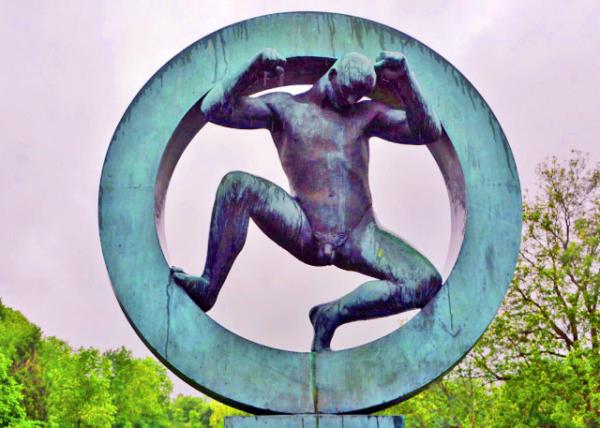 The Ring (雕塑《圓圈》)
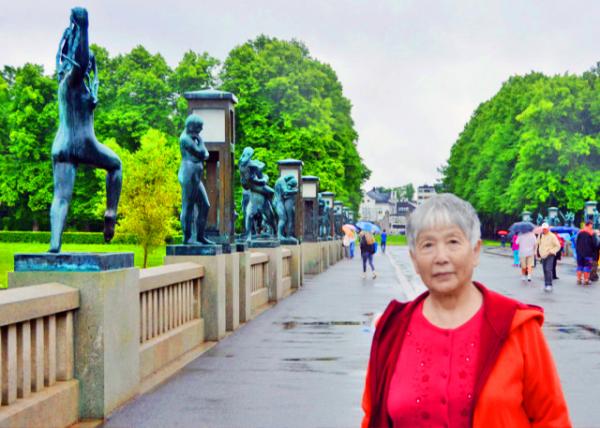 Humanity Sculptures on the Bridge (橋上人文雕塑 06-26-2016)
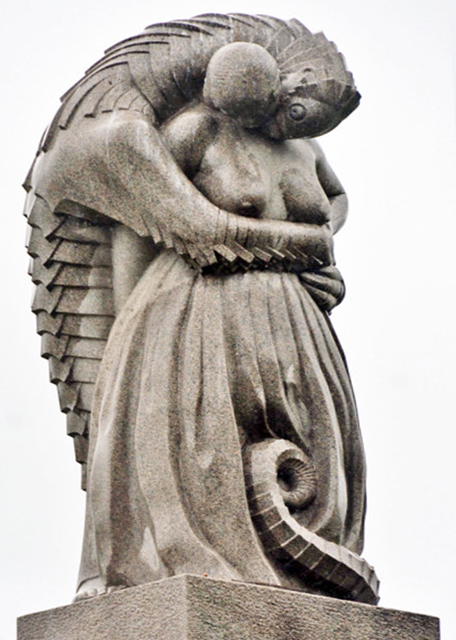
Surrender (屈服) 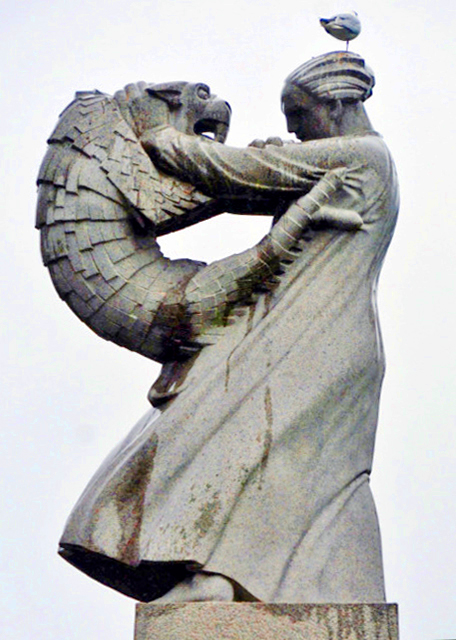
Fight (抗爭)
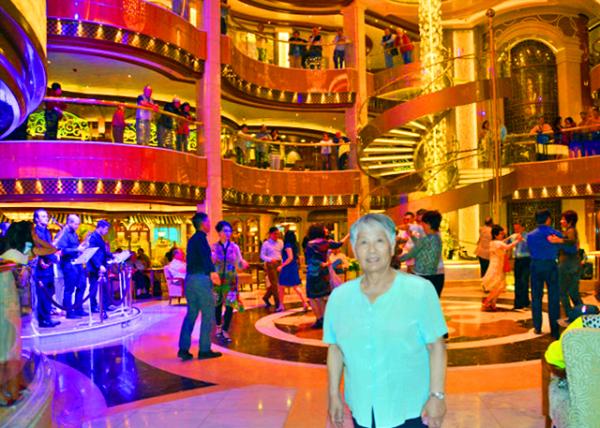 Big Band Ballroom w/ the Regal Princess Showband
(大樂池與“公主·帝王”號遊輪樂隊 06-26-2016)
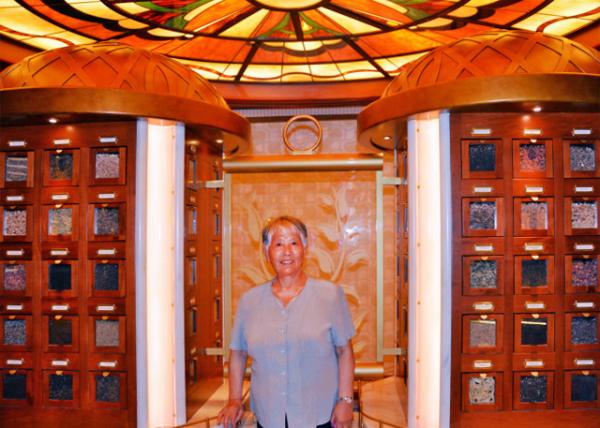 Tea Room (茶坊 06-26-2016)
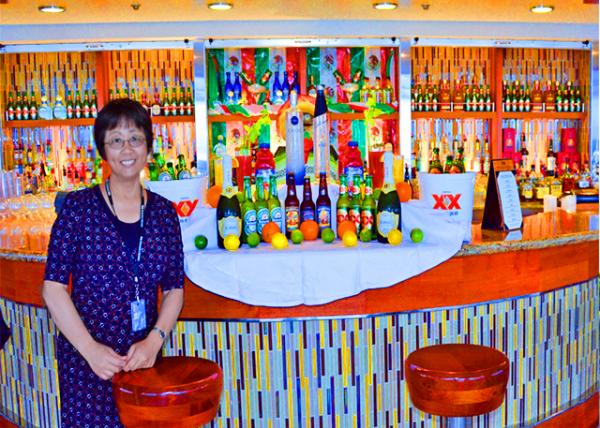 Outrigger Bar (觀景酒吧 06-16-2016)
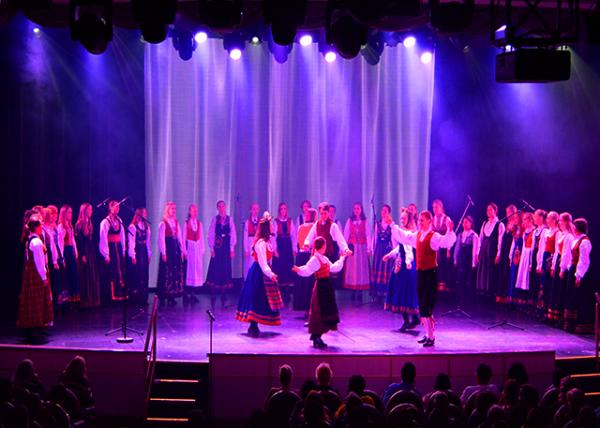 Halling Folk Dance (萬聖節人民間舞蹈)
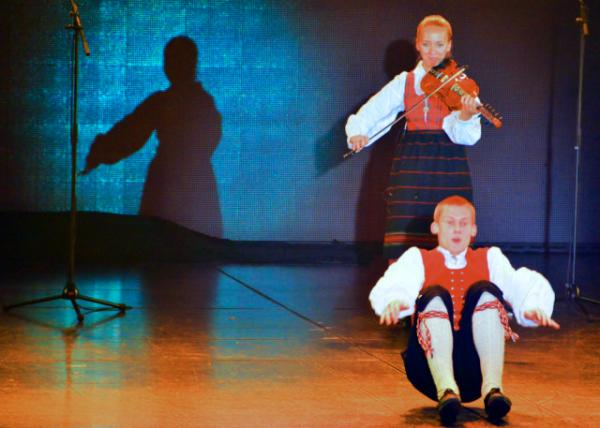 Halling Folk Dance (萬聖節人民間舞蹈)
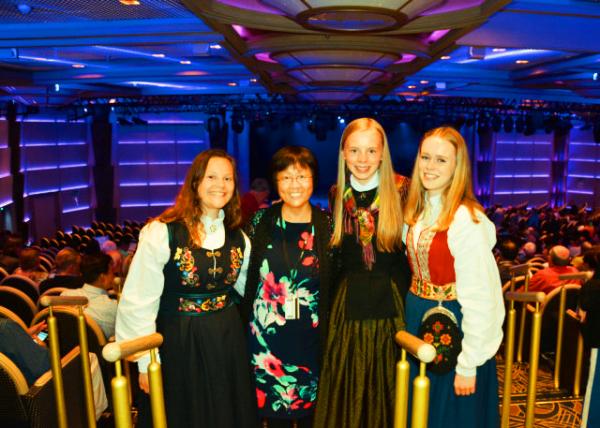 Norsk Teens (挪威高中生 06-26-2016)
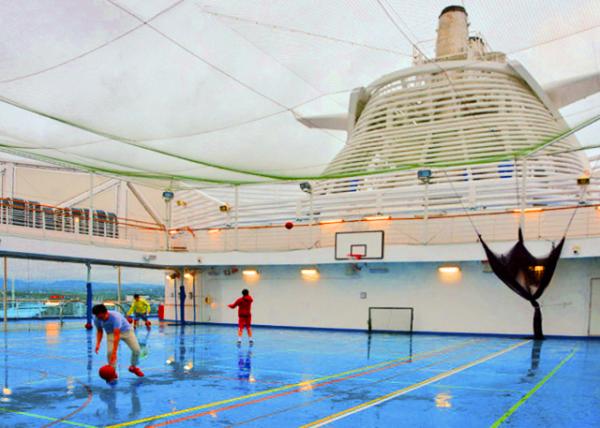 Center Court @ Regal Princess
(“公主·帝王”號遊輪中央球場 06-26-2016) 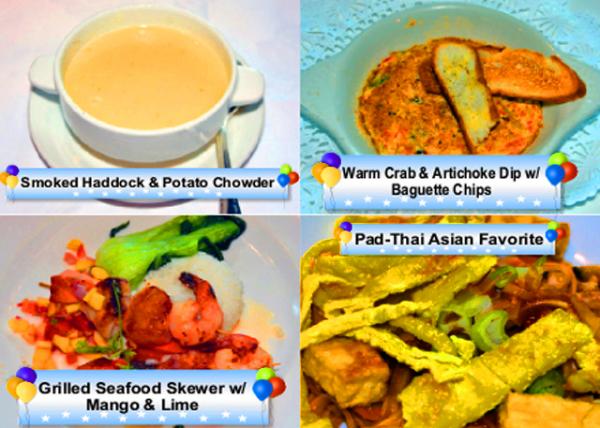 熏黑線鱈與土豆雜燴湯、熱螃蟹和朝鮮薊蘸醬與法式麵包幹、芒果酸橙海鮮串、泰式亞洲風味炒飯
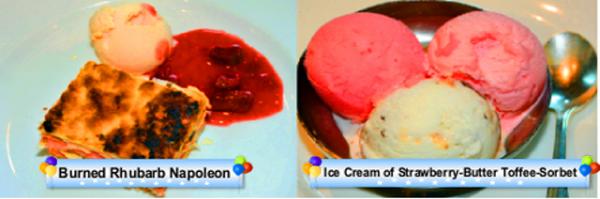 烤大黃千層酥、三色冰激凌“草莓奶油太妃糖與冰糕”
Crosslinks(相關博文): Norway(出遊挪威)
Europe(歐洲掠影) 7th Grade(初中二年級) |