2013-01-03 
【Aiden in English】
As I came to my senses from waking out of deep sleep, the smell of muffins wafted toward me. With an unappetizing breakfast, I hurried down to meet our group. I headed for Uruguay, the second-smallest country in South America, and its oldest town, the Historic Quarter of Colonia del Sacramento, which was declared a UNESCO World Heritage Site in 1995. We left the harbor, an oil refinery, a moored fishing fleet, the Navy Museum, and even the Uruguayan capital city, Montevideo, behind. The lush countryside displayed a vast grassy prairie interrupted only by scattered patches of scrubby woodland along the horizon, reminiscent of the Pampas in neighboring Argentina. Although the trip took about three hours of scenic driving, I spent most of my time recovering and missed out on a precious opportunity for sleep. While half the time I was asleep, sweet and sound, the rest of the time was pathetic. Mom enjoyed sipping yerba mate from a hollow gourd with a bomba (a drinking metal straw), which our tour guide had brewed for the demonstration. Like Chinese tea, the tea was made of potent herbs steeped in hot water. In Uruguay, drinking mate with friends from a shared hollow gourd and using a shared metal straw has become an extremely social practice among people of all ages. I didn't try it because the herbal tea was too strong to drink, and I felt uncomfortable sharing the same straw with others. Colonia del Sacramento was located just opposite the Argentine capital, Buenos Aires, the largest city in South America. Skyscrapers appeared vague across the murky waters of the Rio de la Plata, or River of Silver, the world's widest river, with a maximum width of about 140 miles/220 kilometers from east to west. We returned to the late 16th century when Colonia del Sacramento became the only Portuguese settlement along with the Rio de la Plata. La Plaza de Toros (Bullring) was built in Moorish style in 1910 and could accommodate 10,000 spectators. Now, it is fit for a haunted house and left to rot in pieces due to the government's prohibition of the sport. The bull ring was not only magnificent but also creepy. I wished that I could take a glimpse inside. We walked on foot around the small town built on cobblestones. Once crossing a drawbridge and entering the Porton de Campo (Town Gate) via San Miguel Bastion, we were suddenly walking along winding streets lined with vibrantly colored colonial houses reminiscent of old Lisbon, the Portuguese capital. It stood out against the modern world. In Calle de San Pedro (Street of San Peter), we encountered a large stone house featuring a city map in Portuguese blue and white ceramic tiles, and were welcomed by the Rio de la Plata. The river resembled a sea and behaved like an estuary, where freshwater and seawater mingled. We continued to follow the old town's border and stroll the famous Calle de Los Suspiros (Street of Sighs), named for beauty so profound that it evoked a "sigh" when viewed for the first time. It was striking that the Portuguese built their cobblestoned passageways so that the rainwater would drain along the middle, rather than next to the sidewalks. Casa de Nacarello, a 17th-century Portuguese house, glorified its simplicity and loveliness. Once or twice, we would stop, and the tour guide would provide a brief explanation of the place's culture. Most of the history was related to the Spanish and Portuguese wars. The battles continued for several decades, with a focus on the struggles at the Rio de la Plata estuary. Eventually, the Portuguese overcame the immigrating Spanish and signed a treaty to control the town. I wondered why the two large European nations would want natural resources from a tiny village like Colonia del Sacramento in South America. Near Uruguay's oldest church, Basílica del Santísimo Sacramento (Basilica of the Holy Sacrament), dating back to 1695, we dined in a nice restaurant that served Uruguayan cuisine: a veggie salad, asado (barbecue) chicken, and fish, accompanied by a selection of ice cream. Before I left the Historic Quarter for good, Mom and I bought tickets to El Faro, or Lighthouse (1857), and the ruins of the Convent of San Francisco (1683) located in the Plaza Mayor (Main Square). The view was spectacular from the Portuguese irregular and terrain-fitting street layout, the Spanish orthogonal and wide area, and the colonial decorations in variety at the top. When I saw people running on the ground, I thought they were rainbow-colored ants with two legs. The descent was taking forever. A girl no more than five years old hopped down the steps one by one, carefully in front of me. When a beam of sunlight squeezed in, I thought I had made it. However, my intentions were misguided, and it was merely a window. Just as I had given up hope, I reached the bottom and rushed to catch up with the group on the bus, which took us back to the cruise ship. 【红霞译】
清晨自然醒来松饼飘香,简单吃过早点,我便匆匆上路。今天要去乌拉圭“彩鸟之河”──南美洲第二小国及其最古老的萨克拉门托“圣礼”殖民古城。早在1995年,联合国教科文组织就将此地列为《世界遗产名录》。
我们离开码头很快将炼油厂、停泊的渔船、海军博物馆、甚至首都蒙得维的亚“眼见大山”甩在身后,迎面而来的草原牧场广袤无际,茂密的树林灌木丛间或把守地平线尽端,好像我们重新置身邻国阿根廷平原。
沿途共有三个钟头车程,虽说风景如画,但我闭目养神,一半的功夫用来补觉解乏,不困的时间打发得无聊;妈妈不管三七二十一,对品尝马黛茶“葫芦草”心血来潮。导游先将马黛茶碎末放入葫芦罐里,然后倒进热水浸泡,流程近似中国人沏茶,在乌拉圭不分大人小孩,与朋友共饮马黛茶是社交场合中不可缺少的环节。我没有兴趣试喝,不仅由于茶浓草药味道重,味觉受不了,而且由于大家为拉关系套近乎表忠心必须合用同一个金属吸管,感觉受不了。
话说我们将要登门走访的萨克拉门托,地理上恰好位于阿根廷首都对面,中间以世界上最宽的普拉塔“银”河为界,东西跨度140英里/220公里。从萨克拉门托古城向南美最繁华的阿根廷大都会布宜诺斯艾利斯“顺风”望去,依稀可见高楼广厦。
一走进萨克拉门托,展现在我们眼前的是16世纪唯一建立在普拉塔河畔边葡萄牙殖民地的历史画面。
斗牛场实为一处1910年间完成的露天圆拱马蹄型摩尔“北非穆斯林”式建筑,最多可容纳一万人,由于政府严禁斗牛体育运动而造成常年失修,现在它形如鬼楼阴宅,破烂得不堪入目。实际上,这个建筑本身非常雄伟,同时令人毛骨悚然,不过我真希望自己能进去看上一眼。
在萨克拉门托殖民地古城区,我们全部要靠双脚徒步行走鹅卵石铺就的马路上,经吊桥穿过老城门,进入天使城堡,时空一下子把我们带回1745年。石阶石道曲径通幽,殖民式小屋色彩绚丽,使人恍若现身葡萄牙首都里斯本“美湾”。我们站在圣彼得“磐石”大街,一边正对石房老屋,其上悬挂一幅用葡萄牙蓝、白釉彩瓷砖拼成的城市地图;另一边则面朝普拉塔河,宽大无比的河流看上去跟海没什么两样,入海口处海水与河水交汇。
我们继续游逛,漫步走在著名的“叹息街”上,第一次倘佯葡萄牙人精心打造的鹅卵石街区,心中禁不住发出赞美之声。有趣的是道路两旁地势偏高,并呈坡度向中央倾斜,这样每当下雨的时候雨水便会自动集中在马路中央,不会朝两旁流去而影响人行过道;叹息街角一间17世纪葡萄牙式纳卡雷洛“无花果树林”之家以其质朴典雅的特点,极大地丰富这条马路的历史底蕴。
我们一边走一边看景致,一边停一边听解说,每每讲到历史,总免不了跟战争挂上钩,几十年来西班牙与葡萄牙之间打来打去,无非为了争夺地盘,最后葡萄牙制服西班牙,萨克拉门托沦为葡萄牙殖民属地。我真不明白为什么两个欧洲大国为掠夺当地自然资源而不惜在南美这个水路交通要塞大动干戈?距离1695年修建的乌拉圭全国最古老的圣礼大教堂不远,我们在一家口碑不错的餐馆就餐,蔬菜沙拉、鸡肉鱼片地炉烧烤、冰激凌,使我们在瞻仰异国他乡历史的同时,不失时机地享受到本土饮食文化。 离开古城区之前,妈妈和我买了门票,从位于城中心的圣礼修道院(1683年)遗址爬到航标灯塔(1857年)顶层。放眼全城,葡萄牙式狭窄起伏的马路、西班牙式规整宽敞的街区、殖民式“光闪闪贝阙珠宫,齐臻臻碧瓦朱甍,宽绰绰罗帏绣成栊,郁巍巍画梁雕栋”,桃源美景;俯瞰脚下,路上行人个个像身着五颜六色、体架两条腿的蚂蚁一样来回蠕动,生气盎然。我循台阶下塔时并非顺畅,前面有一位不到五岁的小女孩慢慢腾腾挡住去路,起先见到一丝光明,我以为胜利在望,结果满不是那么回事,原来不过是一扇窗户,我心灰意冷,最终好不容易着了地,这时我乐不颠颠一路小跑,飞速踏上归程之路。 Today in History(历史上的今天): 2011: 算命先生(Fortune Teller) 2009: 祝愿孩子(Wish) 
Yerba Mate, a Traditional South American Beverage Made from the Dried Leaves of the Ilex paraguariensis Plant (马黛茶“葫芦草”·传统的南美饮料,由巴拉圭冬青的干叶制成 01-03-2013)  Scrubby Pastureland (灌木丛牧区) Scrubby Pastureland (灌木丛牧区)
 Plaza de Toros Real de San Carlos Built in 1910 in a Distinctive Neo-Mudéjar Architectural Style & the Country's Only Preserved Bullring Plaza de Toros Real de San Carlos Built in 1910 in a Distinctive Neo-Mudéjar Architectural Style & the Country's Only Preserved Bullring
(圣卡洛斯“自由者”皇家斗牛场·建于1910年,采用独特的穆德哈尔“驯服”新建筑风格,全国唯一保存完好的斗牛场 01-03-2013)  Portón de Campo @ Colonia del Sacramento Portón de Campo @ Colonia del Sacramento
(萨克拉门托殖民地·城门 01-03-2013)  San Miguel Bastion, Built by the Portuguese in 1680, reflects the Historical Conflicts Between the Portuguese & Spanish from the City's Colonial Fortifications San Miguel Bastion, Built by the Portuguese in 1680, reflects the Historical Conflicts Between the Portuguese & Spanish from the City's Colonial Fortifications
(圣米格尔“神似”堡垒·由葡萄牙人于1680年修建的殖民时期防御工事,揭示出葡萄牙与西班牙之间历史冲突 01-03-2013)
 Map of the Old Town in Ceramic Tiles (老城瓷砖地图) Map of the Old Town in Ceramic Tiles (老城瓷砖地图)
 Remains of Portuguese Azulejo (葡萄牙釉面瓷砖遗迹) Remains of Portuguese Azulejo (葡萄牙釉面瓷砖遗迹)

Souvenir Shop (礼品店 01-03-2013)  Wrought-Iron Lamp @ Calle de los Suspiros w/ Its Well-preserved Colonial Architecture Featuring Rustic, Red-toned Walls & Traditional Portuguese-style Ceramic Street Signs Wrought-Iron Lamp @ Calle de los Suspiros w/ Its Well-preserved Colonial Architecture Featuring Rustic, Red-toned Walls & Traditional Portuguese-style Ceramic Street Signs
(叹息街锻铁灯·质朴的红色墙壁和传统的葡萄牙风格陶瓷路牌)  Calle de los Suspiros, the 17th-Century Portuguese Colonial Style of Architecture Calle de los Suspiros, the 17th-Century Portuguese Colonial Style of Architecture
(叹息街·17世纪葡萄牙殖民时期的建筑风格 01-03-2013)
 Casa de Nacarello, a Perfectly Preserved 18th-century Portuguese Colonial Home Casa de Nacarello, a Perfectly Preserved 18th-century Portuguese Colonial Home
(纳卡雷洛“吹响号角”之家·保存完好的18世纪葡萄牙殖民时期住宅 01-03-2013)  Old Stone House on Calle San Pedro, Characterized by Its Uneven Masonry Walls & Old-world Architectural Style Old Stone House on Calle San Pedro, Characterized by Its Uneven Masonry Walls & Old-world Architectural Style
(圣彼得街老石屋·墙体不平整,建筑风格古朴典雅 01-03-2013)  Dr. Bautista Rebuffo Municipal Museum Dr. Bautista Rebuffo Municipal Museum
(包蒂斯塔·雷布福“施洗者·冷落”博士市立博物馆 01-03-2013)  Municipal Museum Initially Erected in 1795 & Rebuilt by the Spanish in 1835 Municipal Museum Initially Erected in 1795 & Rebuilt by the Spanish in 1835
(市立博物馆·1795年始建,1835年由西班牙人重建)  Basilica of the Holy Sacrament in the 17th-Century Mixture of Spanish & Portuguese Architecture Basilica of the Holy Sacrament in the 17th-Century Mixture of Spanish & Portuguese Architecture
(圣萨克拉门大教堂·17世纪融合了西班牙与葡萄牙风格的建筑 01-03-2013) 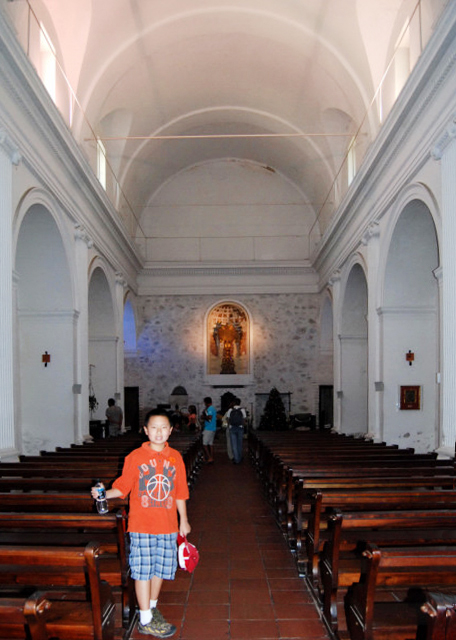
Nave de Basílica del Santísimo Sacramento (圣萨克拉门大教堂·主殿 01-03-2013) 
Lighthouse & Convent Ruins Built in the 1690s, a Blend of Portuguese, Spanish, & Christian Cultures for a Christian Monastery/Convent (灯塔与修道院遗址·建于17世纪90年代的基督教修道院/尼古庵,融合了葡萄牙语、西班牙语、基督教文化) 
Lighthouse Built in 1857 on the Site of the Convent's Ruins, Making It a Unique Blend of Historical & Architectural Interest (灯塔·1857年建在修道院遗址上,独特地融合了历史价值与建筑艺术) 
Monumento al Almirante Brown (海军上将布朗“坚毅”纪念碑)  Colonia Coast Guard HQ (殖民地海岸警卫队总部大楼) Colonia Coast Guard HQ (殖民地海岸警卫队总部大楼)
 Old Town Restaurant (老城餐厅) Old Town Restaurant (老城餐厅)
 Lunch @ Meson de la Plaza Restaurante Lunch @ Meson de la Plaza Restaurante
(广场客栈餐厅·午餐 01-03-2013)  Old Bridge Caballada (骑行老桥) Old Bridge Caballada (骑行老桥)
 Buquebus Ferry on Río de la Plata (普拉塔河上巴士渡船) Buquebus Ferry on Río de la Plata (普拉塔河上巴士渡船)
 Río de la Plata, the Widest in the World, w/ a Maximum Width of 220 Kilometres/140 Miles Río de la Plata, the Widest in the World, w/ a Maximum Width of 220 Kilometres/140 Miles
(普拉塔河·世上最宽的河流,最大宽度达220公里/140英里 01-03-2013)  Fishing on Río de la Plata (普拉塔河钓鱼) Fishing on Río de la Plata (普拉塔河钓鱼)
 Argentina in Distance across Río de la Plata Argentina in Distance across Río de la Plata
(普拉塔河对岸阿根廷)  Historic Quarter of the City of Colonia del Sacramento Listed as a UNESCO World Heritage Site in 1995 Historic Quarter of the City of Colonia del Sacramento Listed as a UNESCO World Heritage Site in 1995
(萨克拉门托殖民地·1995年被联合国教科文组织纳入《世界遗产名录》)  Montevideo Telecommunication Tower in Montevideo Montevideo Telecommunication Tower in Montevideo
(蒙得维的亚·电信大楼) 
Escollera Sarandíof Montevideo (蒙得维的亚·萨兰迪“光滑头花草”防波堤) 
Ciudad Vieja of Montevideo (蒙得维的亚·老城区) 
Parish Church of St. Francis of Assisi in Montevideo (蒙得维的亚·圣弗朗西斯“自由者”阿西西教区教堂)  Terminal Bldg in Port of Montevideo Terminal Bldg in Port of Montevideo
(蒙得维的亚港航站楼) 
Palacio Salvo in Montevideo, Featuring an Eclectic Architectural Style, Predominantly Italian Gothic, w/ Classic & Neo-Romantic Influences, Completed in 1928 (蒙得维的亚萨尔沃“完整”宫·建筑风格以意大利哥特式为主,兼具古典主义和新浪漫主义元素,1928年竣工)  Graf Spee Monument in the Montevideo Commercial Port Graf Spee Monument in the Montevideo Commercial Port
(蒙得维的亚商港——格拉夫·斯佩“长矛伯爵”海军上将号纪念碑)  Uruguayan Naval Fleet in Port of Montevideo Uruguayan Naval Fleet in Port of Montevideo
(乌拉圭海军舰队驻扎在蒙得维的亚港)
 Fishing Boats Laid Pell-Mell in Montevideo Harbor Fishing Boats Laid Pell-Mell in Montevideo Harbor
(蒙得维的亚港·横七竖八的渔船)  Rusty, Abandoned Ship in Montevideo Harbor Rusty, Abandoned Ship in Montevideo Harbor
(蒙得维的亚港·锈迹斑斑的废弃船只)
 Montevideo Oil Refinery (蒙得维的亚炼油厂) Montevideo Oil Refinery (蒙得维的亚炼油厂)

Native Palm Tree (本地棕榈树)  Dinner @ Star Princess Dinner @ Star Princess
(“公主·星辰”号游轮——晚餐 01-03-2013)  Sunset in Montevideo (蒙得维的亚·日落) Sunset in Montevideo (蒙得维的亚·日落)
Crosslinks(相关博文): South America(漂流南美洲)
小学四年级(4th Grade) |