2011-04-07
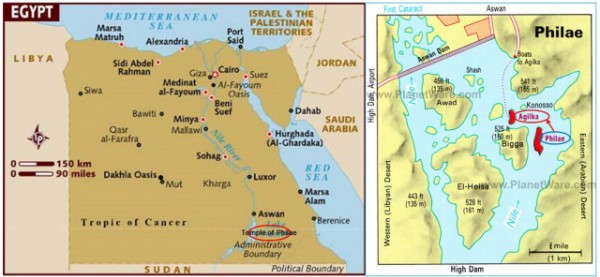
离开开罗“胜利者”,乘飞机不到两个钟头,便抵达阿斯旺“市场”——努比亚“黄金”腹地的心脏之城。据说努比亚乃世上最早的黑人文化,乃至整个人类的起源,传说中的伊甸“天堂”园也与之紧密相连。阿斯旺位于上埃及,是埃及的南大门、黑非洲的要塞,年降雨量几乎为零,堪称地球上最干燥的地区之一。大清早我们在纳赛尔“胜利”湖畔集结,轮渡早已守候,三桅帆船整装待发。远望桔黄色的努比亚村舍依山而立,水鸟紧随船后,在水面与湖岸间忙碌不息。 菲莱“挚爱”神庙被誉为“尼罗‘溪谷’河明珠”,献给古埃及的救世女神,融合了法老后期与古希腊罗马的建筑风格,是迄今保存最完好的三座托勒密“好战”王朝庙宇之一,1979年列入世界科教文组织《世界遗产名录》。它原在菲莱岛上,1962年因高坝修建面临淹没,1980年埃及政府下令将所有石刻与浮雕转移至500米/1,640英尺外的安吉里卡“口”岛,按原貌重建。我们从菲莱岛西侧登岸,最先映入眼帘的是内克塔内布“重生之魂”二世祭堂——古埃及最后一位纯血统法老的遗迹。不远处便是哈德良“富有”凯旋门,门上刻有古埃及最后一批象形文字,时间为公元394年8月24日。图拉真“坚定”亭在岛南侧,14根希腊式廊柱支撑着无顶建筑。东侧的哈索尔“天空之神”神殿,贝斯“守护神”(Bes)浮雕堪称最有艺术魅力的作品。 菲莱神殿坐落在罗马式广场上,两排高大的希腊式廊柱护驾。第一道塔门由托勒密二世打造,门上浮雕描绘了救世女神、复仇之神与爱之女神观看国王英勇作战的场景。伊西斯“救世女神”神庙中的系列雕刻,贯穿了古埃及最经典的神话——奥西里斯“冥界之神”被弟弟赛特“混乱之神”设计杀害,伊西斯历尽艰辛寻回丈夫遗体,却在复活之际再次被赛特分尸。她再度追寻,找回13块骨骸,却唯独缺失了生殖器。她用咒语使奥西里斯短暂复活,并在怀孕后永别尘世。儿子荷鲁斯“复仇之神”降生,终为父报仇。菲莱神庙,既是敬拜伊西斯与奥西里斯的圣地,也是荷鲁斯的殿堂——对此,我们深有感触。3,000年后,一个七岁的孩子在异国的石头上,替她记住了那场漫长的寻找。而那座被搬迁过、被重建过、被洪水威胁过的神庙,也因此获得了一次新的聆听——来自一个比所有神话都更年轻的耳朵。 Today in History(历史上的今天): 2011: 埃及尼罗河游轮(Cruising on the Nile, Egypt)
2011: 埃及阿布辛贝双神庙(Twin Temples of Abu Simbel, Egypt)  Aswan Dam Regulating the Flow of the Nile River Aswan Dam Regulating the Flow of the Nile River
(阿斯旺坝·调节尼罗“溪谷”河的流量)
 Ferry Station @ Qubbet el-Hawa Opposite Aswan Ferry Station @ Qubbet el-Hawa Opposite Aswan
(轮渡站——位于阿斯旺对面的库贝特·哈瓦“风之穹顶”遗迹)

Qubbet el-Hawa, a Resting Place, Served as the Necropolis of Ancient Nobles & Priests from the Old & Middle Kingdoms (库贝特·哈瓦“安息之地”——古王国和中王国时期贵族和祭司的陵墓)
 Ferry Station against the Vibrant Nubian Villages Ferry Station against the Vibrant Nubian Villages
(渡轮·背依色彩缤纷的努比亚村庄 04-07-2011)  Philae Island, the Original Place about 500 Meters/0.3 Miles South of the Artificial Agilika Island in Aswan Philae Island, the Original Place about 500 Meters/0.3 Miles South of the Artificial Agilika Island in Aswan
(阿斯旺菲莱神庙原址·安吉里卡人工岛新址500米/0.3英里以南)  500 Meters/1,640 Ft apart from Old Philae Island to New Agilika Island 500 Meters/1,640 Ft apart from Old Philae Island to New Agilika Island
(新旧菲莱神庙·相距500米/1640英尺 04-07-2011)
 Agilika Island or the New Philae, about 500 Meters/0.3 Miles North of the Original Philae Island Agilika Island or the New Philae, about 500 Meters/0.3 Miles North of the Original Philae Island
(安吉里卡岛·菲莱神庙旧址500米/0.3英里以北)  Philae Temple Complex Dedicated to Isis, Osiris, & Horus Philae Temple Complex Dedicated to Isis, Osiris, & Horus
(菲莱神庙建筑群·供奉伊西斯、奥西里斯和荷鲁斯“复仇之神”)  Philae Island, a Revered Religious Site for Millennia Philae Island, a Revered Religious Site for Millennia
(菲莱岛·几千年来备受尊崇的宗教圣地)
 Entrance to the island of Philae w/ the Vestibule of Nectanebo I Entrance to the island of Philae w/ the Vestibule of Nectanebo I
(菲莱岛的入口·内克塔内布一世前厅)
 Access to the Temple of Isis, Built During Nectanebo I's Rule from 380 to 362 B.C. from Lake Nasser via a Double Colonnade Access to the Temple of Isis, Built During Nectanebo I's Rule from 380 to 362 B.C. from Lake Nasser via a Double Colonnade
(双柱廊大门·从纳赛尔湖进入伊西斯神庙,该神庙建于公元前380—362年间内克塔内布一世统治时期)
 Kiosk of Nectanebo I, the Birth House or Mammisi Dedicated to Isis in Honor of the Birth of Her Son Horus Kiosk of Nectanebo I, the Birth House or Mammisi Dedicated to Isis in Honor of the Birth of Her Son Horus
(内克塔内布“重生之魂”一世祭堂·献给伊西斯以纪念荷鲁斯出生的诞生殿 04-07-2011)  Vestibule of Kiosk of Nectanebo I w/ 14 Stone Pillars, the Oldest Surviving Structure in the Philae Temple Complex Vestibule of Kiosk of Nectanebo I w/ 14 Stone Pillars, the Oldest Surviving Structure in the Philae Temple Complex
(前厅含有14根石柱的奈克塔内布一世祭堂·菲莱神庙建筑群中现存最古老的建筑 04-07-2011)
 Philae Temple Dedicated to Isis, Osiris, & Horus Philae Temple Dedicated to Isis, Osiris, & Horus
(菲莱神庙·救世女神、冥界之神、复仇之神三口之家祭堂)
 Philae Temple, the Premier Cult Center of Isis, the Ancient Egyptian Goddess of Magic, Motherhood, & Healing Philae Temple, the Premier Cult Center of Isis, the Ancient Egyptian Goddess of Magic, Motherhood, & Healing
(菲莱神庙·古埃及掌管魔法、母性与治愈的女神——伊西斯的主要崇拜中心 04-07-2011)  1st Pylon, Featuring 2 Large, Tapering Towers w/ a Gateway in the Center, Deep grooves on Either Side of the Portal to Support Flagpoles 1st Pylon, Featuring 2 Large, Tapering Towers w/ a Gateway in the Center, Deep grooves on Either Side of the Portal to Support Flagpoles
(第一塔门·由两座高大且向上收窄的塔楼组成,中间设有入口。入口两侧的深槽旨在支撑旗杆 04-07-2011) 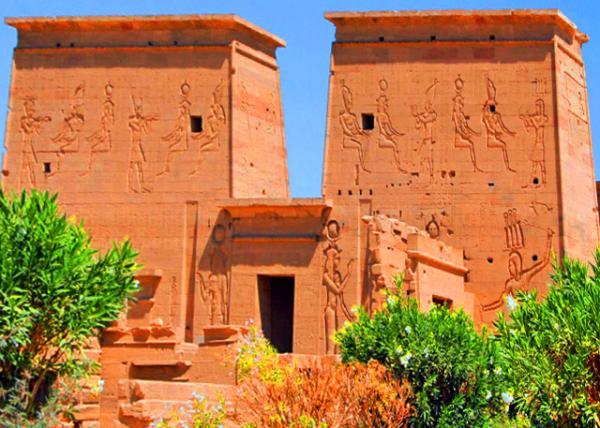 1st Pylon, the Monumental Entrance to the Temple of Isis 1st Pylon, the Monumental Entrance to the Temple of Isis
(第一塔门·伊西斯神庙宏伟的入口)
 Temple of Isis, Bringing Osiris Back to Life, Giving Birth to Horus, & Mummifying Osiris after His Death Temple of Isis, Bringing Osiris Back to Life, Giving Birth to Horus, & Mummifying Osiris after His Death
(伊西斯神庙·复活奥西里斯、生下荷鲁斯,以及奥西里斯死后将其制成木乃伊 04-07-2011)
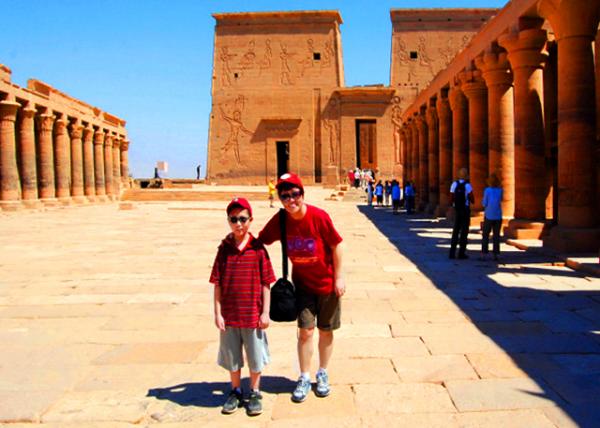 Courtyard Flanked by Colonnades Courtyard Flanked by Colonnades
(庭院两侧建有柱廊厅 04-06-2011)
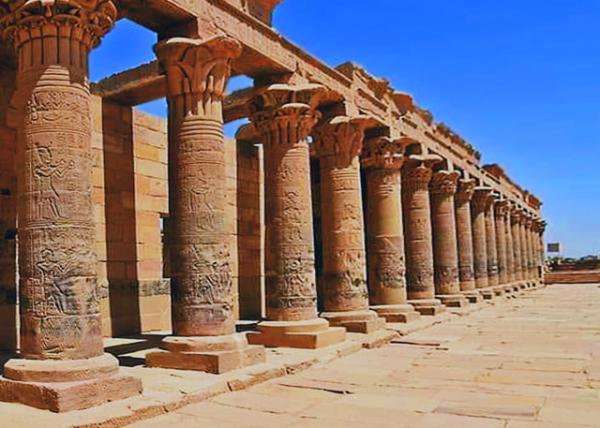 32 Columns w/ Carvings of Tiberius Offering Gifts to the Gods 32 Columns w/ Carvings of Tiberius Offering Gifts to the Gods
(32根石柱·第二位罗马皇帝提比略“台伯河”献给诸神雕刻)
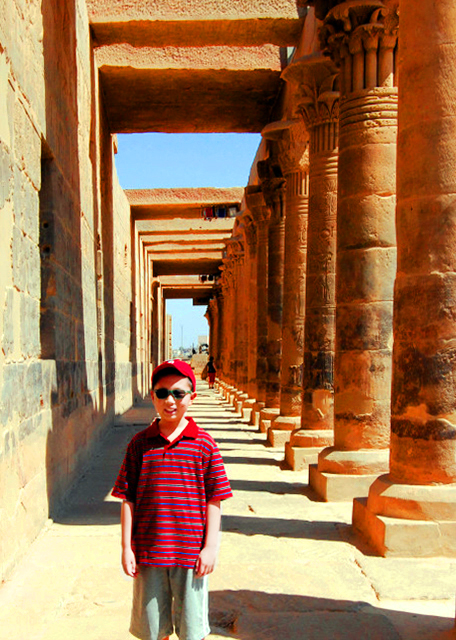
Eastern Colonnade in the Outer or the Forecourt (外侧或前院的东部柱廊 04-06-2011) 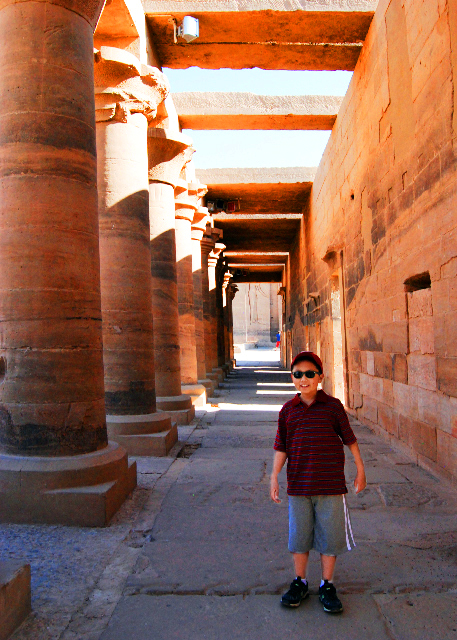
Western Colonnade in the Outer or the Forecourt (外侧或前院的西部柱廊 04-06-2011)  Colonnaded Atrium, Beautifully Preserved Greco-Roman & Egyptian Architecture Colonnaded Atrium, Beautifully Preserved Greco-Roman & Egyptian Architecture
(柱廊中庭·保存完好的希腊罗马和埃及建筑风格 04-07-2011)
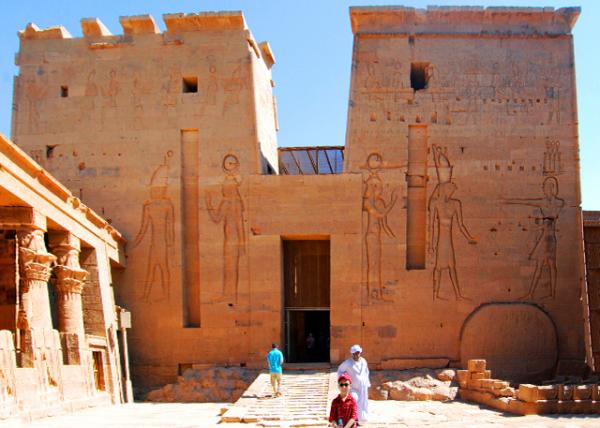 2nd Pylon of Temple of Isis w/ Its Monumental Reliefs of Ptolemy XII Smiting Enemies, & a Well-preserved Granite Stele Carved by Ptolemy VI Philometor & Cleopatra II 2nd Pylon of Temple of Isis w/ Its Monumental Reliefs of Ptolemy XII Smiting Enemies, & a Well-preserved Granite Stele Carved by Ptolemy VI Philometor & Cleopatra II
(伊西斯神庙第二塔门·托勒密十二世击败敌人的巨型浮雕,以及由托勒密六世、菲洛墨托“爱其母亲”和克利奥帕特拉“父亲的荣耀”二世雕刻的保存完好的花岗岩石碑 04-07-2011) 
Relief @ the 2nd Pylon of The Temple of Isis (伊西斯神庙·第二塔门浮雕)

Ptolemy XII Dedicating the Slaughtered Sacrificial Animals to Horus and Hathor (托勒密12世将屠宰的牺牲动物献给荷鲁斯和哈索尔神殿)

Vestibule w/ 8 Columns, Originally Separated from the Court by Screens between the Columns on the Front (前厅·原用8根柱子作屏风与庭院隔开 04-06-2011)  Hypostyl Hall (柱厅) Hypostyl Hall (柱厅)

A Stone Pillar w/ Hieroglyphics (刻有象形文字的石柱 04-06-2011)  Holy of Holies, the Dwelling Place of the Divine w/ a Powerful, Sacred atmosphere Holy of Holies, the Dwelling Place of the Divine w/ a Powerful, Sacred atmosphere
(至圣所·拥有强大而神圣氛围的神之居所 04-06-2011)

Cartouches @ Holy of Holies (至圣所·涡卷纹王室徽章 04-06-2011)  Hieroglyphs w/ Horus Surrounded by Lotus Flowers Hieroglyphs w/ Horus Surrounded by Lotus Flowers
(象形文字与莲花环绕的荷鲁斯)
 Reliefs in the Sanctuary @ Temple of Isis Reliefs in the Sanctuary @ Temple of Isis
(伊西斯神庙·圣殿内浮雕)
 Gateway of Hadrian, the Entrance to a Sacred Space Gateway of Hadrian, the Entrance to a Sacred Space
(哈德良之门·通往圣地的入口)
 Temple of Hathor, Featuring a Colonnaded Kiosk w/ 14 Pillars, a Pronaos, & a Terrace Overlooking the Nile Temple of Hathor, Featuring a Colonnaded Kiosk w/ 14 Pillars, a Pronaos, & a Terrace Overlooking the Nile
(哈索尔神殿·14根饰有花卉柱头的柱廊亭、前厅门廊和可欣赏尼罗河景色的露台 04-06-2011)
 Grinding Stone @ Temple of Hathor Grinding Stone @ Temple of Hathor
(哈索尔神殿·磨石)  Gate of Diocletian, a Freestanding Triumphal Arch Dedicated to Emperor Diocletian Gate of Diocletian, a Freestanding Triumphal Arch Dedicated to Emperor Diocletian
(戴克里先“天神荣耀”门·独立的凯旋门,献给戴克里先皇帝)
 Temple of Augustus Signifying the Roman Presence & Influence on Egyptian Religious Practices Temple of Augustus Signifying the Roman Presence & Influence on Egyptian Religious Practices
(奥古斯都“罗马第一大帝”寺庙·标志着罗马人对埃及宗教习俗的影响)

Trajan's Kiosk, Featuring the 14 Greek Pillars w/ Intricate Floral Capitals (图拉真亭·14根带有花饰柱头的希腊柱子 04-06-2011)  Trajan's Kiosk as Pharaoh's Bed, a Ceremonial Landing Place for the Temple Complex Trajan's Kiosk as Pharaoh's Bed, a Ceremonial Landing Place for the Temple Complex
(图拉真亭“法老之床”·神庙建筑群的仪式登陆点) 
Greek Columnar Structure of Trajan's Kiosk (图拉真亭·希腊柱状结构 04-06-2011)  Lotus Capital, a Symbol of Upper Egypt Lotus Capital, a Symbol of Upper Egypt
(莲花柱头·上埃及的象征)  Papyrus Capital, a Symbol of Lower Egypt Papyrus Capital, a Symbol of Lower Egypt
(纸莎草形柱头·下埃及的象征)  Papyrus Capital, a Symbol of Lower Egypt Papyrus Capital, a Symbol of Lower Egypt
(纸莎草形柱头·下埃及的象征)  Column Stigma in Nature-inspired Decorations, Representing the "Primeval Waters of Nun" Column Stigma in Nature-inspired Decorations, Representing the "Primeval Waters of Nun"
(柱头·大自然的装饰象征着努恩“原始之水”)  Papyrus of the Column Chapiter (纸莎草柱头) Papyrus of the Column Chapiter (纸莎草柱头)
 Lotus of the Necking (莲花柱头) Lotus of the Necking (莲花柱头)
 Lotus of the Column Head (莲花柱头) Lotus of the Column Head (莲花柱头)

Egyptian Gecko, Tarentola annularis (埃及环纹壁虎)  Hieroglyphs & Cartouches (象形文字与王室徽章) Hieroglyphs & Cartouches (象形文字与王室徽章)
 Scarab Beetle, a Symbol of Rebirth & Resurrection Scarab Beetle, a Symbol of Rebirth & Resurrection
(圣甲虫·重生和复活的象征)  Horus Surrounded by Lotus Flowers (被莲花环绕的荷鲁斯) Horus Surrounded by Lotus Flowers (被莲花环绕的荷鲁斯)
 Street Vendors in Aswan (阿斯旺·地摊 04-06-2011) Street Vendors in Aswan (阿斯旺·地摊 04-06-2011)
 Lake Nasser Formed by the Aswan High Dam Lake Nasser Formed by the Aswan High Dam
(因阿斯旺高坝而水位提高的纳赛尔湖)
Crosslinks(相关博文): 埃及(Egypt) Africa (漫游非洲) 小学二年级(2nd Grade)
|