2013-12-14
【Aiden in English】
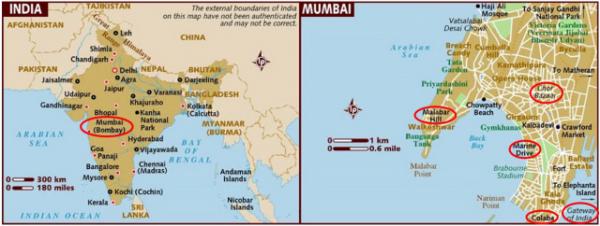
Finally, after spending more than two days crossing the Arabian Sea from Oman, we arrived in Mumbai, India. As for its beautiful bay, Mumbai, formerly known as Bombay, was the Indian financial center, making the city a melting pot of people and cultures. On the one hand, colonial architecture incorporated elements such asd German gables, Dutch gambrel roofs, Swiss timbering, Romanesque arches, and Tudor casements, along with traditional Indian features. The UNESCO World Heritage Site of Victoria Terminus was built in the Gothic Revival Style, and it was the former headquarters of the Bombay University. On the other hand, cows were strolling in the bustling emporium, where sugarcane juice was freshly offered with a unique flavor and a pungent smell. As I exited the cruise ship, I first noticed the pollution. Despite the clear and tranquil sky, the city was shrouded in a heavy, hazy fog or orange smog. The pollution shaded out the sun and made all symbolic architecture fade into a clog. The second thing that stood out was the hundreds of people carrying lunchboxes. They were well-known as Dabbawalas, similar to the pizza delivery service in Mumbai. Instead of pizza, it's rice and curry vegetables. The Dabbawallas traveled on foot, by bicycle, by train, and by bus to deliver lunch to people working in office buildings at noon. In America, they could drive a car around to deliver lunches. It was amazing how the Dabbawallas hardly missed the boxes over a century, since most of them looked exactly the same to me. The third thing that stunned me was Dhobi Ghat, the open-air Laundromat in Mahalaxmi, where locals would pay to have their laundry hand-washed, hung outdoors to dry, and ironed on a fire-stove. This had lasted for hundreds of thousands of years in their tradition. The male-only washers called Dhobiwalas sweated all over their bodies, and they seemed to be smacking the dirty clothes against a concrete basin filled with water. I couldn't even imagine how exhausted the workers must feel, and I felt even worse when my eyes fell on how much more they had to do for the rest of the day. Piles and piles of clothes went on as far as I could see. It would take at least a week or a month to finish. In addition, I wondered how they could tell whose clothes belonged to whom. Hundreds of racks stood on the ground, filled with clean shirts, pants, saris, and kurtas, but no labels were in sight. That was a question I will never know the answer to. Mumbai not only inherited its ancient tradition but flourished under various European influences throughout history. 【红霞译】
离开阿曼之后,经过两天多阿拉伯海航行,我们终于抵达印度孟买“母亲”。
久负“美丽海湾”盛名的孟买是印度共和国金融中心,虽然名字历经变化,但一直不失为各民族同胞及其多元性传统文化的大熔炉。一方面,当地经典建筑渗透了浓重的殖民色彩,德国三角墙、荷兰复折式屋顶、瑞士木框撑架、中世纪圆窗拱门、英国都铎窗扉等西洋流派横贯城区大街小巷,联合国教科文组织《世界遗产名录·维多利亚“胜利女王”火车站》再现了典型的哥特式复兴艺术,孟买大学同样将这种古典主义发挥得淋漓尽致;另一方面,母牛大摇大摆地漫步于人声鼎沸的繁华商业闹区,邻家新鲜榨出的甘蔗汁香甜可口,保你百味俱全。
刚一走下游轮,孟买城市污染首先引起我高度注意,晴朗的天空挂上浓重的橙雾,雾霾遮日障目,所有著名建筑物因此而变得模糊不清,无一幸免。
其次,数以百计手提各色饭包的达巴瓦拉“送饭员”,这种饭盒快递格外招人眼球,他们每天将新鲜烹饪的午餐便当从各预约人家及时运送到写字楼上班族手中,犹如比萨饼店外卖,只不过他们所送的是大米饭咖哩菜,不及美国佬可以开车送货,饭盒人多只能以徒步、骑单车、坐公交或乘火车方式完成这种登门服务。令我惊讶的是,一个多世纪以来饭盒人午餐送饭风雨无阻,尽管绝大多数饭包外表看上去没有什么特别不同,但他们几乎从不出错。
最后震撼我认知的是露天贫民洗衣场,在这里所有衣物都用手洗,自然晾干后再用火炉加热的铁熨斗人工烫平,并叠好送归顾客。位于玛哈拉克希米“财富女神”的千人洗衣场历史悠久,工艺传统,几千年来多比瓦拉“传统洗衣工”清一色男士挥汗如雨,没完没了地站在水泥搓衣板上振臂摔打脏衣脏物,手头上的活计尚未干完,后续工作又堆积如山,也许再需花上一个星期甚至一个月的时间才能告一段落。成百上千个晾衣杆拔地而起,挂满了洗净的衬衫、裤子、长巾和礼服袍褂,而上面连根标记都没有,他们怎么区分混杂一块的各家衣物,恐怕我这辈子也找不出答案。 显而易见,孟买不仅有机地借鉴了欧洲文化,而且还执着地继承了民族衣钵,最终创造出具有印度特色的繁荣昌盛。
Today in History(历史上的今天): 2010: 等价交换(Exchange)  Mumbai Harbour, the Gateway to India Mumbai Harbour, the Gateway to India
(孟买港·印度的门户)
 Gateway of India, a Symbol of Conquest & Colonisation in the Architecture of Marathas w/ a Blend of Hindu Traditions, Regional Craftsmanship, & Functional Designs, Completed in 1924 Gateway of India, a Symbol of Conquest & Colonisation in the Architecture of Marathas w/ a Blend of Hindu Traditions, Regional Craftsmanship, & Functional Designs, Completed in 1924
(印度门·征服与殖民化的象征,建于1924年、融合了印度教传统、区域工艺和实用设计的马拉地风格 12-14-2013)  Taj Mahal Palace, a Prime Example of Indo-Saracenic Architecture, Opened in 1903 Taj Mahal Palace, a Prime Example of Indo-Saracenic Architecture, Opened in 1903
(泰姬陵“王冠”酒店·印度—撒拉逊“穆斯林”式建筑的典范,于1903年开业 12-14-2013)  Victoria Train Station in the Late 19th-Century Indo-Saracenic & Victorian Gothic Revival Victoria Train Station in the Late 19th-Century Indo-Saracenic & Victorian Gothic Revival
(维多利亚火车站·19世纪晚期印度-撒拉逊与维多利亚哥特复兴式) 
The Terminal @ Victoria Train Station (维多利亚火车站·站台) 
Turret of Victoria Train Station (维多利亚火车站·角楼)
 Bombay High Court in the Late 19th-Century Victorian & Art Deco Ensemble Bombay High Court in the Late 19th-Century Victorian & Art Deco Ensemble
(孟买高等法院·19世纪晚期维多利亚哥特式和装饰艺术风格)  Bombay High Court, a Reminder of India's Colonial History Bombay High Court, a Reminder of India's Colonial History
(孟买高等法院·印度殖民历史的见证)  Rajabai Clock Tower of Mumbai Univ, Housing the Library in the Late 19th-Century Venetian & Gothic Revival Rajabai Clock Tower of Mumbai Univ, Housing the Library in the Late 19th-Century Venetian & Gothic Revival
(孟买大学钟楼·大学图书馆的所在地,19世纪晚期威尼斯和哥特复兴式)  Oriental Bldg in the Late 19th-Century Gothic Revival Oriental Bldg in the Late 19th-Century Gothic Revival
(东方大厦·19世纪晚期哥特复兴式)  Royal Bombay Yacht Club & Statue of Shivaji @ Apollo Bunder Royal Bombay Yacht Club & Statue of Shivaji @ Apollo Bunder
(皇家孟买游艇俱乐部与阿波罗“太阳神”码头·希瓦吉“湿婆王公”雕像 12-14-2013) 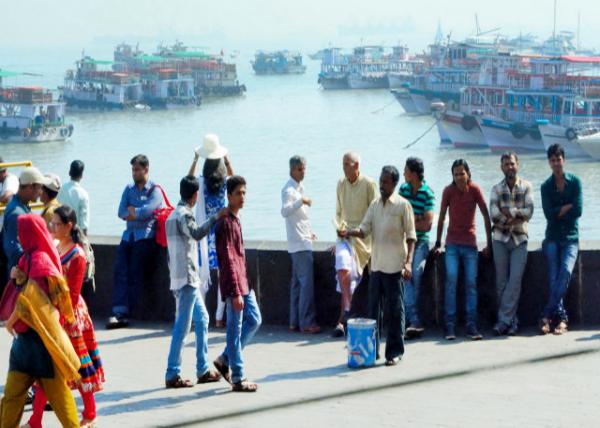 Apollo Bunder (阿波罗码头) Apollo Bunder (阿波罗码头)
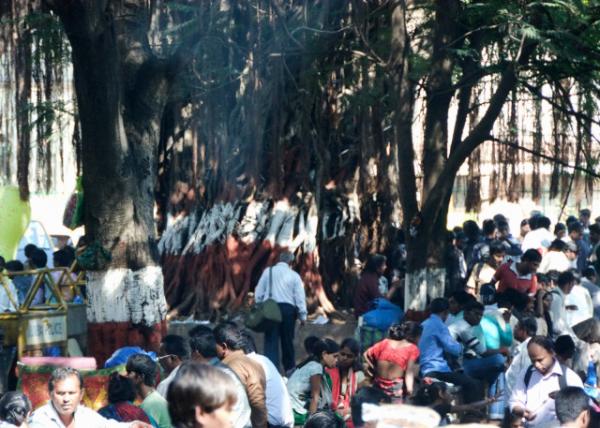 Ferry Commuters @ Apollo Bundar Ferry Commuters @ Apollo Bundar
(阿波罗码头·等船上班的乘客)
 Mumbai Municipal Corporation Bldg in the late 19th-Century Venetian Gothic & Indo-Saracenic (市政公司大厦·19世纪晚期威尼斯哥特式与印度-撒拉逊式) Mumbai Municipal Corporation Bldg in the late 19th-Century Venetian Gothic & Indo-Saracenic (市政公司大厦·19世纪晚期威尼斯哥特式与印度-撒拉逊式)
 Asiatic Society of Mumbai, Historical Library & Museum Asiatic Society of Mumbai, Historical Library & Museum
(孟买亚洲学会·历史图书馆和博物馆)
 Mansion of Vijay Mallya, King of Good Times Mansion of Vijay Mallya, King of Good Times
(“美好时光之王”维杰·马利亚的顶层豪华公寓) 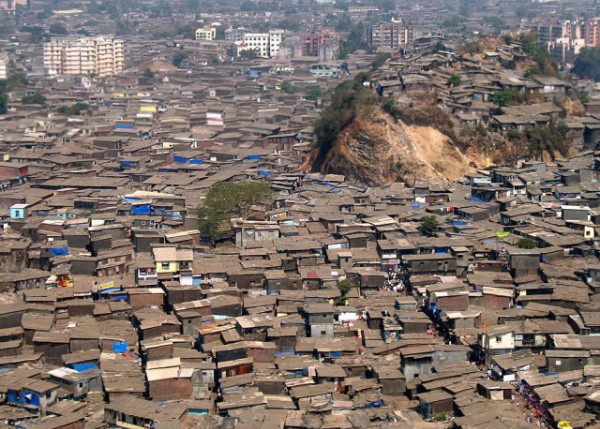
Slumdog Millionaire (贫民窟的百万富翁) 
Prince of Wales Museum of Western India in the Early 20th-Century Victorian Gothic and Art Deco Ensembles of Mumbai (西印度威尔士亲王博物馆·20世纪初期维多利亚哥特式和装饰艺术风格建筑群 12-14-2013) 
Main Lobby @ Prince of Wales Museum of Western India (西印度威尔士亲王博物馆·主厅)  Sculpture Gallery @ Prince of Wales Museum of Western India Sculpture Gallery @ Prince of Wales Museum of Western India
(西印度威尔士亲王博物馆·雕塑馆 12-14-2013)  Siddhivinayak Temple, a Symbol of Faith, Hope, & Devotion for Millions of People Siddhivinayak Temple, a Symbol of Faith, Hope, & Devotion for Millions of People
(悉提维纳亚克“象头”神庙·数百万人的信仰、希望和虔诚的象征)
 Iskon Temple (国际奎师那知觉协会神庙) Iskon Temple (国际奎师那知觉协会神庙)
 Holy Name Cathedral (圣名大教堂) Holy Name Cathedral (圣名大教堂)
 Haji-Ali Daragh (哈吉·阿里“完成麦加朝觐·圣人”陵墓) Haji-Ali Daragh (哈吉·阿里“完成麦加朝觐·圣人”陵墓)
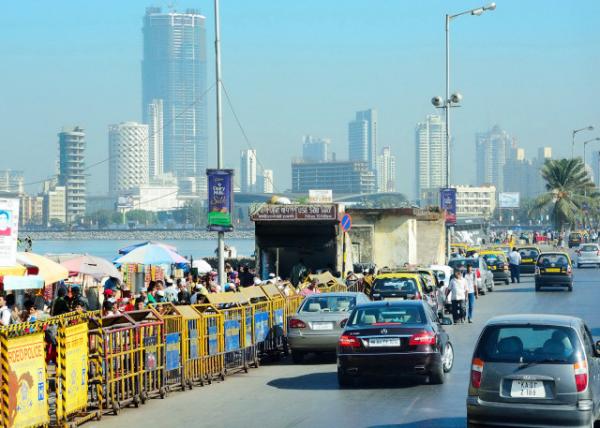 Haji-Ali Daragh Blvd (哈吉·阿里陵墓大道) Haji-Ali Daragh Blvd (哈吉·阿里陵墓大道)
 Sri Sri Radha Gopinath Expanded beyond Anyone's Wildest Dreams Sri Sri Radha Gopinath Expanded beyond Anyone's Wildest Dreams
(斯里·斯里·拉达·戈皮纳斯“祈祷·崇拜·主奎师那·牧牛人之主”寺庙——超越任何人最疯狂的梦想 12-14-2013)
 Meditation Worship @ Sri Sri Radha Gopinath Meditation Worship @ Sri Sri Radha Gopinath
(斯里斯里拉达戈皮纳斯神庙·思祷) 
Hindu Door @ Sri Sri Radha Gopinath (斯里斯里拉达戈皮纳斯神庙·印度教大门)
 Murals @ Sri Sri Radha Gopinath Murals @ Sri Sri Radha Gopinath
(斯里斯里拉达戈皮纳斯神庙·壁画 12-14-2013) 
Coat of Arm @ Sri Sri Radha Gopinath (斯里斯里拉达戈皮纳斯神庙·盾徽)  Mani Bhavan Museum, the Former Residence of Mahatma Gandhi Served as His Mumbai Headquarters from 1917 to 1934 Mani Bhavan Museum, the Former Residence of Mahatma Gandhi Served as His Mumbai Headquarters from 1917 to 1934
(玛尼·巴凡“珠宝屋”博物馆——圣雄甘地的故居,1917—1934年间从事政治活动的孟买总部 12-14-2013)  Mani Bhavan Gandhi Sangrahalaya, a Residence to Gandhi Launched the Exceptional Non-Cooperation, Satyagraha, Swadeshi, Khadi, Khilafat, & Home Rule movement Mani Bhavan Gandhi Sangrahalaya, a Residence to Gandhi Launched the Exceptional Non-Cooperation, Satyagraha, Swadeshi, Khadi, Khilafat, & Home Rule movement
(圣雄甘地纪念馆·由此住所发起了非凡的不合作、非暴力不合作、自由主义、卡迪布“手工织布”、哈里发“继承”和地方自治运动 12-14-2013)  Mani Bhavan Museum Relief Of Mahatma Gandhi Mani Bhavan Museum Relief Of Mahatma Gandhi
(玛尼·巴万博物馆——圣雄甘地浮雕 12-14-2013)
 Natl Gallery of Modern Art (国家现代美术馆) Natl Gallery of Modern Art (国家现代美术馆)

Flora Fountain (植物群喷泉) 
Statue of Patriots (爱国者雕像)
 A collecting Dabbawala, usually on a bicycle, collects Dabbas either from a worker's home or from Dabba makers. A collecting Dabbawala, usually on a bicycle, collects Dabbas either from a worker's home or from Dabba makers.
(通常骑自行车从上班族家中或餐馆那里收集便当盒) 
Dabbawalla (饭盒快递) 
The Lunchbox (便当袋)  Dhobi Ghat @ Mahalaxmi Dhobi Ghat @ Mahalaxmi
(玛哈拉克希米·千人洗衣场 12-14-2025) 
All Hand-Wash Men @ Dhobi Ghat (玛哈拉克希米·全部是男性手洗工)  Queen's Necklace, Marine Drive (女王项链·海滨大道) Queen's Necklace, Marine Drive (女王项链·海滨大道)
 Rush Hours (尖峰时刻) Rush Hours (尖峰时刻)
 Public Transportation (公共交通 12-14-2013) Public Transportation (公共交通 12-14-2013)
 Mumbai's Iconic Horse Carriages Mumbai's Iconic Horse Carriages
(孟买标志性马车 12-14-2013)
 Carrying on the Head (头载货物) Carrying on the Head (头载货物)
 Traffic Police on Duty (交警当班) Traffic Police on Duty (交警当班)
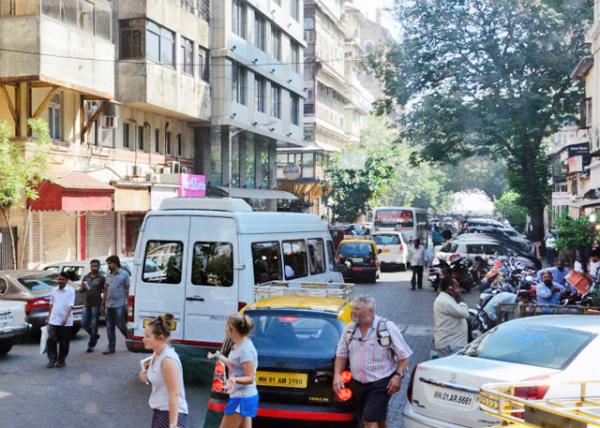 Jay Walk @ Colaba Causeway (科拉巴堤道·乱穿马路) Jay Walk @ Colaba Causeway (科拉巴堤道·乱穿马路)
 Colaba Causeway, Shopping Centres Colaba Causeway, Shopping Centres
(科拉巴堤道·购物中心)
 Chor Bazaar, “You can buy what you have lost in Mumbai back from this flea market" Chor Bazaar, “You can buy what you have lost in Mumbai back from this flea market"
(乔尔“盗贼”市场·如果你在孟买丢了东西,你可以从这个自由市场买回来)
 Street Fruit-Veggie Stand (果蔬地摊) Street Fruit-Veggie Stand (果蔬地摊)
 Street Fresh Sugarcane Press (榨甘蔗地摊) Street Fresh Sugarcane Press (榨甘蔗地摊)
 Folkloric Dancing Under the Stars (星空下民族舞蹈) Folkloric Dancing Under the Stars (星空下民族舞蹈)
 Sari-Kurta Dressed Locals Sari-Kurta Dressed Locals
(身穿长巾宽松衬衫的当地人)  Teacher & Her Pupils (老师与小学生们) Teacher & Her Pupils (老师与小学生们)
 Morning Shower on the Street (街头早浴) Morning Shower on the Street (街头早浴)

Street Mendicants (街头托钵僧)  Panhandlers & Vagrants (乞丐与流浪者) Panhandlers & Vagrants (乞丐与流浪者)
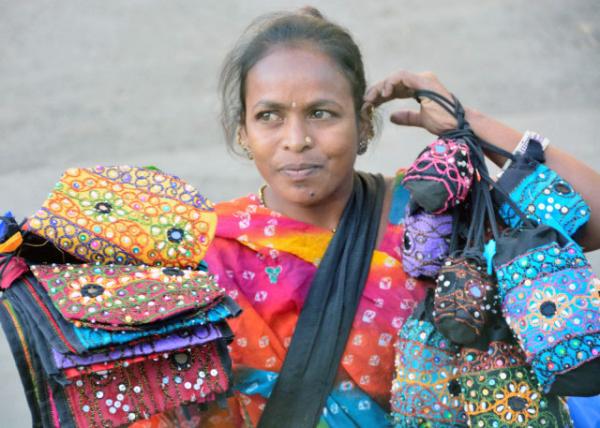
Street Vendor Mom (沿街推销手工品的母亲) 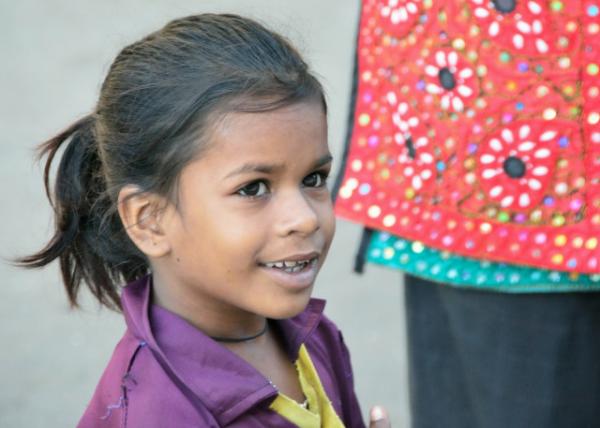
Street Vendor Lady's Daughter (穷人的孩子早当家) 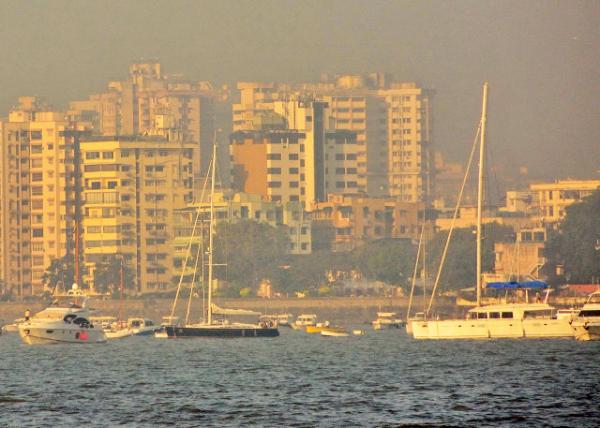
Haze over Mumbai Downtown (孟买市中心烟霞)
 Butcher's Is, Artificially Created During the Late 19th Century through the Reclamation of Land in the Mumbai Harbour Butcher's Is, Artificially Created During the Late 19th Century through the Reclamation of Land in the Mumbai Harbour
(屠夫岛·19世纪末孟买港填海造地的人造岛屿)  Middle Ground Coastal Battery (中区海岸炮台) Middle Ground Coastal Battery (中区海岸炮台)
 Fishing Boat against Nautica Oceania Fishing Boat against Nautica Oceania
(渔船与背后的“大海·航海”号游轮)
 Showered Man (淋浴者) Showered Man (淋浴者)
 Dinner @ Toscana Dining of Nautica Oceania Dinner @ Toscana Dining of Nautica Oceania
(“大洋·航海”号游轮意大利餐厅——晚餐 12-14-2013) 
Dinner @ Toscana Dining of Nautica Oceania (“大洋·航海”号游轮意大利餐厅·晚餐 12-14-2013) Crosslinks(相关博文): India(出游印度)
Across the Indian Ocean(穿越印度洋) |