2015-06-19
【Aiden in English】
It's hilarious how some things can start again after being destroyed. At times, it becomes impossible to exist anymore. What goes around comes around, and the return can be excellent. In 1650 B.C., a massive earthquake struck Santorini in Greece. The island would never be the same. This most beguiling island of the Cyclades was sitting on two clashing continental plates. One earthquake-triggered tsunami and an eruption from an active volcano shook the island. One-half of the island rose, while a large chunk became a very odd-looking seabed. It created a signature caldera and two smoldering islands situated in the center. Of course, the crater remained on the surface, for the land around it magically and miraculously missed the volcano. The dark beach is directly a result of the volcanic activity along the coastline, in contrast to the azure sea with its onyx-colored sand. Following the entire event, the volcano has remained active to the present day. That's what I call stubborn, which sounds similar to some people trying to win the lottery. The eruption also gave birth to a sheet of very fertile volcanic ash. The ash made exotic plants grow. When settlers came, they farmed a highly lush island of vegetation. Unlike any other part of the Mediterranean Sea, it provided terrific scenic views, with whitewashed villages perched on the volcanic walls. The island was sheathed with a sharp cliff that dropped steeply into the tranquil Caldera Bay. The people of Santorini also followed a very Chinese way of cultivating land, which involved planting in a stairway or terrace style. The farmland made up most of the area, with flower-filled verandas. Santorini had no freshwater, and that factor crippled the civilization. In 1956, a colossal earthquake moved the river flowing through the island. The river had meant life. Now, the people stuck in Santorini are also stuck with having tourists pay to use the restroom. Some islanders were even afraid to invite friends into their houses. I suppose the locals go looking to cover a lot of ground. Water is probably the most considerable imported good; a drop of water might as well be a drop of wine. These sides evened out to a pretty lovely island. The island got a second chance. As we all know, if you beat an orange to a pulp without removing the seeds, it will never grow back or produce another orange. Yet apparently, there is a law in physics that if a volcano blows up an island multiple times, it becomes prettier and more fertile. It defies a crucial law in the universe. The law is based on a concept called "entropy," which means that everything tends to deteriorate over time. At the finish line or at different points along the way, all of existence will disappear, for example, Pompeii in Italy. When Mt. Vesuvius erupted, Pompeii was destroyed and never rebuilt. At present, it appears to be just a replica, and Santorini would never become a bustling metropolis. Our sun only has another 5 billion (give or take a few million) years to burn. Light can be sucked into a black hole. Everything that starts has to stop. Thus, there's room for a few acceptances, such as Santorini, but only far. The universe will disappear and be replaced by something even more bizarre and inexplicable, and apparently, so does this entry. Santorini lasted through earthquakes, eruptions, and time. Soon, though, I'm sure there will be something that the island has to fight for its survival. 【红霞译】
生命轮回着实饶有兴趣,有些东西从此化为乌有,有些事情一去不再复返,但善有善报,恶有恶报,一旦逃过劫难,未来会更加美好。
公元前1650年,希腊圣托里尼“和平”岛发生了强烈地震,从此旧貌换新颜,这个堪称环状群岛最漂亮的海岛地处欧非两块冲突的地理板块之间,地震引起海啸,火山爆发带动地壳变迁,一半火山升出水面,剩余的大片怪石嶙峋并构成地貌迥异的海底世界。圣托里尼岛皓若一个盛满海水的巨型招牌火山口,两个后来形成的火山岛位居其中,与周围峻山奇岭遥遥相望;同时,海岸线一带火山活动成就了漂亮的黑色沙滩,玛瑙般的沙砾与碧蓝的天空形成鲜明对比。
圣托里尼岛几经大自然洗礼,直到现在其火山活动仍然十分活跃,火山简直太过固执,好像跟赌棍没啥两样,火山喷发释放出大量火山灰,把土壤滋润得相当肥沃,有助于奇花异草茁壮生长,难怪当年父老乡亲一踏上这片土地,无不为之欣然倾倒。与地中海其它岛屿卓有不同,圣托里尼岛风景秀美,万丈火山壁陡峭险峻,径直跌入湛清澄澈的火山海湾,星罗棋布的白色村庄像个庞大的头套紧紧罩在悬崖之巅。圣托里尼岛民因地制宜,干脆把一亩三分地开垦成中式梯田,屋前阳台花枝招展,房后农庄满园春色。圣托里尼岛淡水短缺,严重阻碍了文明建设,1956年地震又彻底摧毁了原有河流,而河水乃是生命之源,如今定居在岛上的居民不得不要求游客付费上厕所,有的甚至不敢贸然邀请朋友来家做客,我觉得当地人碍于冲洗马桶所致,水无疑成为最大的进口商品,水贵如酒,这么看来,圣托里尼岛真是优缺点参半。
圣托里尼岛生命轮回。正如大家所知,如果你做橙汁的时候无核可剔,那么这种橙子永远无法用来播种传代。按照物理定律,火山爆发的次数越多,土壤色泽越好养分越足,进而揭示出一个残酷事实,定律基于所谓的“熵”值而论,也就是说世间所有事物最终都会趋于灭亡,只不过时间有早有晚,旧的不去新的不来。意大利的庞贝就是佐证,维苏威火山爆发之时,正是庞贝灭亡之日,而且绝无可能再获新生,眼下圣托里尼岛重蹈覆辙,恐怕永远不会发展成为繁华都会。太阳顶多再继续燃烧50亿年(前后加减几百万年),光也能被黑洞遮住,有开始必有结束,因此在我看来,个例时有发生,老天爷非常厚待圣托里尼岛,但别期待过高。 宇宙终将消失,取而代之的是一些无法想像和令人费解的东西,这就是熵值的现实意义。圣托里尼岛命大,曾逃过地震、火山以及时间之磨难;相信不远的将来,它还会面对生与死的抉择。
Today in History(历史上的今天): 2014: Ocean City, MD(马里兰州海洋城) 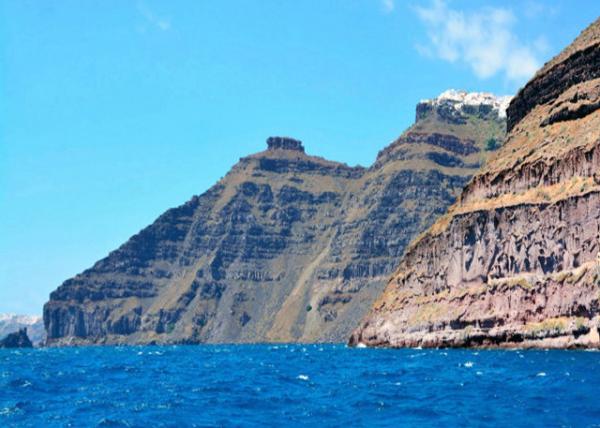 Caldera @ Firostefani (费拉“闪亮之冠”村·火山臼) Caldera @ Firostefani (费拉“闪亮之冠”村·火山臼)
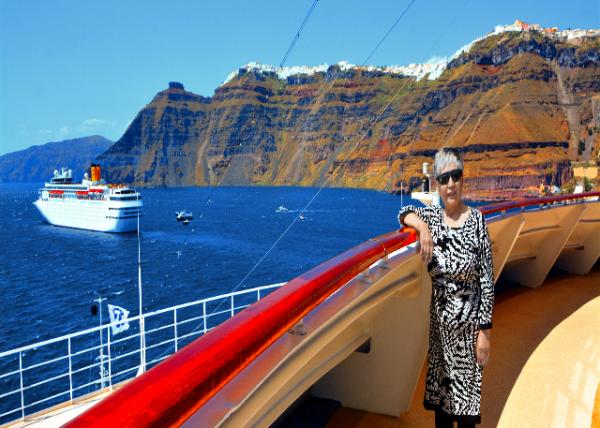 Caldera Viewed from Emerald Princess Caldera Viewed from Emerald Princess
(“公主·翡翠”号游轮近观火山臼 06-19-2015) 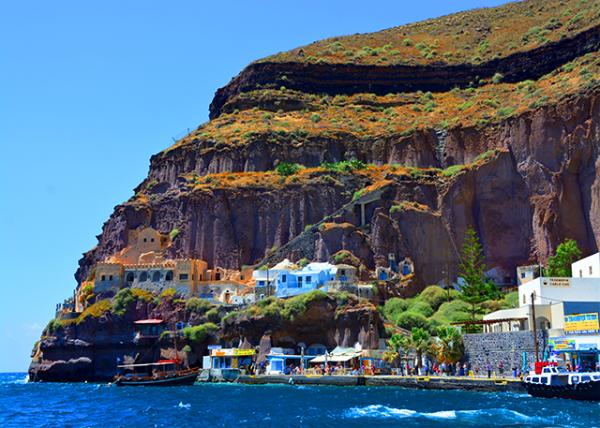 Old Fira Port in Amoudi Bay Set into the High Volcanic Cliffs of Western Santorini Old Fira Port in Amoudi Bay Set into the High Volcanic Cliffs of Western Santorini
(位于阿莫迪“沙岸”湾的旧港·坐落在圣托里尼岛西部的高火山悬崖之中) 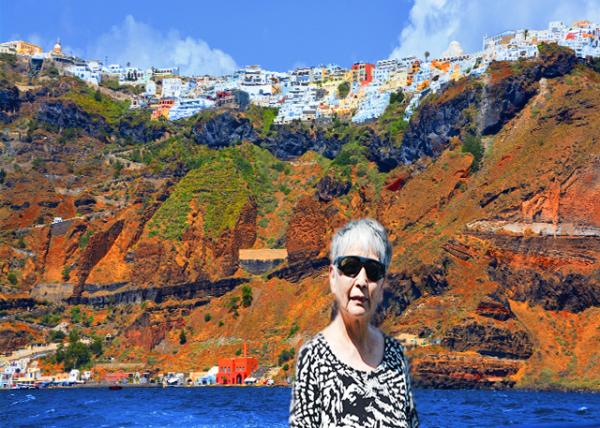 View of Fira from Emerald Princess over the Sea View of Fira from Emerald Princess over the Sea
(从停泊在海上的“公主·翡翠”号游轮观望菲拉 06-19-2015)
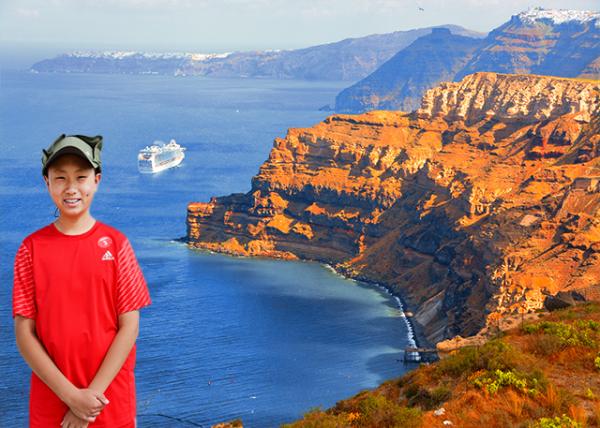 Akrotiri Peninsula w/ Caldera Views Akrotiri Peninsula w/ Caldera Views
(阿克罗蒂里“海岬”半岛·火山口景观 06-19-2015) 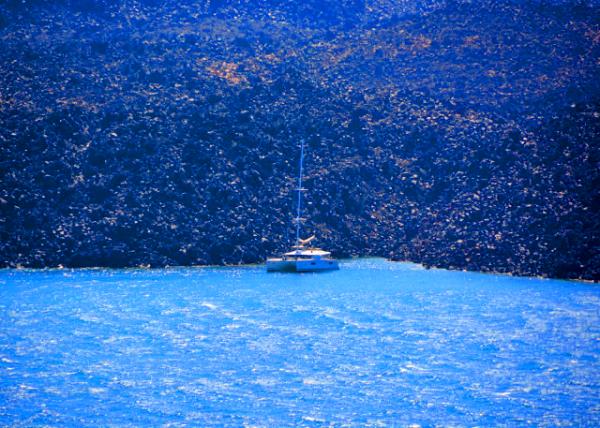 Jagged Black Lava (锯齿状黑色熔岩) Jagged Black Lava (锯齿状黑色熔岩)
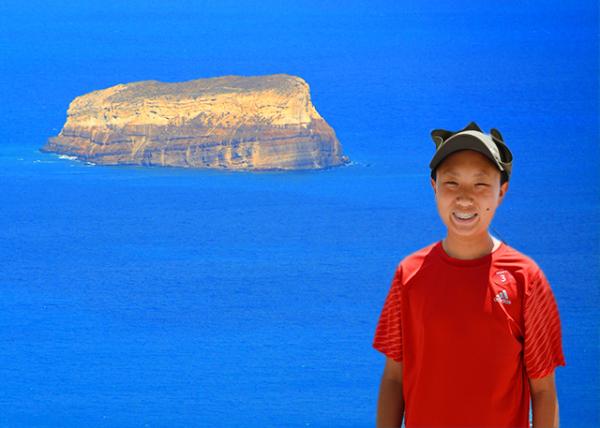 Aspronisi Island (阿斯普罗尼西“白”岛 06-19-2015) Aspronisi Island (阿斯普罗尼西“白”岛 06-19-2015)
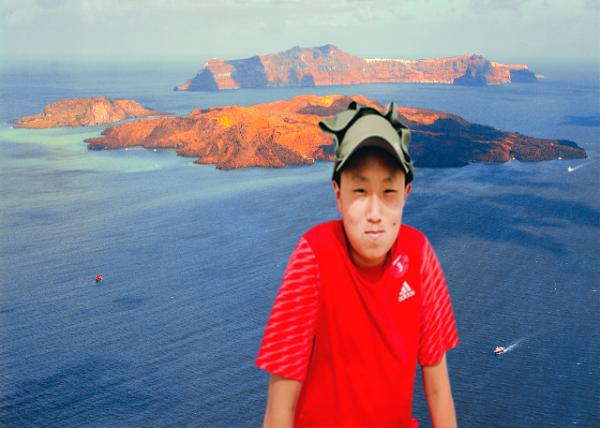 Nea Kameni vs Palea Kameni Nea Kameni vs Palea Kameni
(新旧卡美尼“烧焦”岛 06-19-2015) 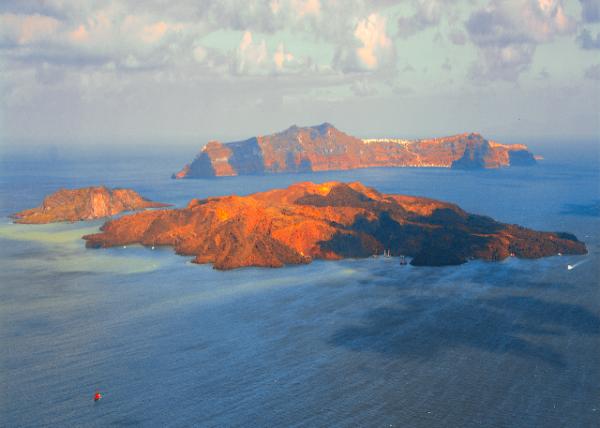 Thirasia against Santorini & Nea Kameni Thirasia against Santorini & Nea Kameni
(提拉西亚“收割机”岛与背后的圣托里尼岛和新卡美尼岛) 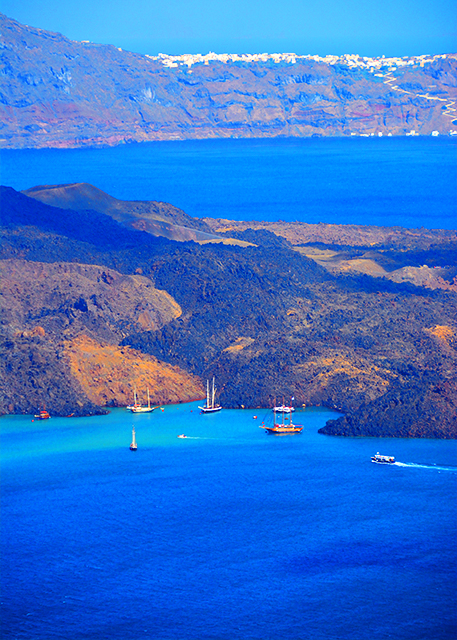
Thirasia against Santorini (提拉西亚“猎人”与背后的圣托里尼岛)
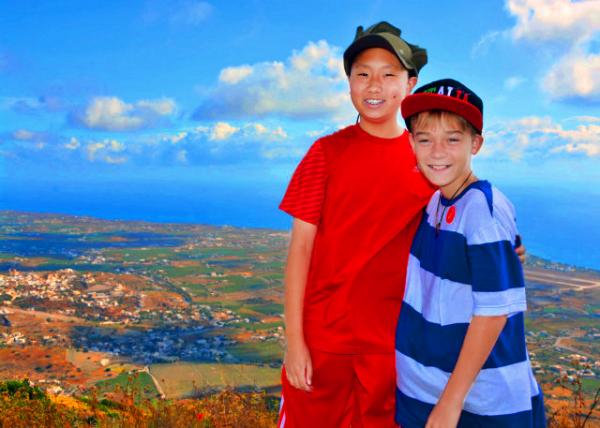 12-Yr-Old Pals from PA and CA 12-Yr-Old Pals from PA and CA
(来自宾州和加州十二岁的同龄伙伴 06-19-2015) 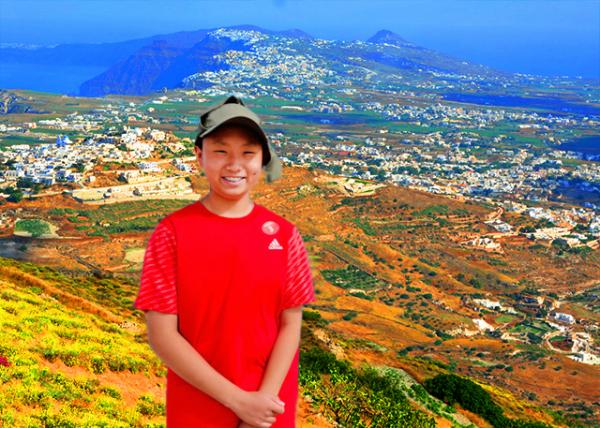 Akrotiri Peninsula Outlooked from Mt. Profitis Llias Akrotiri Peninsula Outlooked from Mt. Profitis Llias
(从先知以利亚山俯视阿克罗蒂里半岛 06-19-2015)
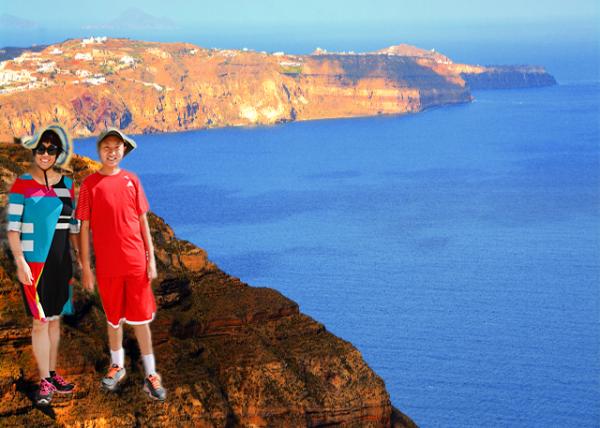 Hike w/ 10-Km ca 6-Mile Path Running along these Cliffs, Connecting the Town of Fira to Oia Hike w/ 10-Km ca 6-Mile Path Running along these Cliffs, Connecting the Town of Fira to Oia
(悬崖徒步·长约10公里/6英里的路径,连接着菲拉镇与伊亚“远”镇 06-19-2015) 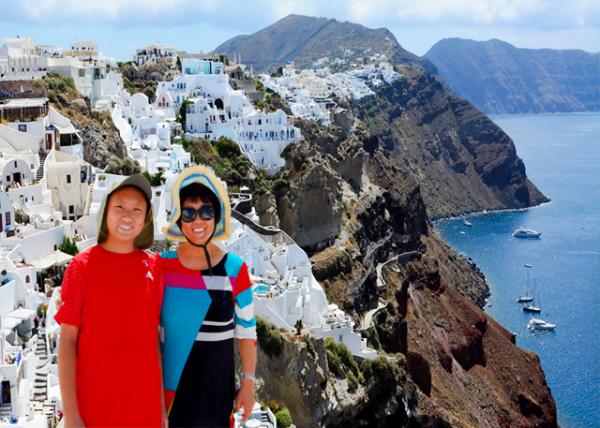 Terraces of Whitewashed, Cliff-top Bldgs in Oia Village Terraces of Whitewashed, Cliff-top Bldgs in Oia Village
(伊亚村悬崖顶的白色建筑露台 06-19-2015)
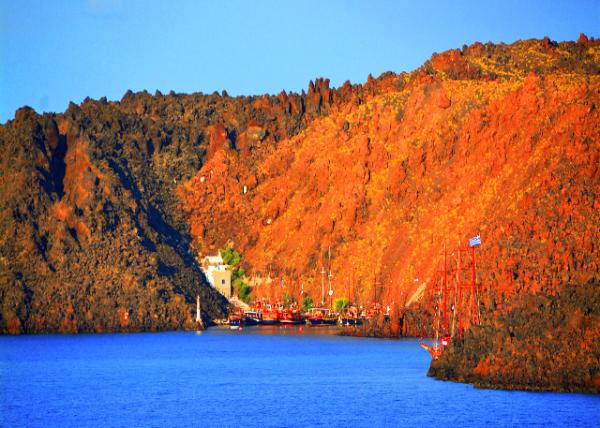 Fishing Port (渔港) Fishing Port (渔港)
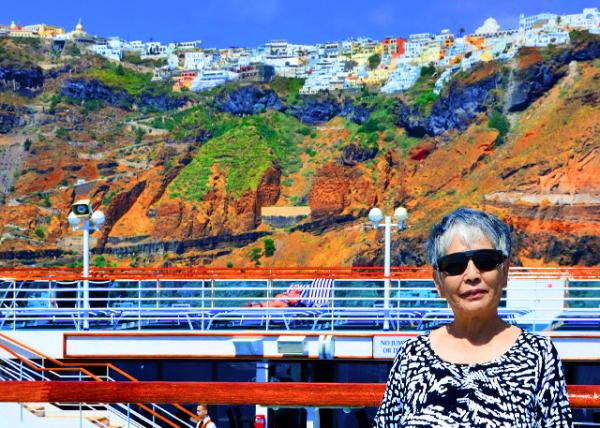 Fira Panorama (费拉镇全景 06-19-2015) Fira Panorama (费拉镇全景 06-19-2015)
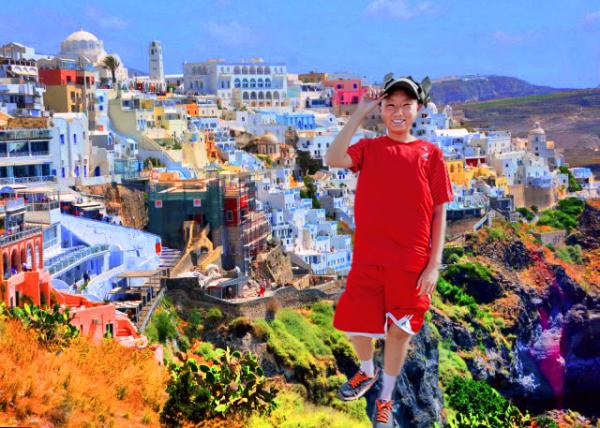 Fira, the Modern Capital of Santorini Fira, the Modern Capital of Santorini
(费拉镇·圣托里尼岛现代首府 06-19-2015) 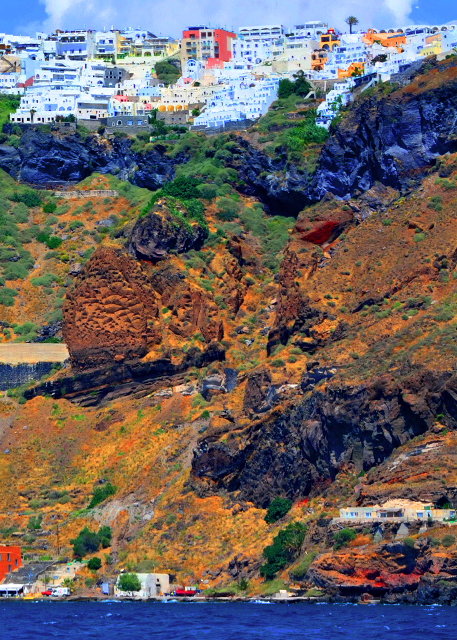
Houses Built on the Edge of the Caldera (建在火山口边缘的房屋)
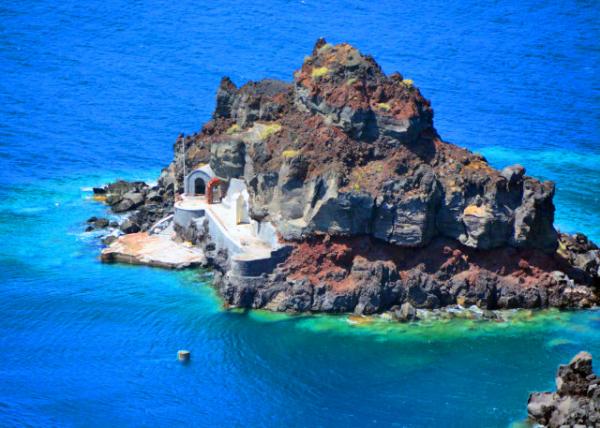 Isle of Saint Nicholas, Amoudi Bay @ Oia Village Isle of Saint Nicholas, Amoudi Bay @ Oia Village
(位于伊亚村阿莫迪湾的圣尼古拉斯“人民的胜利”小岛) 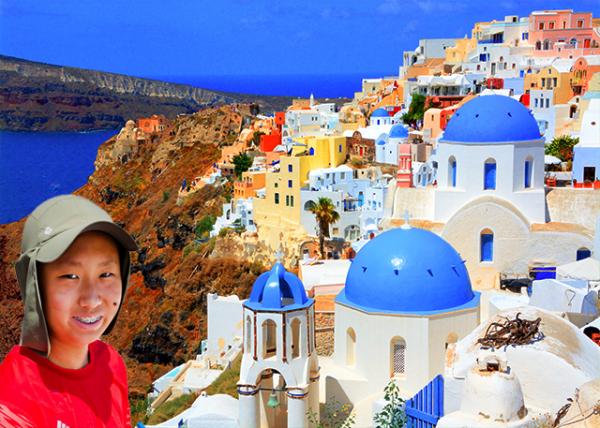 View of Imerovigli, Example of Cycladic Architecture View of Imerovigli, Example of Cycladic Architecture
(伊莫洛维里“白日瞭望台”景观·基克拉迪“环岛”建筑的典范 06-19-2015)
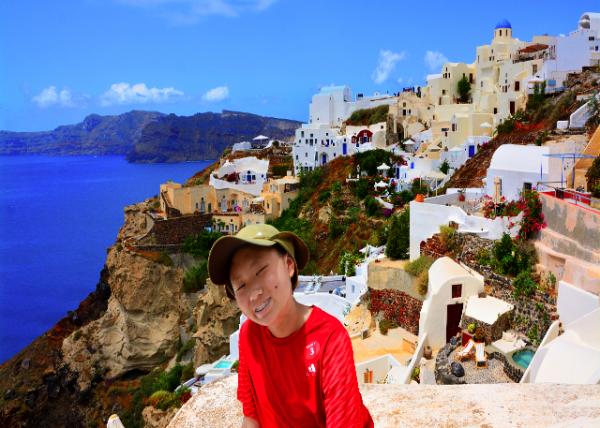 Panoramic View of the Caldera Taken from Oia Panoramic View of the Caldera Taken from Oia
(从伊亚镇观看火山臼全景 06-19-2015) 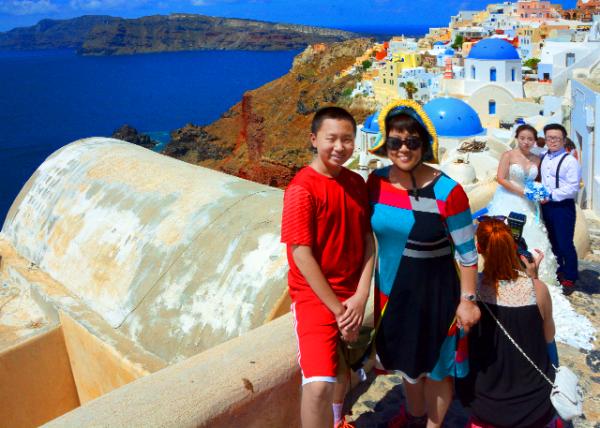 Oia Church w/ Cupola Painted Blue & White Washed Walls Oia Church w/ Cupola Painted Blue & White Washed Walls
(伊亚教堂·穹顶漆成蓝色和墙面刷成白色 06-19-2015) 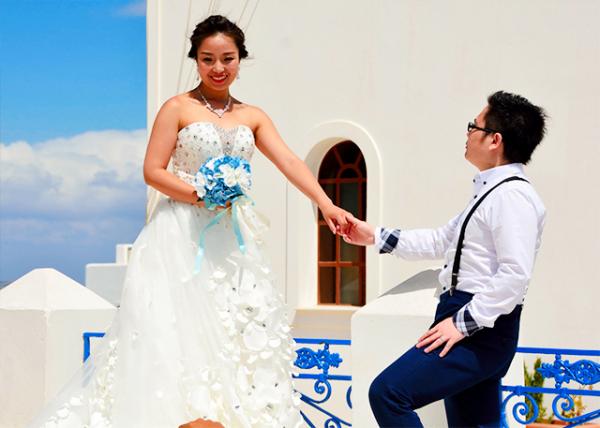 Wedding Photo (婚纱照) Wedding Photo (婚纱照)
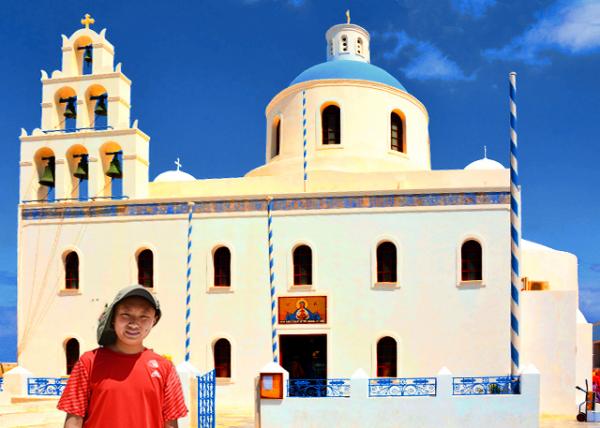 Church of Panagia of Platsani (圣母颂教堂) Church of Panagia of Platsani (圣母颂教堂)
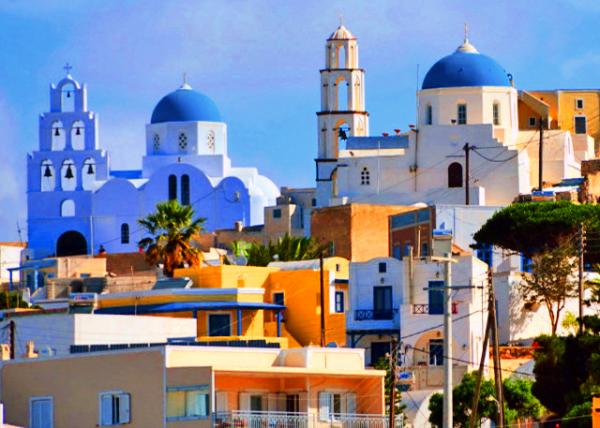 Agia Theodosia Church (圣狄奥多西亚“神赐”教堂) Agia Theodosia Church (圣狄奥多西亚“神赐”教堂)
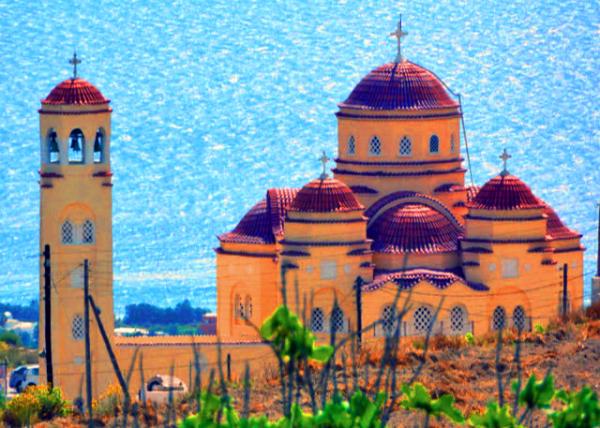 Church of Agios Charalambos Church of Agios Charalambos
(圣查拉兰博斯“喜乐”教堂) 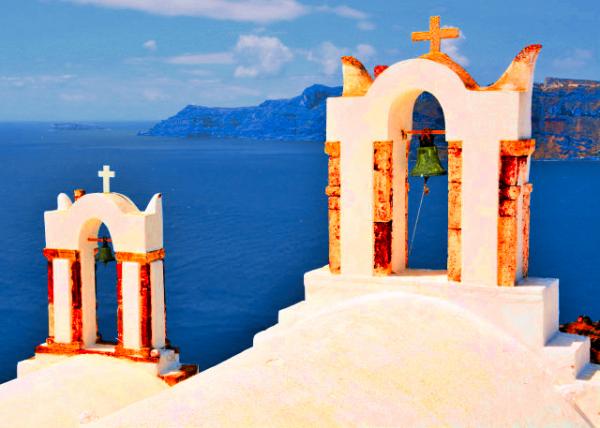 Assumption of the Blessed Virgin Mary Church Overlooking Nea Kameni Island Assumption of the Blessed Virgin Mary Church Overlooking Nea Kameni Island
(圣母升天教堂俯瞰新亚卡美尼岛) 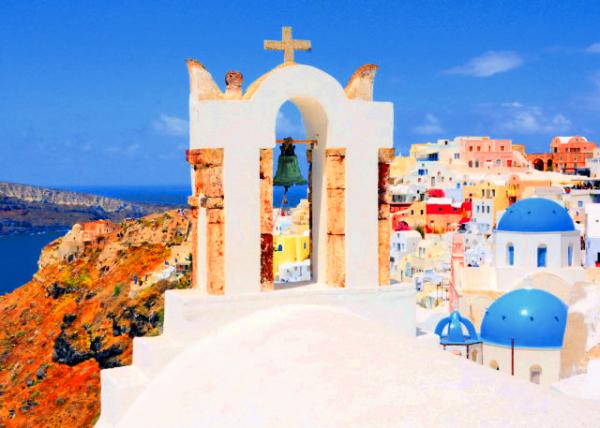 Greek Orthodox Church Bell Tower (东正教钟楼) Greek Orthodox Church Bell Tower (东正教钟楼)
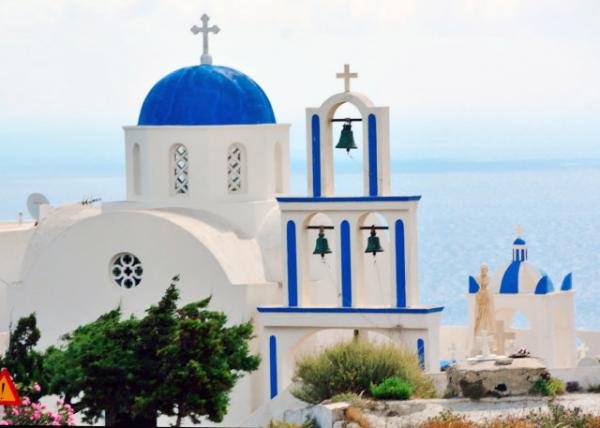 Pyrgos Kallistis Church w/ Cupola Painted Blue & White Washed Walls Pyrgos Kallistis Church w/ Cupola Painted Blue & White Washed Walls
(皮尔戈斯·卡利斯蒂斯“美塔”教堂·穹顶漆成蓝色和白色洗墙) 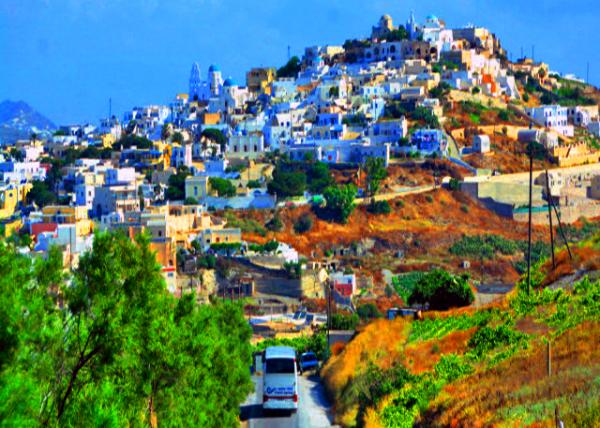 Pyrgos Kallistis Village (皮尔戈斯·卡利斯蒂斯村) Pyrgos Kallistis Village (皮尔戈斯·卡利斯蒂斯村)
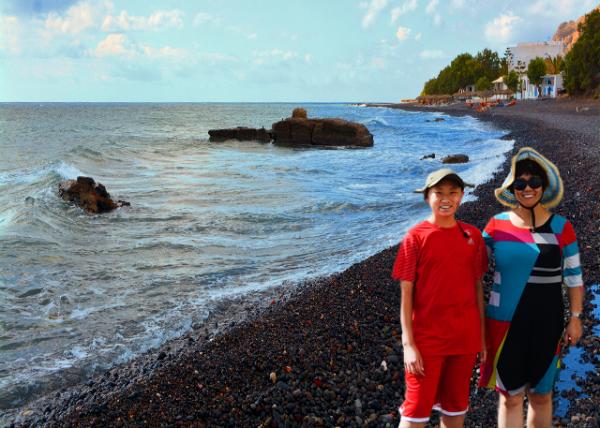 Onyx-Colored Black Gravel Beach Onyx-Colored Black Gravel Beach
(玛瑙色黑砾石海滩 06-19-2015) 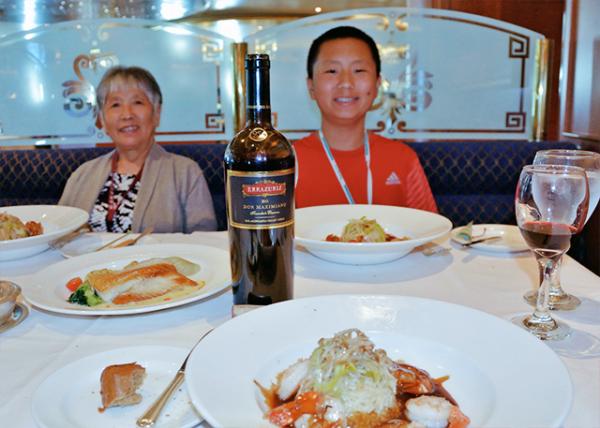 Botticelli Dining Room of Emerald Princess Botticelli Dining Room of Emerald Princess
(“公主·翡翠”号游轮·波提切利“小酒桶”餐厅 06-19-2015) 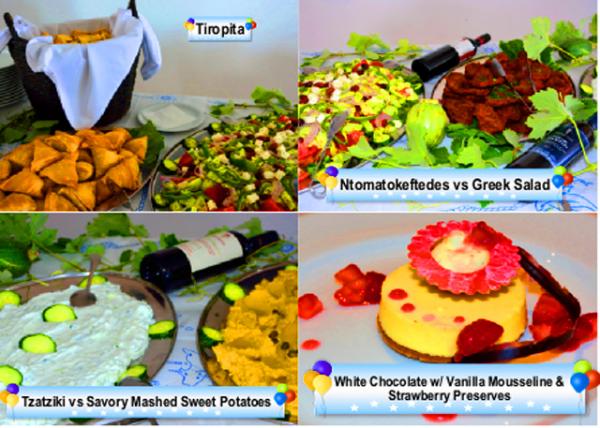 午餐:奶酪派、油炸番茄球与希腊沙拉、酸奶黄瓜酱与美味红薯泥、白巧克力配香草蛋白冻和草莓果酱 午餐:奶酪派、油炸番茄球与希腊沙拉、酸奶黄瓜酱与美味红薯泥、白巧克力配香草蛋白冻和草莓果酱
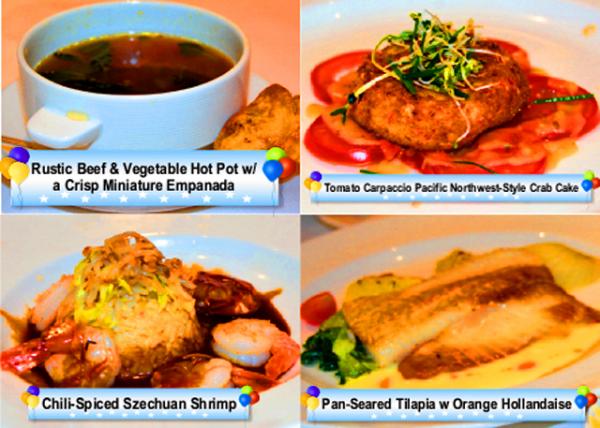 晚餐:乡村牛肉和蔬菜火锅配脆皮微型肉馅卷饼、番茄薄片太平洋西北风味蟹饼、川椒虾仁、桔子蛋白酱煎罗非鱼 晚餐:乡村牛肉和蔬菜火锅配脆皮微型肉馅卷饼、番茄薄片太平洋西北风味蟹饼、川椒虾仁、桔子蛋白酱煎罗非鱼
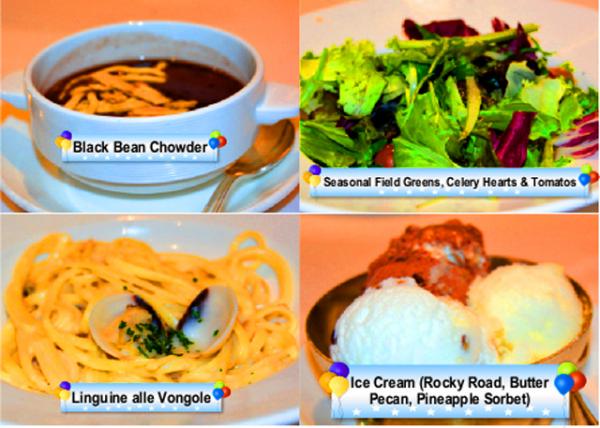 黑豆杂烩汤、绿色时菜芹菜心和西红柿沙拉、蛤蜊扁面条、三色冰激凌·果仁糖奶油山核桃和菠萝冰糕 黑豆杂烩汤、绿色时菜芹菜心和西红柿沙拉、蛤蜊扁面条、三色冰激凌·果仁糖奶油山核桃和菠萝冰糕
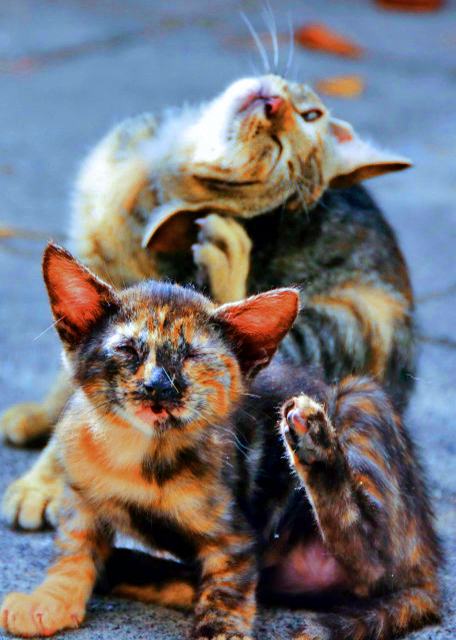
Mother & Baby (母与子) 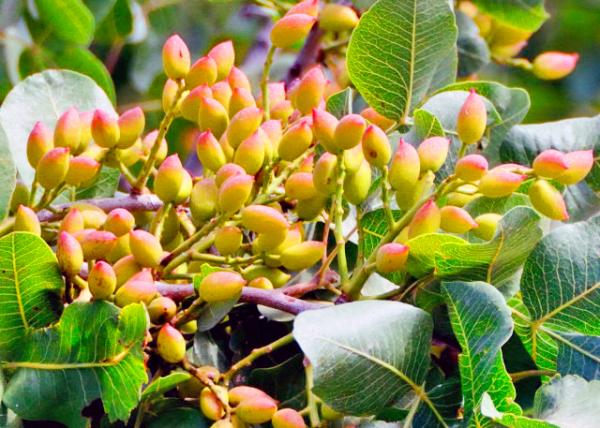 Pistachio Tree (开心果树) Pistachio Tree (开心果树)
Crosslinks(相关博文):
Greece(出游希腊)
Europe(欧洲掠影) 6th Grade(初中一年级)
|