2017-08-02 【Aiden in English】 I must say, it feels delicious to start debating now. I love it. The entire camp up to this point has been essentially note-taking and minimal public speaking. However, there is a saying that the best way to learn is to take the plunge. And today was a leap of faith in a particular direction. We started the day with a regular note-taking class and questions, eventually making a list of Pro-Con debates. After a while, the teacher must've noticed more than a few bored students, which is understandable. He then decided to jump ahead to some competition, as all teachers know that the brighter the class, the higher the competitive spirit. Evidence is a key factor in the debate. Whether it is accurate or not, evidence powers the discussion and arguments forward. I did not enjoy the students' lack of meaningful information at the public school. Some pieces were outdated, and others were straight-up untrue. Therefore, we examined the various reasons that could compromise evidence. The instructors describe the debate as explaining the topic to a seven-year-old child: the debaters must always define every term that a young child wouldn't understand. Our instructor then said that evidence should also follow this rule: give every piece of helpful credentials. For example, when a study reveals that fifty percent of students lack sleep, this finding can be questioned due to the lack of information to verify its accuracy. More importantly, today was the first day of an actual debate. After choosing a partner, we had a sparkling discussion. I paired up with an American kid from Brooklyn, New York, who wanted to win the debate, so I took it just as seriously. The topic was that parents should lie about Santa Claus, which sounds absurd to me. I never experienced too much of the Santa Claus baloney, as most Asian parents are very straight up to their children and give them cold, hard cash from a young age. Regardless, I understand the weight behind this topic. Within each debate, both sides had to find their values. We were chosen as the Co team, and our resolution was, "Parents should not lie to their children about Santa Claus." Our value was the idea of lying in society and its possible effects. Although a simple topic like this is presented, the degree of difficulty we take it can very easily surpass the first impressions. It was a five-minute preparation, impromptu debate, which resulted in chaos. There was no need to divulge a winner because everyone, including me, was still learning. The result mostly fell to the judge, who criticized both sides. However, even for just a taste, the debate was, above all, fun. 【红霞译】
我承认即将参与辩论的感觉真好,格外招人喜爱,在此之前辩论营基本上只是做些笔记间或搞点演讲活动,不过俗话说得对,最佳学习方式莫过于循序渐进,今天赶在这个节骨眼上恰好放胆一试。 一开始我们仍然写要点提问题,最终方才起草正方反方辩论程序。过了一会,老师注意到不少学生闲得无聊,这不难理解。于是他决定先搞个比赛小试牛刀,英雄所见略同,老师们恐怕都明白越是上进的班级比赛斗志越是旺盛。 证据是辩论中的关键因素,不管是否真实,它是驳论与结辩的前提,我不喜欢公立学校学生所提供的无用信息,那些不是过时的资料就是虚假的东西,因此我们有足够理由排除这些证据。
授课讲师们以向一位七岁儿童解释标题的口吻来描述辩论:辩论者总要给懵懂的孩童讲解字义,接下来他阐明证据同样遵循这一规则:拿出有用的凭证。举例来说,当一项研究表明50%的学生缺觉,这条信息因缺乏验证真实性而被搁置一边。
更重要的是,今天是实战辩论的第一天,在选好搭档之后,我俩闪亮登场。我的队友是一位来自纽约布鲁克林“美溪”的美国男孩,他特别想赢这场辩论,因此我也得全力以赴。手头的论题是“父母应该隐瞒圣诞老人真相”,在我看来荒唐无稽。我从来没有听过太多圣诞老人闲话,多数亚洲父母对其子女非常率真,直接送给小孩现金钞票。无论怎样说,我完全明白这个论题背后所隐含的分量。每场辩论双方必须找出自己的立论,我们选择站在反方立场,其结辫是“父母不应隐瞒圣诞老人真相”,论点源于社会根基及可能造成的影响。尽管争辩的内容简单直白,我俩在很大程度上拓宽思路,轻松地超越第一印象。 今天先给出五分钟准备时间,随后即兴辩论,结果乱成一锅粥,在此没必要公布最后赢家,毕竟人人仍处在学习阶段,包括我个人在内。结果多由评委决定,对双方表现进行评议。然而即使初尝喜悦,辩论十分有趣。 Today in History(历史上的今天): 2014: Mesoamerican Biological Corridor(南下中美洲生物通道) 2012: 工作聚餐(Business Lunch) 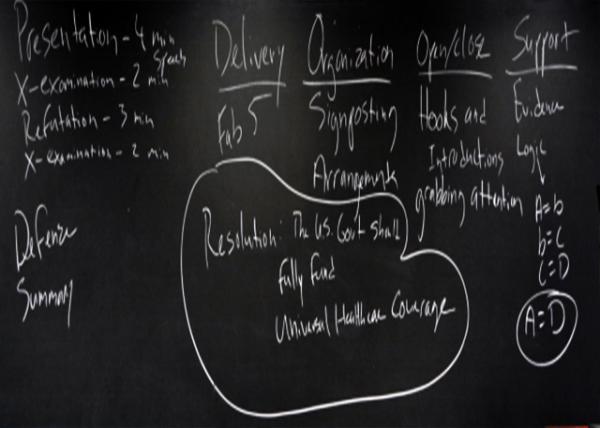 Debate Procedures (辩论程序) Debate Procedures (辩论程序)
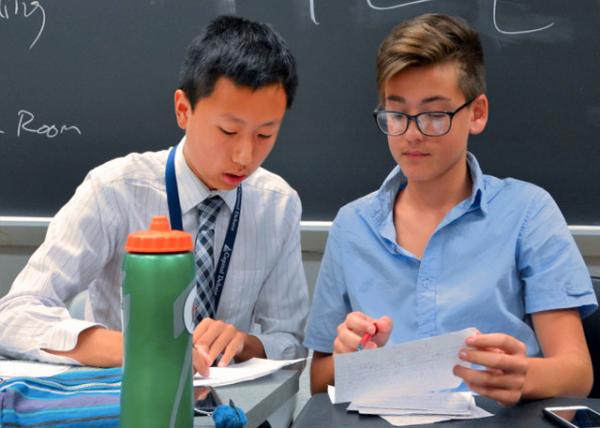 Team w/ Lyle (搭档莱尔“岛屿” 08-02-2017) Team w/ Lyle (搭档莱尔“岛屿” 08-02-2017)
Crosslinks(相关博文): 2017: Capitol Debate Camp Day-3(国会辩论夏令营第三天) 2017: Capitol Debate Camp Day-2(国会辩论夏令营第二天)
2017: Capitol Debate Camp Day-1(国会辩论夏令营第一天) 8th Grade(初中三年级) |