2015-08-21
【Aiden in English】
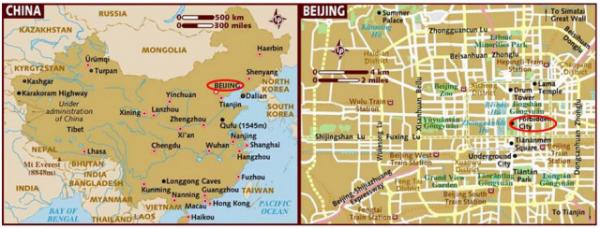
Beijing used to have good weather throughout the year. Nowadays, I don't think so. But the point is that it had warm summers and fair winters. A water source was extremely close by, making it an ideal location for the Chinese rulers to consider all these factors. The Forbidden City is not so "forbidden" anymore. It's quite the opposite. The name was given because ordinary peasants were forbidden to do so at the time. Yet today, it's incredible what ten US dollars can get you into. Due to its favorable weather and geography, Beijing was home to the emperors of 24 generations from the Ming to Qing Dynasties and is the capital of the People's Republic of China, with a population of approximately 22 million. Wherever I travel around the world, all capitals contain the same message. I'm "the ruler of this nation. So, I will live in a big house alone, and nobody may enter!" It sounds very familiar to other places. The Forbidden City wasn't an actual city, but it might as well have been in its heyday. An emperor always needed his style and a feeling of supremacy. The Forbidden City has a vast entrance, with double doors of the Meridian Gate made of metal, featuring studs arranged in rows that jut out for defense and intimidation. They provided no footholds or handholds to scale it. But inside was the whole other story. The walls that surrounded the city were significant, too. I must say, even after visiting Rome, I'm still impressed by the architecture. There isn't anything quite like the City Center of Beijing. Enormous rectangular buildings with stunning roofs in Hip and Hip-and-Gable styles loomed over the courtyard. The roof had bamboo-like glazed tiles that infused it with texture, and outcroppings were held up to the outer edge of the roof. Dragons are extremely important in Chinese history, and having these buildings would be entirely fitting. Dragons were carved into stone, mahogany, and jade, acting as decorations and borders to empty areas. Dragon patterns were painted to symbolize an emperor as the son of Heaven in three main halls: Supreme Harmony, Central Harmony, and Preserved Purity. On the other hand, the Chinese build the most colorful structures in the world. Vivid red walls, yellow tiles, gold carvings, and white marbles flashed in your eyes every time you glanced at something. If that weren't the case, a contrast would be added to the pediments, ridge roofs, girders, angle modillions, and marble pillars. But the Forbidden City wasn't done yet. Stretching onwards from both sides of the city was a small maze of houses built for an emperor's daily services. He would eat, sleep, talk, consider, and negotiate in a different house every time, each house adorned with gorgeous decorations and priceless artifacts. People could see a detailed tapestry in many windows, and each weaves down to a hair's breadth. The corridors seemed to wrap around one another for so long, which felt surreal. After all, it was a City Center. But everyone reading this understands that the ancient Chinese were creative, and emperors liked to show off. Whether to intimidate, boast, or simply “wow” people, the Chinese emperors did all the above. Rome now might have some competition. 【红霞译】
从前北京一年四季气候适宜,如今我反倒认为未必如此,但有一点毋容置疑,那就是夏凉冬暖水源充足,可以说天时地利,难怪被当时中国统治阶层视为风水宝地。
紫禁城不再是一个“禁城”,字面意思与实际含义早已相去甚远,其名称原指严禁平民百姓入内,如今只要肯花$10块大洋,随你自由进出。北京气候条件良好,地理环境适中,曾是明清两个朝代廿四位皇帝寝宫所在地,如今作为中华人民共和国的首都,大约二千二百万同胞在这里生活。每当我周游列国,愈发感觉各国首脑无不竞相昭布于世,“我掌管国家大权,有资格独居豪宅,闲人止步!”听起来多么耳熟,对不对?
紫禁城其实算不上一个城,也许在当时别具规模。皇帝自有皇帝的份儿,无时无刻都想表现高人一等。紫禁城入口很大,第一道午门是金属制的双开门,上面有成排向外凸出的钉子,起到防卫与恐吓作用。与大门内侧不同,外侧未设任何扶手及落脚的东西;城墙特别厚实,把整个故宫围得严严实实。刚从罗马鉴赏雄伟奇观归来,我依然深为紫禁城所折服。说真的,无论走遍世界,我都难以看到像北京这座城中城如此辉煌壮丽的古代建筑群。
皇城庭院上,庑殿顶与歇山顶等巨大长方形宫殿错落有致;房盖琉璃瓦片呈质感性强的竹片状,并点缀不同寓意的装饰图案,要么象征吉祥富足,要么表现高贵威严。龙为中国神话的百麟之长,可谓传承中华民族精神的图腾标志,因此以龙为背景的木雕石刻玉器屡见不鲜,太和殿、中和殿和保和殿三大殿内饰有大量金龙和玺彩画,索性把人间皇帝当作真龙天子。此外,中式楼阁亭榭等建筑特别讲究色彩艳丽,黄瓦、红墙、金饰、白石交相呼应,彰显中国古代宫廷艺术特征;山花、屋脊、梁枋、檐角、华表上各种鎏金铜叶龙凤瑞兽,更加强烈地营造出富丽堂皇的视觉效果。紫禁城之美远远不止这些,如果沿中轴线向两边展开,那么你会发现形形色色犹如置身迷宫的朝房廊庑,这是皇帝日常出没的地方,吃饭睡觉聊天思考会客等各项事宜分别选在专设的地点进行,而每处装璜精工细作,摆设用具极其考究。游客们可以近观挂毯制品,手工细腻到头发丝那么细。故宫御道连亘通幽,简直不可思议。至此我幡然醒悟,紫禁城是一个地地道道的“城中城”,恐怕跟我一起同游的读者也清楚地认识到古代中国人巧夺天工,帝王将相们又热衷炫耀自己的丰功伟绩。 无论是为了敲山震虎,还是炫耀地位,或是取悦世人,中国历代皇帝不惜劳民伤财。由此说来,罗马需要加把劲才能迎头赶上。
Today in History(历史上的今天): 2014: YMCA Camp─Dodgeball-3(基督教青年会夏令营─躲避球之三) 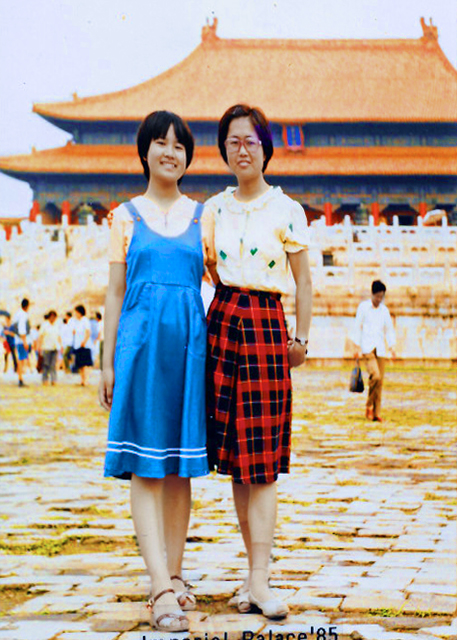
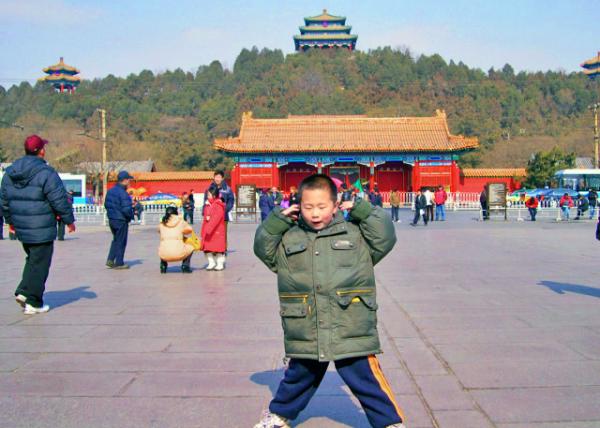
Hall of Supreme Harmony, the Highest Structure in the Forbidden City, Symbolizing the Emperor's Supreme Authority (太和殿·紫禁城中最高的建筑,象征着皇帝至高无上的权威 08-01-1985)
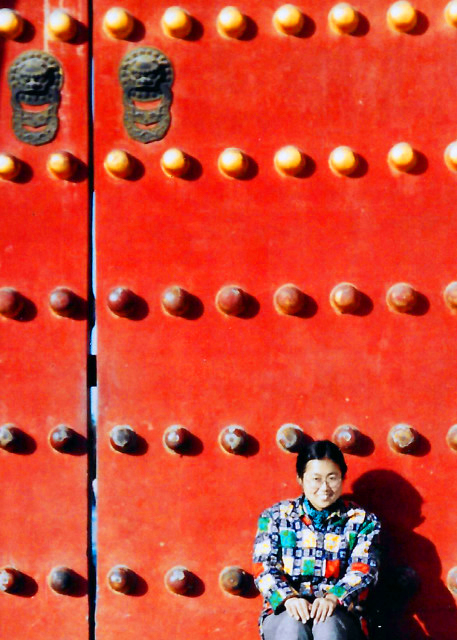
Red Gate, Symbolizing Imperial Power (红门·象征着皇权 11-24-1988)
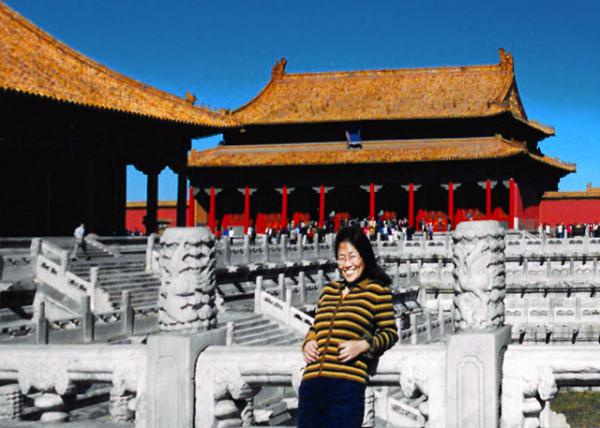 Hall of Supreme Harmony, the Largest Surviving Wooden Structure in China Hall of Supreme Harmony, the Largest Surviving Wooden Structure in China
(太和殿·中国现存最大的木结构建筑 10-02-1999) 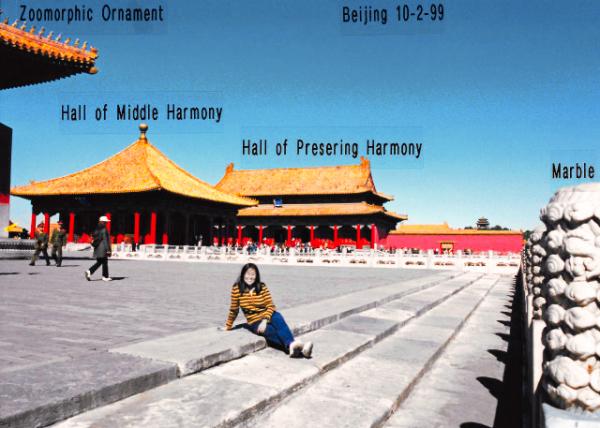 Hall of Central Harmony, the Emperor's Private Rest & Preparation Area | Preserving Harmony for Imperial Examinations, Banquets & Ceremonies Hall of Central Harmony, the Emperor's Private Rest & Preparation Area | Preserving Harmony for Imperial Examinations, Banquets & Ceremonies
(中和殿·皇帝的私人休息和准备区 | 保和殿·举行科举考试、宴会和仪式的地方 10-02-1999) 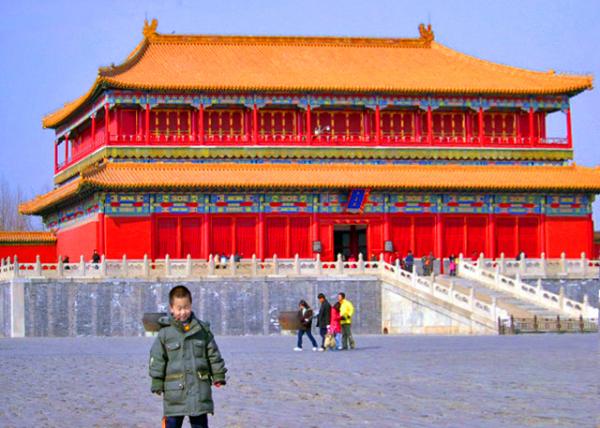 Pavilion of Spreading Righteousness, a Qing Dynasty Imperial Storehouse for Gold & Silver Ritual Items Pavilion of Spreading Righteousness, a Qing Dynasty Imperial Storehouse for Gold & Silver Ritual Items
(弘义阁·清代皇家金银礼器库 02-11-2008)
 Hall of Spiritual Cultivation, a Dining Spot for Empress Dowager Cixi Hall of Spiritual Cultivation, a Dining Spot for Empress Dowager Cixi
(养性殿·慈禧太后用餐的地方 02-11-2008)
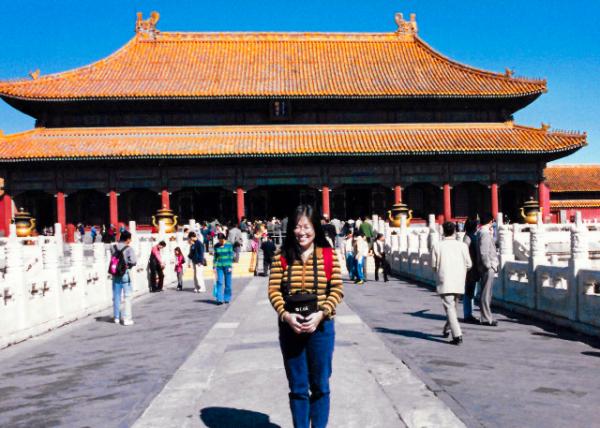 Palace of Heavenly Purity, the Emperor's Primary Residence during the Ming & Early Qing dynasties Palace of Heavenly Purity, the Emperor's Primary Residence during the Ming & Early Qing dynasties
(乾清宫·明清初期皇帝的主要住所 10-02-1999) 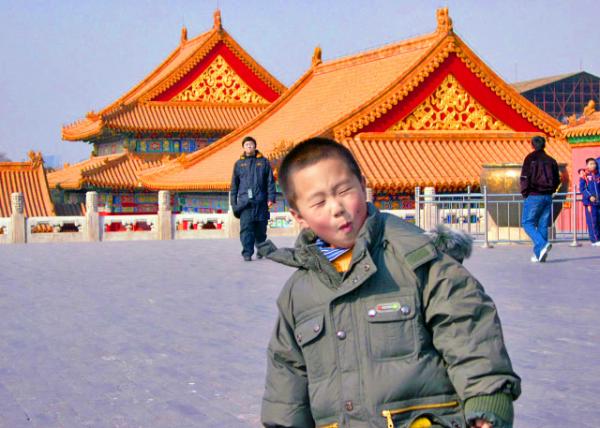 Glazed Hip-and-Gable Roofs over Courtyard @ Palace of Heavenly Purity Glazed Hip-and-Gable Roofs over Courtyard @ Palace of Heavenly Purity
(乾清宫·黄琉璃瓦重檐庑殿顶 02-11-2008)
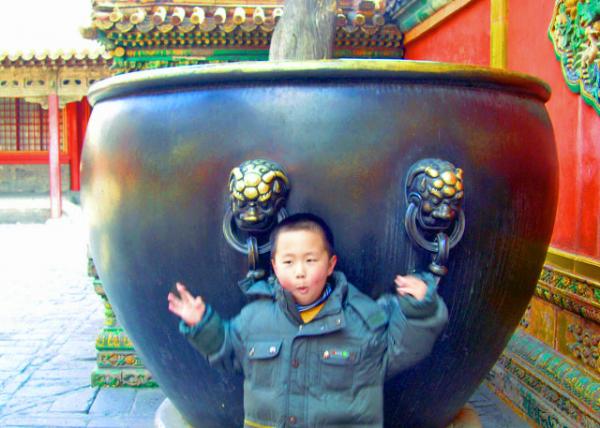 Big Bronze Water Bowl w/ Lion Heads (Touched for Good Luck) @ Palace of Heavenly Purity Big Bronze Water Bowl w/ Lion Heads (Touched for Good Luck) @ Palace of Heavenly Purity
(乾清宫·狮头吉祥缸 02-11-2008) 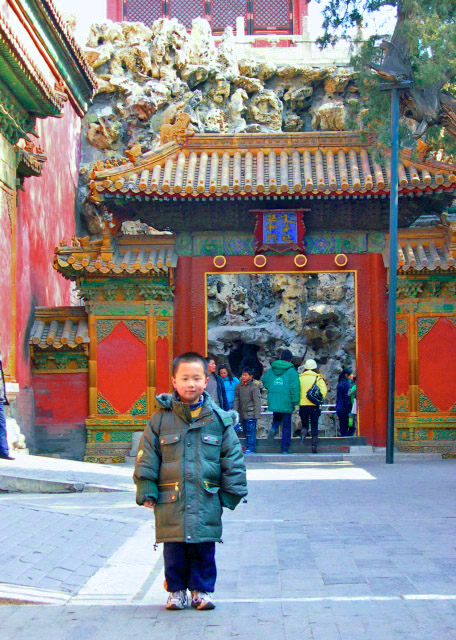
Yanhe Gate, Prolonging Life & Promoting Longevity (延和门·延年益寿 02-11-2008) 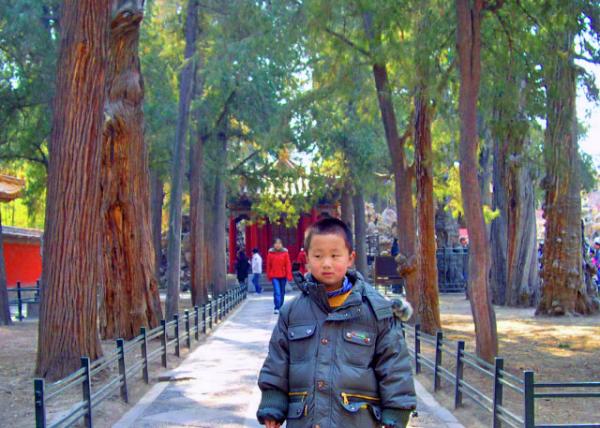 Imperial Garden, Featuring Ancient Cypress Trees, Winding Paths, Ornate Pavilions of Imperial View, Rockeries, & Taoist Temples Imperial Garden, Featuring Ancient Cypress Trees, Winding Paths, Ornate Pavilions of Imperial View, Rockeries, & Taoist Temples
(御花园·拥有古老的柏树、蜿蜒的小路、华丽的御景阁、假山和道教寺庙 02-11-2008) 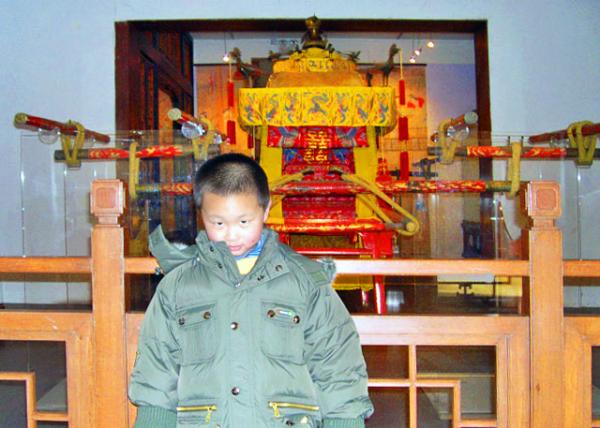 Qing Emperor's Sedan Chair, the Dragon Throne Qing Emperor's Sedan Chair, the Dragon Throne
(清帝轿子·龙之王座 02-11-2008) 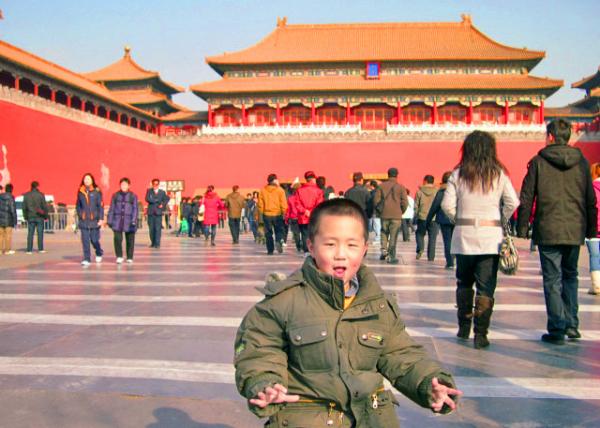 Meridian Gate & Turret, w/ Imposing 5-Tower Structure or "Five Phoenix Turrets", the Southern & Largest Gate of the Forbidden City Meridian Gate & Turret, w/ Imposing 5-Tower Structure or "Five Phoenix Turrets", the Southern & Largest Gate of the Forbidden City
(故宫午门与角楼·雄伟的五塔结构“五凤凰塔”,故宫最南端、规模最大的城门 02-11-2008)
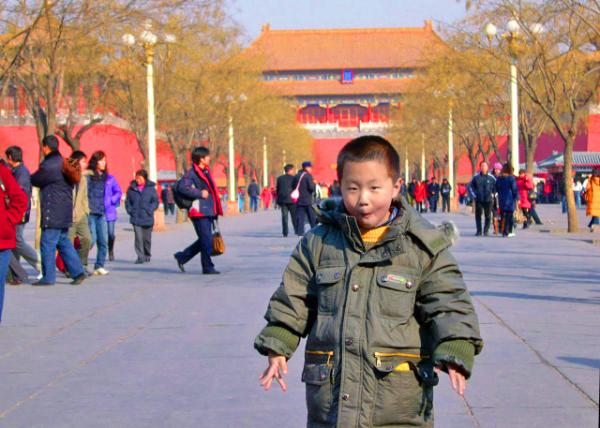 East Prosperity Gate, a Crucial Administrative Point within the Imperial City East Prosperity Gate, a Crucial Administrative Point within the Imperial City
(东华门·皇城内重要的行政中心 02-11-2008) 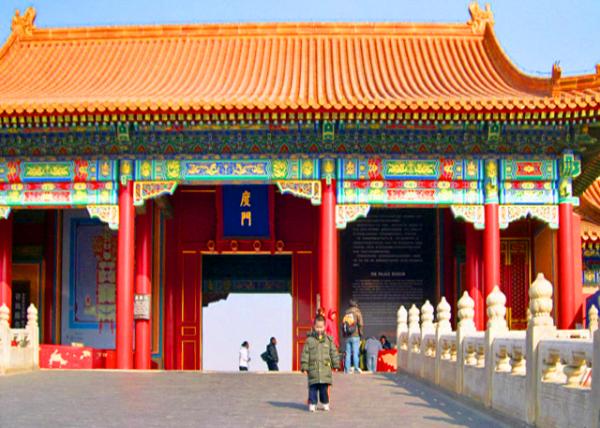 Zhendu Gate or Gate of Correct Conduct Zhendu Gate or Gate of Correct Conduct
(贞度门·王公大臣们上朝必经之地 02-11-2008) Crosslinks(相关博文): China(出游中国) 6th Grade(初中一年级) |